

From < 3000 km2 to 25,00,000 km2
-
A thread on the Journey of the Maratha Empire
-
A thread on the Journey of the Maratha Empire
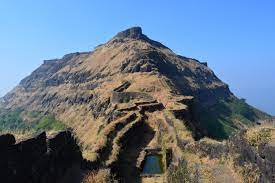
In 1645, the seed of what will become an Empire a century later was sown by Chhatrapati Shivaji Maharaj in his teen years.
It began with the conquest of Fort Torna, which lies approximately 50 km southwest of Pune.
It began with the conquest of Fort Torna, which lies approximately 50 km southwest of Pune.
In the next 25 years, the Maratha kingdom rose to prominence under the exemplary leadership of Chhatrapati Shivaji Maharaj.
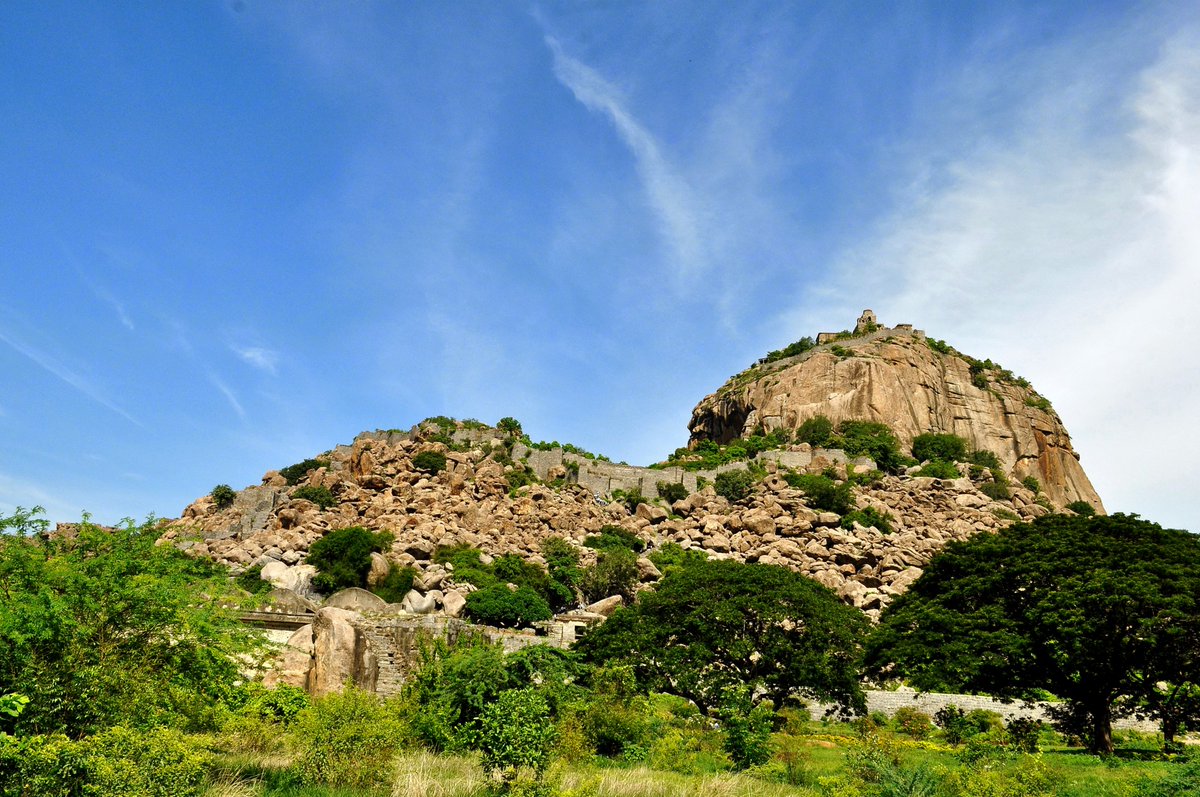
Its farthest frontier was Gingee in Tamil Nadu and its impregnable fort.
Later, the fort proved to be the strongest bastion in the most delicate hour.
Its farthest frontier was Gingee in Tamil Nadu and its impregnable fort.
Later, the fort proved to be the strongest bastion in the most delicate hour.
Shortly after Chhatrapati Shivaji Maharaj's death, Emperor Aurangzeb invaded the kingdom, and what ensued was 27 years of massive struggle in the Deccan.
An epic saga in every sense, this defining era shaped the future of the Indian subcontinent.
An epic saga in every sense, this defining era shaped the future of the Indian subcontinent.
These 27 years saw the remarkable but short reign of Chhatrapati Sambhaji Maharaj, his brutal execution by Emperor Aurangzeb, the increasingly intrusive presence of European powers, internal political strife in Mughal and Maratha durbars, Aurangzeb's conquest of Bahamani forces -
The fierce resistance of Marathas under Chhatrapati Rajaram Maharaj (and Maharani Tarabai, Senapati Santaji Ghorpade & Senapati Dhanaji Jadhav), the captivity of Chhatrapati Shahu Maharaj, and then finally the death of Emperor Aurangzeb.
After a short internal struggle, Chhatrapati Shahu Maharaj took reigns of the kingdom, and he appointed Balaji Vishwanath as the Peshwa.
This marked the period of Maratha-ascendancy.
The ascent was further fueled by the 20 years' relentless tenure of Peshwa Bajirao I.
This marked the period of Maratha-ascendancy.
The ascent was further fueled by the 20 years' relentless tenure of Peshwa Bajirao I.
The undefeated warrior, Peshwa Bajirao, is credited with expanding the Maratha kingdom at a rapid pace and establishing it as the premier military power in the subcontinent at that point.
Peshwa Bajirao was succeeded by his son Peshwa Nanasaheb I, who was assisted by multiple able administrators and generals.
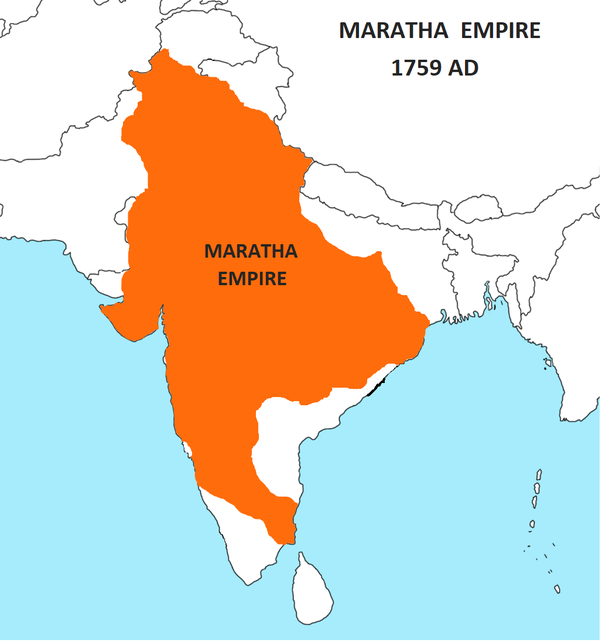
During his reign, in 1760, the Maratha Empire reached its peak as it spread over an area larger than 25 lakh sq km (80% of modern India's size).
During his reign, in 1760, the Maratha Empire reached its peak as it spread over an area larger than 25 lakh sq km (80% of modern India's size).
In 1761, the 3rd battle of Panipat proved to be a significant setback.
The 17 years old Madhavrao took the reigns of the empire in 1761 and consolidated it to its former glory within a few years.
His untimely death in 1772, at the young age of 27, was the most decisive loss.
The 17 years old Madhavrao took the reigns of the empire in 1761 and consolidated it to its former glory within a few years.
His untimely death in 1772, at the young age of 27, was the most decisive loss.
For the next 30 years, the internal squabbles within the Peshwa family led to the gradual disintegration of the central power.
Remarkable individuals such as Raja Mahadji Shinde and Nana Fadnis, to name a few, ensured the supremacy and arrested the decline for a brief period.
Remarkable individuals such as Raja Mahadji Shinde and Nana Fadnis, to name a few, ensured the supremacy and arrested the decline for a brief period.
The reign of Peshwa Bajirao II between 1795 and 1818 marks the period of the empire's decline and eventual end.
The most notable moment of this era is the Treaty of Bassein in December 1802 between Marathas and Britishers.
The most notable moment of this era is the Treaty of Bassein in December 1802 between Marathas and Britishers.
In 1818 as the Marathas were defeated by the Britishers in the 3rd Anglo-Maratha war, it affirmed the decisive beginning of the British colonial rule over India.
This thread is a highly superficial summary of an epoch that lasted for 173 years.
The Maratha empire and its interactions with its contemporary powers - Islamic rulers (Shah Jahan to Tipu Sultan), European powers, Rajputs& other Hindu rulers - has far-reaching implications on Modern history.
This complex and captivating saga will be covered in depth during the upcoming online course in Marathi, which is jointly conducted by Bharat Itihasa Samshodhak Mandal, Nyansa, and the Bhandarkar Oriental Research Insitute.
it begins on March 21, 2022.
it begins on March 21, 2022.
Link for registration -
Loading suggestions...