
Politics
Middle East
International Relations
nuclear energy
Nuclear cooperation
Technical compliance

Thread on Russian civilian nuclear cooperation with Iran, Russia’s role in the JCPOA, and the technical aspects of the deal in relation to Russia
1/
1/
Russia was anticipated to support the restoration of the JCPOA by:
- converting centrifuges at Fordow to produce stable isotopes
- providing fuel for the TRR
- exporting the excess stockpiles of enriched uranium (potentially spent fuel)
2/
- converting centrifuges at Fordow to produce stable isotopes
- providing fuel for the TRR
- exporting the excess stockpiles of enriched uranium (potentially spent fuel)
2/
Why is Russia important in terms of technical compliance?
Russia has the most experience working with Iran’s civilian nuclear program and arguably has the most knowledge on it - Moscow enjoys close ties with Tehran, an additional challenge to a JCPOA without Russia
3/
Russia has the most experience working with Iran’s civilian nuclear program and arguably has the most knowledge on it - Moscow enjoys close ties with Tehran, an additional challenge to a JCPOA without Russia
3/
Russian involvement in Iran's civilian nuclear energy industry dates back to the 1990s through a series of intergovernmental agreements that culminated in the Bushehr Nuclear Power Plant, a VVER-1000 Light water reactor
4/
4/
Iran’s nuclear fuel cycle basically depends on Russia and Moscow has a financial interest in ensuring that Iran does not develop an independent fuel cycle.
5/ carnegieendowment.org
5/ carnegieendowment.org
The Zarif tape confirmed that during JCPOA negotiations, Russia blocked Iran's proposal to use fuel from Natanz for Bushehr by invoking safety concerns. Likely had to do with Russia protecting its economic interests in Iran’s fuel cycle.
6/
6/
During negotiations, Russian proposed the conversion of Iran’s underground enrichment facility at Fordow for research purposes. Rosatom provided the designs based off of a Russian Electrochemical Plant in Krasnoyarsk. JCPOA stipulates Russian responsibilities with Fordow.
7/
7/
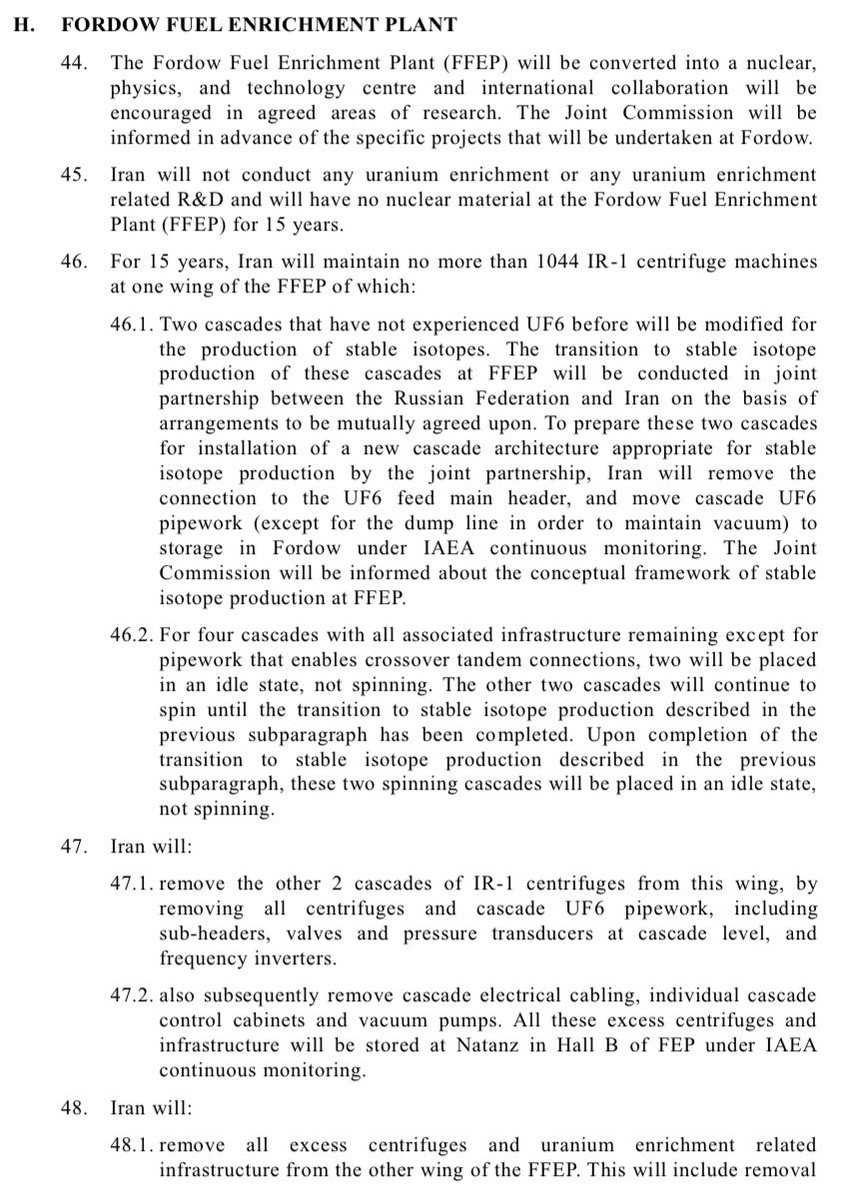
In terms of progress, only pre-project studies on Fordow have been completed which dealt the technical requirements for the modification of gas centrifuge cascades to produce stable isotopes for medical purposes.
8/
8/
After Trump left the JCPOA, Iran began using uranium hexafluoride in cascades at Fordow. Russia stated that the presence of uranium hexafluoride in close proximity of stable medical isotopes rendered further implementation technologically impossible.
9/
9/
In December 2019, the U.S. terminated the sanctions waiver related to Fordow. That same month, Russia's TVEL, a subsidiary of Rosatom, suspended the project.
10/
10/
Biden’s sanctions waivers allow Russia to resume its work on Fordow, other countries have the know-how to pursue the project but Iran risks alienating Russia by unilaterally abrogating TVEL’s contract if Russia refuses to pull-out of the project.
11/
11/
Russia also provided fuel for the Tehran Research Reactor (TRR) which is fueled by 20% enriched uranium. Under the JCPOA, Iran is not allowed to enrich uranium above 3.67% so Iran needs to purchase TRR fuel from “entities outside Iran” like Russia.
12/
12/
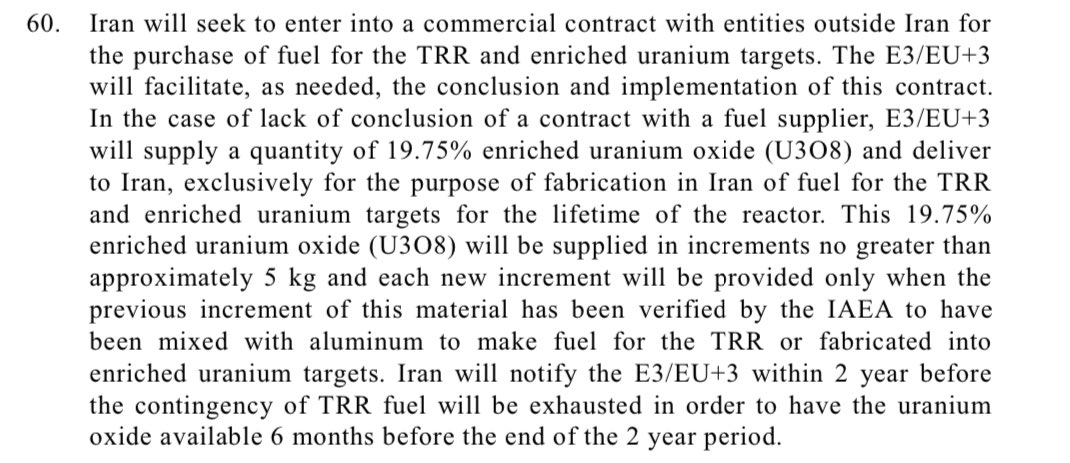
Before Trump revoked sanctions waivers, Russia supplied Iran with 5kg installments of partially fabricated TRR fuel plates. Another state could conceivably do this but it requires the approval of the Joint Commission of which Russia is a member.
13/ iaea.org
13/ iaea.org
Iran’s growing enrichment stockpile far surpasses the 300kg limit- a restoration of the JCPOA would require Iran to ship the excess uranium abroad in exchange for yellowcake. Russia was likely going to be tasked with this responsibility.
14/ iaea.org
14/ iaea.org
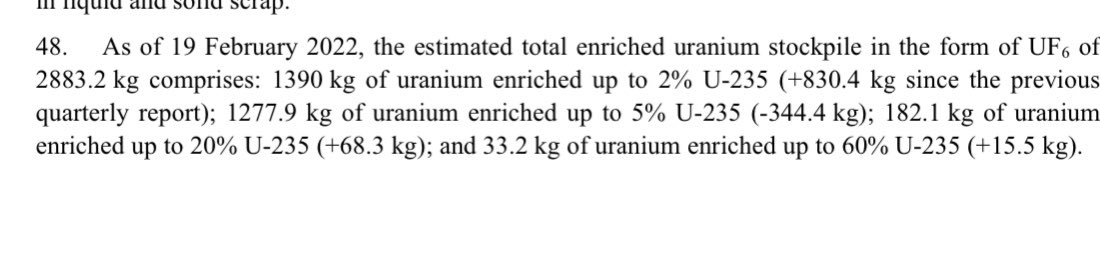
Russia did this with the original JCPOA. In December 2015, Russia removed all excess low-enriched uranium and nuclear materials from Iran prior to the JCPOA Implementation Day. It later helped with the shipment of spent-fuel.
15/
15/
There are certainly ways to formulate some kind of “JCPOA minus Russia” in terms of technical responsibilities but ultimately, the main challenges will likely be political.
16/
16/
Loading suggestions...