

Methods of assessing gingival biotype
#Dental_by_Hadeel
#Dental_by_Hadeel

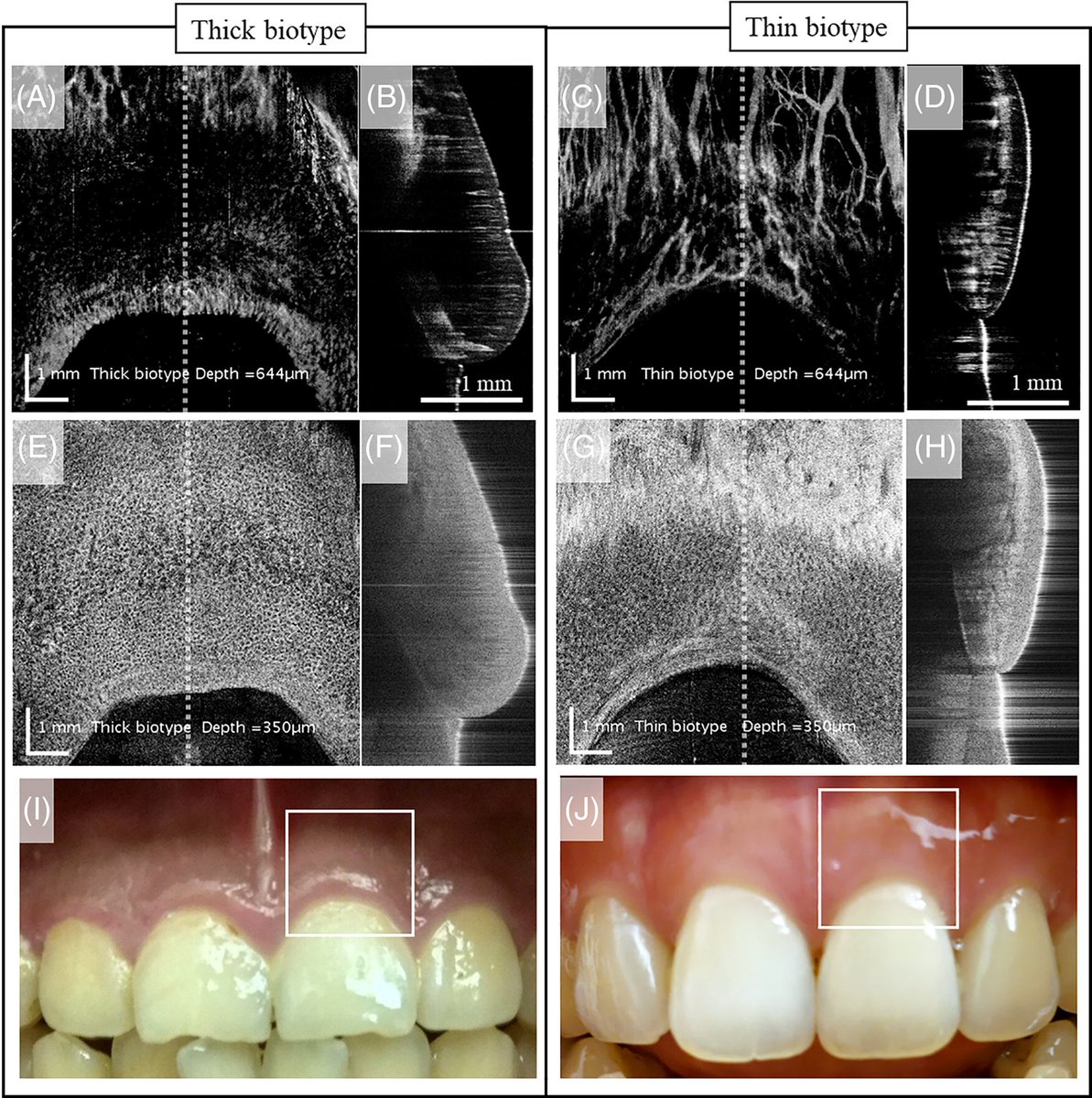
A clinician’s knowledge in identifying gingival biotypes is paramount in achieving optimal treatment outcomes.
Many invasive and non-invasive methods were
proposed to measure tissue thickness. These include
the following:
1️⃣ Direct measurement,
2️⃣ Probe transparency (TRAN) method
3️⃣ Ultrasonic devices.
4️⃣ Cone-Beam Computed Tomography (CBCT)
Scan.
proposed to measure tissue thickness. These include
the following:
1️⃣ Direct measurement,
2️⃣ Probe transparency (TRAN) method
3️⃣ Ultrasonic devices.
4️⃣ Cone-Beam Computed Tomography (CBCT)
Scan.
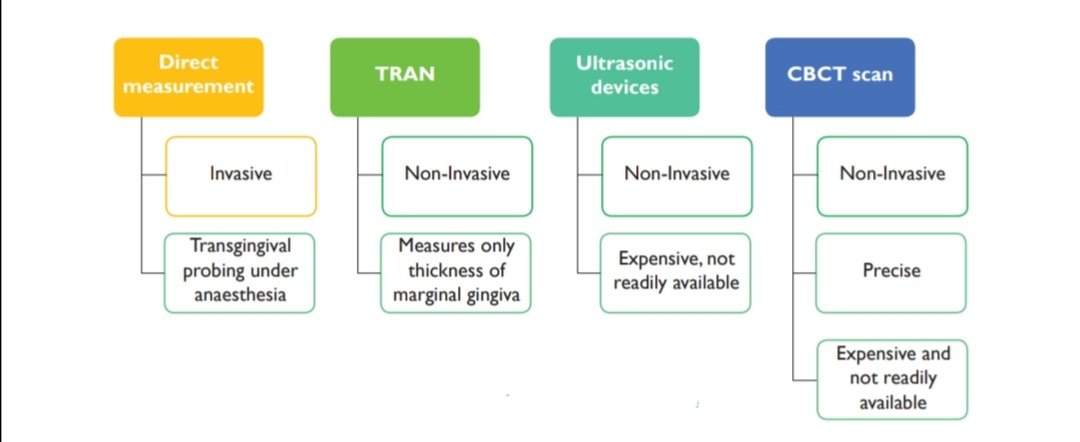
🔴Direct measurement:
▫️It involves Trans-gingival probing under local
anaesthesia.
▫️This procedure is commonly used for clinical
examination.
▫️It is performed during surgical procedures due to
its invasive nature.
▫️It involves Trans-gingival probing under local
anaesthesia.
▫️This procedure is commonly used for clinical
examination.
▫️It is performed during surgical procedures due to
its invasive nature.
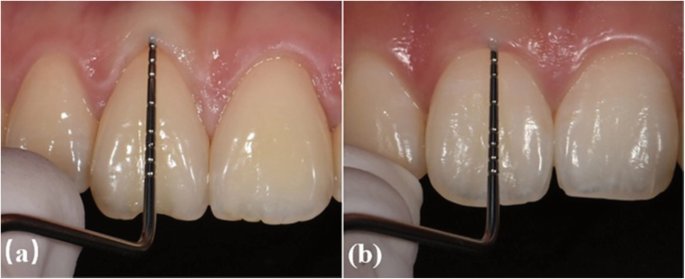
▫️In the direct method, the tissue thickness is
measured using a periodontal probe.
▫️When the thickness is less than 1.5 mm, it is
considered as thin.
measured using a periodontal probe.
▫️When the thickness is less than 1.5 mm, it is
considered as thin.
🔹Limitations include
• Precision of the probe, which is to the nearest
0.5 mm
• The angulation of the probe during probing
• Distortion of tissue during probing.
• Precision of the probe, which is to the nearest
0.5 mm
• The angulation of the probe during probing
• Distortion of tissue during probing.
🔴Probe transparency (TRAN) method:
▫️Placing a periodontal probe in the gingival sulcus
and observing the transparency is a simple method
to determine tissue thickness.
▫️Placing a periodontal probe in the gingival sulcus
and observing the transparency is a simple method
to determine tissue thickness.
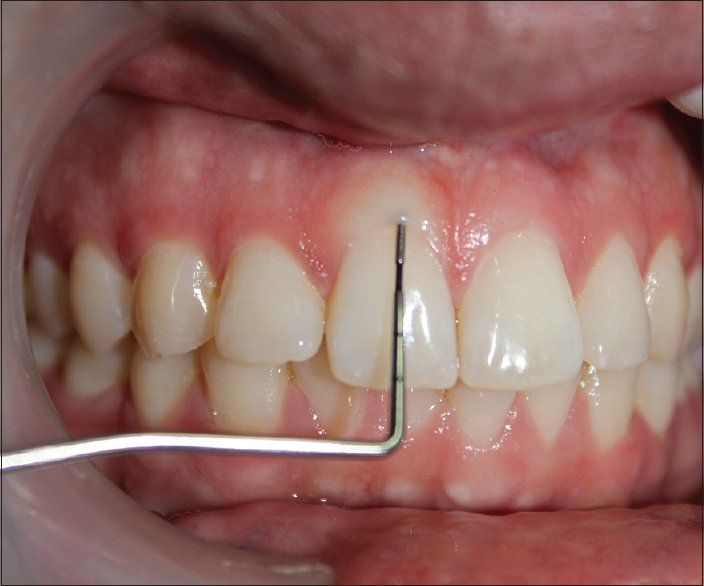
▫️The gingival biotype is considered thin if the
outline of the probe is shown through the gingival margin from the sulcus.
▫️This method can regularly be used in clinical
examination.
outline of the probe is shown through the gingival margin from the sulcus.
▫️This method can regularly be used in clinical
examination.
🔹Limitations:
• Lack of precision
• It gives only the thickness of the marginal
gingiva
• It cannot estimate the topography of
underlying osseous structures.
• Lack of precision
• It gives only the thickness of the marginal
gingiva
• It cannot estimate the topography of
underlying osseous structures.
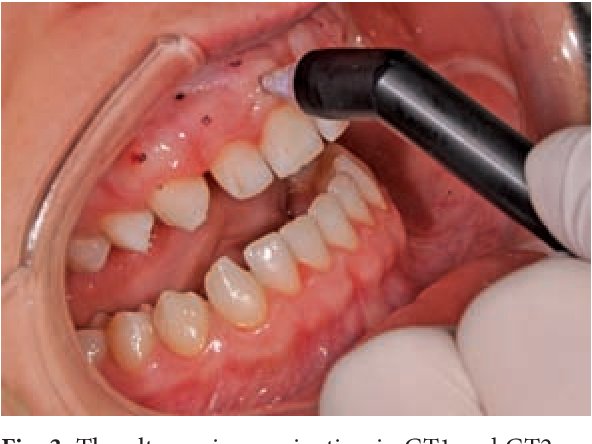
🔴Ultrasonic Method:
▫️ The use of ultrasonic devices to determine thethickness is a non-invasive method.
🔹Limitations include
• Difficulty in reproducing the measurements
• Unavailability
• High cost of the device.
▫️ The use of ultrasonic devices to determine thethickness is a non-invasive method.
🔹Limitations include
• Difficulty in reproducing the measurements
• Unavailability
• High cost of the device.
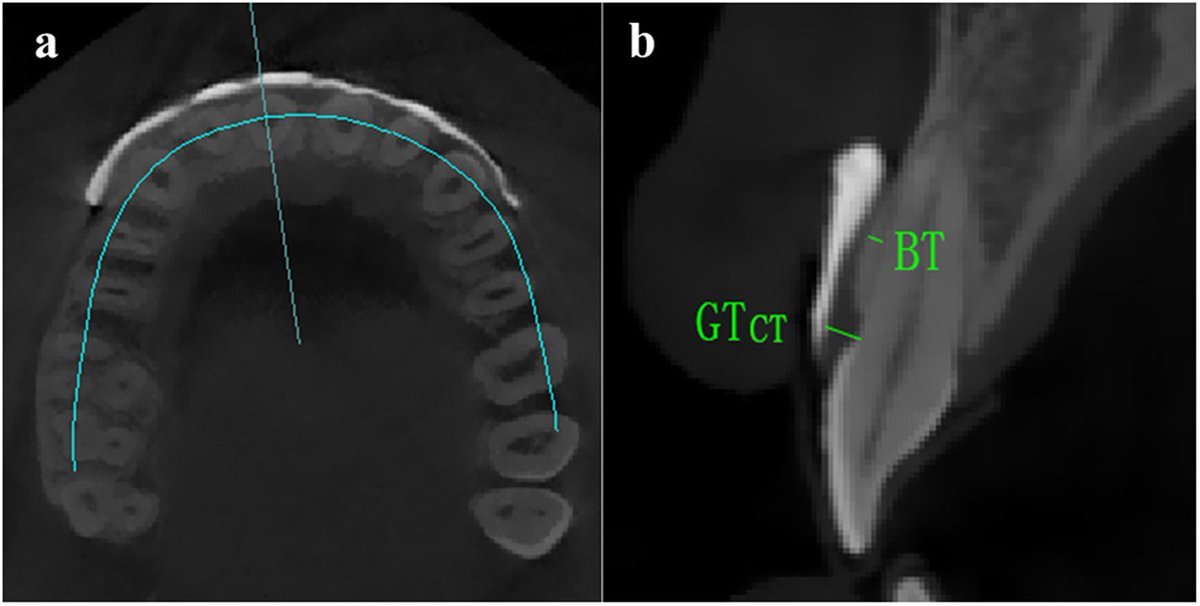
🔴Cone Beam Computed Tomography scan:
▫️Used to visualize and measure the thickness of
both hard and soft tissues.
▫️Fu et al,reported that CBCT measurements of
both bone and labial soft tissue thickness are
accurate and more objective than other direct
measurement method
▫️Used to visualize and measure the thickness of
both hard and soft tissues.
▫️Fu et al,reported that CBCT measurements of
both bone and labial soft tissue thickness are
accurate and more objective than other direct
measurement method
Loading suggestions...