

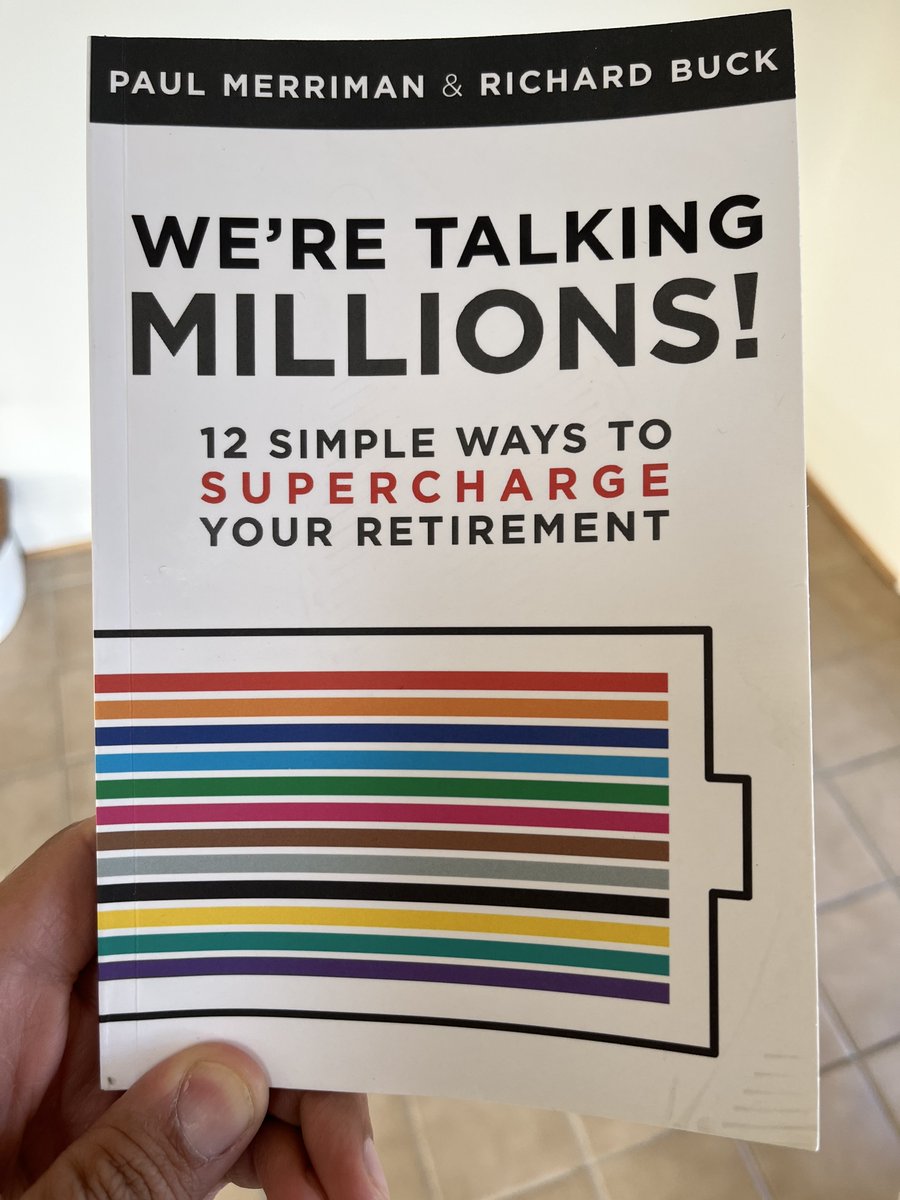
12 Small Steps with Enormous Payoffs
From We're Talking Millions
From We're Talking Millions
1. Save instead of spend
In a world where you are bombarded with opportunities to spend, saving consistently is harder than it sounds.
But it needs to be done. Here's how:
1. Pick a monthly saving percentage
2. Increase 1% every month
3. Repeat
In a world where you are bombarded with opportunities to spend, saving consistently is harder than it sounds.
But it needs to be done. Here's how:
1. Pick a monthly saving percentage
2. Increase 1% every month
3. Repeat
Delaying gratification early in your career is the best way to save a big chunk of money.
When you get more income, increase your savings rate, not your lifestyle.
When you get more income, increase your savings rate, not your lifestyle.
2. Save earlier rather than later
Giving your investments as much time as possible to grow is the key to wealth.
This can't be overstated enough.
But here is an easy example:
Giving your investments as much time as possible to grow is the key to wealth.
This can't be overstated enough.
But here is an easy example:
Assuming an 8% annual return:
-31 year old investing $5K/year will have $861,580 by age 65
-21 year old investing $5K/year will have $1.93 million by age 65!
Start early. Even small amounts make a difference.
-31 year old investing $5K/year will have $861,580 by age 65
-21 year old investing $5K/year will have $1.93 million by age 65!
Start early. Even small amounts make a difference.
3. Invest in stocks instead of bonds
Stocks are more volatile than bonds. No doubt about that.
But for long term wealth building, stocks are vastly superior.
Stocks are more volatile than bonds. No doubt about that.
But for long term wealth building, stocks are vastly superior.
4. Own a lot of stocks, not just a few
By owning individual stocks, you open yourself up to enormous risk.
Focus on index funds, which are baskets of stocks.
If you still want to pick solo stocks, use a small percentage of your income to reduce risk.
By owning individual stocks, you open yourself up to enormous risk.
Focus on index funds, which are baskets of stocks.
If you still want to pick solo stocks, use a small percentage of your income to reduce risk.
5. Cut investment expenses
Every dollar you save in expenses is one more dollar for your investment return.
Index funds are very inexpensive. You can even get index funds with no expenses nowadays (check out $FZROX).
Every dollar you save in expenses is one more dollar for your investment return.
Index funds are very inexpensive. You can even get index funds with no expenses nowadays (check out $FZROX).
6. Passive index funds
There is very little role for actively managed mutual funds nowadays. Here's why:
-Passive index funds usually cost half as much
-Passive index funds almost always have better performance
Passive index funds should be the backbone of your portfolio.
There is very little role for actively managed mutual funds nowadays. Here's why:
-Passive index funds usually cost half as much
-Passive index funds almost always have better performance
Passive index funds should be the backbone of your portfolio.
7. Buy small companies
Small cap stocks are the key to huge growth.
In any 40 year period from 1928-2019, small company stocks returned 13.8% on average.
S&P stocks grew by 11%. That difference can mean hundreds of thousands of dollars or more over the long term.
Small cap stocks are the key to huge growth.
In any 40 year period from 1928-2019, small company stocks returned 13.8% on average.
S&P stocks grew by 11%. That difference can mean hundreds of thousands of dollars or more over the long term.
8. Buy value stocks
Value stocks are usually priced lower than growth stocks.
It doesn't mean they're bad companies. Just that they're undervalued for whatever reason.
Luckily, you can get an index fund of value stocks pretty easily nowadays.
Value stocks are usually priced lower than growth stocks.
It doesn't mean they're bad companies. Just that they're undervalued for whatever reason.
Luckily, you can get an index fund of value stocks pretty easily nowadays.
9. Buy and hold
Buy low and sell high. That's the key to making money.
But when volatility and emotions are high, humans end up selling. It's typical fight or flight stuff.
But if you have a strong portfolio, hold on through tough times. That's when the big money is made.
Buy low and sell high. That's the key to making money.
But when volatility and emotions are high, humans end up selling. It's typical fight or flight stuff.
But if you have a strong portfolio, hold on through tough times. That's when the big money is made.
10. Dollar cost average (DCA)
DCA is investing a set amount of money at regular intervals. Here's why it's great:
-It guarantees your cost of shares is less than what you paid for them.
-If you stick to DCA it means you won't be trying to time the market.
DCA is investing a set amount of money at regular intervals. Here's why it's great:
-It guarantees your cost of shares is less than what you paid for them.
-If you stick to DCA it means you won't be trying to time the market.
11. Use tax advantaged accounts
Don't just throw all of your investments in a brokerage account. Your taxes will be a wild ride every year.
Instead, put what you can in IRA's, 401k's and HSA's. They will all allow tax free growth.
And that's the key to LONG TERM growth.
Don't just throw all of your investments in a brokerage account. Your taxes will be a wild ride every year.
Instead, put what you can in IRA's, 401k's and HSA's. They will all allow tax free growth.
And that's the key to LONG TERM growth.
12. Use a Target Date Fund (TDF)
TDF's make investing set it and forget it.
They provide diversification, low expenses (Vanguard or Fidelity) and automatic rebalancing.
A great place to start, or even finish, your investing journey.
TDF's make investing set it and forget it.
They provide diversification, low expenses (Vanguard or Fidelity) and automatic rebalancing.
A great place to start, or even finish, your investing journey.
Do all these 12 steps over decades, and you're almost guaranteed to be financially independent.
RT the first post to share these investing truths with others.
For weekly financial insights, click below to join my newsletter and get a free investment cheat sheet:
fsfmoney.com
For weekly financial insights, click below to join my newsletter and get a free investment cheat sheet:
fsfmoney.com
Loading suggestions...