

In 1995, Charlie Munger gave a legendary speech at Harvard University.
Charlie spent over one hour explaining the Psychology of Human Misjudgement and the tendencies that mislead us.
Here are 4 of those tendencies that will improve your Decision Making 👇🏼
Charlie spent over one hour explaining the Psychology of Human Misjudgement and the tendencies that mislead us.
Here are 4 of those tendencies that will improve your Decision Making 👇🏼
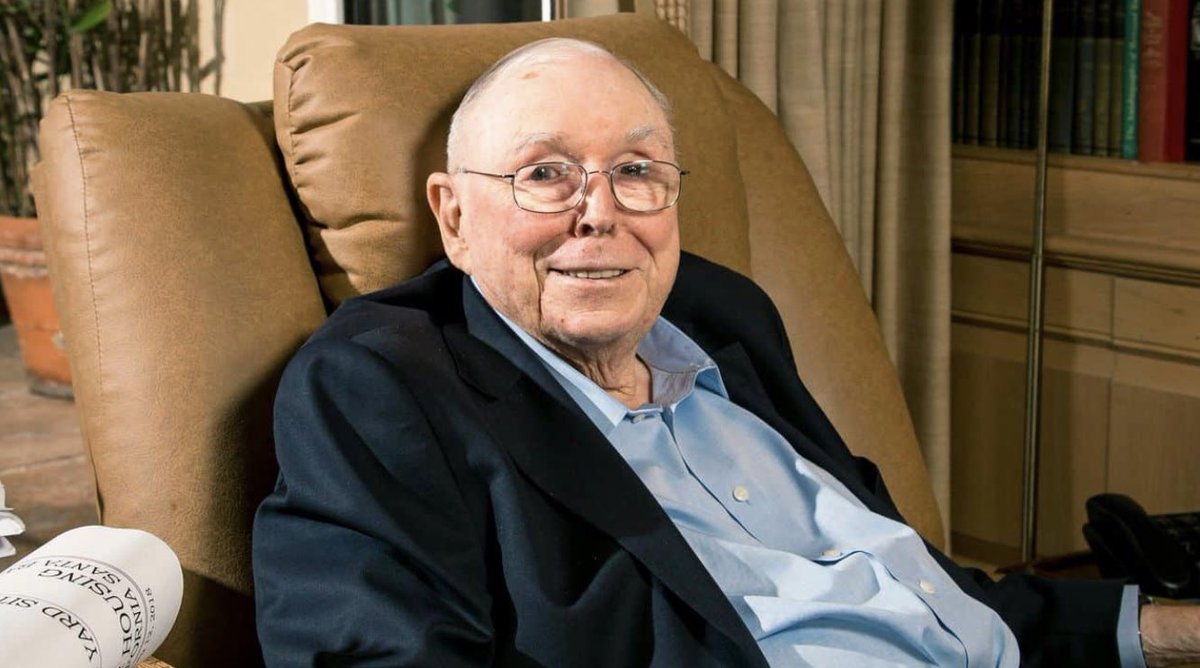
1. Doubt Avoidance Tendency
We spend very little time in doubt.
For us, it’s generally more important to make a decision, even if it might be wrong than to be in doubt.
Like almost all of these tendencies, the reasons lie in our evolution.
We spend very little time in doubt.
For us, it’s generally more important to make a decision, even if it might be wrong than to be in doubt.
Like almost all of these tendencies, the reasons lie in our evolution.
A sure way to get killed as a prey animal is to overthink the decision to run away.
Even today, being in doubt makes us feel insecure.
We rather take a position that we can then rationalize than say, “I don’t know.”
Even today, being in doubt makes us feel insecure.
We rather take a position that we can then rationalize than say, “I don’t know.”
How to resist this Tendency:
Start with being aware this tendency exists.
Then, as soon as you realize you are in doubt, acknowledge that fact and take your time.
Most importantly, learn to be confident with being in doubt.
Today, there’s no reason for hasty decisions.
Start with being aware this tendency exists.
Then, as soon as you realize you are in doubt, acknowledge that fact and take your time.
Most importantly, learn to be confident with being in doubt.
Today, there’s no reason for hasty decisions.
2. Reason-Respecting Tendency
The Reason-Respecting Tendency is close to Munger’s Mental Model about the most important question in the world: Why?
Do you remember sitting in class and asking: “Will we ever need this in our lives?”
The Reason-Respecting Tendency is close to Munger’s Mental Model about the most important question in the world: Why?
Do you remember sitting in class and asking: “Will we ever need this in our lives?”
If we feel like we don’t, it's likely that we won’t learn it.
In contrast, learning something that we know will be useful is pretty easy.
All we need is a reason. You can practically use this tendency in your life.
Whatever you need to do, note why you have to do it.
In contrast, learning something that we know will be useful is pretty easy.
All we need is a reason. You can practically use this tendency in your life.
Whatever you need to do, note why you have to do it.
This tendency is so strong that we even accept complete nonsense as a reason.
An experiment showed that someone could skip the line at a printer by explaining: “I have to make some copies.”
So, use this tendency to your advantage but don’t be fooled through it by others.
An experiment showed that someone could skip the line at a printer by explaining: “I have to make some copies.”
So, use this tendency to your advantage but don’t be fooled through it by others.
3. Inconsistency Avoidance Tendency
We all do stuff that we know isn’t good for us.
Somehow we are programmed to be reluctant to change that.
Thus, these things often turn out to become habits.
We all do stuff that we know isn’t good for us.
Somehow we are programmed to be reluctant to change that.
Thus, these things often turn out to become habits.
And once a habit is created, it is tough to break it.
That’s the power behind habits.
But besides having problems overcoming such bad habits, there’s also a tendency that might help us do exactly that.
Our tendency to avoid inconsistencies.
That’s the power behind habits.
But besides having problems overcoming such bad habits, there’s also a tendency that might help us do exactly that.
Our tendency to avoid inconsistencies.
We dislike being perceived as inconsistent because this implies other negative connotated behaviors and character traits.
Thus, our tendency to avoid inconsistencies can help us prevent bad habits.
Thus, our tendency to avoid inconsistencies can help us prevent bad habits.
By making ourselves aware that, for example, smoking would be inconsistent with our choice to live healthy, we are more likely to not even start in the first place.
“An ounce of prevention is worth a pound of cure.”
- Benjamin Franklin
“An ounce of prevention is worth a pound of cure.”
- Benjamin Franklin
4. Envy/Jealousy Tendency
“It is not greed that drives the world but envy.”
Most people would feel okay earning an average income when their neighbors earn the same or even less.
“It is not greed that drives the world but envy.”
Most people would feel okay earning an average income when their neighbors earn the same or even less.
But those same people would feel a lot worse if they made $10,000 more but less than their neighbors.
We often attribute the same characteristics to the people around us as we do to ourselves.
So it’s likely that we assume people around us are equally talented.
We often attribute the same characteristics to the people around us as we do to ourselves.
So it’s likely that we assume people around us are equally talented.
If that’s the case, we feel unfairly treated if they make more money than we do.
And nobody likes to be treated unfairly.
Accordingly, we start to develop negative feelings towards those people.
And nobody likes to be treated unfairly.
Accordingly, we start to develop negative feelings towards those people.
It’s very hard to overcome this tendency.
Once again, the only long-term solution is to build strong confidence and accept that your success depends above all on yourself.
Otherwise, you’ll always point to the people around you and feel unfairly treated.
Once again, the only long-term solution is to build strong confidence and accept that your success depends above all on yourself.
Otherwise, you’ll always point to the people around you and feel unfairly treated.
That's it for today.
I hope you learned something and enjoyed reading this Thread.
If that's the case, why not Retweet and Like it so that other people find it too.
For more content about Investing and Psychology, feel free to follow me @MnkeDaniel
Cheers!
I hope you learned something and enjoyed reading this Thread.
If that's the case, why not Retweet and Like it so that other people find it too.
For more content about Investing and Psychology, feel free to follow me @MnkeDaniel
Cheers!
Loading suggestions...