
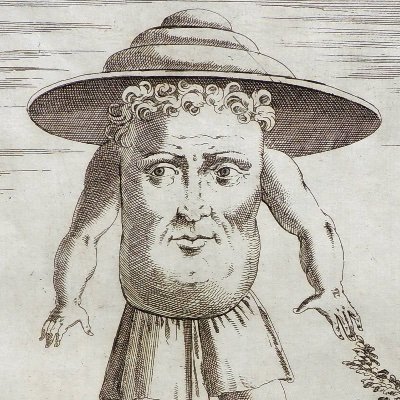
"I am a collector of rare books. I gotta lotta books."
Enjoying this video from fellow bibliophile and rare book collector @machinegunkelly.
facebook.com
Enjoying this video from fellow bibliophile and rare book collector @machinegunkelly.
facebook.com
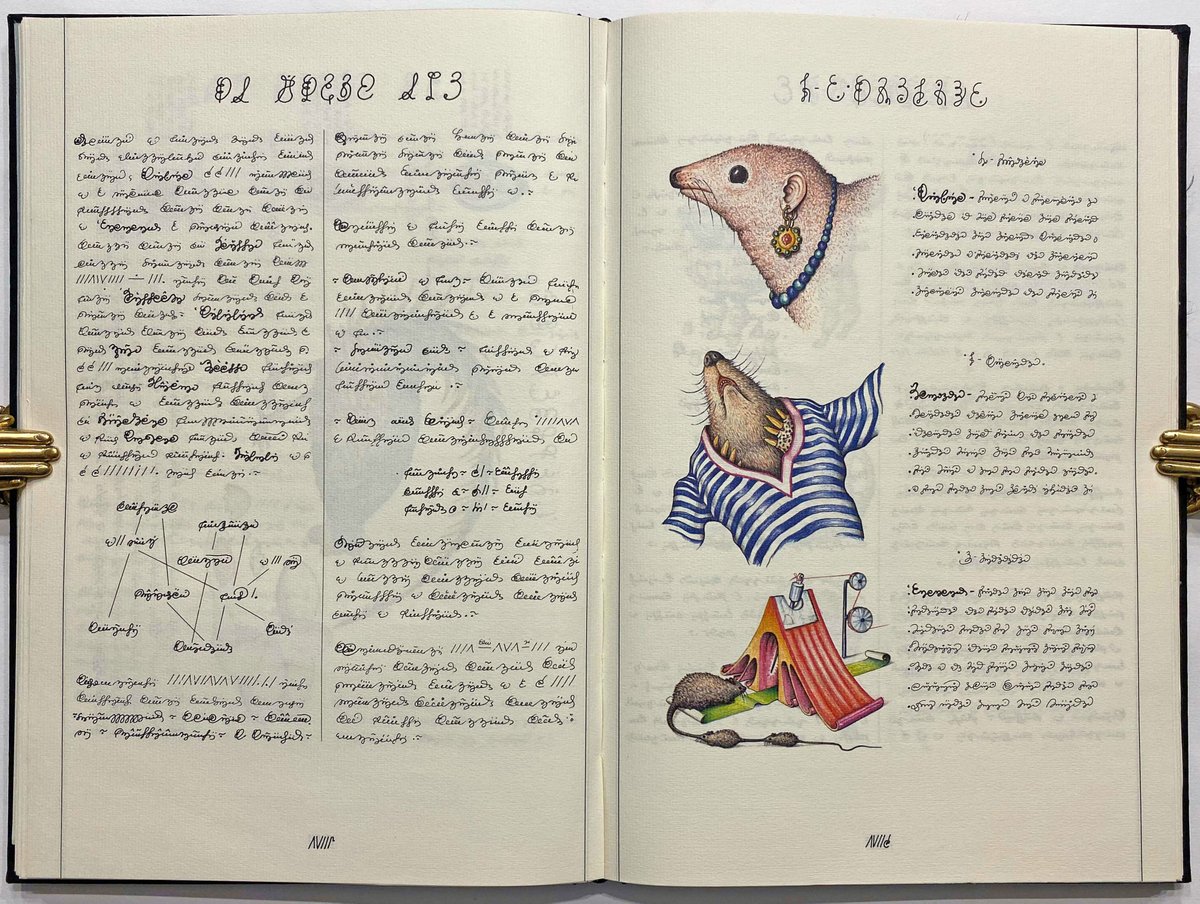
The "entire encyclopedia made up of an imaginary language" mentioned by @machinegunkelly is of course Luigi Serafini's remarkable Codex Seraphinianus.


Codex Seraphinianus, originally published in 1981, is an illustrated encyclopedia of an imaginary world, created by the Italian artist, architect and industrial designer Luigi Serafini during 30 months from 1976 to 1978. It is approximately 360 pages (depending on edition). 3/


As @machinegunkelly mentions in his furry pink loo, Codex Seraphinianus is written in a cipher alphabet in an imaginary constructed language. Originally published in Italy, it has been released in several countries. 4/
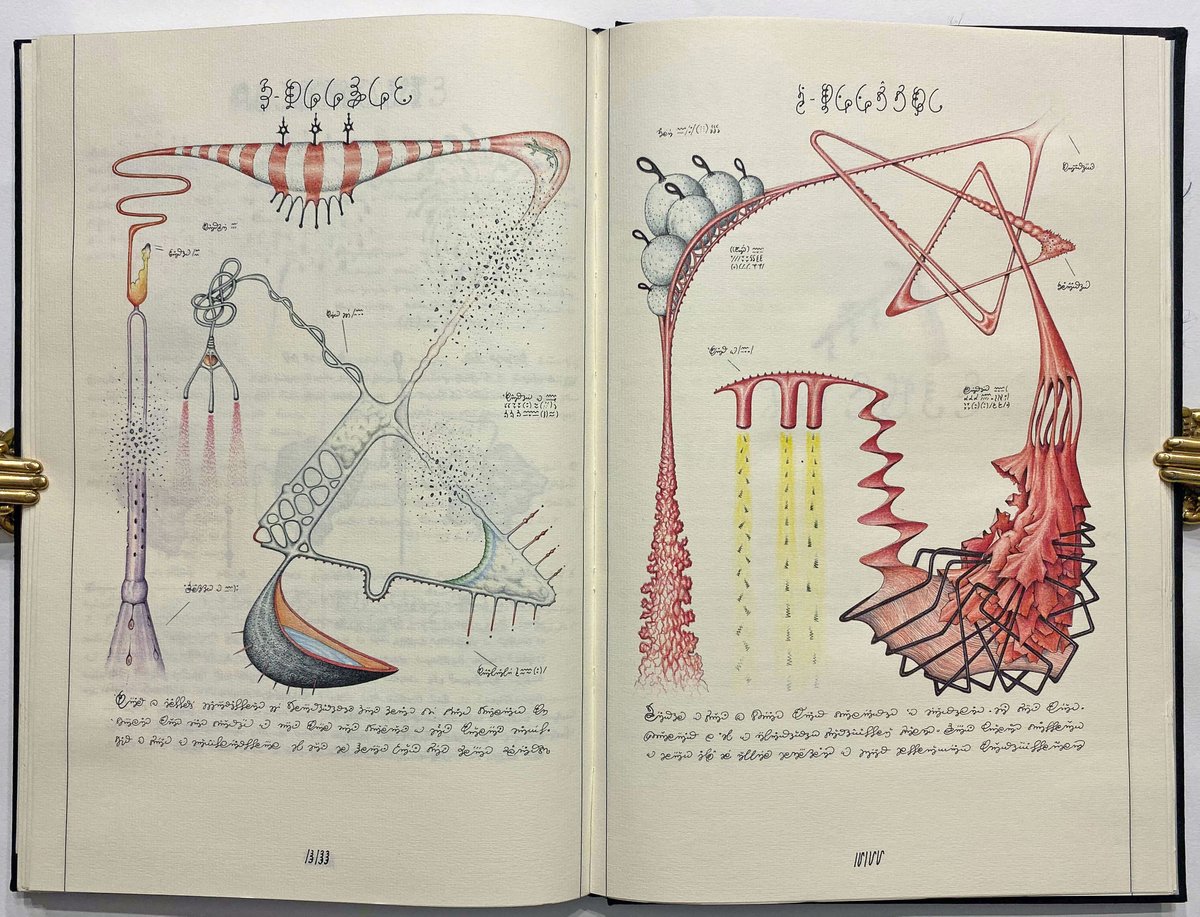
The Codex is an encyclopedia in manuscript with copious hand-drawn, colored-pencil illustrations of bizarre and fantastical flora, fauna, anatomies, fashions, and foods. 5/
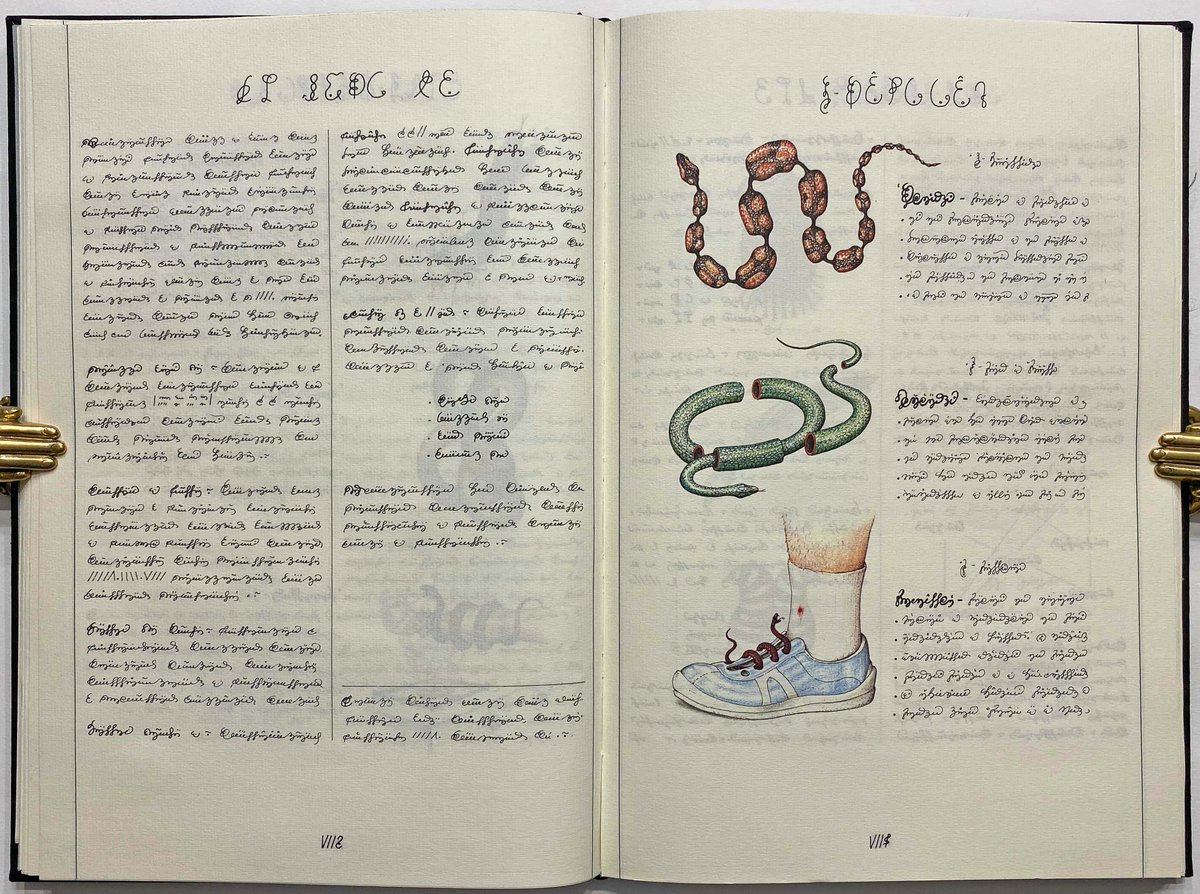
The illustrations are often surreal parodies of things in the real world, such as a bleeding fruit, a plant that grows into roughly the shape of a chair and is subsequently made into one, a copulating couple that metamorphoses into an alligator. 6/
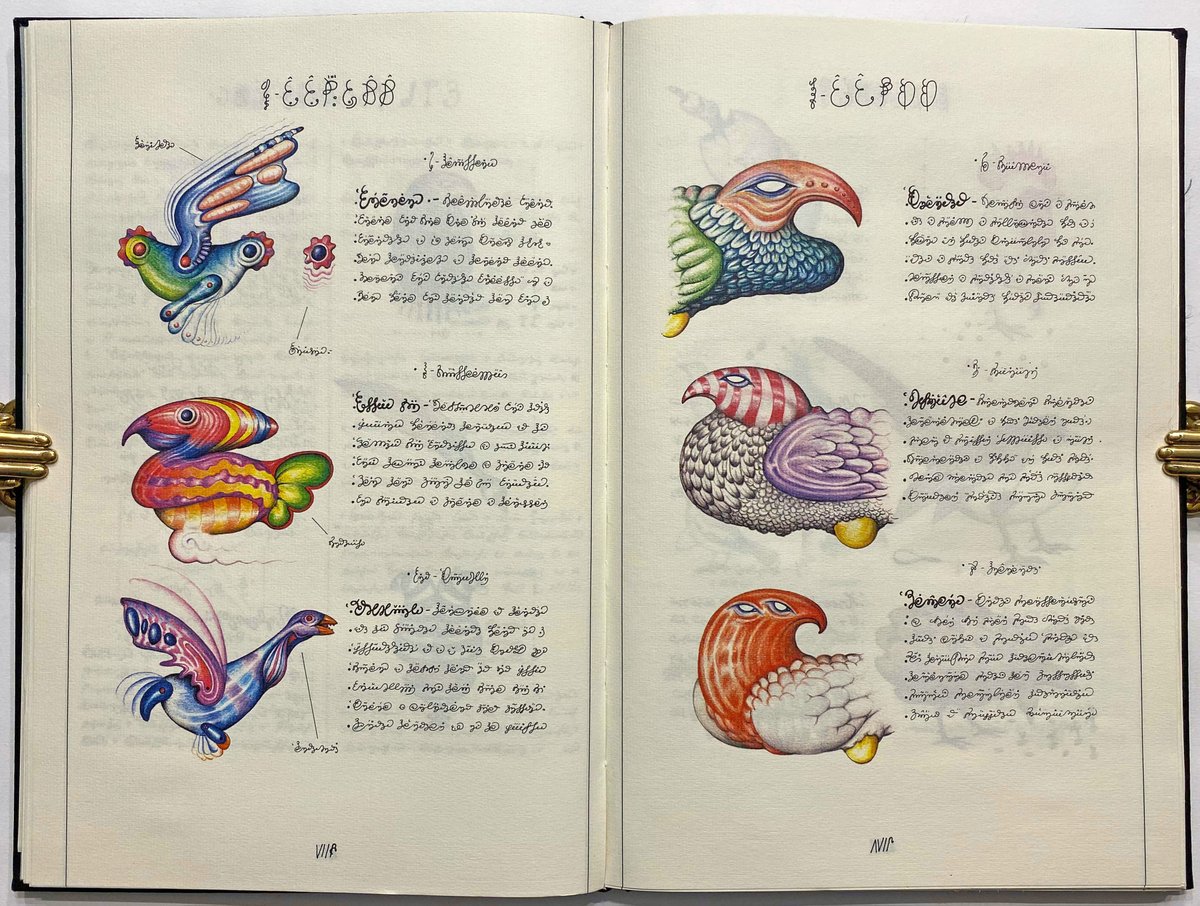
Others depict odd, apparently senseless machines, often with delicate appearances. Some illustrations are recognizable as maps or human faces; while others are mostly or totally abstract. Nearly all of the illustrations are brightly coloured and highly detailed. 7/
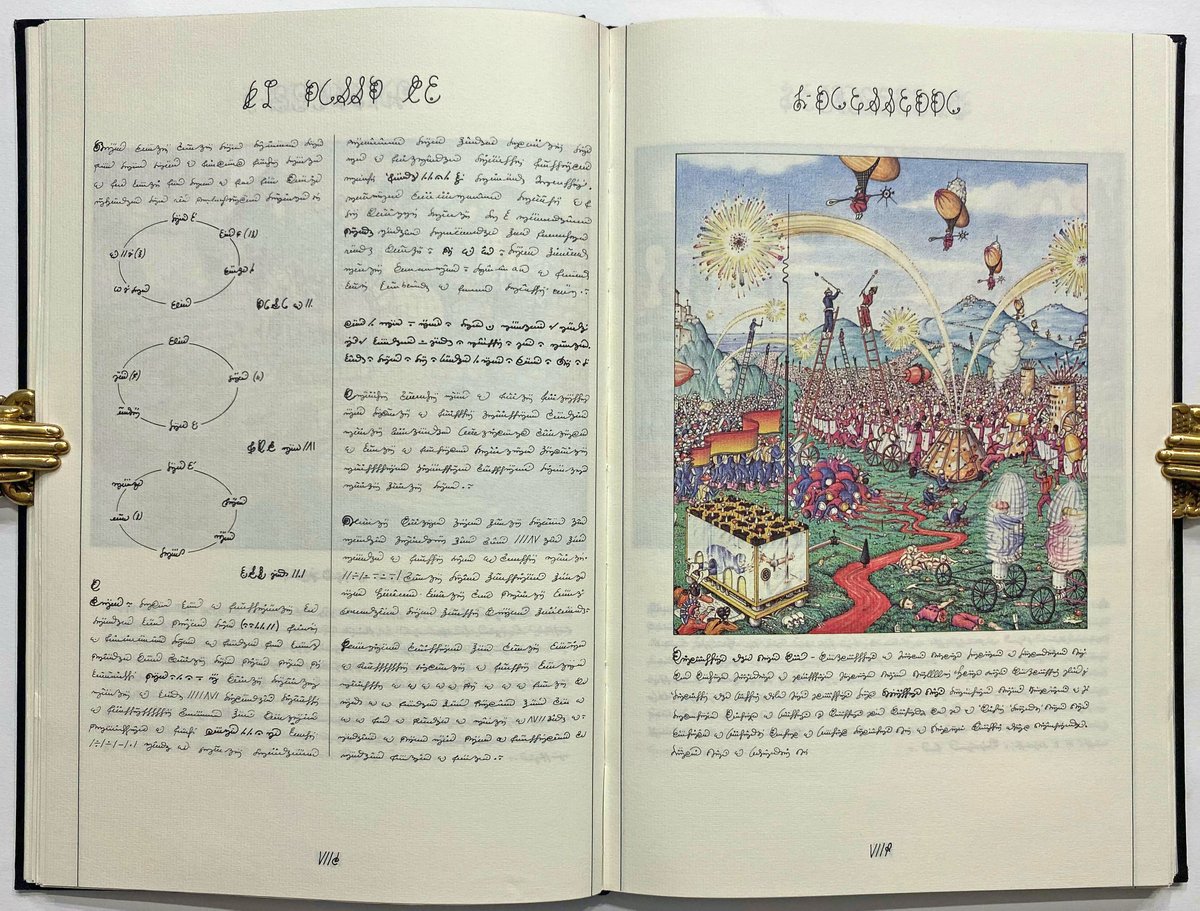
The writing system ismodeled on Western writing systems, with left-to-right writing in rows and an alphabet with uppercase and lowercase letters, some of which double as numerals. Some letters appear only at the beginning or end of words, similar to Semitic writing systems. 8/
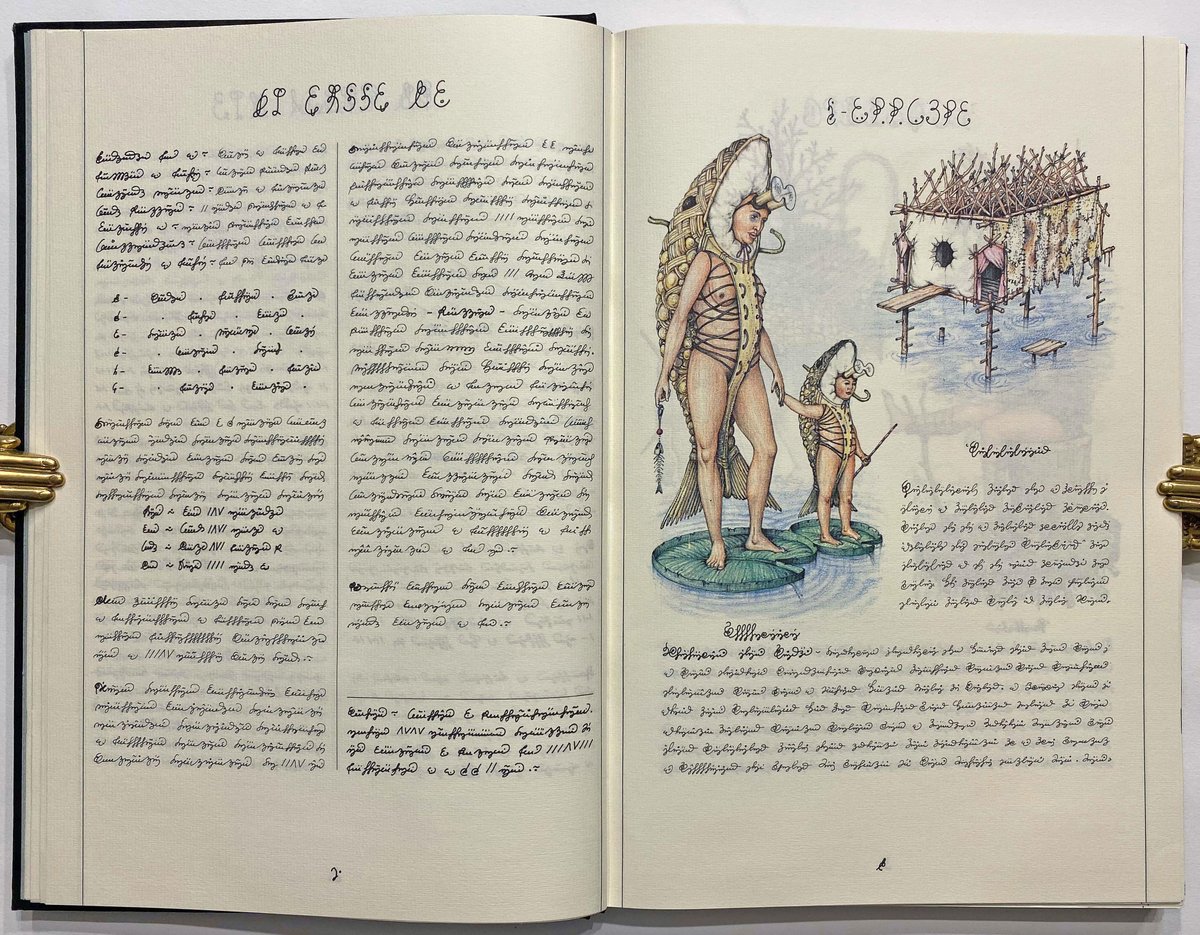
The book's "language" has defied analysis for decades. The page-numbering system, however, has been cracked (apparently independently) by Allan C. Wechsler and Bulgarian linguist Ivan Derzhanski, among others, and is a variation of base 21. 9/
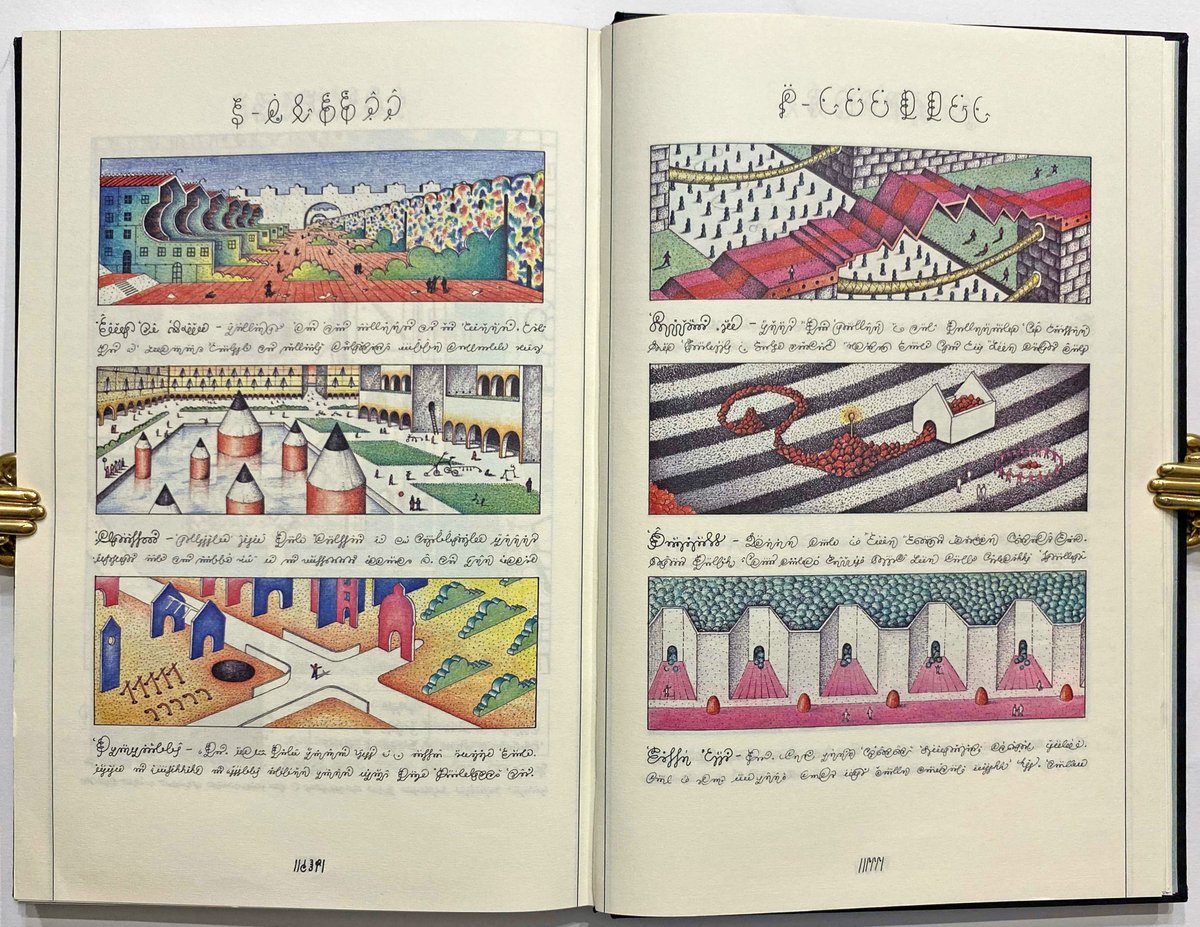
In a talk at the Oxford University Society of Bibliophiles on 11 May 2009, Serafini stated that there is no meaning behind the Codex's script, which is asemic; that his experience in writing it was similar to automatic writing.... 10/
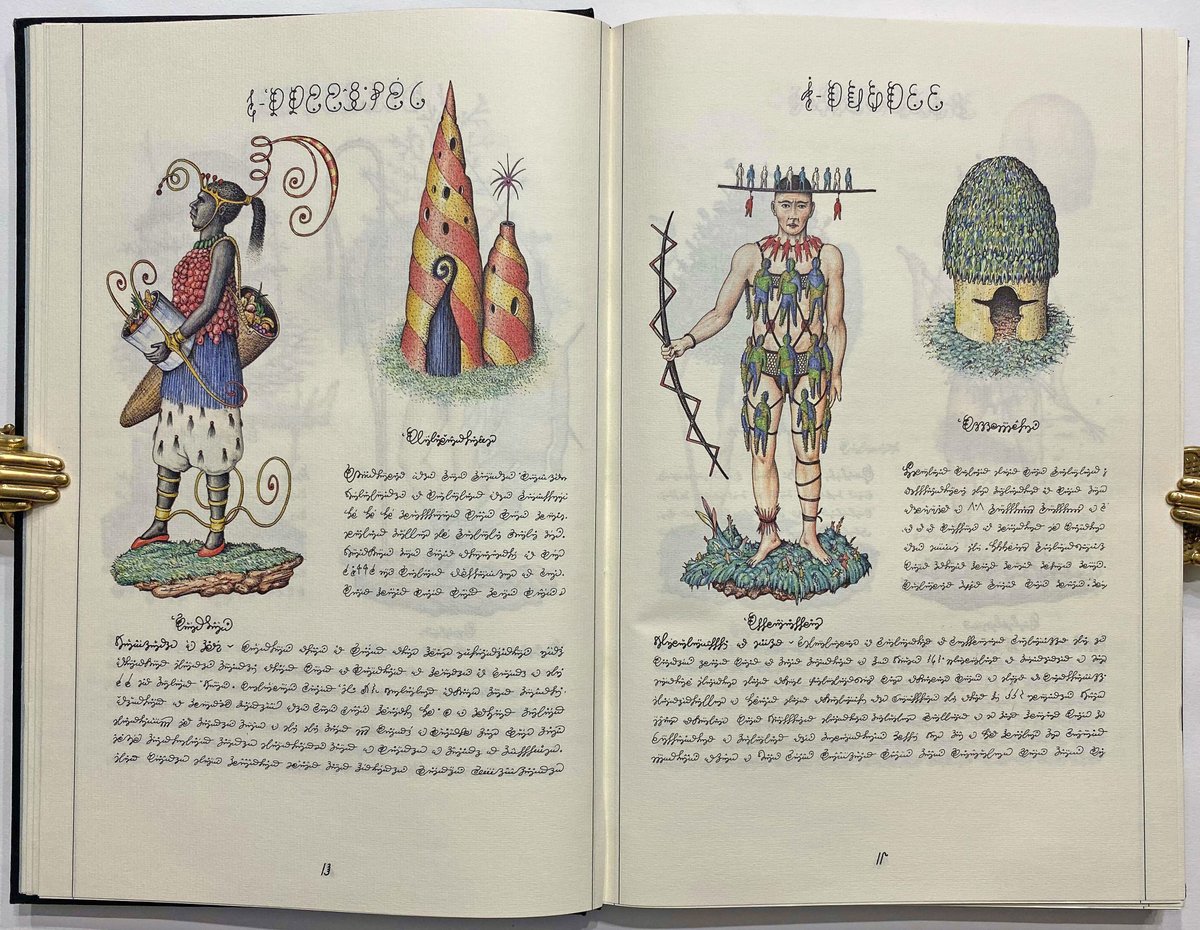
..... and that what he wanted his alphabet to convey was the sensation children feel with books they cannot yet understand, although they see that the writing makes sense for adults. 11/
Loading suggestions...