

The Ethereum merge is one of the biggest crypto events of 2022.
🧵: In this thread, I'll cover:
- What the changes mean for $ETH
- How it affects other L1s
- Why the $ETH merge could be a market catalyst
- If $ETH can finally flip #bitcoin
Let's dive in. 👇
🧵: In this thread, I'll cover:
- What the changes mean for $ETH
- How it affects other L1s
- Why the $ETH merge could be a market catalyst
- If $ETH can finally flip #bitcoin
Let's dive in. 👇
2/ Ethereum is a layer 1 blockchain which facilitates dAPPS and smart contracts.
$ETH is the token powering the network, used to pay gas fees in order to facilitate transactions.
$ETH is the token powering the network, used to pay gas fees in order to facilitate transactions.
3/ But $ETH has a major problem. It operates on a proof of work (POW) consensus, meaning miners must validate transactions.
POW enables a TPS of 13, however demand for the network has increased rapidly since inception. Transactions now exceed 1m+ a day:
POW enables a TPS of 13, however demand for the network has increased rapidly since inception. Transactions now exceed 1m+ a day:
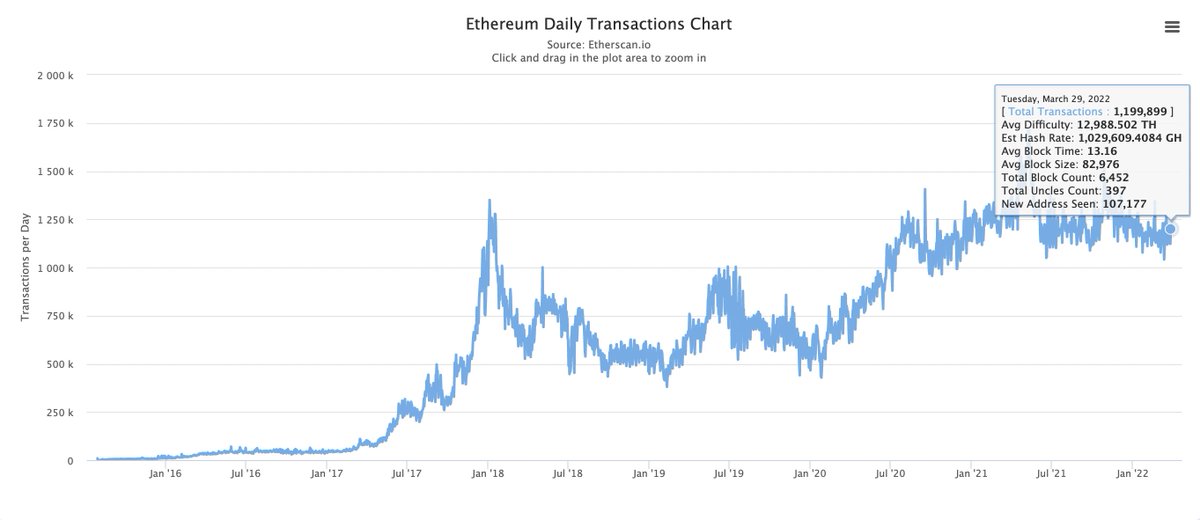
4/ This increase in network usage has led to extremely slow transaction speeds and high gas fees. The POW consensus limits Ethereum's ability to effectively scale.
The network simply can't handle the demand. But the market had a solution, alternate L1s or "ETH killers".
The network simply can't handle the demand. But the market had a solution, alternate L1s or "ETH killers".
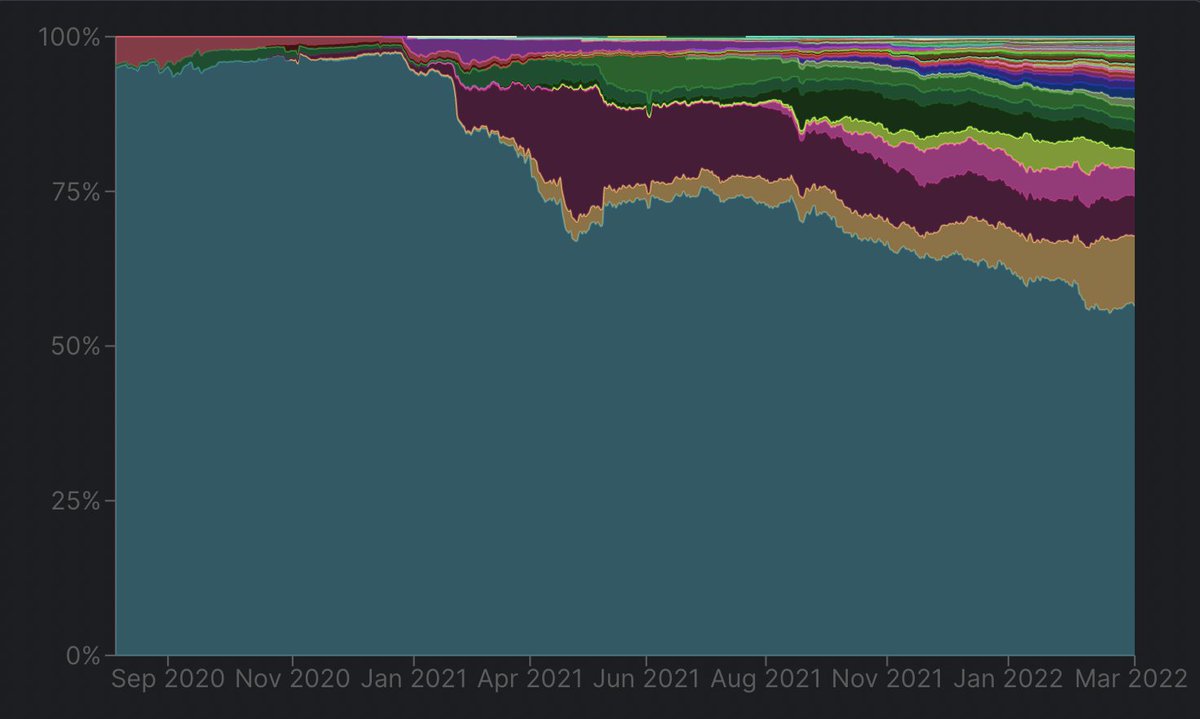
5/ These layer 1s have had a rapid rise as many users have flocked to faster and cheaper chains.
$ETH's market share by TVL on DeFi Llama has declined from 100% to 55% in the space of 2 years.
$ETH's market share by TVL on DeFi Llama has declined from 100% to 55% in the space of 2 years.
6/ But in the meantime, the Ethereum team has been busy at work to find a solution.
They arrived at a sensible conclusion: $ETH must transition from POW to POS in order to increase scalability, speed and decrease cost.
Enter "The Merge". 👇
They arrived at a sensible conclusion: $ETH must transition from POW to POS in order to increase scalability, speed and decrease cost.
Enter "The Merge". 👇
7/ The term $ETH 2.0 was popularised, but Ethereum decided to scrap the terminology as it was causing confusion.
The major upgrade can be split up into 3 categories:
1. Beacon chain (completed)
2. The merge (June 2022)
3. Sharding (2023+)
The major upgrade can be split up into 3 categories:
1. Beacon chain (completed)
2. The merge (June 2022)
3. Sharding (2023+)
8/ The merge is occurring in June 2022 and can be defined as Ethereum's official transition from POW to POS.
It can be broken down into 2 major categories: Deflation, and rewards:
1. $ETH issuance is declining from 15k/day to 1.5k/day. This represents a 90% cut to emissions.
It can be broken down into 2 major categories: Deflation, and rewards:
1. $ETH issuance is declining from 15k/day to 1.5k/day. This represents a 90% cut to emissions.
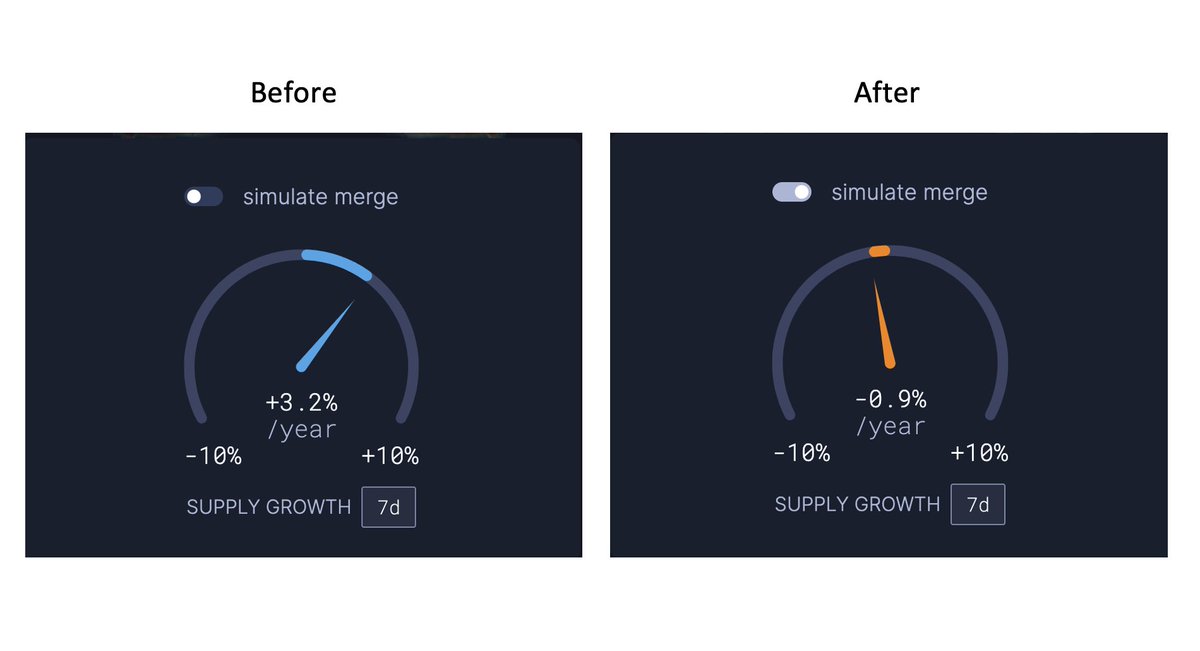
9/ This decline in emissions is very positive, as currently $ETH's issuance is causing a +3.2% yearly inflation.
After the merge, $ETH supply will decrease by -0.9% (based on 7d supply data).
$ETH will finally be deflationary. ✅
After the merge, $ETH supply will decrease by -0.9% (based on 7d supply data).
$ETH will finally be deflationary. ✅
10/ Secondly, rewards for POS validators are substantially increasing. Staking rewards are projected to be ~10% post-merge.
11/ Interestingly, 10.2M (almost 10%) of $ETH are already being staked.
The combination of tokens being staked, and the decrease in emissions could potentially lead to a supply shock.
The combination of tokens being staked, and the decrease in emissions could potentially lead to a supply shock.
12/ One of the biggest drivers of future crypto growth is institutional adoption.
With environmental concerns becoming a key stakeholder consideration in the modern era, blockchains with environmentally sustainable models have an advantage over other chains.
With environmental concerns becoming a key stakeholder consideration in the modern era, blockchains with environmentally sustainable models have an advantage over other chains.
13/ Ethereum ticks this box, as the change to POS will mean it uses -99.95% less energy.
14/ So with all these positive changes for $ETH, how will this affect other L1s? Here's my thesis:
- The success of Ethereum is paramount for the industry as its still a magnet for new liquidity.
- However, these changes are only specific to tokenomics, not scalability.
- The success of Ethereum is paramount for the industry as its still a magnet for new liquidity.
- However, these changes are only specific to tokenomics, not scalability.
15/ Scalability increases through sharding will be a long process, not currently expected to be implemented until at least 2023.
This gives other L1s enough time to generate network effect. We've seen this evidenced via the mass growth in $LUNA, $AVAX and $FTM transactions.
This gives other L1s enough time to generate network effect. We've seen this evidenced via the mass growth in $LUNA, $AVAX and $FTM transactions.
16/ Even if $ETH manages to scale, with the mass adoption of crypto there is still a massive need for L1 power.
The future is almost undoubtably multi-chain. This includes L0s, L1s, and L2 scaling solutions.
The future is almost undoubtably multi-chain. This includes L0s, L1s, and L2 scaling solutions.
17/ Based on the data we have at our disposal, let me attempt answer the question on many investor's lips: Can $ETH finally overtake $BTC?
18/ One thing $ETH has going for it is network effect.
If these changes can onboard new users (which they likely will due to cheaper fees and faster speeds), then price is sure to follow.
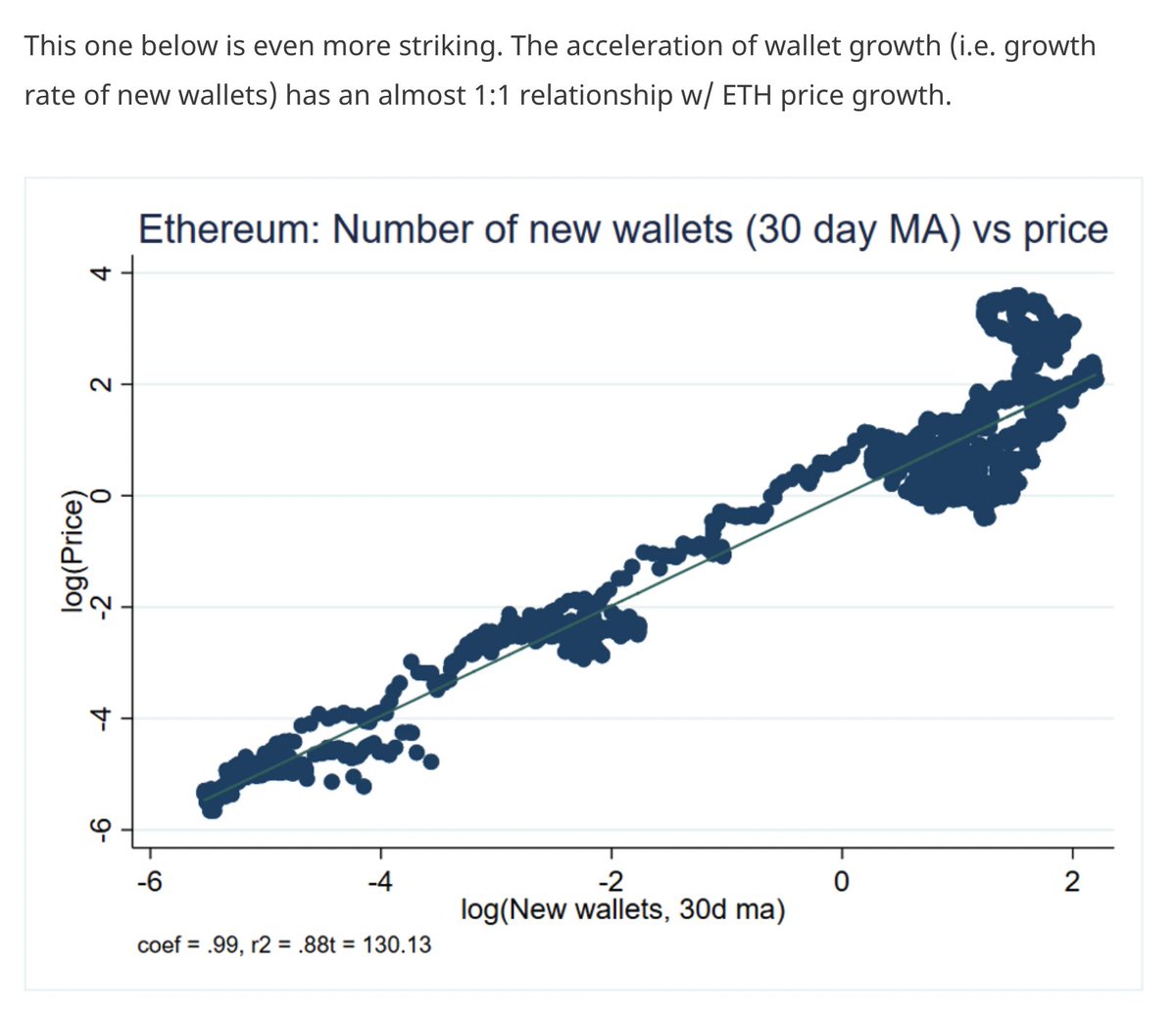
We can observe that the price growth correlates 1:1 with address growth.
If these changes can onboard new users (which they likely will due to cheaper fees and faster speeds), then price is sure to follow.
We can observe that the price growth correlates 1:1 with address growth.
19/ As previously discussed, the supply side changes are also very positive.
$ETH as a newly deflationary asset, in tandem with increased staking, will reduce the circulating supply, likely resulting in a price increase.
$ETH as a newly deflationary asset, in tandem with increased staking, will reduce the circulating supply, likely resulting in a price increase.
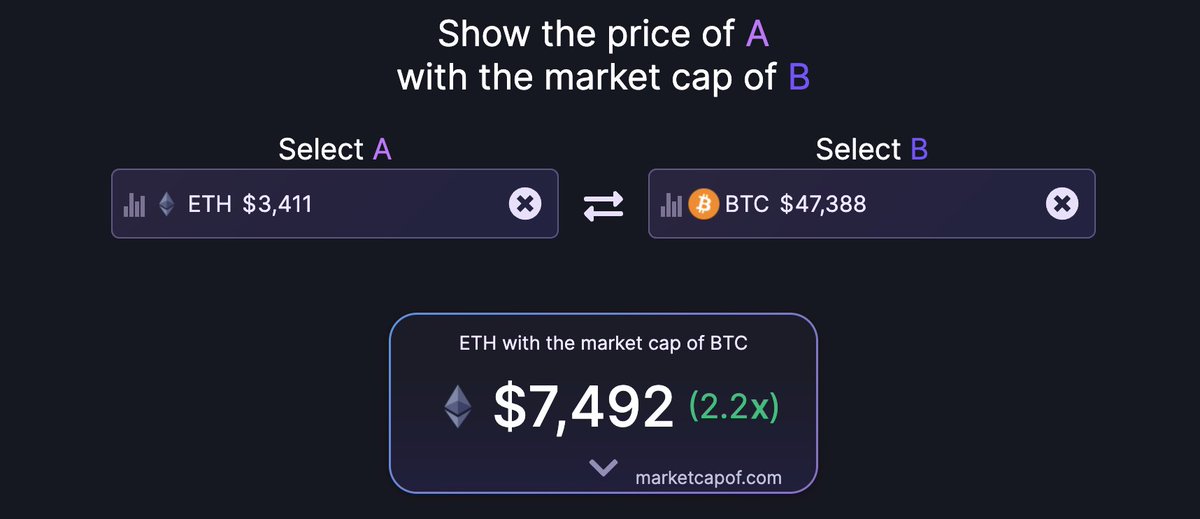
20/ But it still needs to 2.2x to reach the market cap of $BTC, which is unlikely in the short term if #Bitcoin continues to gain adoption.
However long term, it's very conceivable that $ETH competes for top spot, considering network effect and institutional adoption.
However long term, it's very conceivable that $ETH competes for top spot, considering network effect and institutional adoption.
21/ #Bitcion is still king in my opinion. It has no direct competition as a store of value asset, whereas $ETH has competition amongst the other L1s.
Nonetheless, the future of $ETH is very exciting and I'm intrigued to see how the merge plays out.
Nonetheless, the future of $ETH is very exciting and I'm intrigued to see how the merge plays out.
22/ These are some of the other resources I used during my research:
Ethereum: ethereum.org
$ETH supply data: ultrasound.money
@lifiprotocol:
@shivsakhuja:
Ethereum: ethereum.org
$ETH supply data: ultrasound.money
@lifiprotocol:
@shivsakhuja:

23/ If you want to learn more about the $ETH merge and its effect on cryptocurrency, I covered this topic in more depth on today's show:
youtu.be
youtu.be
Loading suggestions...