

WARNING! BDSM CONTENT 🙄😅
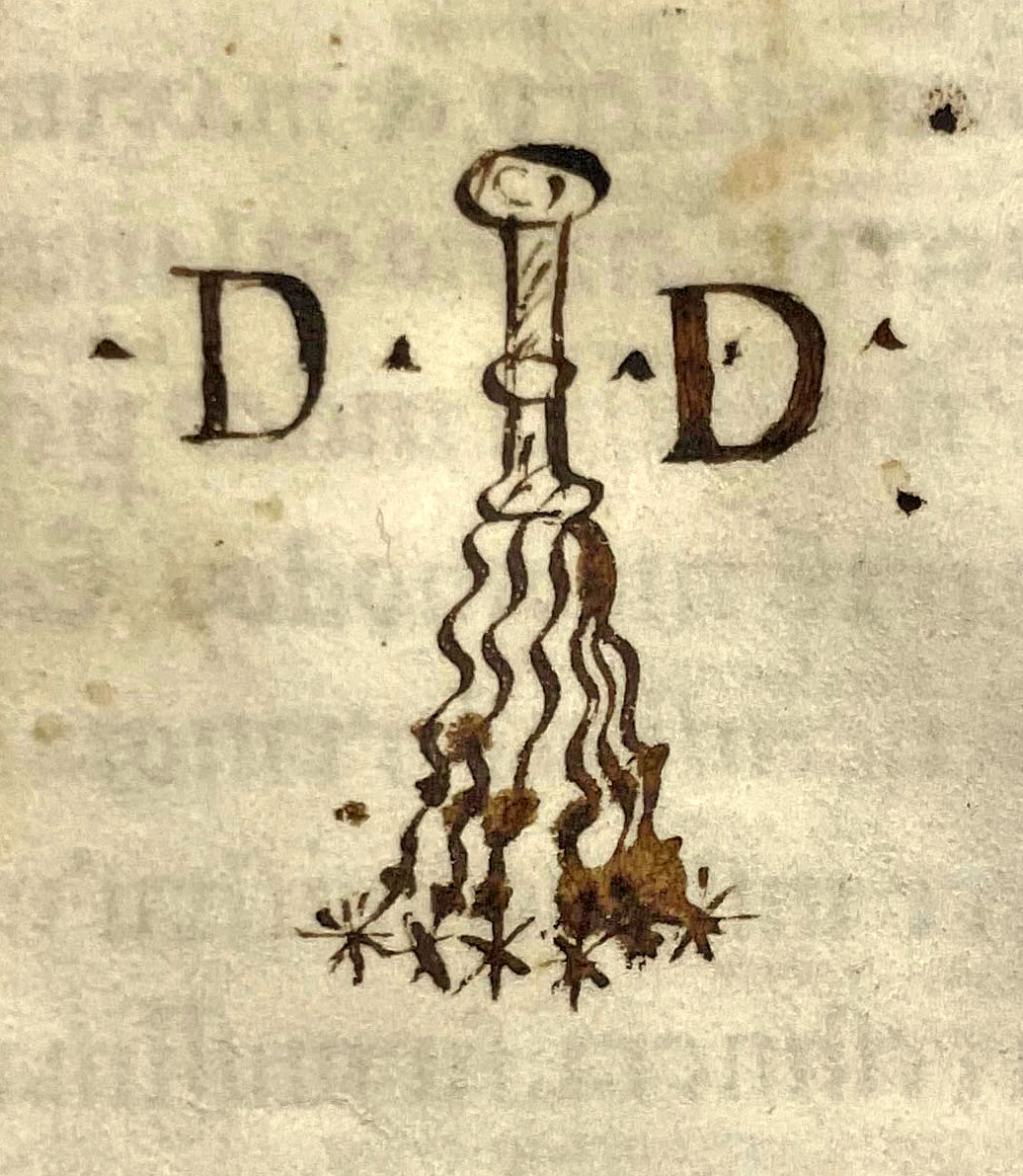
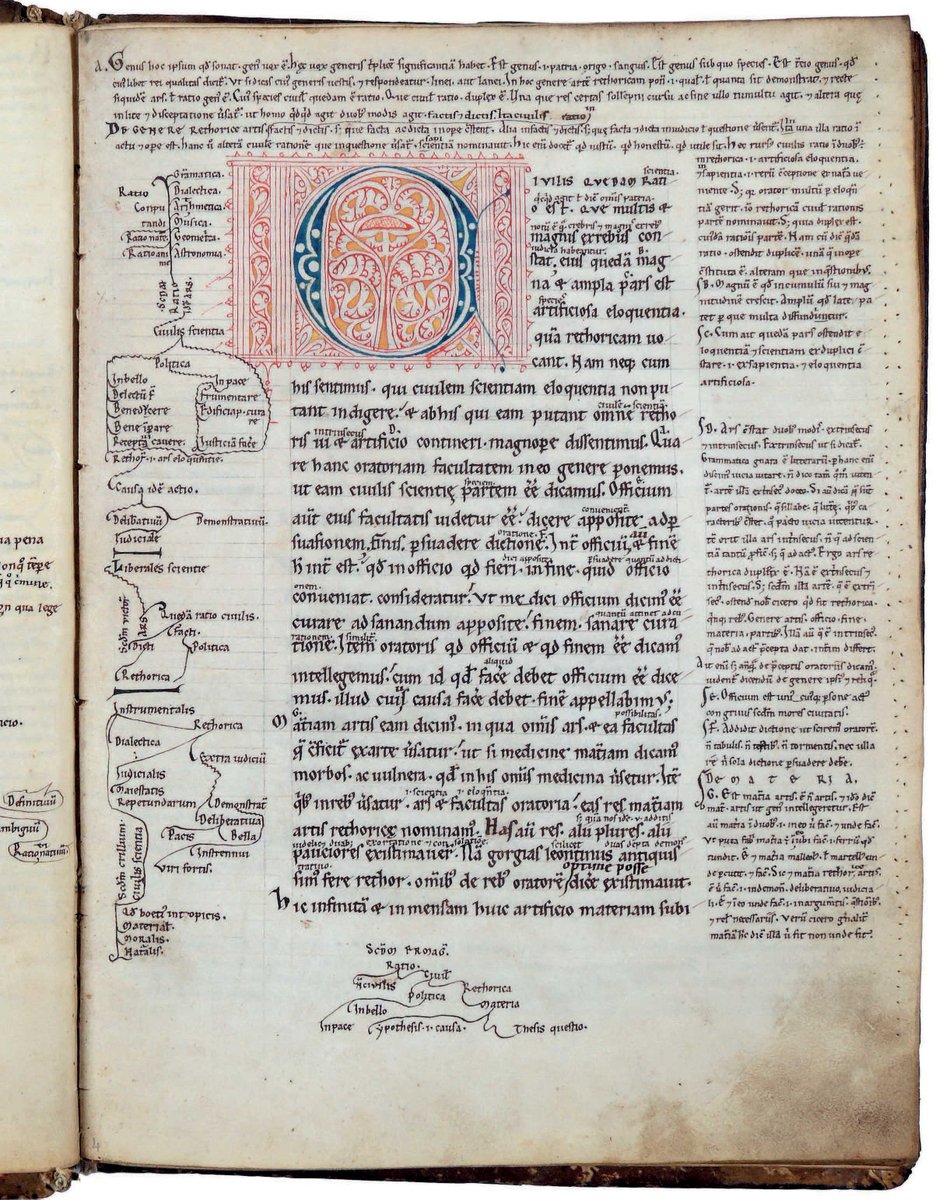
A late 11th cent. codex of Cicero's De inventione [Rhetorica Vetus], with the inscription "Domus Dei Tridenti" and two drawings of a scourge or flagella, indicating the Church of the Domus Dei in Trento, the seat of the 'Flagellantium Sodalitium'. 1/
A late 11th cent. codex of Cicero's De inventione [Rhetorica Vetus], with the inscription "Domus Dei Tridenti" and two drawings of a scourge or flagella, indicating the Church of the Domus Dei in Trento, the seat of the 'Flagellantium Sodalitium'. 1/
![WARNING! BDSM CONTENT 🙄😅
A late 11th cent. codex of Cicero's De inventione [Rhetorica Vetus], with t...](https://pbs.twimg.com/media/FPaLgaFX0AAroas.jpg)
![WARNING! BDSM CONTENT 🙄😅
A late 11th cent. codex of Cicero's De inventione [Rhetorica Vetus], with t...](https://pbs.twimg.com/media/FPaLi3oXMAMp9kK.jpg)
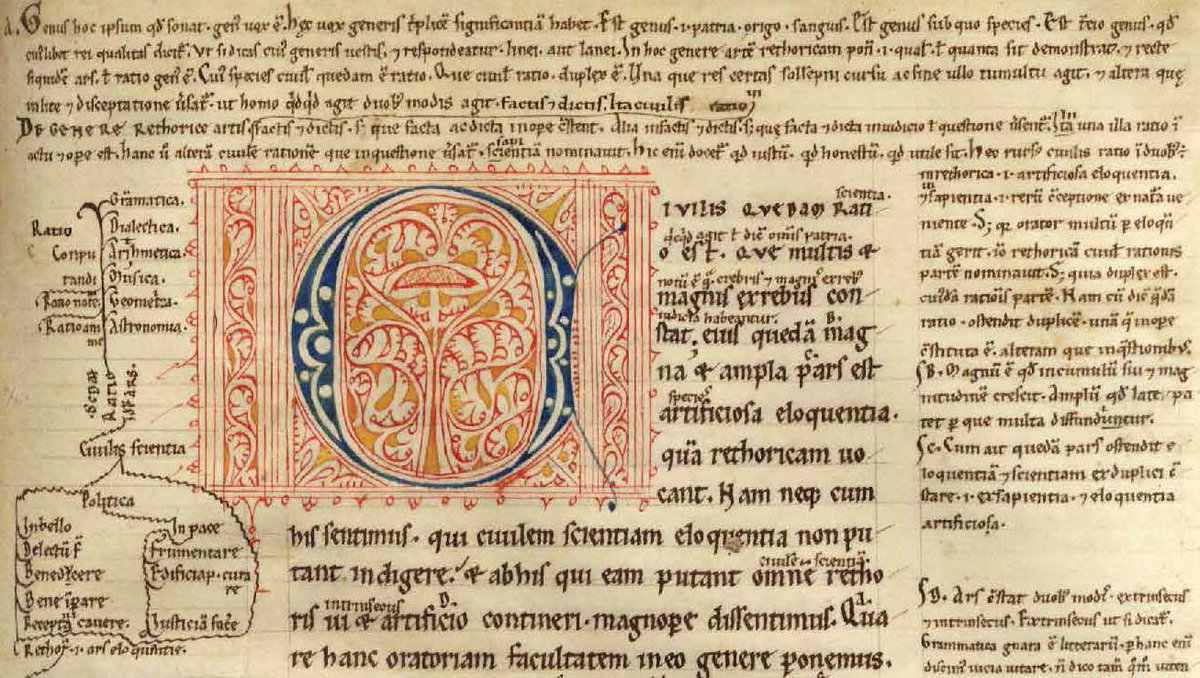
A closeup of one of the decorated opening initials (also showing the glossed text in the same hand as the principle scribe), and another drawing of the scourge or flagella symbol of the "Domus Dei Tridenti" flagellant order. 2/
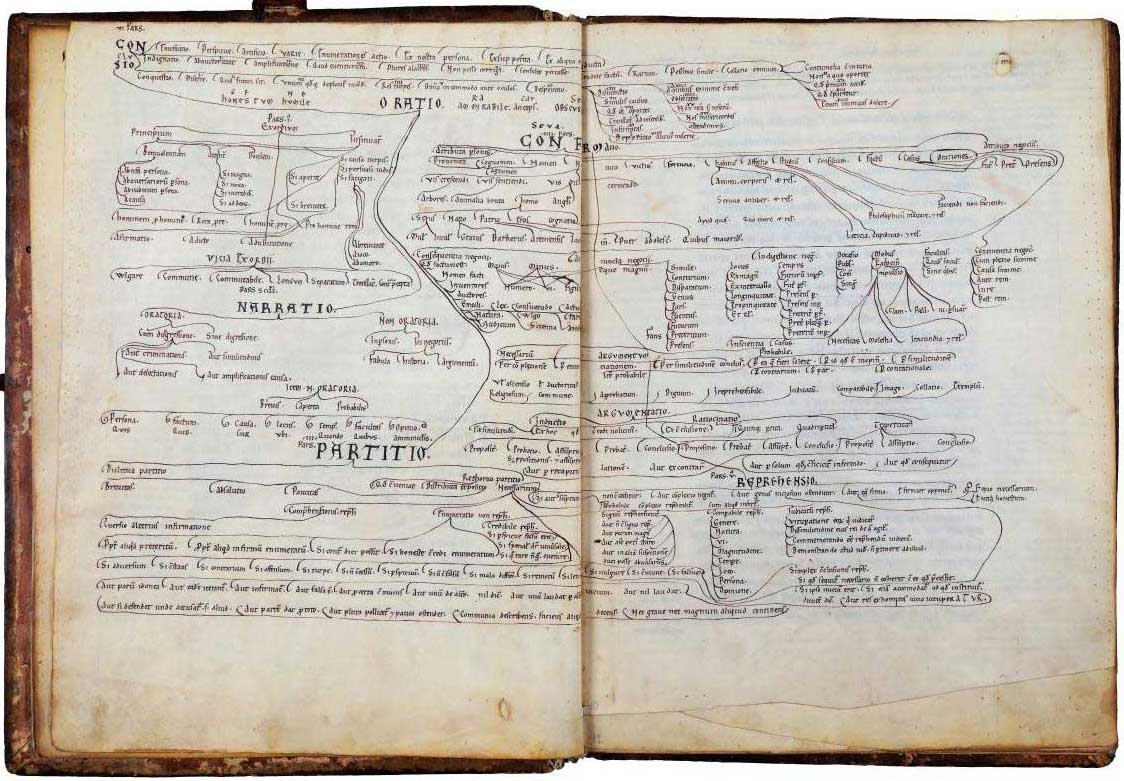
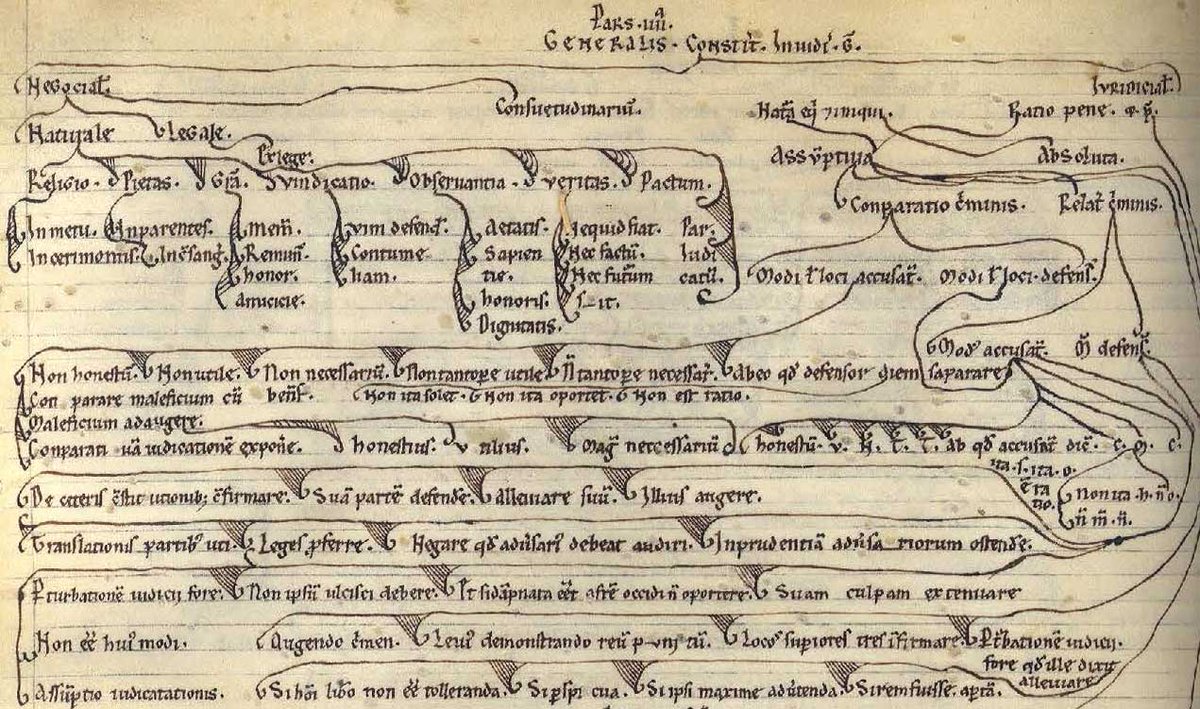
Perhaps most remarkable in this manuscript are the numerous magnificent full-page schematic diagrams. These elaborate diagrams are contemporaneous with the rest of manuscript; they were executed in the same hand of the copyist who wrote the first 33 leaves of the text. 3/
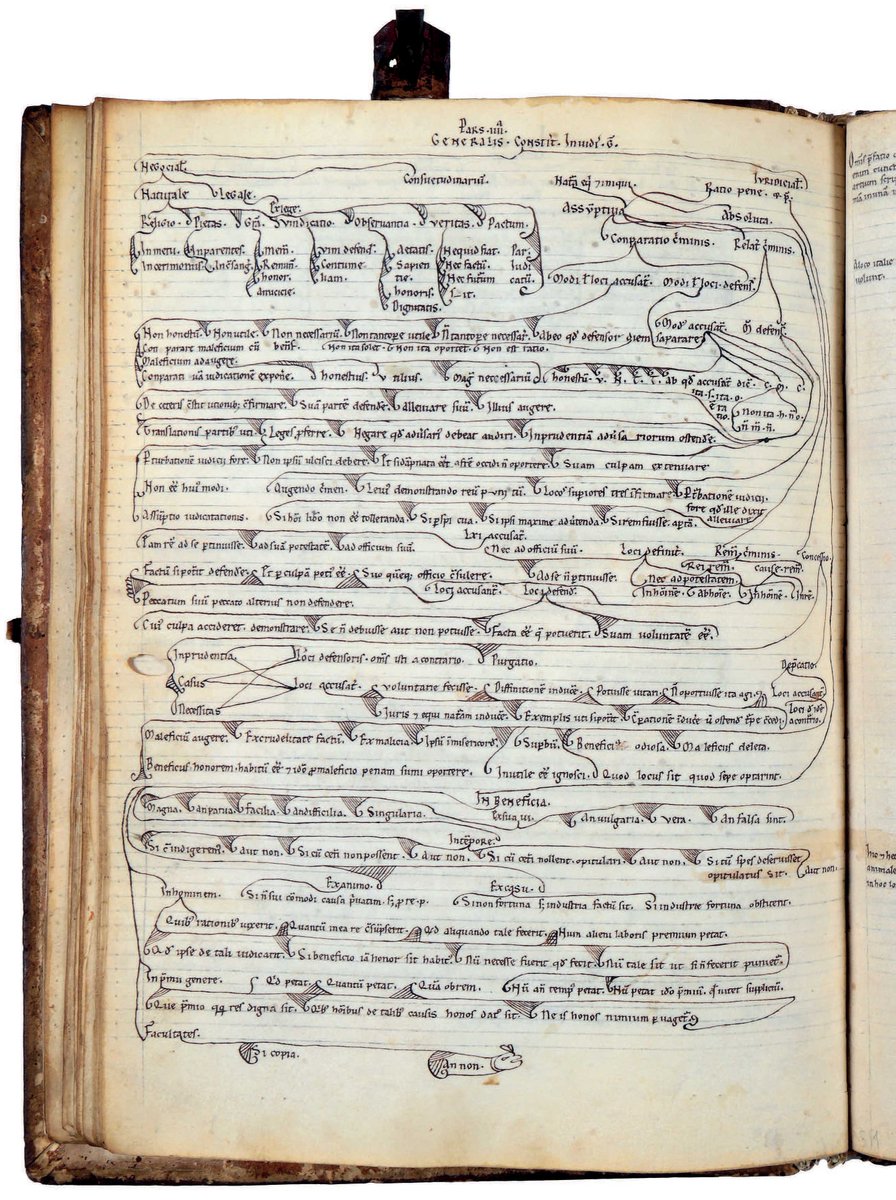
Another of the diagramatic pages in more detail. 4/
In the margins of fols 33v-41v are 1398 leonine hexameters, not relating to Cicero’s text, comprising two poems: the first is a theological composition in 1,202 verses by Meginardus (fl. 12th cent. South Germany), the second is a hymn to the beginning of spring in 196 verses. 5/
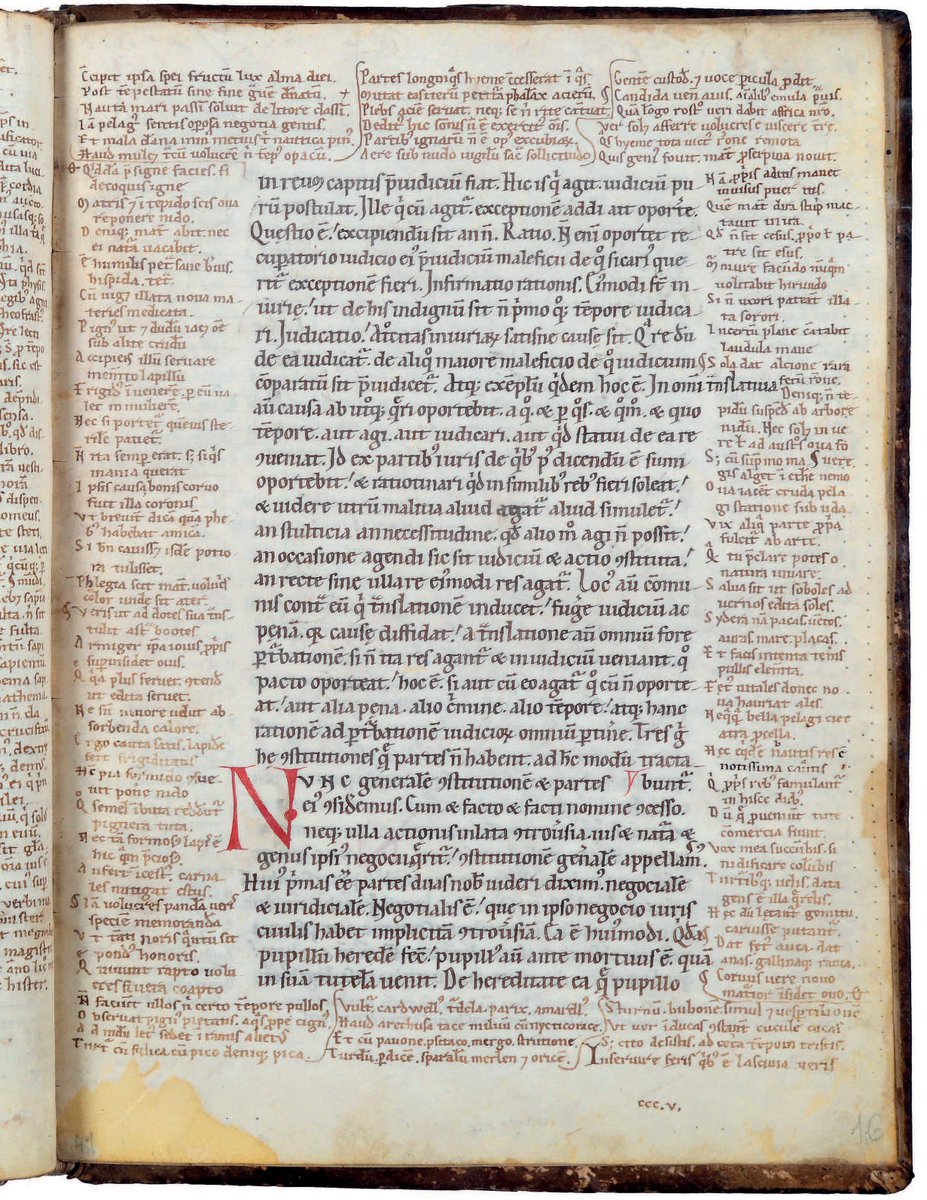
The greatest part of the poems copied in this manuscript are hitherto unrecorded. 6/

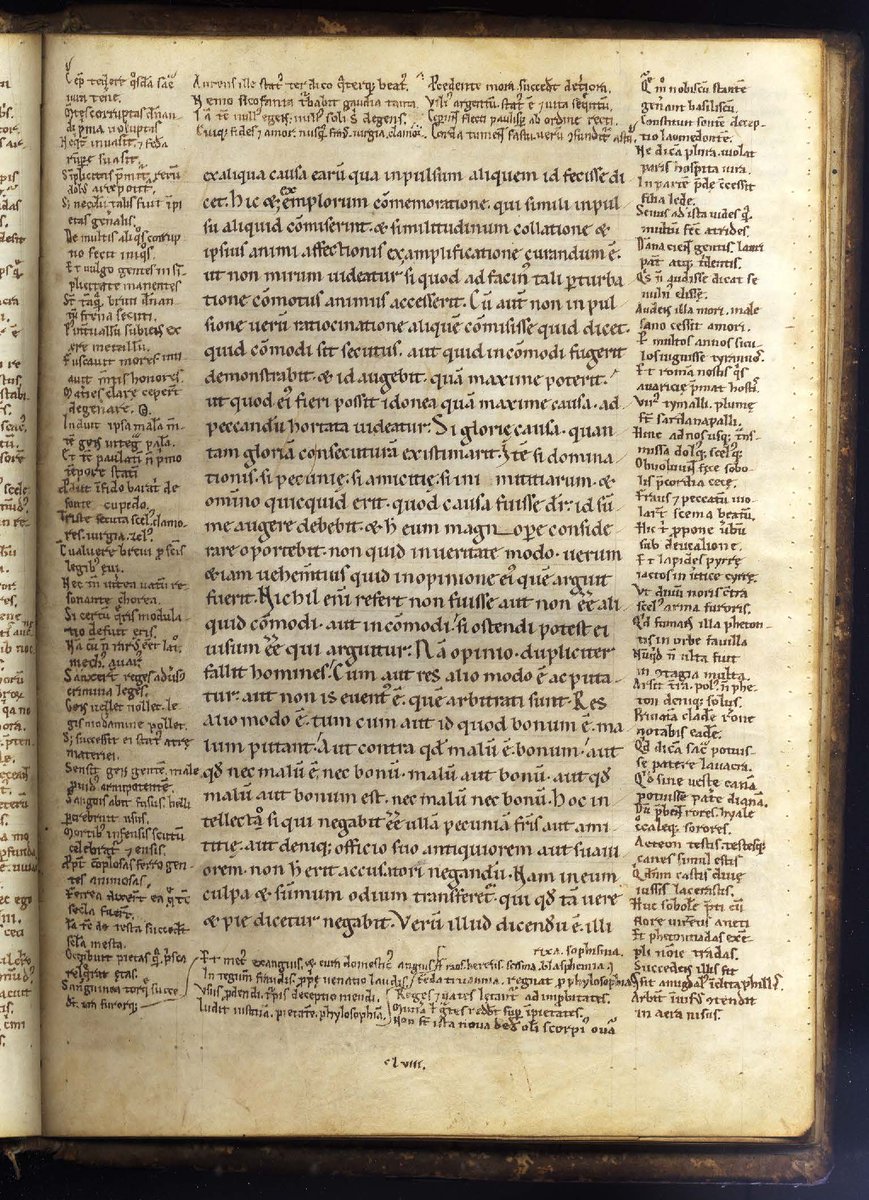
The manuscript contains the complete text of Cicero’s De inventione, also called by medieval scholars the Ars minor or Rhetorica vetus (in contrast to the Ad Herennium, or Rhetorica maior or nova, also ascribed to Cicero). 7/
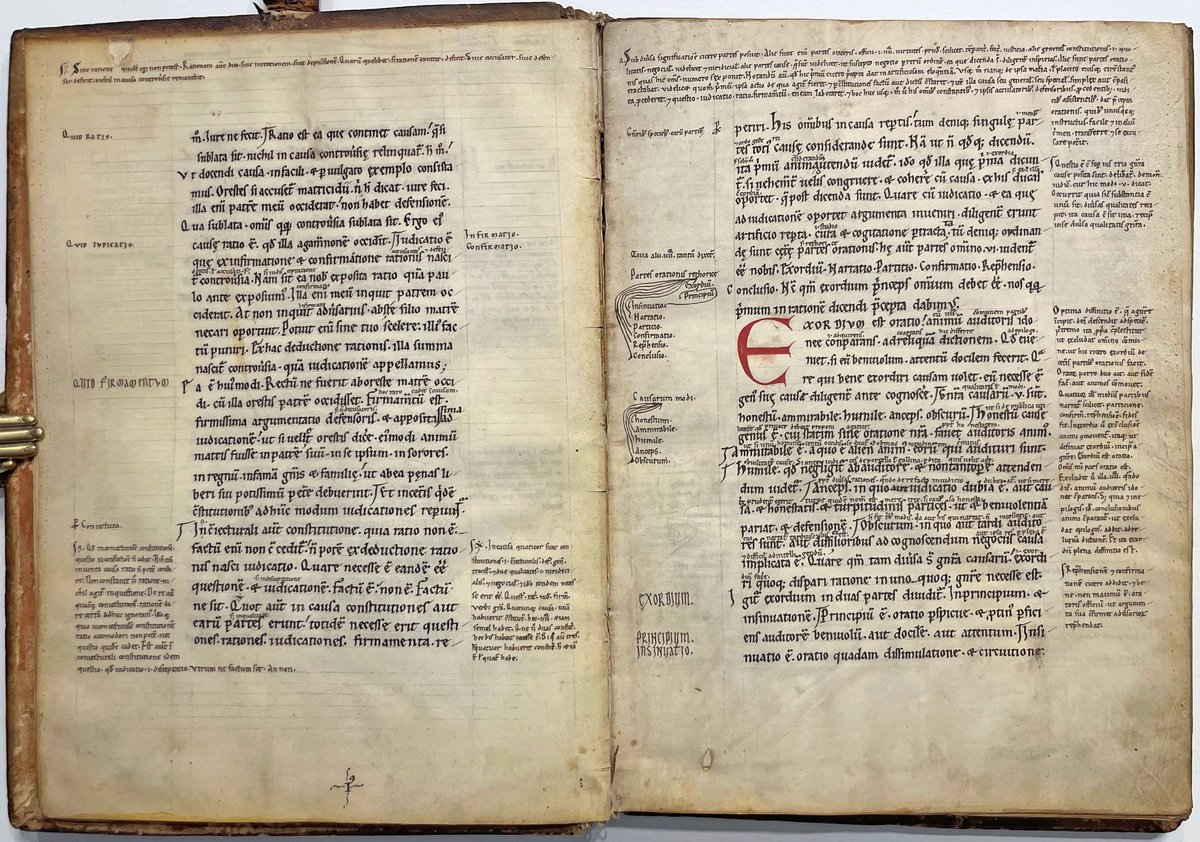
Generally, the recorded manuscripts of Cicero's De inventione are in small format. Only the famous ms. Laud lat. 49 preserved nowadays in the Bodleian Library of Oxford, and produced in Mainz in the 11th century, has dimensions comparable to those of this folio manuscript. 8/
Loading suggestions...