

1/16
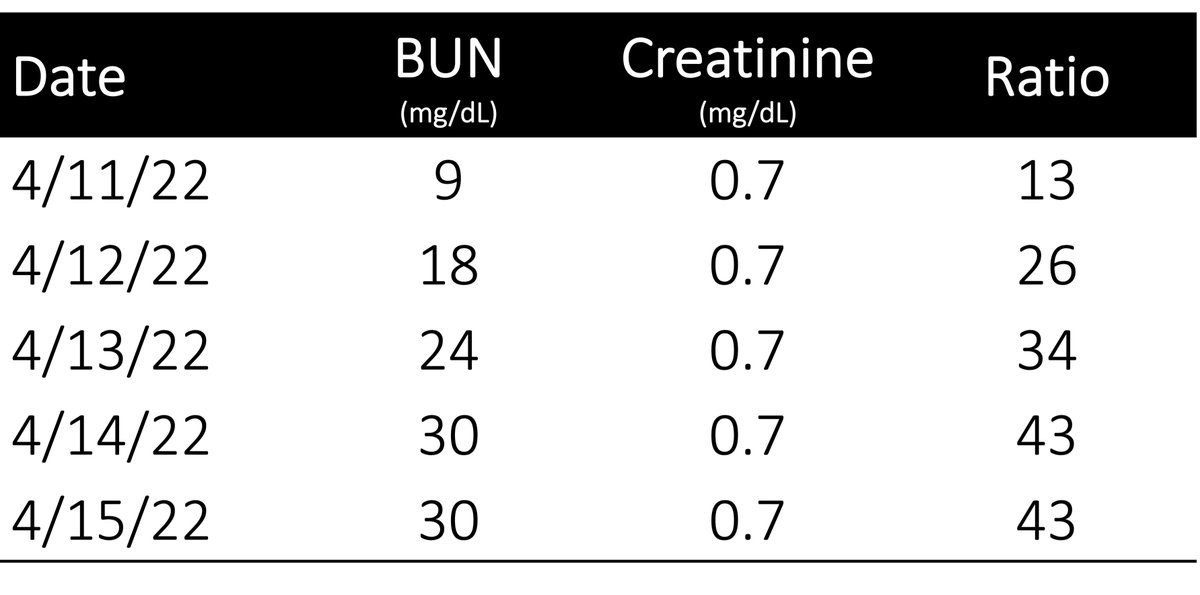
Why do corticosteroids increase the BUN/Cr ratio?
I see this often after starting patients on prednisone.
But why? And, does it also happen with excess endogenous steroids (e.g., Cushing's)?
🎟Let's have a look.
Why do corticosteroids increase the BUN/Cr ratio?
I see this often after starting patients on prednisone.
But why? And, does it also happen with excess endogenous steroids (e.g., Cushing's)?
🎟Let's have a look.
2/
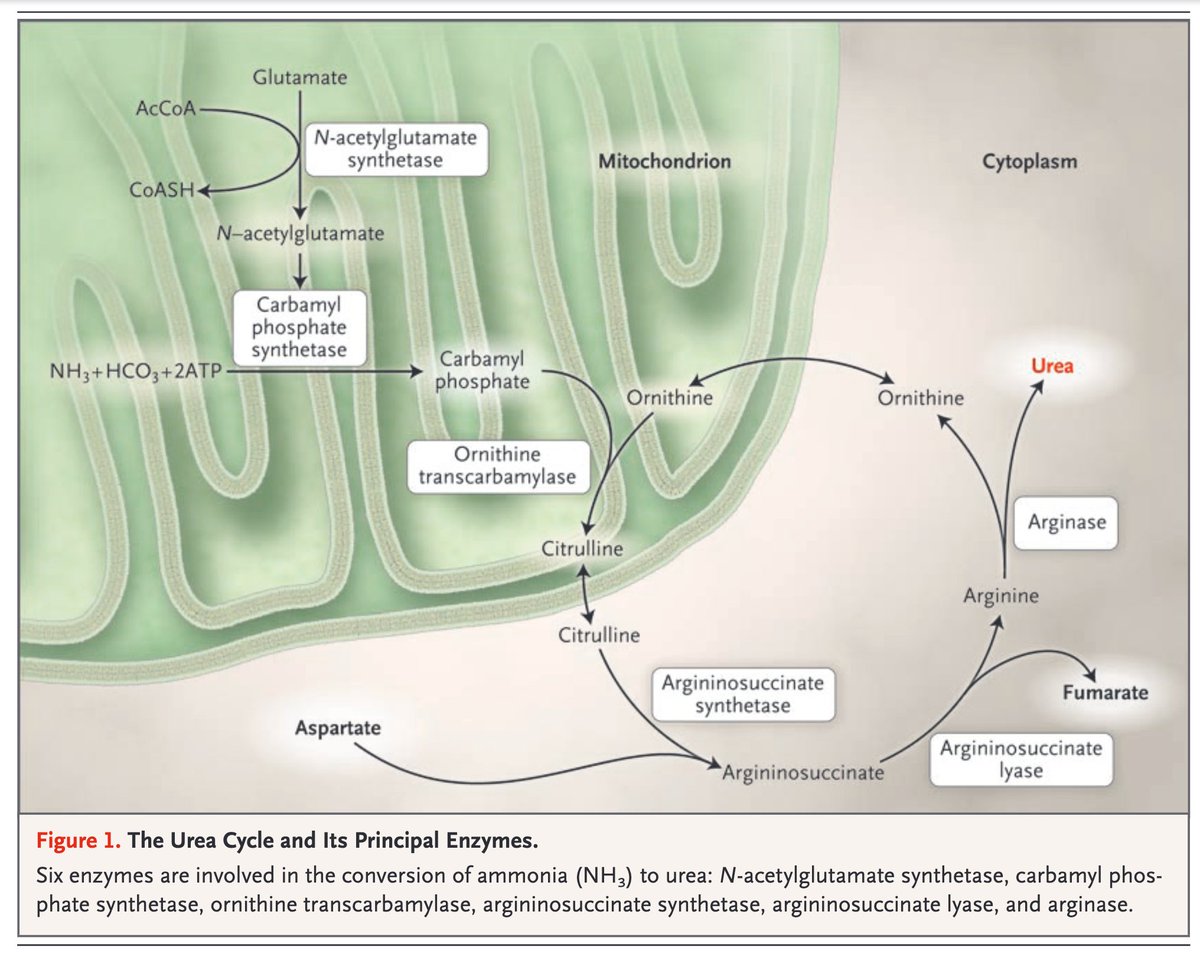
Urea is the main way the body disposes of nitrogenous waste formed during breakdown of protein into amino acids.
Before that, nitrogen is first stored in the form of ammonia.
This poses a problem.
youtube.com
Urea is the main way the body disposes of nitrogenous waste formed during breakdown of protein into amino acids.
Before that, nitrogen is first stored in the form of ammonia.
This poses a problem.
youtube.com
3/
Ammonia is toxic and would require tremendous dilution (and therefore water!) for safe removal by the kidney.
Instead, humans convert ammonia to urea via the urea cycle and excrete nitrogenous waste in this manner.
pubmed.ncbi.nlm.nih.gov
Ammonia is toxic and would require tremendous dilution (and therefore water!) for safe removal by the kidney.
Instead, humans convert ammonia to urea via the urea cycle and excrete nitrogenous waste in this manner.
pubmed.ncbi.nlm.nih.gov
4/
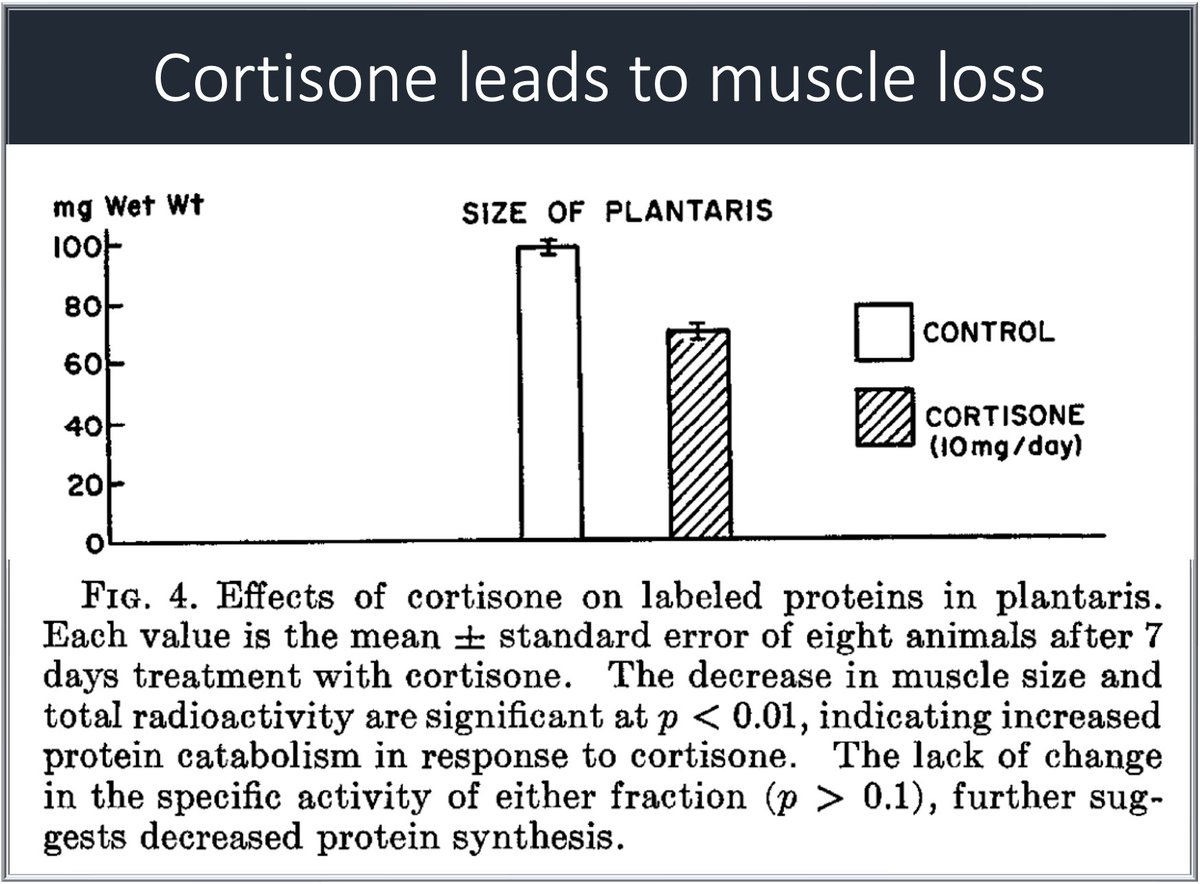
Returning to corticosteroids, they are known to induce protein catabolism. Evidence for this includes the muscle wasting seen with the administration of cortisone.
We also observe these changes in Cushing's where endogenous cortisone is elevated.
jbc.org
Returning to corticosteroids, they are known to induce protein catabolism. Evidence for this includes the muscle wasting seen with the administration of cortisone.
We also observe these changes in Cushing's where endogenous cortisone is elevated.
jbc.org
5/
Whether steroids increase protein catabolism via ↓protein synthesis or ↑protein degradation has been debated. Some studies show only one, some show both.
💥Regardless, the net effect of steroids is protein catabolism and creation of nitrogenous waste and urea formation.💥
Whether steroids increase protein catabolism via ↓protein synthesis or ↑protein degradation has been debated. Some studies show only one, some show both.
💥Regardless, the net effect of steroids is protein catabolism and creation of nitrogenous waste and urea formation.💥
6/
This increase in urea formation explains the elevation in BUN seen with steroids.
🧩 But, there is still a puzzle. Creatinine is also derived from muscle protein. If steroids lead to protein catabolism does creatinine similarly increase?
journals.physiology.org
This increase in urea formation explains the elevation in BUN seen with steroids.
🧩 But, there is still a puzzle. Creatinine is also derived from muscle protein. If steroids lead to protein catabolism does creatinine similarly increase?
journals.physiology.org
7/
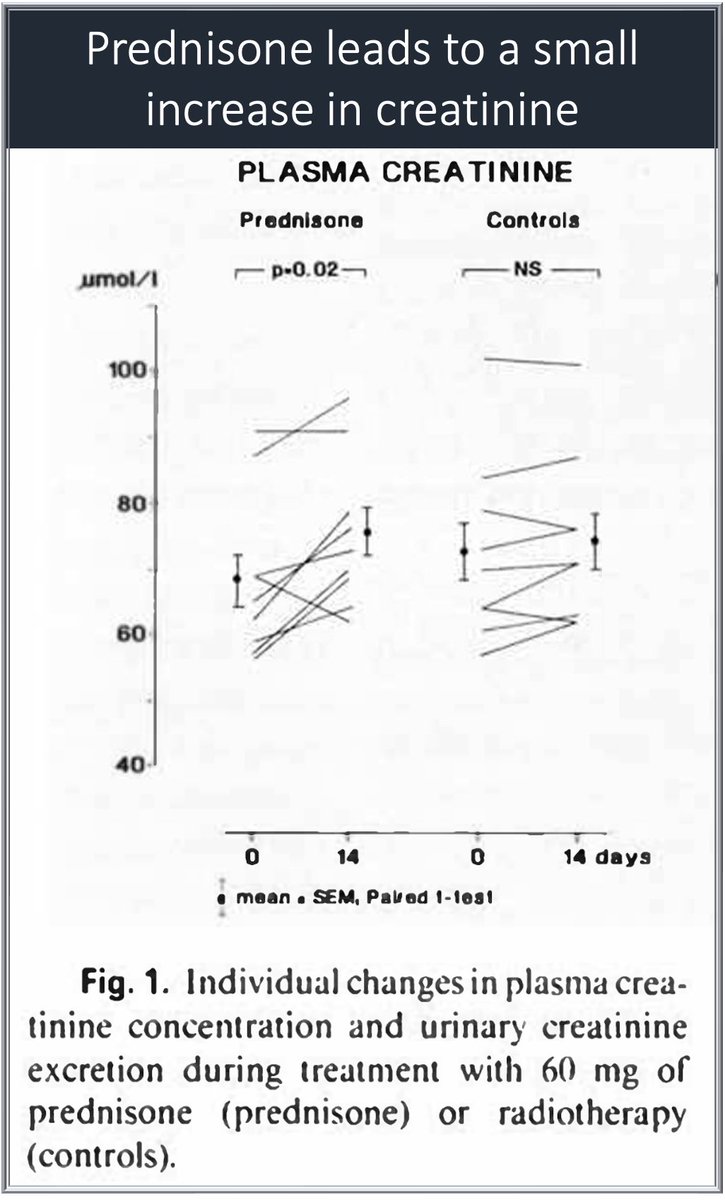
Again, the studies are not uniform though most suggest creatinine remains stable after corticosteroid administration.
In one of the only studies that did demonstrate an increase, it was only 0.08 mg/dL (from 0.77 to 0.85).
pubmed.ncbi.nlm.nih.gov
Again, the studies are not uniform though most suggest creatinine remains stable after corticosteroid administration.
In one of the only studies that did demonstrate an increase, it was only 0.08 mg/dL (from 0.77 to 0.85).
pubmed.ncbi.nlm.nih.gov
8/
In fact, many articles state plainly that "[creatinine] production is not readily influenced by those muscle catabolic factors that so readily affect urea formation..."
To understand why this might be, let's examine how creatinine is generated.
ncbi.nlm.nih.gov
In fact, many articles state plainly that "[creatinine] production is not readily influenced by those muscle catabolic factors that so readily affect urea formation..."
To understand why this might be, let's examine how creatinine is generated.
ncbi.nlm.nih.gov
![8/
In fact, many articles state plainly that "[creatinine] production is not readily influenced by t...](https://pbs.twimg.com/media/FQe1v6_XoAIiAUj.jpg)
9/
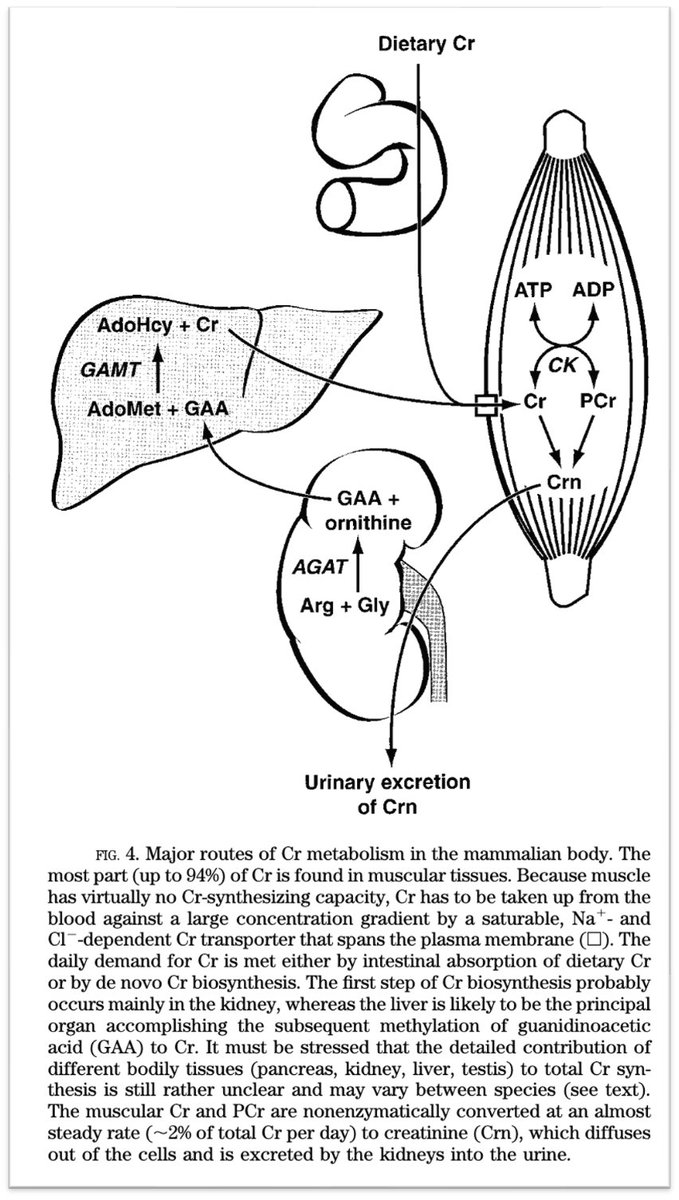
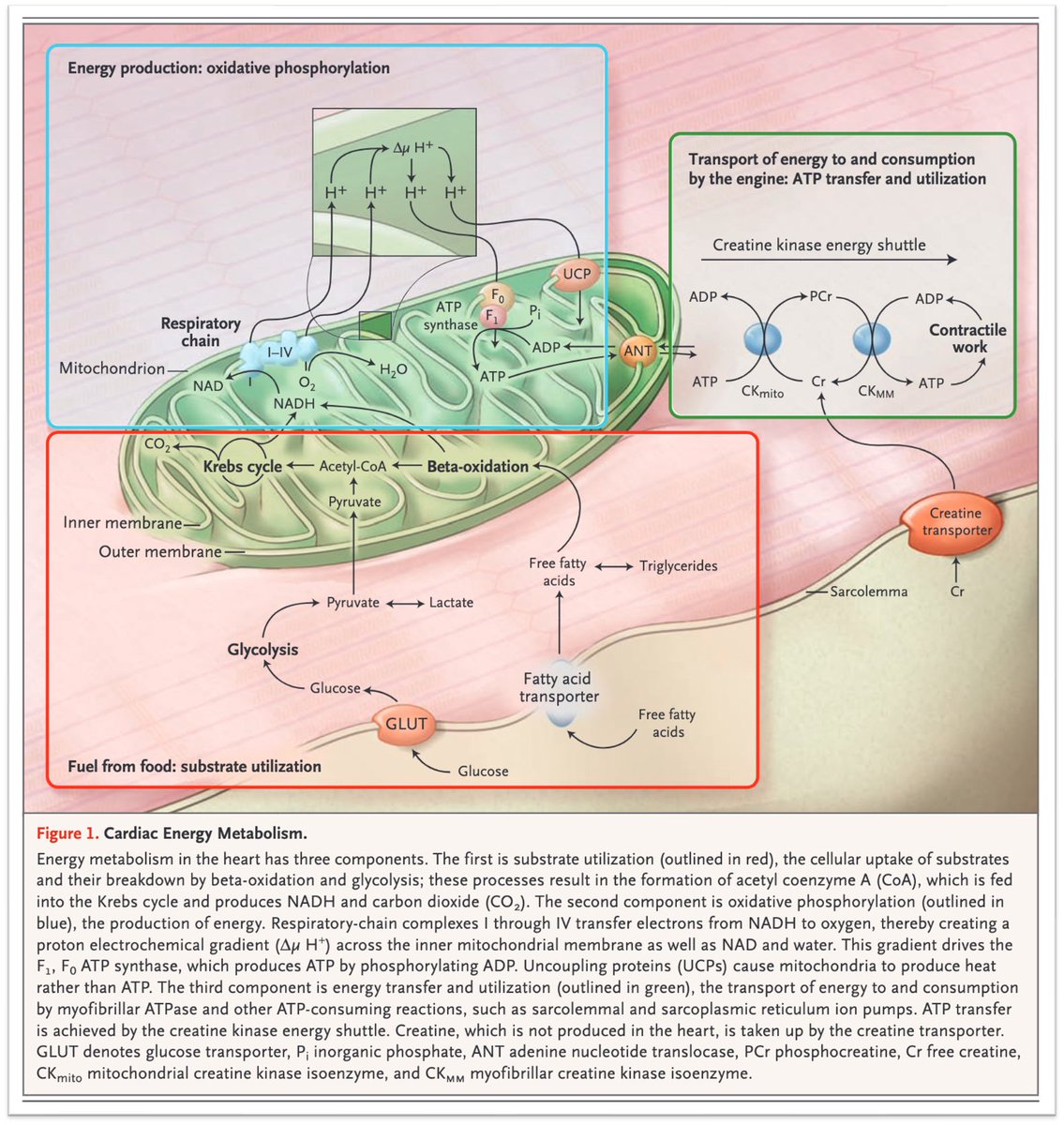
Most cells use ATP as their energy source. Muscles use a lot more high-energy phosphate and need a back-up.
To ensure adequate energy reserves, muscles store phosphocreatine which can be used to quickly replenish ATP during exercise.
pubmed.ncbi.nlm.nih.gov
Most cells use ATP as their energy source. Muscles use a lot more high-energy phosphate and need a back-up.
To ensure adequate energy reserves, muscles store phosphocreatine which can be used to quickly replenish ATP during exercise.
pubmed.ncbi.nlm.nih.gov
10/
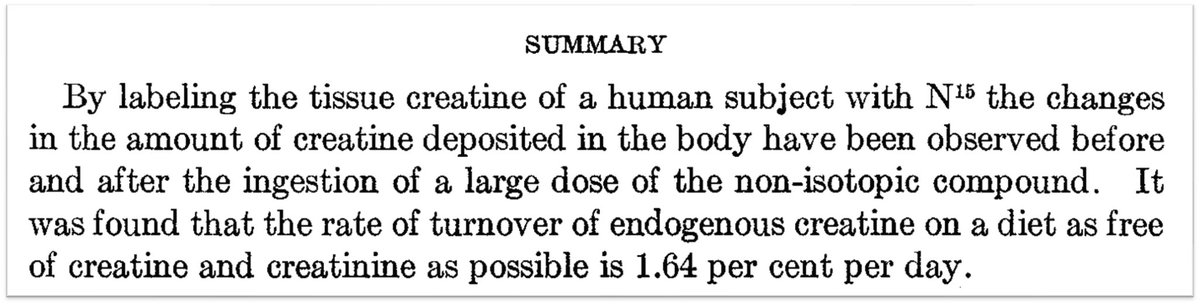
Phosphocreatine is generated from creatine by creatinine kinase. Some of the creatine is then converted to creatinine is a non-enzymatic reaction.
💥Creatinine production is stable at 1-2% per day and not as subject to change from catabolic states.💥
jbc.org
Phosphocreatine is generated from creatine by creatinine kinase. Some of the creatine is then converted to creatinine is a non-enzymatic reaction.
💥Creatinine production is stable at 1-2% per day and not as subject to change from catabolic states.💥
jbc.org
11/
🔑Creatinine is more a byproduct of phosphocreatine generation than it is of muscle catabolism. As a result, steroid-induced catabolism may not increase creatinine levels.
But, the amino acids released do get metabolized to urea.
Result: ↑BUN/Cr ratio.
🔑Creatinine is more a byproduct of phosphocreatine generation than it is of muscle catabolism. As a result, steroid-induced catabolism may not increase creatinine levels.
But, the amino acids released do get metabolized to urea.
Result: ↑BUN/Cr ratio.
12/
What about exogenous increases in corticosteroids, as with Cushing's disease. Do these patients demonstrate a similar increase in BUN/Cr?
I couldn't find any clear studies showing a relationship though some reviews suggest a connection.
pubmed.ncbi.nlm.nih.gov
What about exogenous increases in corticosteroids, as with Cushing's disease. Do these patients demonstrate a similar increase in BUN/Cr?
I couldn't find any clear studies showing a relationship though some reviews suggest a connection.
pubmed.ncbi.nlm.nih.gov
13/
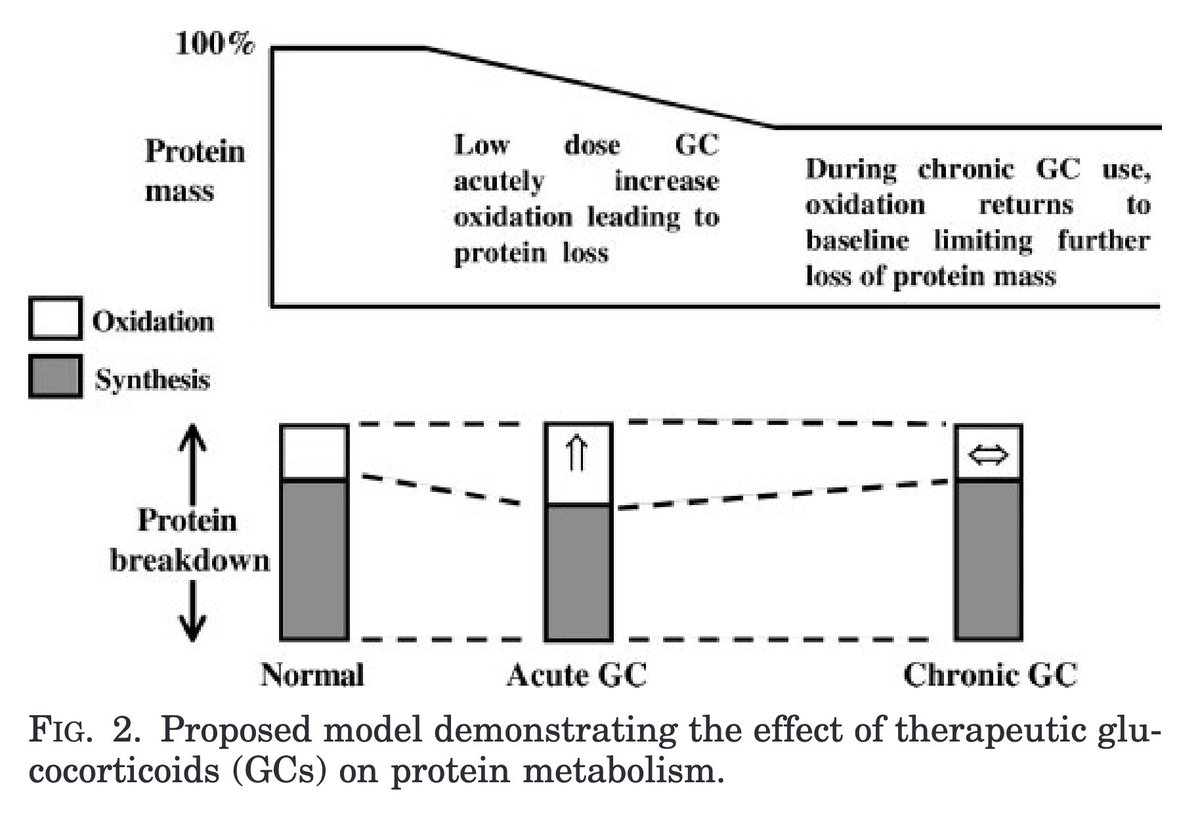
Studies of chronic steroid administration suggest that the catabolism seen is more pronounced acutely and wanes over time.
🤔Maybe the same occurs with Cushing's. If so, this might explain a lack of consistent increase in BUN/Cr.
pubmed.ncbi.nlm.nih.gov
Studies of chronic steroid administration suggest that the catabolism seen is more pronounced acutely and wanes over time.
🤔Maybe the same occurs with Cushing's. If so, this might explain a lack of consistent increase in BUN/Cr.
pubmed.ncbi.nlm.nih.gov
14/
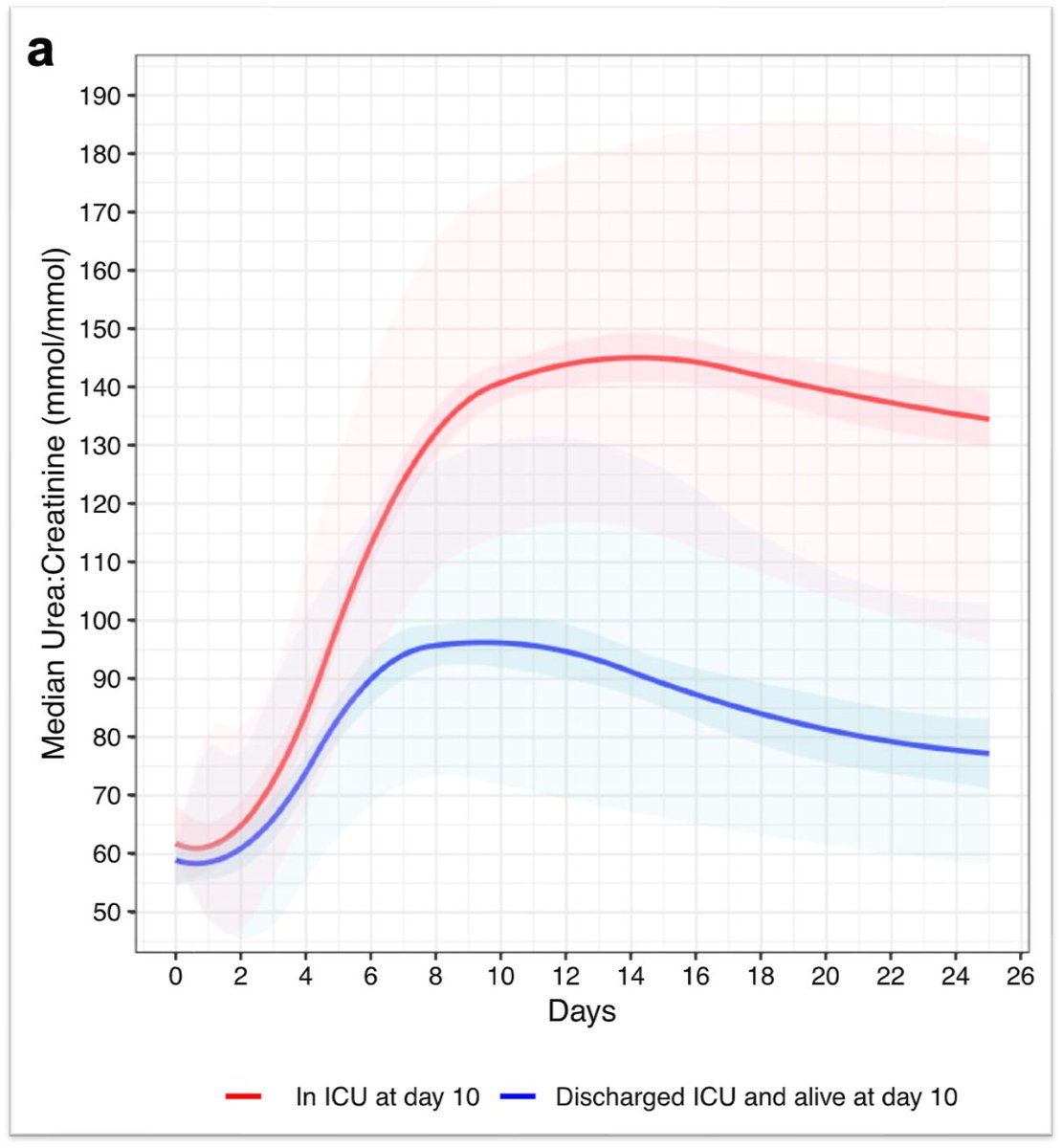
Before closing, note that other catabolic states have been associated with increased BUN/Cr.
One study proposed that an increased BUN/Cr is a signature of catabolism associated with persistent critical illness after major trauma.
pubmed.ncbi.nlm.nih.gov
Before closing, note that other catabolic states have been associated with increased BUN/Cr.
One study proposed that an increased BUN/Cr is a signature of catabolism associated with persistent critical illness after major trauma.
pubmed.ncbi.nlm.nih.gov
15/
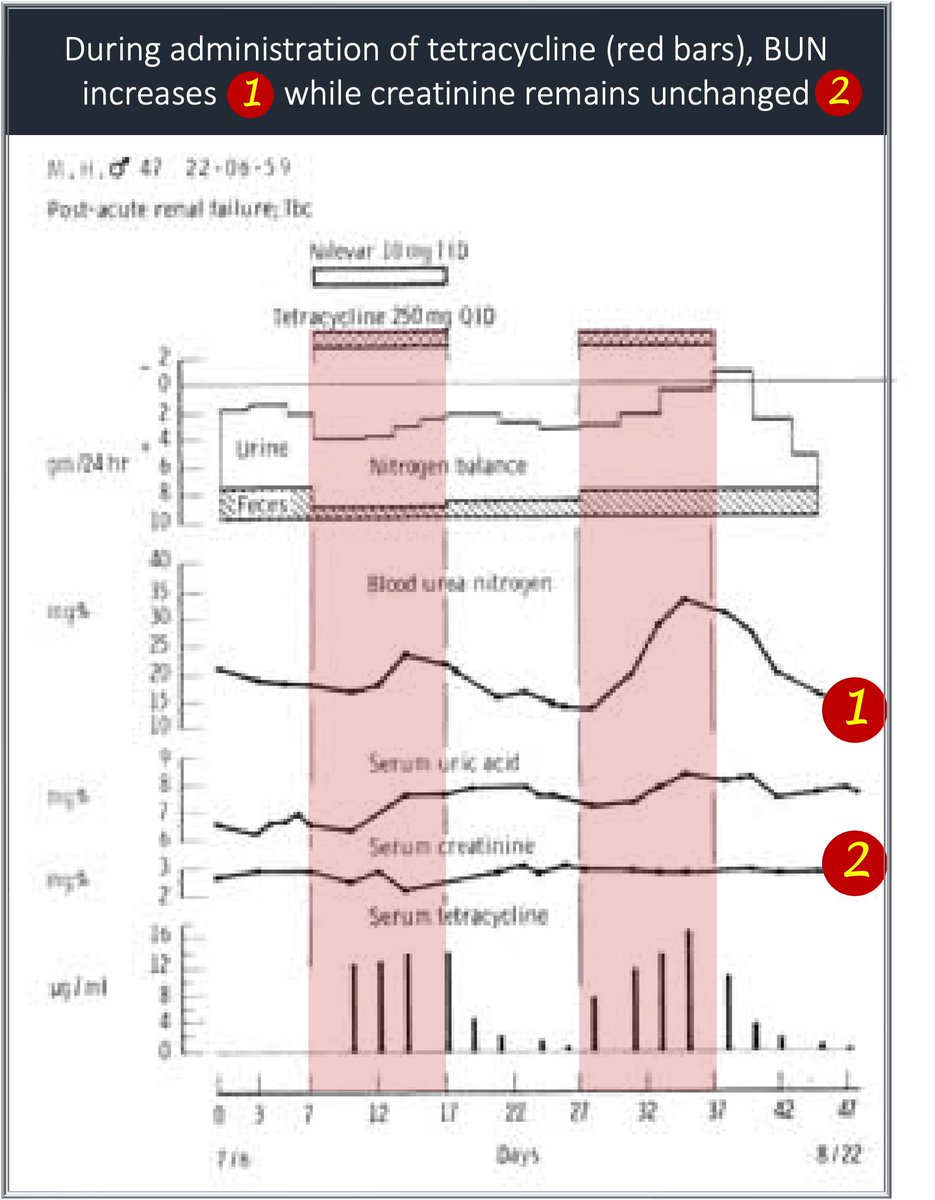
And medications which affect protein synthesis may lead to muscle catabolism.
One example is tetracycline which has been shown to increase the BUN/Cr. The same is not seen with doxycycline.
pubmed.ncbi.nlm.nih.gov
And medications which affect protein synthesis may lead to muscle catabolism.
One example is tetracycline which has been shown to increase the BUN/Cr. The same is not seen with doxycycline.
pubmed.ncbi.nlm.nih.gov
16/16
➤Urea is generated during protein catabolism
➤Corticosteroids, by increasing protein catabolism, increased urea generation and BUN
➤Creatinine appears less affected, resulting in an increased BUN/Cr ratio
➤Urea is generated during protein catabolism
➤Corticosteroids, by increasing protein catabolism, increased urea generation and BUN
➤Creatinine appears less affected, resulting in an increased BUN/Cr ratio
Loading suggestions...