
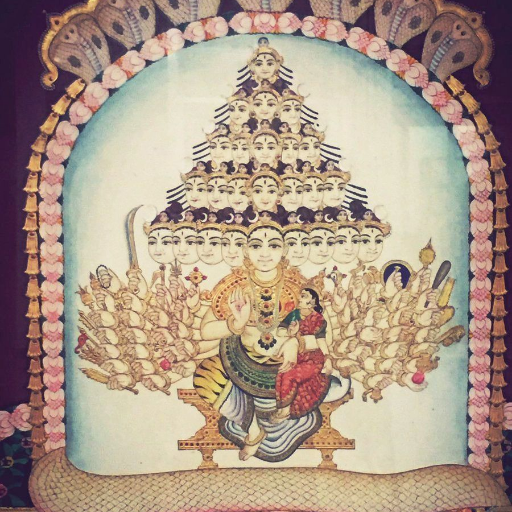
@kshetragnya @WalkofV @tskrishnan Briefly put,
1. The real hubs of Siddhānta-Śaivam are Kāśmīradeśa & Madhyapradeśa, where Śaiva Brāhmaṇas (as well as Bhojarāja of Paramāra dynasty, a Kṣatriya & the odd one out) systematized the doctrine. ++
1. The real hubs of Siddhānta-Śaivam are Kāśmīradeśa & Madhyapradeśa, where Śaiva Brāhmaṇas (as well as Bhojarāja of Paramāra dynasty, a Kṣatriya & the odd one out) systematized the doctrine. ++
@kshetragnya @WalkofV @tskrishnan 2. The earliest Siddhānta Āgamas we have are:
1-Niśvāsa (possibly 400s)
2-Svāyambhūva (likely 400s; commented 1st in 5/600s in Kāśmīra)
3-Raurava (likely same as Svāyambhūva)
4-Kiraṇa (commented 1st in mid 900s in Kāśmīra; likely 6-700s at the very least);+
1-Niśvāsa (possibly 400s)
2-Svāyambhūva (likely 400s; commented 1st in 5/600s in Kāśmīra)
3-Raurava (likely same as Svāyambhūva)
4-Kiraṇa (commented 1st in mid 900s in Kāśmīra; likely 6-700s at the very least);+
@kshetragnya @WalkofV @tskrishnan 2’Cont’d ++
5-Mṛgendra (commented 1st in Kāśmīra in early 900s; likely same age as Kiraṇa).
6-Mātaṅgapārameśvara (at least 6-700s; commented 1st in Kāśmīra in mid 900s)
7-Sārdhatriśati-Kālottara (Same as 6).
5-Mṛgendra (commented 1st in Kāśmīra in early 900s; likely same age as Kiraṇa).
6-Mātaṅgapārameśvara (at least 6-700s; commented 1st in Kāśmīra in mid 900s)
7-Sārdhatriśati-Kālottara (Same as 6).
@kshetragnya @WalkofV @tskrishnan 3. The above Āgamas already provide much of the philosophical grounding for the Siddhānta & were all commented upon in mid-900s Kāśmīra & earlier.
I have marked the composition dates of the Āgamas as at least 2-3 centuries before the date of the commebtaries.
I have marked the composition dates of the Āgamas as at least 2-3 centuries before the date of the commebtaries.
@kshetragnya @WalkofV @tskrishnan 4. These are rather tentative and much earlier dates await confirmation given that we already have references to the Siddhānta in inscriptions from the time of Rājasim̐ha Pallava. Believe that @tskrishnan saar can verify this.
@kshetragnya @WalkofV @tskrishnan 5. During the reign of both Rājarāja & Rājendra Chōzhas, we see an influx of Śivabrāhmaṇas from “Āryadeśa”, “Madhyadeśa” & “Gauḍadeśa”. The last one (i.e. Bengal) was especially a great net exporter of scholarly Śivabrāhmaṇas to TN.
@kshetragnya @WalkofV @tskrishnan 6. While I don’t dispute that certain old, lost Āgamas were conceived anew & freshly in TN (Kāmika, Kāraṇa, etc) under the same names (or what scholars like to call “South Indian Temple Āgamas”), these temple-centric Āgamas have the Śivabrāhmaṇas as their impetus, not Vēlālas.
@kshetragnya @WalkofV @tskrishnan 7. My own suspicion is that the last great migrant Śivavipras from the Gauḍa lands were the impetus behind the Kāmikāgama as we know today. The Kāmika singles out Drāviḍa & Gauḍa by name for the Deśabhāṣa liturgy to be performed after the proper Āgamika worship.
@kshetragnya @WalkofV @tskrishnan 8. In contrast to the Āgamas being of Vēlāla origin, we find that the frequency of quoting them is drastically reduced in the post-Meykaṇḍār Vēlāla Paṇḍara-Gurus’ works in contrast to the Siddhānta works in Sam̐skṛta.
@kshetragnya @WalkofV @tskrishnan 9. The above cannot be attributed to a lack of access to the Āgamas since we actually had a Kārkātta Vēlāla scholar from Jaffna write a Sam̐skṛta commentary on Pauṣkarāgama. See here:
@kshetragnya @WalkofV @tskrishnan 10. Also, the Śaiva & Vaiṣṇava (Pāñcarātra) Āgamas have origins in Kāśmīradeśa & share enough ritual features that we can safely speak of an “Āgamika” ritual grammar, which most definitely, like its Vedic predecessor, took birth in far north of the Vindhyās.
@kshetragnya @WalkofV @tskrishnan 11. As a final point, till very recently, many well-read, pious men from the Śaiva-Vēlāla community were very much aware of the Original, Kāśmīra Ācāryas of Siddhānta. Example 👇🏾
@kshetragnya @WalkofV @tskrishnan 11. Cont’d: A Skt work composed in TN, “Siddhānta-Sārāvalī”- The publisher reverentially addresses the highly-esteemed Kāśmīra Guru Rāmakaṇṭha as “Bhagavān” while listing his sources.
@kshetragnya @WalkofV @tskrishnan 11. Cont’d: The publisher was one Śrī Ṣaṇmukha Mudaliyār, who clearly was very invested in publishing old, Skt Siddhānta classics.
It’s amazing how the Pan-Indian provenance of Siddhānta has been forgotten & an insidious bunch seeks to market it as “Tamizh religion”. //End
It’s amazing how the Pan-Indian provenance of Siddhānta has been forgotten & an insidious bunch seeks to market it as “Tamizh religion”. //End
Loading suggestions...