

Reading a WHITEPAPER is essential before you invest in a project.
But understanding a Whitepaper is difficult!
Terra $Luna WHITEPAPER breakdown for beginners:
But understanding a Whitepaper is difficult!
Terra $Luna WHITEPAPER breakdown for beginners:

#Terra aims to build a family of decentralized price-stable money that can be transacted in both fiat and blockchain economies.
Crypto-currencies are volatile, making $btc and others hard to use as a medium of exchange and store of value.
Crypto-currencies are volatile, making $btc and others hard to use as a medium of exchange and store of value.

$TerraSDR will be the flagship currency of the family.
SDR is a reserve asset(which is just a bunch of currencies)held by the International Monetary Fund.
Note: SDR is not a currency.
The value of 1 SDR is 1.36$.(at the time of writing)
SDR is a reserve asset(which is just a bunch of currencies)held by the International Monetary Fund.
Note: SDR is not a currency.
The value of 1 SDR is 1.36$.(at the time of writing)
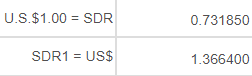
$TerraSDR is the currency in which transaction fees, miner rewards, and grants will be denominated.
#Terra currencies have access to shared liquidity within the system.
Meaning you can swap $TerraUSD for $TerraEUR instantly for the respective exchange rate.
#Terra currencies have access to shared liquidity within the system.
Meaning you can swap $TerraUSD for $TerraEUR instantly for the respective exchange rate.
1.2) PRICE MEASUREMENT:
The system relies on a decentralized price oracle to estimate the true exchange rate of every #Terra currency.
An oracle is a bridge b/w the blockchain and the real world.
They act as information sources for the blockchain from the outside world.
The system relies on a decentralized price oracle to estimate the true exchange rate of every #Terra currency.
An oracle is a bridge b/w the blockchain and the real world.
They act as information sources for the blockchain from the outside world.

For any #Terra sub-currency, miners submit a vote for what they believe to be the current exchange rate.
Every 'n' blocks the true rates are determined by the median value.
Every 'n' blocks the true rates are determined by the median value.
Some amount of #Terra is rewarded to those who voted within 1 Standard deviation.
Those who voted outside may be punished by burning their stakes.
But you might say, what if all the voters profit by coordinating on a false price vote?
Those who voted outside may be punished by burning their stakes.
But you might say, what if all the voters profit by coordinating on a false price vote?
The #Terra protocol limits the voting power only to miners who have a strong vested interest in the system which decreases the odds.
Even if they do it, they would be at a loss since the miner's stakes will be burned.
Even if they do it, they would be at a loss since the miner's stakes will be burned.

1.3) PRICE STABILITY:
Now that the system has detected that the price of a #Terra currency has deviated from its peg.
It needs to apply pressure using some mechanism to normalize the price or bring back the peg.
Now that the system has detected that the price of a #Terra currency has deviated from its peg.
It needs to apply pressure using some mechanism to normalize the price or bring back the peg.
USERS & ARBITRAGERS:
1. When the price of $UST falls below the peg:
The circulating money supply is CONTRACTED within the system, which increases the demand for the currency.
When demand for the currency rises, its price also rises relatively.
1. When the price of $UST falls below the peg:
The circulating money supply is CONTRACTED within the system, which increases the demand for the currency.
When demand for the currency rises, its price also rises relatively.
When UST's price< 1$, anyone can give 1 UST to the system and they will get 1$ worth of $Luna in return.
So instead of selling your 1 UST(1$) for a loss in the open market(say 0.9$), you can just give it to the system for 1$ worth of $Luna.
So instead of selling your 1 UST(1$) for a loss in the open market(say 0.9$), you can just give it to the system for 1$ worth of $Luna.
The system burns the $UST obtained thus reducing the circulating supply, which increases the price of $UST.
It also incentivizes people b/c they can buy 0.9$ worth of $UST from the market and sell it for 1$ worth of $Luna.
Thus PEOPLE themselves can bring back the peg!
It also incentivizes people b/c they can buy 0.9$ worth of $UST from the market and sell it for 1$ worth of $Luna.
Thus PEOPLE themselves can bring back the peg!

2. When the price of $UST rises above the peg:
The circulating money supply is expanded within the system, which reduces the demand for the currency.
When demand for the currency falls, its price also falls relatively.
The circulating money supply is expanded within the system, which reduces the demand for the currency.
When demand for the currency falls, its price also falls relatively.
When $UST's price> 1$, anyone can give 1$ worth of $Luna to the system and the system gives them 1 UST.
Then they can go to the open market and sell that 1 UST(which is worth 1$) for a profit(say 1.1$).
Then they can go to the open market and sell that 1 UST(which is worth 1$) for a profit(say 1.1$).
This also incentivizes people to give 1$ worth of $Luna to the system and get 1 UST back to make a profit.
Thus PEOPLE themselves can bring back the peg!
Thus PEOPLE themselves can bring back the peg!
NOTE:
To buy 1 $UST, the protocol mints and sells 1$ worth of $Luna.
By selling 1 $UST, the protocol earns 1$ worth of $Luna.
To buy 1 $UST, the protocol mints and sells 1$ worth of $Luna.
By selling 1 $UST, the protocol earns 1$ worth of $Luna.
Thus the supply and demand of $UST is controlled with the help of $Luna.
The volatility moves from $UST to $Luna.
The price is normalized as the arbitrage opportunity disappears.
The volatility moves from $UST to $Luna.
The price is normalized as the arbitrage opportunity disappears.
The block producer takes the responsibility of:
1. Bundling transactions together,
2. Achieving consensus among miners,
3. Ensuring that messages are distributed properly,
and PRODUCES THE NEXT BLOCK.
1. Bundling transactions together,
2. Achieving consensus among miners,
3. Ensuring that messages are distributed properly,
and PRODUCES THE NEXT BLOCK.
The block producer election is weighted by the size of the miner's $Luna stake.
More $Luna => More mining power
Less $Luna => Less mining power
Having more $Luna staked in the system increases your odds of generating a block.
SIZE MATTERS.
More $Luna => More mining power
Less $Luna => Less mining power
Having more $Luna staked in the system increases your odds of generating a block.
SIZE MATTERS.

2. In the mid to long term, miners are compensated with increased mining rewards:
The system buys back the mining power until a specific target supply is reached so that it has enough mining power available for the long run.
The system buys back the mining power until a specific target supply is reached so that it has enough mining power available for the long run.
The system also increases mining rewards for miners over the long run.
So, the miners bear the costs of #Terra volatility in the SHORT TERM, while being compensated for it in the LONG TERM.
But how are they compensated?
So, the miners bear the costs of #Terra volatility in the SHORT TERM, while being compensated for it in the LONG TERM.
But how are they compensated?
Since $Luna represents MINING POWER in the network, the system burns a portion of $Luna earned from seigniorage.
More $Luna burn = More mining power for miners(why? We'll see)
The remaining portion of the seigniorage goes to the treasury.
More $Luna burn = More mining power for miners(why? We'll see)
The remaining portion of the seigniorage goes to the treasury.
The profit or loss from a mining operation is calculated as below:
P/L= ((Total rewards/Luna supply) - (Mining cost))
Total rewards- Fees
Luna supply- Circulating $Luna supply
Mining cost- Cost of work for that unit
P/L= ((Total rewards/Luna supply) - (Mining cost))
Total rewards- Fees
Luna supply- Circulating $Luna supply
Mining cost- Cost of work for that unit
So the protocol can use 'fees' and '$Luna supply' as LEVERS to control the rewards for the miners.
If rewards are increasing due to high usage, then the system decreases fees & the amount of $Luna burnt from seigniorage.
If rewards are increasing due to high usage, then the system decreases fees & the amount of $Luna burnt from seigniorage.
If rewards are decreasing due to low usage, the system increases fees(max 1%) & the amount of $Luna burnt from seigniorage.
Coupled with this, the protocol also targets stable growth in miner rewards with long-term growth of the #Terra economy.
Coupled with this, the protocol also targets stable growth in miner rewards with long-term growth of the #Terra economy.
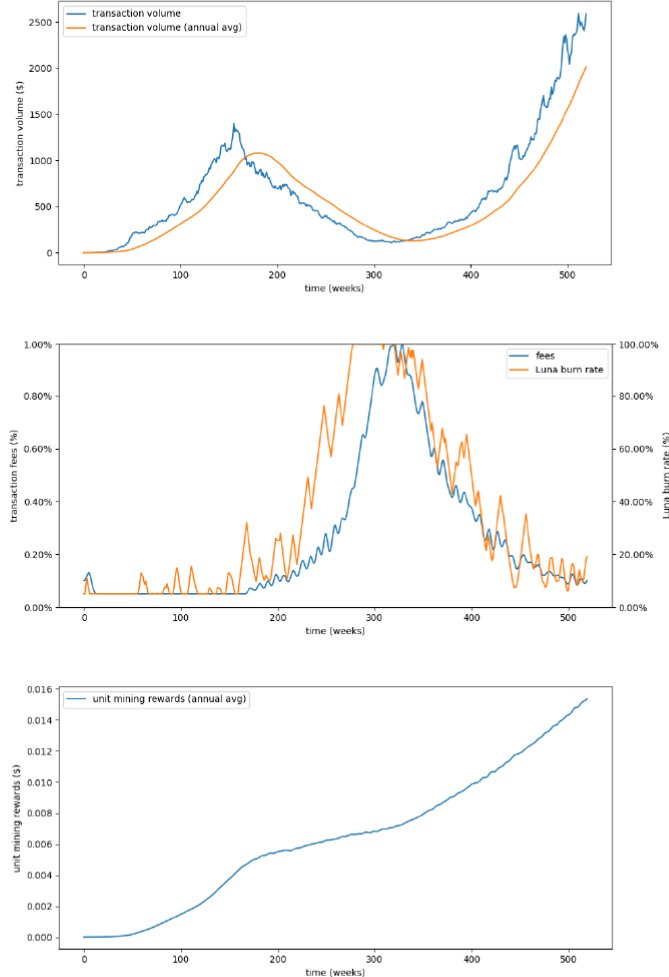
Observe how the 'transaction fees' & '$Luna burn' are adjusted according to usage(txn volume). Both are increased as the usage reduces & vice versa.
Also, observe how the mining rewards keeps on growing as the #Terra economy grows.
Hence, the miners are rewarded long-term!
Also, observe how the mining rewards keeps on growing as the #Terra economy grows.
Hence, the miners are rewarded long-term!
Now that we have learned how the #Terra protocol manages to maintain the PRICE STABILITY using miners & arbitragers,
Let's understand how it manages to GROW its economy!
Let's understand how it manages to GROW its economy!

2. ADOPTION:
Just STABILITY is not enough for a currency to survive, it also needs enough ADOPTION within its economy.
Terra platform dApps will drive the growth of the economy but the lack of incentives might slow it down.
Just STABILITY is not enough for a currency to survive, it also needs enough ADOPTION within its economy.
Terra platform dApps will drive the growth of the economy but the lack of incentives might slow it down.
Remember when part of the seigniorage($Luna) is burnt to maintain stability, well the remaining part is returned back to the economy itself from the treasury.
#Terra's main focus is the allocation of resources from the seigniorage to dApps.
#Terra's main focus is the allocation of resources from the seigniorage to dApps.
To receive seigniorage from the treasury, a dApp needs to register itself on the #Terra network.
dApps are eligible for funding depending on their economic activity and use of funding.
dApps are eligible for funding depending on their economic activity and use of funding.
The funding procedure is as follows:
1. A dApp applies for an account with the treasury.
2. $Luna validators vote to accept or reject the application.
3. The funding is determined by a FUNDING WEIGHT method & the number of votes.
4. $Luna validators can also blacklist dApps.
1. A dApp applies for an account with the treasury.
2. $Luna validators vote to accept or reject the application.
3. The funding is determined by a FUNDING WEIGHT method & the number of votes.
4. $Luna validators can also blacklist dApps.
Funding weight is the amount of funding that will be allocated to the dApp depending upon 2 factors:
1. ROBUST ECONOMIC ACTIVITY.
2. EFFICIENT USE OF FUNDING.
Funding Weight= (1- x)*Txn volume + x*(difference in Txn volume/funding received in the past)
1. ROBUST ECONOMIC ACTIVITY.
2. EFFICIENT USE OF FUNDING.
Funding Weight= (1- x)*Txn volume + x*(difference in Txn volume/funding received in the past)
1) x:
The value of 'x' is changed to the relative importance of ECONOMIC ACTIVITY & FUNDING EFFICIENCY.
2) (1- x)*Txn volume:
It is the average transaction volume generated by the dApp in the recent past.
This is an indicator of the dApp's ECONOMIC ACTIVITY.
The value of 'x' is changed to the relative importance of ECONOMIC ACTIVITY & FUNDING EFFICIENCY.
2) (1- x)*Txn volume:
It is the average transaction volume generated by the dApp in the recent past.
This is an indicator of the dApp's ECONOMIC ACTIVITY.
3) x*(difference in txn volume / funding received in the past):
The numerator describes the trend in txn volume.
If positive then the dApp is growing and vice versa.
The denominator is the past funding from the protocol.
This is an indicator of the dApp's FUNDING EFFICIENCY.
The numerator describes the trend in txn volume.
If positive then the dApp is growing and vice versa.
The denominator is the past funding from the protocol.
This is an indicator of the dApp's FUNDING EFFICIENCY.
A Dapp with a weight of 2 would receive twice the amount of funding of a dApp with a weight of 1.
Hence, the #Terra protocol funds the organizations and proposals with the highest net impact on the economy.
Hence, the #Terra protocol funds the organizations and proposals with the highest net impact on the economy.
I have tried to simplify the whitepaper as much as I can.
I did not add any new information or opinions here.
This is a raw and uncut version of the #Terra whitepaper by @stablekwon
You can find the #Terra whitepaper here:
assets.website-files.com assets.website-files.com
I did not add any new information or opinions here.
This is a raw and uncut version of the #Terra whitepaper by @stablekwon
You can find the #Terra whitepaper here:
assets.website-files.com assets.website-files.com
Loading suggestions...