

In 1902, the 6- and 18-yard boxes that we know today were introduced to football pitches.
But in 2016, a Venezuelan Research Professor with a PhD in Engineering Mechanics proposed a new penalty area to improve the fairness of football.
🧶 Thread:
But in 2016, a Venezuelan Research Professor with a PhD in Engineering Mechanics proposed a new penalty area to improve the fairness of football.
🧶 Thread:

Is it as easy to score from the bottom corner of the area as it is the top? Intuitively, we know it isn’t.
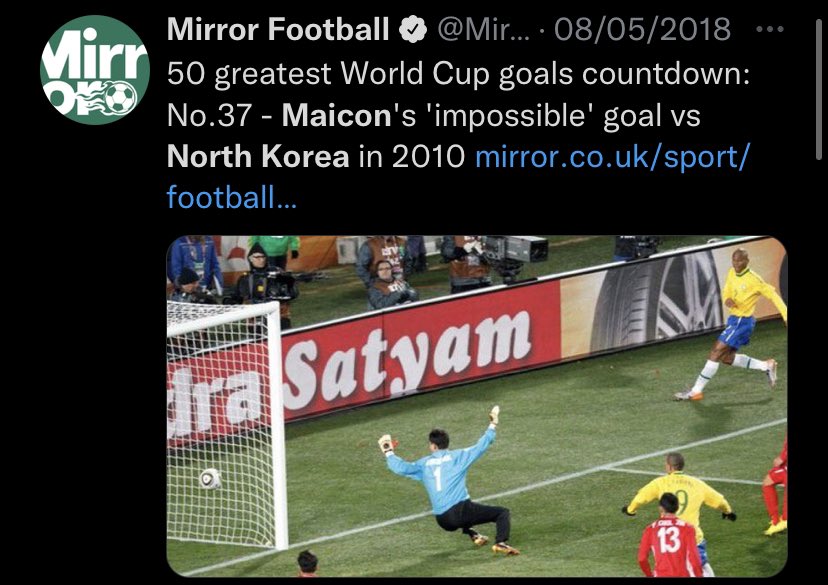
When Maicon scored vs. North Korea in the 2010 World Cup, he had a 1 in 17 chance of doing so from where he struck it. Its xG was 0.06.
When Maicon scored vs. North Korea in the 2010 World Cup, he had a 1 in 17 chance of doing so from where he struck it. Its xG was 0.06.

Compare that to a penalty kick, which gives you a 76% likelihood of scoring: you’re 13 times more likely to hit the back of the net from the spot than you are from where Maicon scored what The Mirror deemed, in the build up to Russia 2018, the 37th best goal in World Cup history.
In 2014, in the 94th minute of the Round of 16 World Cup match between The Netherlands and Mexico, Arjen Robben found himself in a very similar position to Maicon when he fell to the ground after a tackle attempt from Rafael Marquez.
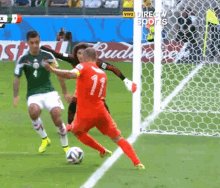
At 1-1, the referee awarded a penalty, Klaas Jan Huntelaar scored it, and The Netherlands advanced to the quarter finals.
Was it a result of simulation, referee error, or both? Perhaps it was neither. However, it’s never been forgiven in Mexico and was highly controversial.
Was it a result of simulation, referee error, or both? Perhaps it was neither. However, it’s never been forgiven in Mexico and was highly controversial.
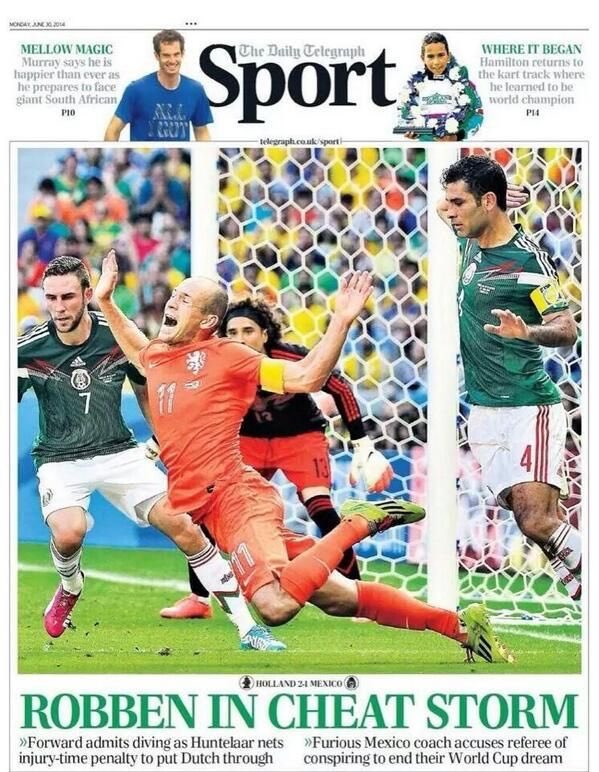

In 2016, author and Professor of Applied Mathematics David Sumpter used the Robben scenario in his book Soccermatics to illustrate one of the rationales given for a newly proposed goal and penalty area by a Venezuelan engineer.
That man was Dr. Cesar Morales. 🇻🇪
That man was Dr. Cesar Morales. 🇻🇪


That same year, Dr. Morales had published the paper “A Mathematics-based New Penalty Area in Football: Tackling Diving” in Issue 24 of the Journal of Sports Sciences, with funding from the Universidad Simón Bolívar in Caracas.

It is based on “considering mathematically the actual scoring possibility…near the goal,” he wrote.
Dr. Morales described the current 18-yard box as “mathematically disproportionate” and possibly “causing too much diving or simulation by players around the goal.”
Dr. Morales described the current 18-yard box as “mathematically disproportionate” and possibly “causing too much diving or simulation by players around the goal.”
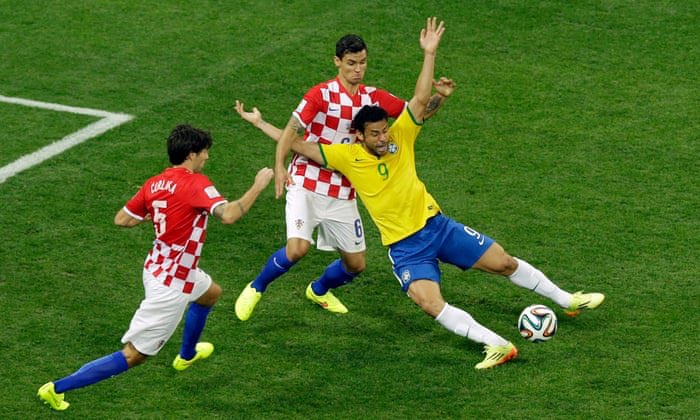
In turn, Dr. Morales hypothesised, “too many matches are decided unfairly.” The objective of his newly designed area – founded on the principles of probability – was to reduce these problems.
Curiously, his idea was to return to something close to the semicircles used pre-1902.
Curiously, his idea was to return to something close to the semicircles used pre-1902.
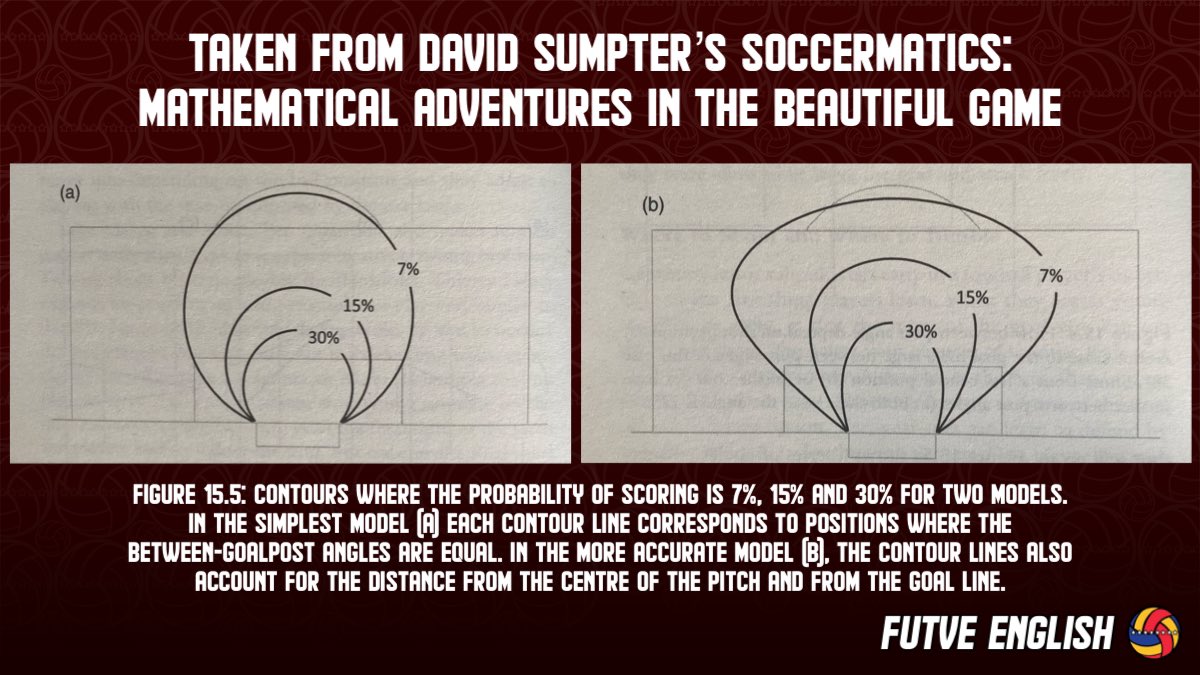
As Sumpter explains, “César’s argument is that the shape of the current box encourages diving. If a player has less than 7% chance of scoring from the outside edges of the box, then there is an incentive to throw himself to the ground.”
📸: FiftyFive.One’s xG graph
📸: FiftyFive.One’s xG graph
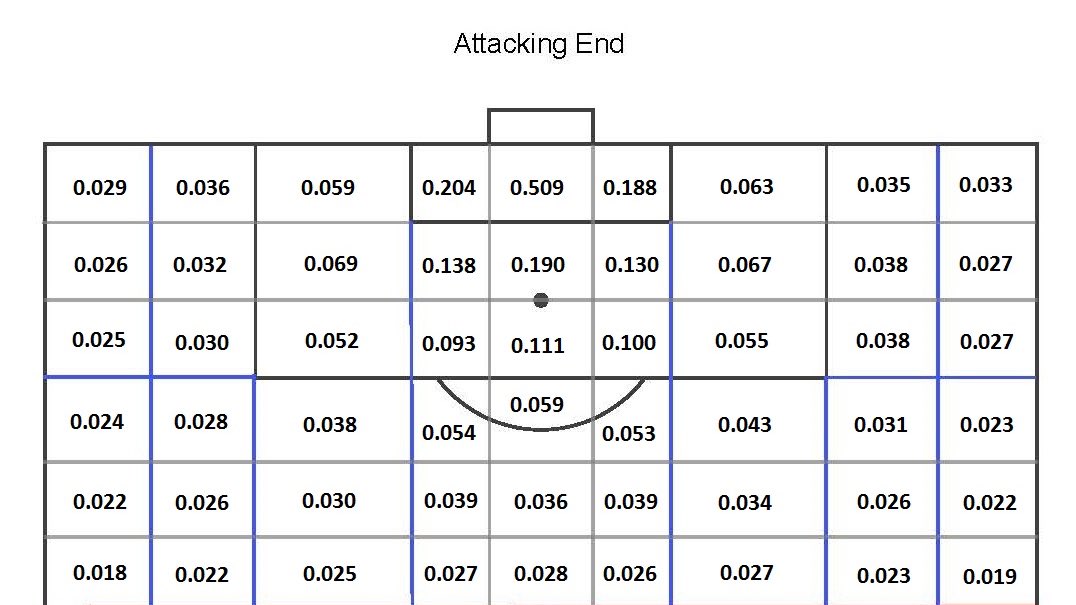
Dr. Morales also explained in his 2016 paper that “moreover, the proposed PA not only would reduce the problem of cheating or diving by attackers but also the more general one of unfair outcomes of referee mistakes close to goal.”
In 2018, he updated his proposal and areas:
In 2018, he updated his proposal and areas:
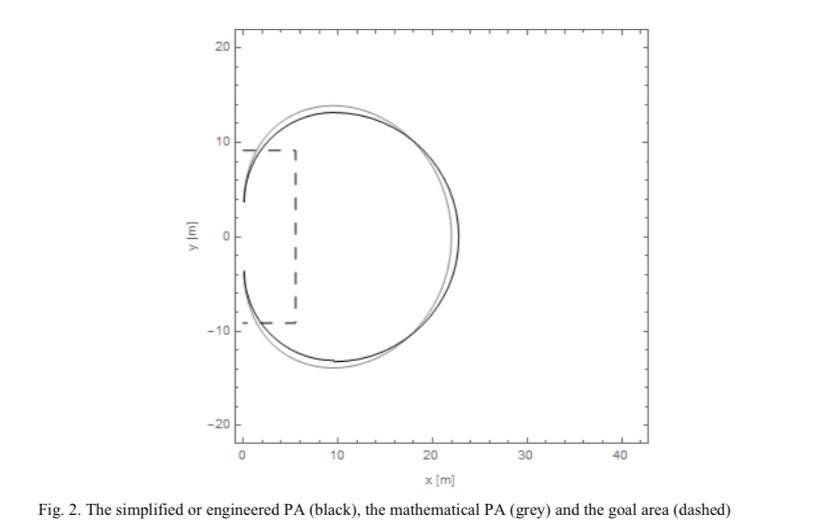
“One of the main advantages…of the new [area] is that as [the ball] moves along the limits of the current [area], the probability or chance of scoring varies quite wildly, whereas along the new perimeter the possibility of scoring is mathematically the very same.”
![“One of the main advantages…of the new [area] is that as [the ball] moves along the limits of the cu...](https://pbs.twimg.com/media/FQoUoLjWYA47aBm.jpg)
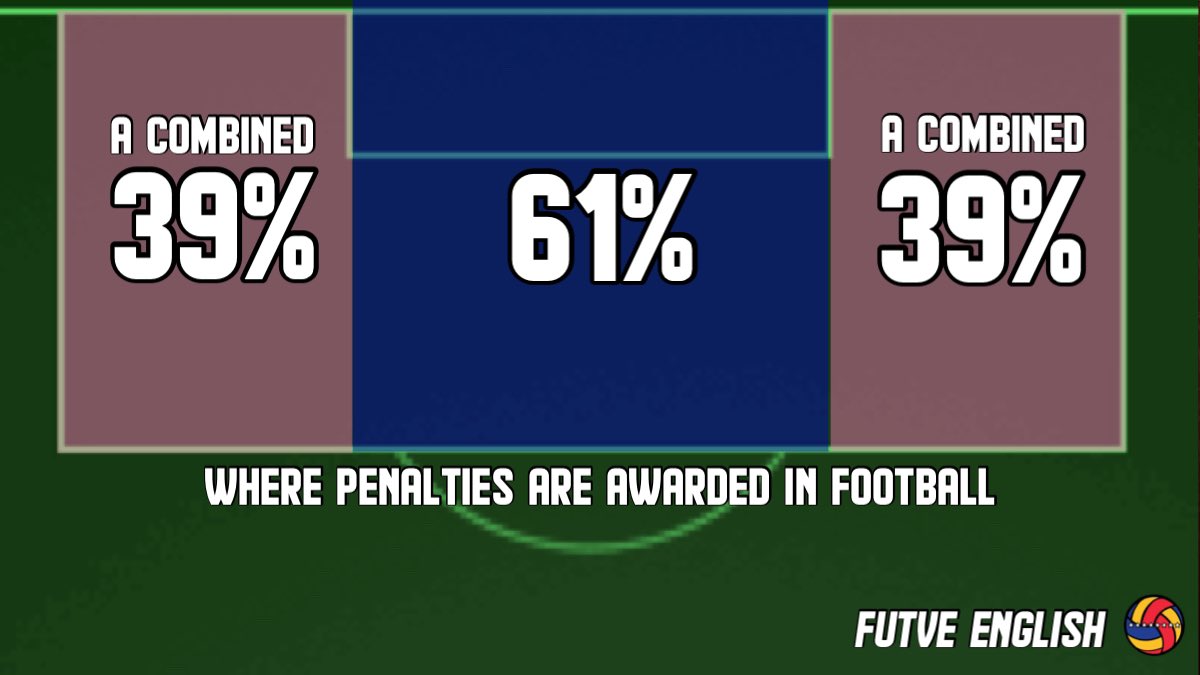
Whilst Dr. Morales’ maths is sound, Sumpter notes that “penalties on the edges of the box are exceptions rather than the rule.”
A penalty being awarded is 2.1 times more likely in the centre of the box than it is in the areas to the side of the six yard box.
A penalty being awarded is 2.1 times more likely in the centre of the box than it is in the areas to the side of the six yard box.
The penalty area has remained unchanged for well over 100 years of football but is seemingly flawed. The proposal for a circular area, founded on mathematics, is the norm in other forms of football such as futsal, and is statistically fairer.
So, what do you prefer? 🤔
So, what do you prefer? 🤔
Loading suggestions...