

1/8
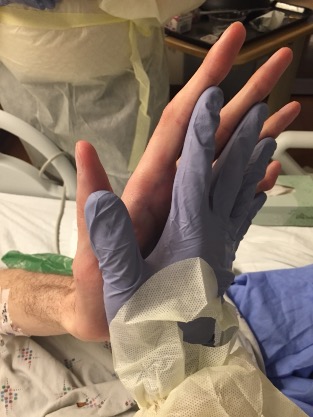
A young man presents with dyspnea. We start with his hands.
My hand is gloved in the second photo (for frame of reference, I can palm a basketball).
Our patient has a finding that should generate a hypothesis.
A young man presents with dyspnea. We start with his hands.
My hand is gloved in the second photo (for frame of reference, I can palm a basketball).
Our patient has a finding that should generate a hypothesis.

2/8
Our hypothesis takes us to the patient’s mouth.
Our hypothesis takes us to the patient’s mouth.

3/8
A high-arched palate. Otherwise note as an “ogival” arch. These arches are pointed at the top and are a key feature of Gothic architecture, beginning in the 12th century.
A high-arched palate. Otherwise note as an “ogival” arch. These arches are pointed at the top and are a key feature of Gothic architecture, beginning in the 12th century.

4/8
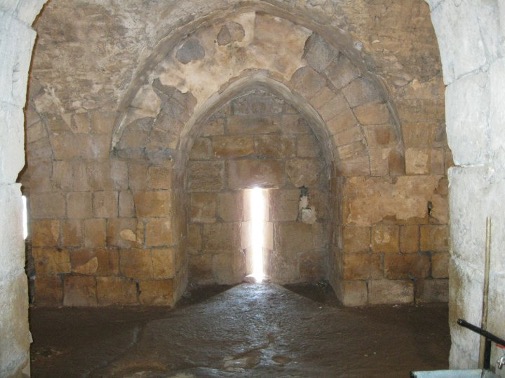
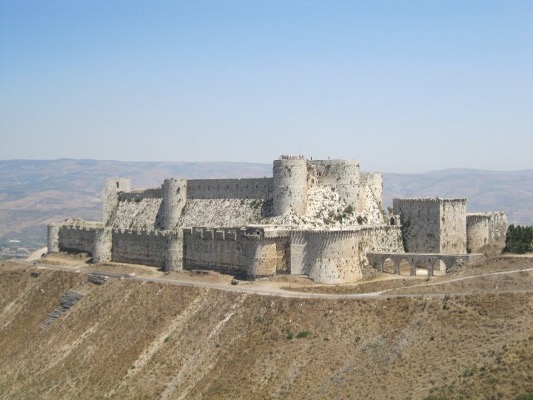
Here is a real example. I took this photo of an arrowslit inside a famous castle in Syria (Qala’at al-Hosn or Krak des Chevaliers) when I visited in 2010. There is an ogival arch right above the slit.
Here is a real example. I took this photo of an arrowslit inside a famous castle in Syria (Qala’at al-Hosn or Krak des Chevaliers) when I visited in 2010. There is an ogival arch right above the slit.
5/8
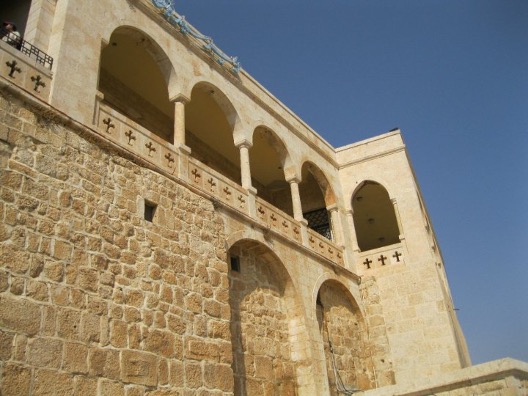
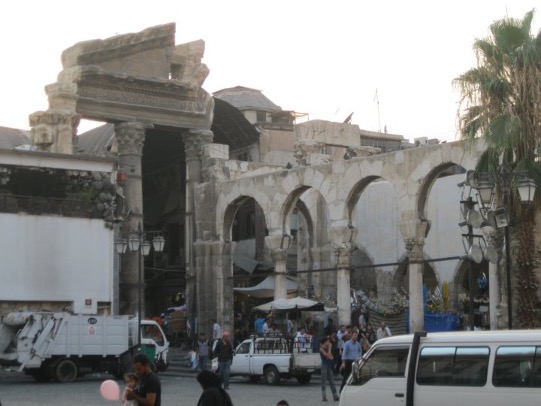
Here we see more "standard" arches in and around Damascus. Left, a monastery/church in Sednaya, a city near Damascus where Aramaic is still spoken. Right, Roman ruins thousands of years old.
But our patient's palate doesn't look like these arches. He has an ogival palate.
Here we see more "standard" arches in and around Damascus. Left, a monastery/church in Sednaya, a city near Damascus where Aramaic is still spoken. Right, Roman ruins thousands of years old.
But our patient's palate doesn't look like these arches. He has an ogival palate.
6/8
Now we must ask, how can Marfan’s syndrome lead to dyspnea? Before we auscult, we anticipate what the heart will sound like.
“The ears can’t hear what the mind doesn’t know.”
Take a listen.
(Best with headphones.)
Now we must ask, how can Marfan’s syndrome lead to dyspnea? Before we auscult, we anticipate what the heart will sound like.
“The ears can’t hear what the mind doesn’t know.”
Take a listen.
(Best with headphones.)

7/8
He has a systolic murmur and a diastolic murmur. Classic for aortic insufficiency (the systolic component is like a “flow” murmur related to the large SV generated by the extra end-diastolic volume).
So we revisit the hands. What finding is present in this video?
He has a systolic murmur and a diastolic murmur. Classic for aortic insufficiency (the systolic component is like a “flow” murmur related to the large SV generated by the extra end-diastolic volume).
So we revisit the hands. What finding is present in this video?

8/8
With our eyes and ears only (and with the benefit of a brief tour through Syria), we diagnosed this patient with Marfan’s syndrome complicated by aortic valve insufficiency. I hope you enjoyed the journey.
For more cases: physicaldiagnosispdx.com
With our eyes and ears only (and with the benefit of a brief tour through Syria), we diagnosed this patient with Marfan’s syndrome complicated by aortic valve insufficiency. I hope you enjoyed the journey.
For more cases: physicaldiagnosispdx.com

Loading suggestions...