

Can Solar + EV + Hydrogen Fuel cell can really reduce CO2 emission?
or it is just a myth?
A thread (1/36)
or it is just a myth?
A thread (1/36)
Currently, there are 410 PPM of CO2 in the atmosphere. By keeping it below 450 ppm, global warming trends can be curbed.
For this CO2 emission to go down nearly 60% from 34 billion tonnes to15 billion tonnes by 2040.
(2/36)
For this CO2 emission to go down nearly 60% from 34 billion tonnes to15 billion tonnes by 2040.
(2/36)
Widespread adoption of renewable energy and EV to drive down carbon emissions.
Is it true? It may not be. Let's find out.
(3/36)
Is it true? It may not be. Let's find out.
(3/36)
A widespread move to renewable power will cost $70 tr over 20 years which $50 tr more than current trajectory.
However, this spending may not be fruitful for reduction in global carbon emission.
Why? Keep reading.
(4/36)
However, this spending may not be fruitful for reduction in global carbon emission.
Why? Keep reading.
(4/36)
The IEA’s World Energy Outlook generated a lot of attention when it was released.
While CO2 emissions fall to 15 bn tonnes by 2040, the drivers of the reduction seem questionable.
(5/36)
While CO2 emissions fall to 15 bn tonnes by 2040, the drivers of the reduction seem questionable.
(5/36)
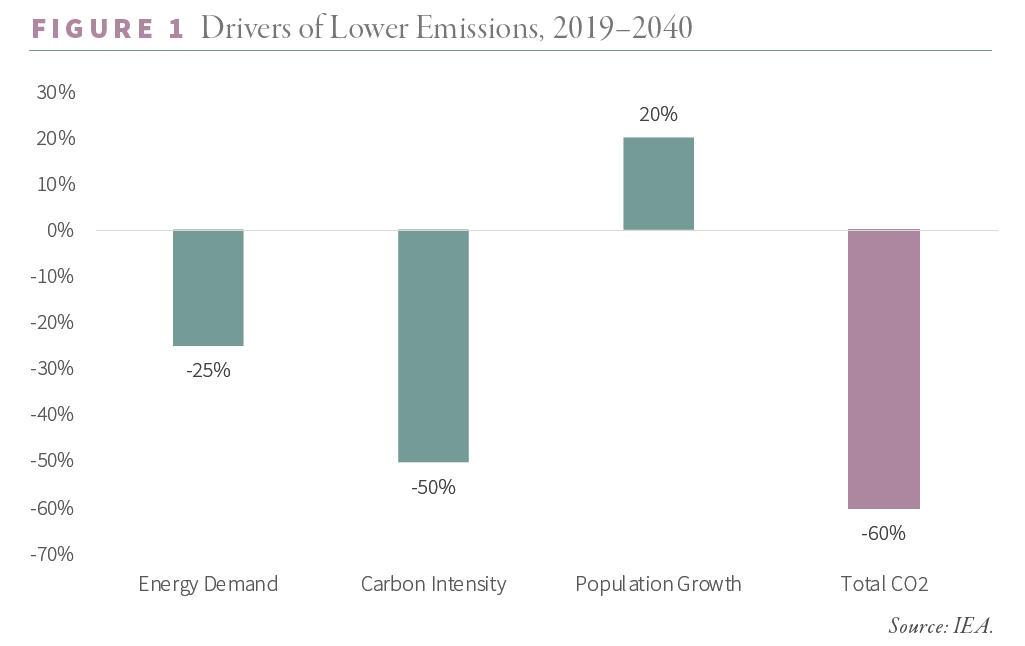
For emissions to fall 60% over the next 20 years, IEA assumes
1.Per capita energy demand will fall by 25%
2.CO2 per unit of energy drops by 50%
3.Population growth of 20%.
These three factors equate to a 60% reduction in total carbon emissions
(6/36)
1.Per capita energy demand will fall by 25%
2.CO2 per unit of energy drops by 50%
3.Population growth of 20%.
These three factors equate to a 60% reduction in total carbon emissions
(6/36)
1st assumption is very questionable because according to the BP statistical review,
there has not been a single 20-year period since 1965 where per capita demand has fallen by more than 0.1%.
(7/36)
there has not been a single 20-year period since 1965 where per capita demand has fallen by more than 0.1%.
(7/36)
Non-OECD real GDP per capita will double over the next 20 years.
The IEA projects emerging market per capita energy demand will fall by 20%. It is nearly impossible.
(8/36)
The IEA projects emerging market per capita energy demand will fall by 20%. It is nearly impossible.
(8/36)
In last two decades, real GDP doubled, and energy demand up 60%. The next doubling on GDP would result in energy demand growing by at least 30% by 2040.
However IEA expects energy demand to fall by 20%, again impossible.
(9/36)
However IEA expects energy demand to fall by 20%, again impossible.
(9/36)
If OECD per capita demand falls by 10% instead of 30% and non-OECD demand grows by 30% instead of falling by 20%, per capita primary energy will grow by 12% instead of falling by 25%, leaving total demand 50% higher than the IEA expects.
(10/36)
(10/36)
Carbon intensity per unit of energy is unlikely to fall by the 50%. It is widely believed the reduction will be driven by adoption of wind, solar, EV & hydrogen fuel cells.
But these technologies may fail to deliver the expected results.
(11/36)
But these technologies may fail to deliver the expected results.
(11/36)
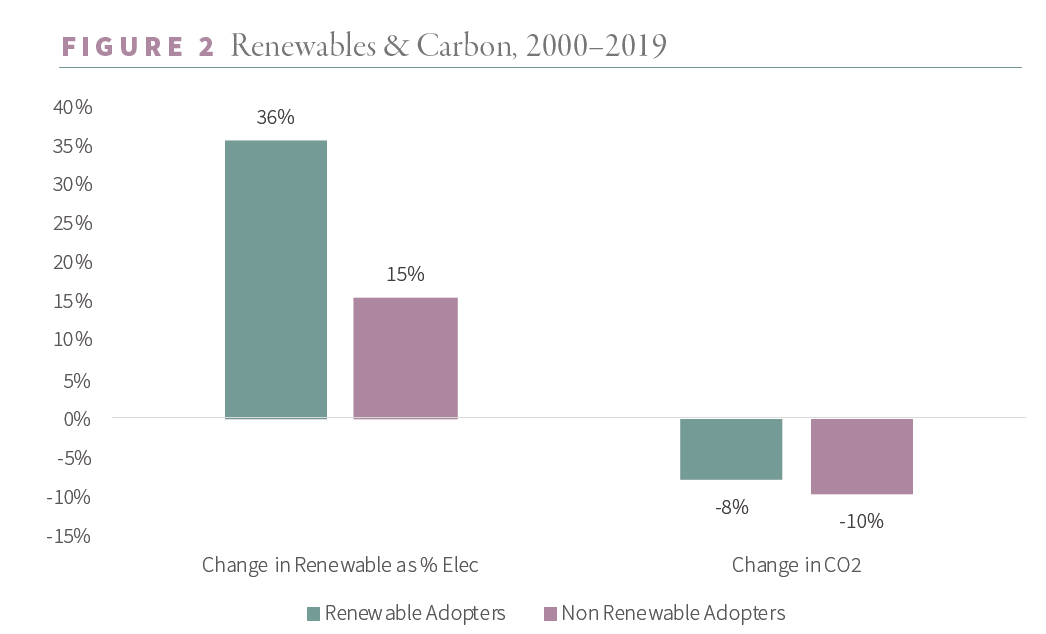
Over the past two decades, Germany has increased renewables from 2% to 40%. Over same period, carbon emissions per unit of energy fell by only 12%.
Between 2000 and 2019, the US and France went from 1% renewable electricity to 10%.
(12/36)
Between 2000 and 2019, the US and France went from 1% renewable electricity to 10%.
(12/36)
Despite this lack, US carbon intensity fell by 13% while France’s intensity fell by 10%.
Not only is this reduction a far cry from the projected 50%.reduction but Germany is also no better than US & France.
(13/36)
Not only is this reduction a far cry from the projected 50%.reduction but Germany is also no better than US & France.
(13/36)
EV will likely not deliver the necessary carbon reduction either. In Norway, EV sales have gone from zero to nearly 60% penetration between 2010 and 2019.
Despite this carbon intensity has declined by 10% compared to 11% in US where EV less than 2% of vehicle sales.
(14/36)
Despite this carbon intensity has declined by 10% compared to 11% in US where EV less than 2% of vehicle sales.
(14/36)
Wind and solar are extremely inefficient generators of electricity due
1.Low energy density
2.Their intermittency.
A solar panel dispatches 12-20% of rated capacity due to the intermittency of sunshine.
A wind turbine is better, but still less than 25%.
(15/36)
1.Low energy density
2.Their intermittency.
A solar panel dispatches 12-20% of rated capacity due to the intermittency of sunshine.
A wind turbine is better, but still less than 25%.
(15/36)
As a result, excess capacity and a storage system are required to smooth out the inherent variability.
Low load factors and “buffering” of intermittency results in poor “energy return on energy invested” (EROEI).
(16/36)
Low load factors and “buffering” of intermittency results in poor “energy return on energy invested” (EROEI).
(16/36)
25–60% of the energy generated in renewable consumed internally, compared with 3% for a modern gas plant.
Solar and wind generate CO2 during their construction and maintenance.
This partially explains why German carbon intensity only fell by only 12%.
(17/36)
Solar and wind generate CO2 during their construction and maintenance.
This partially explains why German carbon intensity only fell by only 12%.
(17/36)
EV also involve energy intensive lithium-ion batteries. Over the life of a typical EV, nearly 40% total energy goes into manufacturing the battery.
The IEA expects electric vehicles will represent nearly 15% of total transportation energy by 2040.
(18/36)
The IEA expects electric vehicles will represent nearly 15% of total transportation energy by 2040.
(18/36)
This equates to 850 mm EVs and 65 terawatt hrs of batteries.
This is a staggering amount comapred to global lithium-ion manufacturing capacity.
These batteries will require an incredible 2 billion tonnes of oil equivalent to build.
(19/36)
This is a staggering amount comapred to global lithium-ion manufacturing capacity.
These batteries will require an incredible 2 billion tonnes of oil equivalent to build.
(19/36)
Much of the carbon savings will be undone by generating the power in the first place.
The IEA’s proposal assumes wind & solar make up 50% of all electricity and 850 mm EV will be on the road.
These initiatives to reduce CO2 by 55% or 18 bn tonnes per year. (20/36)
The IEA’s proposal assumes wind & solar make up 50% of all electricity and 850 mm EV will be on the road.
These initiatives to reduce CO2 by 55% or 18 bn tonnes per year. (20/36)
However, simply moving away from coal towards natural gas would save nearly 14 bn
tonnes of CO2 per year.
Renewables would save an incremental 4 bn tonnes only compared with the next cleanest option.
(21/36)
tonnes of CO2 per year.
Renewables would save an incremental 4 bn tonnes only compared with the next cleanest option.
(21/36)
Huge energy is required to build renewable capacity and manufacture batteries.
The move toward renewables and EVs would generate 45 billion tonnes of incremental CO2. Therefore, 10 years of carbon “savings” would be spent on the energy transition itself.
(22/36)
The move toward renewables and EVs would generate 45 billion tonnes of incremental CO2. Therefore, 10 years of carbon “savings” would be spent on the energy transition itself.
(22/36)
Life of equipment
Battery: 6-15 years
Wind Turbine: 20 years
PV Solar panels: 25 years
A huge amount of the expected carbon savings will be undone by the necessary manufacturing. At worst, the impact could be net detrimental.
(23/36)
Battery: 6-15 years
Wind Turbine: 20 years
PV Solar panels: 25 years
A huge amount of the expected carbon savings will be undone by the necessary manufacturing. At worst, the impact could be net detrimental.
(23/36)
Move toward gas would be much more energy efficient. Countries have seen better results while spending trillions less.
Nuclear power can provide reliable carbon-free power. Moving towards nuclear would allow for the greatest CO2 reduction while saving trillions.
(24/36)
Nuclear power can provide reliable carbon-free power. Moving towards nuclear would allow for the greatest CO2 reduction while saving trillions.
(24/36)
The major problem is the energy-intensive lithium-ion battery. To address this issue, hydrogen fuel cell technology is proposed as a possible solution.
This marks the second investment mania in hydrogen fuel cells in 30 years.
(25/36)
This marks the second investment mania in hydrogen fuel cells in 30 years.
(25/36)
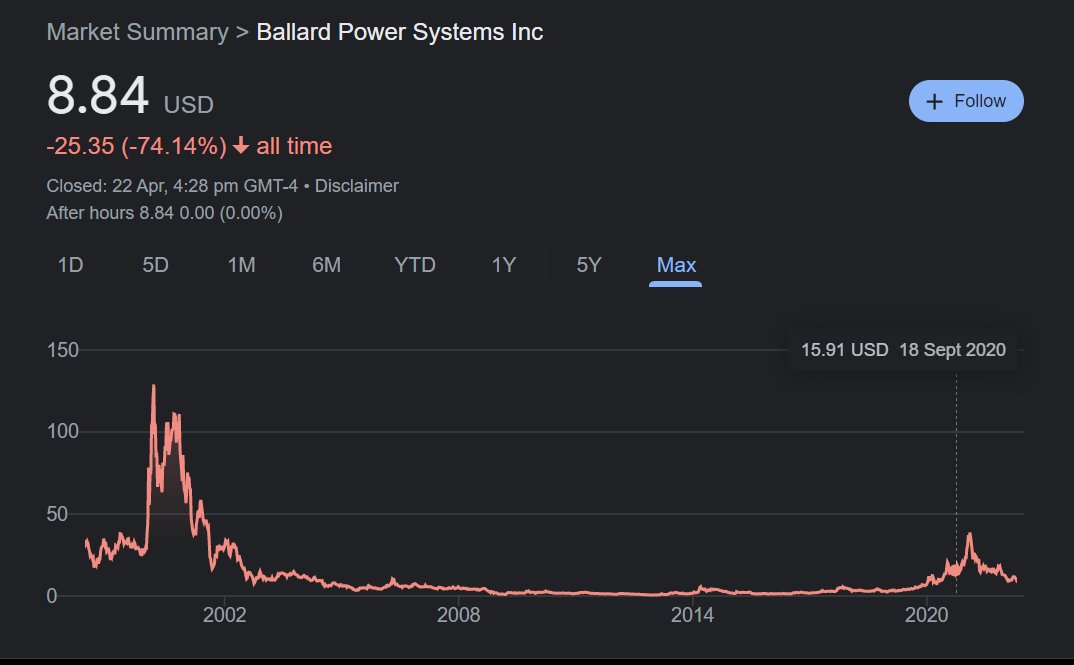
In the late 1990s, fuel cells went through an impressive bull market that saw Ballard rise 1400% over 3 years before crashing 99%
Recently, similar trend has been observed. Unfortunately, many of the technical issues that led to the previous hydrogen bust still remain.
(26/nn)
Recently, similar trend has been observed. Unfortunately, many of the technical issues that led to the previous hydrogen bust still remain.
(26/nn)

Fuel cell is neither energy-intensive nor inefficient technology.
To make hydrogen, electricity is used to electrolyze water resulting in oxygen and hydrogen gas. The gas is then compressed or liquefied for transport to the end user.
(27/36)
To make hydrogen, electricity is used to electrolyze water resulting in oxygen and hydrogen gas. The gas is then compressed or liquefied for transport to the end user.
(27/36)
In the fuel cell, hydrogen is reformed back into water producing an electrical current used to power a motor.
Not having to manufacture an energy-intensive battery saves on upfront energy dramatically.
(28/36)
Not having to manufacture an energy-intensive battery saves on upfront energy dramatically.
(28/36)
Unfortunately, savings are “spent” on the poor overall energy efficiency of the system.
Energy loss
1. Powering an electrolyzer: 30%
2. Compressing or liquefying the gas: 15%
3. Generating an electric current in the fuel cell: 30%
(29/36)
Energy loss
1. Powering an electrolyzer: 30%
2. Compressing or liquefying the gas: 15%
3. Generating an electric current in the fuel cell: 30%
(29/36)
70% of the electricity used to power the system is wasted.
Hydrogen fuel cells requires more total energy to power a car than standard EVs despite their lithium-ion battery.
(30/36)
Hydrogen fuel cells requires more total energy to power a car than standard EVs despite their lithium-ion battery.
(30/36)
Wind or solar power based hydrogen (“green” hydrogen) makes the overall energy efficiency become even worse.
To achieve a reduction in net emissions requires the original electricity be nearly 4x less carbon intensive to make up for the 70% energy lost in the system.
(31/36)
To achieve a reduction in net emissions requires the original electricity be nearly 4x less carbon intensive to make up for the 70% energy lost in the system.
(31/36)
Solar and wind powered “green hydrogen” vehicles would not generate any net carbon savings compared with gasoline or diesel and would likely be much worse.
The only source that meets these criteria is nuclear fission.
(32/36)
The only source that meets these criteria is nuclear fission.
(32/36)
A modern reactor generates electricity with EROEI of 100 vs 30 for gas & 1–4 for renewable
Only 1% of the generated electricity is consumed internally vs 3% for gas & 25–60% renewable
Only a combination of nuclear & efficient natural gas can hope to get close.
(33/36)
Only 1% of the generated electricity is consumed internally vs 3% for gas & 25–60% renewable
Only a combination of nuclear & efficient natural gas can hope to get close.
(33/36)
Crude is extremely energy dense, invaluable in powering things like cars, trucks & planes.
Aggressive push toward nuclear and gas would allow global energy demand to grow 35% in next 2 decades while still cutting carbon emissions by nearly half.
(34/36)
Aggressive push toward nuclear and gas would allow global energy demand to grow 35% in next 2 decades while still cutting carbon emissions by nearly half.
(34/36)
Such plan would save $30 trillion, some of which can be used to pursue the more promising carbon-mitigation technologies
For example, Boston Metal is exploring ways to produce carbon-free steel (8% of global emissions).
(35/36)
For example, Boston Metal is exploring ways to produce carbon-free steel (8% of global emissions).
(35/36)
Technology (Battery & Renewables) are evolving and better solutions can always be invented especially when people like Elon Musk is still living on planet Earth
Disc: Source of this thread is an article by “Goehring & Rozencwajg”. Felt like highlighting the antithesis.
(36/36)
Disc: Source of this thread is an article by “Goehring & Rozencwajg”. Felt like highlighting the antithesis.
(36/36)
Loading suggestions...