

@AnandOjhaG @VVVStockAnalyst @Disciplined_Inv It only means that the gain will likely not be repeated unless they stock up more inventory AND prices go up again. On the flipside, if you go heavy on inventory and prices decline, you eat the losses too. Happens frequently to oil refiners and crude-derivative players.
@AnandOjhaG @VVVStockAnalyst @Disciplined_Inv In some industries pricing changes very quickly and if you loaded up on inventory thinking prices will keep rising, but they do not - then you're in trouble on the way down. This is why 'commodity' businesses are called so.
@AnandOjhaG @VVVStockAnalyst @Disciplined_Inv However, the extent varies depending on how much RM/inventory you generally carry - many companies will not load huge inventory at high prices - they will wait - can work out either way, you only know in hindsight who is nimble and smart, and who is not.
@AnandOjhaG @VVVStockAnalyst @Disciplined_Inv For textile players in the cotton field, for example, you NEED to buy your cotton requirements for 1-2 quarters minimum, high prices or not. This is because availability is seasonal. So the only case you will not load up fully is if you expect supply from elsewhere.
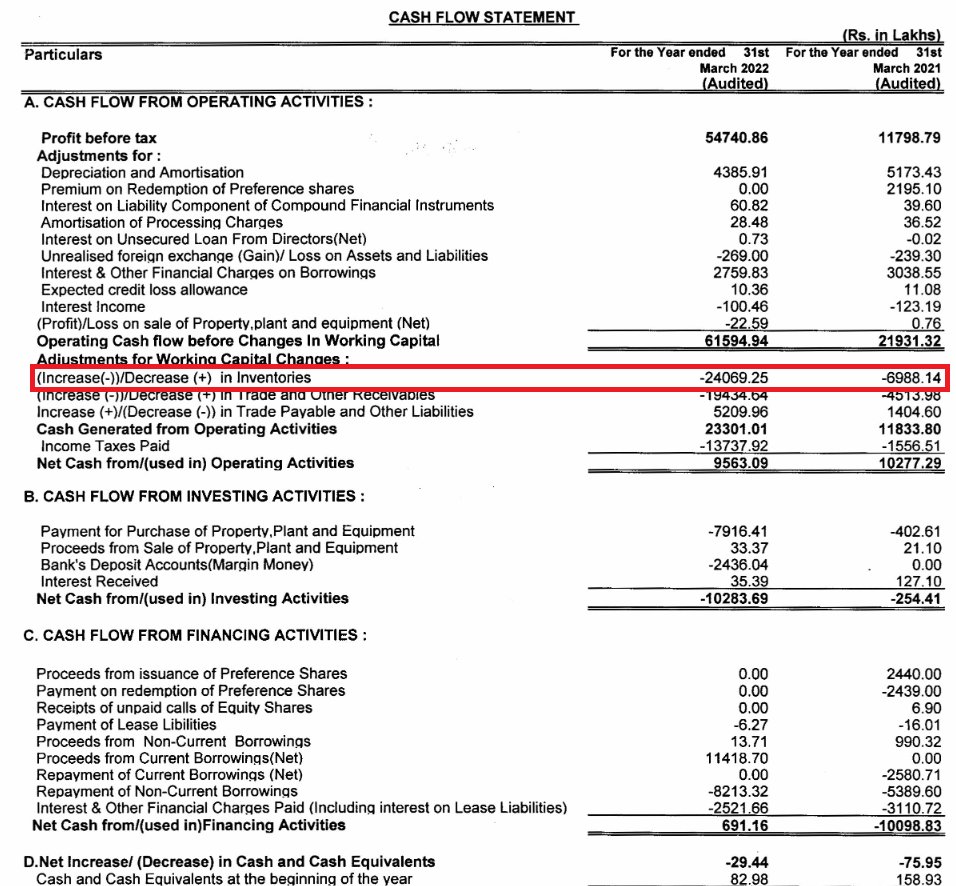
@AnandOjhaG @VVVStockAnalyst @Disciplined_Inv Check out inventory loaded by Sportking Ltd, one of the largest procurers of cotton in India. If you need to fulfill orders, you have to load up at whatever price is available. Btw, government removed import duty a week or two ago on cotton to address availability and pricing.
Loading suggestions...