

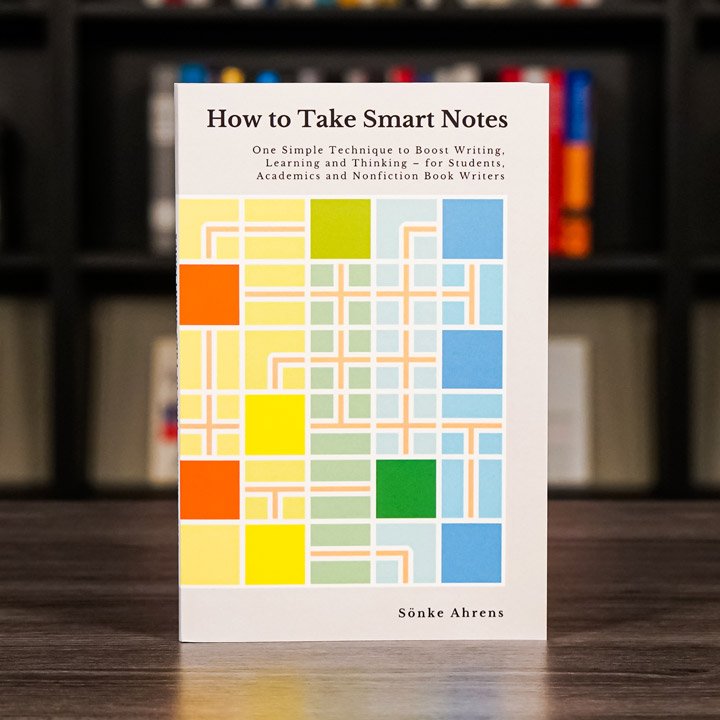
Top 10 Lessons From "How to Take Smart Notes" by Sonke Ahrens
1. Purpose
Willpower is never as effective as having a meaningful and well-defined task. You may not have willpower, but the fact that you do not have to use it indicates that you have prepared yourself for success.
This is where and note-taking organization comes into play.
Willpower is never as effective as having a meaningful and well-defined task. You may not have willpower, but the fact that you do not have to use it indicates that you have prepared yourself for success.
This is where and note-taking organization comes into play.
2. Structure
A good structure enables you to do so, to move seamlessly from one task to the next – without jeopardizing the entire arrangement or losing sight of the big picture.
Having a clear structure to work within is not the same as making plans for something.
A good structure enables you to do so, to move seamlessly from one task to the next – without jeopardizing the entire arrangement or losing sight of the big picture.
Having a clear structure to work within is not the same as making plans for something.
3. Deal with complex topics
To deal with complexity, keep things as simple as possible and adhere to a few basic principles.
The structure's simplicity allows us to build complexity where we want it: on the content level.
To deal with complexity, keep things as simple as possible and adhere to a few basic principles.
The structure's simplicity allows us to build complexity where we want it: on the content level.
4. Importance of writing
If you want to remember something in the long run, you must write it down.
To truly comprehend something, you must translate it into your own words.
Thinking happens on paper just as much as it does in your head.
If you want to remember something in the long run, you must write it down.
To truly comprehend something, you must translate it into your own words.
Thinking happens on paper just as much as it does in your head.
5. Ideas
The goal is to develop ideas and arguments rather than to collect them.
Is the new information contradicting, correcting, supporting, or adding to what you already have in your head?
Can you combine concepts to create something new? What are the questions they raise?
The goal is to develop ideas and arguments rather than to collect them.
Is the new information contradicting, correcting, supporting, or adding to what you already have in your head?
Can you combine concepts to create something new? What are the questions they raise?
6. Simplicity
We have a tendency to believe that large transformations must begin with a similarly large idea.
However, it is often the simplicity of an idea that makes it so powerful (and often overlooked in the beginning).
We have a tendency to believe that large transformations must begin with a similarly large idea.
However, it is often the simplicity of an idea that makes it so powerful (and often overlooked in the beginning).
7. Brain
Psychologists used to think of the brain as a limited storage that makes learning difficult later in life.
However, we now know that the more connected our existing information is, the easier it is to learn, because new information can dock to that information.
Psychologists used to think of the brain as a limited storage that makes learning difficult later in life.
However, we now know that the more connected our existing information is, the easier it is to learn, because new information can dock to that information.
8. Breaks improve your long-term memory
Breaks are much more than just a chance to rest. They are necessary for learning.
They enable the brain to process information, store it in long-term memory, and prepare it to process new information.
Breaks are much more than just a chance to rest. They are necessary for learning.
They enable the brain to process information, store it in long-term memory, and prepare it to process new information.
9. Selectivity
While selectivity is essential for smart note-taking, it is also critical to be selective in the right way.
We are naturally drawn to things that we already believe we know, when we should actually seek out contradictory facts that challenge our beliefs.
While selectivity is essential for smart note-taking, it is also critical to be selective in the right way.
We are naturally drawn to things that we already believe we know, when we should actually seek out contradictory facts that challenge our beliefs.
10. Information network
Connecting a piece of information to many meaningful contexts is useful learning. Connect your notes with other notes.
Making these connections creates a self-sustaining network of interconnected ideas and facts that act as cues for one another.
Connecting a piece of information to many meaningful contexts is useful learning. Connect your notes with other notes.
Making these connections creates a self-sustaining network of interconnected ideas and facts that act as cues for one another.
Thank you for reading🙏
If you found this thread valuable, please:
✅RT the first tweet and help others find this thread
✅Follow me @ReiniLackner
If you found this thread valuable, please:
✅RT the first tweet and help others find this thread
✅Follow me @ReiniLackner
Loading suggestions...