

[QQT: BIGGEST MYTHS ABOUT RAMAYAN]
1/25
Daśaratha only had 3 wives, Ravan came to Sita’s “Swayamvar,” Lakshman and Sita never cursed each other, Lakshman drew a line, and Ravan tricked Sita into crossing it.
Gospel truth, right?
Turns out…not really.
1/25
Daśaratha only had 3 wives, Ravan came to Sita’s “Swayamvar,” Lakshman and Sita never cursed each other, Lakshman drew a line, and Ravan tricked Sita into crossing it.
Gospel truth, right?
Turns out…not really.
2/25
I recently went through some sections of Valmiki’s work and learned things that shook my understanding of the epic. For starters, none of the above claims seems to match what Valmiki wrote!
With this thread, I intend to share my findings. Correct me if am wrong.
I recently went through some sections of Valmiki’s work and learned things that shook my understanding of the epic. For starters, none of the above claims seems to match what Valmiki wrote!
With this thread, I intend to share my findings. Correct me if am wrong.
3/25
Claim 1: Daśaratha only had three wives.
Wrong.
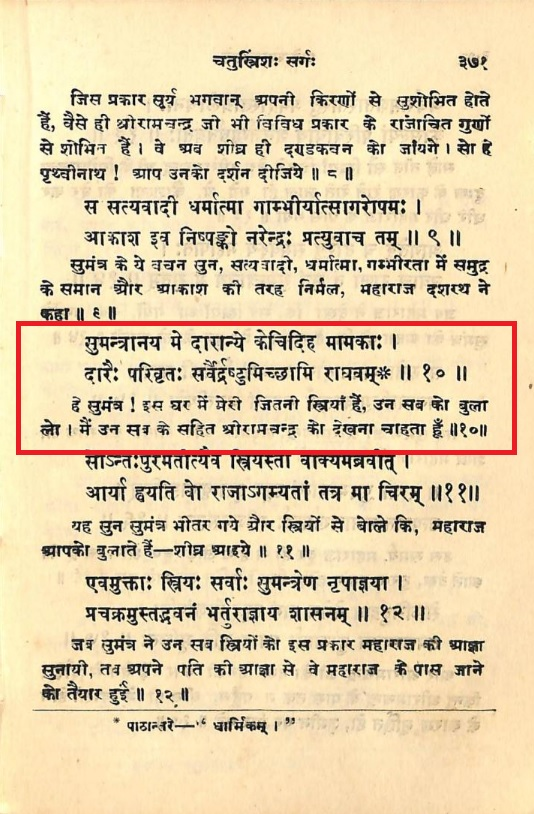
The mention of the king’s consorts comes in Ayodhya Kanda, verses 34.10–13. In 34.10, the king asks one of his ministers to summon “all my women" along with Ram for some discussion.
All, of course, could mean just three.
Claim 1: Daśaratha only had three wives.
Wrong.
The mention of the king’s consorts comes in Ayodhya Kanda, verses 34.10–13. In 34.10, the king asks one of his ministers to summon “all my women" along with Ram for some discussion.
All, of course, could mean just three.
4/25
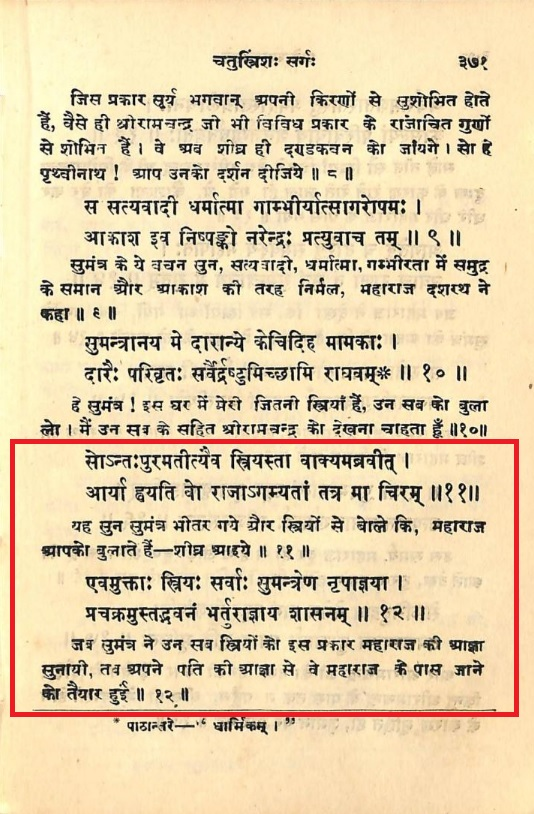
In 34.11 and 12, the minister (Sumantra) leaves to carry out his king’s orders, enters the place where the women live, and relays the orders to them. The ladies then prepare to leave.
Again, no sign that there’s any number of them but three.
In 34.11 and 12, the minister (Sumantra) leaves to carry out his king’s orders, enters the place where the women live, and relays the orders to them. The ladies then prepare to leave.
Again, no sign that there’s any number of them but three.
5/25
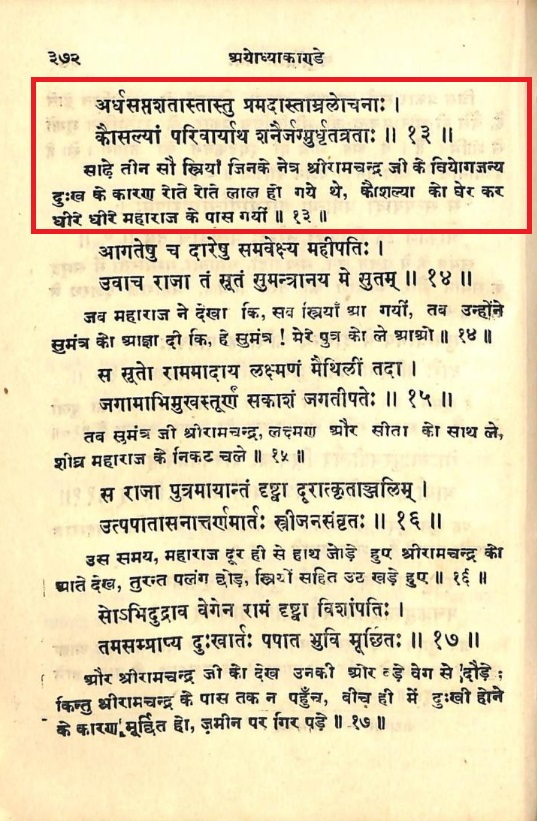
And then comes 34.13, the verse that finally gives a number.
And what’s that number?
Not three, not fifty, not a hundred…it’s a good 350.
That’s the number of women the king had, although Valmiki doesn’t specify if they’re all wives or just concubines.
And then comes 34.13, the verse that finally gives a number.
And what’s that number?
Not three, not fifty, not a hundred…it’s a good 350.
That’s the number of women the king had, although Valmiki doesn’t specify if they’re all wives or just concubines.
6/25
Claim 2: Ravan participated in Sita’s Swayamvar
Also wrong.
First of all, there’s no mention of the word “swayamvar” in the entire epic. Swayamvar has generally been presented as Sita’s condition that she’d only marry whoever manages to string an enchanted special bow.
Claim 2: Ravan participated in Sita’s Swayamvar
Also wrong.
First of all, there’s no mention of the word “swayamvar” in the entire epic. Swayamvar has generally been presented as Sita’s condition that she’d only marry whoever manages to string an enchanted special bow.
7/25
This condition exists, no doubt. But not as Sita’s but as her dad Janak’s. It’s he who has vowed to marry his girl only to the one who successfully strings that bow. It’s an open-ended challenge where anyone was free to visit at their convenience. There was no ceremony.
This condition exists, no doubt. But not as Sita’s but as her dad Janak’s. It’s he who has vowed to marry his girl only to the one who successfully strings that bow. It’s an open-ended challenge where anyone was free to visit at their convenience. There was no ceremony.
8/25
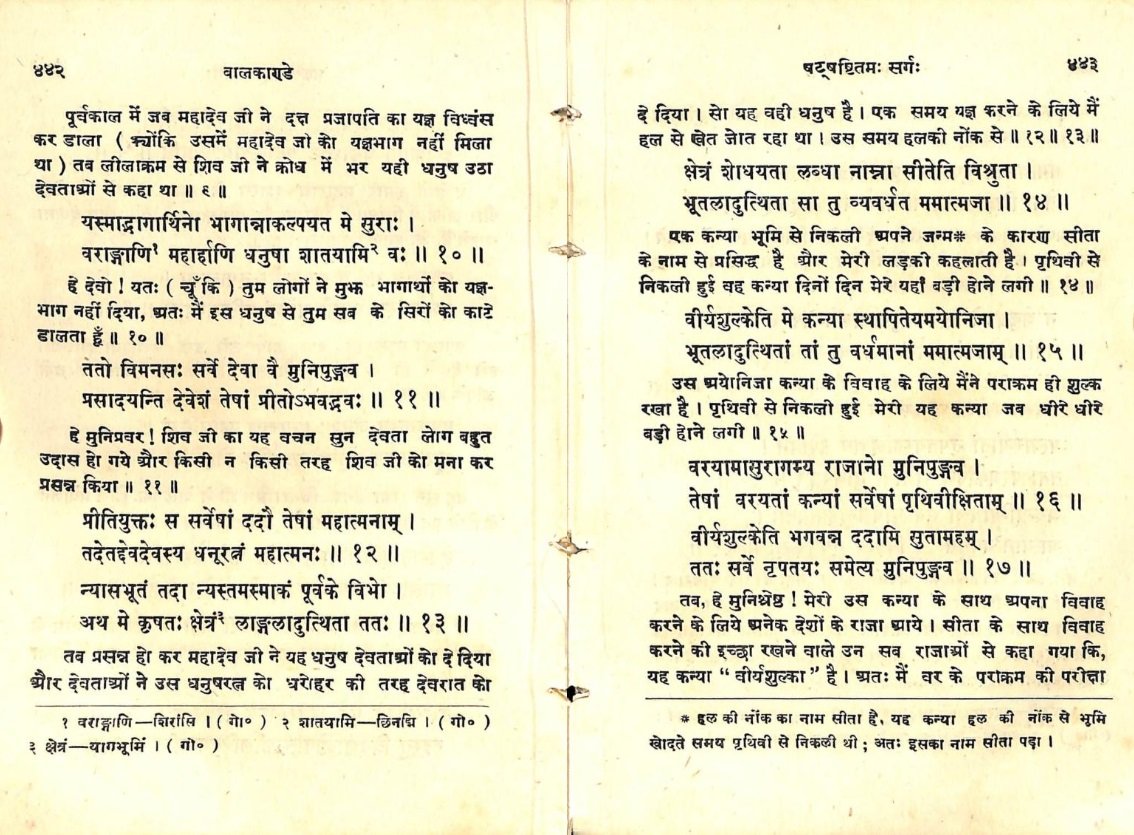
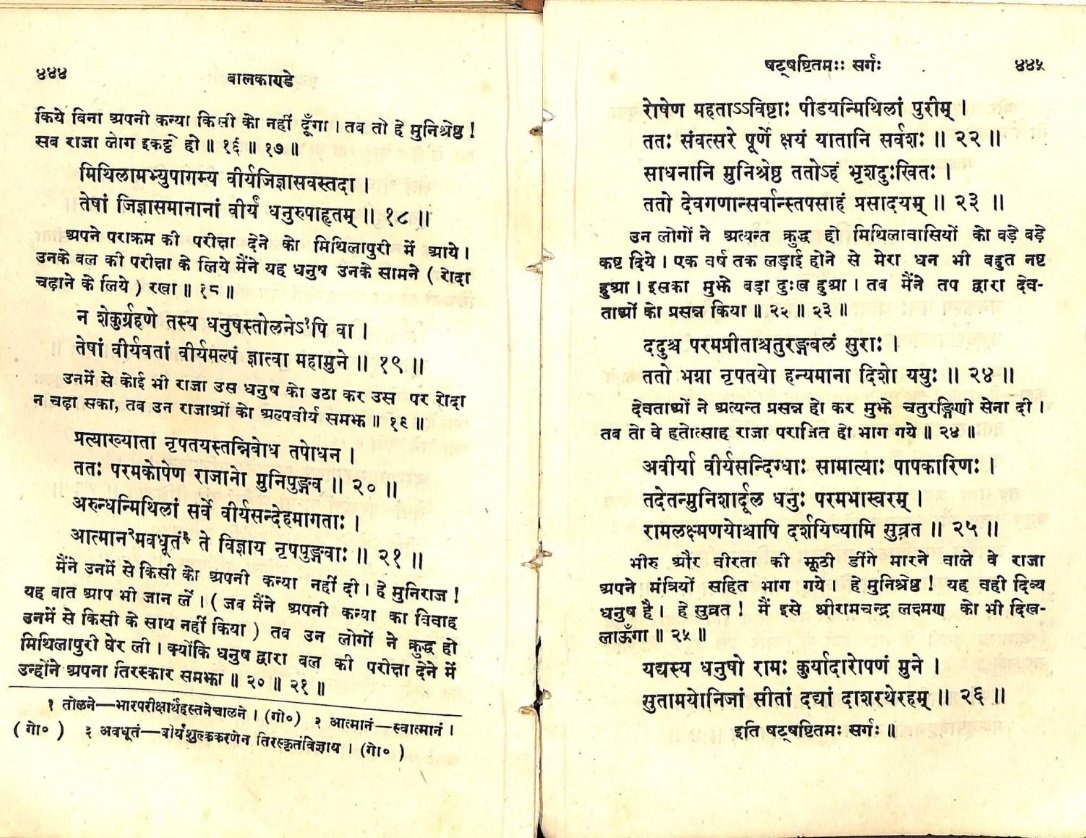
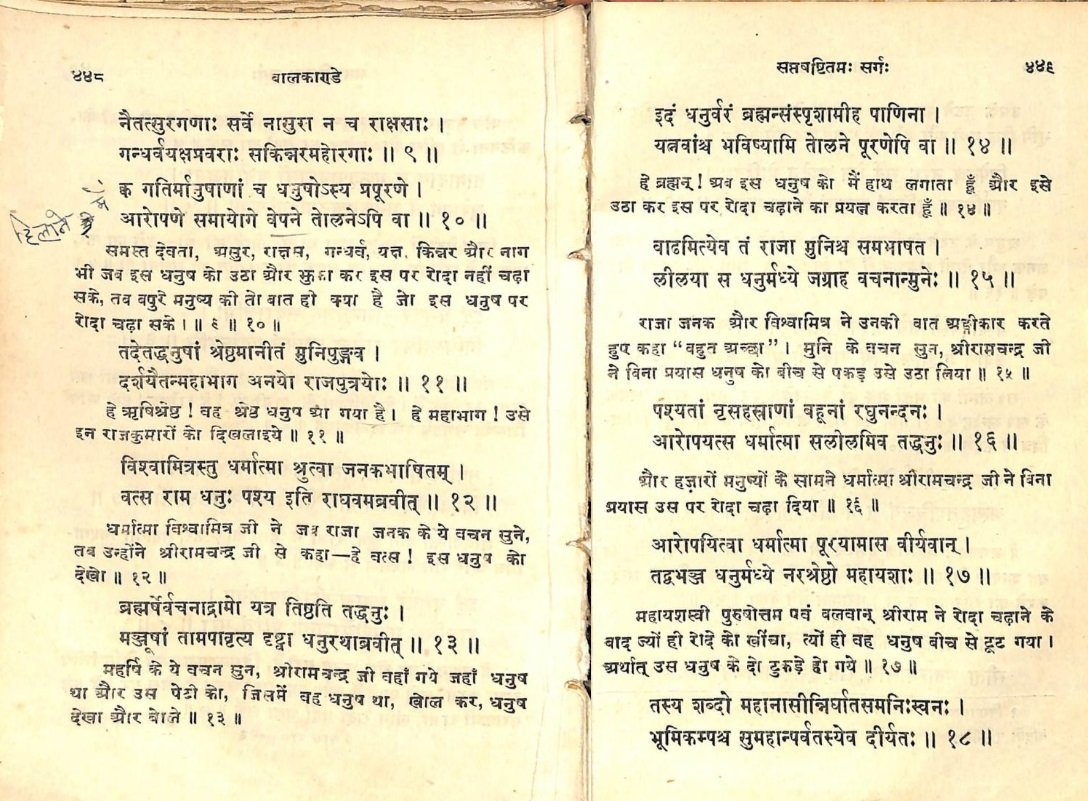
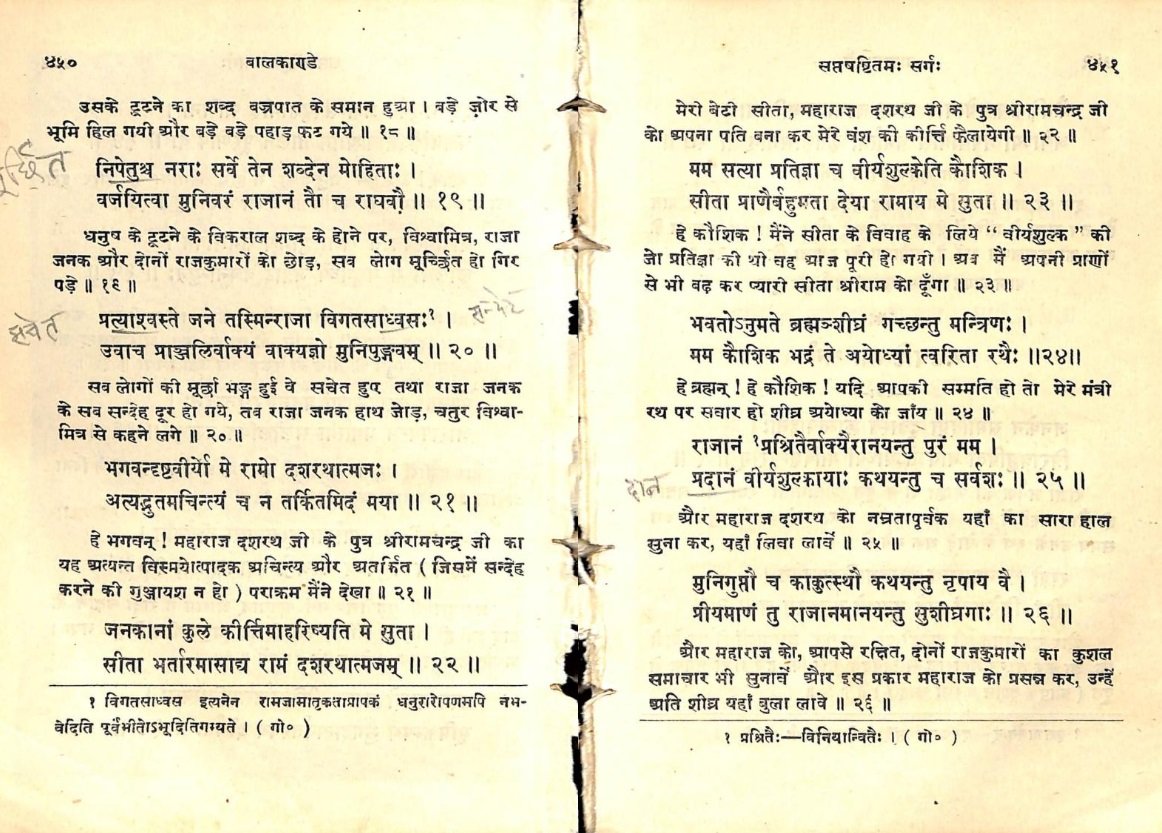
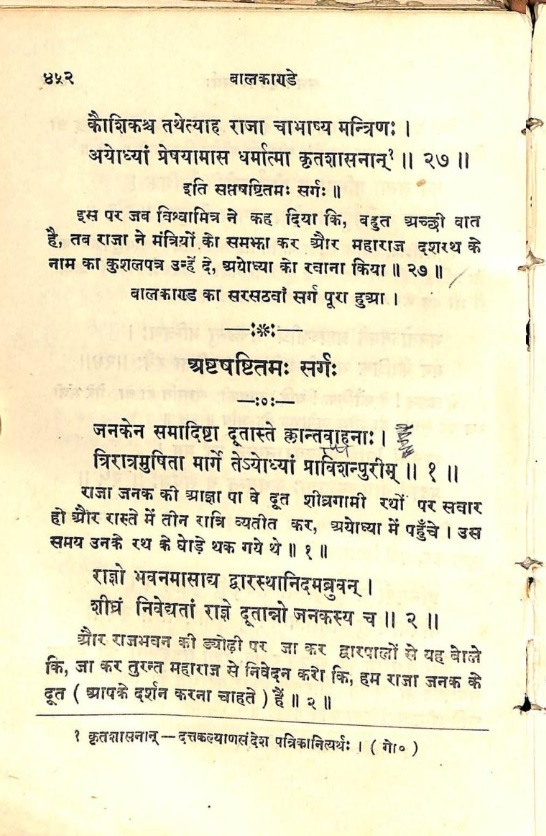
The details of this marriage appear in Bala Kanda verses 66.1–26, 67.1–13, and 68.1–21. Let’s investigate in parts.
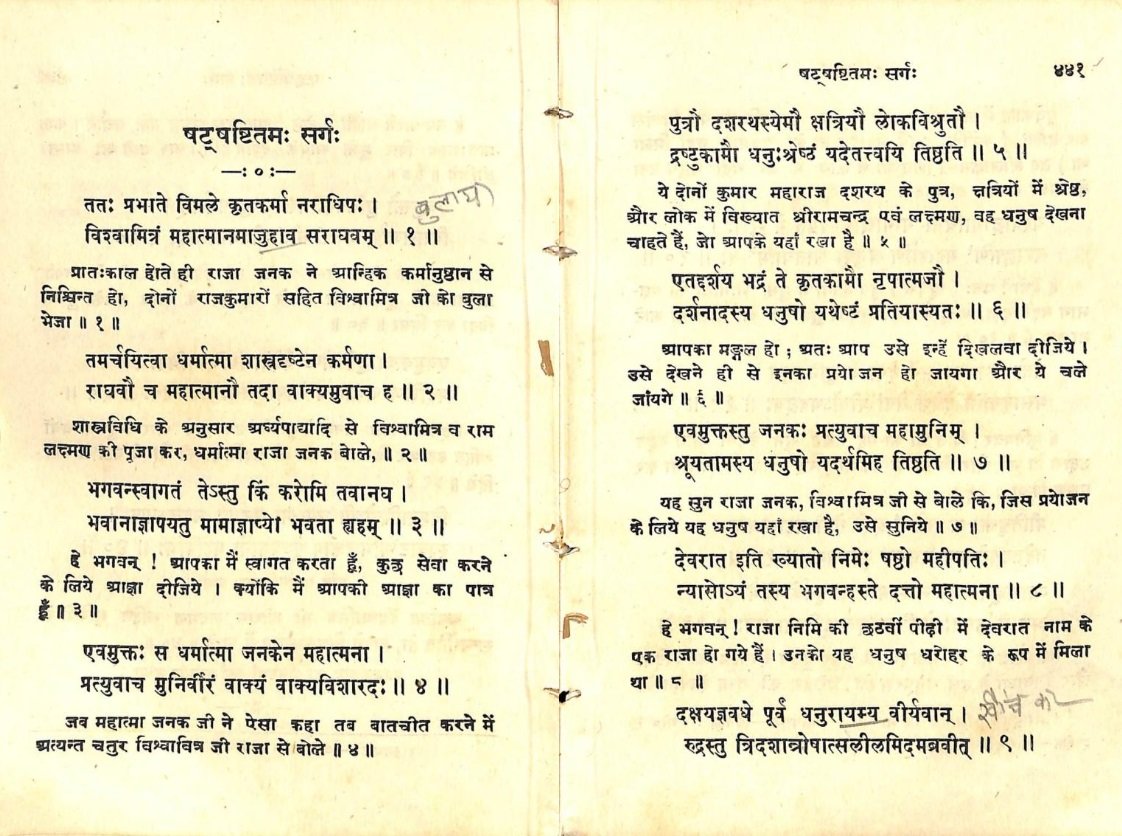
Verses 66.1-8 set the tone; here, Vishvamitra visits Janak with Ram and Lakshman, introduces the boys to him, and requests to see the bow.
The details of this marriage appear in Bala Kanda verses 66.1–26, 67.1–13, and 68.1–21. Let’s investigate in parts.
Verses 66.1-8 set the tone; here, Vishvamitra visits Janak with Ram and Lakshman, introduces the boys to him, and requests to see the bow.
9/25
Subsequently, Janak proceeds to relate to his guests the background of the bow and also his precondition for his daughter’s marriage. He mentions several princes who tried and lost, but not in some ceremony. Also, no mention of Ravan as an aspirant.
Subsequently, Janak proceeds to relate to his guests the background of the bow and also his precondition for his daughter’s marriage. He mentions several princes who tried and lost, but not in some ceremony. Also, no mention of Ravan as an aspirant.
10/25
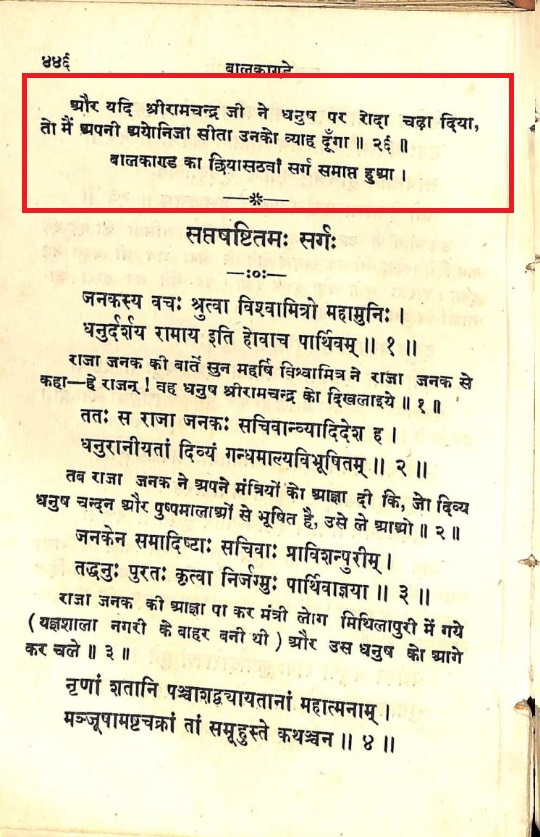
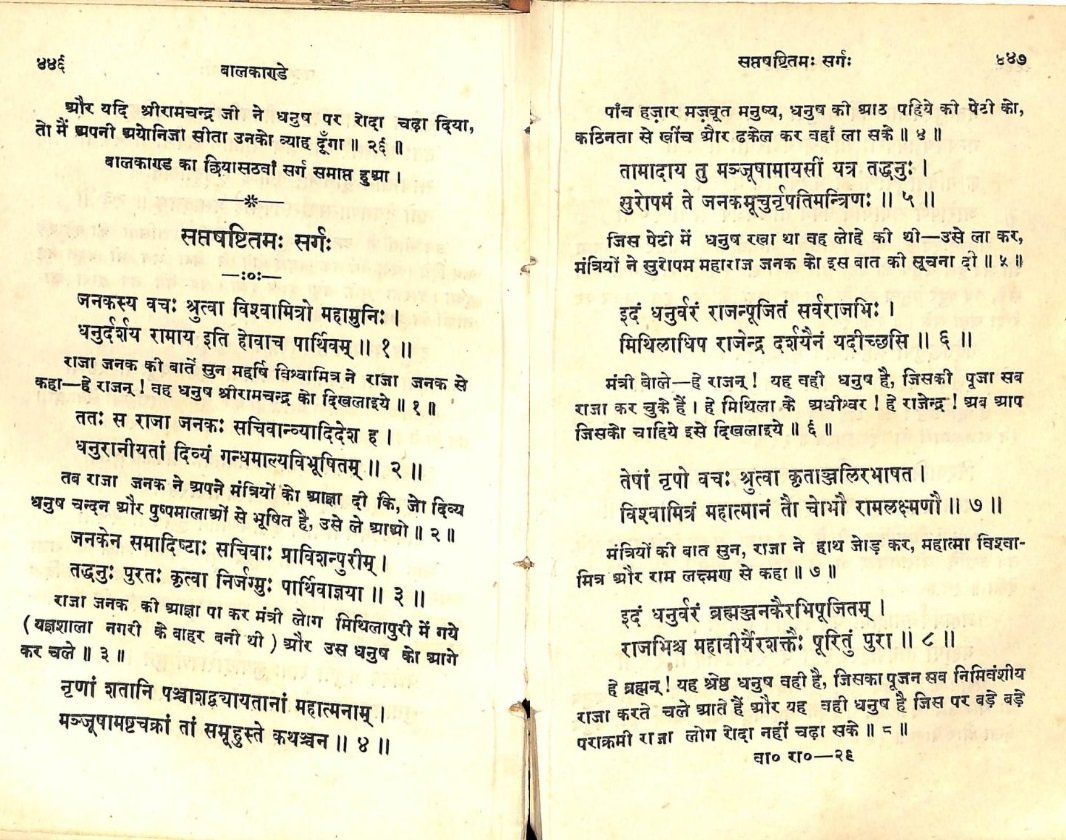
Chapter 67 is all about Ram trying his luck with the bow and succeeding, thus scoring Sita’s hand in marriage. The actual wedding takes place a couple of chapters later but the deal is sealed in 67.1–27. Even here, there’s no mention of Ravan.
Chapter 67 is all about Ram trying his luck with the bow and succeeding, thus scoring Sita’s hand in marriage. The actual wedding takes place a couple of chapters later but the deal is sealed in 67.1–27. Even here, there’s no mention of Ravan.
11/25
Claim 3: Lakshman and Sita never cursed each other
Okay we know Lakshman was reluctant to leave Sita behind when she asked him to look out for Ram in the jungle. But how reluctant? And how polite was he?
Before that, how nice was Sita to him in her demand?
Claim 3: Lakshman and Sita never cursed each other
Okay we know Lakshman was reluctant to leave Sita behind when she asked him to look out for Ram in the jungle. But how reluctant? And how polite was he?
Before that, how nice was Sita to him in her demand?
12/25
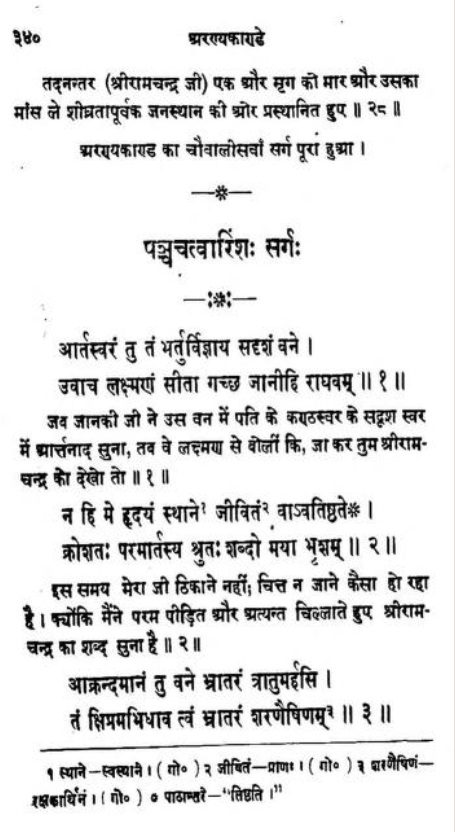
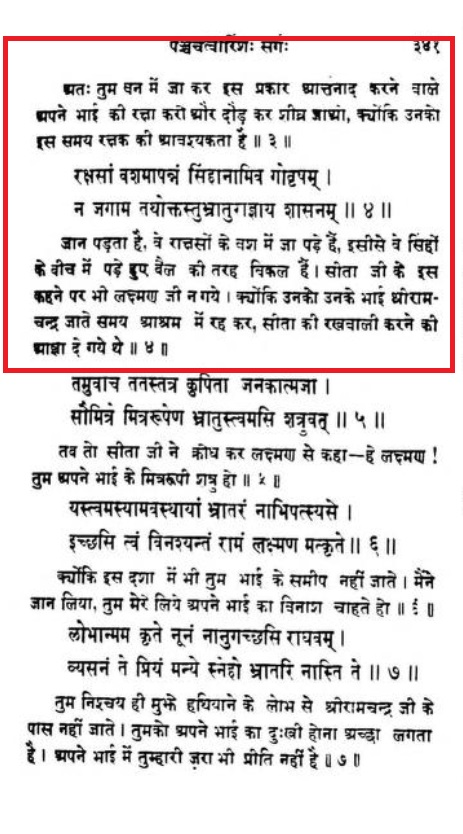
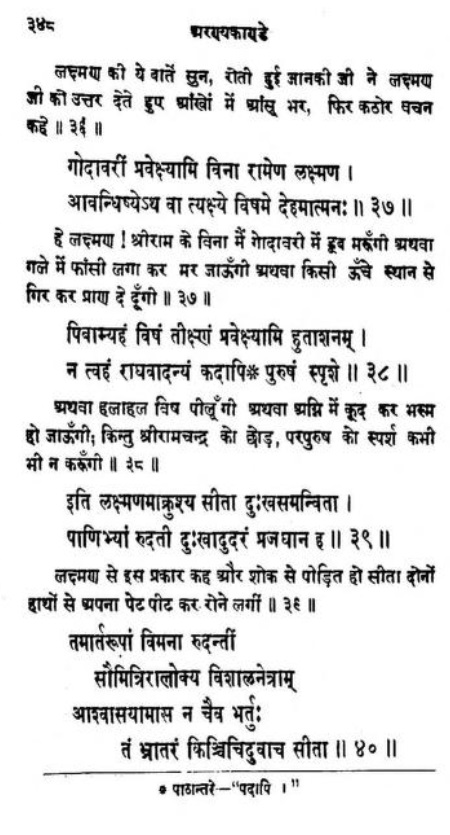
Verses 45.1–4 of Aranya Kanda describe how upon hearing Marichi’s screams and mistaking them for Ram’s, Sita asks Lakshman to go look for her husband, a request Lakshman ignores without a word. So far, nothing that we don’t know already. But read what follows…
Verses 45.1–4 of Aranya Kanda describe how upon hearing Marichi’s screams and mistaking them for Ram’s, Sita asks Lakshman to go look for her husband, a request Lakshman ignores without a word. So far, nothing that we don’t know already. But read what follows…
13/25
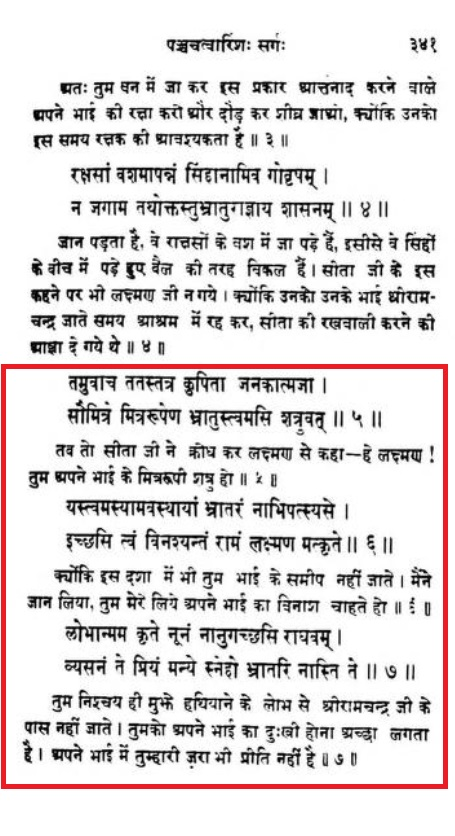
In 45.5 thru 7, she literally calls Lakshman his elder brother’s enemy and accuses him of…hear this out—plotting to “get” her! Dunno about you but I sure wasn’t really aware of this exchange. She unambiguously accuses her brother-in-law of desiring Ram’s end.
In 45.5 thru 7, she literally calls Lakshman his elder brother’s enemy and accuses him of…hear this out—plotting to “get” her! Dunno about you but I sure wasn’t really aware of this exchange. She unambiguously accuses her brother-in-law of desiring Ram’s end.
14/25
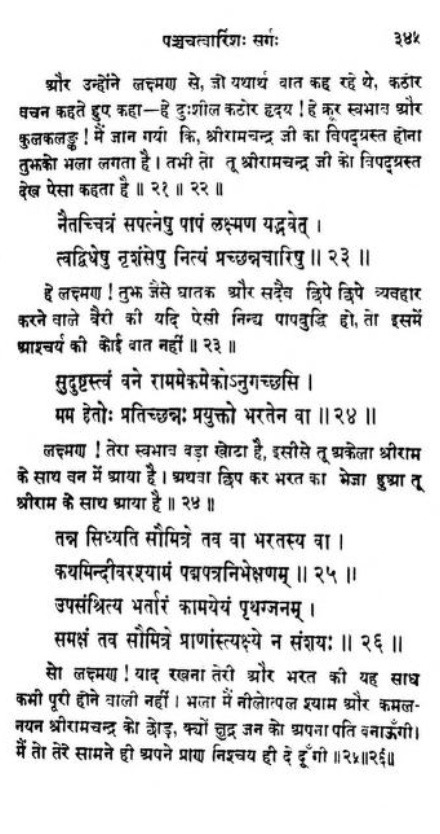
In later verses, she even goes on to use words like cruel and “kul-kalank” for him and further accuses him of conspiring with Bharat to usurp what’s Ram’s.
In response, Lakshman first states that her outburst is typical of women, and then goes ballistic on her…
In later verses, she even goes on to use words like cruel and “kul-kalank” for him and further accuses him of conspiring with Bharat to usurp what’s Ram’s.
In response, Lakshman first states that her outburst is typical of women, and then goes ballistic on her…
15/25
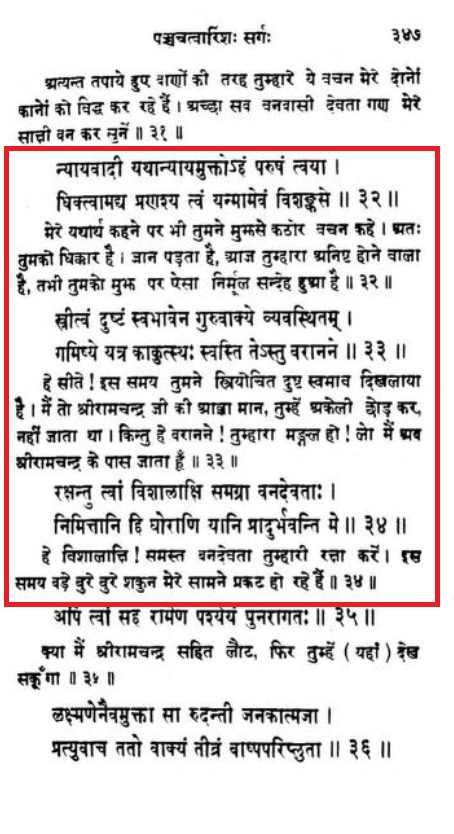
A livid Lakshman throws at her words like wicked (dusht) and shames her for her behavior. While he does pray for her safety in 45.33-34, in just the preceding verse he curses her with bad fortune for using harsh words against him.
A livid Lakshman throws at her words like wicked (dusht) and shames her for her behavior. While he does pray for her safety in 45.33-34, in just the preceding verse he curses her with bad fortune for using harsh words against him.
16/25
Claim 4: Lakshmanrekha
This should shock you the most—there’s no Lakshmanrekha or any other line, enchanted or otherwise, in all of Ramayan.
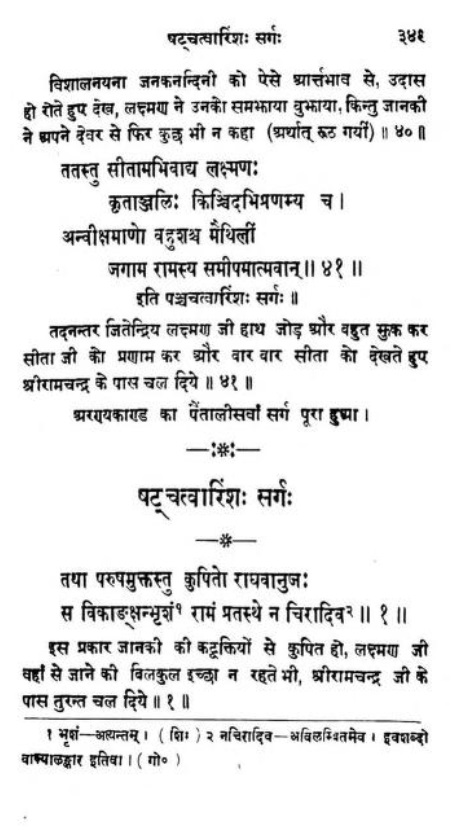
The final verses of Aranyakanda, chapter 45 and the first of the following talk about Lakshman’s reluctant departure.
Claim 4: Lakshmanrekha
This should shock you the most—there’s no Lakshmanrekha or any other line, enchanted or otherwise, in all of Ramayan.
The final verses of Aranyakanda, chapter 45 and the first of the following talk about Lakshman’s reluctant departure.
17/25
If you read the verses you’ll see, the only exchange the two had was Sita’s threats of suicide, should Lakshman continue to refuse, and Lakshman’s reluctant departure subsequently…without a word. Forget a “rekha,” there isn’t even so much as a “be careful in my absence.”
If you read the verses you’ll see, the only exchange the two had was Sita’s threats of suicide, should Lakshman continue to refuse, and Lakshman’s reluctant departure subsequently…without a word. Forget a “rekha,” there isn’t even so much as a “be careful in my absence.”
18/25
Claim 5: Ravan tricked Sita into crossing the line
Of course, there’s nothing to cross if there’s no lakshmanrekha. But Ravan did come guised as a Brahmin ascetic.
Havind said that, Valmiki makes no mention of him even asking for alms. The interaction is very different.
Claim 5: Ravan tricked Sita into crossing the line
Of course, there’s nothing to cross if there’s no lakshmanrekha. But Ravan did come guised as a Brahmin ascetic.
Havind said that, Valmiki makes no mention of him even asking for alms. The interaction is very different.
19/25
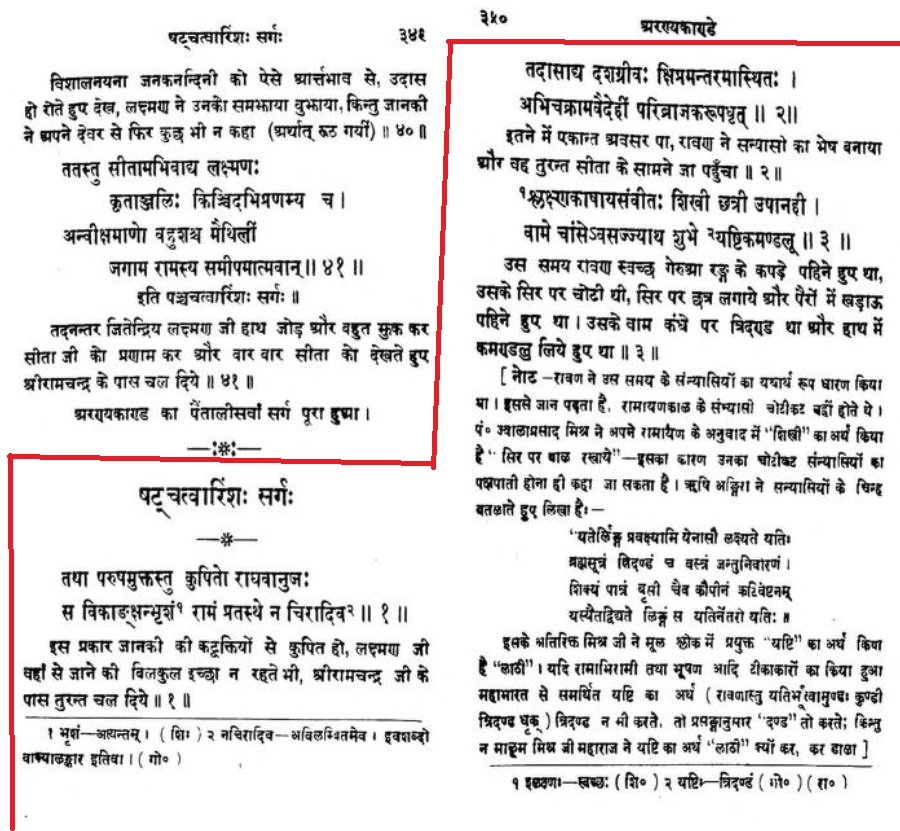
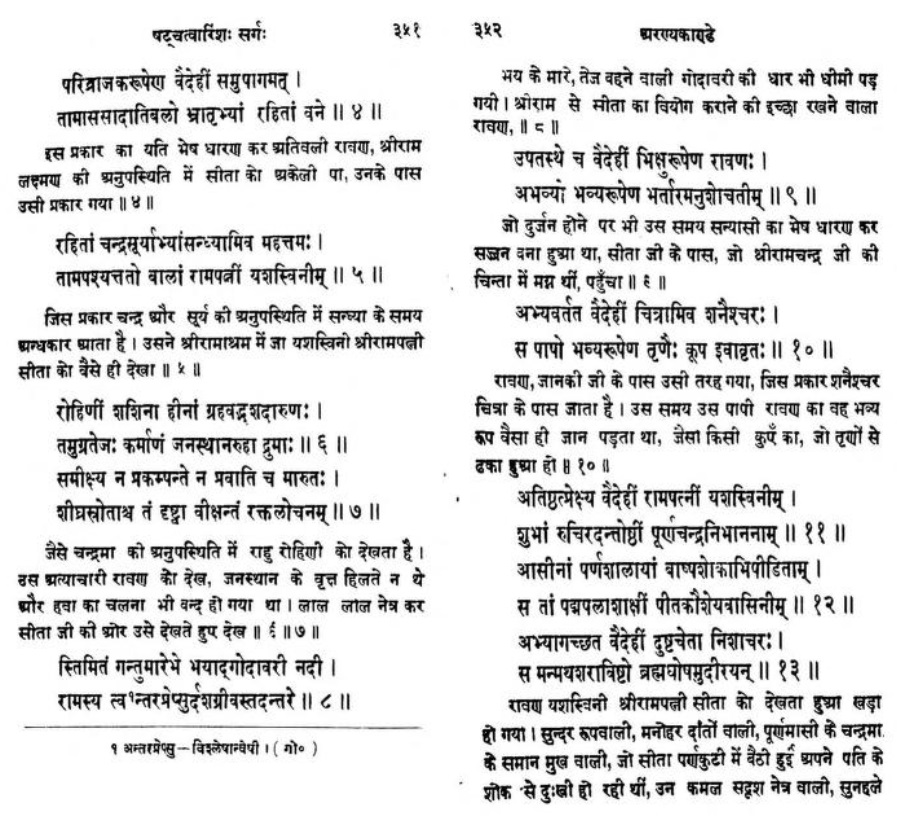
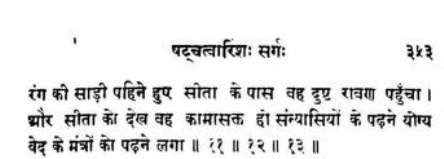
The verses in question are 46.1 thru 13 where Ravan approaches Sita’s dwelling and spots her in all her beauty. These verses also describe how the elements change behavior upon his approach as a sinister omen.
No sign of begging so far.
The verses in question are 46.1 thru 13 where Ravan approaches Sita’s dwelling and spots her in all her beauty. These verses also describe how the elements change behavior upon his approach as a sinister omen.
No sign of begging so far.
20/25
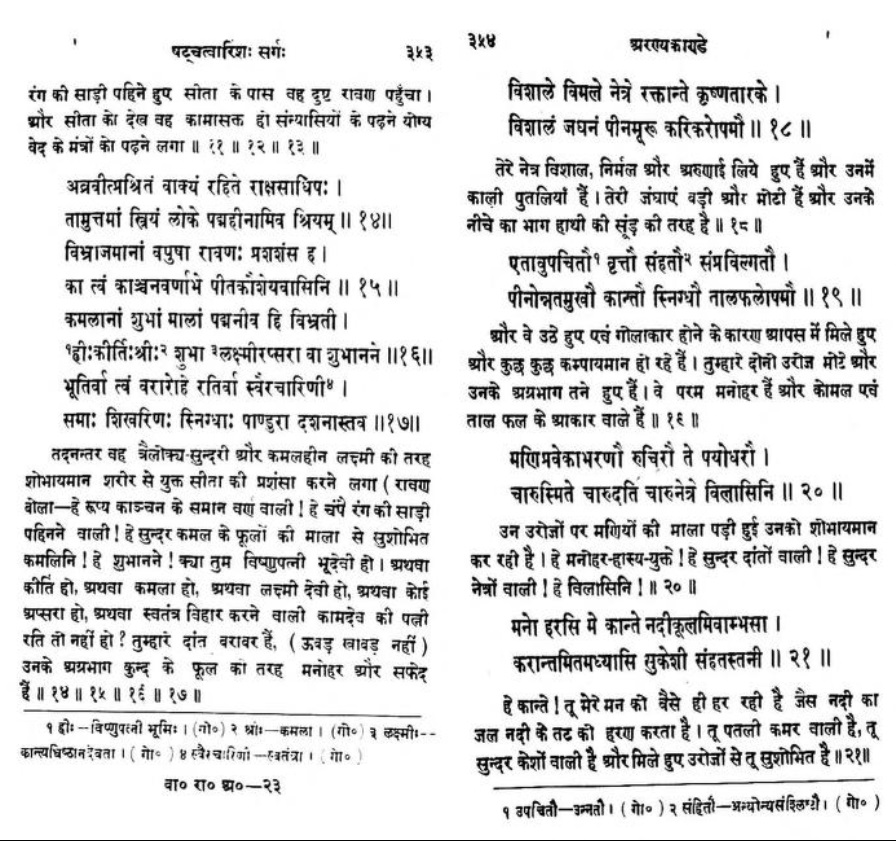
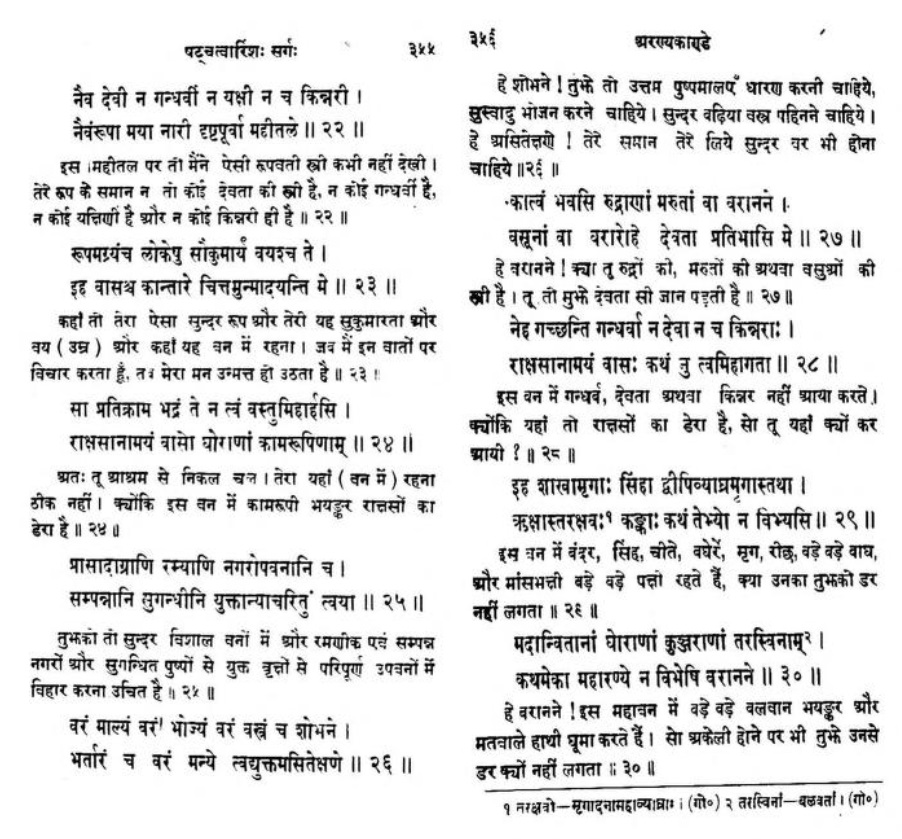
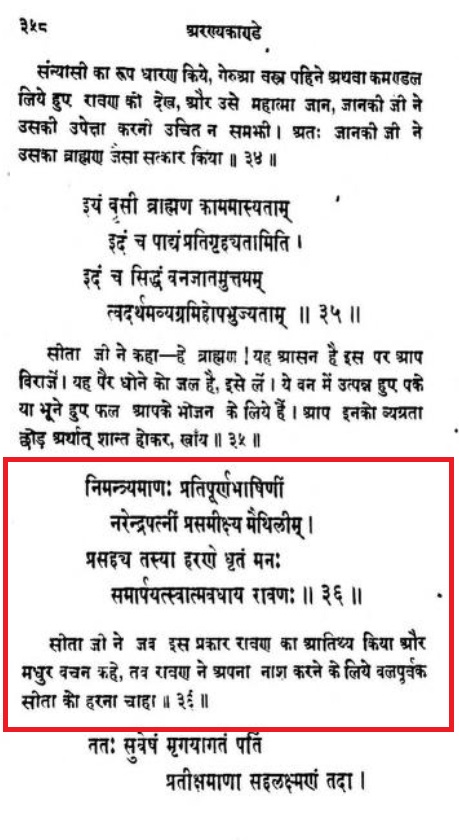
Moving on, Valmiki portrays Ravan’s first interaction with Sita as that of admiration and lechery. Sita’s responses are diplomatic as she offers him a seat and some food and water. Not because he asked but because it was a common courtesy extended to guests.
Moving on, Valmiki portrays Ravan’s first interaction with Sita as that of admiration and lechery. Sita’s responses are diplomatic as she offers him a seat and some food and water. Not because he asked but because it was a common courtesy extended to guests.
21/25
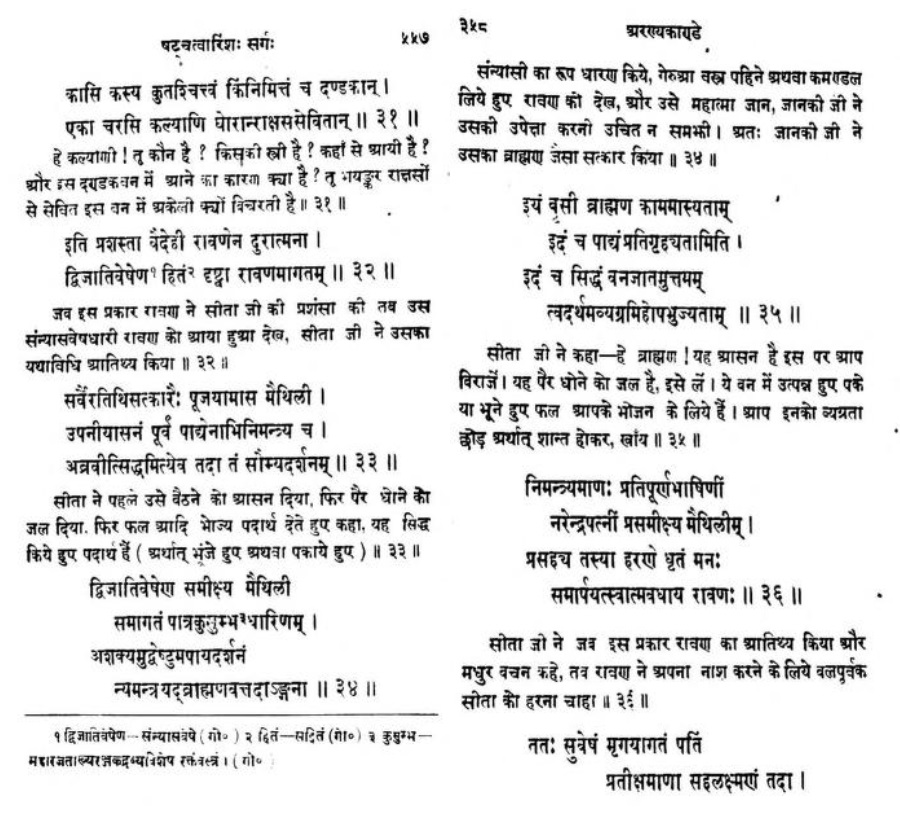
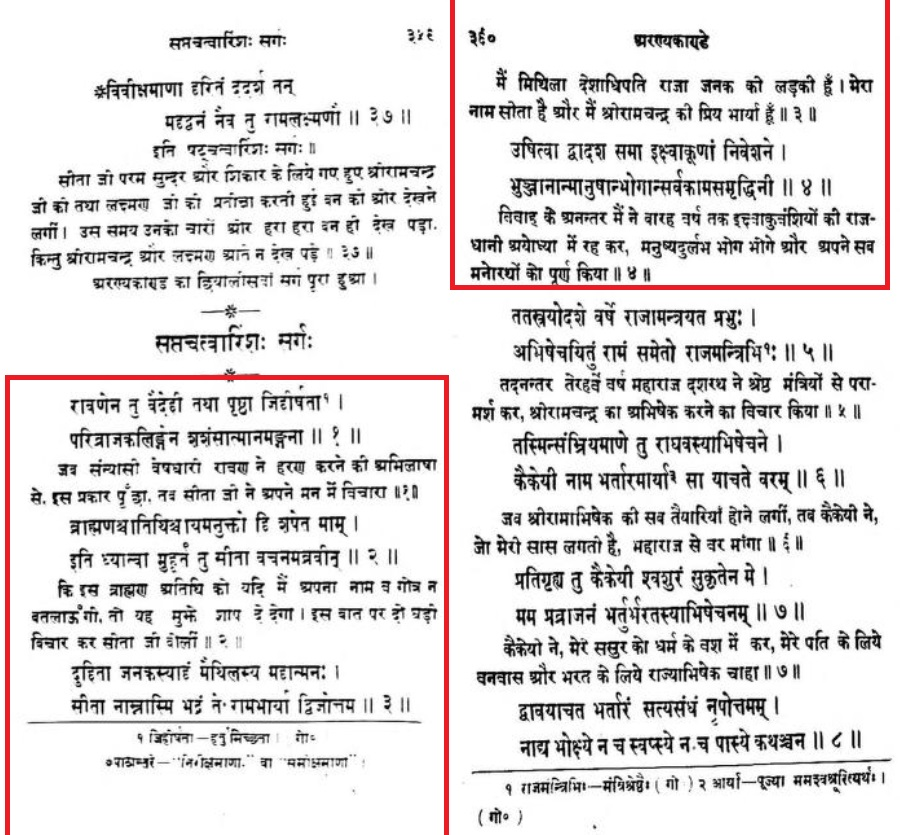
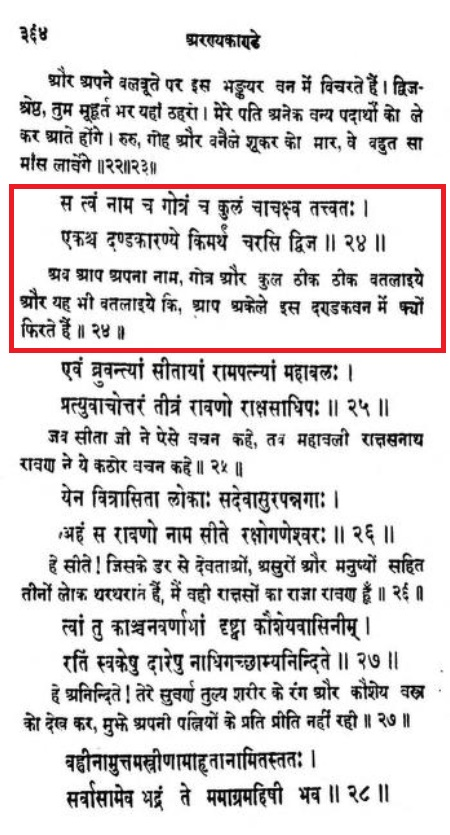
At which point Ravan finally moves to abduct her by force. Sita’s first defense was to tell him about her “gotra” hoping it’d prevent him from proceeding (assuming he was a Brahmin). Having completed her narration, she then asks her guest for his gotra too.
At which point Ravan finally moves to abduct her by force. Sita’s first defense was to tell him about her “gotra” hoping it’d prevent him from proceeding (assuming he was a Brahmin). Having completed her narration, she then asks her guest for his gotra too.
22/25
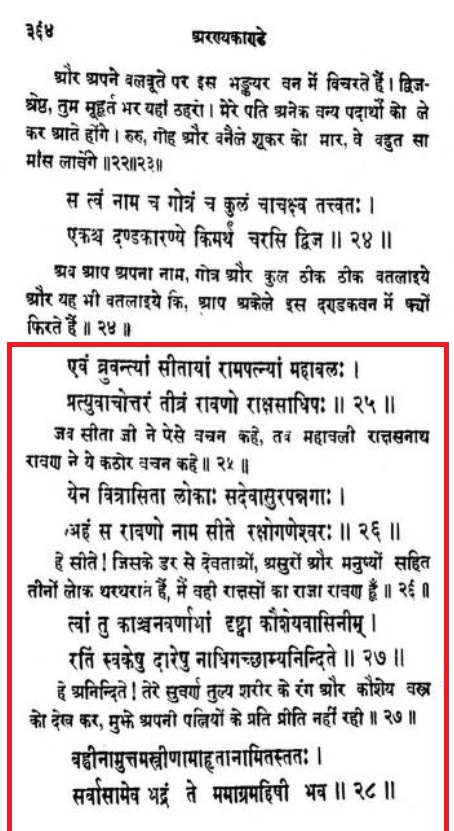
Only then does Ravan reveal himself as a Brahmin king of Lanka.
Only after Sita asks, not on his own.
The entire remainder of chapter 47 is about this exchange—Ravan trying hard to impress with his power and lineage and Sita trying equally hard to resist his move.
Only then does Ravan reveal himself as a Brahmin king of Lanka.
Only after Sita asks, not on his own.
The entire remainder of chapter 47 is about this exchange—Ravan trying hard to impress with his power and lineage and Sita trying equally hard to resist his move.
23/25
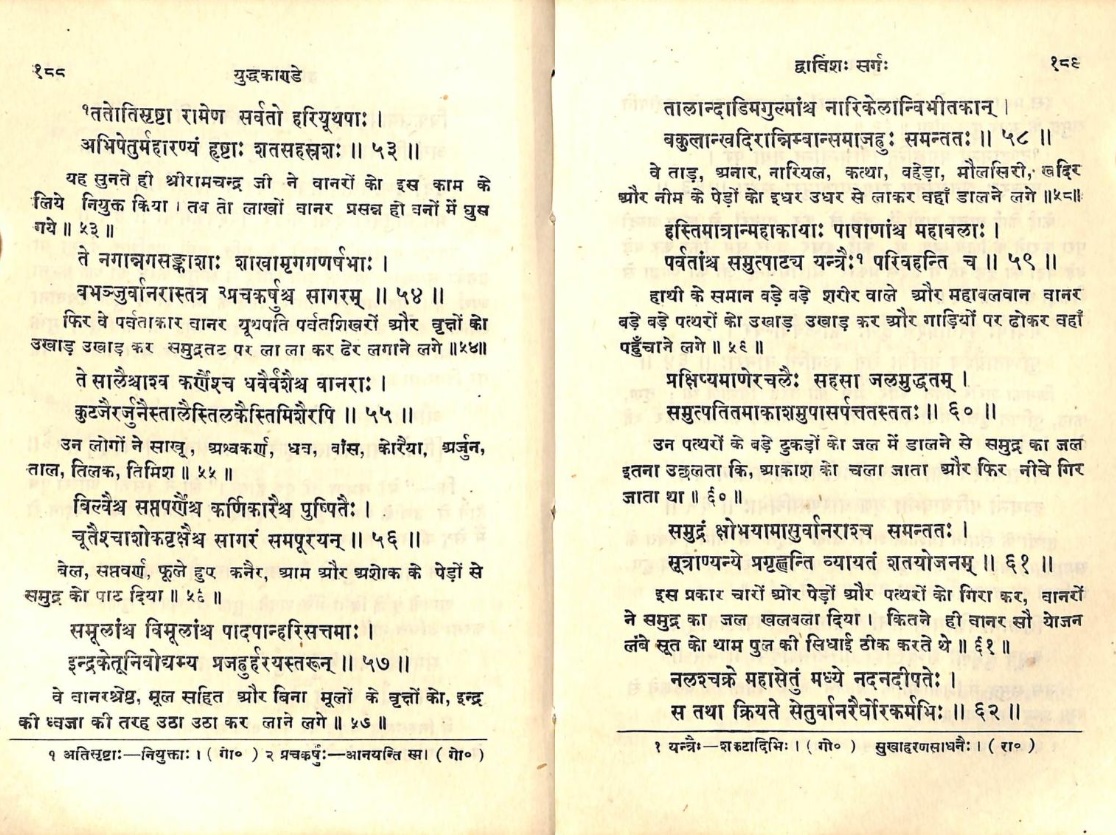
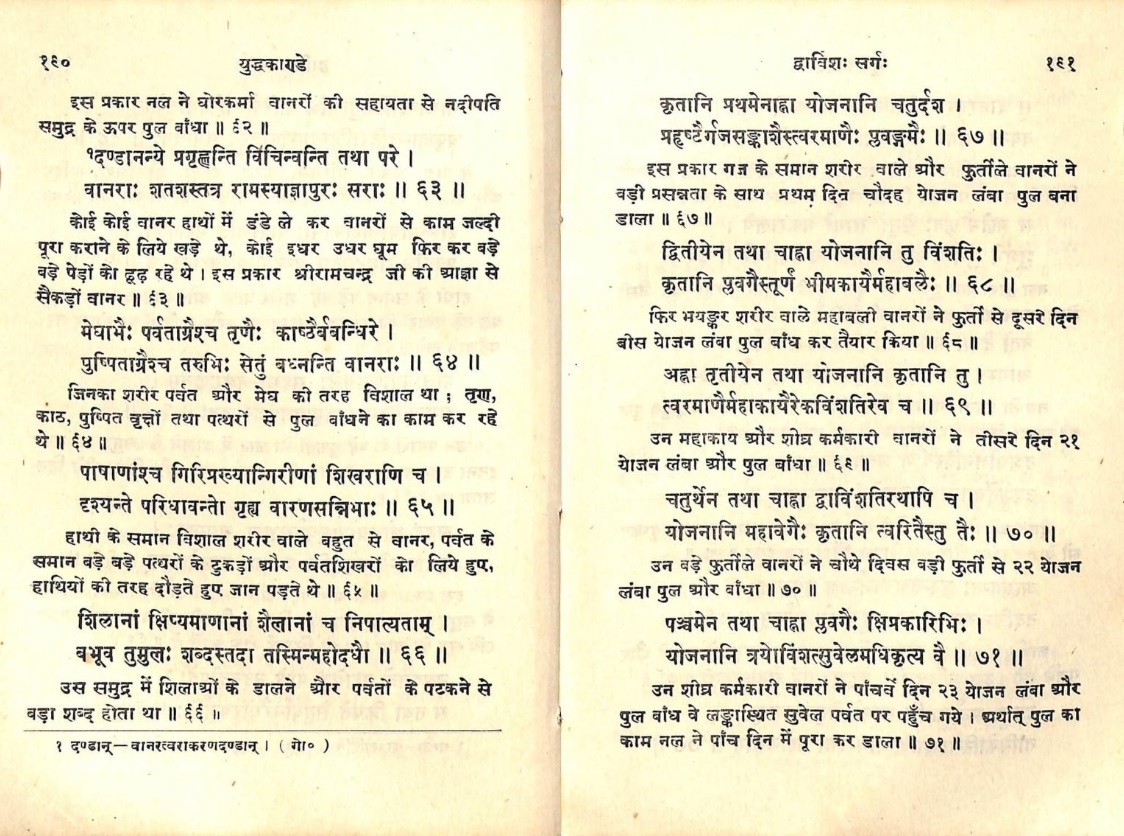
And here’s a bonus: The “setu” was built by dumping into the sea, boulders inscribed with “Ram.”
No.
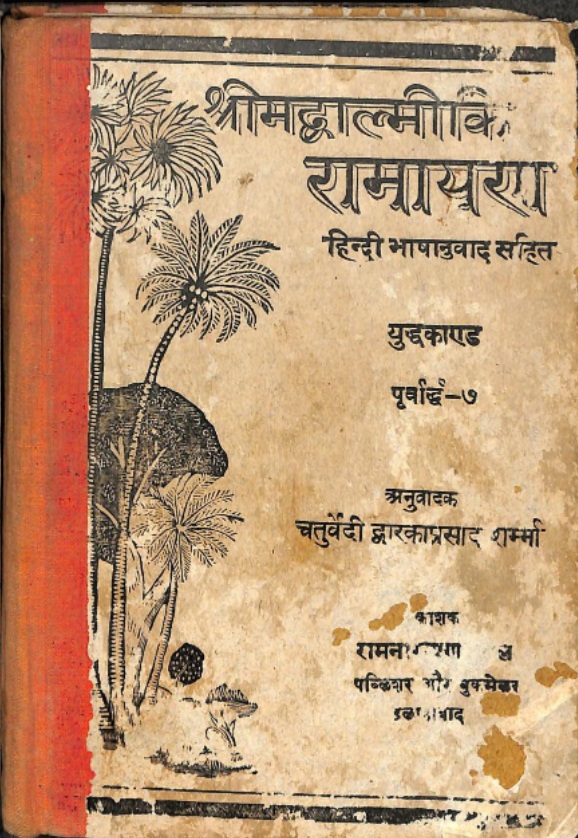
No inscription. And not just boulders but also trees of all kinds. That’s what it says in Valmiki’s Yuddha Kanda, verses 22.54-71.
No Ram-naam miracle. Just brute force.
And here’s a bonus: The “setu” was built by dumping into the sea, boulders inscribed with “Ram.”
No.
No inscription. And not just boulders but also trees of all kinds. That’s what it says in Valmiki’s Yuddha Kanda, verses 22.54-71.
No Ram-naam miracle. Just brute force.
24/25
So these are five claims that are taken as self-evident amongst Hindus that actually aren’t. Now the question is, where did they come from then?
And the answer is Tulsidas.
Every single one of these is part of later embellishments by Akbar’s Awadhi contemporary.
So these are five claims that are taken as self-evident amongst Hindus that actually aren’t. Now the question is, where did they come from then?
And the answer is Tulsidas.
Every single one of these is part of later embellishments by Akbar’s Awadhi contemporary.
25/25
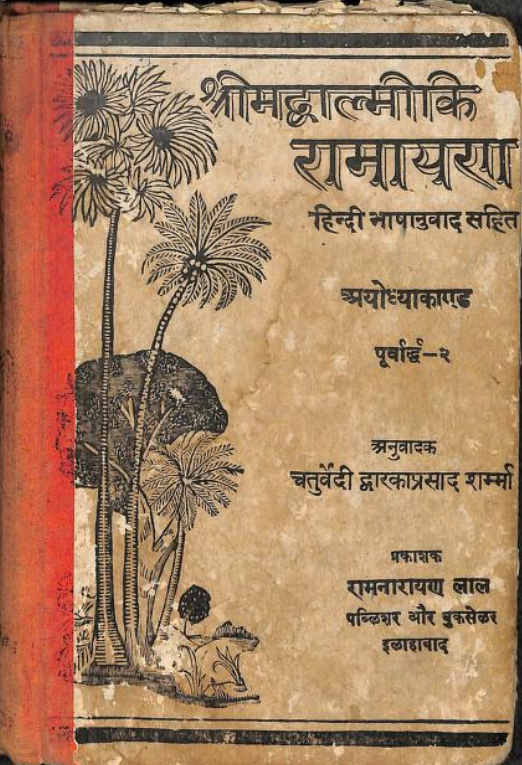
What prompted this investigation was this tweet by @Devduttmyth where he stated that there’s no lakshmanrekha in Ramayan. I just wanted to see it for myself and wound up with 4 more.
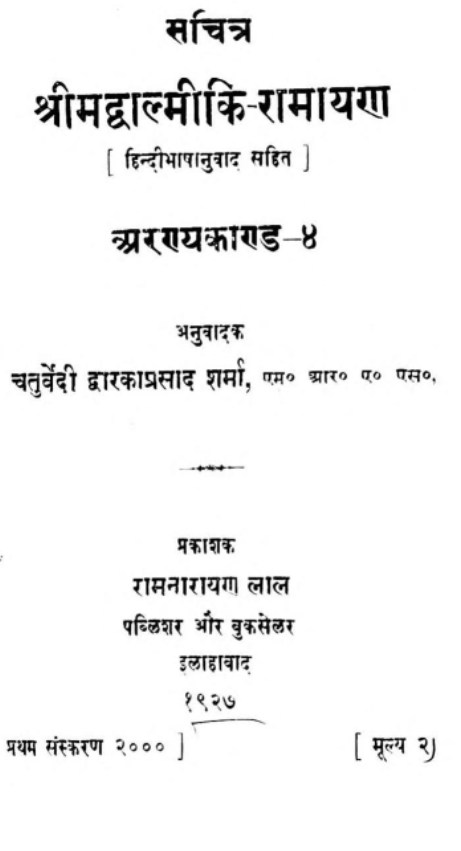
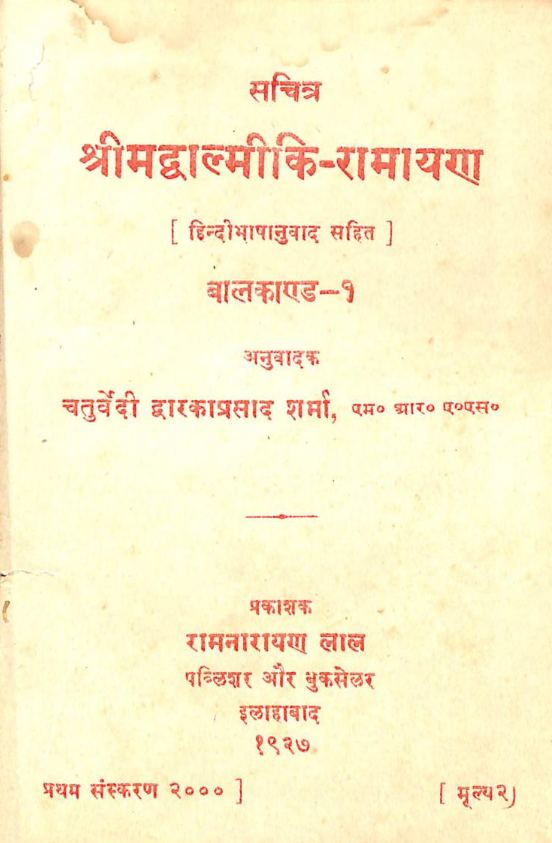
Sources:
What prompted this investigation was this tweet by @Devduttmyth where he stated that there’s no lakshmanrekha in Ramayan. I just wanted to see it for myself and wound up with 4 more.
Sources:
Loading suggestions...