
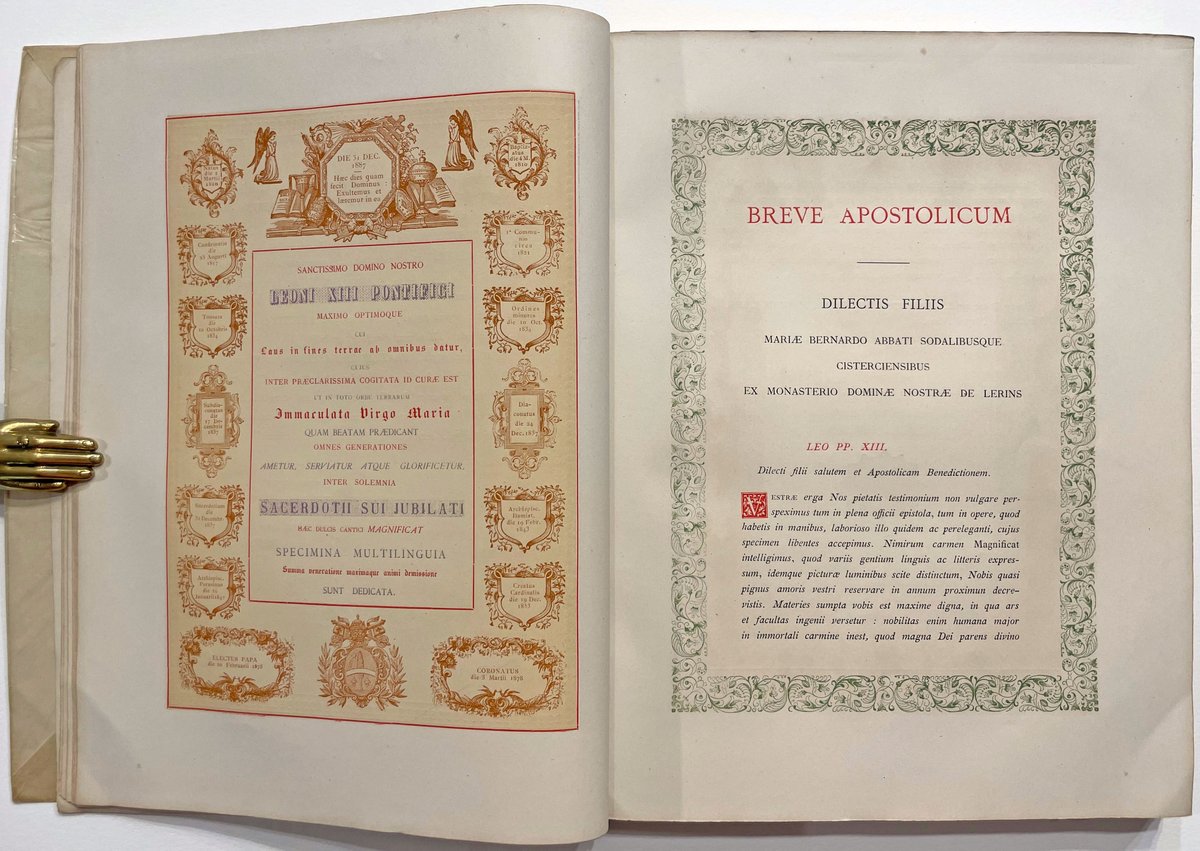
Perhaps the most ambitious mission polyglot ever: a rendering of the "Magnificat" in 150 languages, many in unique scripts. This 1887 publication from the monastic island of Saint-Honorat, off the coast of Cannes, was conceived by the monastery’s abbot Marie Bernard Barnouin. 1/
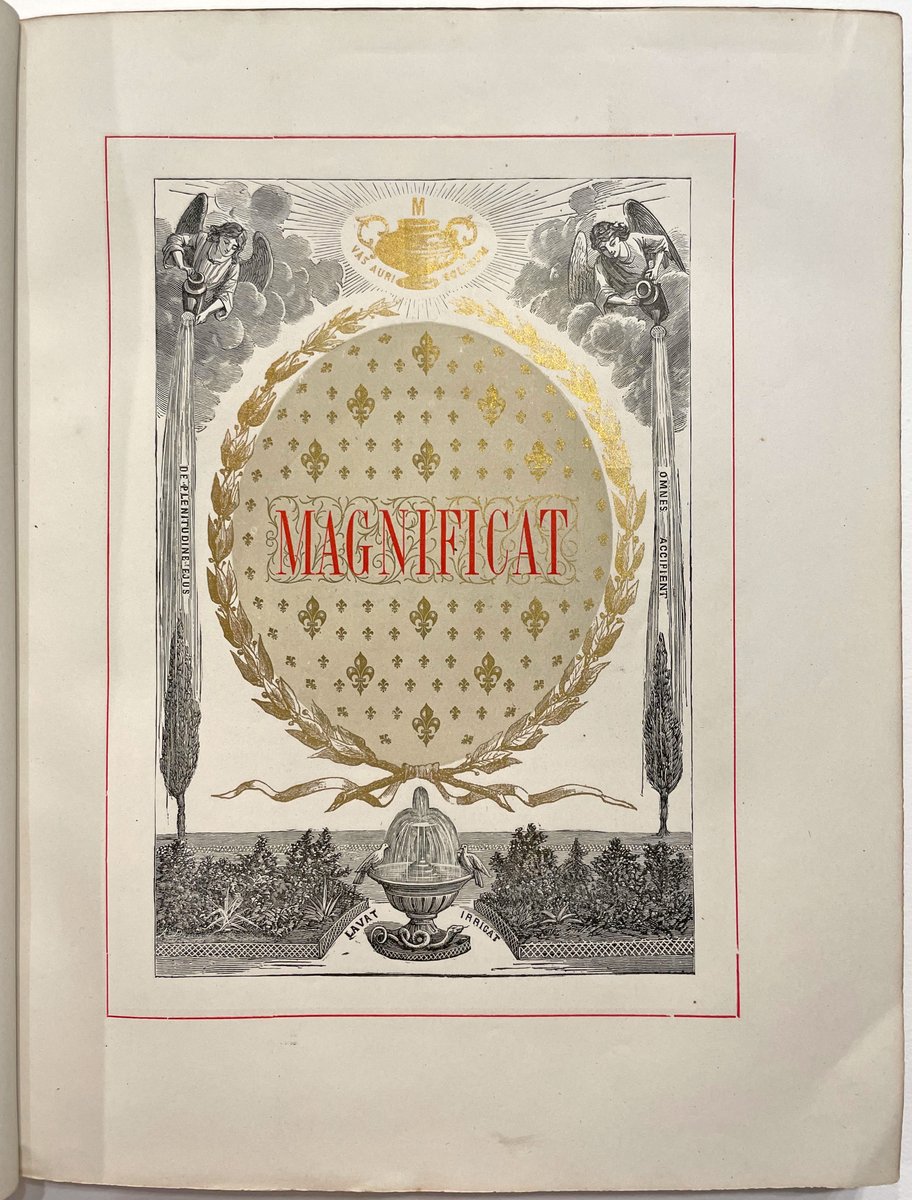
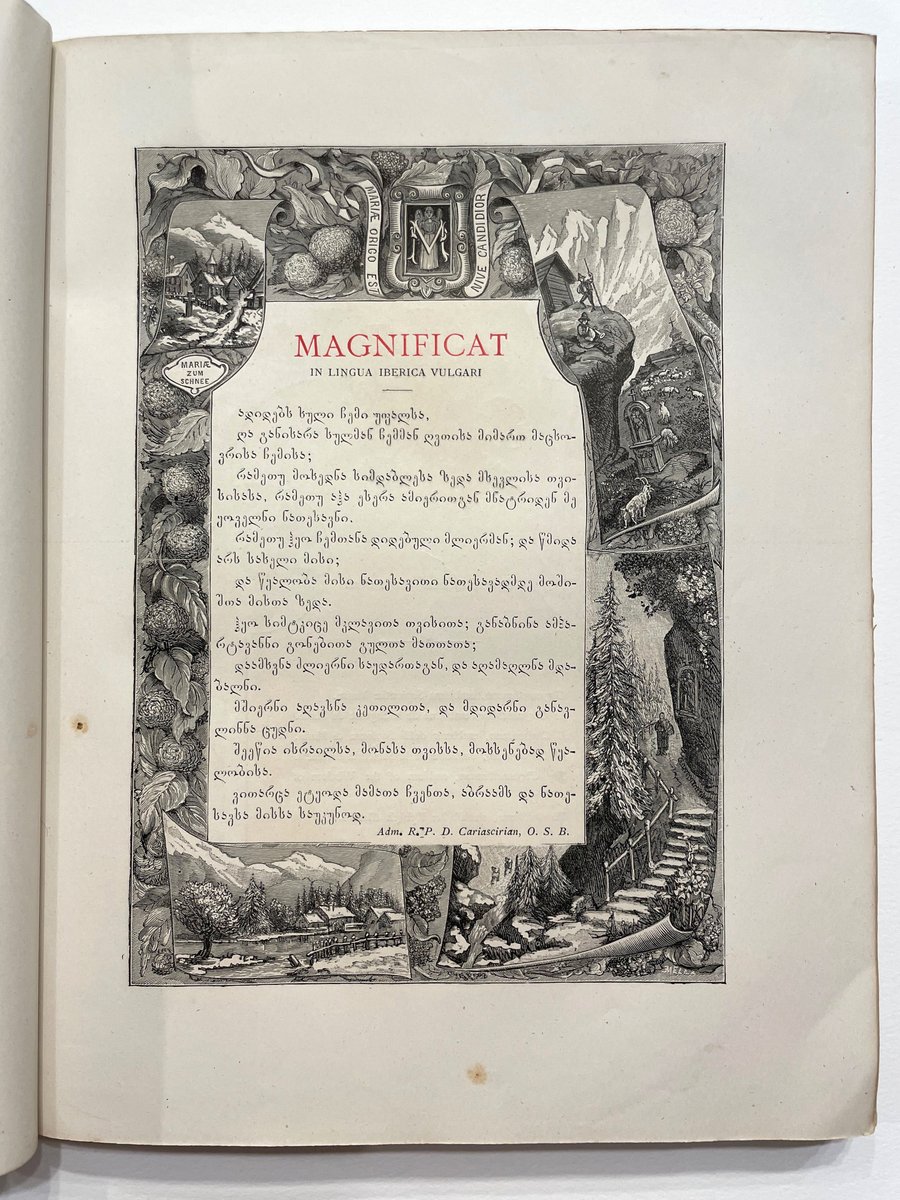
The text was printed and chromoxylographed at the monastery’s own printing office on the island of Saint-Honorat, while the elaborately chromolithographed plates were printed by Benziger Frères, Einsiedeln and Société St. Augustin, in Brussels. 2/
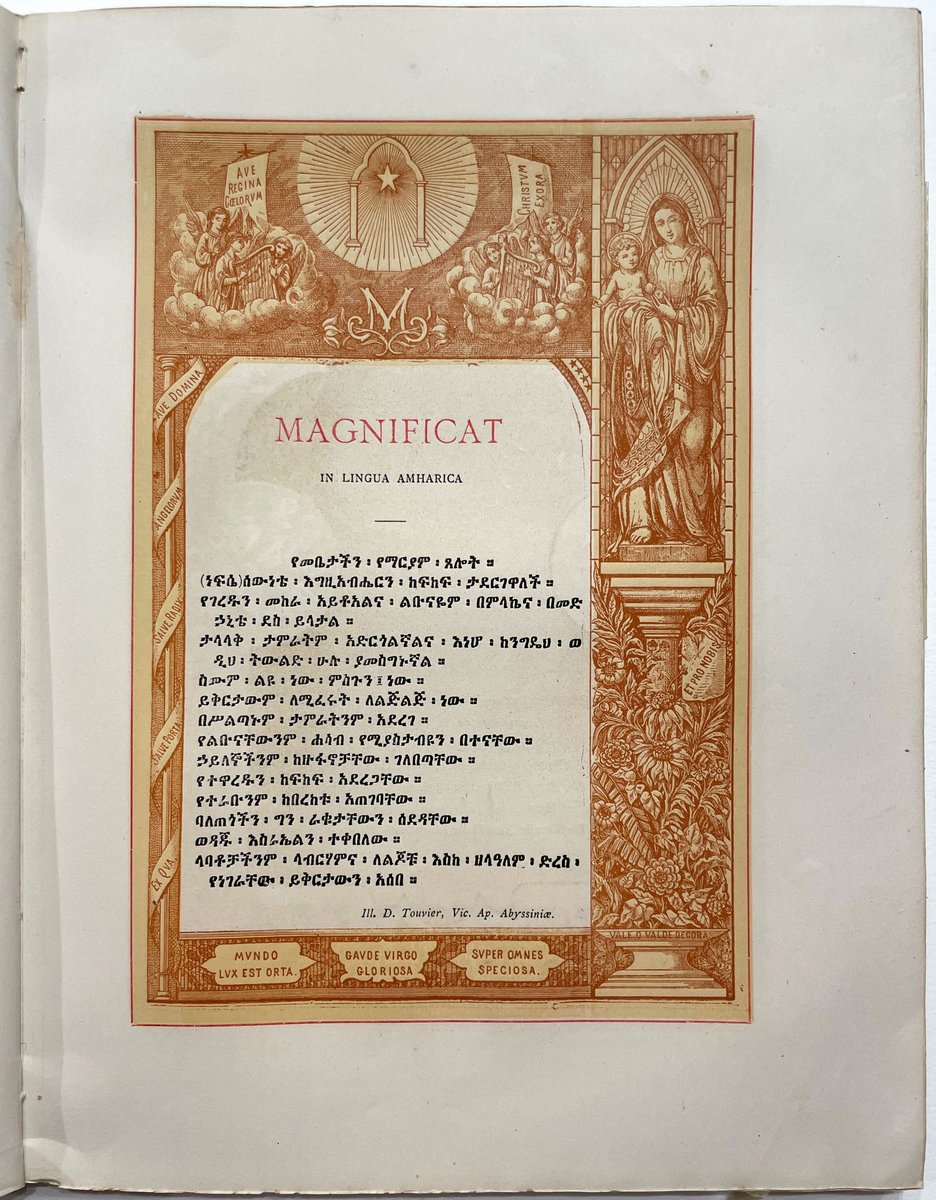
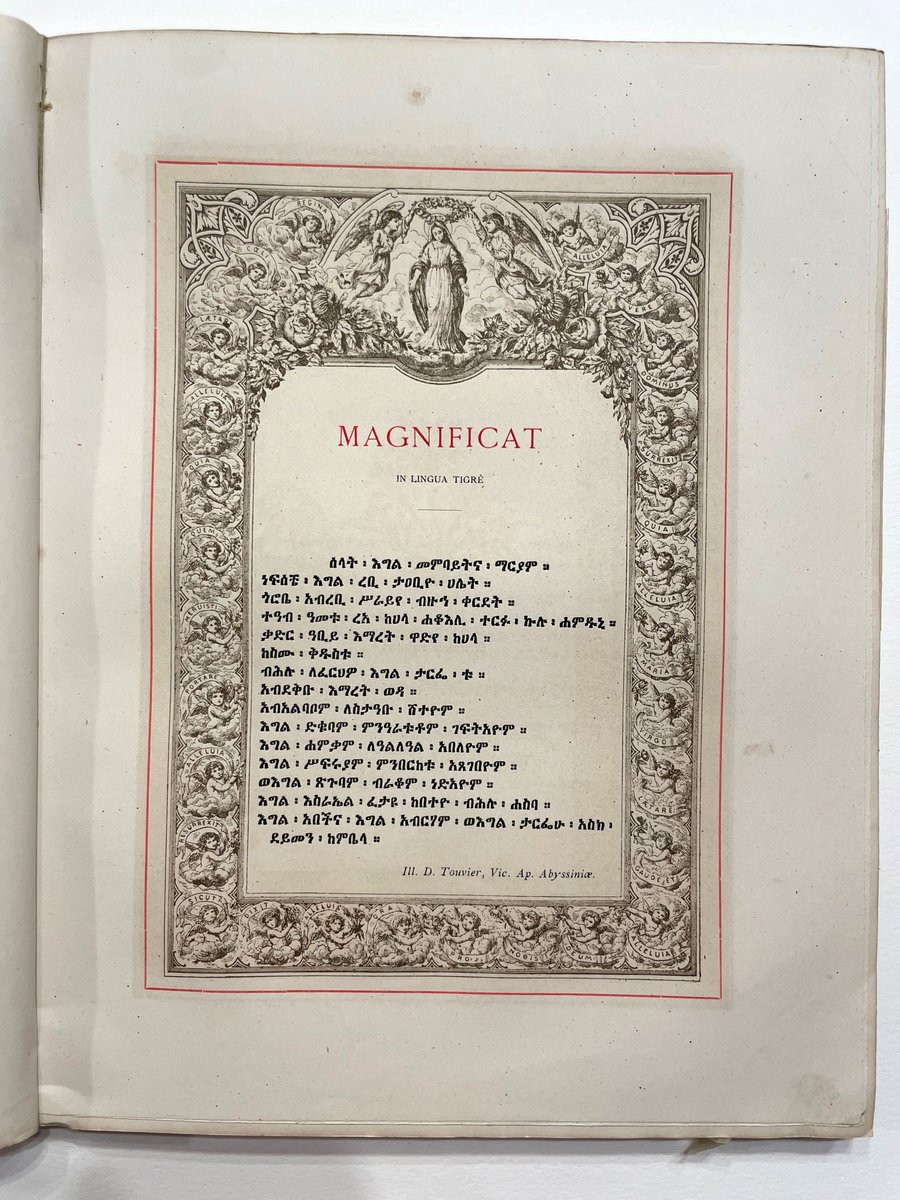
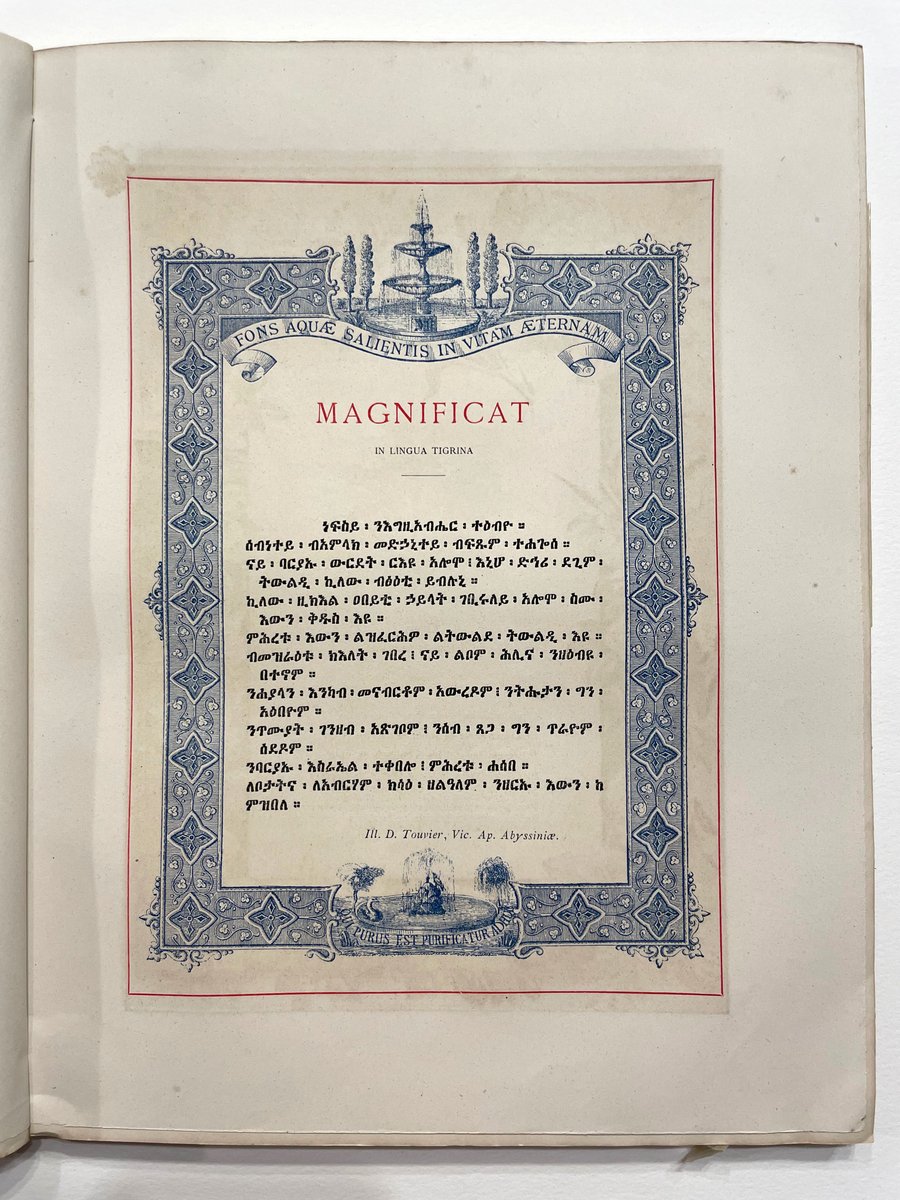
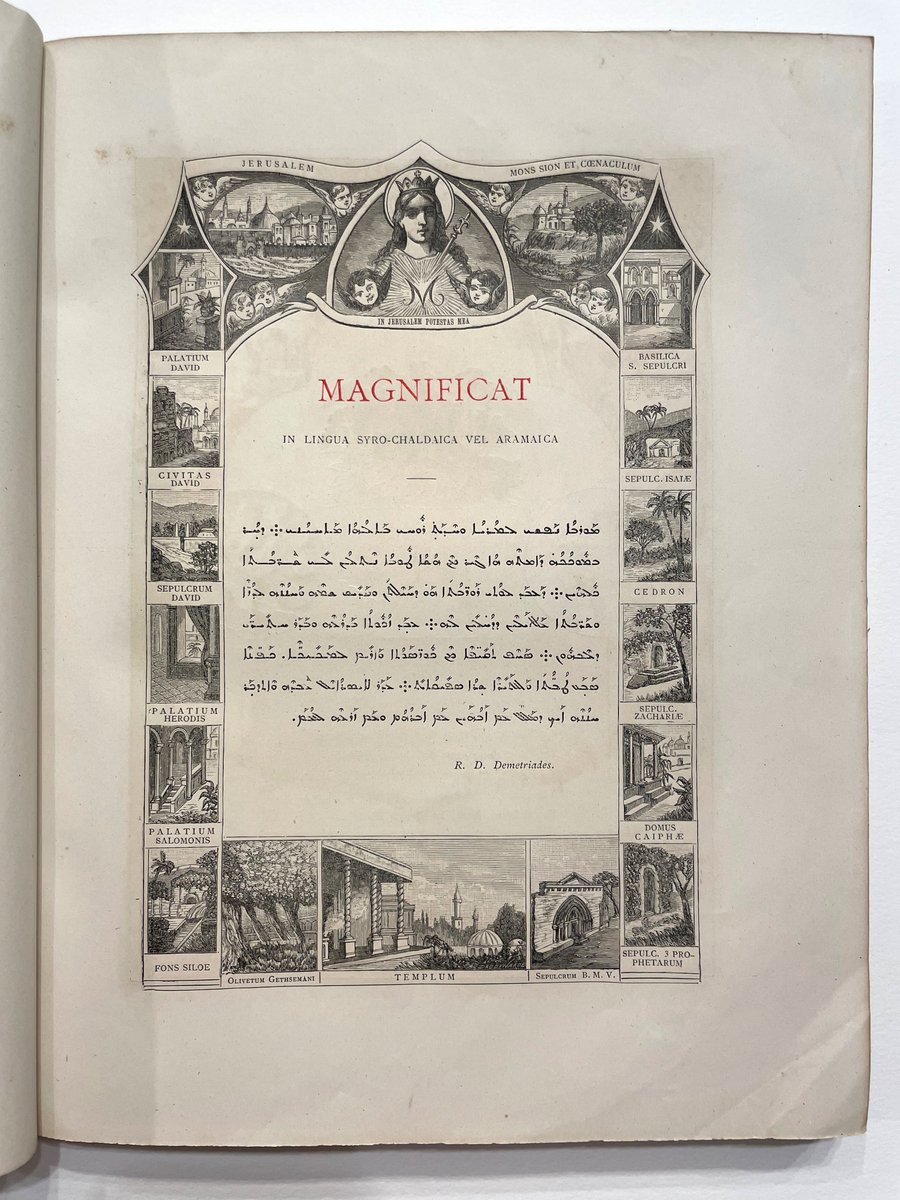
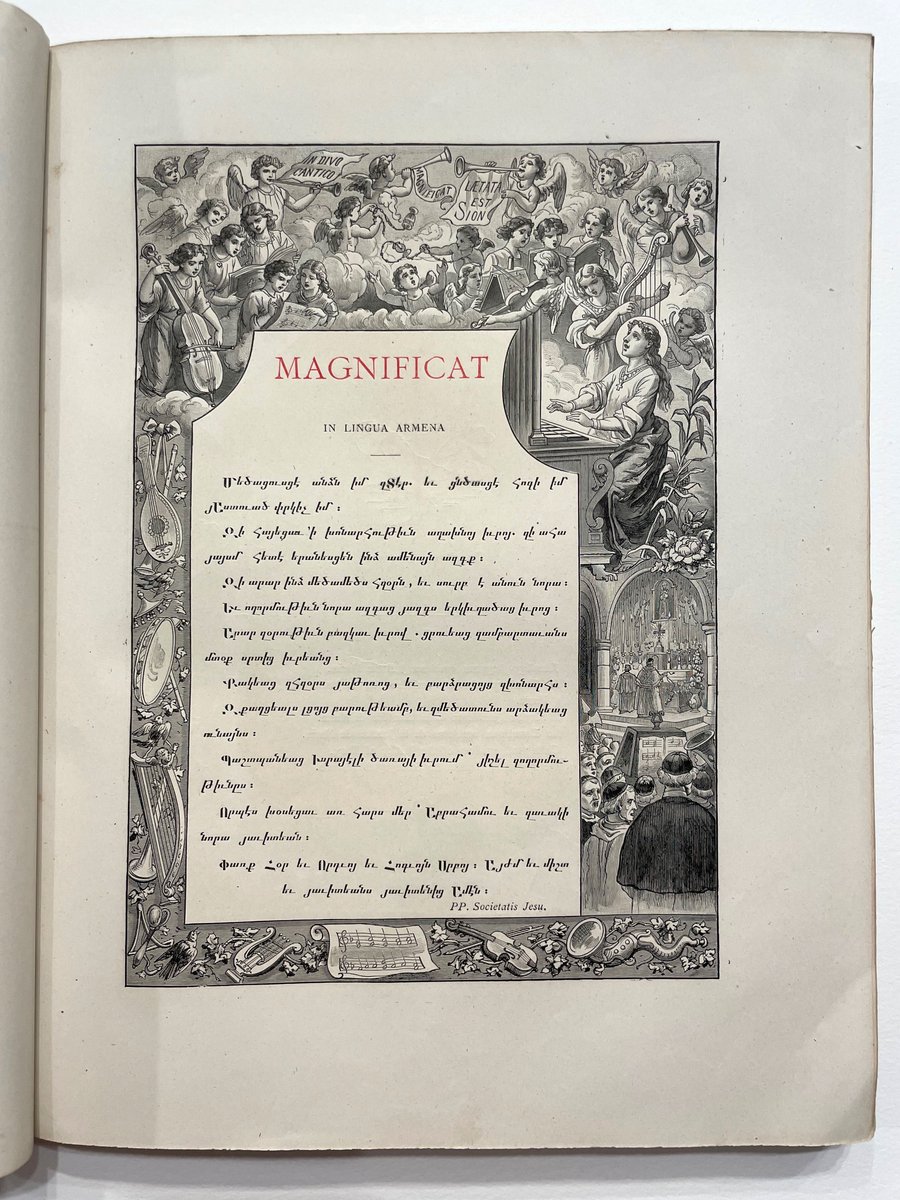
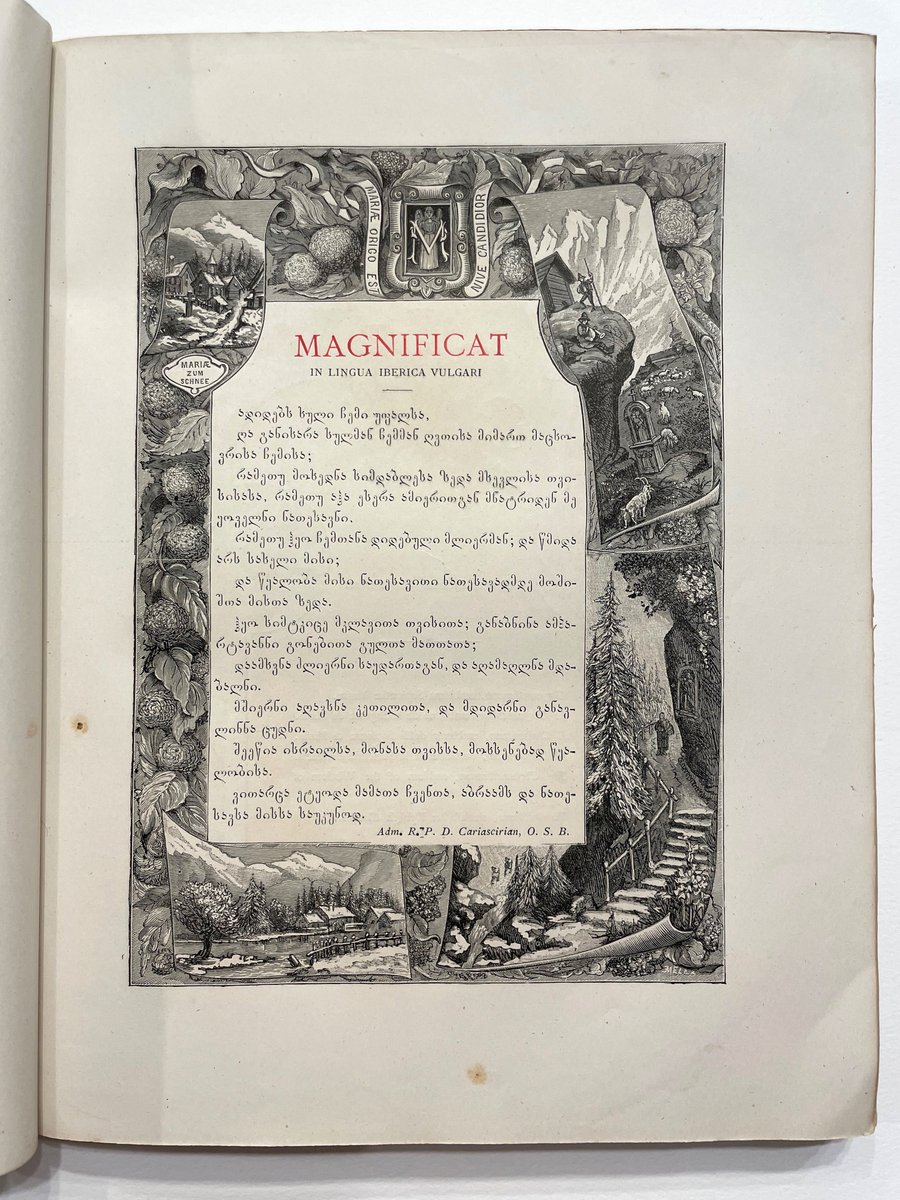
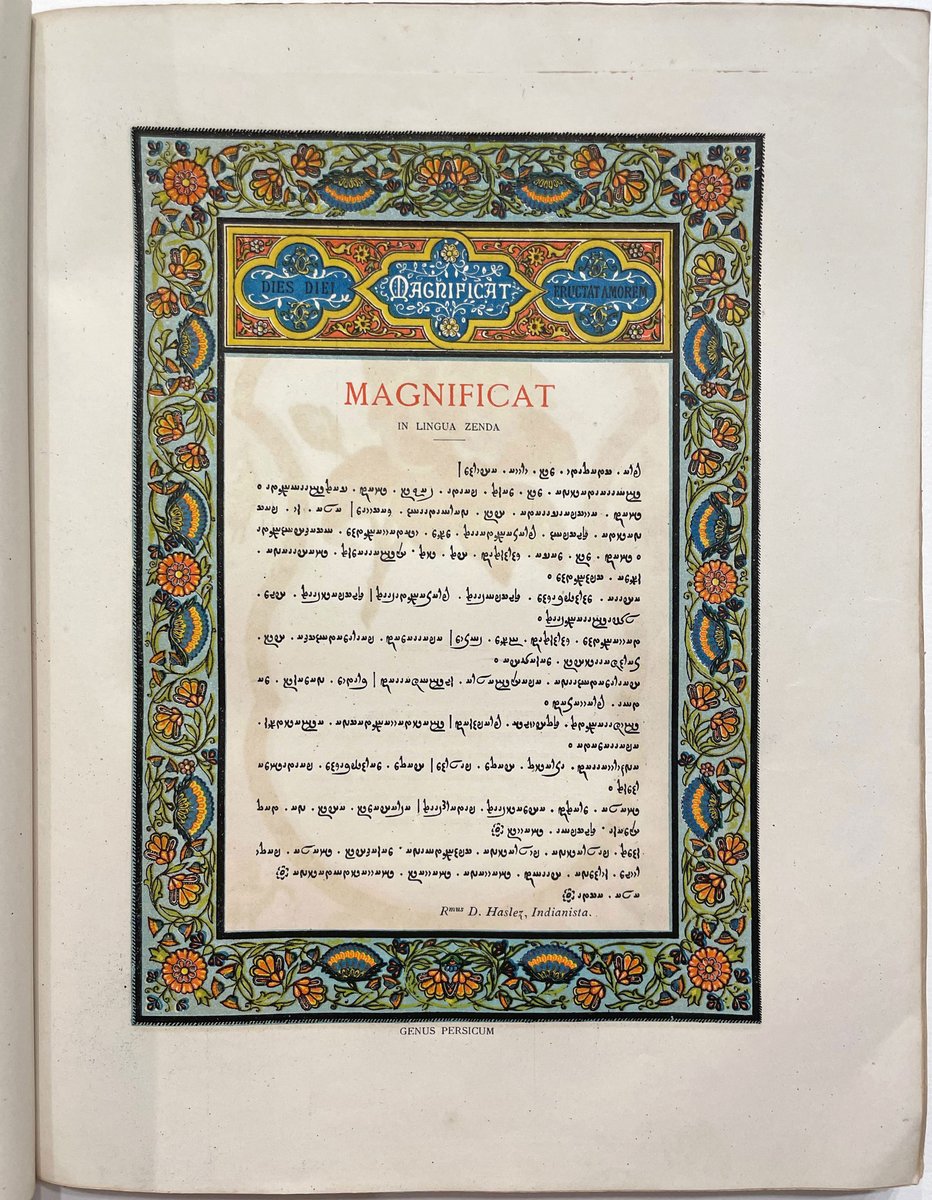
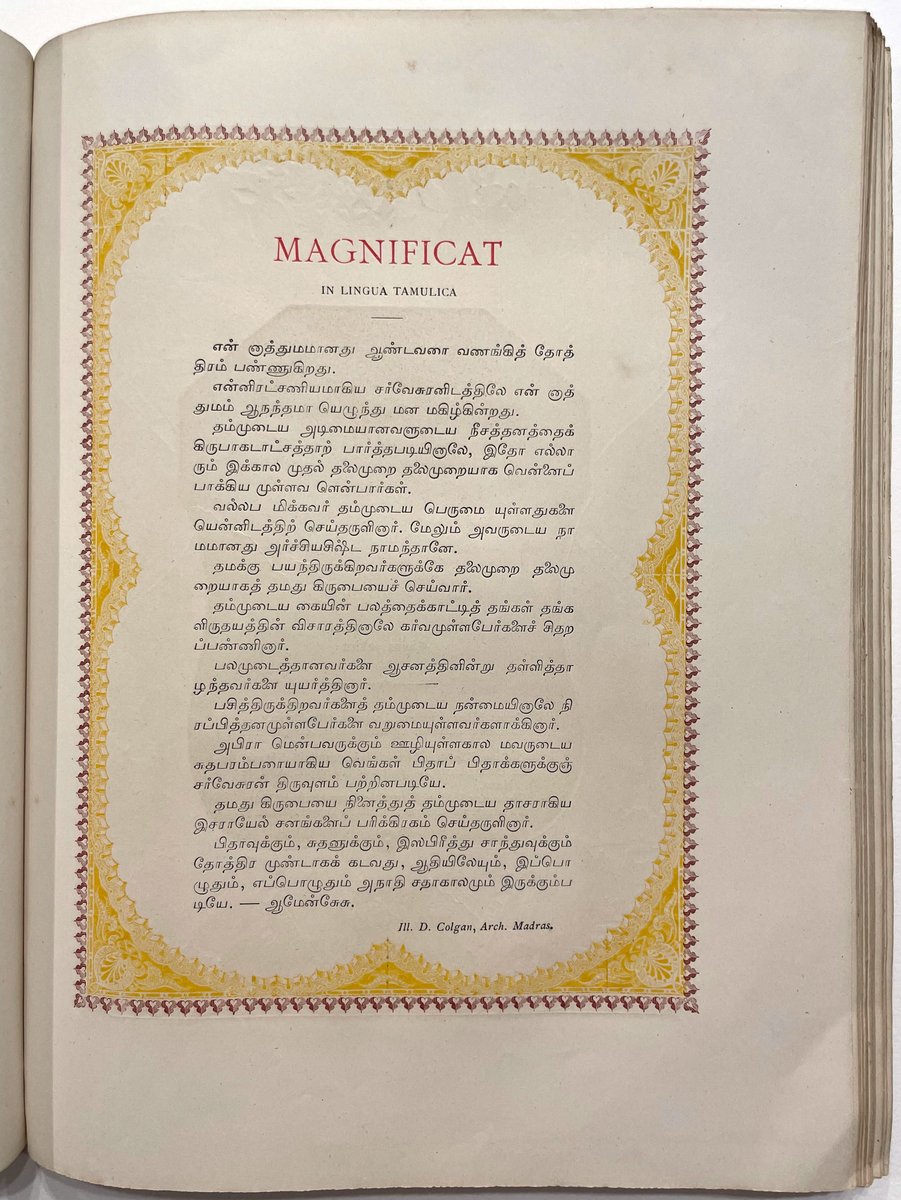
Each of the 150 different languages is set in its appropriate corresponding font, with pictorial borders mirroring landscape, fauna and flora, architecture and ornamentation of each language region. 3/
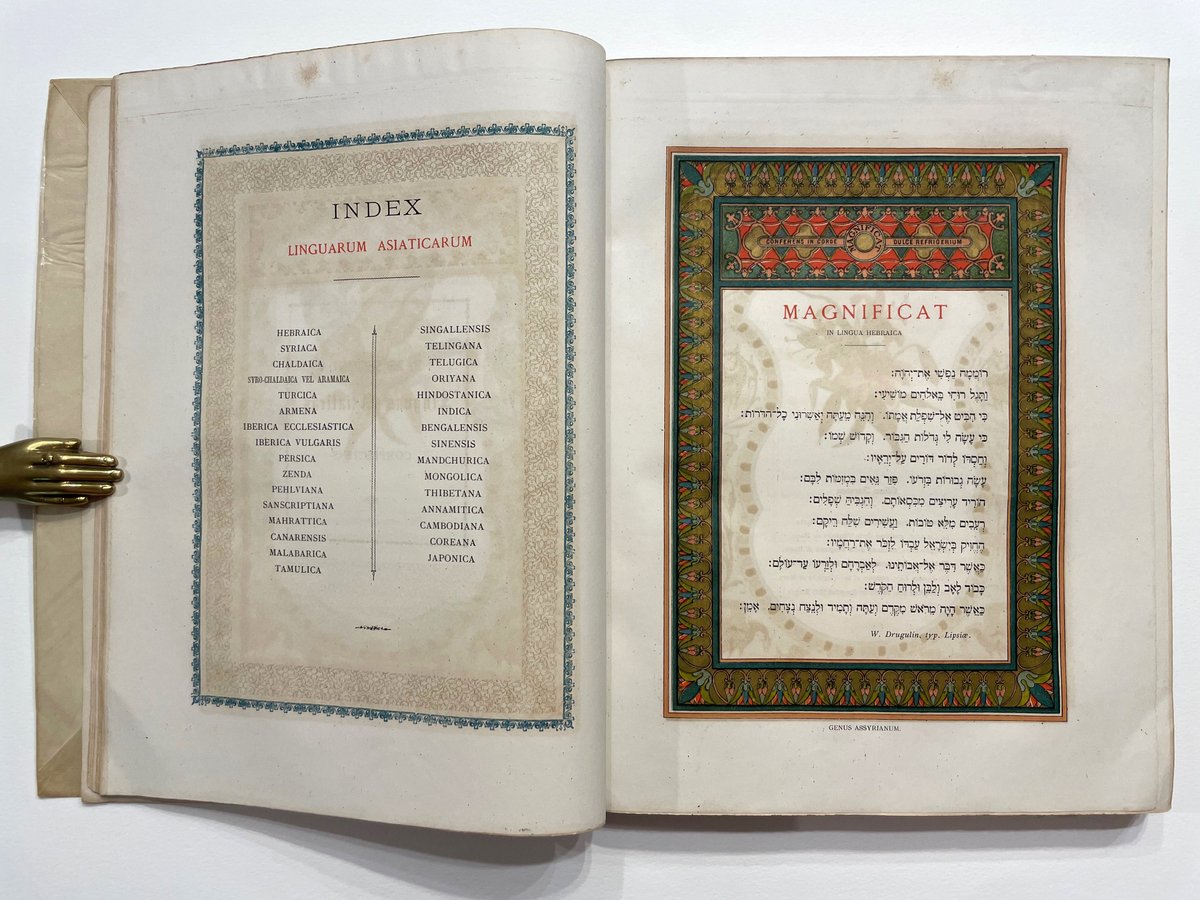
The languages include those of both hemispheres, ranging from the western European, through the Asiatic (48 languages) and Middle Eastern languages, African languages (25 languages) as well as those of Pacific Island nations (Samoa, Tonga, Marquesas, Tahiti, Gilbert Islands). 4/
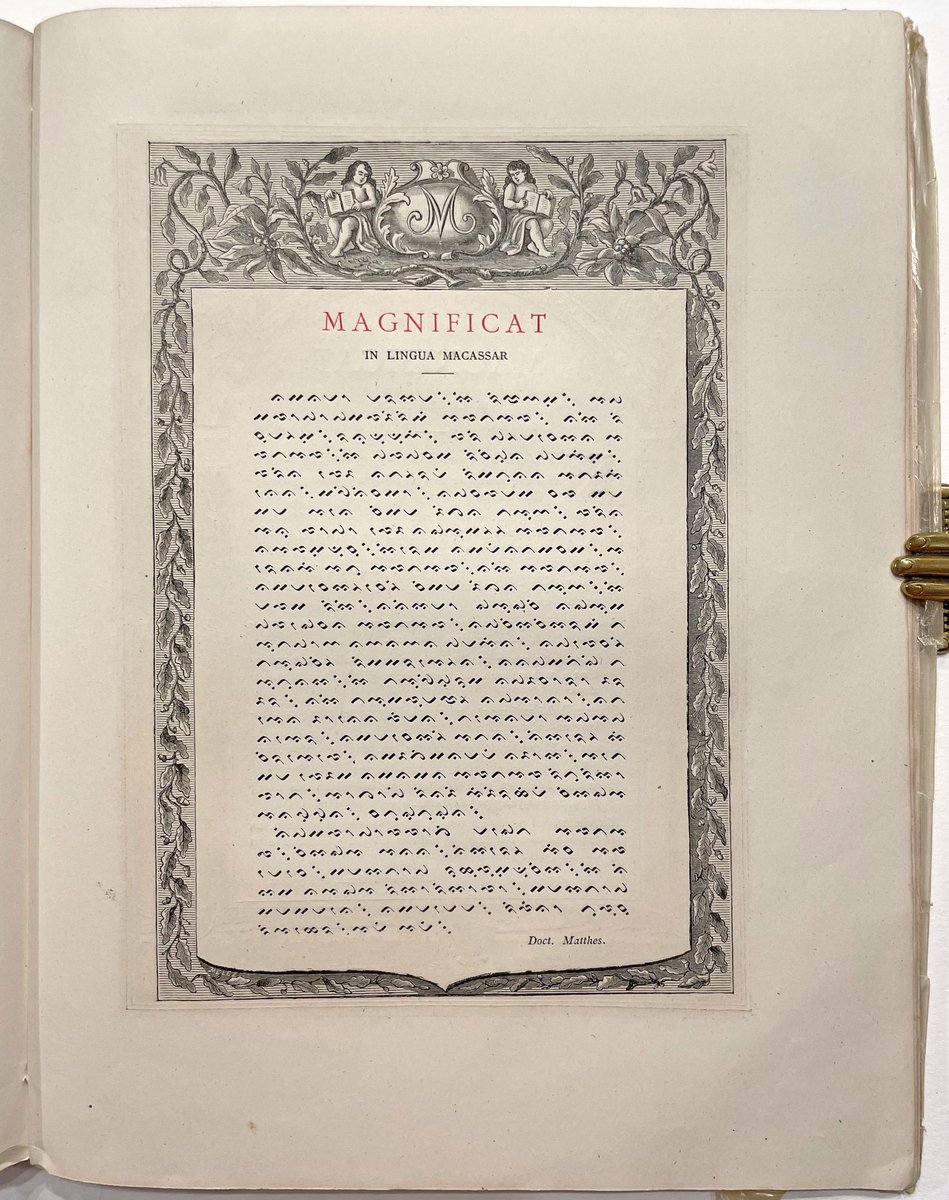
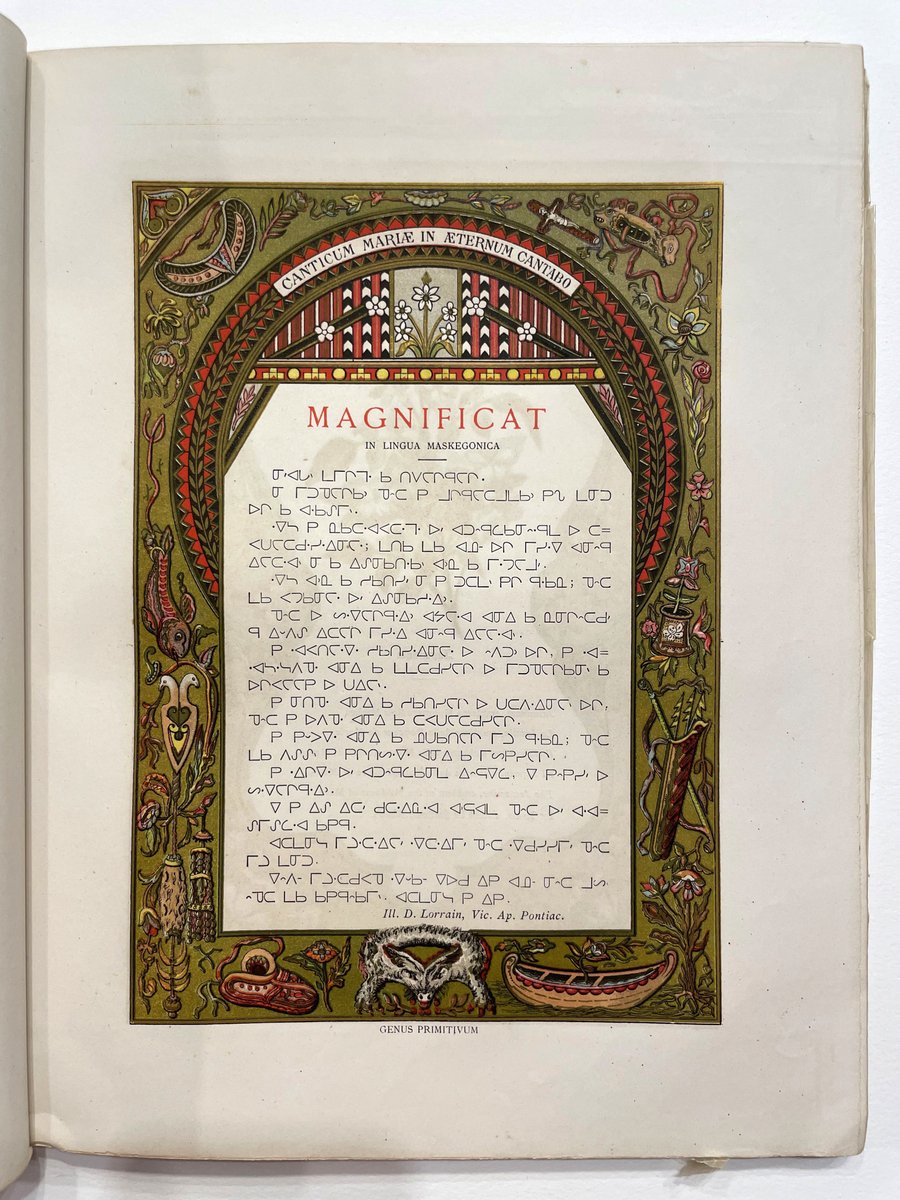
Included are many Native American languages (15 different languages in all), each with the translator’s name (chiefly members of Catholic missionary societies and orders) printed in lower right corner. This is a really extraordinarily ambitious undertaking in colour printing. 5/
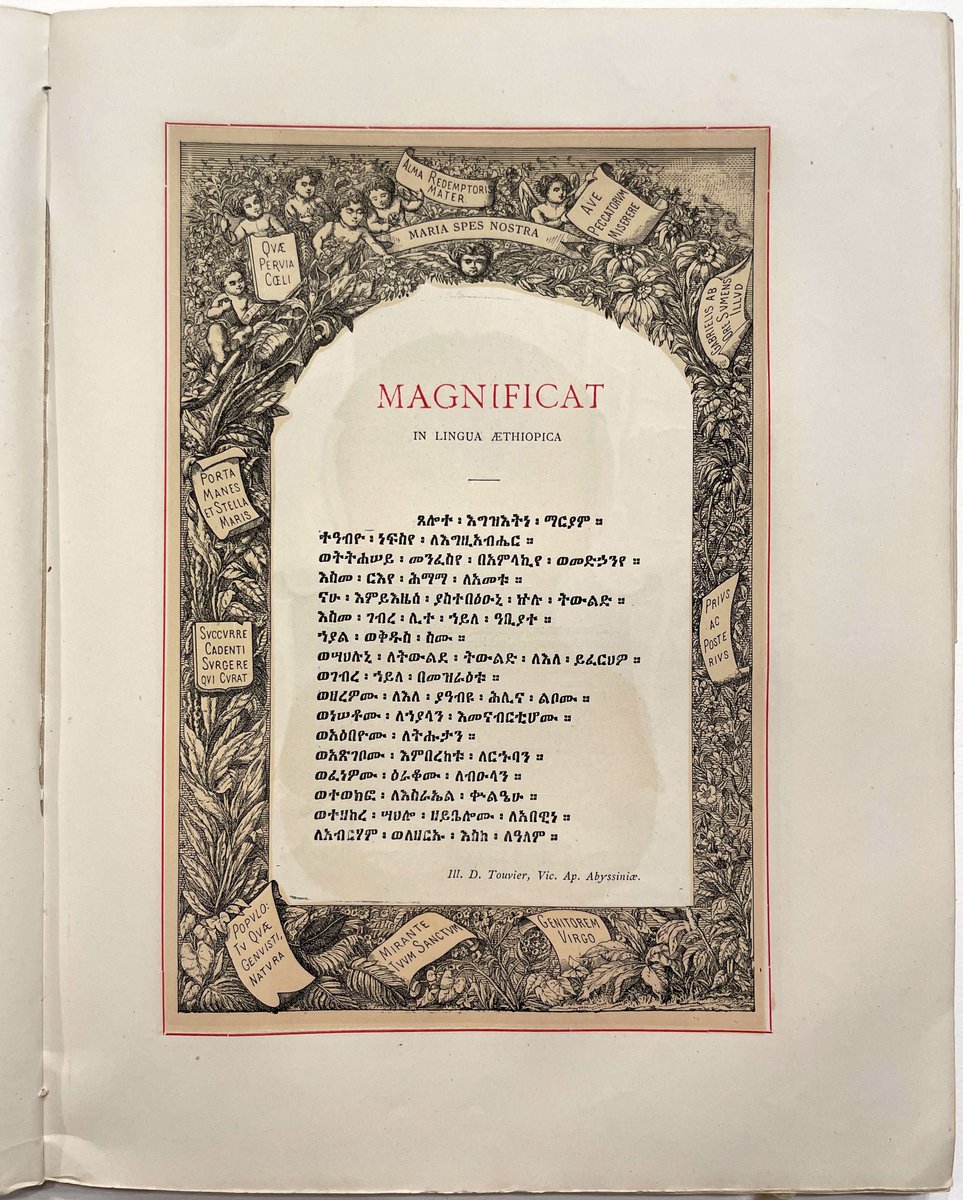
What's especially remarkable about this publication is the level of detail - for example, when it comes to Ethiopia, you'd expect Ge'ez, but also included here are Amharic, Tigre and Tigrinya! 6/
Aramaic (Syriac) and Armenian. 7/
Georgian and Avestan. 8/
Tamil and Telugu. 9/
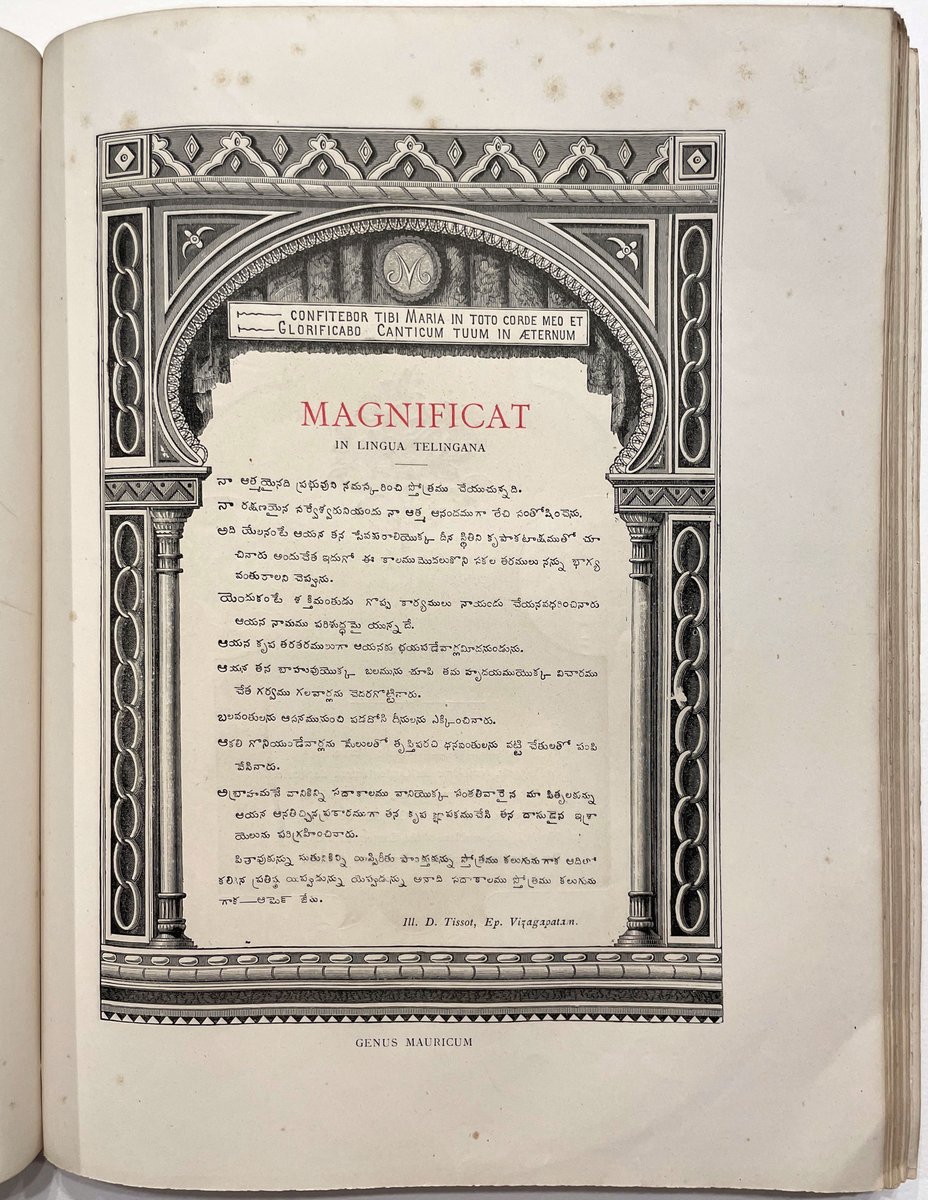
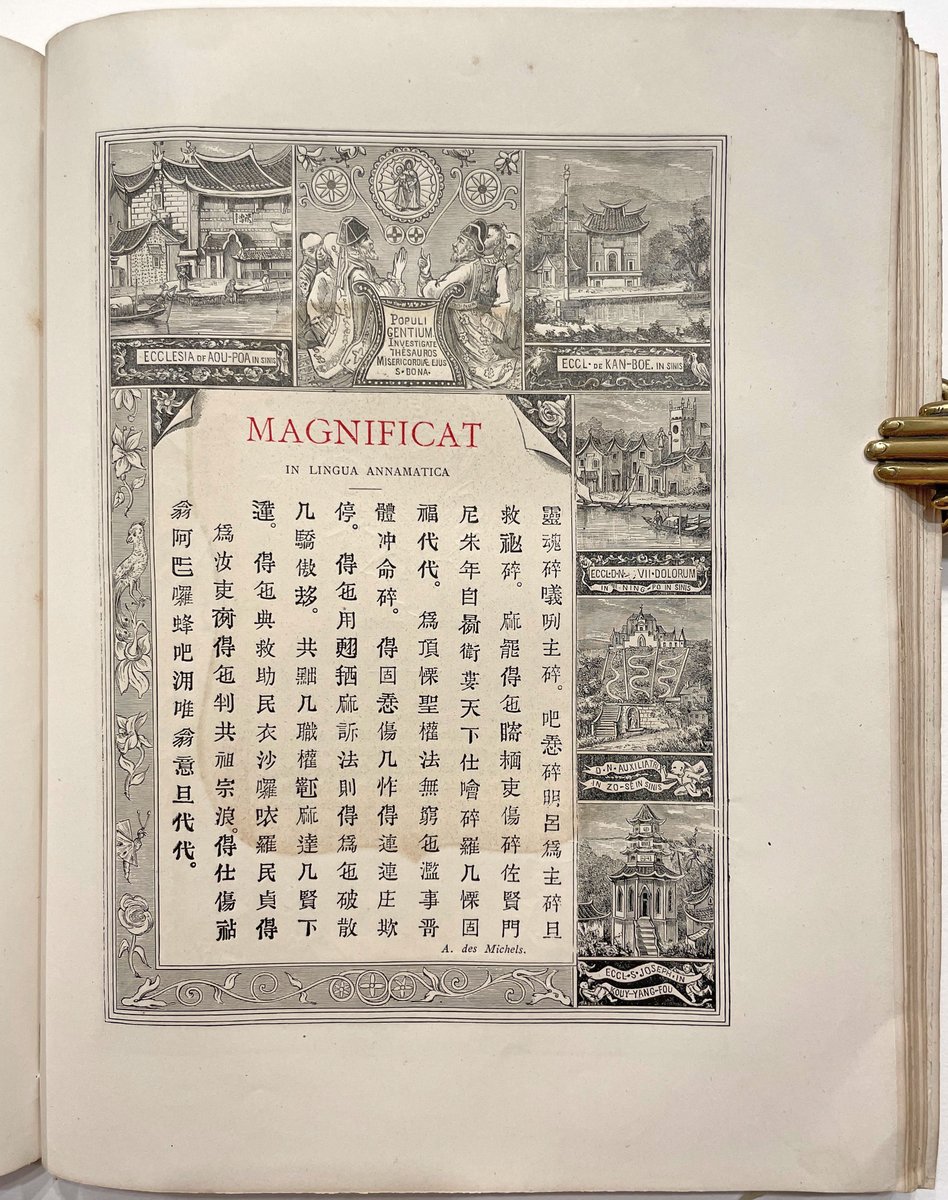
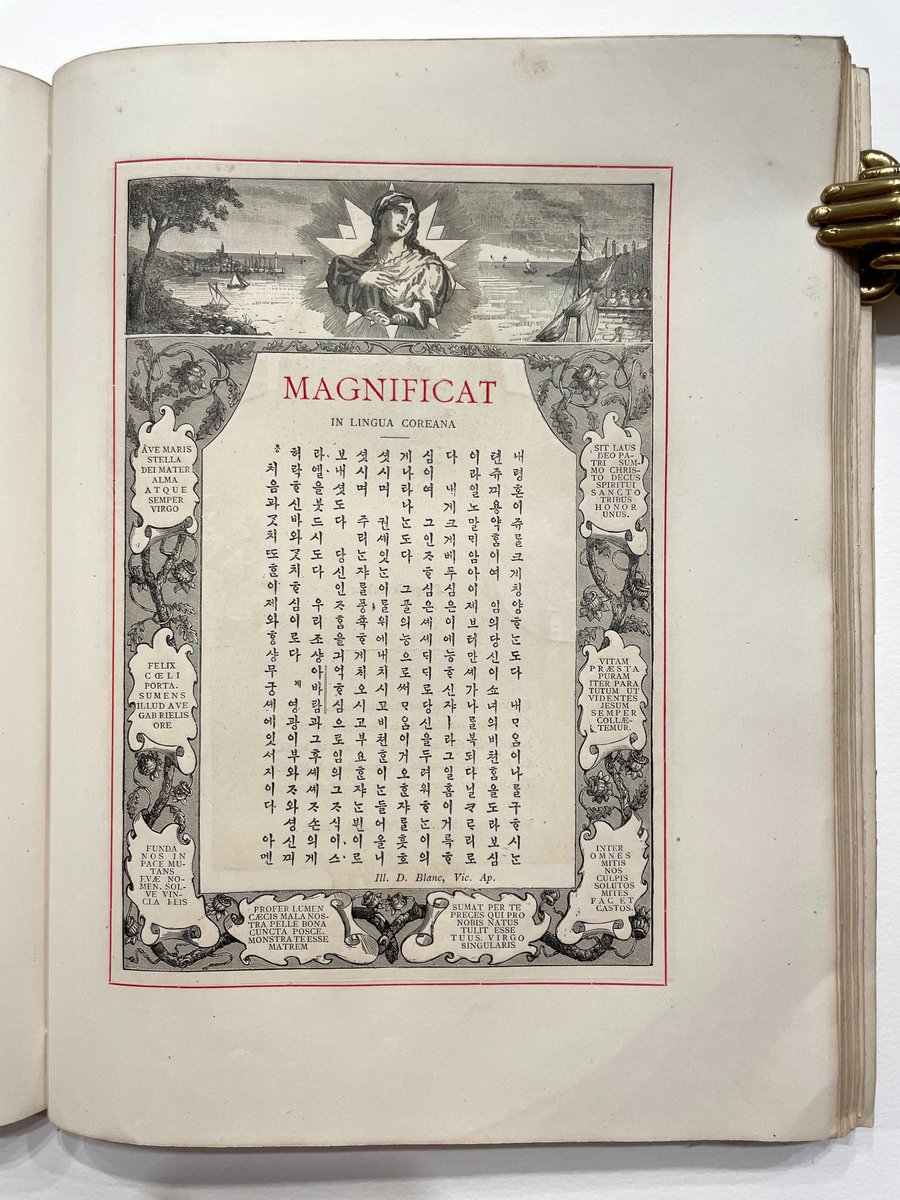
Chu-Nom and Hangul. 10/
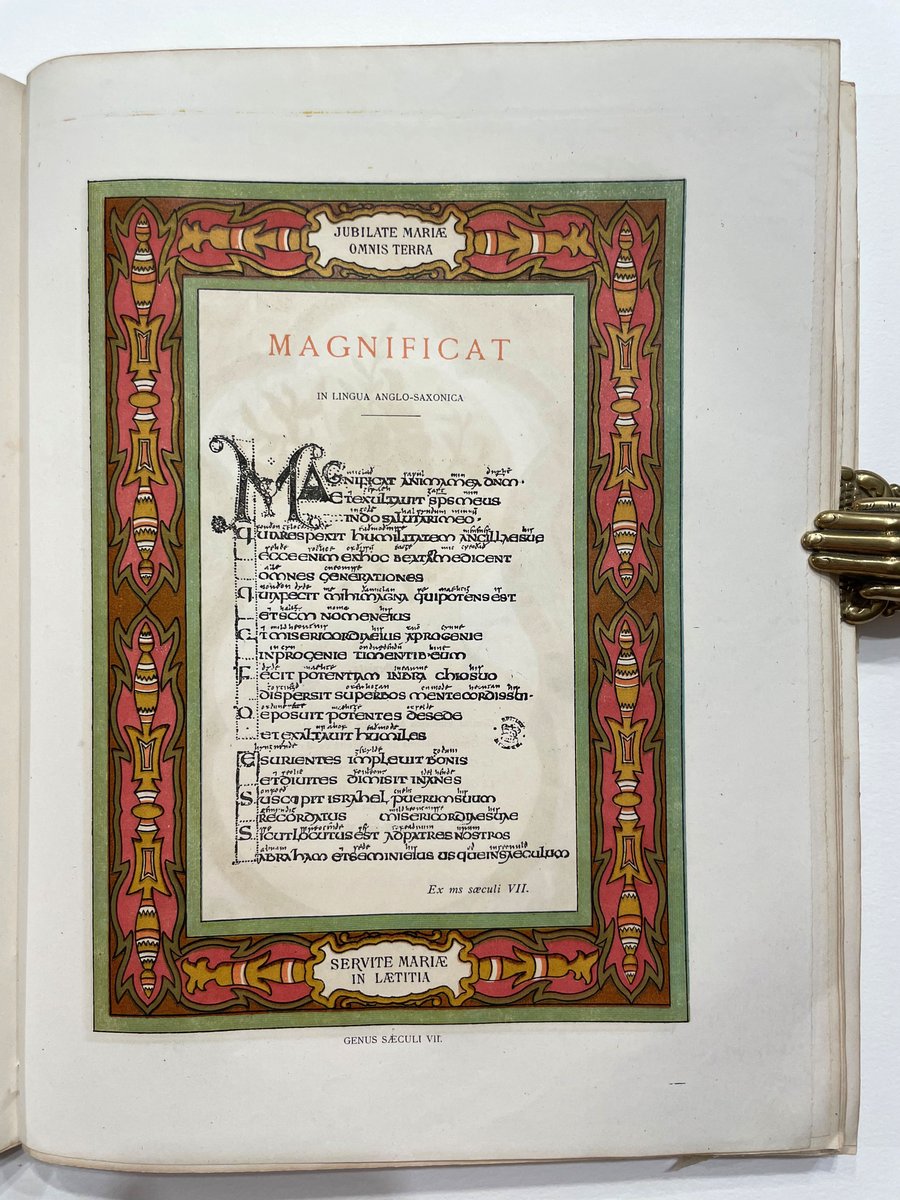
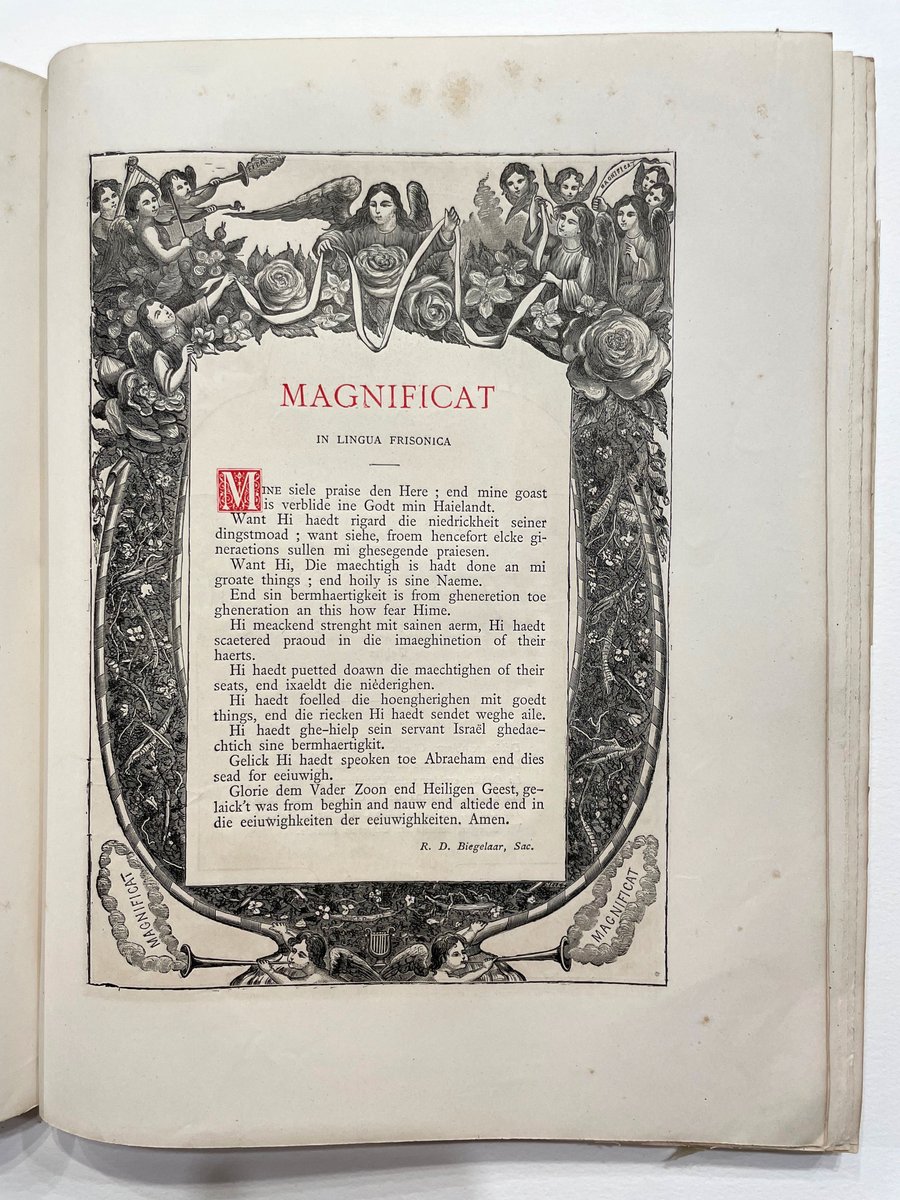
Anglo-Saxon and Frisian. 11/
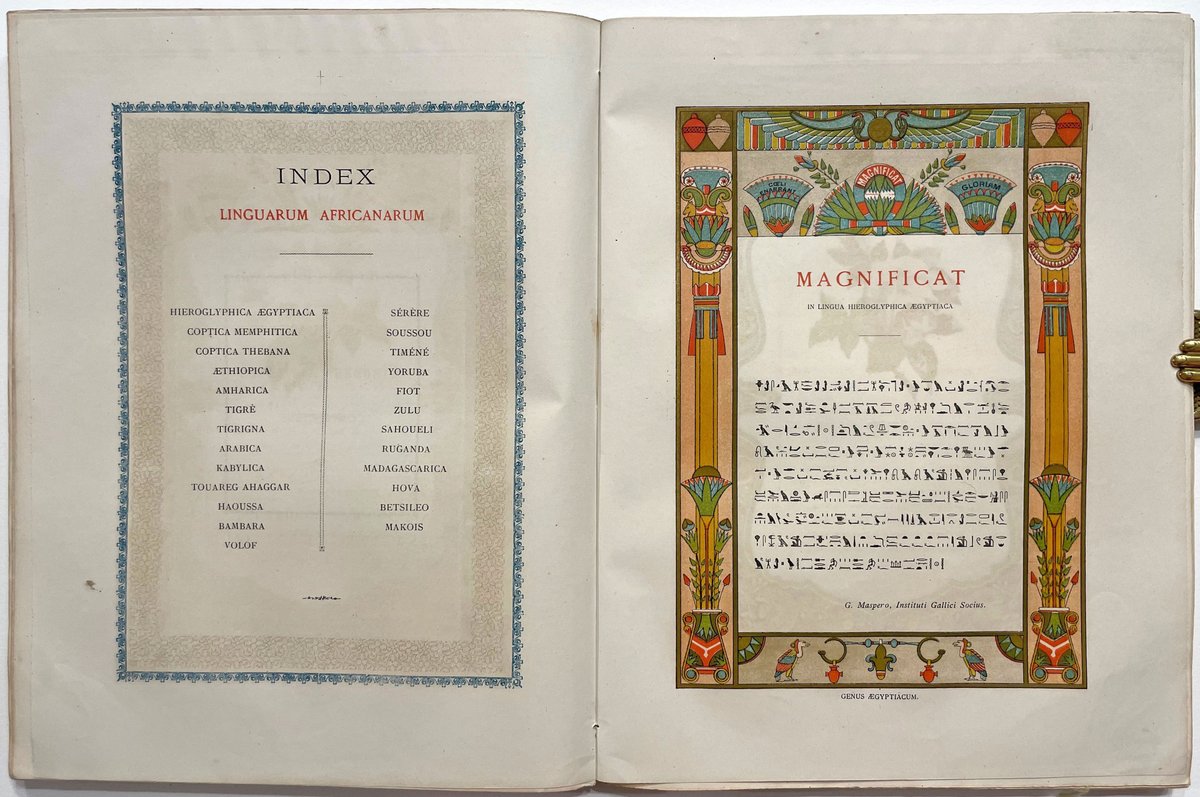
The section on African languages commences with Egyptian hieroglyphics. 12/
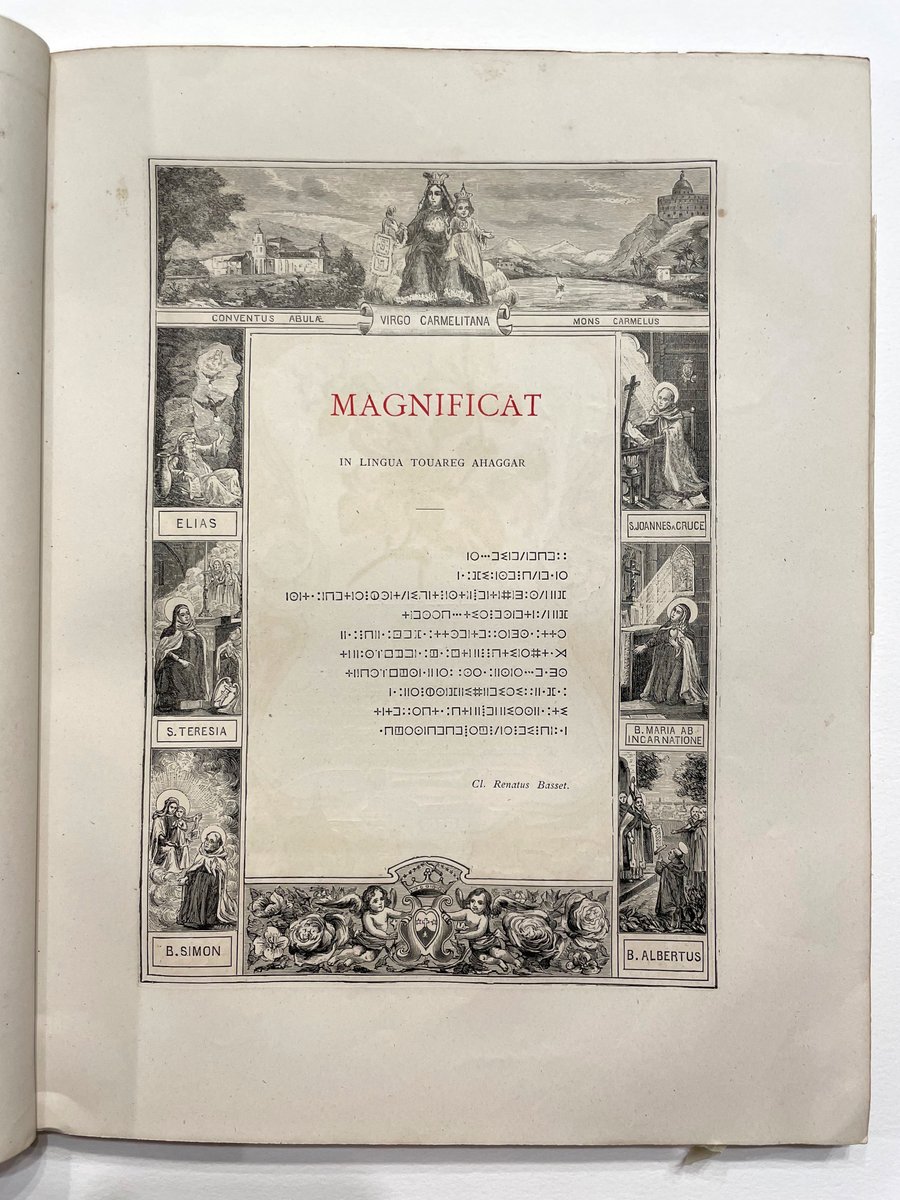
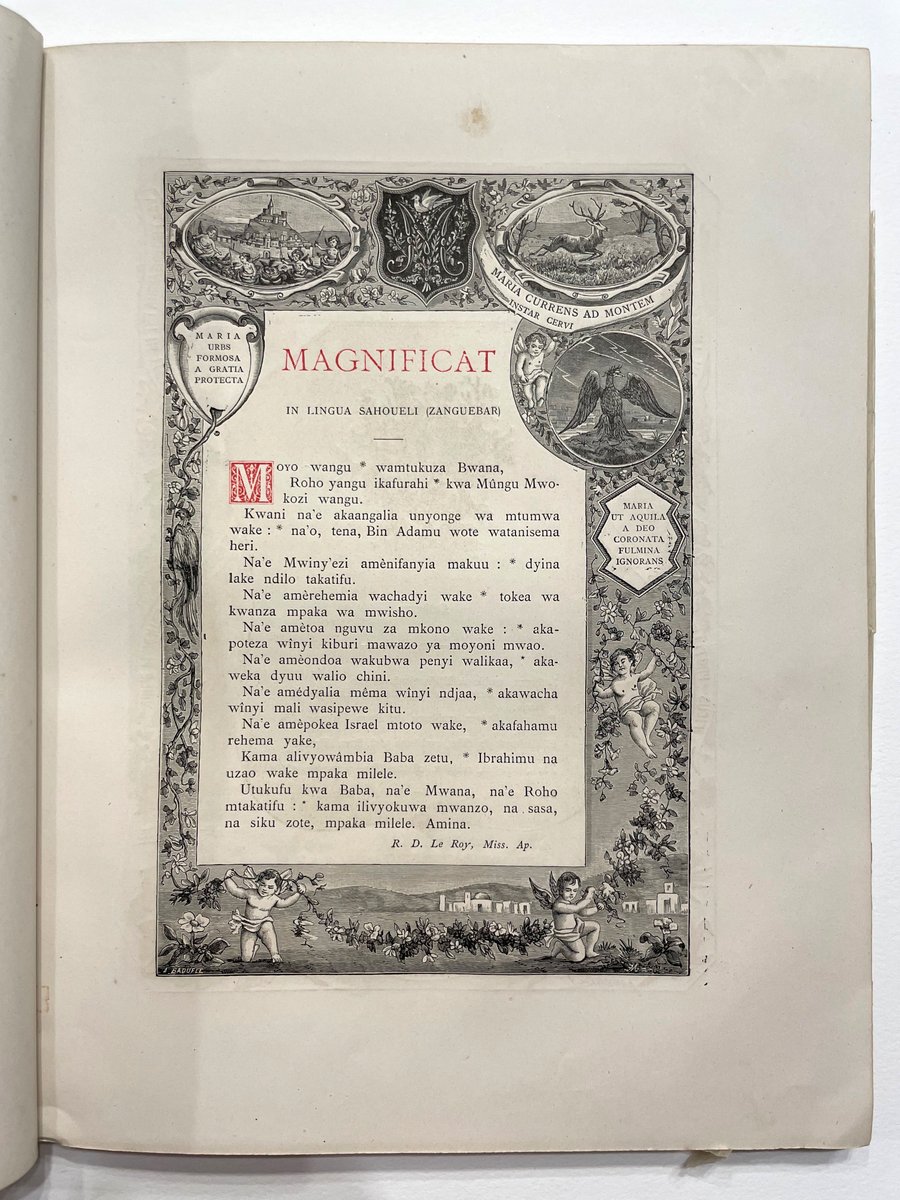
Tamazight in Tifinagh script, and Swahili. 13/
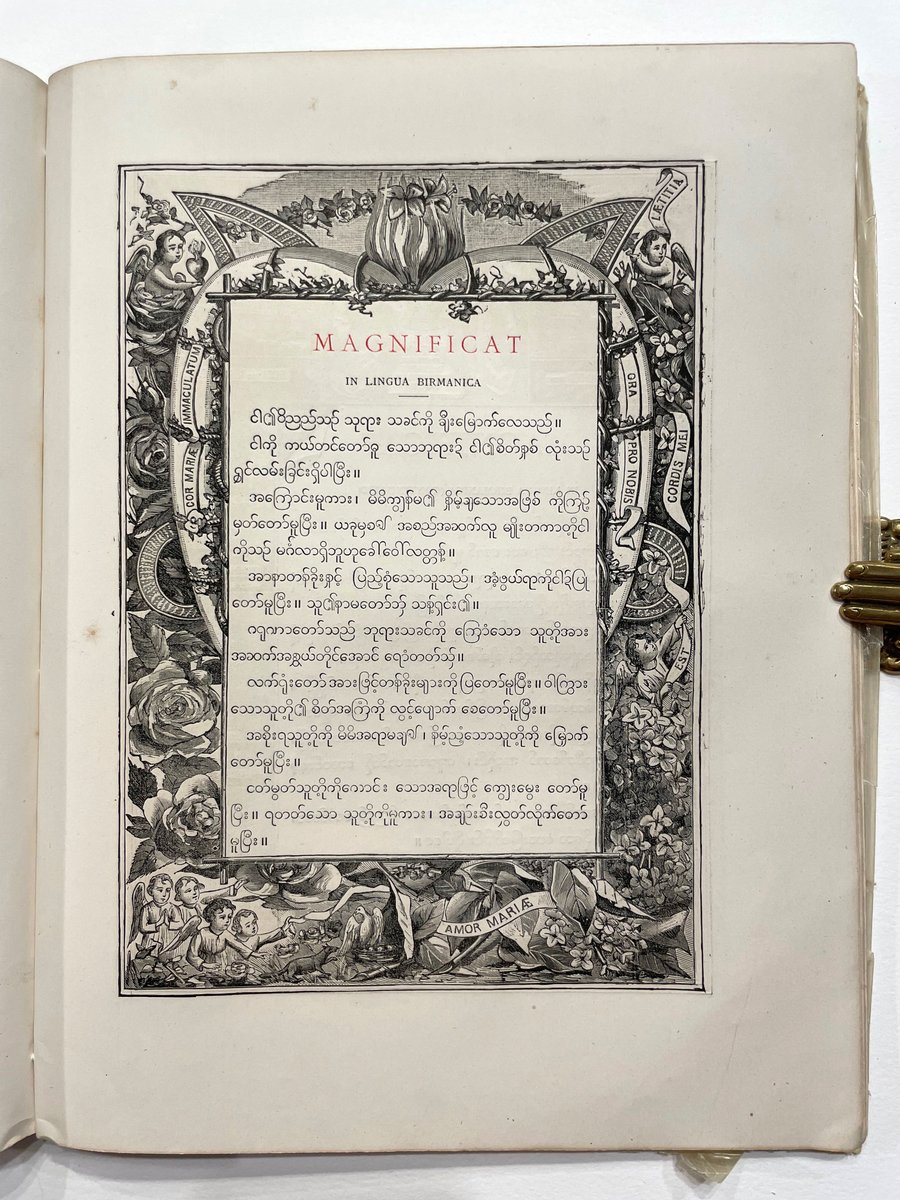
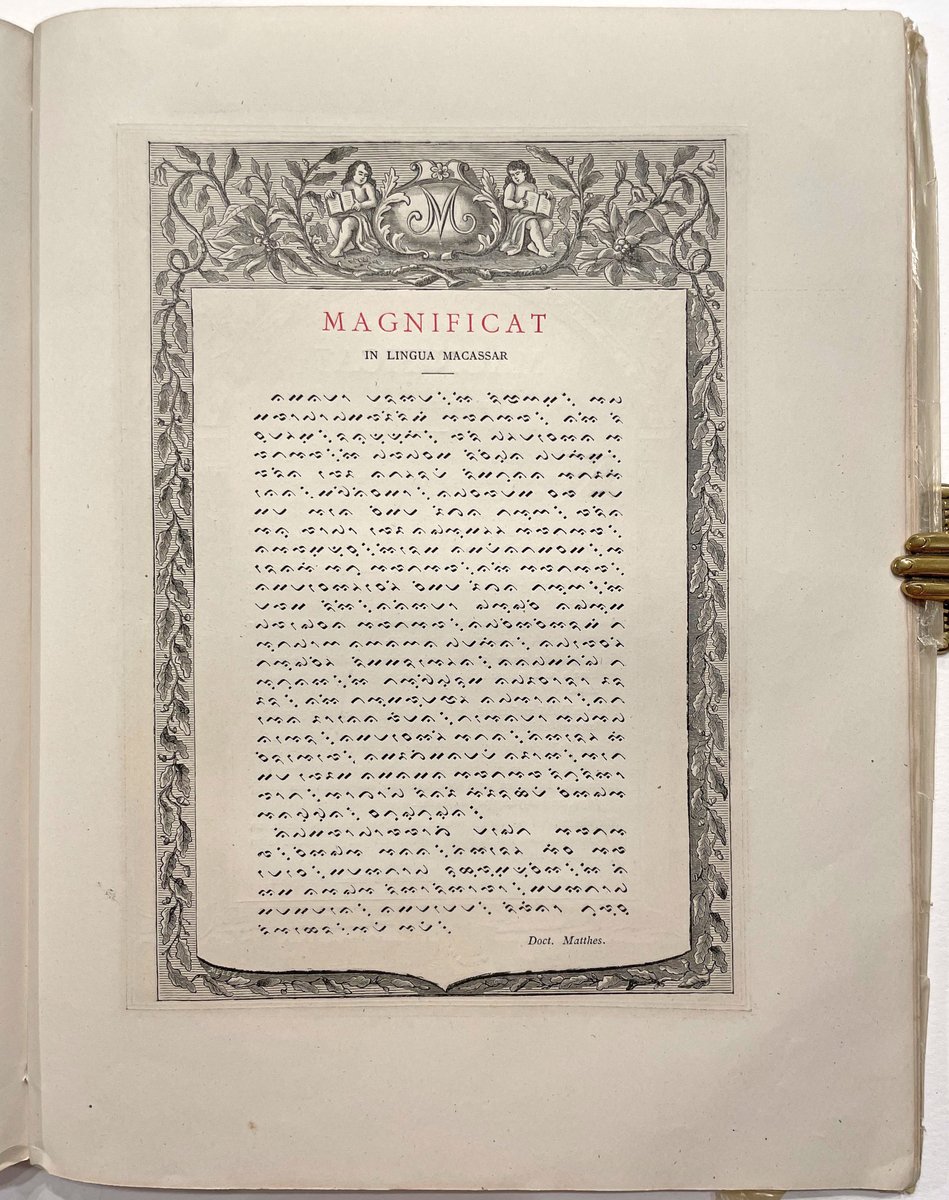
Burmese and Makasar or 'bird script' from South Sulawesi. 14/
Loading suggestions...