

In fact the opposite is true. I have nothing against Buddhism as it is part of Dharma but then these nincompoops have forced people like me to call out their bluff based on Marxist propaganda and fraudulent scholarship.
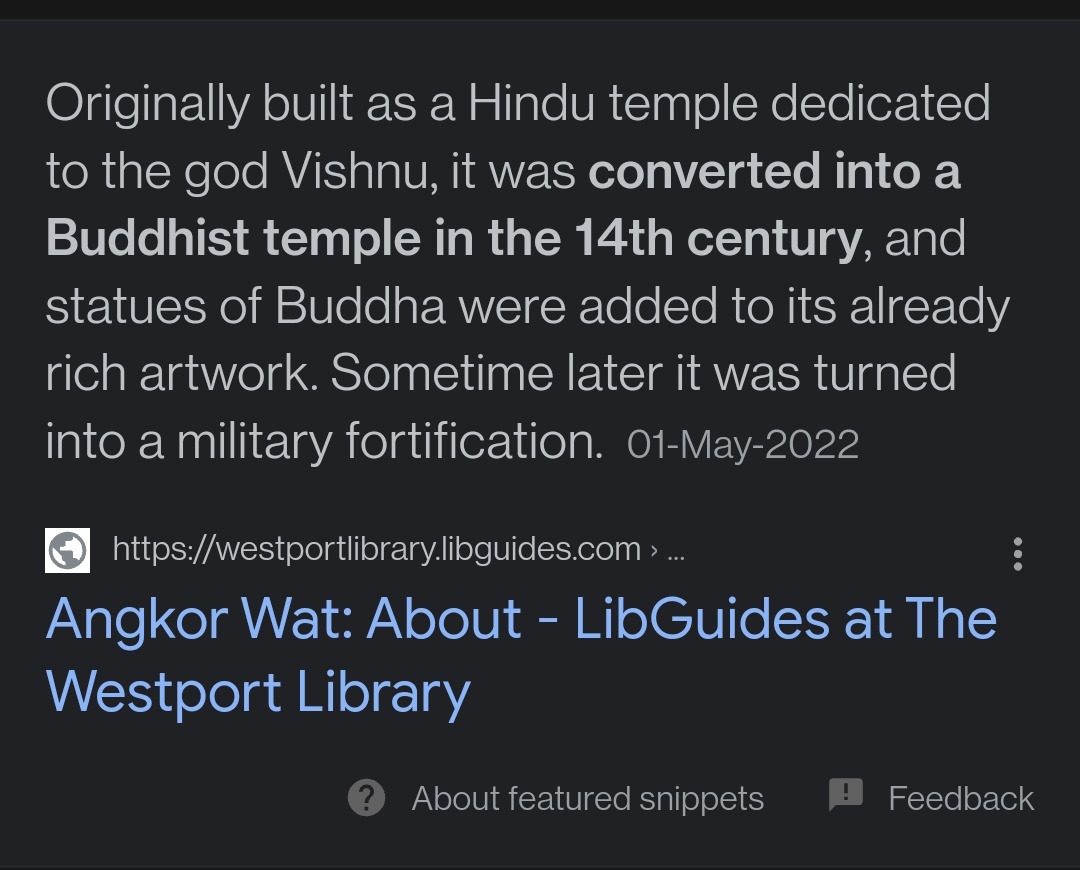
Source: Journal of the Pali Text Society 1896 by Thomas William Rhys Davids (Scholar of the Pāli language and founder of the Pāli Text Society) Page 87-92
Myths of Persecution of Buddhists
Myths of Persecution of Buddhists
1. Mahirakula, King of Kashmir & his invasion of Gandhara.
Truth: He was the last Alchon Hun king. Acc. to Chinese Buddhist pilgrim Song Yun, Mihirakula "does not believe in any religion", the Brahmins who live in his kingdom & read their sacred texts do not like him.
Truth: He was the last Alchon Hun king. Acc. to Chinese Buddhist pilgrim Song Yun, Mihirakula "does not believe in any religion", the Brahmins who live in his kingdom & read their sacred texts do not like him.

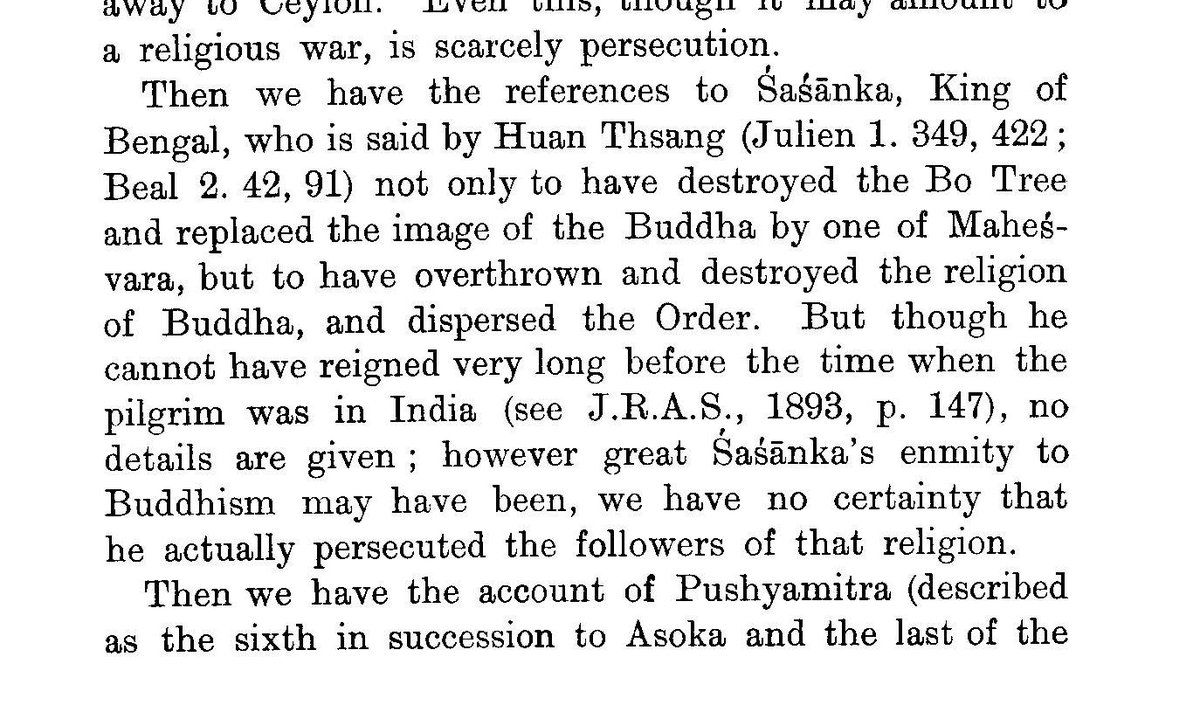
2. Shashanka, King of Bengal.
Truth: Flourishing condition of the Buddhist University at Nalanda, where Hiuen Tsang himself studied & existence of a no. of monasteries in Shashanka's kingdom including the Raktamrttika-Mahavihara goes against the evidence of Hiuen Tsang.
Truth: Flourishing condition of the Buddhist University at Nalanda, where Hiuen Tsang himself studied & existence of a no. of monasteries in Shashanka's kingdom including the Raktamrttika-Mahavihara goes against the evidence of Hiuen Tsang.
3. Pushyamitra
Truth: Étienne Lamotte points out that Buddhist legends are not consistent about location of Pushyamitra's anti-Buddhist campaign & his death. (cont.)
Truth: Étienne Lamotte points out that Buddhist legends are not consistent about location of Pushyamitra's anti-Buddhist campaign & his death. (cont.)
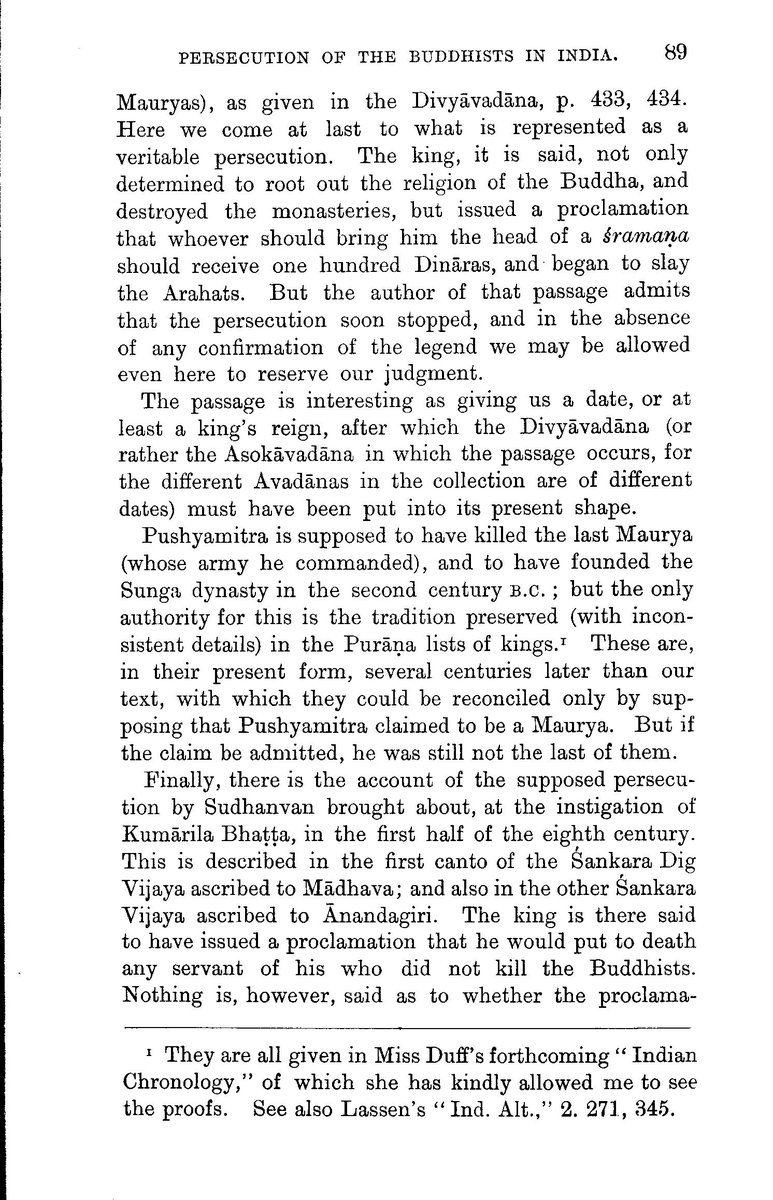
The Ashokavadana claims that Pushyamitra offered Roman dinaras as a reward for killing Buddhist monks, but the dinara did not come into general circulation in India before the 1st century BCE.
Pushyamitra's overthrow of the Mauryans cannot be considered as a Brahmin uprising as Ashoka's edicts mention the Brahmins before Shramanas, and the appointment of a Brahmin general (Pushyamitra) shows that the Brahmins were honoured at the Mauryan court.
The fact that the Ashokavadana mentions Pushyamitra as a Mauryan further erodes its historical credibility, and weakens the hypothesis that he persecuted Buddhists because he was a Brahmin.
Surprise surpirse, even Romila Thapar writes that the lack of concrete archaeological evidence casts doubt on the claims of Buddhist persecution by Pushyamitra. (Book: Aśoka and the Decline of the Mauryas by Romila Thapar)
Last: Supposed persecution by Sudhanvan of Buddhists at instigation of Kumárila Bhatta.
Reality: No single instance of any Buddhist actually suffering in body is ever referred to. (cont.)
Reality: No single instance of any Buddhist actually suffering in body is ever referred to. (cont.)
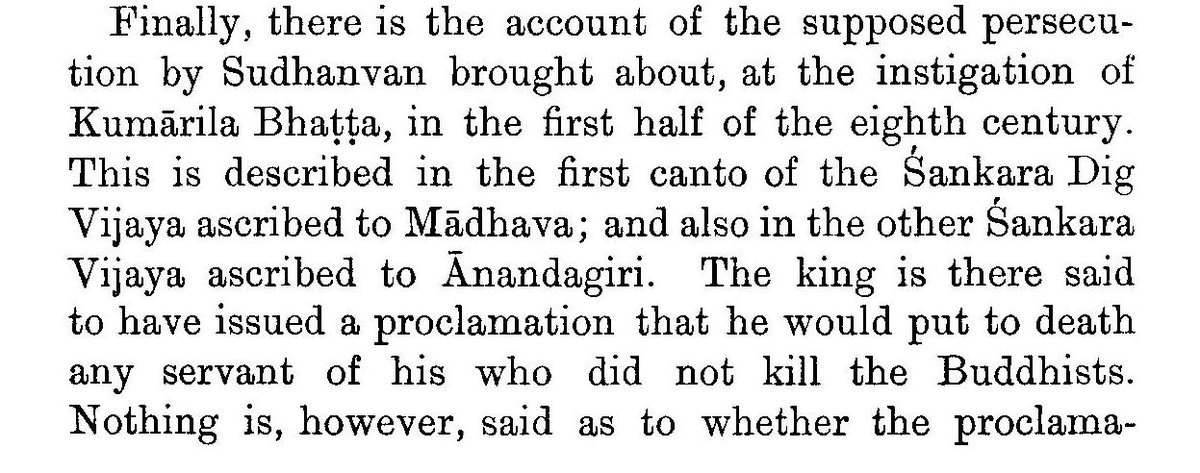
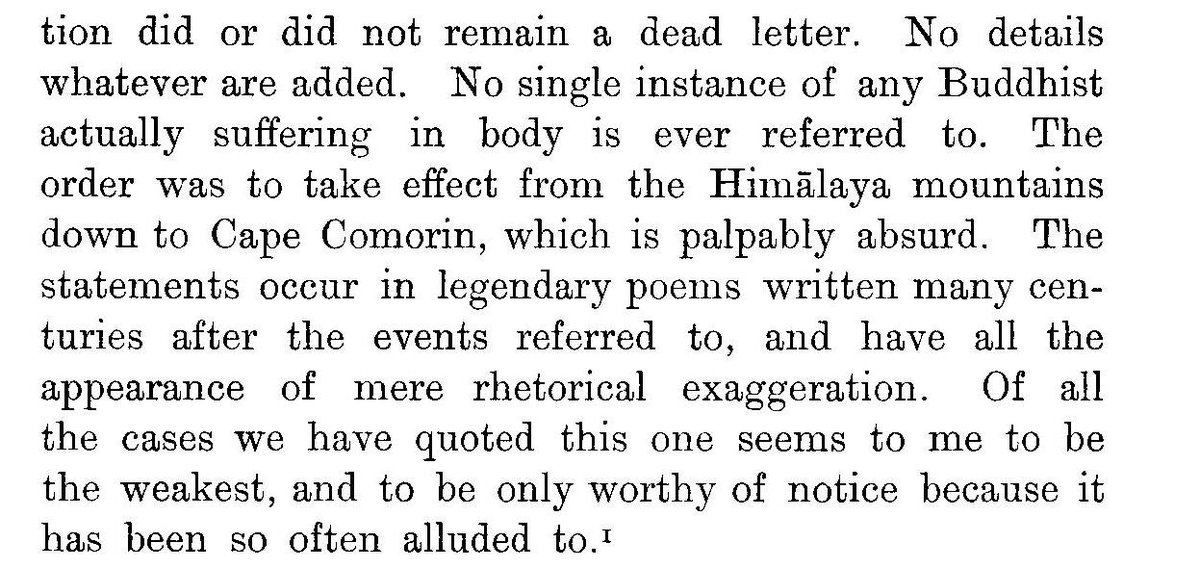
Statements occur in legendary poems written many centuries after the events referred to & have all the appearance of mere rhetorical exaggeration.
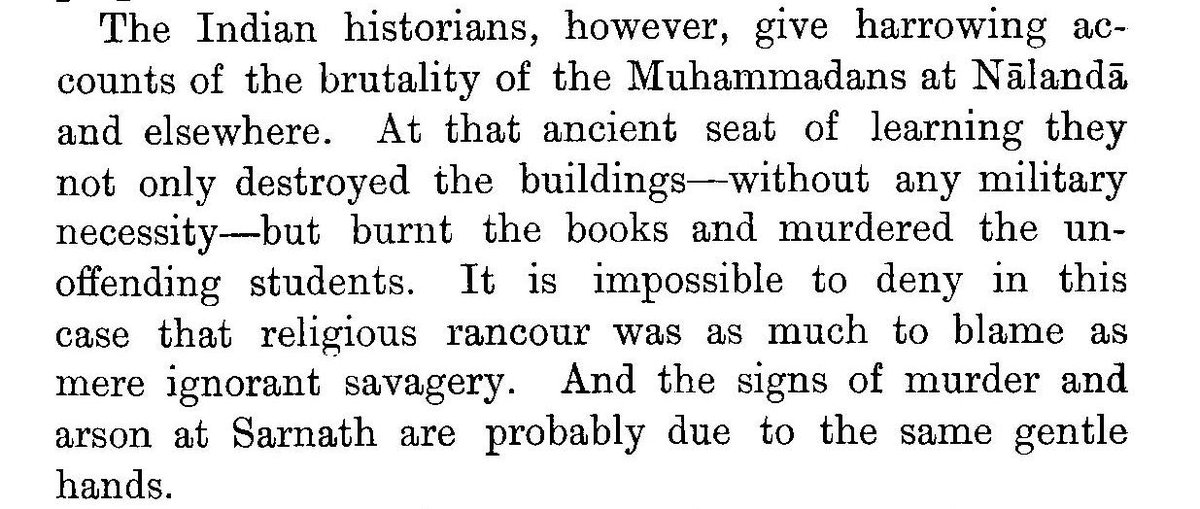
The Indian historians, however, give harrowing accounts of the brutality of the Muhammadans at Nalanda and elsewhere. At that ancient seat of learning they not only destroyed the buildings without any military necessity but burnt the books and murdered the unoffending students.
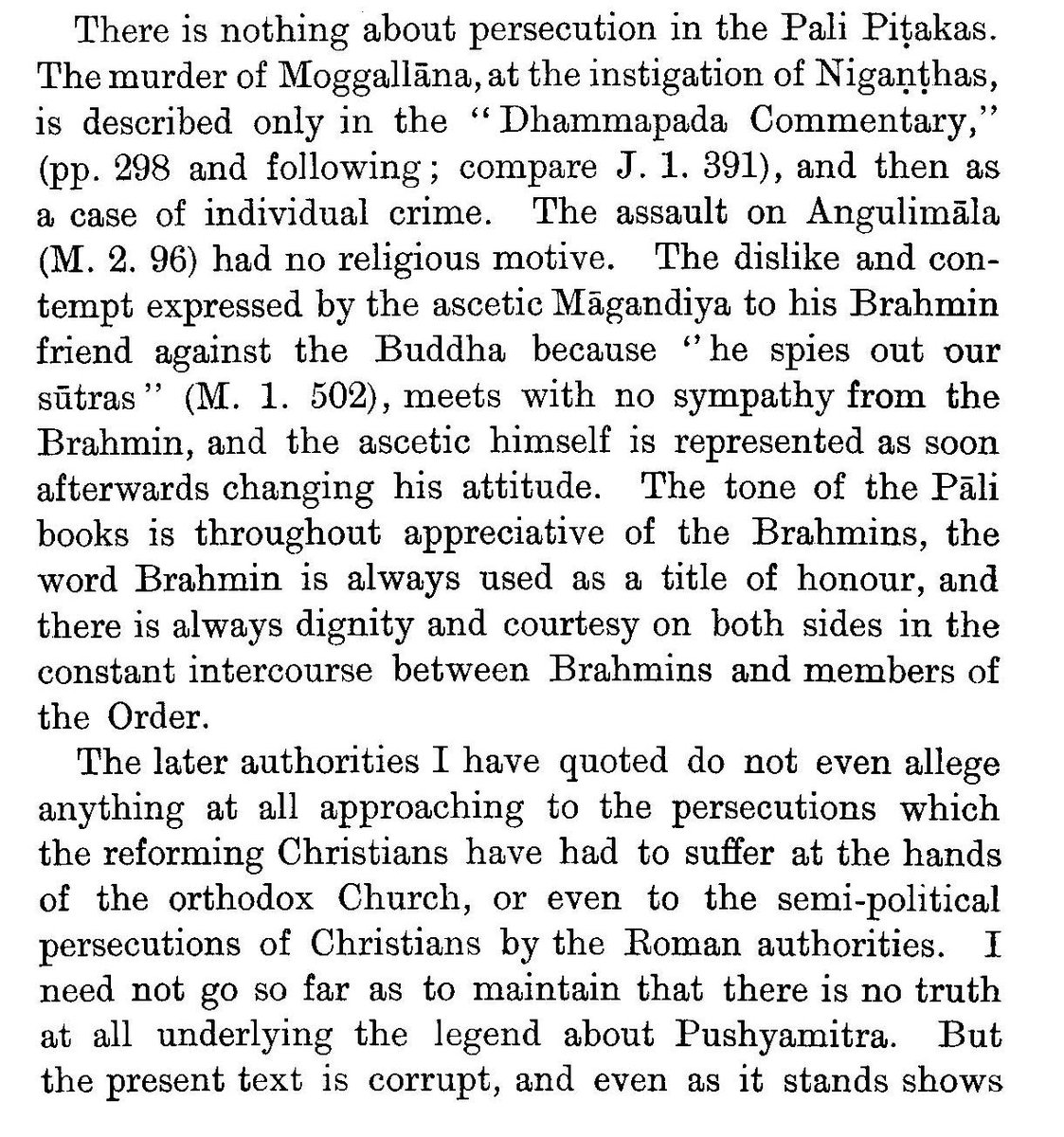
- There is nothing about persecution in the Pali Pitakas.
- The murder of Maudgalyayana, at the instigation of Niganthas is described only in the "Dhammapada Commentary" and then as a case of individual crime.
- The assault on Angulimala had no religious motive.
- The murder of Maudgalyayana, at the instigation of Niganthas is described only in the "Dhammapada Commentary" and then as a case of individual crime.
- The assault on Angulimala had no religious motive.
"The tone of the Pali books is throughout appreciative of the Brahmins, the word Brahmin is always used as a title of honour, and there is always dignity and courtesy on both sides in the constant intercourse between Brahmins and members of the Order."
"...The adherents of faiths logically so diametrically opposed lived side by side for a thousand years in profound peace... It must be reckoned to the credit of the Indian people as a whole; and it is evidence of the wide spread, in the valley of the Ganges...
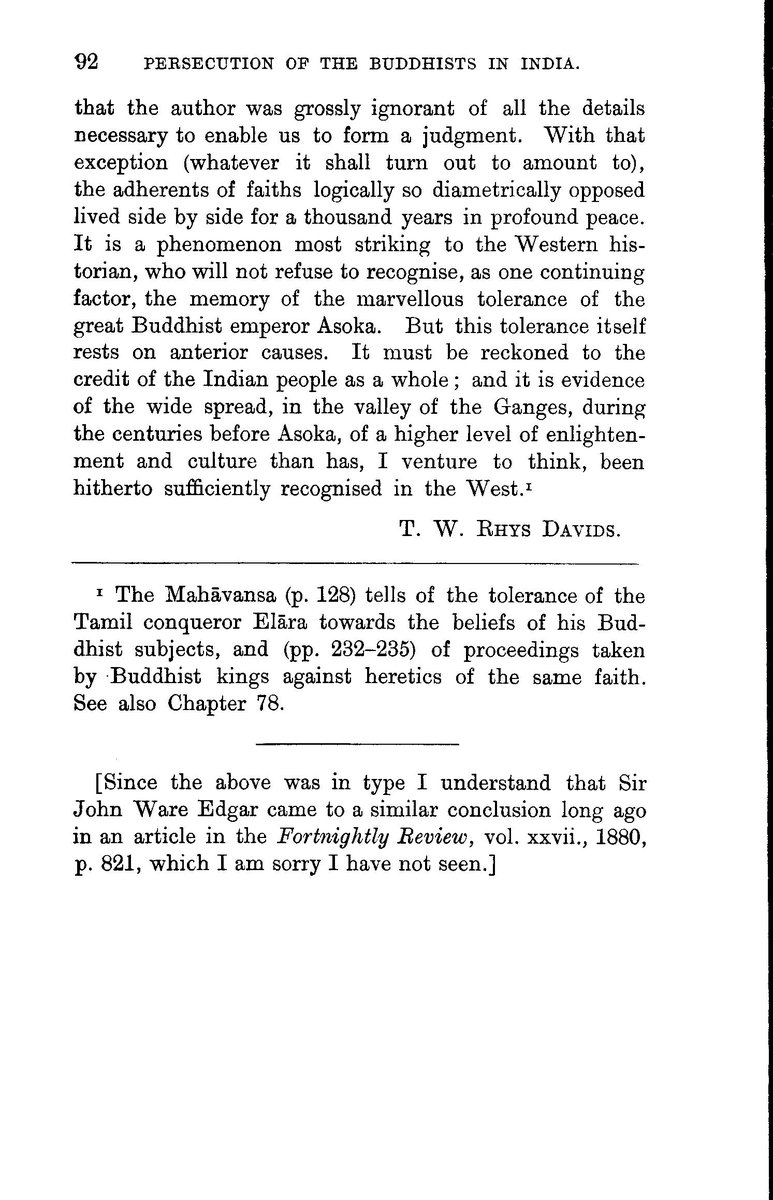
during the centuries before Asoka, of a higher level of enlightenment and culture than has, I venture to think, been hitherto sufficiently recognised in the West." - T. W. RHYS DAVIDS.
Loading suggestions...