

Newcastle United’s 2020/21 financial results cover a season when they finished 12th in the Premier League under head coach Steve Bruce, since replaced by Eddie Howe in November 2021. Disrupted by the COVID-19 pandemic. Some thoughts in the following thread #NUFC
This was the last set of accounts under Mike Ashley’s ownership, as the club was acquired in October 2021 by Saudi Arabia’s Public Investment Fund (80% stake), as well as PCP Capital Partners (10%) and RB Sports & Media (10%).
#NUFC pre-tax loss reduced from £26m to £14m, despite revenue falling £13m (8%) from £153m to £140m and profit on player sales dropping £24m to £2m, as operating expenses decreased £51m (25%), mainly due to change in accounting date. Loss after tax narrowed from £23m to £12m.

Main driver of #NUFC revenue fall was COVID, which led to reductions in match day, down £17m (99%) to just £176k, and commercial, down £8m (29%) to £21m. Partly offset by TV money rising £13m (12%) to £119m, mainly due to broadcasters’ rebate in prior year.

#NUFC wage bill decreased £14m (12%) from £121m to £107m, while player amortisation fell £15m (32%) to £32m and there was no repeat of prior year’s £11m impairment charge. Other expenses were also down £10m (40%) to £14m, partly due to the lower cost of staging games.
Worth noting that #NUFC 2020/21 accounts only cover 11 months, but prior year was 13 months, as financial reporting period extended to 31st July 2020 to take into consideration COVID delaying end of season. Little impact on revenue, but significant cost reduction year-on-year.

Adverse COVID impact for #NUFC in 2020/21 was £25.9m (revenue loss net of cost savings), but costs were £12.7m lower, due to only 11 months in accounts, so underlying loss was only £0.4m. Total revenue loss over two years amounts to £40m.


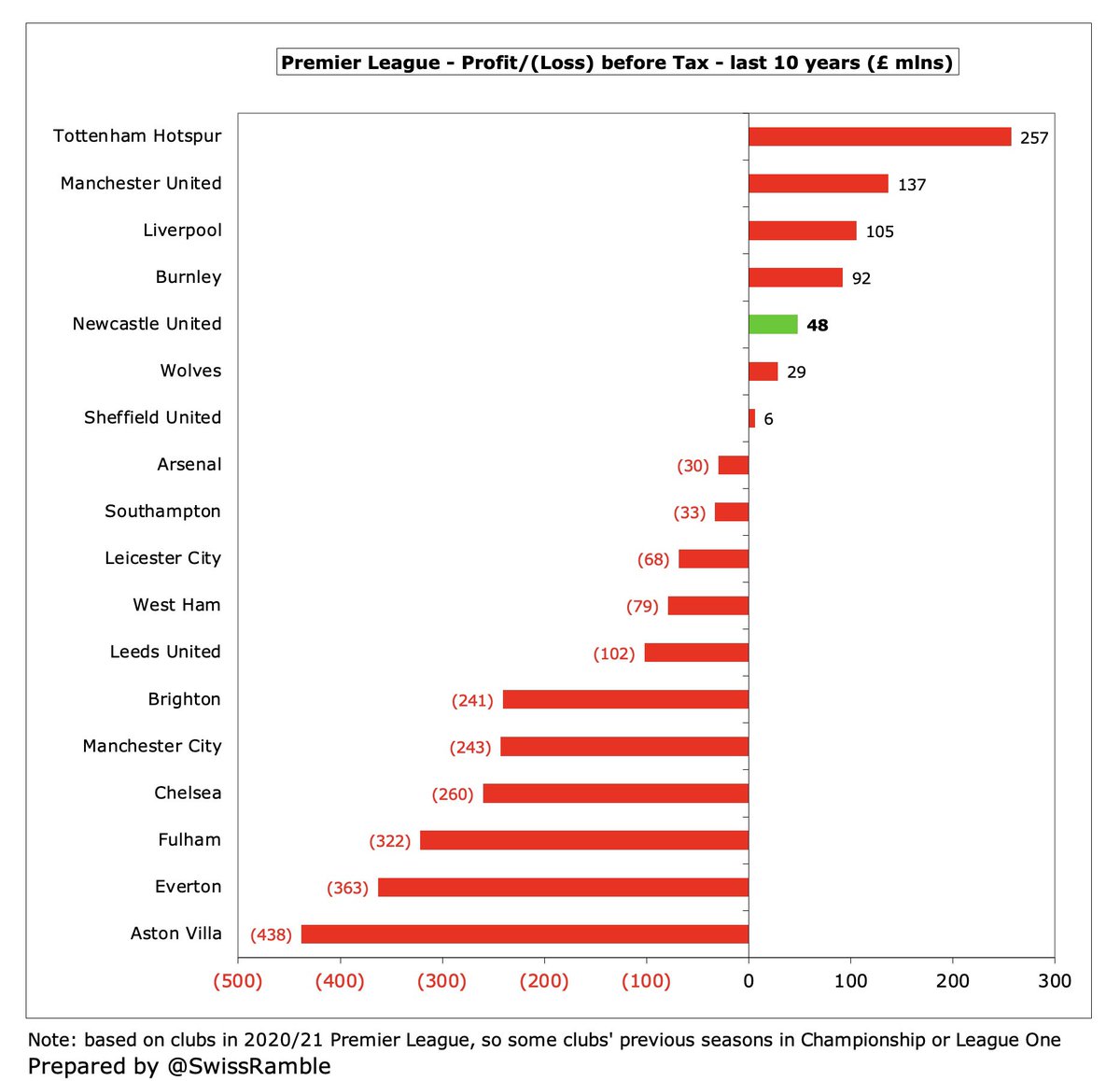
#NUFC posted profits in 7 of last 10 years, the only exceptions being 2017 (Championship) plus 2020 and 2021 (COVID), adding up to £48m over this period. That’s impressive from a financial perspective, though the Toon Army would have liked to see more of that money on the pitch.

Until the slowdown in 2020/21, when departures were mainly free transfers, #NUFC had been making some decent money from player sales with £97m in the previous 4 years (annual average £24m). There will also be hardly any profit from player trading this season.


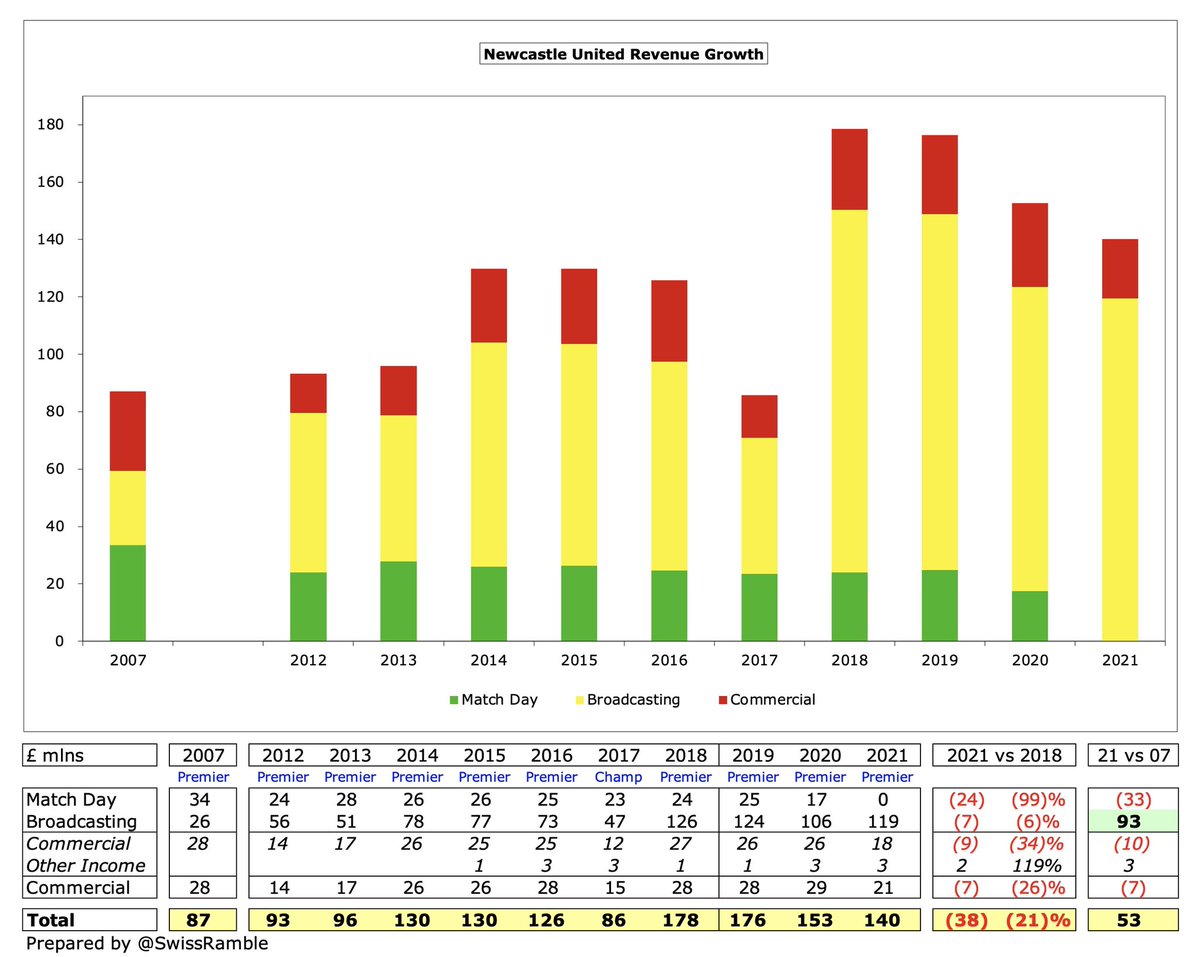
#NUFC revenue fell for the 3rd year in a row, so £140m is £38m (21%) lower than £178m club record, largely due to the pandemic. Revenue has grown £53m since Ashley’s arrival in 2007, but £93m is from centrally negotiated TV contracts, with both match day and commercial lower.


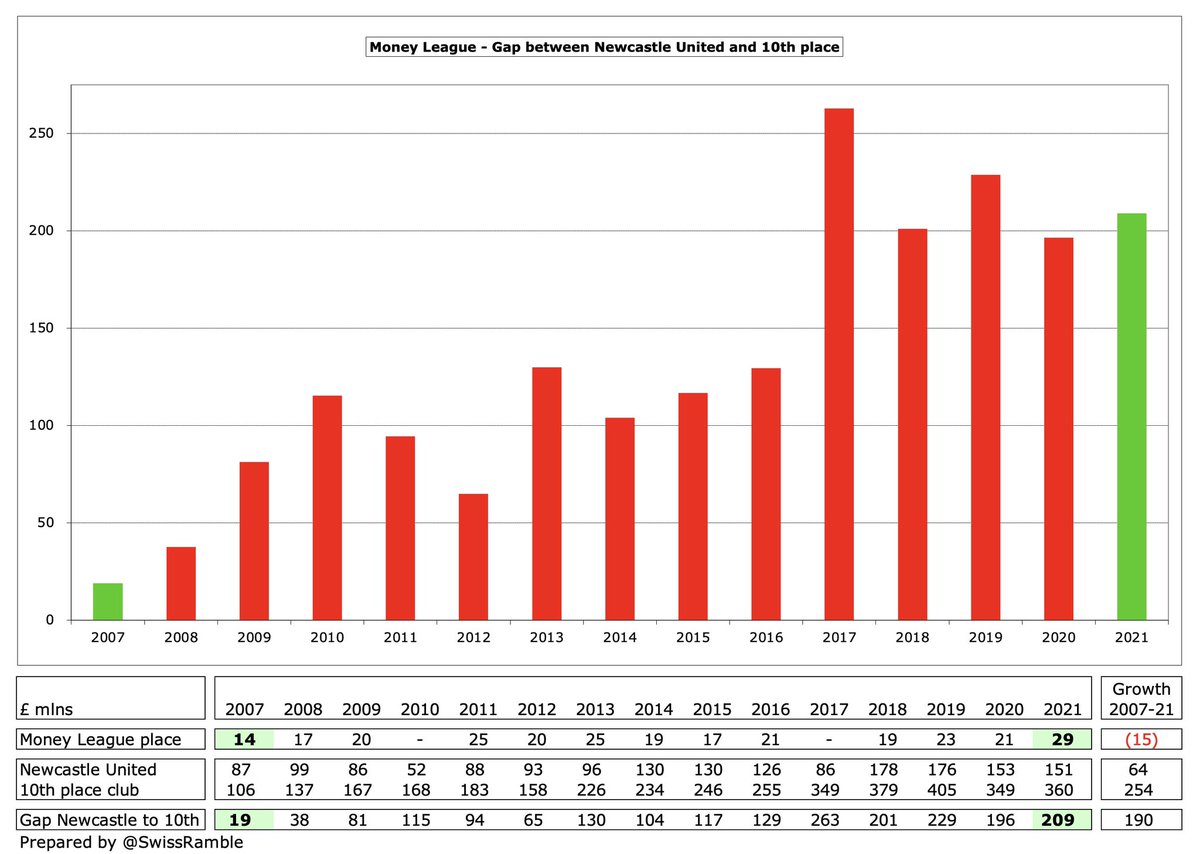
#NUFC were in 29th position in the Deloitte Money League, which ranks clubs globally by revenue, just behind Napoli. Interestingly, they reported £151m revenue, which is £11m higher than club’s £140m, possibly because they have annualised the 11 months in 2020/21.

Before Ashley’s takeover, #NUFC had 14th highest revenue in the world, just £19m lower than 10th placed club, but this gap has soared to £209m in 2021, as Newcastle have been left behind by other clubs. In fact, they had 6th highest revenue in England before the big man arrived.

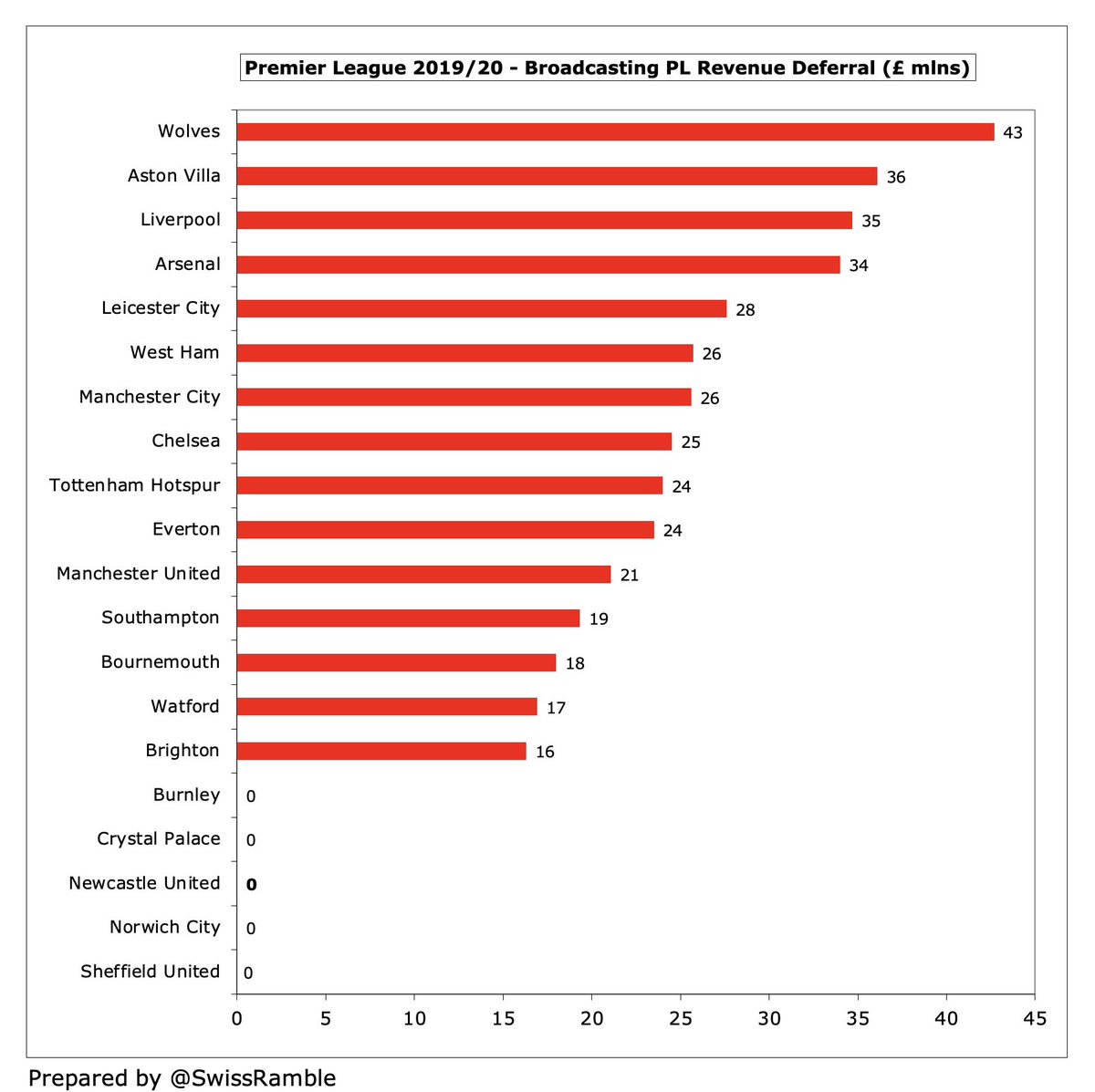
#NUFC broadcasting income rose £13m (12%) to £119m, as prior year included broadcaster rebate, plus higher facility fee (more live games on TV) and merit payment (league position up one to 12th). On low side in the PL, as others benefited from revenue deferrals from 2019/20.


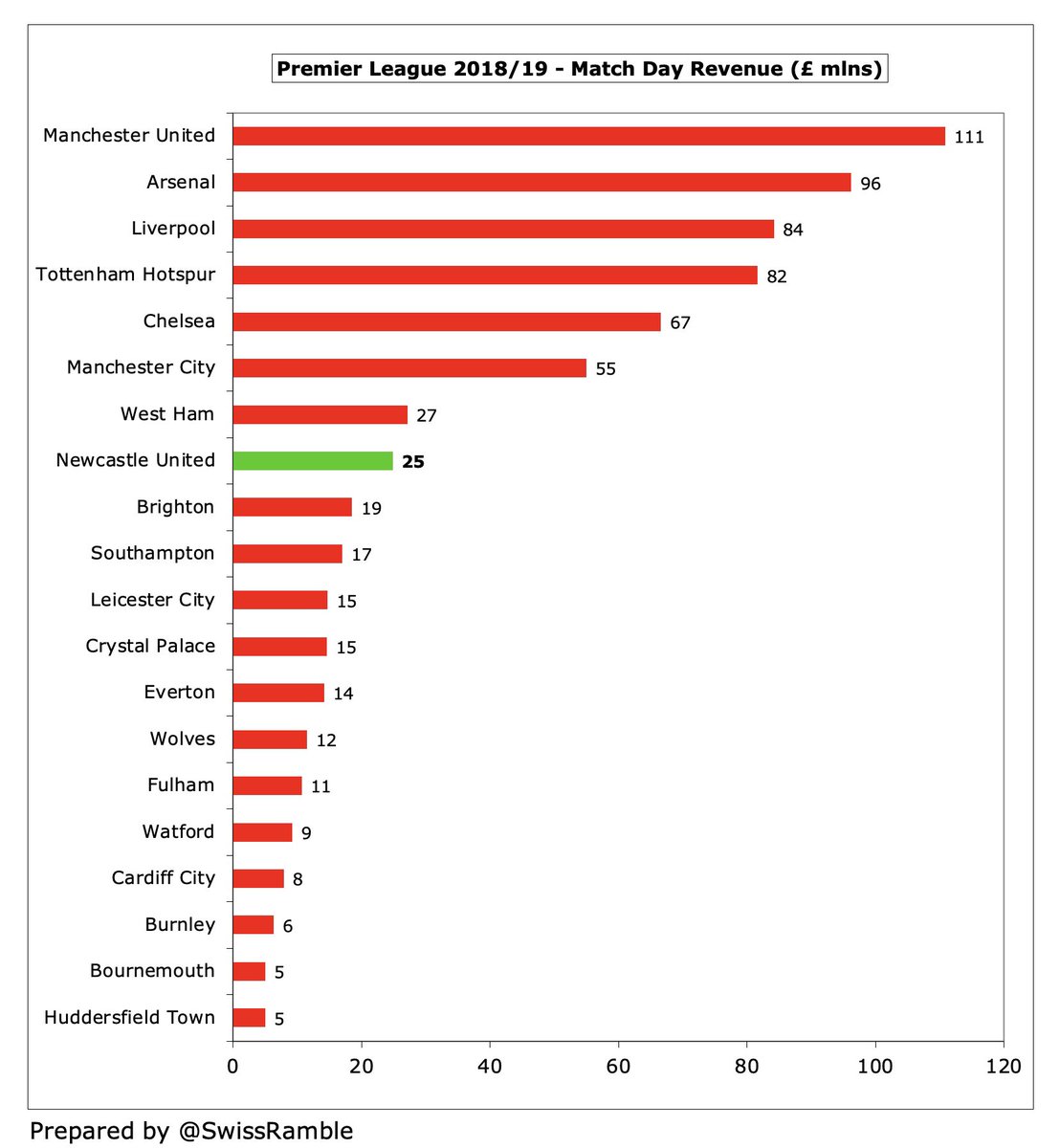
#NUFC match day income fell £17m (99%) to just £176k, as all home games were played behind closed doors (except one with restricted capacity). Newcastle were 8th highest in Premier League before the pandemic with £25m in 2019, only behind the Big Six and West Ham.



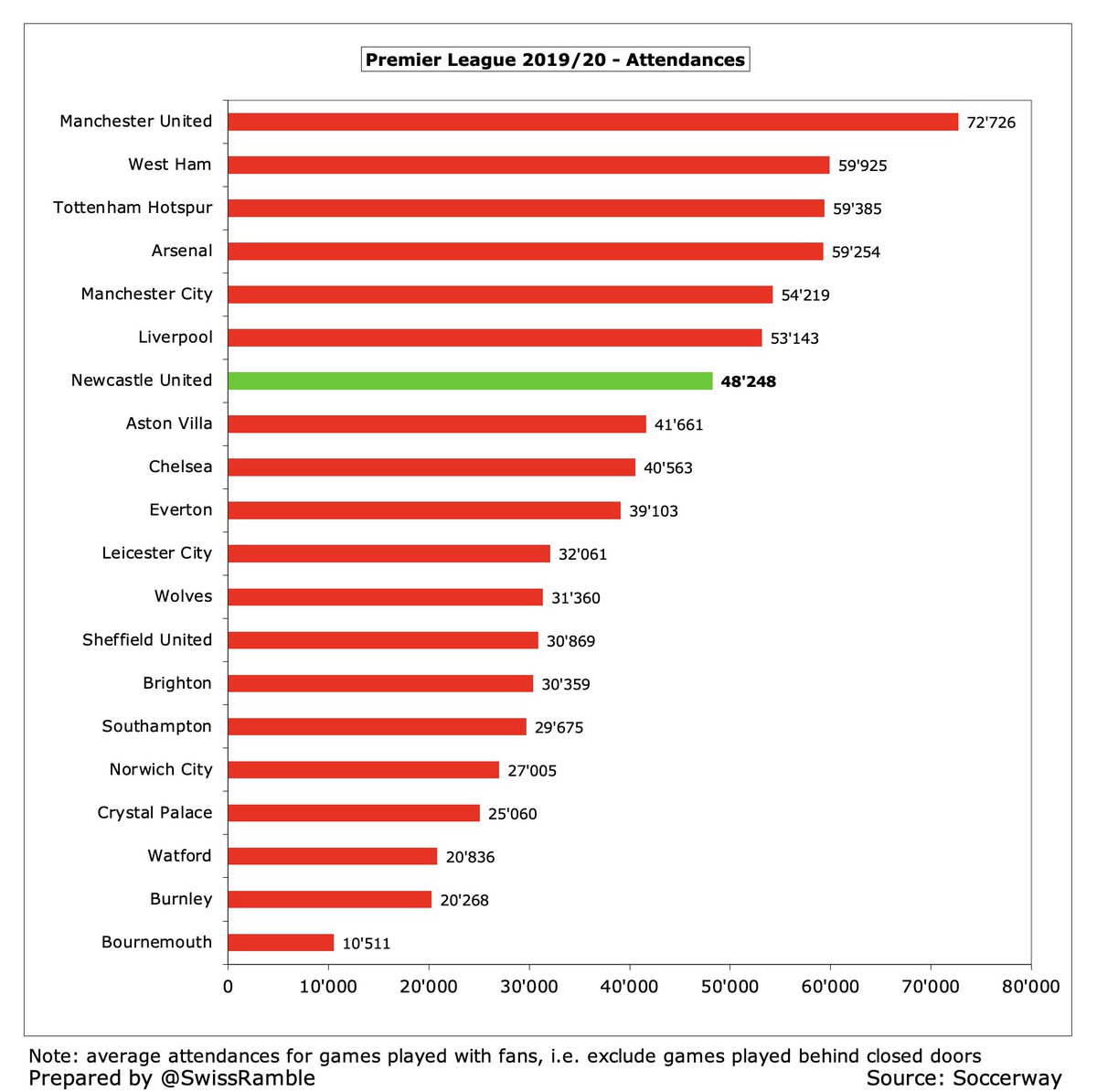
As testament to #NUFC fans’ loyalty, average attendance has been around 50,000 for last 10 years, including 51,000 in Championship. Fell to 48,248 in 2019/20 (for games played with fans), but this was still 7th highest in Premier League and it is back up over 50,000 this season.


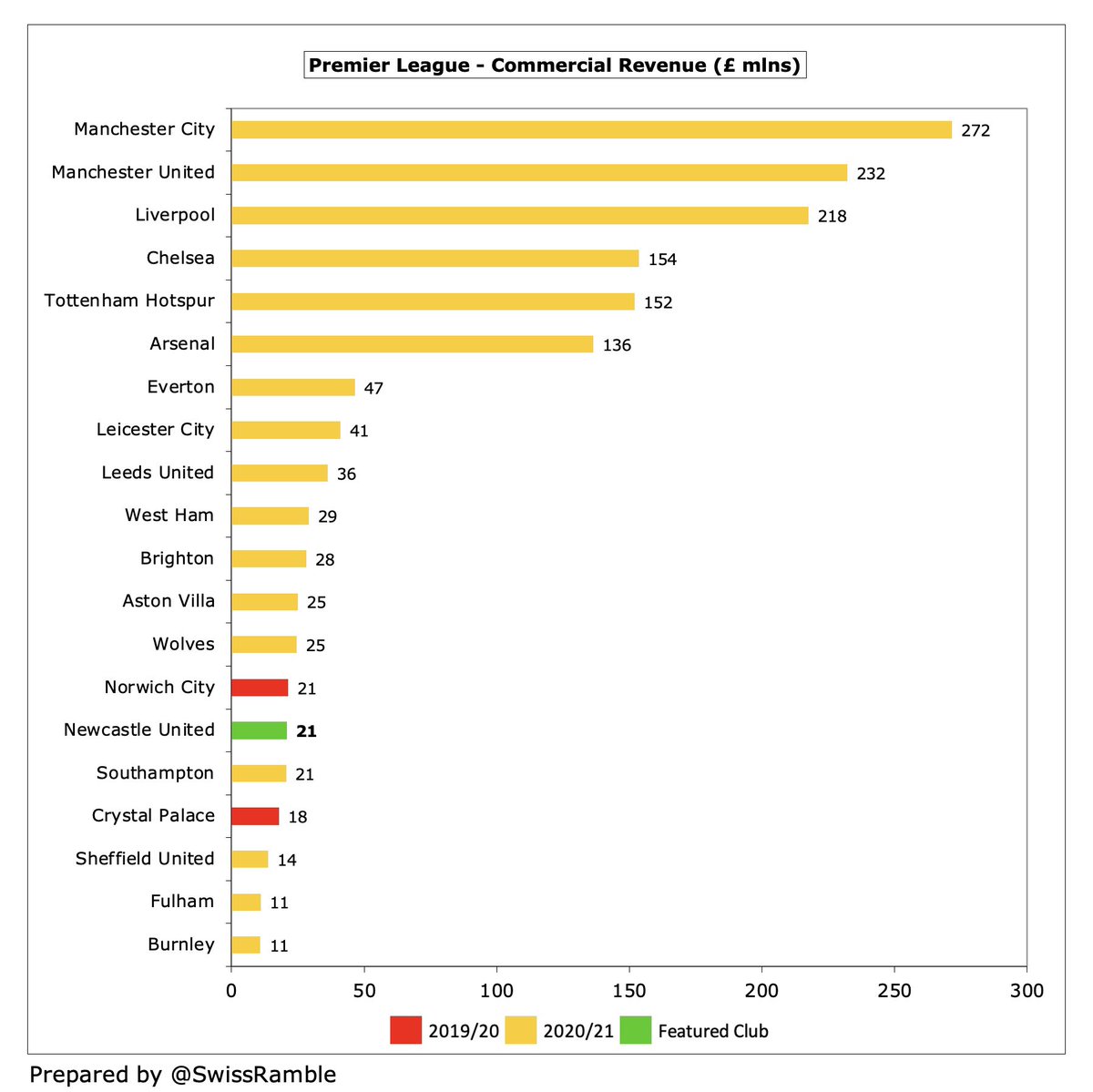
Ashley did not manage to grow #NUFC commercial income at all in 14 years. In fact, it has actually decreased, so club has fallen way behind rivals in this revenue stream. Newcastle outsourced catering in 2009, but that was only worth £6m, so does not explain the poor performance.

The new owners claimed that #NUFC had not received any sponsorship from Ashley for Sports Direct stadium advertising for the last three seasons, though the accounts state that the club made sales of £253k to the owner’s companies, while purchasing £40k of goods.
#NUFC shirt sponsorship with Fun88 has been extended, reportedly for £8m a year, while Puma’s kit supplier deal was replaced in 2020 by Castore, who will also take over the club’s retail operations. Sleeve sponsor for 2021/22 is Kayak, succeeding ICM.


#NUFC wage bill fell £14m (12%) from £121m to £107m, mainly because the accounting period only covered 11 months in 2020/21 (prior year 13 months). On a like-for-like basis, wages would have actually increased by £5m (4%) from £112m to £117m.

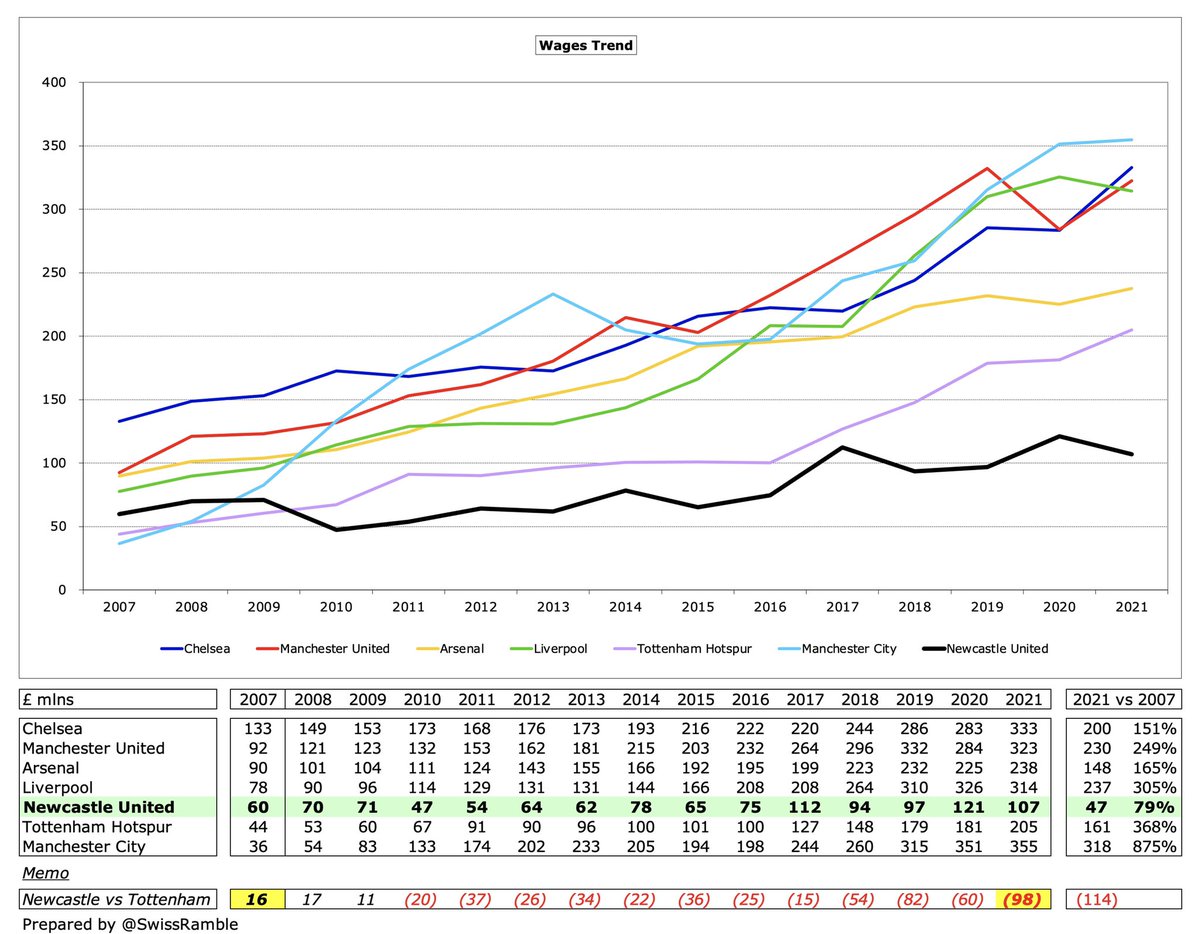

#NUFC wages to turnover ratio decreased from 79% to 76%, which was at the higher end of the Premier League. This was impacted by COVID-driven reduction in revenue, though on the other hand it would have been higher with 12 months of wages.


#NUFC player amortisation, the annual charge to expense transfer fees over contract, fell £15m (32%) to £32m, partly due to shorter accounting period, but also prior year £11m impairment reducing player values. One of the lowest in the PL, reflecting club’s limited investment.


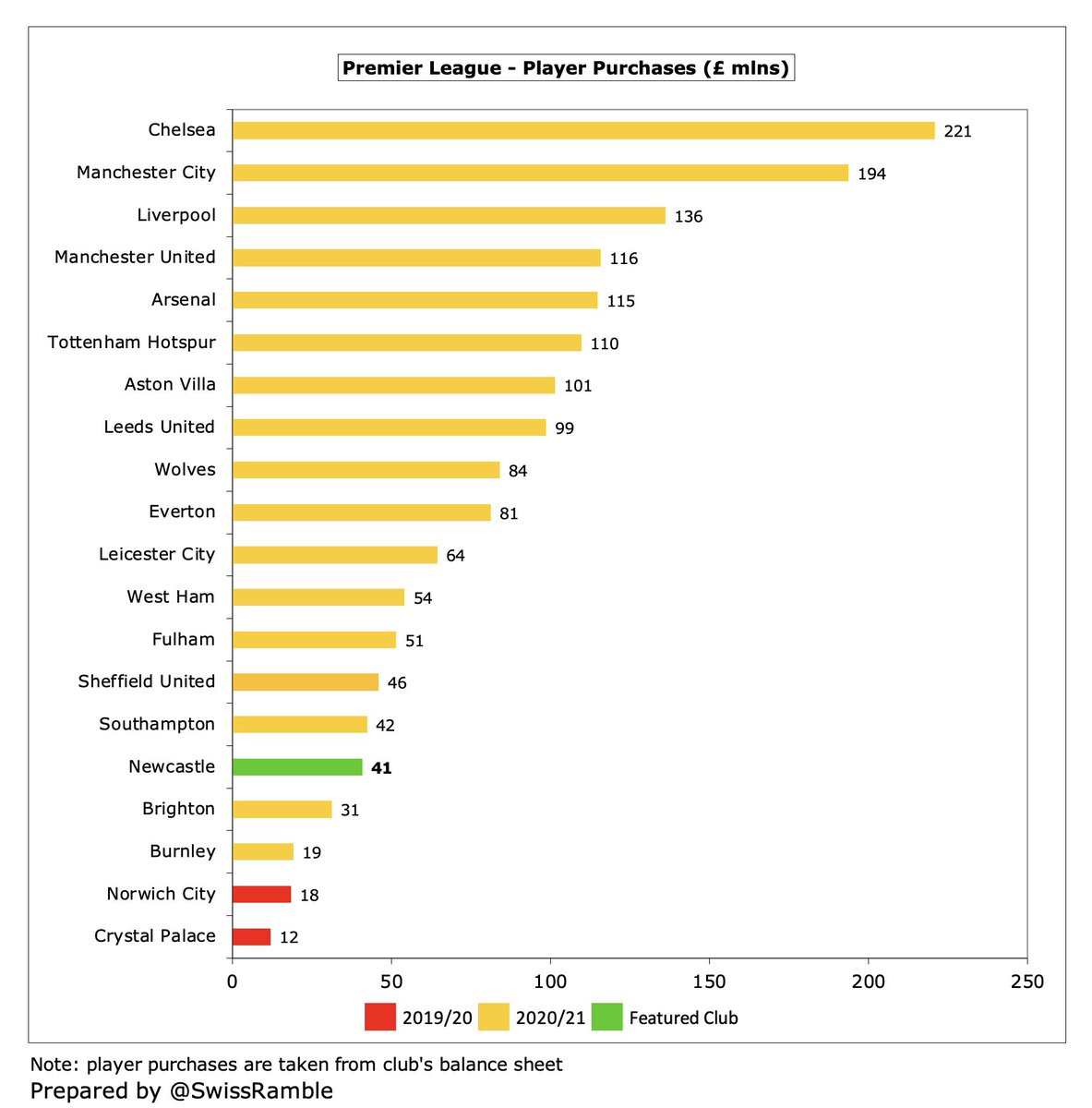
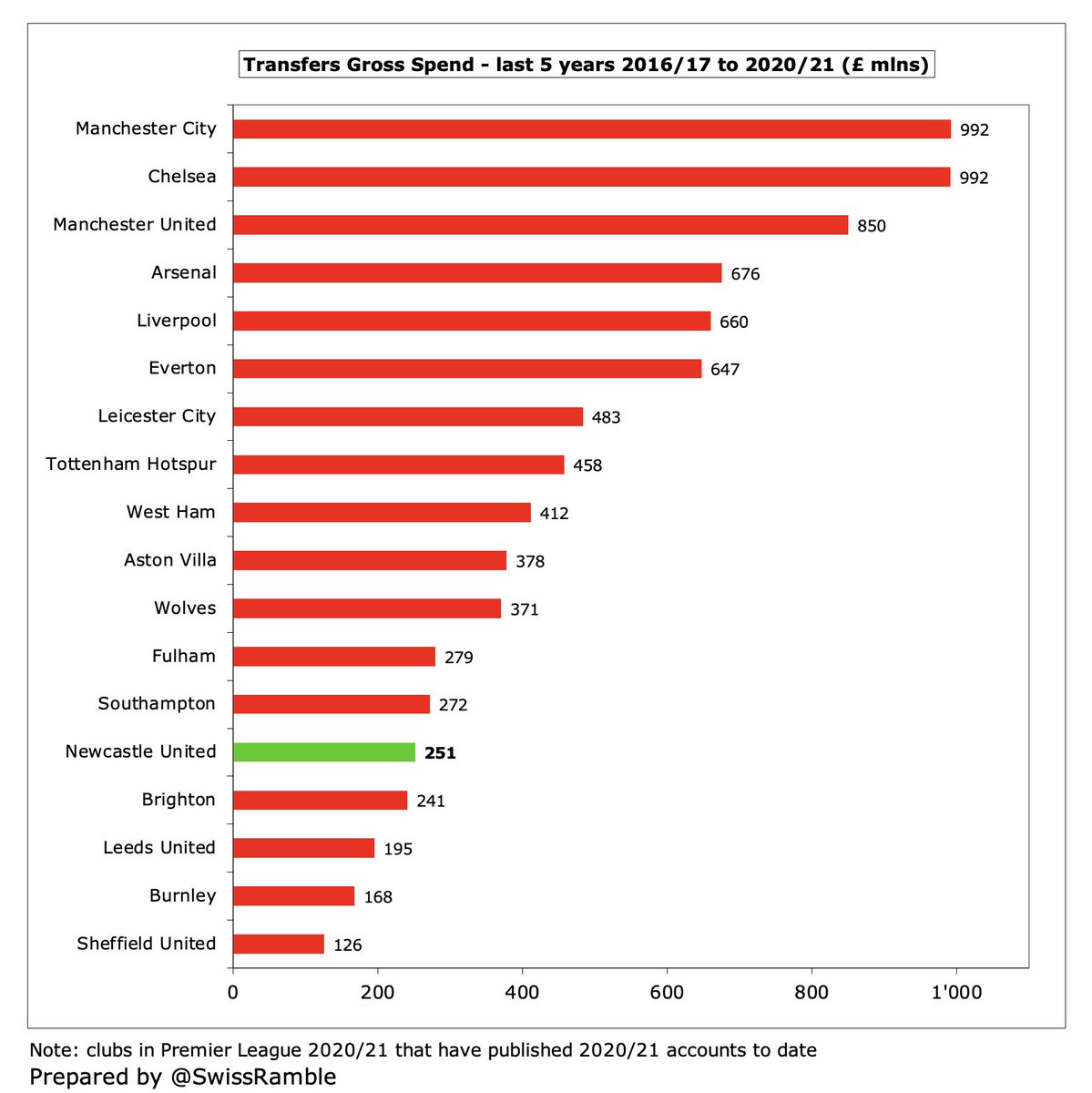
#NUFC gross transfer spend was £251m in last 5 years, though this was fairly low for the top flight. However, that looks set to change under the new owners with the £92m outlay in January being highest in Europe, including Bruno Guimaraes, Chris Wood, Kieran Trippier & Dan Burn.

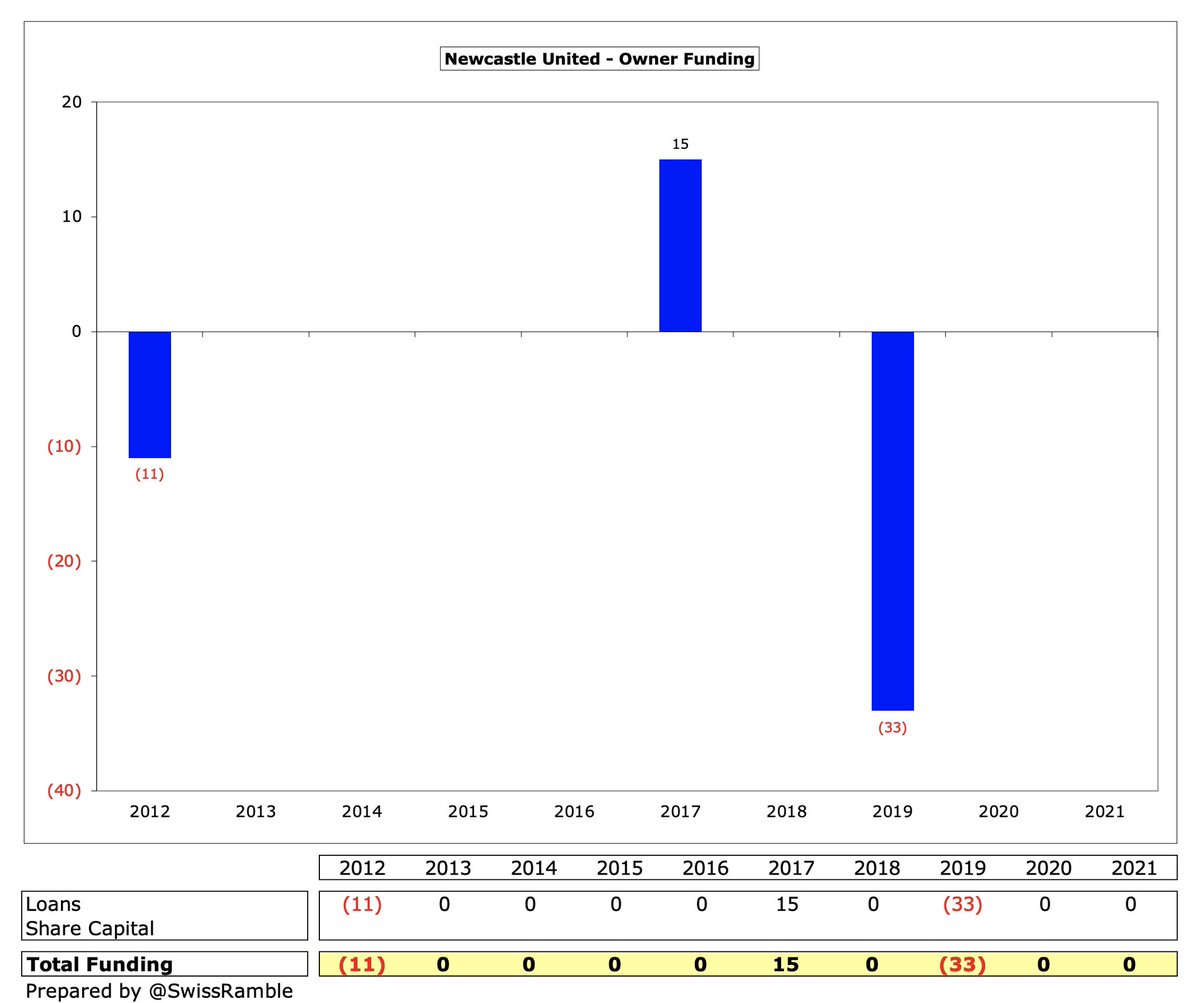
#NUFC gross debt rose from £107m to £112m, mainly £107m owed to Mike Ashley plus a £5m promissory note (repaid after accounts in August 2021). Ashley’s loan was also settled after the takeover, so the club is likely to be debt-free now.


#NUFC £15m operating loss became £25m negative cash flow (after adjusting for non-cash movements) before spending £25m on players (purchases £40m, sales £15m), though nothing really spent on infrastructure or interest payments. After £5m external loan, net cash outflow of £45m.


As a result, #NUFC cash balance dropped from £63m to £17m, though the club emphasised that the 2019/20 accounting period extension meant that prior year included advance payment of 2020/21 TV money from the Premier League, so balance was artificially high.

During the Ashley era, #NUFC generated £212m from operations, boosted by his £111m loan. Most of this was spent on the squad £212m, while £68m was used to repay bank loans and make £11m interest payments (mostly in the early years of his reign).



Ironically, Ashley’s parsimonious approach to spending in the last few years has left #NUFC with plenty of wriggle room under the Premier League’s Profitability & Sustainability rules. After allowable deductions and adjustments for COVID impact, I estimate this as £200m.
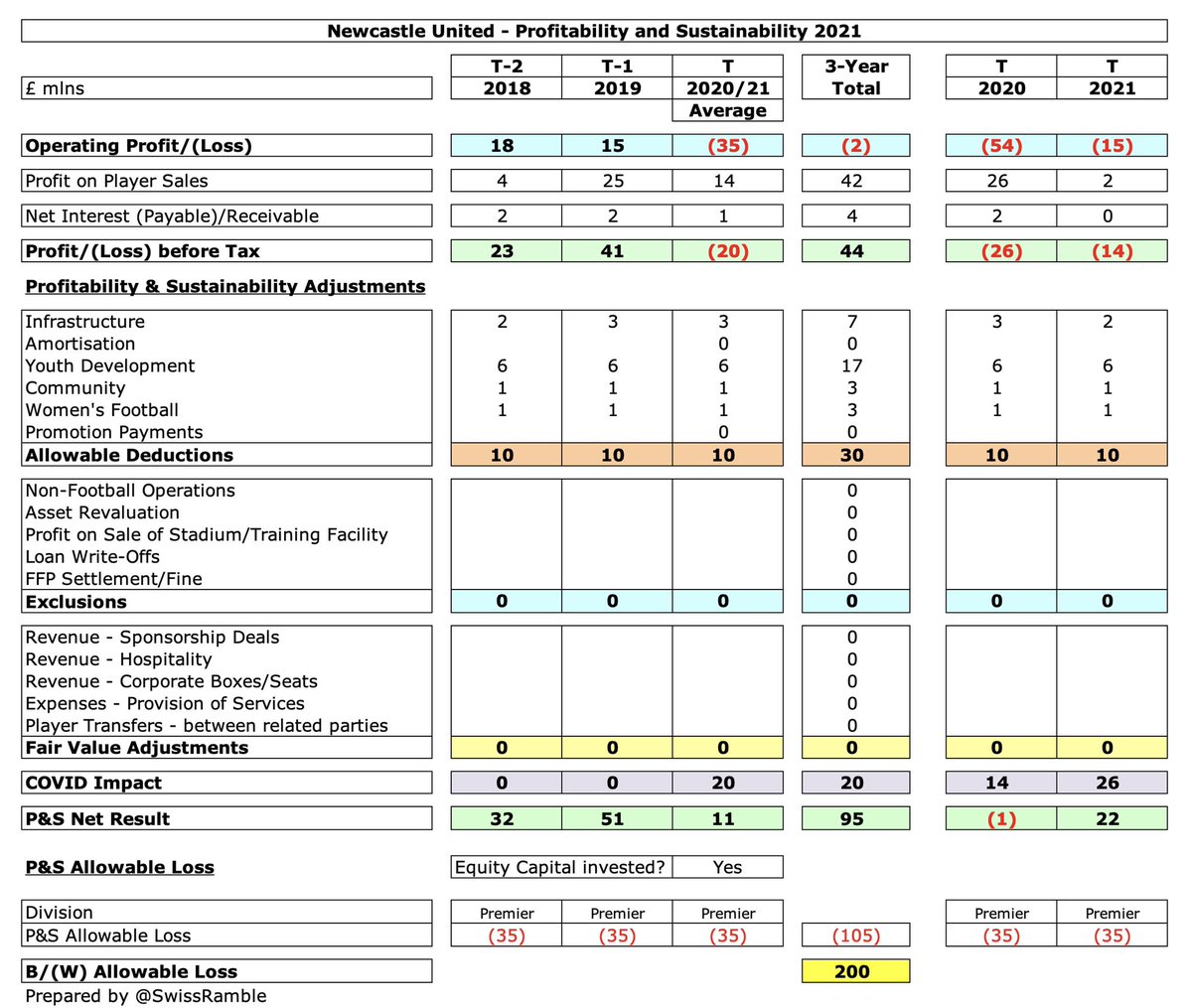

In theory, #NUFC could splash out around £600m on transfers (say, 4 top class players at £150m each), increasing player amortisation by £120m a year (assuming 5-year contract), while increasing the wage bill by £62m (with players paid £300k a week) and still be below £200m.

However, that would use up #NUFC entire FFP limit in one year, which would cause a problem in following years – unless they grow revenue. So it might be more sensible to spend less, say 4 players for £50m each on £100k wages, which would give a £61m annual impact.

In fact, #NUFC transfer activity last summer and the January transfer window has already led to an increase in annual costs of around £52m, so the point here is that the club *could* spend more, but they will want to give themselves some room to manoeuvre in future windows.

Eddie Howe confirmed the #NUFC approach: “With FFP, we have restraints. We can't just go out and spend money on players like maybe teams could have done in the past. The more money you spend in one window, the more it impacts your ability to then spend in windows beyond.”
Loading suggestions...