

Intro to Quantitative Tightening
On June 1st, the Federal Reserve will begin to aggressively shrink its $9T balance sheet through QT.
But what even is QT and how might it impact the economy and financial markets?
Let's break it down in simple English!
🧵👇
On June 1st, the Federal Reserve will begin to aggressively shrink its $9T balance sheet through QT.
But what even is QT and how might it impact the economy and financial markets?
Let's break it down in simple English!
🧵👇

The Federal Reserve begins its quantitative tightening (QT) program on June 1st.
This type of contractionary monetary policy has only been done in the US once before (2017 - 2019).
This tool is used to reduce liquidity in the economy to combat inflation.
This type of contractionary monetary policy has only been done in the US once before (2017 - 2019).
This tool is used to reduce liquidity in the economy to combat inflation.
Before diving into the mechanics of how this works, let’s briefly take a step back and provide some context.
The chart below displays the size of the Fed’s balance sheet.
The balance sheet has grown from ~$4.3T in March 2020 to roughly $9T now.
The chart below displays the size of the Fed’s balance sheet.
The balance sheet has grown from ~$4.3T in March 2020 to roughly $9T now.

How did this happen?
In March 2020, at the beginning of the pandemic, the Fed started its Quantitative Easing (QE) program to stimulate the economy.
What is QE? 👇
In March 2020, at the beginning of the pandemic, the Fed started its Quantitative Easing (QE) program to stimulate the economy.
What is QE? 👇
QE is when the Fed buys longer-term Treasury securities and mortgage-backed securities (MBS) from the open market using reserves that it creates (essentially printing money).
The result: new money is added to the system, interest rates fall & the Fed’s balance sheet expands.
The result: new money is added to the system, interest rates fall & the Fed’s balance sheet expands.
So the Fed’s balance sheet has more than doubled in the last two years and the private sector (commercial banks) are awash with excess reserves.
Now, the Fed is pushing the brakes and aiming to slow down the economy.
They can do this through QT, the opposite of QE.
Now, the Fed is pushing the brakes and aiming to slow down the economy.
They can do this through QT, the opposite of QE.
How does it work?
Normally, the Fed reinvests the proceeds from the principal payments of maturing Treasuries into newly issued Treasuries.
In doing so, they replace maturing bonds.
This is how they maintain the size of their balance sheet.
Normally, the Fed reinvests the proceeds from the principal payments of maturing Treasuries into newly issued Treasuries.
In doing so, they replace maturing bonds.
This is how they maintain the size of their balance sheet.
With QT, the Fed reduces the amount of money that's reinvested into new Treasury securities.
Treasuries that are not reinvested "run-off" the balance sheet.
As @fedguy12 says: these proceeds are extinguished and reserves disappear from the banking system with a few keystrokes.
Treasuries that are not reinvested "run-off" the balance sheet.
As @fedguy12 says: these proceeds are extinguished and reserves disappear from the banking system with a few keystrokes.
@FedGuy12 This allows them to reduce the value of their balance sheet.
Because of this, you'll see QT often referred to as "Balance Sheet Run-Off" or "Balance Sheet Normalization."
Because of this, you'll see QT often referred to as "Balance Sheet Run-Off" or "Balance Sheet Normalization."
@FedGuy12 The Fed sets a monthly cap on how many Treasuries can mature without having its proceeds reinvested.
These reductions must be gradual and measured since we don't know what level of bank reserve balances need to be maintained in order to not cause a shock in the financial system.
These reductions must be gradual and measured since we don't know what level of bank reserve balances need to be maintained in order to not cause a shock in the financial system.
@FedGuy12 In this round of QT, securities will “run-off” the balance sheet at this pace:
June - August: $47.5b ($30b in Treasuries and $17.5b in MBS)
September onwards: $95b ($60b in Treasuries and $35b in MBS)
Once the cap is met, any extra money from maturing securities is reinvested.
June - August: $47.5b ($30b in Treasuries and $17.5b in MBS)
September onwards: $95b ($60b in Treasuries and $35b in MBS)
Once the cap is met, any extra money from maturing securities is reinvested.

@FedGuy12 Effectively, the Fed’s balance sheet should shrink by roughly $1T annually.
This is a much faster pace than the last round of QT in 2017-2019.
Powell expects that it may take around three years for the balance sheet to normalize, although there is no fixed timeframe.
This is a much faster pace than the last round of QT in 2017-2019.
Powell expects that it may take around three years for the balance sheet to normalize, although there is no fixed timeframe.
@FedGuy12 Note: Recent Fed minutes from May 25th indicate that outright selling of MBS (rather running-off) may be possible in the future.
Although this is not certain yet.
This may put some downward pressure on the price of MBS, leading to higher mortgage rates and weakness in housing.
Although this is not certain yet.
This may put some downward pressure on the price of MBS, leading to higher mortgage rates and weakness in housing.
@FedGuy12 However, former senior Fed trader, Joseph Wang, expects that sales will be no more than $10b per month and that there should be buyers including banks, insurance companies and pension funds.


@FedGuy12 @MacroAlf In terms of equities, @JDHenning published a great analysis that tracked the performance of the S&P, VIX, FANG stocks and more during prior QE and QT cycles.
Here's how the S&P performed during the last QT cycle.
Returns turned sharply negative when QT's pace was $50B per month.
Here's how the S&P performed during the last QT cycle.
Returns turned sharply negative when QT's pace was $50B per month.

@FedGuy12 @MacroAlf @jdhenning Of course, past performance is not indicative of the future.
But equities have sold off considerably YTD in anticipation of the Fed's tightening.
While equity markets have been pricing in contractionary policies, the macro backdrop doesn't seem too supportive for risk assets.
But equities have sold off considerably YTD in anticipation of the Fed's tightening.
While equity markets have been pricing in contractionary policies, the macro backdrop doesn't seem too supportive for risk assets.
@FedGuy12 @MacroAlf @jdhenning There isn't much history to look at to forecast the effects that QT will have on the financial system.
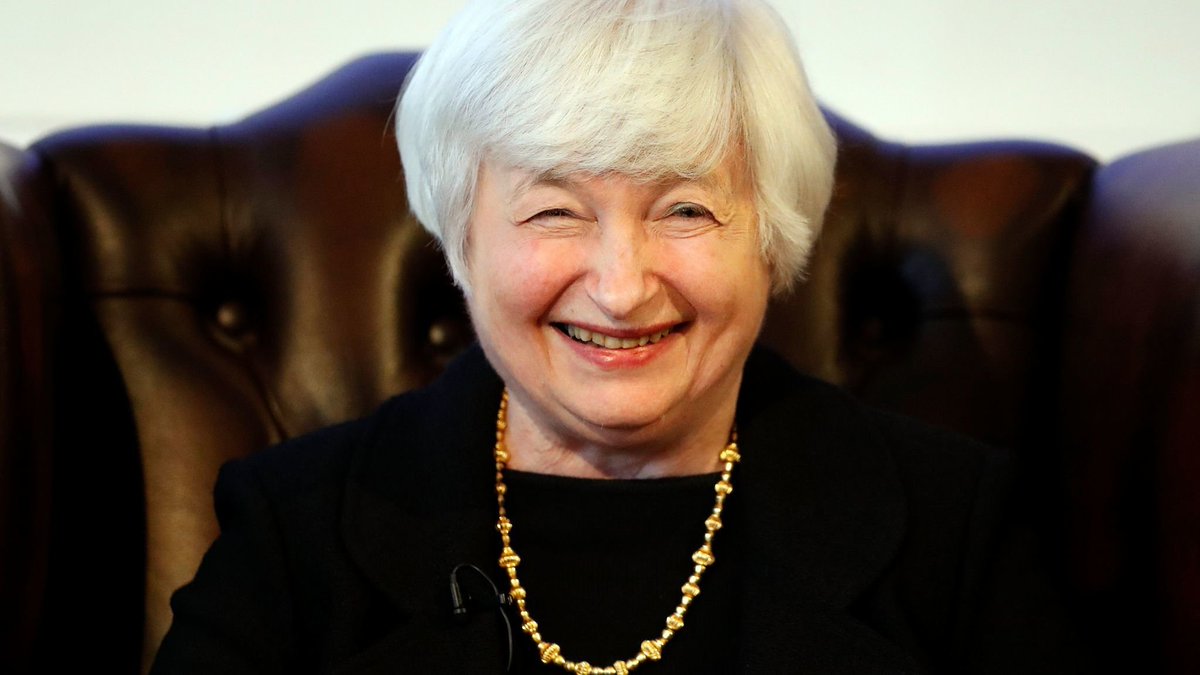
Prior to the last QT cycle, Janet Yellen, former chair of the Federal Reserve, said it would be like watching paint dry.
This analogy proved to be quite inaccurate.
Prior to the last QT cycle, Janet Yellen, former chair of the Federal Reserve, said it would be like watching paint dry.
This analogy proved to be quite inaccurate.
@FedGuy12 @MacroAlf @jdhenning The last QT cycle ended abruptly in September 2019, after repo rates unexpectedly spiked.
It was believed that reserve balances in the banking system hit a minimum, prompting the Fed to start another round of QE.
Details on the last QT cycle can be found in our list of sources.
It was believed that reserve balances in the banking system hit a minimum, prompting the Fed to start another round of QE.
Details on the last QT cycle can be found in our list of sources.

@FedGuy12 @MacroAlf @jdhenning Time will tell if this QT experiment will lead to any new unforeseeable shocks in the financial system.
With the current macro backdrop, we'd wager that this cycle will likely be more eventful than watching paint dry.
With the current macro backdrop, we'd wager that this cycle will likely be more eventful than watching paint dry.
@FedGuy12 @MacroAlf @jdhenning Thank you for reading!
We'd love to hear your thoughts on QT and how you think this policy will affect the economy and markets.
Sources used for this write-up can be found here: docs.google.com
We'd love to hear your thoughts on QT and how you think this policy will affect the economy and markets.
Sources used for this write-up can be found here: docs.google.com
We'll be regularly sharing our notes and research across various topics in finance.
The financial world is complex, and we aim to produce content that is valuable to readers of all levels.
A follow, like and retweet👇is greatly appreciated!
The financial world is complex, and we aim to produce content that is valuable to readers of all levels.
A follow, like and retweet👇is greatly appreciated!
Loading suggestions...