
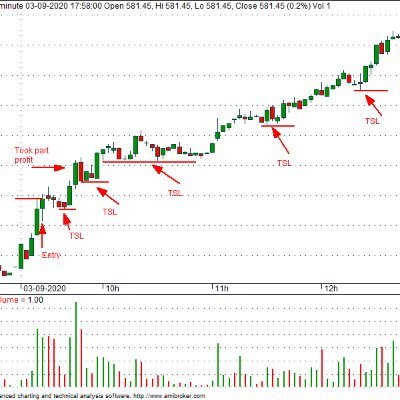
Inside Bar (IB) is an effective trading strategy where a range is formed & we trade on a Breakout/Breakdown.
What is IB?
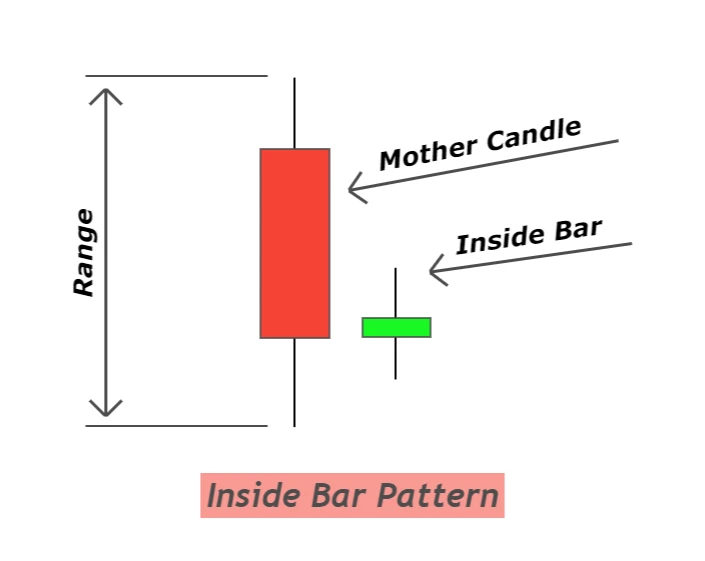
Textbook definition of IB:
When the current bar is trading inside the previous candle's high and low (range)
What is IB?
Textbook definition of IB:
When the current bar is trading inside the previous candle's high and low (range)
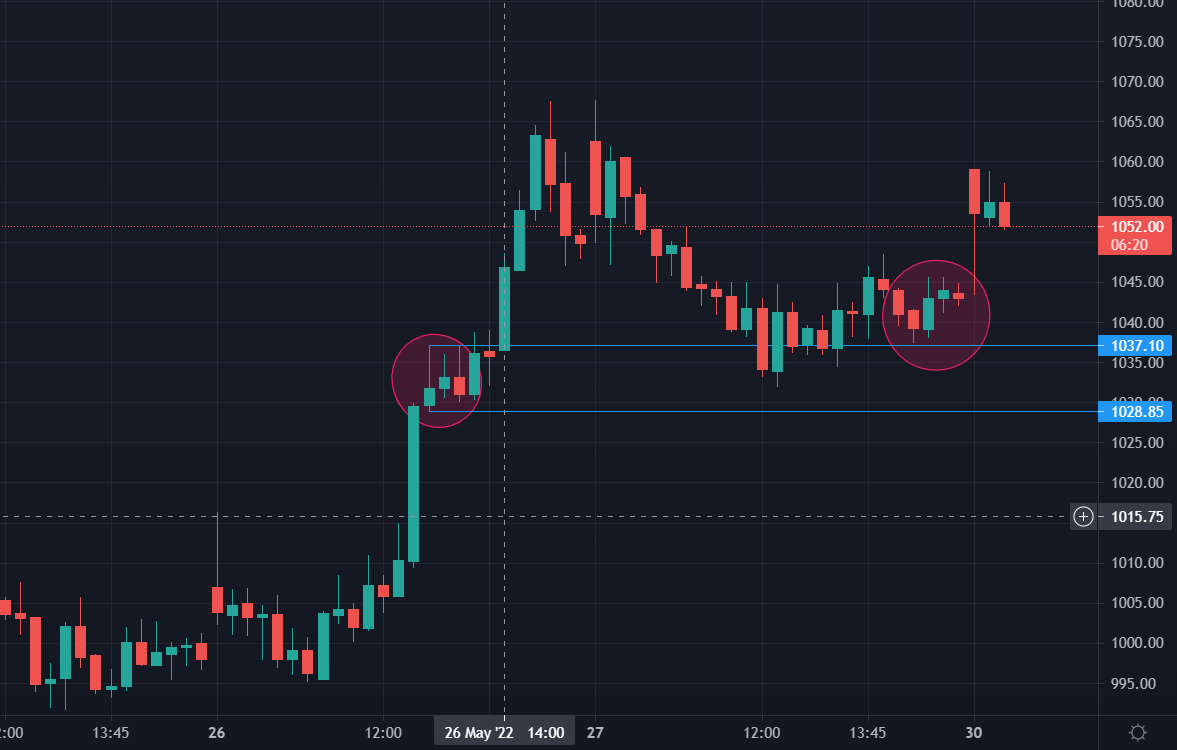
Here's a live example from the Tata Steel Chart where you can see multiple IB forming on 15 minutes chart.
I've marked 2 IBs in the circle where we can find the mother candle & the inside bar candle.
I've marked 2 IBs in the circle where we can find the mother candle & the inside bar candle.
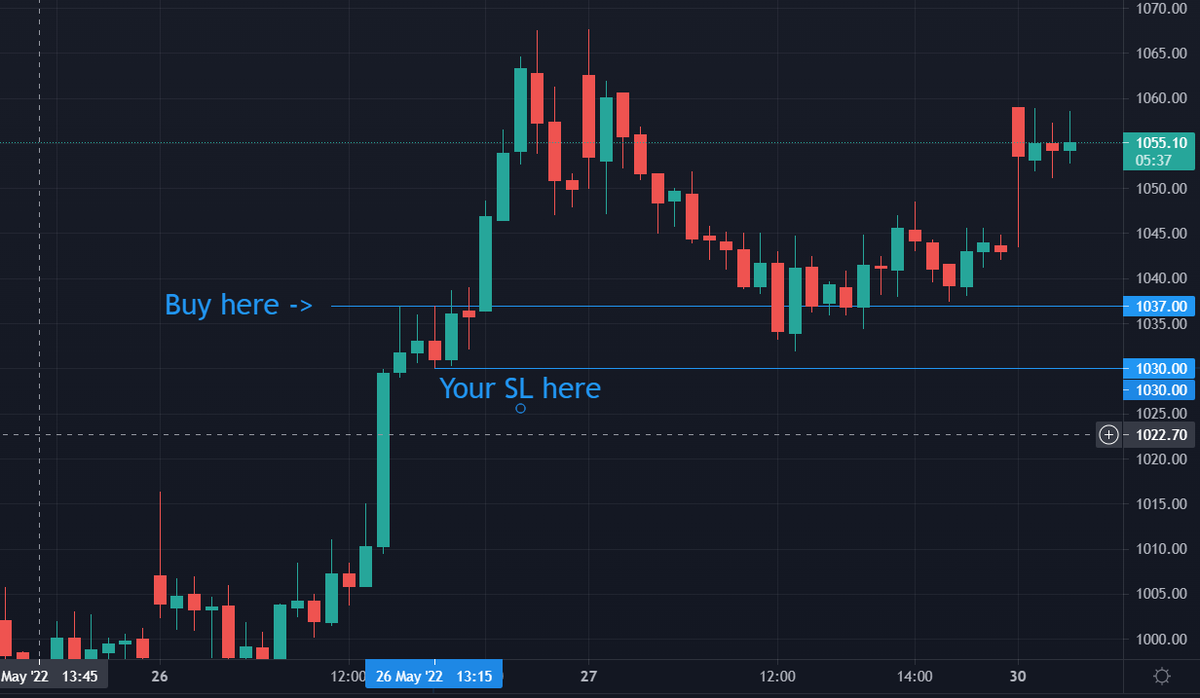
So how do we trade this?
If the overall trend is bullish, then you should be looking at high on the mother candle. When the mother candle's high is broken, you can place your SL at:
1. Low of the mother candle, or
2. Low of the Inside Bar candle.
Both the eg are in charts:
If the overall trend is bullish, then you should be looking at high on the mother candle. When the mother candle's high is broken, you can place your SL at:
1. Low of the mother candle, or
2. Low of the Inside Bar candle.
Both the eg are in charts:

And Vice Versa for the Bearish bias.
If the overall trend is bearish, then you should be looking at low on the mother candle. When the mother candle's low is broken, you can place your SL at:
1. High of the mother candle, or
2. High of the Inside Bar candle.
If the overall trend is bearish, then you should be looking at low on the mother candle. When the mother candle's low is broken, you can place your SL at:
1. High of the mother candle, or
2. High of the Inside Bar candle.
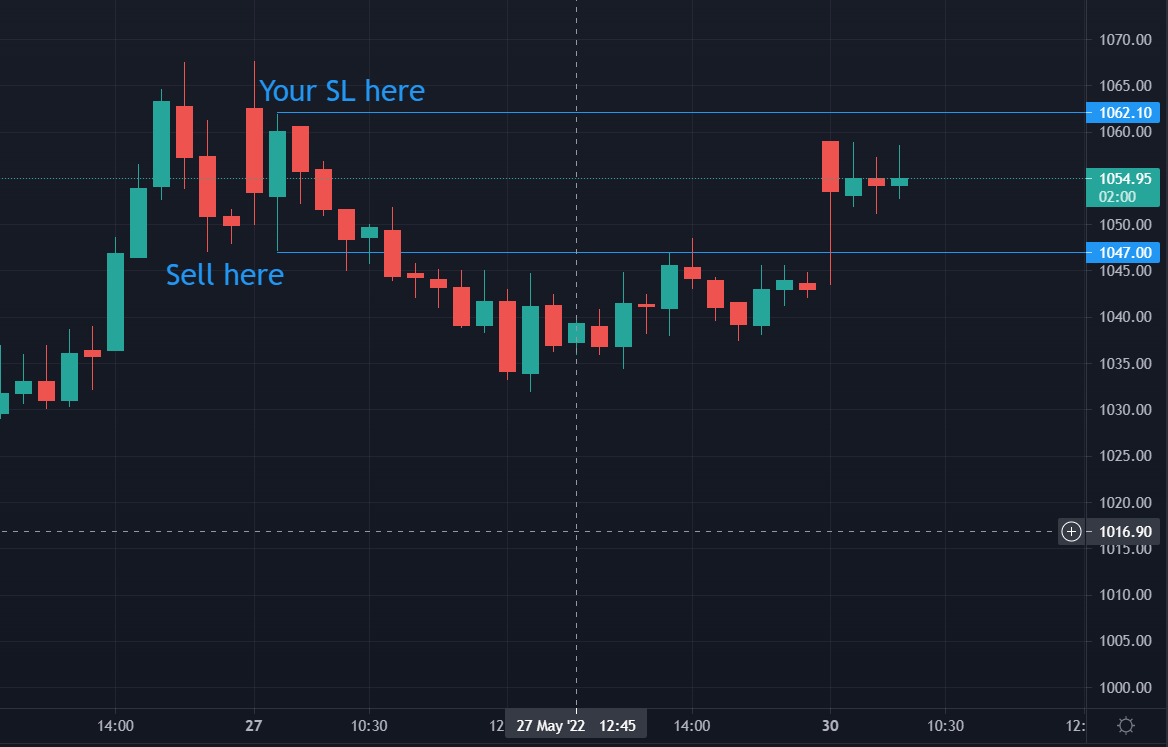
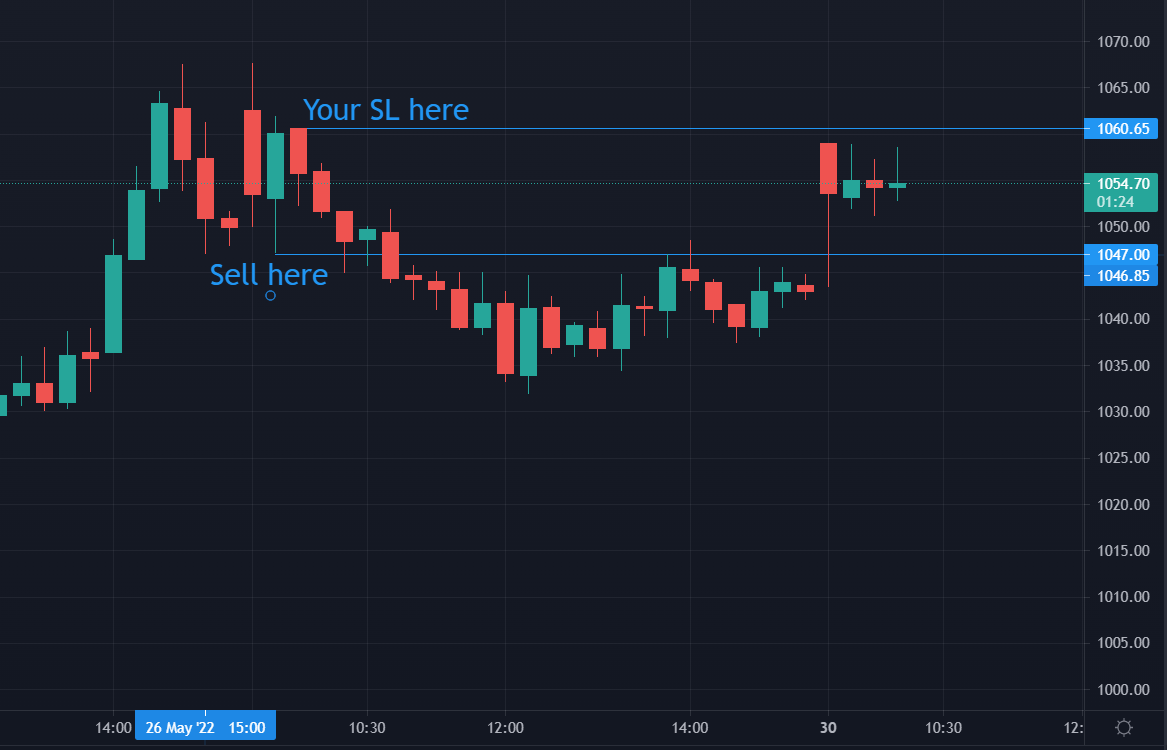
I prefer keeping the high or low of the inside bar candle as my SL.
Remember there are 100s of ways to trade this, ultimately your position sizing & risk management will come into play.
Position sizing can be calculated using the SL, and risk can be managed.
Remember there are 100s of ways to trade this, ultimately your position sizing & risk management will come into play.
Position sizing can be calculated using the SL, and risk can be managed.
When to trade Inside Bar?
When the broader market breaks out of the consolidation and starts trending.
Here's an example of Reliance which was in a consolidation period for 7 years before breaking out and trending.
When the broader market breaks out of the consolidation and starts trending.
Here's an example of Reliance which was in a consolidation period for 7 years before breaking out and trending.

Another way to trade the Inside bar is when it is respecting certain moving averages. For eg, you can see Reliance on the daily chart. Here the price respected MA20 which I prefer.

When not to trade Inside Bar?
When the market is in a range or consolidation period.
Inside Bar is an indecision candle and we are trading on its breakout, if the market is in range mode then the possibility of getting caught in fake breakout & hitting our SL will be high.
When the market is in a range or consolidation period.
Inside Bar is an indecision candle and we are trading on its breakout, if the market is in range mode then the possibility of getting caught in fake breakout & hitting our SL will be high.

How and when to book in Inside Bar?
There are multiple ways but my preferences are:
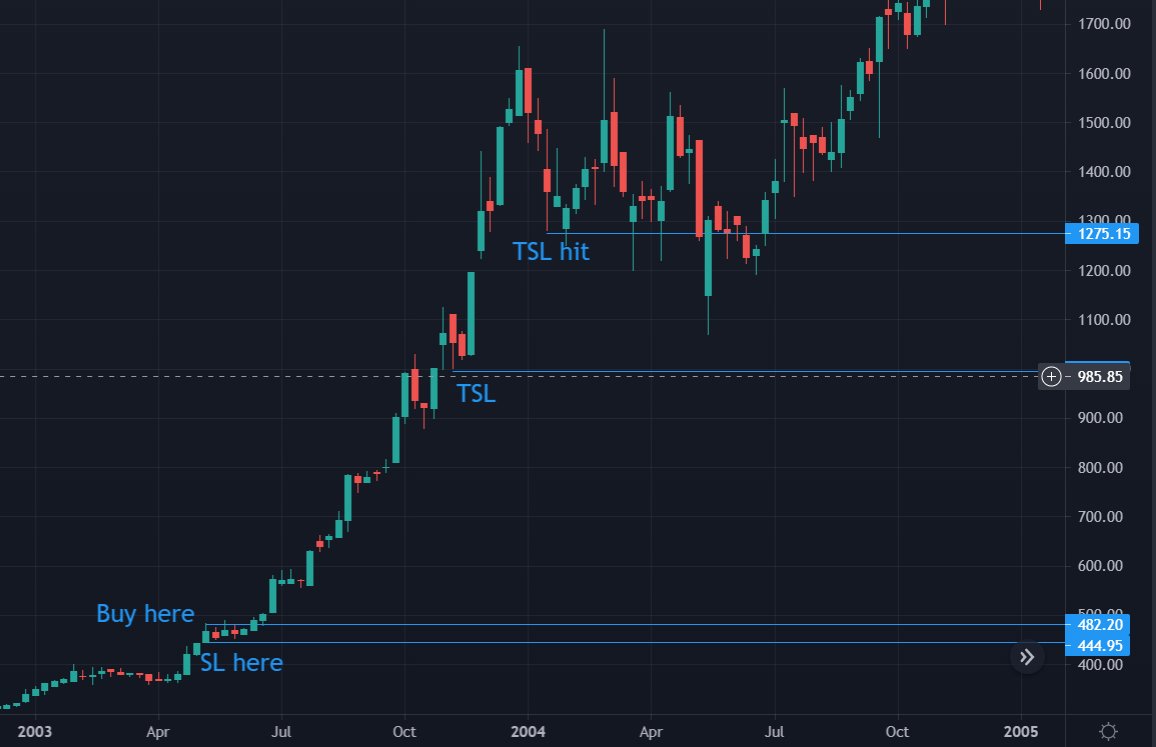
1. Target = 2x of SL
2. On every new IB formed, you will get a new SL which can be your Trailing SL.
Let me show you in an example below
There are multiple ways but my preferences are:
1. Target = 2x of SL
2. On every new IB formed, you will get a new SL which can be your Trailing SL.
Let me show you in an example below
The following ex is of Bosch when it was trading in a range. After a breakout, it gave an IB candle. Buy signal was at 482 with an SL of 445.
You can see how to place TSL here after every new IB candle is formed. Using this, we can ride the trend and get better RR (482 to 1275)
You can see how to place TSL here after every new IB candle is formed. Using this, we can ride the trend and get better RR (482 to 1275)
Loading suggestions...