

Remembering the great spiritual environmentalist & socio-religious leader Guru #Jambeshwar, the founder of Bishnoi sect & a scion of Parmara clan of Rajputs on #WorldEnvironmentDay.
He gave 29 commandments for his followers out of which 8 prescribed to preserve bio diversity.
He gave 29 commandments for his followers out of which 8 prescribed to preserve bio diversity.
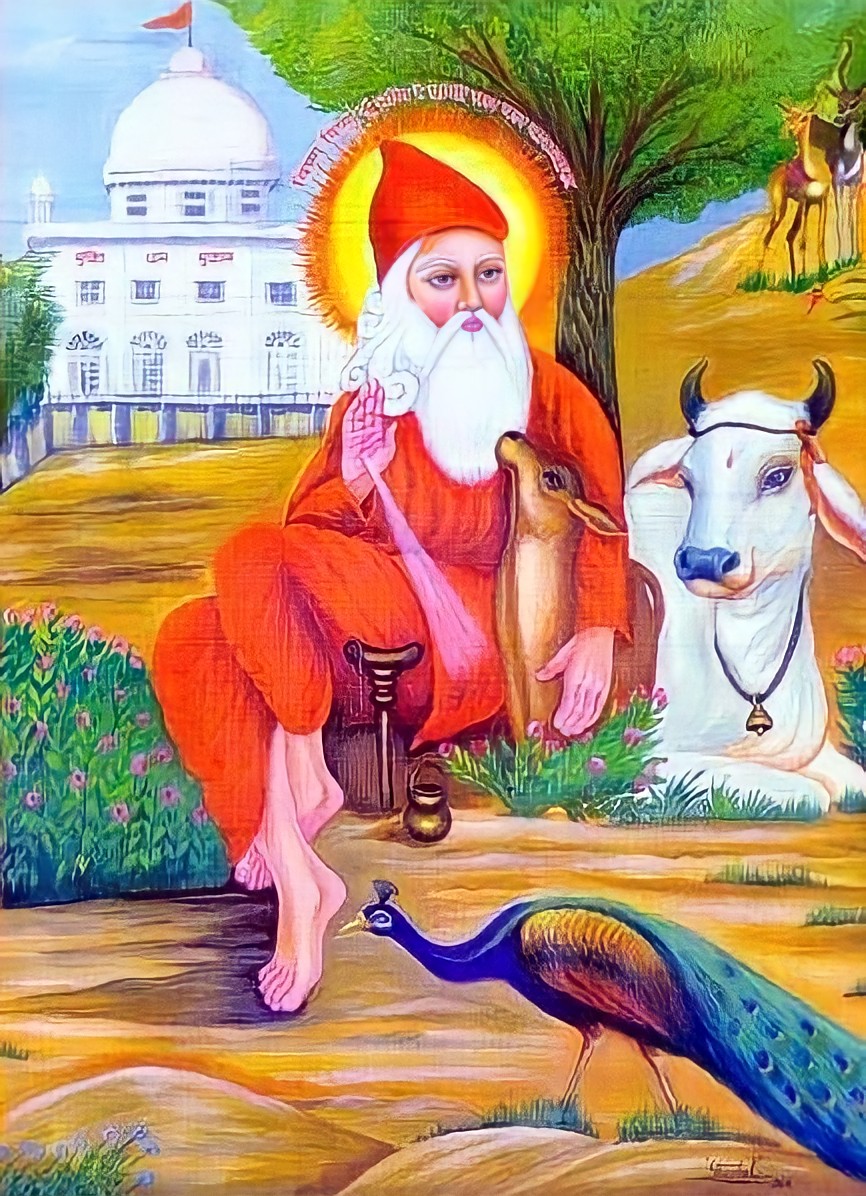
Also known as Jambhoji, he was a devoted Vaishnav his followers are known as Bishnois or the Jambeshwarpanthis.
Jambho ji, was born in a Rajput family of Panwar/Parmar clan in the house of Lohat ji Panwar and Hansa Kanwar at village of Pipasar in Nagaur-Rajasthan in 1451 A.D.
Jambho ji, was born in a Rajput family of Panwar/Parmar clan in the house of Lohat ji Panwar and Hansa Kanwar at village of Pipasar in Nagaur-Rajasthan in 1451 A.D.
Born on Janmasthami, he was just as fond of mother nature & spent hours in the vicinity of animals as did Lord Krishn.
He launched the Bishnoism movement at Samrathal Dhora after performing hawan at the age of 34 in 1485.
His teachings were in poetic form are known as Shabadwani.
He launched the Bishnoism movement at Samrathal Dhora after performing hawan at the age of 34 in 1485.
His teachings were in poetic form are known as Shabadwani.
In year 1485 there was a worst drought in western Rajasthan area and people started migrating to malwa (MP) with their animals.
The kind-hearted Jambho ji couldn't see his large scale suffering and came forward to help the drought affected people to hold them back.
The kind-hearted Jambho ji couldn't see his large scale suffering and came forward to help the drought affected people to hold them back.
People agreed and Jambha Ji helped them with grain, food, fodder, seed, agriculture accessories, etc.
His principle was, “JIYA NE JUKTI AUR MARIYA NE MUKTI” meaning a meaningful way of living and then moksha after death is the ultimate path of ones life.
His principle was, “JIYA NE JUKTI AUR MARIYA NE MUKTI” meaning a meaningful way of living and then moksha after death is the ultimate path of ones life.
He traveled a lot to help & teach people, as a result his followers are today spread in Rajasthan, Haryana, UP, MP, Punjab etc.
Many Rajput kings and reputed persons came in his contact, admired his teachings & gave him patronage. He also helped many of them with his blessings.
Many Rajput kings and reputed persons came in his contact, admired his teachings & gave him patronage. He also helped many of them with his blessings.
Although, he preached for next 51 years, travelling across the country, only 120 Shabads i.e. verses of Shabadwani, are available at present.
Bishnoism, as mention earlier revolves around 29 commandments. Out of these 29 commandments, 8 prescribe to preserve bio diversity and-
Bishnoism, as mention earlier revolves around 29 commandments. Out of these 29 commandments, 8 prescribe to preserve bio diversity and-
encourage good animal husbandry.
Seven Commandments provide directions for healthy social behaviour.
Ten commandments are directed towards personal hygiene and maintaining basic good health.
The other four commandments provide guidelines for worshiping of God.
Seven Commandments provide directions for healthy social behaviour.
Ten commandments are directed towards personal hygiene and maintaining basic good health.
The other four commandments provide guidelines for worshiping of God.
In a nutshell, Jambho ji was a great visionary, who foresaw the consequences of man’s actions of destroying nature for his own good.
He saw the need for environmental protection & weaved his principles as religious commandments so that people internalise those principals easily.
He saw the need for environmental protection & weaved his principles as religious commandments so that people internalise those principals easily.
Before his death, he has stated that the black buck & Khejri tree should be saved & conserved.
He was a true visionary, social reformer & great environmentalist who believed in love, harmony & coexistence among not only human beings but also nature.
He was a true visionary, social reformer & great environmentalist who believed in love, harmony & coexistence among not only human beings but also nature.
Guru Jambheshwar Ji left this world at the age of 85 in year 1536 at Lalasar in Sambhar, Jaipur, his last rites were performed in village Talwa in Bikaner.
Every year two melas are held here, one on Amawas (no moon night) of Falgun month and another on amawas of Ashvin month.
Every year two melas are held here, one on Amawas (no moon night) of Falgun month and another on amawas of Ashvin month.
Loading suggestions...