

We have all read Peter Lynch's One Up Wall Street.
But few people know that he wrote for Worth Magazine from 1992 to 1999.
It's a 181 page bonus scene to his best seller.
Here are my biggest takeaway:
But few people know that he wrote for Worth Magazine from 1992 to 1999.
It's a 181 page bonus scene to his best seller.
Here are my biggest takeaway:

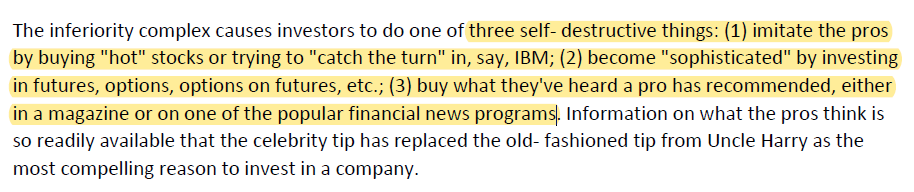
1. Retail investor feels inferior to institutions and often commit these three deadly sins
2. Why you shouldn’t buy based on an expert tip without doing your due diligence
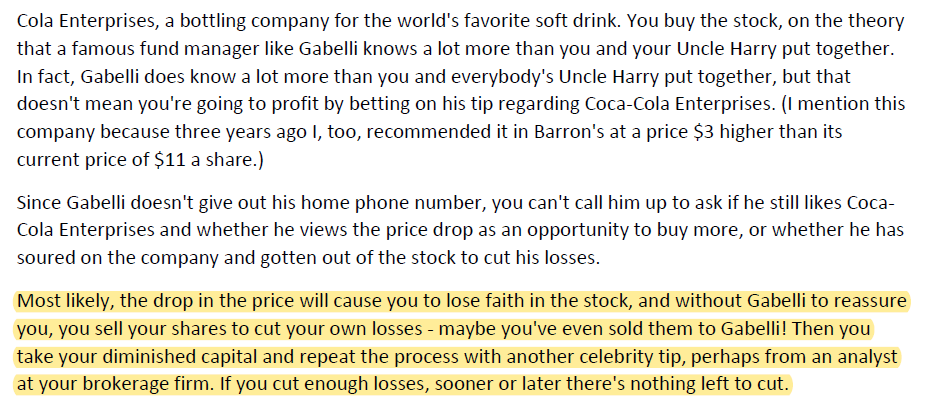
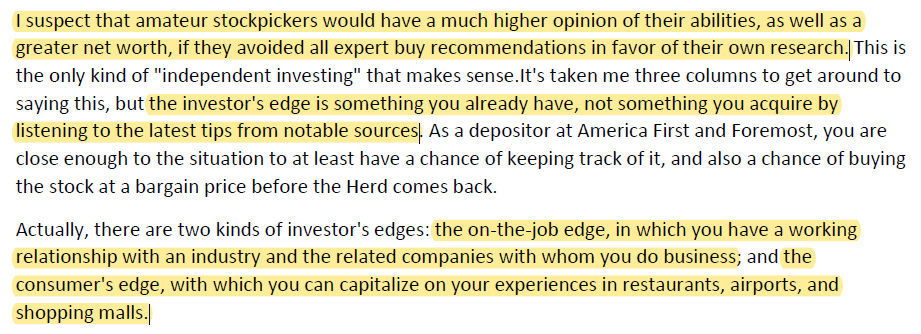
3. Ignore expert tips and favor your own research.
The retail investors' edge:
- on-the-job edge
-consumer's edge
The retail investors' edge:
- on-the-job edge
-consumer's edge
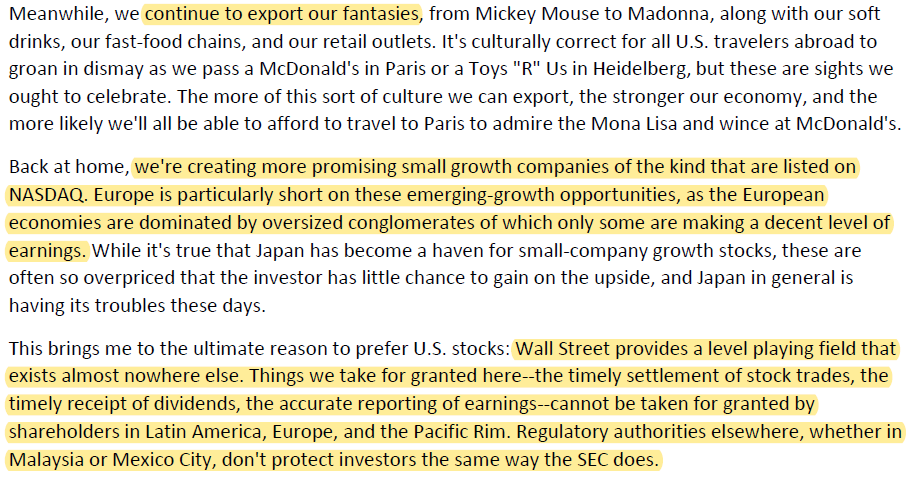
4. Why Lynch thinks that investors in the US should focus on US companies:
It's in the backyard that investors find their edge
It's in the backyard that investors find their edge
5. Why it's best to avoid your broker's "hot IPO" tip.
For best deals, it's often oversubscribed.
Even the big funds are assigned a piddling amount.
If there are left overs in a hot IPO, think about why the big investors are avoiding it.
For best deals, it's often oversubscribed.
Even the big funds are assigned a piddling amount.
If there are left overs in a hot IPO, think about why the big investors are avoiding it.

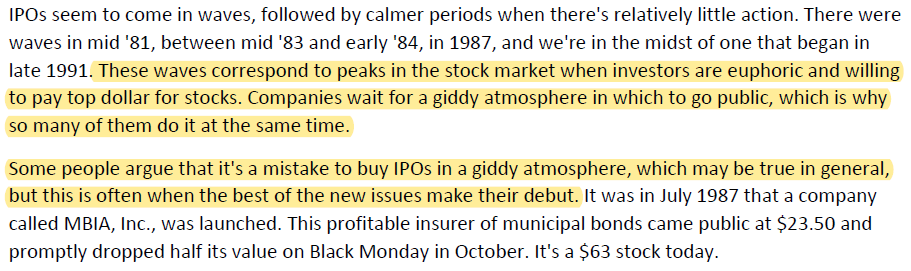
6. IPOs often happen in waves,
It usually correspond with periods when investors are euphoric.
But it might be costly, but the best companies usually get listed during times like these.
It usually correspond with periods when investors are euphoric.
But it might be costly, but the best companies usually get listed during times like these.
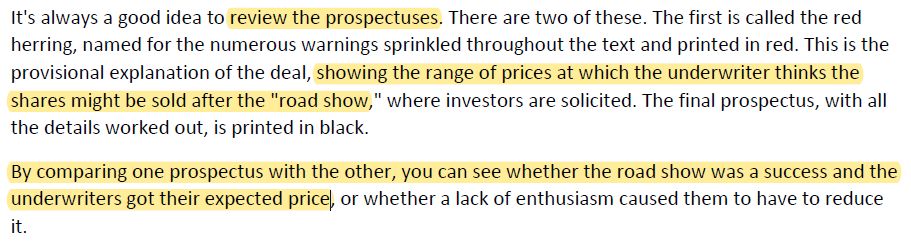
7. How to review IPO prospectuses
Compare the red herring with the final prospectus.
To gauge the enthusiasm for the IPO.
Compare the red herring with the final prospectus.
To gauge the enthusiasm for the IPO.
Check what are the proceeds from the IPO being used for?
a. [Ideally] Invested into the company for working capital needs, pay down debt or for expansion?
b. Go into the pockets of the founders and directors who are selling their shares?
a. [Ideally] Invested into the company for working capital needs, pay down debt or for expansion?
b. Go into the pockets of the founders and directors who are selling their shares?
![Check what are the proceeds from the IPO being used for?
a. [Ideally] Invested into the company for...](https://pbs.twimg.com/media/FUpBt0ZWUAAtUP0.png)
Other stuff Lynch look for in an restaurant company's IPO:
-Is the growth plan well-articulated?
-Sales and earning increasing?
-Annual sales should exceed the cost of construction
-Is revenue heavily reliant on alcohol sales?
-Is the growth plan well-articulated?
-Sales and earning increasing?
-Annual sales should exceed the cost of construction
-Is revenue heavily reliant on alcohol sales?
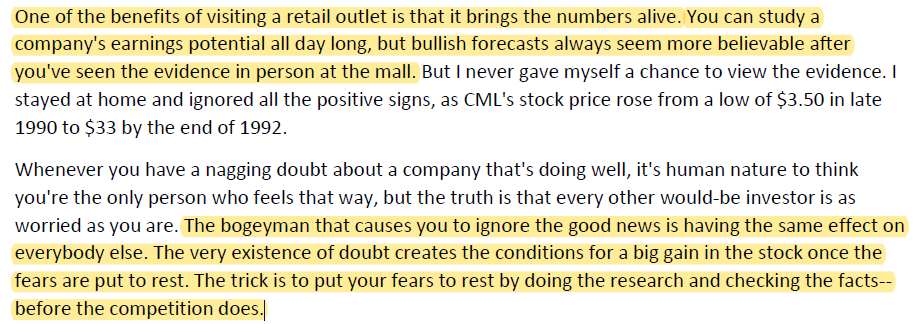
8. There'll always be something to worry about.
That nagging doubt that the company may not have staying power.
As a result, we miss many of the best home runs.
"The trick is to put your fears to rest by doing the research and checking the facts."
That nagging doubt that the company may not have staying power.
As a result, we miss many of the best home runs.
"The trick is to put your fears to rest by doing the research and checking the facts."
9. Three lessons on biotech investments

10. You don't have to invest in companies that are in its early stage.
Even during the late innings, you can make great returns.
Even during the late innings, you can make great returns.

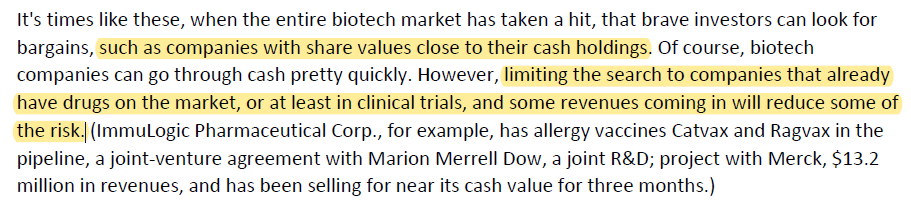
11. When the entire biotech industry is down, look for:
-Companies with share values close to their cash holdings
-Limit the search to companies that already have drugs on the market
-Have revenue
-Companies with share values close to their cash holdings
-Limit the search to companies that already have drugs on the market
-Have revenue
12. The pan-and-shovel technique
Whenever there's a mania, look for supplier who provides them with all the tools they need.
Whenever there's a mania, look for supplier who provides them with all the tools they need.

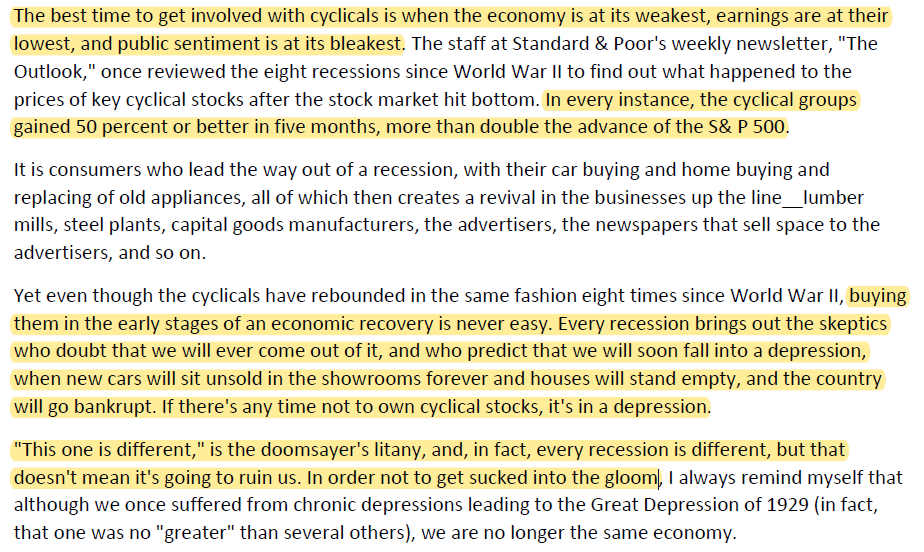
13. The best time to invest in cyclicals is when the economy is at its weakest.
Even though investing in cyclicals has provided predictable results, it is never easy.
Because the sirens of pessimism would be the loudest during times like this.
Even though investing in cyclicals has provided predictable results, it is never easy.
Because the sirens of pessimism would be the loudest during times like this.
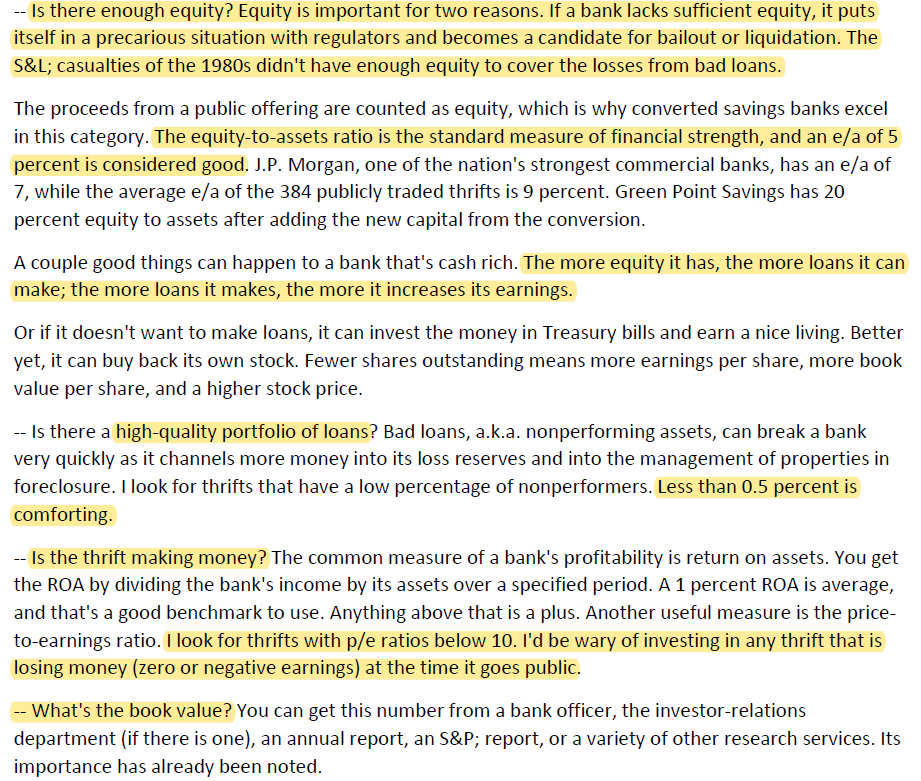
14. When investing in distressed banks, check:
-Enough equity? Equity-to-assets > 5% is good.
-High-quality portfolio of loans? Less than 0.5% is good.
-Is it profitable? ROA > 1% and P/E < 10
-Book value?
-Real estate?
-Cheap deposits?
-Enough equity? Equity-to-assets > 5% is good.
-High-quality portfolio of loans? Less than 0.5% is good.
-Is it profitable? ROA > 1% and P/E < 10
-Book value?
-Real estate?
-Cheap deposits?

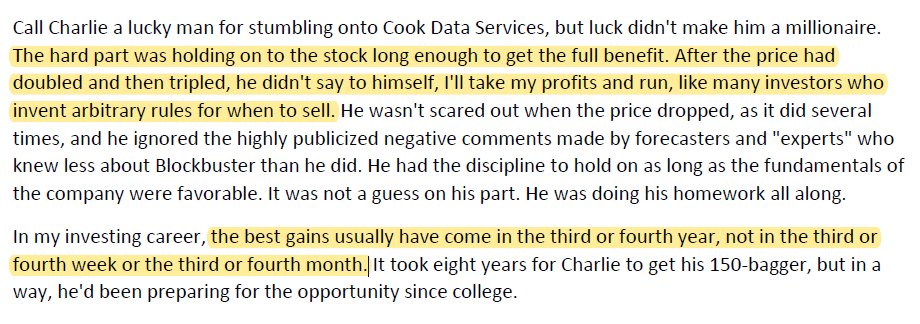
15. The hardest thing about getting a multi-bagger isn't hunting for one, it's the holding.
Not taking quick profits.
Not selling on drawdowns.
Not taking quick profits.
Not selling on drawdowns.
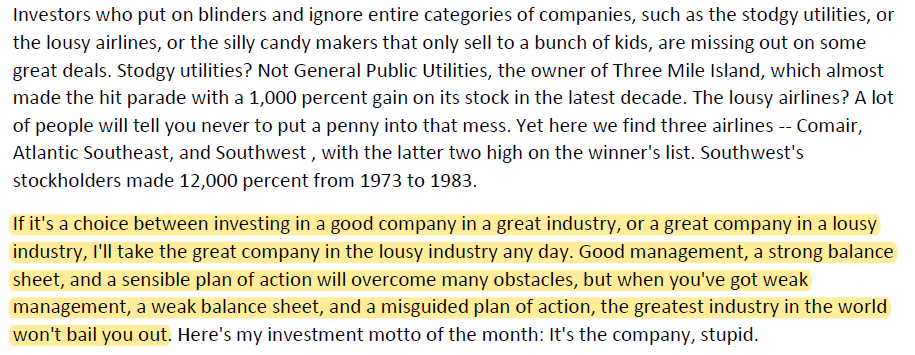
16. It's the company, stupid.
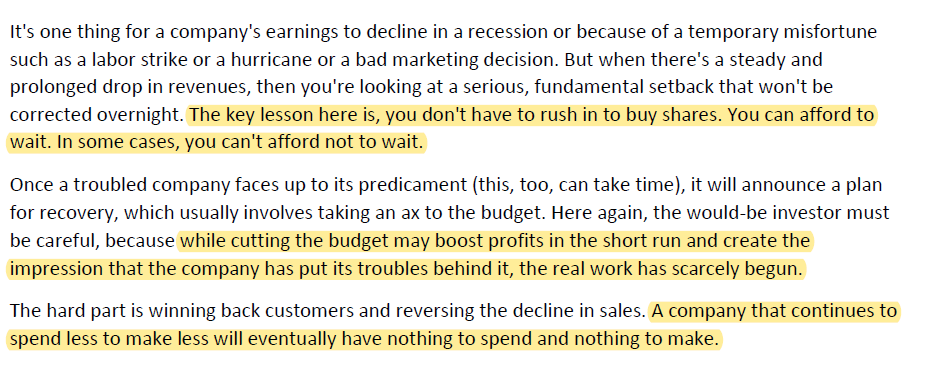
17. When investing in turnarounds:
-Figure out if it's going to survive long enough to turn
-Is it a temporary misfortune or secular decline?
-Be patient
-Figure out if it's going to survive long enough to turn
-Is it a temporary misfortune or secular decline?
-Be patient
If you are new to investing and unsure of how to value companies...
I will be running a LIVE investing course for beginners!
Six sessions between 27 Jun to 8 Jul.
Class is over 70% filled!
Grab yours today.
zeninvesting.gumroad.com
I will be running a LIVE investing course for beginners!
Six sessions between 27 Jun to 8 Jul.
Class is over 70% filled!
Grab yours today.
zeninvesting.gumroad.com
That's it for today!
Follow me → @steadycompound for Tweets on investing, business breakdowns & timeless lessons from super investors.
Join 8,000+ compounders in my newsletter.
You'll receive knowledge bombs on investing every week.
steadycompounding.com
Follow me → @steadycompound for Tweets on investing, business breakdowns & timeless lessons from super investors.
Join 8,000+ compounders in my newsletter.
You'll receive knowledge bombs on investing every week.
steadycompounding.com
Can't have enough of Peter Lynch's insights?
Here are 10 investing gems from his book, One Up Wall Street 👇
Here are 10 investing gems from his book, One Up Wall Street 👇
Loading suggestions...