

The Importance of Coconut Use in Temples!
#LongThread
#LongThread
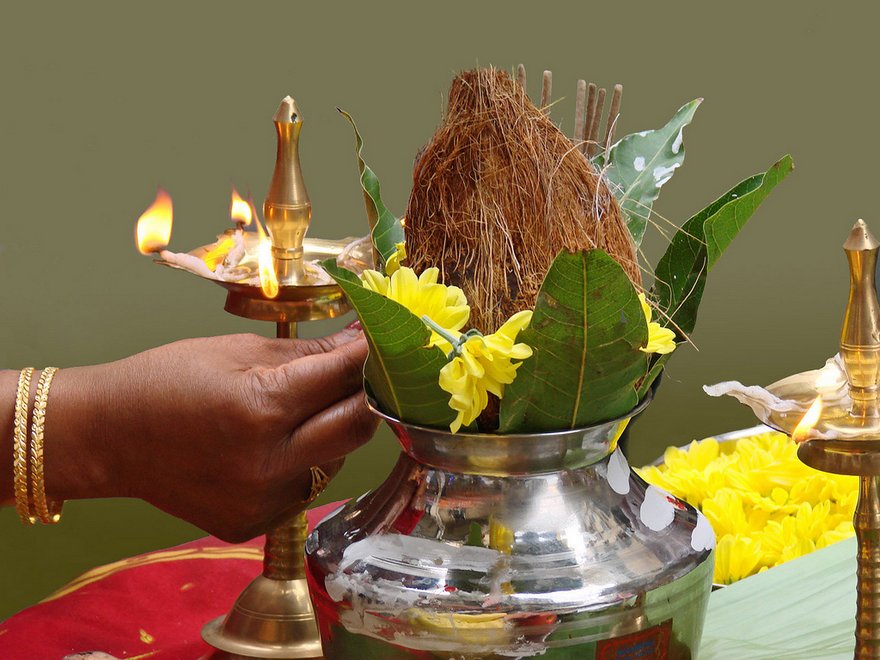
In Tamil, it's known as "Tengai" (literally "honey fruit"), while in Hindi, it's known as "Nariyal" (literally "fruit containing water," from the root word "Nari," which means "water").
Because the coconut is a hardy fruit with a shell that can endure the pressure of seawater, it is plausible that it crossed the water without human assistance. The coconut, being a tough plant, would have been able to thrive in even the most unfavorable conditions.
It thrives in sandy soil, requires very little water, and requires almost no upkeep.
The coconut is supposed to have been created by Sage Vishwamitra. Its tough kernel motivates one to strive hard to achieve achievement. By consuming the kernel, people gain strength and improve their vision.
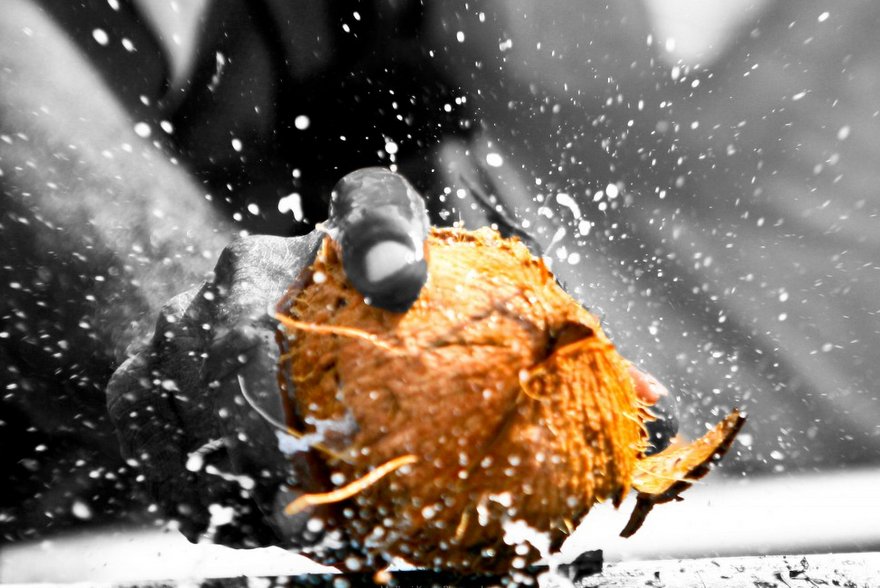
Its water is nutritious to the ill and old, and its oil is used by females for luxuriant hair.
Germs are unable to penetrate its hard kernel, therefore they can last for months. Coconuts are utilized as both a food and a medication. It's high in vitamin E, B, C, and calcium, as well as iron, phosphorus, and other minerals.
It contains high-quality alkaline oil and is high in fat. Coconut protein is also of exceptional grade. Coconut is easily digestible, nutritious, and acts as a blood booster, urinary tract purifier, strength provider, and dosha remover.
Coconut is one of the most typical temple offerings in Indian culture. It is also provided during events such as weddings, festivals, and the use of a new automobile, bridge, or home, among others. When performing hawan, it is offered in the sacrificial fire.
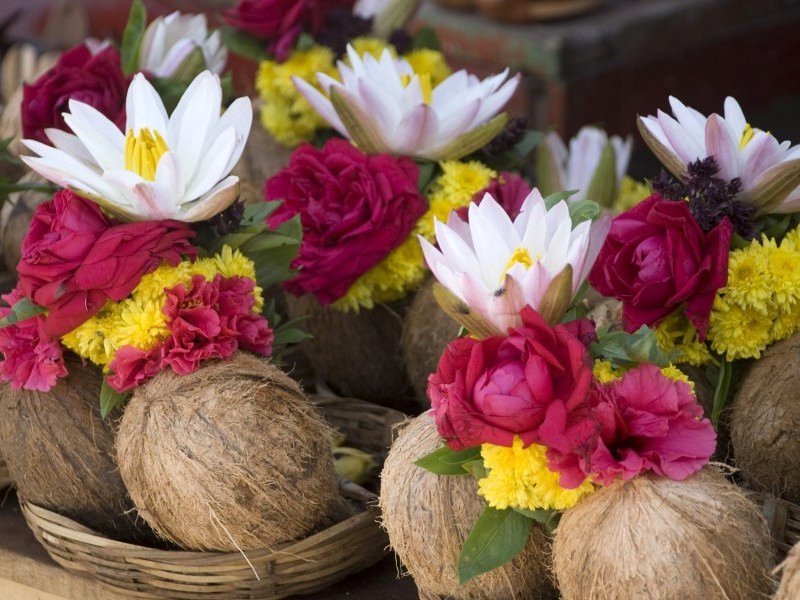
The coconut is shattered and presented to the Lord. Later, it is served as prasad (a holy gift). A coconut is turned around the person or diety and broken at the entry at the start of any religious function to dispel negativity and bring out the goodness.
The purity of the coconut is symbolized by its whiteness.
Except for a tuft on top, the dried coconut's fibre covering is removed. The marks on the coconut give it the appearance of a human head. The coconut is shattered, symbolizing the ego's demise.
The inner juice, which represents inner tendencies (vasanas), is offered to the Lord along with the white kernel, which represents the mind.
Prasad is a mind that has been purified by the Lord's touch. Several ingredients are poured over the deity in the traditional abhishekha ceremony performed in all temples and many houses, including milk, curd, honey, tender coconut water, sandal paste, holy ash, and so on.
Each material has its own significance in terms of giving advantages to devotees.
Tender coconut water is utilized in abhisheka ceremonies because it is thought to help the seeker grow spiritually. The three-eyed Lord Shiva is said to be represented by the marks on the coconut, hence it is supposed to be a means of fulfilling our aspirations.
Coconut is also associated with altruistic service. The trunk, leaves, fruit, coir, and other parts of the tree are used in a variety of ways, including thatches, carpets, delectable dishes, oil, soap, and so on.

It absorbs even salty water from the ground and transforms it into sweet, nutrient-rich water that is very beneficial to the ill. It is utilized in the formulation of numerous ayurvedic medicines as well as other complementary and alternative medical systems.
Its outer shell was burned by ancient Indian medics to make tooth powder, burn creams, and ointments.
Because every inch of the coconut plant is helpful to humans, Indians regard receiving or giving coconut as a gift to be a good omen. It is also known as 'Shreephal,' which means 'prosperous.'
Coconut is a crop with distinct characteristics. Coconut and its products have grown in popularity as a result of their many uses, and they have already risen to the top of the world's food chain.
Furthermore, coconut is an environmentally benign crop that allows other plant species to coexist.
When planted in conjunction with other crops, it improves soil fertility and is suitable for organic farming if appropriate intercrops are cultivated in the inter-spaces.
The crop's future is promising due to its numerous applications, regardless of where it is farmed around the world.
Source: indiadivine.org
Loading suggestions...