

1/14 Who would like to understand the un-peg mechanism in a Liquidity Pool? Here is my 1st 🧵inspired by @DeFi_naly and @ChadMcchief techniques, thanks Bros. Example on $stETH / $ETH pool on #Curve:
👇
👇
2/14 First of all, in #DEFI, token swap occurs in Liquidity Pool. The largest dex being @CurveFinance. If you want to be kept up to date on #curve and beyond, just follow this brilliant guy:
3/14 Token price in a LP follows a specific swap curve. @uniswap folows X*Y=K, but others like @CurveFinance or @VelodromeFi has specific swap curve for correlated assets
4/14 Peg, i.e token average price over all DEXes/CEXes, is maintained as long as the ratio of the tokens inside the pool are balanced, such as the $sUSD / $3CRV pool from @synthetix_io
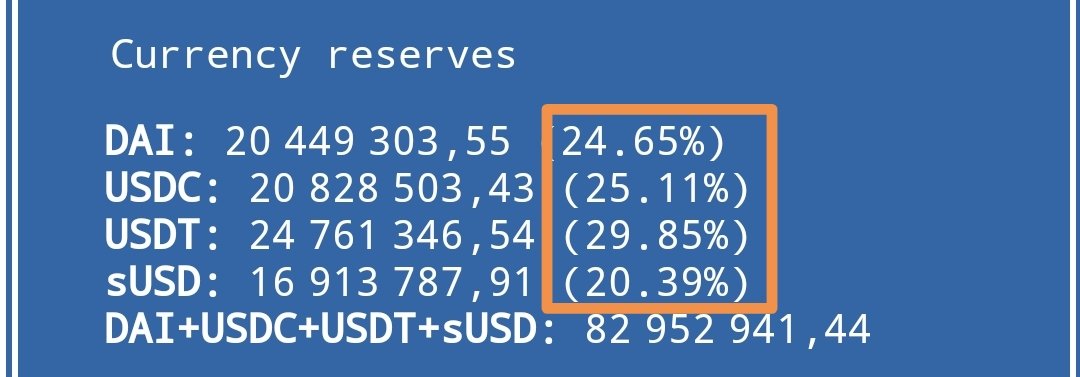
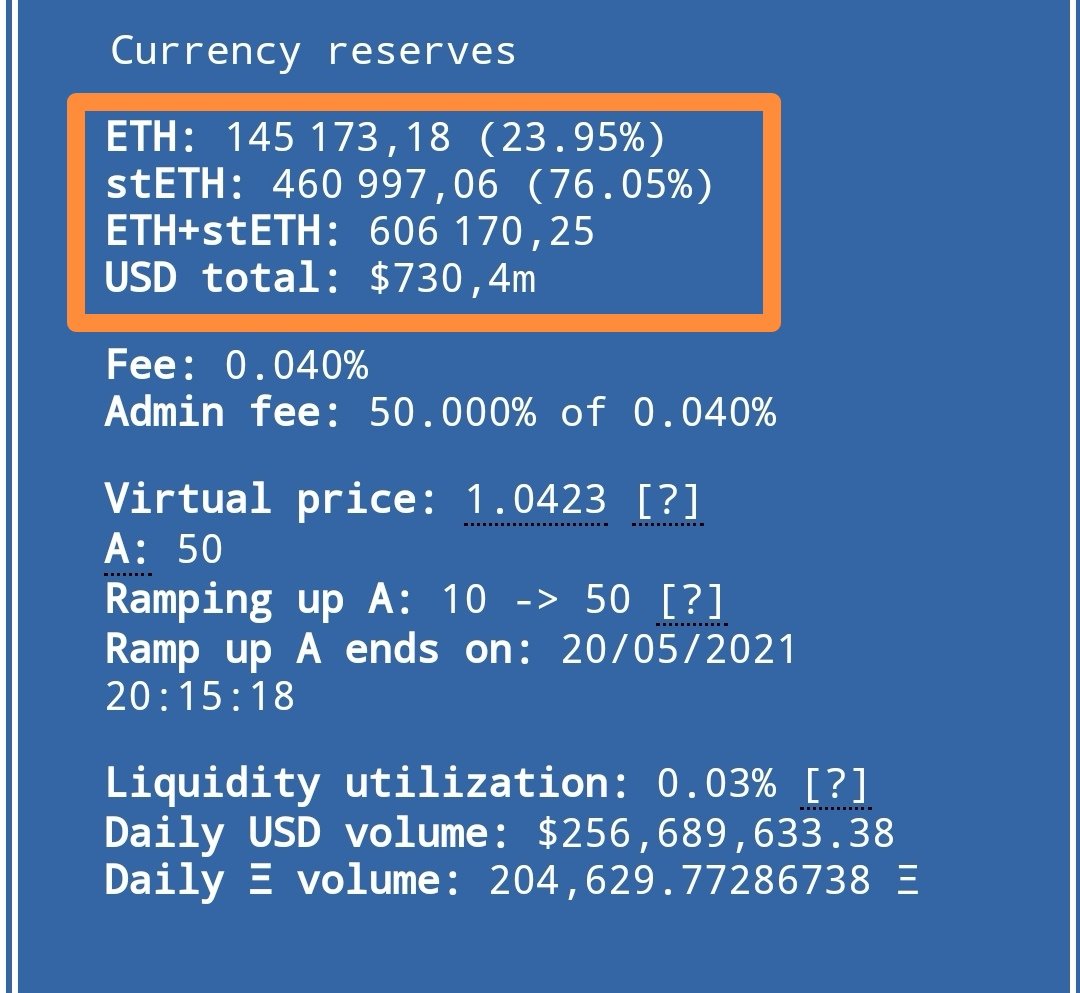
5/14 however, above a specific threshold, peg is not anymore maintained, this is the perfect example of the @LidoFinance pool stETH/ETH.
6/14 And this value depends on a specific A factor as explained by Mr Whale @Tetranode, just read and enjoy :
7/14 This A factor is easily seen on #curve pool

8/14 By changing "A" factor on this website desmos.com, you can simulate the price impact in case of imbalanced token ratio. If ratio is 50/50 peg is perfect.
9/14 Let's check $stETH / $ETH pool and play with it. A factor is 50, so with a pool balance 75/25, unpeg is 3% already, however pool is already significantly drained.
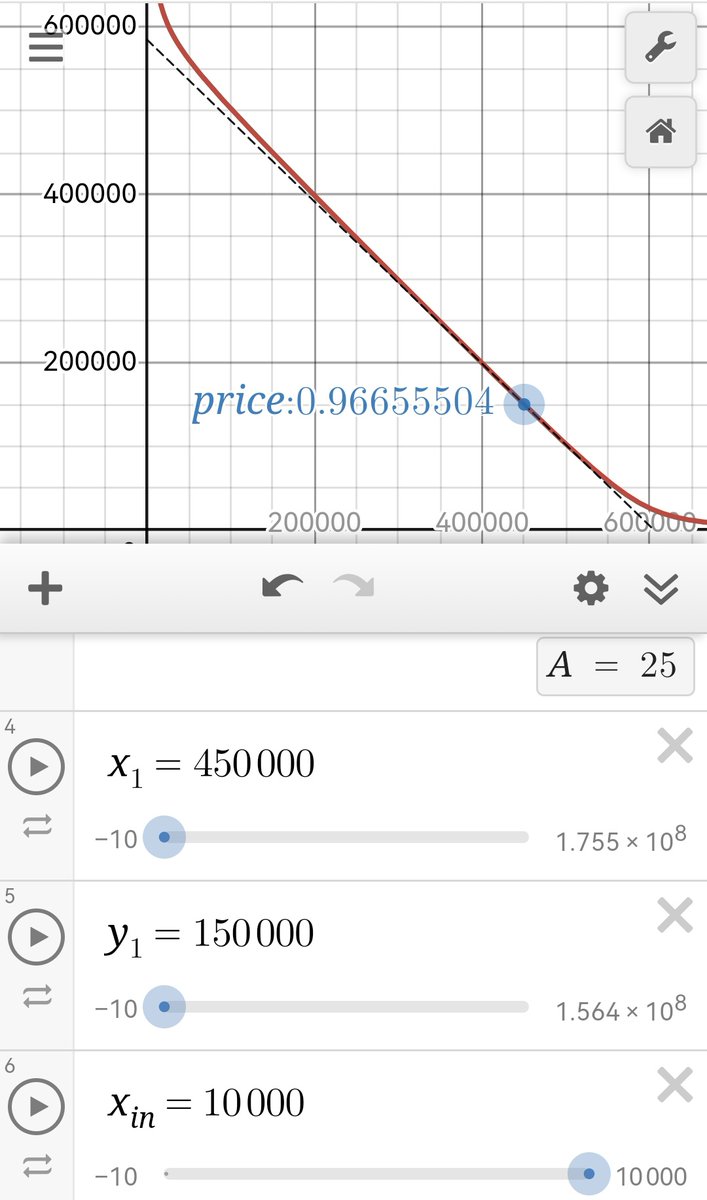
10/14 Whag would have happened with A factor of 10 at same imbalance ratio 75/25: depeg of stETH would have been close to 14%, so much much worse !

11/14 However with A factor of 10, depeg of 3% happens only when balance is 48/52. So leaving plenty of liquidity for arbitrage to maintain the peg.
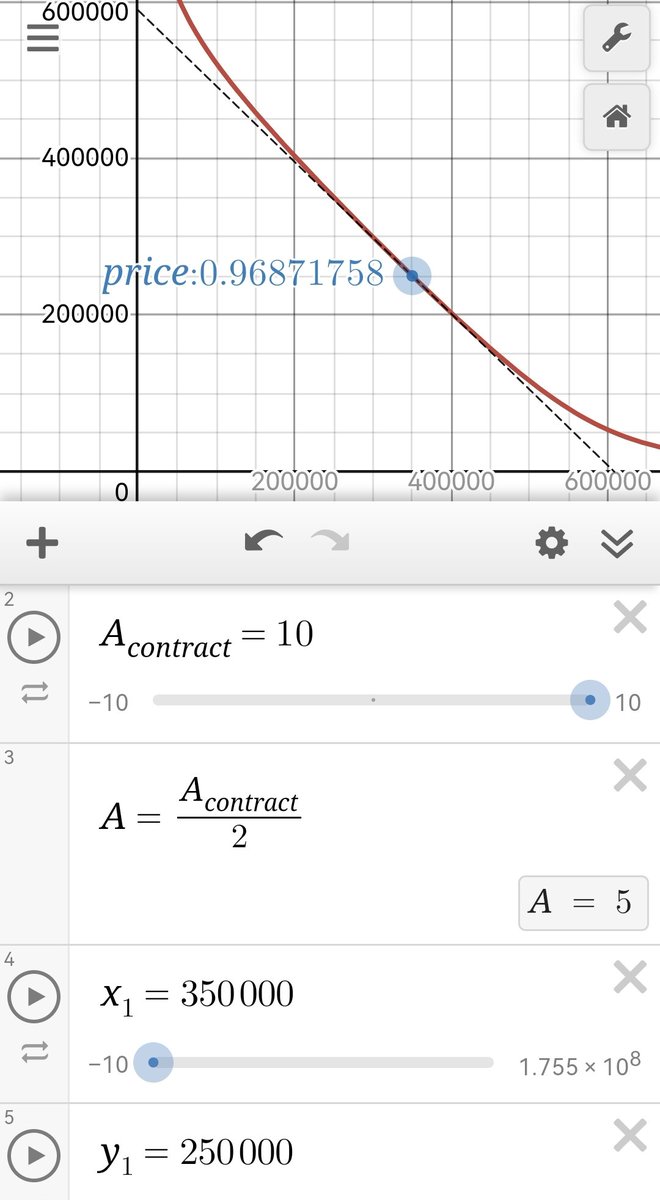
12/14 as said by @Tetranode and Thanks for his insight, by trying to optimize swap efficiency, token peg becomes more fragile.
13/14 So before entering a LP, check the TVL, the A Factor, and define at which ratio a depeg event might tell you to watch out.
By the way if anybody knows a tool that can track this token ratio and sending notifications off chain, i'd be grateful.
By the way if anybody knows a tool that can track this token ratio and sending notifications off chain, i'd be grateful.
14/14 i hope i was clear enough, and right in my assumptions. Feel free to engage discussion if not.
If you enjoyed this thread, please feel free to retweet the below link.
If you enjoyed this thread, please feel free to retweet the below link.
Loading suggestions...