

Fabio Vieria, Elegance.
A monster thread, Part 1.
A monster thread, Part 1.

When news broke a few days ago that Arsenal had paid 35 million euros + add-ons for a little known 22-year-old Portuguese, many did not know what to make of it. Was he any good? What could his impact be? Little knew what to expect.
Let me tell you what to think of Fabio.
Let me tell you what to think of Fabio.

We cannot talk about Fabio Vieira without talking about Manchester City, Liverpool, their respective coaches and maybe even the history of football itself.
I will keep it simple. Arsenal want to play football in a similar way to Manchester City and Liverpool. They recently made
I will keep it simple. Arsenal want to play football in a similar way to Manchester City and Liverpool. They recently made

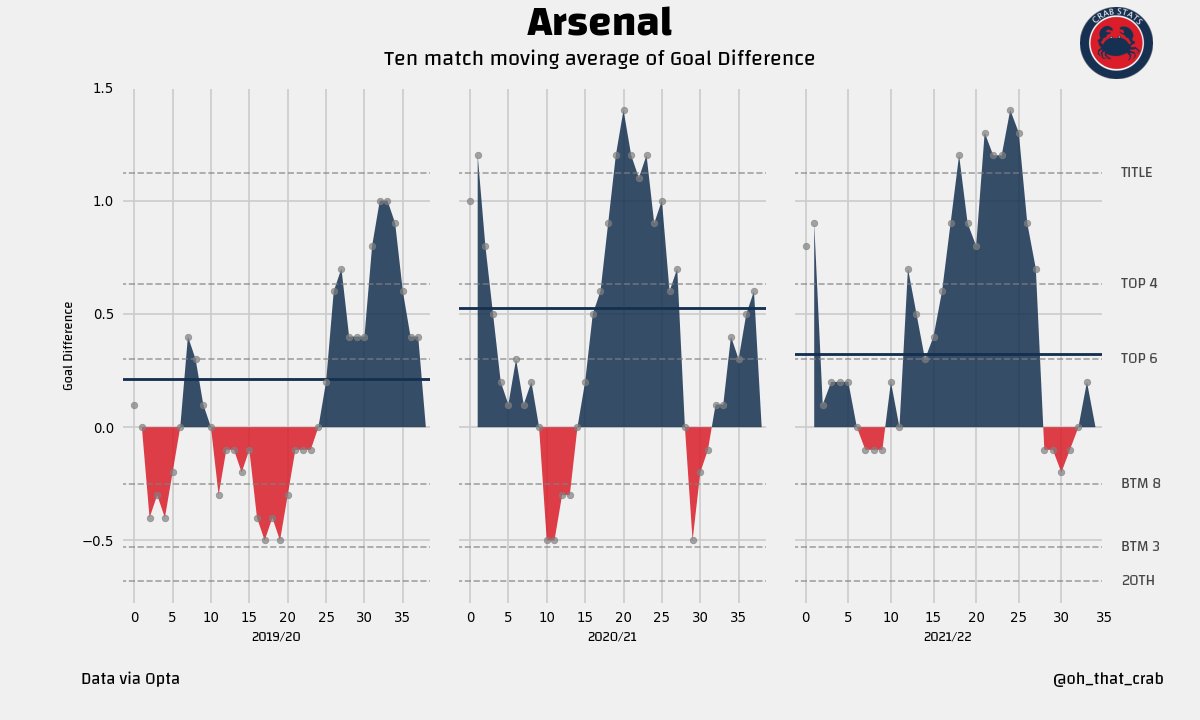
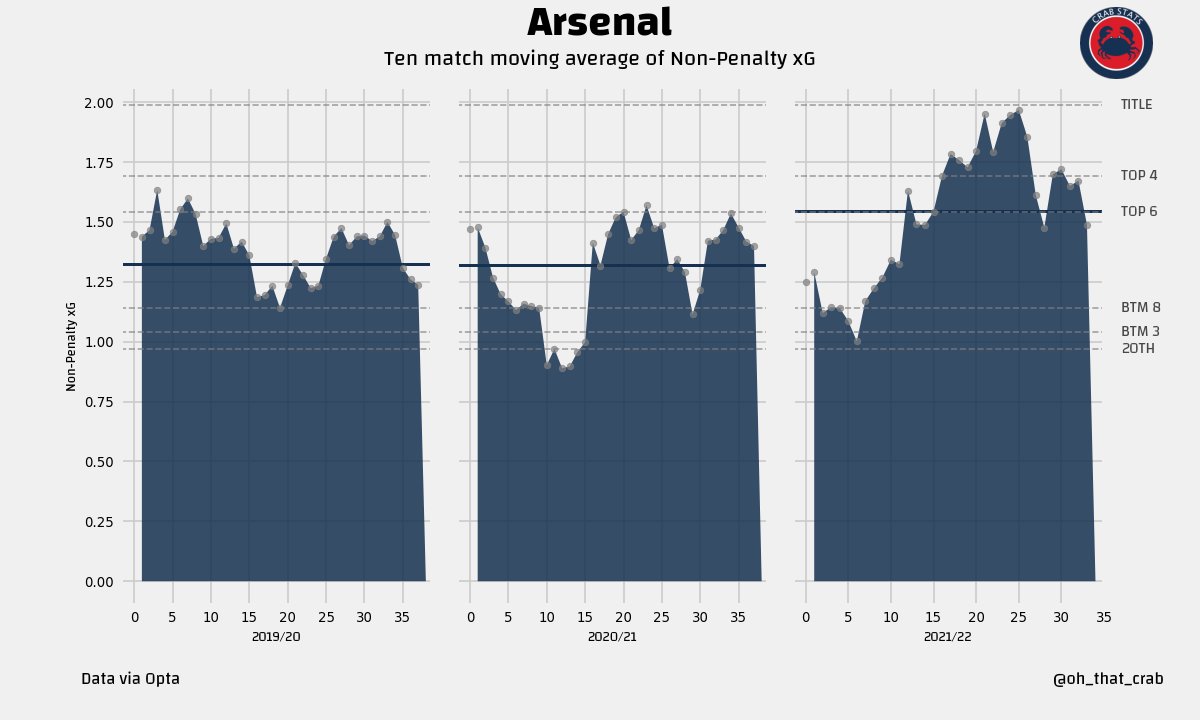
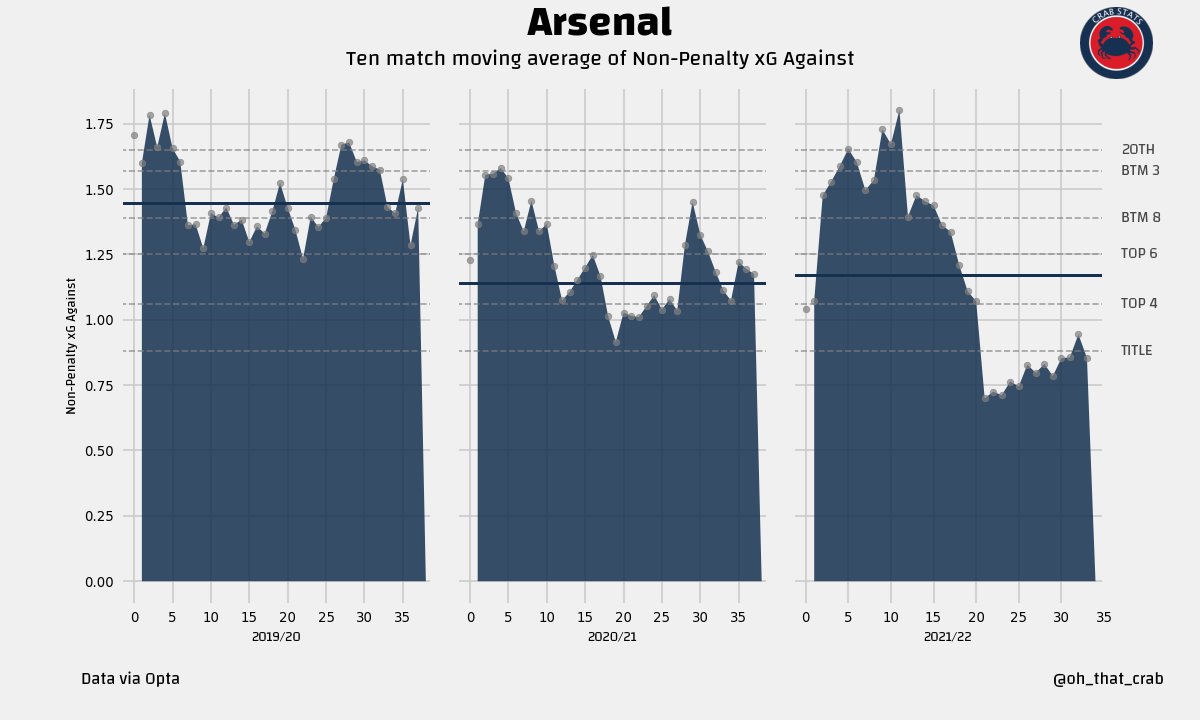
a long-awaited move to the 4-3-3 formation in the middle of the season with Aubameyang leaving and that period resulted in a marked improvement in performances. Arsenal started to look more and more like the Top 2 and less than the rest of the league.
That period didn't last
That period didn't last
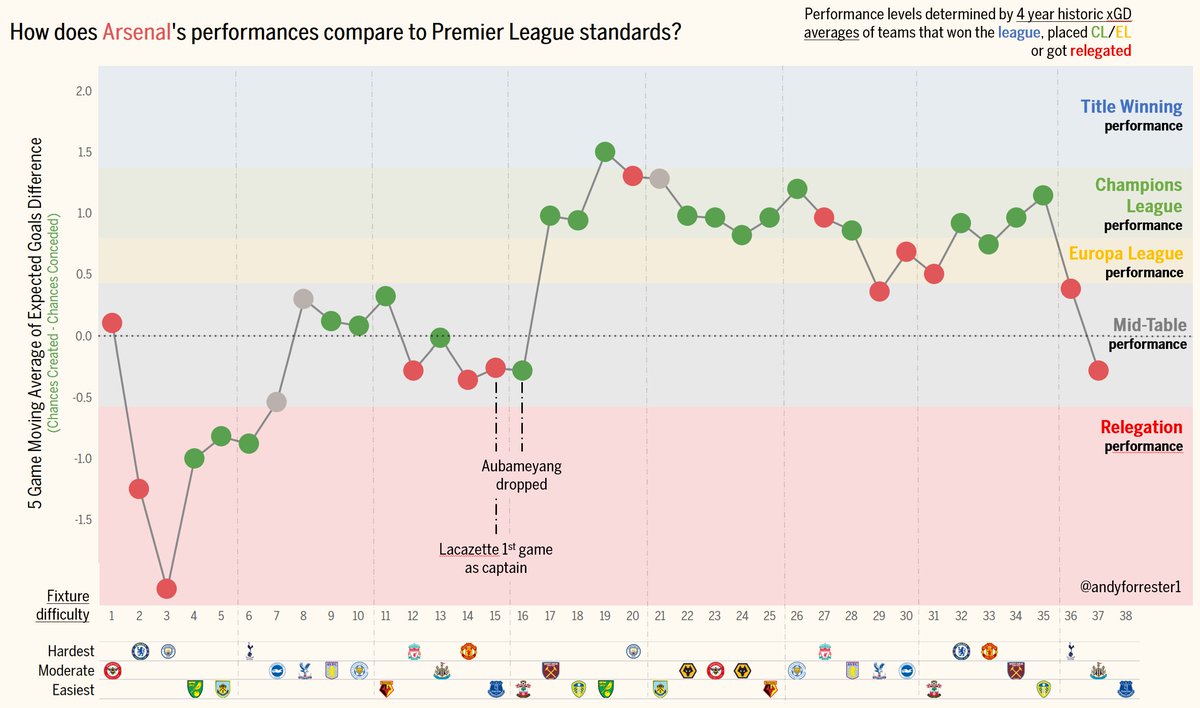
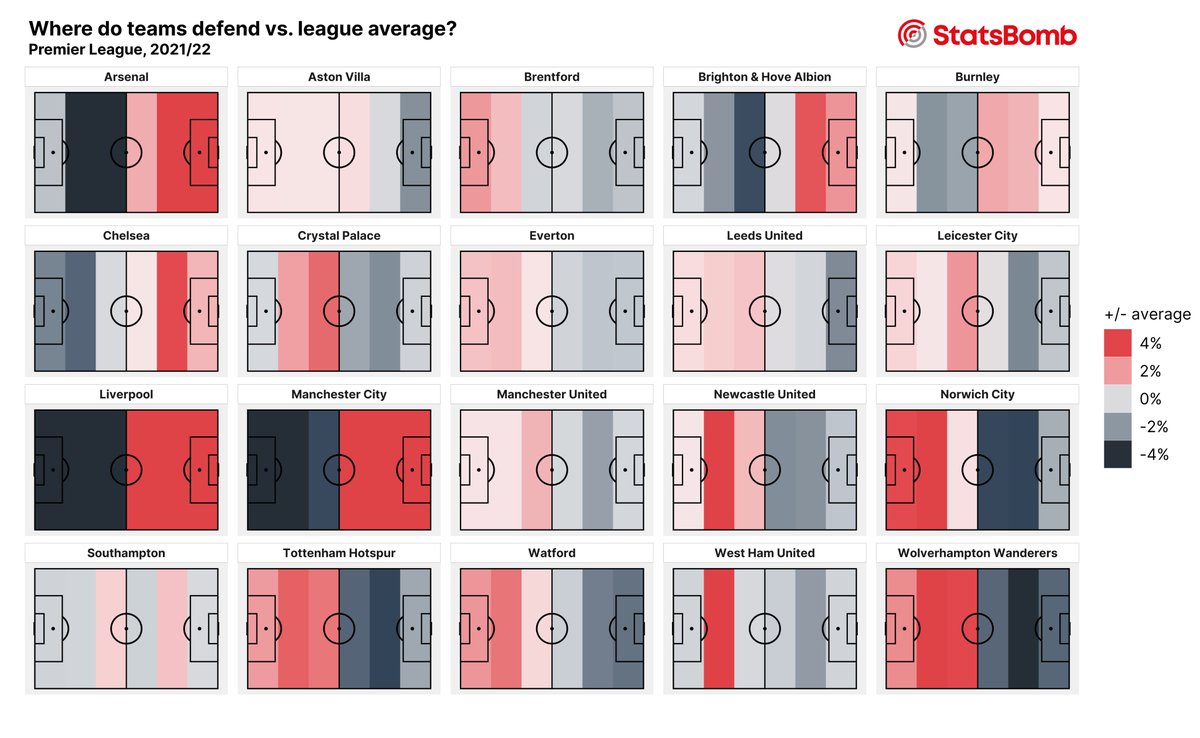
very long for various reasons but after 2 years of continuous shape-shifting, Arsenal finally arrived at what was promised when they hired a Pep acolyte.
Against most teams in the league, Arsenal will dominate territory and push back 11 men into their own 3rd.
With the incoming
Against most teams in the league, Arsenal will dominate territory and push back 11 men into their own 3rd.
With the incoming
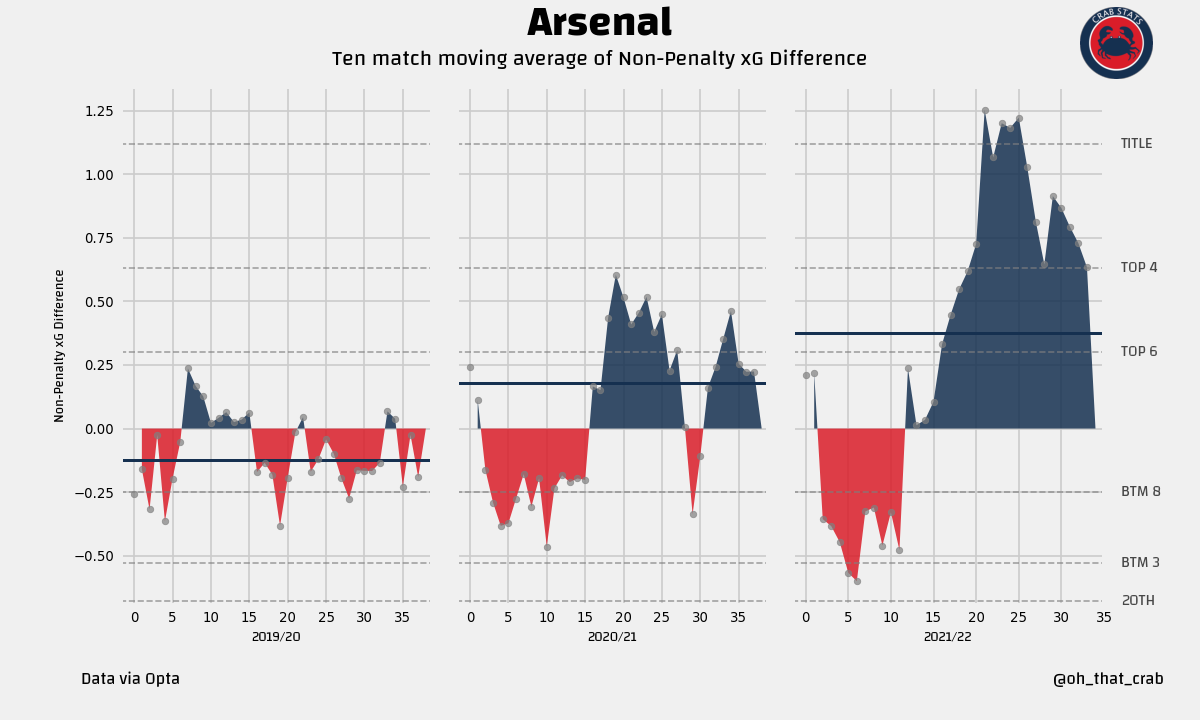
arrivals of reinforcements in William Saliba and another similar left-footed profile (both Saliba and the rumoured Lisandro are in the 95th+ percentile for ballplaying metrics), this will only be more true next season.
This then leads Arsenal to the same question Pep Guardiola
This then leads Arsenal to the same question Pep Guardiola
and (increasingly) Jurgen Klopp have been trying to answer for years now: how do you break down a compact well-drilled lowblock?
Both Pep and Klopp have approaches that focuses on generating superiorities against opposition blocks. However, in recent years, these superiorities
Both Pep and Klopp have approaches that focuses on generating superiorities against opposition blocks. However, in recent years, these superiorities
(numerical, dynamic, positional, associative or collective) have been maxed out by their two teams. City especially have maximized tactical superiorities in their attacking play (defined as that which can be planned and obtained from the training ground).
Teams have grown smarter and more compact in recent times when defending. They are aware that if they deny space, little can be done. And teams in general are putting more and more physical and individual quality in their middle or low blocks, further closing the gap between the
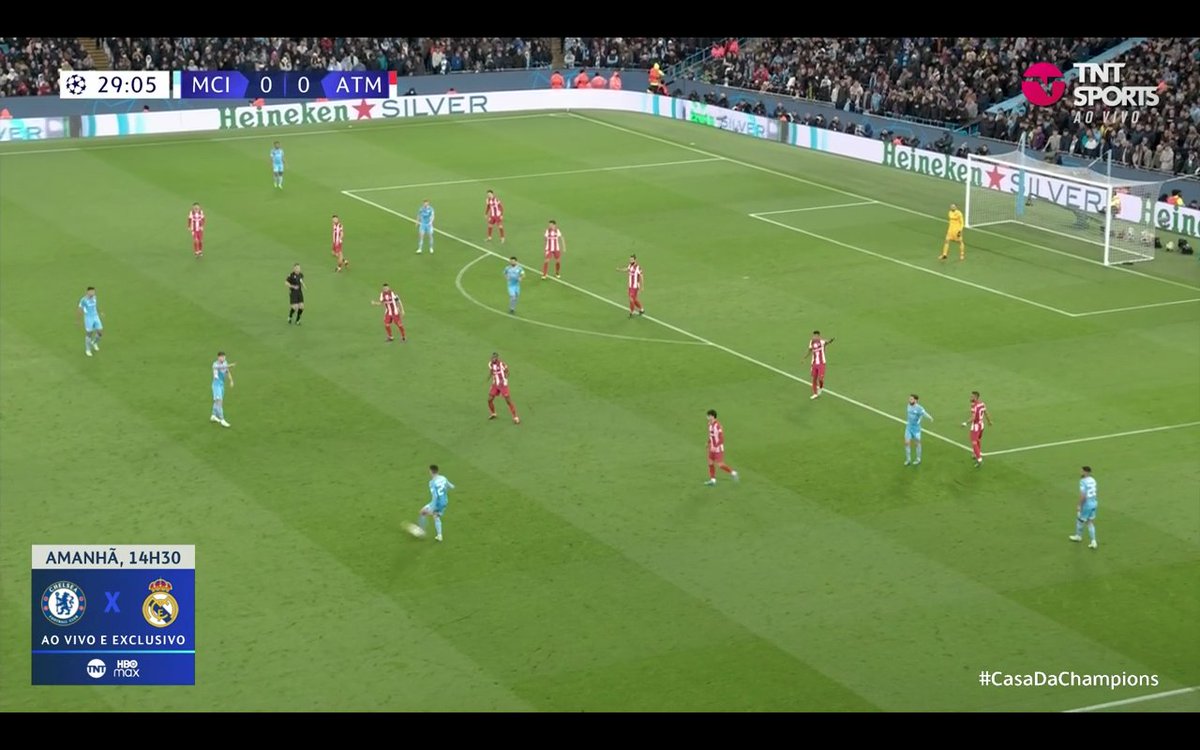
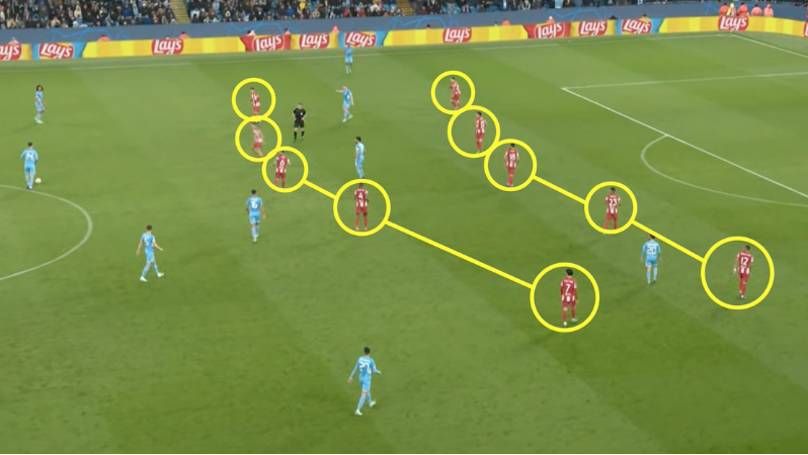
attacking and defensive cycles. Most coaches can watch 50 games from Pep Guardiola's teams and identify all the detail in the attacking principles and consequently come up with new defensive principles to negate them.
As Carlo Ancelotti once quipped, defending is more about
As Carlo Ancelotti once quipped, defending is more about
organization and structure than talent.
If there isn't a lot more tactical edge for the great attacking teams to explore, how then do they continue to be unstoppable and unpredictable at attacking?
I already answered this question in a different thread
If there isn't a lot more tactical edge for the great attacking teams to explore, how then do they continue to be unstoppable and unpredictable at attacking?
I already answered this question in a different thread
but the short-long is that teams are vacating space in deeper areas to make sure space is scarce in higher, more valuable areas.
To continue to be successful, you need to take what is offered and create from those deeper areas rather than from highly protected parts of the pitch
To continue to be successful, you need to take what is offered and create from those deeper areas rather than from highly protected parts of the pitch
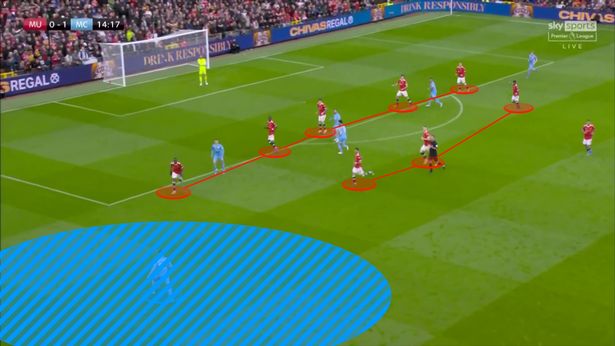
The space nowadays is in deep and wide areas. Therefore you need playmakers who can be consistently reliable creating from there as they are further up the pitch.
The problem is obvious: there are very few playmakers like that.
Enter Kevin De Bruyne and Trent Alexander-Arnold.
The problem is obvious: there are very few playmakers like that.
Enter Kevin De Bruyne and Trent Alexander-Arnold.
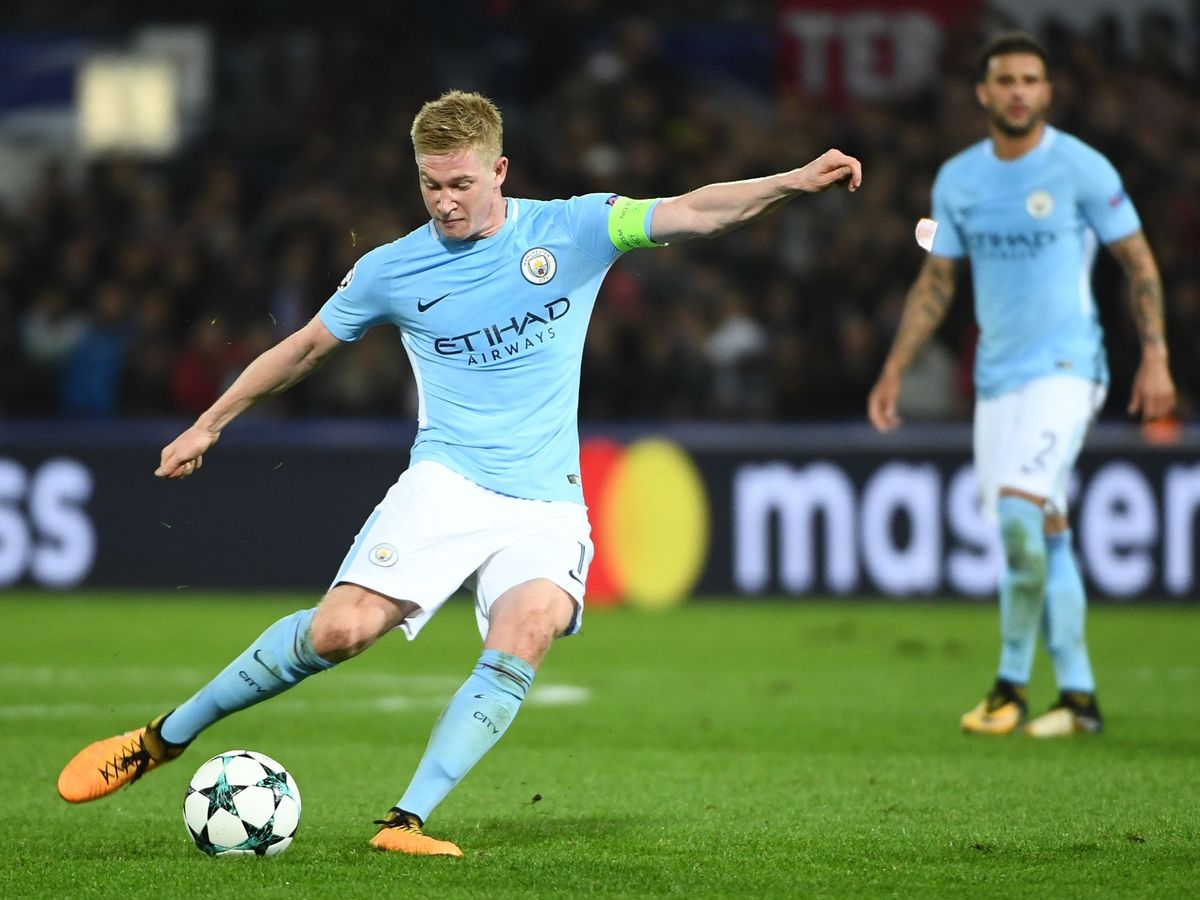

Why are Liverpool and Manchester City so unstoppable? It's because they have people who can create goals like this.

Or this

It's unfair and genuinely unstoppable, happening from spaces no one defends.
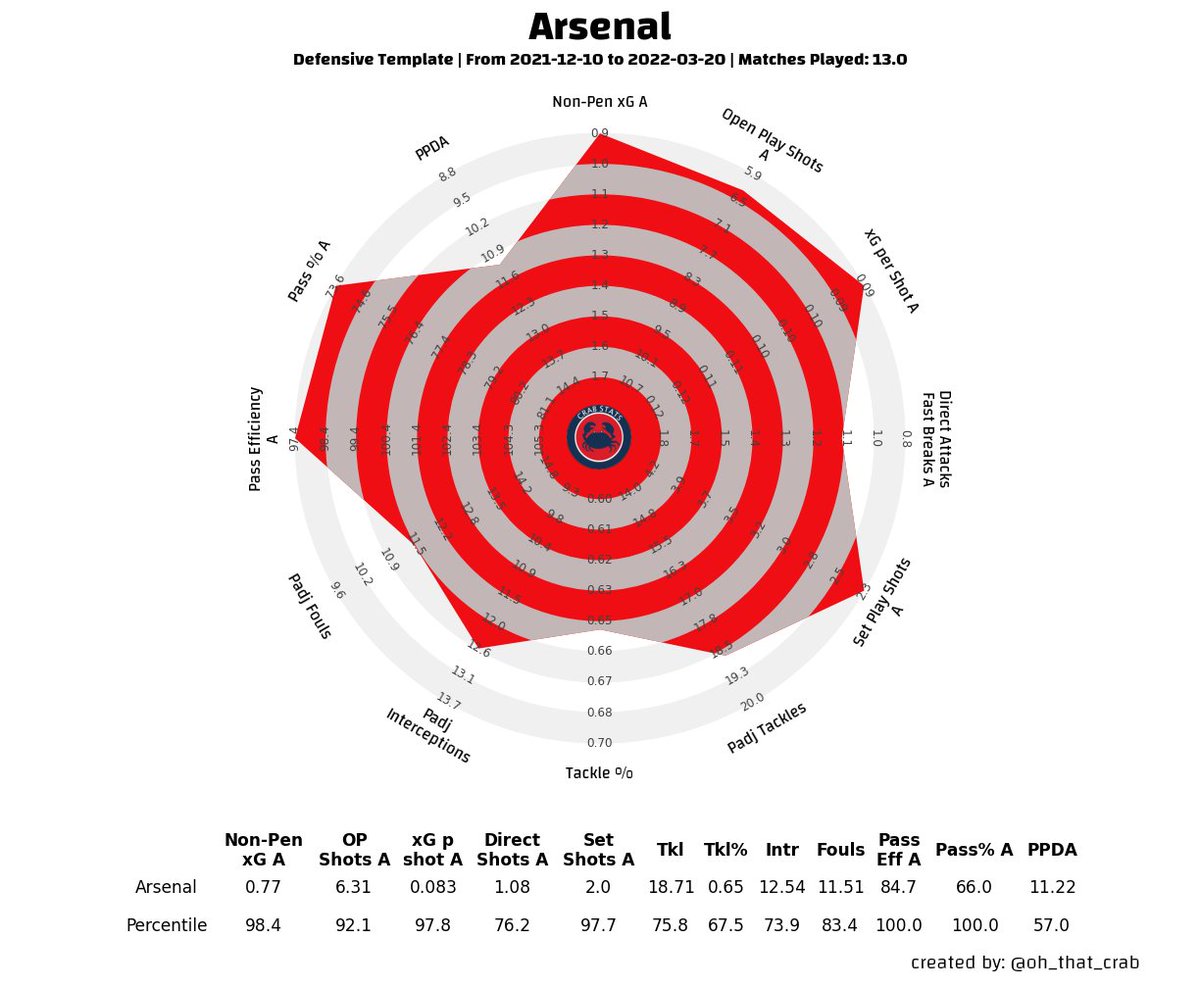
Notice that in both instances, they were playing against an Arsenal in its pomp that had largely defended exceedingly well on the day and that had a defensive output at the time that looked like this:
Notice that in both instances, they were playing against an Arsenal in its pomp that had largely defended exceedingly well on the day and that had a defensive output at the time that looked like this:
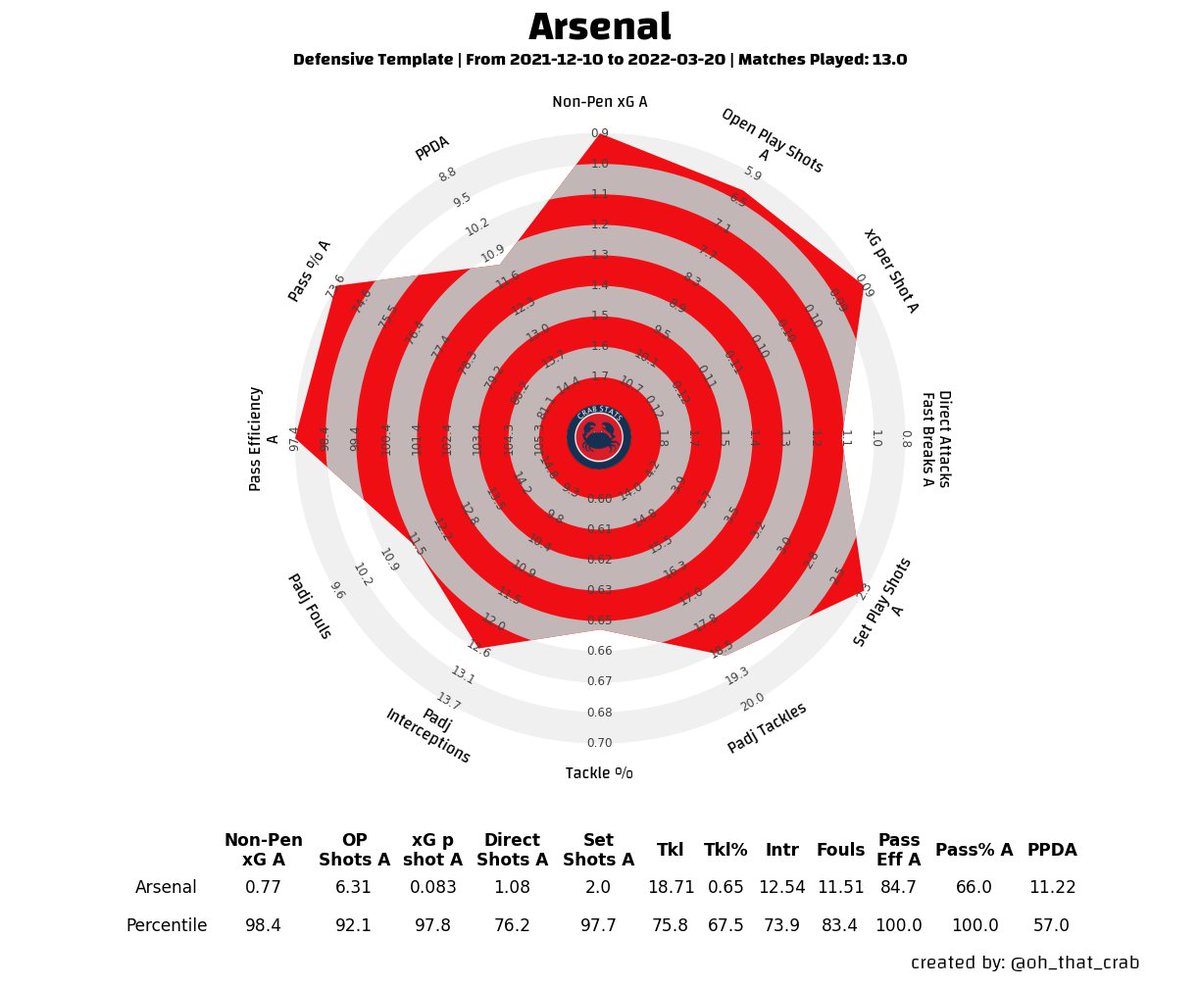
Basically, KDB and TAA are exceptional playmakers. They are primary creators for their team whether in settled play or transitions. But not just that, they exist for one primary reason: both are extraordinary at creating from deep areas.
Look at TAA this season:
Look at TAA this season:
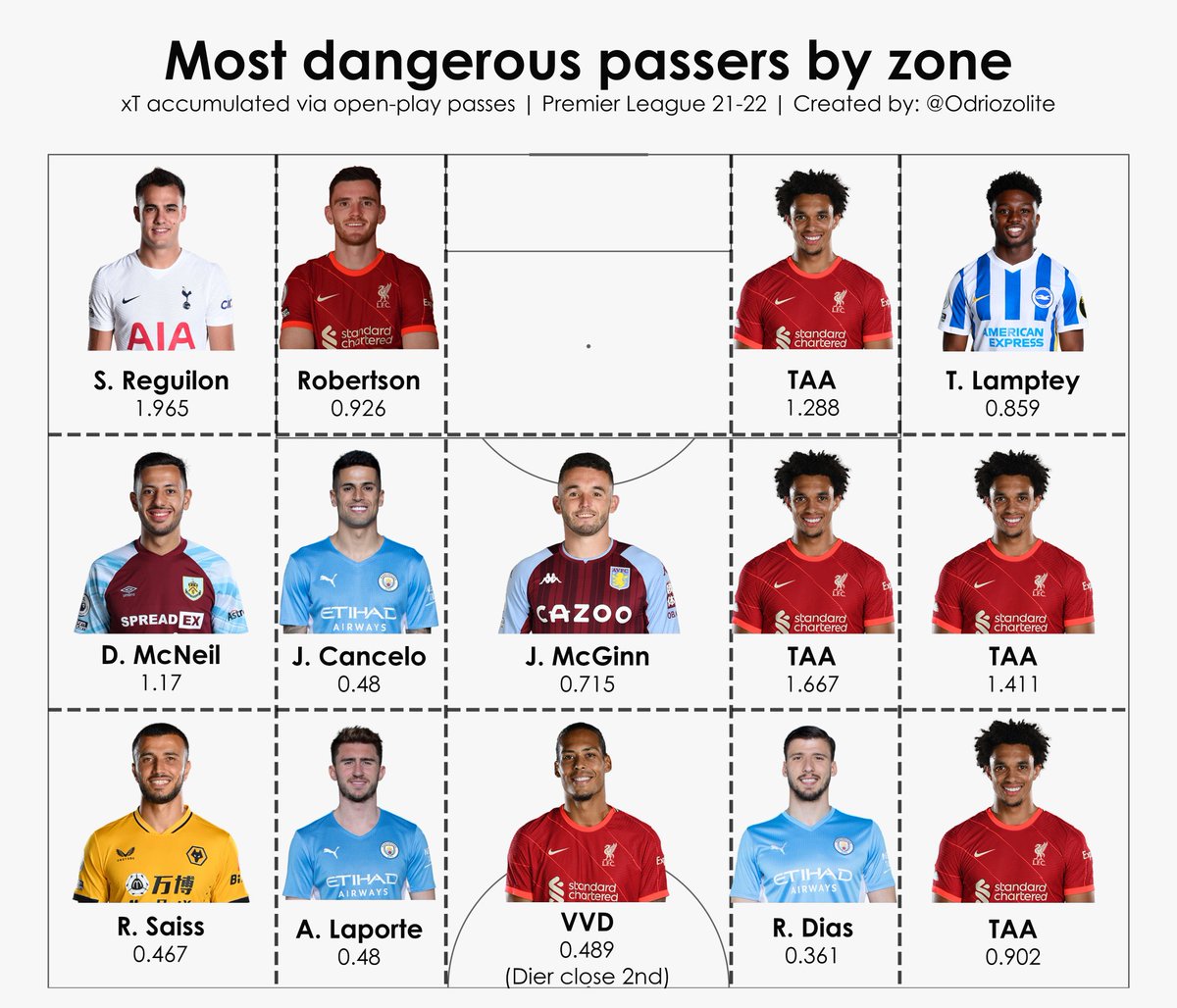
The reason why both exist is primarily because their teams constantly peg opposition teams inside very low compact blocks and they need someone who can unlock these teams even if they are outside or around the blocks at a farther distance from goal than normal.
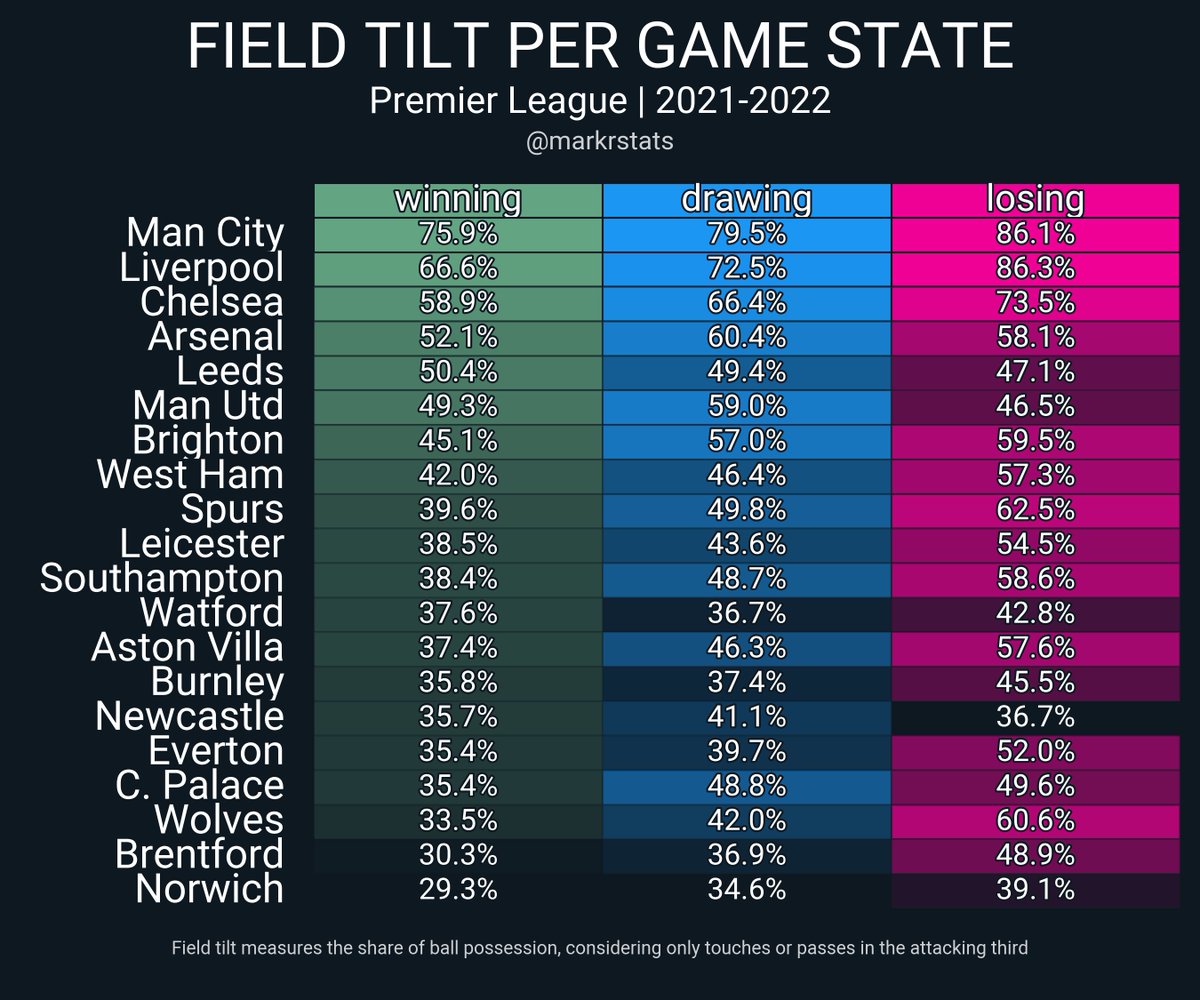
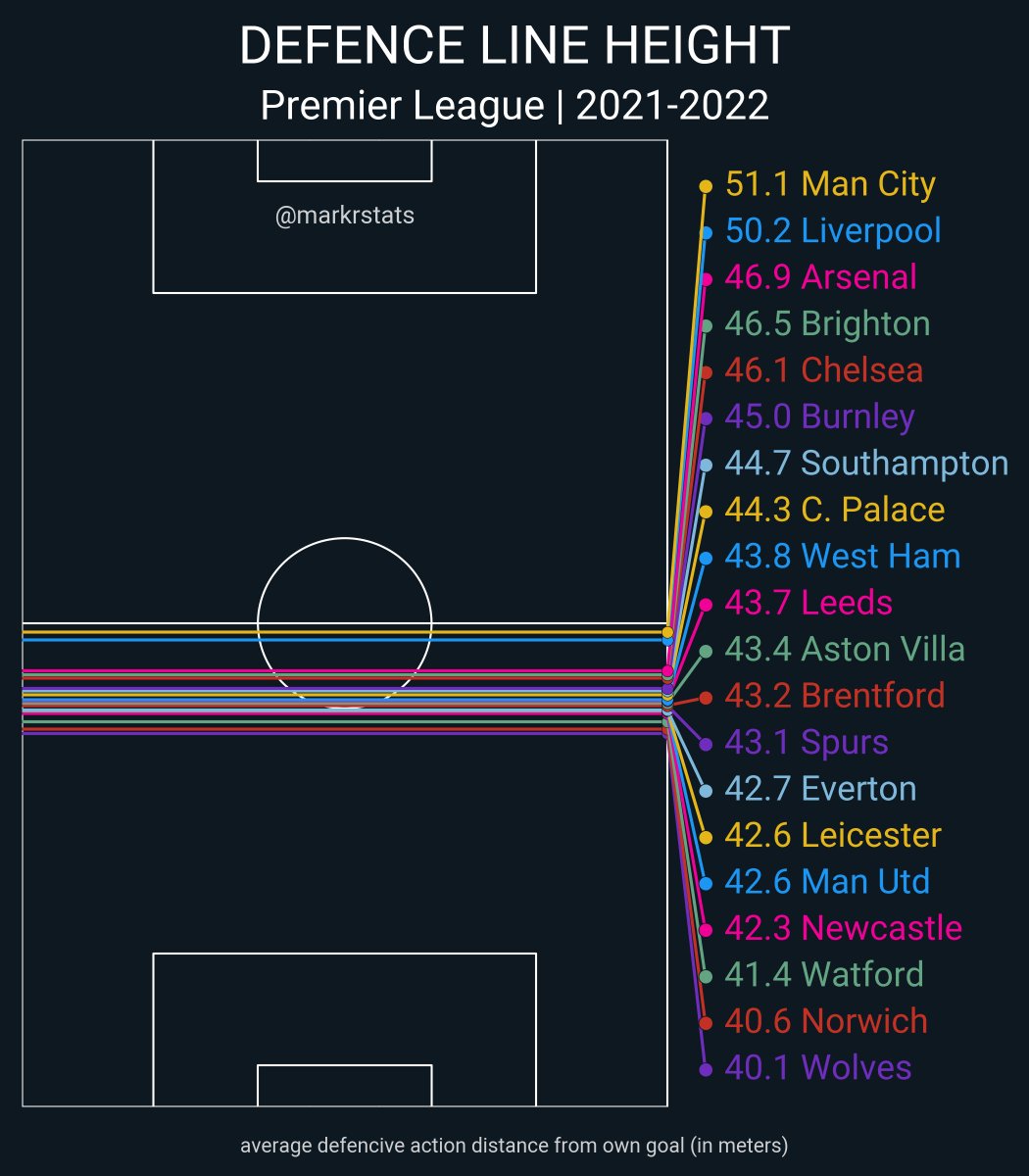
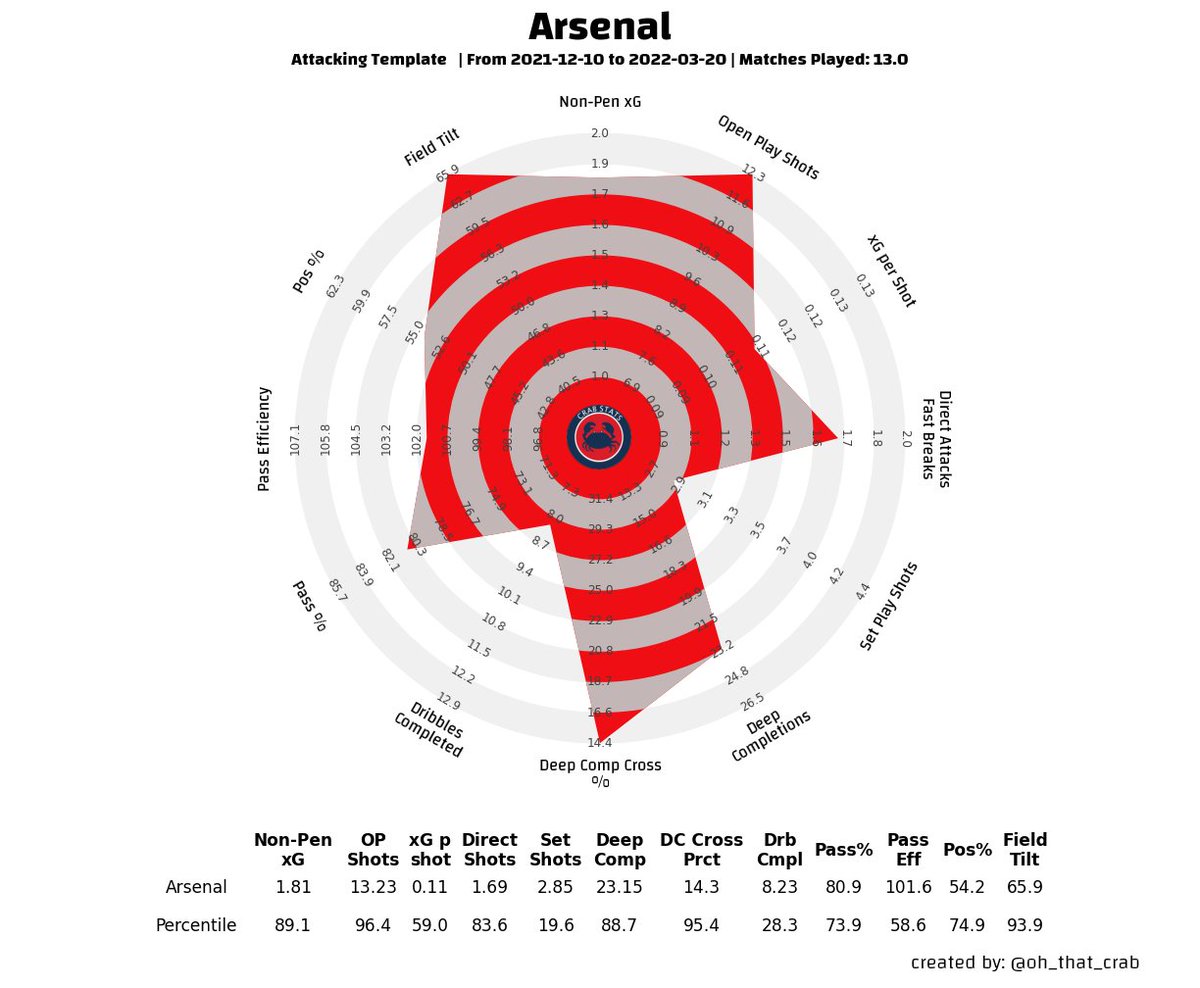
Field tilt is a metric that just simply measures how dominant your team is territory wise.
Go back and check which team are the 4th best in the Premier League at this.
There you go, it is Arsenal.
Check the 3rd highest defensive line as well.
There you go, Arsenal again.
Go back and check which team are the 4th best in the Premier League at this.
There you go, it is Arsenal.
Check the 3rd highest defensive line as well.
There you go, Arsenal again.
As I said, Arsenal want to emulate Liverpool and City. They are almost there. But there is a problem:
Arsenal don't have a KDB or TAA.
So they peg teams in but can't create much outside the blocks teams have around their penalty area.
They have to labour and go inside.
Arsenal don't have a KDB or TAA.
So they peg teams in but can't create much outside the blocks teams have around their penalty area.
They have to labour and go inside.

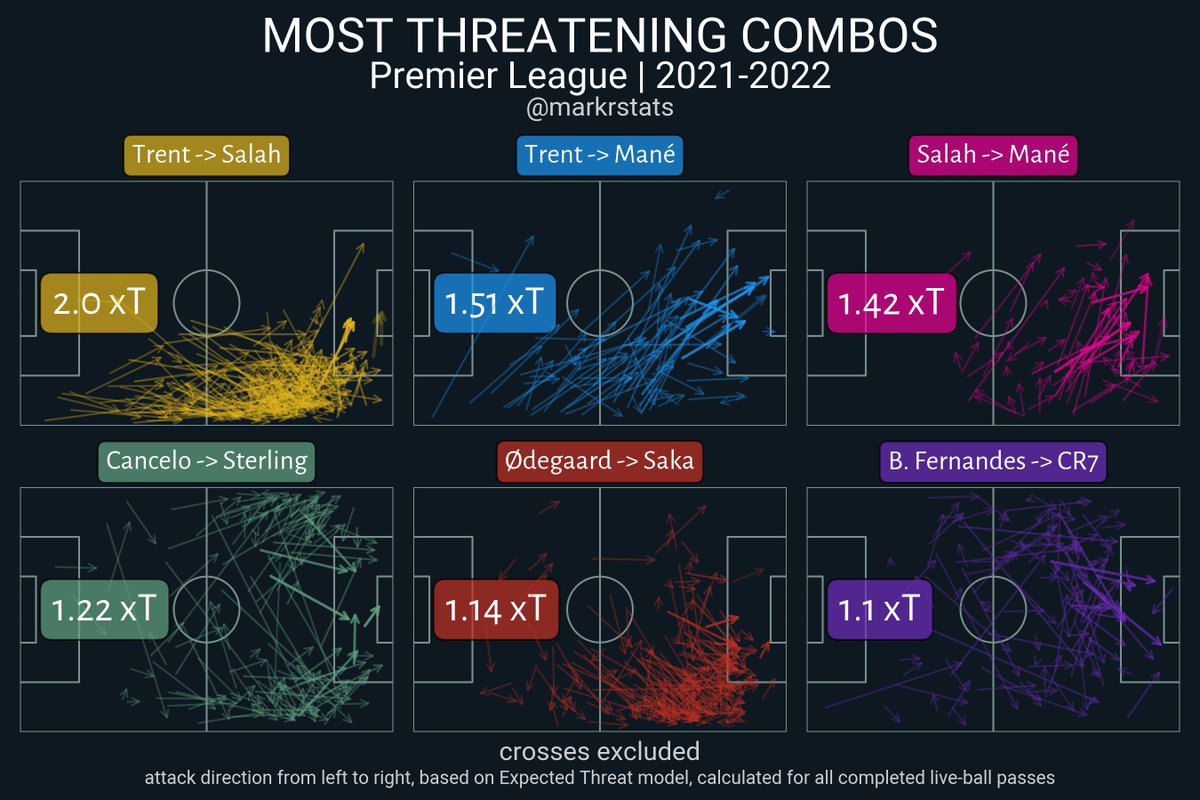
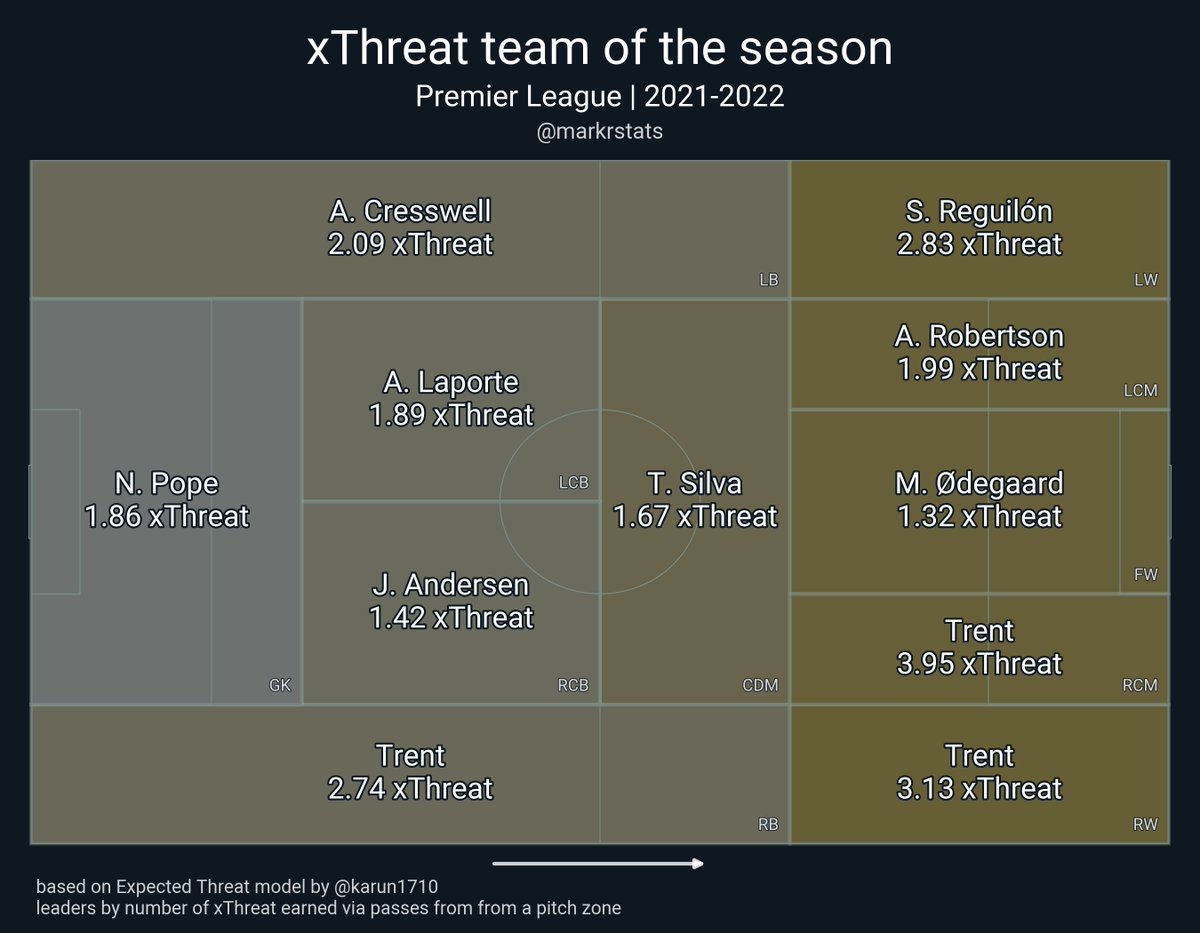
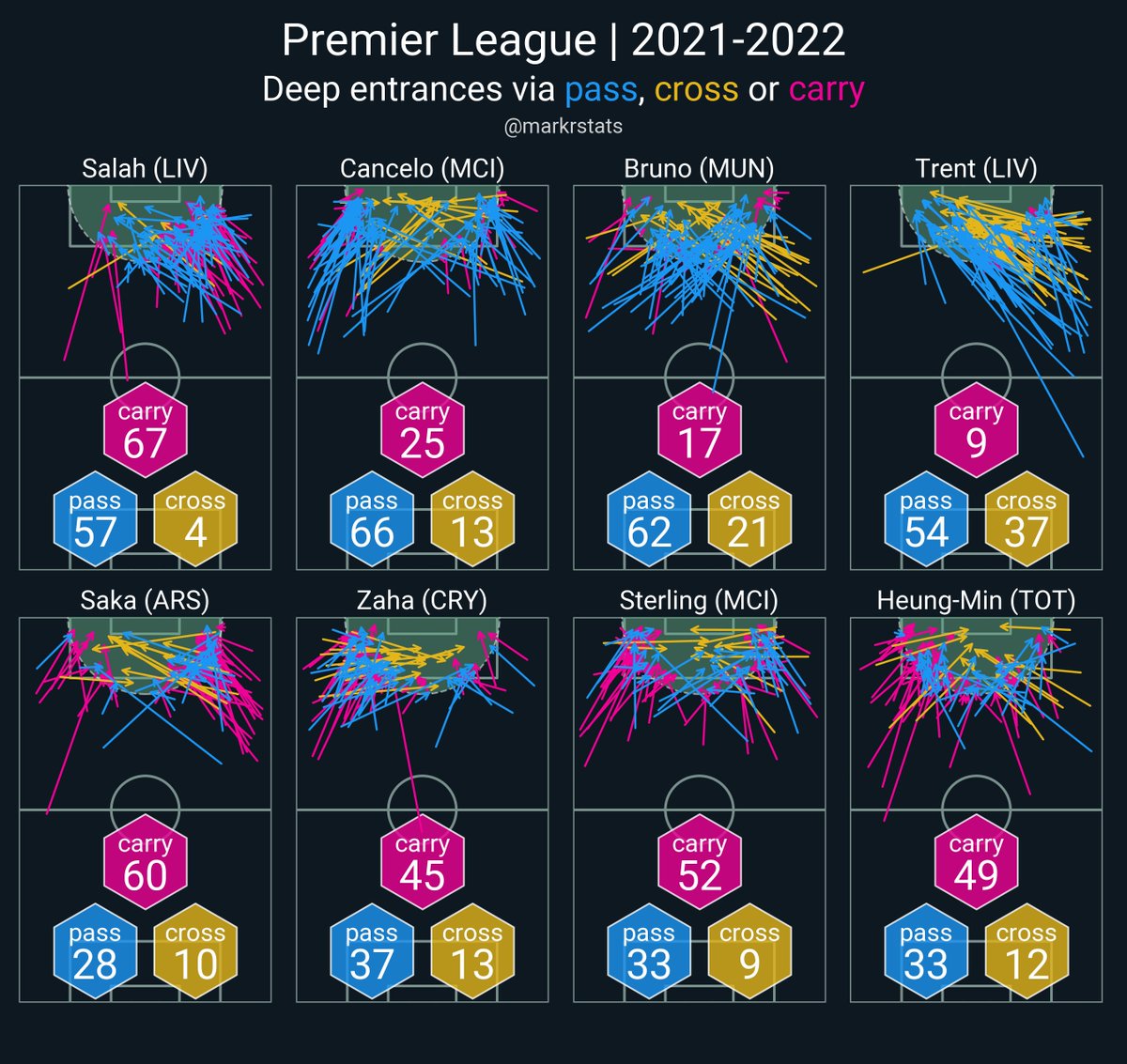
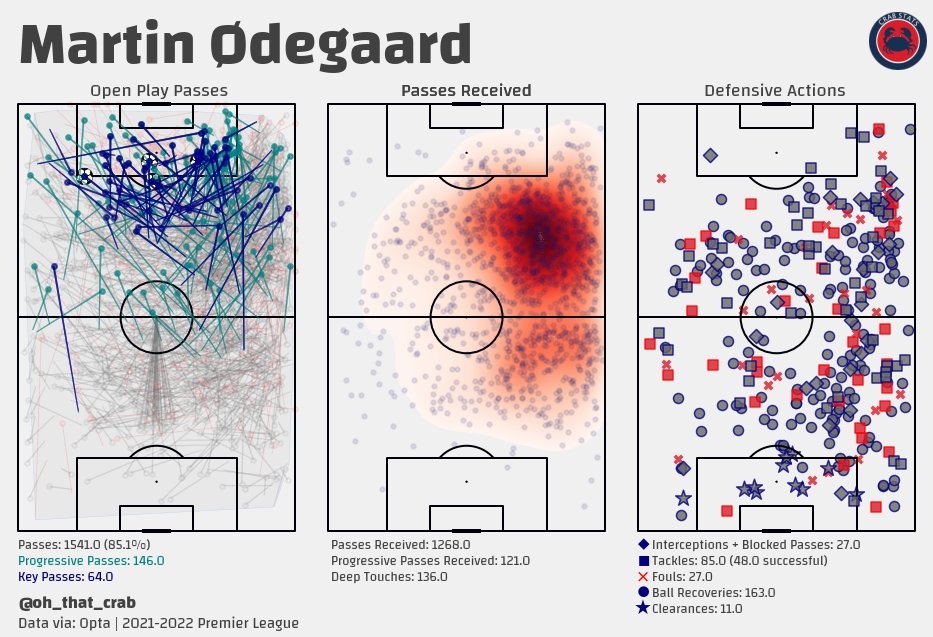
Martin Odegaard, who is the de facto primary creator is more of a traditional playmaker who excels closer to the penalty box.
In fact, as you can see from the above metrics, Odegaard is the most dangerous passer in the league from the most dangerous part of the pitch: Zone 14.
In fact, as you can see from the above metrics, Odegaard is the most dangerous passer in the league from the most dangerous part of the pitch: Zone 14.
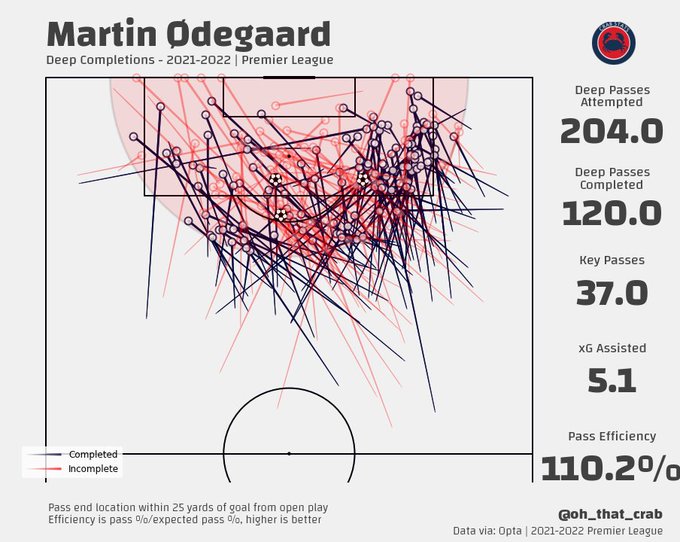
Looking at his deep completions, it seems that the longer or farther they are, the less successful it is, especially if arriving on the opposite side.
Odegaard just isn't from the future like KDB or TAA. He needs to get closer to hurt teams.
It's not very good news for Arsenal.
Odegaard just isn't from the future like KDB or TAA. He needs to get closer to hurt teams.
It's not very good news for Arsenal.
It means Arsenal need to take more risks than Liverpool and City do to create. They need to move the ball more in short distances across tightly patrolled spaces to create shots. It's not that they don't or can't do it: it's that it's less efficient and sustainable!
To get a shot against very compact blocks, Arsenal have to do shit like this

While Liverpool can simply do this

Which one is more efficient?
It isn't that Liverpool don't construct interior play or that constructing interior play is bad. It is that you can't necessarily do it all the time against the most compact blocks.
Arsenal have to. They have no choice. Hence less efficiency.
It isn't that Liverpool don't construct interior play or that constructing interior play is bad. It is that you can't necessarily do it all the time against the most compact blocks.
Arsenal have to. They have no choice. Hence less efficiency.
And this is where Fabio Vieira comes in...
(The End.
Part 2 is coming tomorrow.
Thank you so much for reading all through) .
(The End.
Part 2 is coming tomorrow.
Thank you so much for reading all through) .
Much thanks to @StatsBomb, @oh_that_crab, @markrstats and @Odriozolite for the data vizzes and their public facing work.
I'm exhausted. But thank you for reading. Part 2 is way more enjoyable and even more in depth than this!
It's where I kept all the real stuff! So, wait.
It's where I kept all the real stuff! So, wait.
Loading suggestions...