
Three generations of Arabic printing and book production in Lebanon at the Monastery of St John the Baptist, Dair al Yuhanna, Shuwayr.
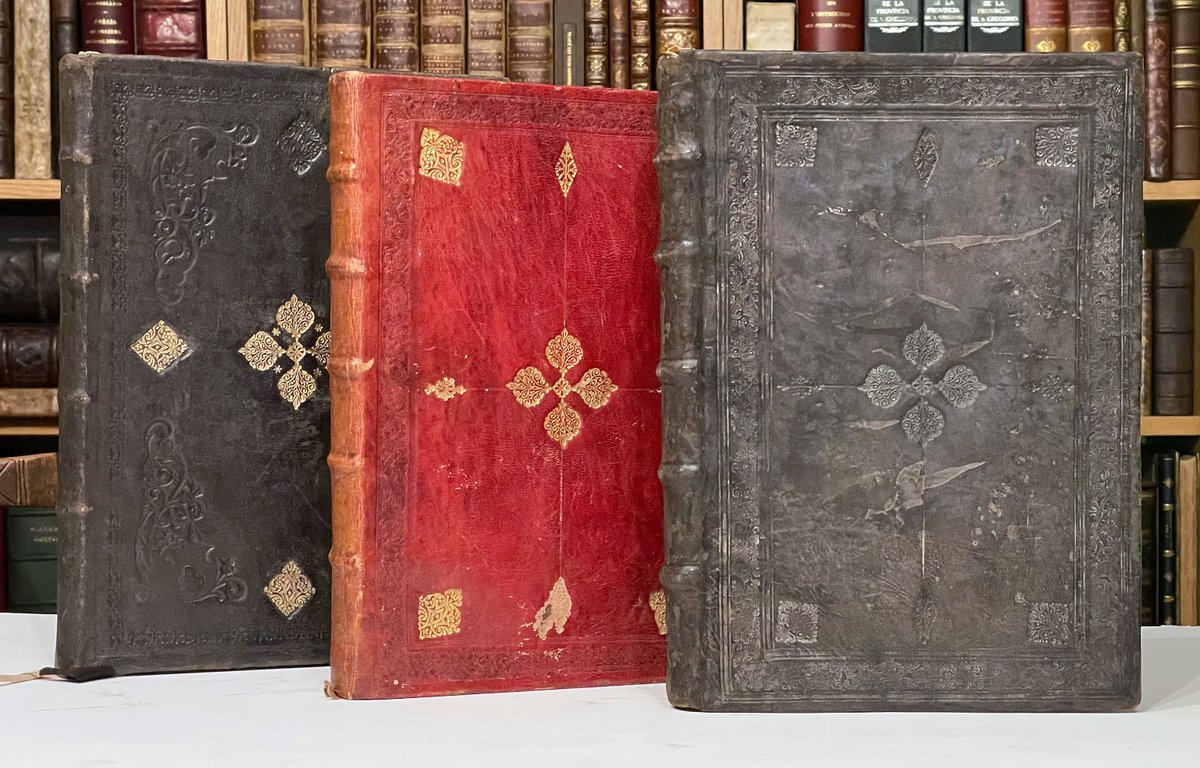
Kitab al-Injil - The Evangelion of the Greek Church - printed and bound at the monastery in 1776, in 1818 and finally, in 1861. 1/
Kitab al-Injil - The Evangelion of the Greek Church - printed and bound at the monastery in 1776, in 1818 and finally, in 1861. 1/
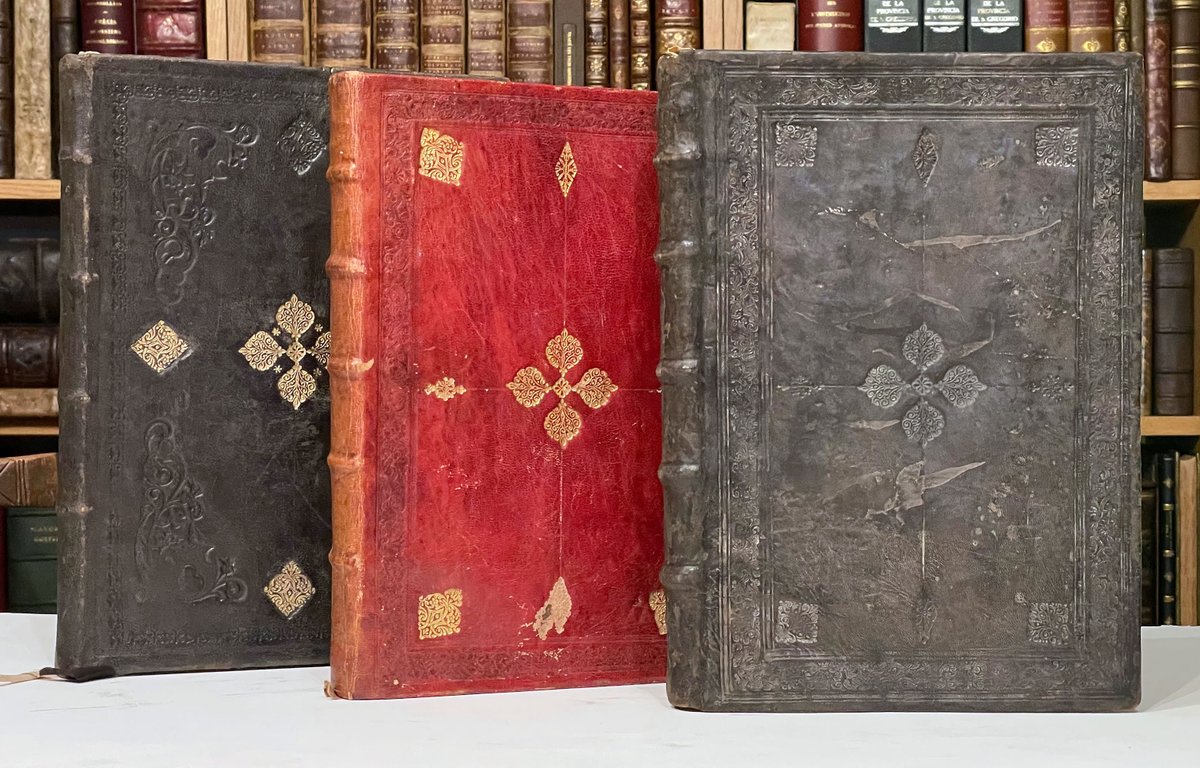
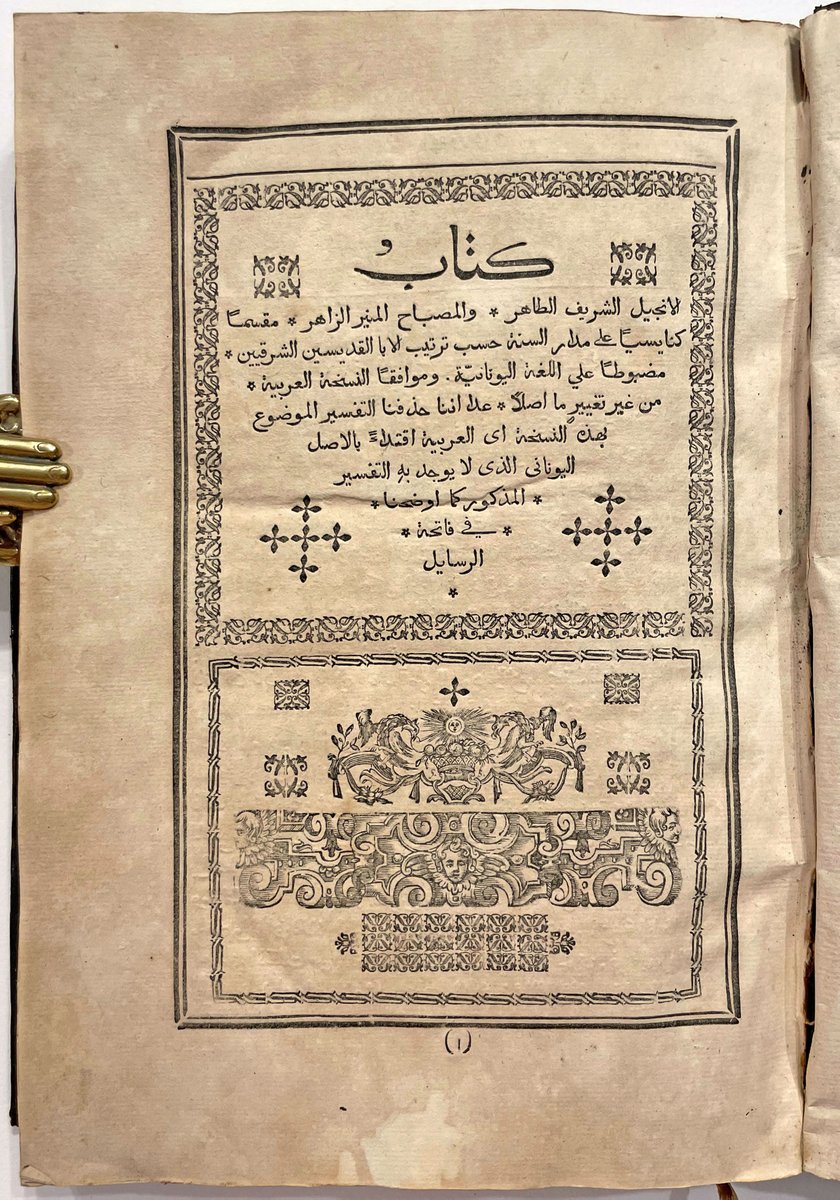
THE FIRST EDITION
Kitāb al-injil̄ al-sharīf al-tạ ̄hir wa-al-miṣbāh al- munīr al-zāhir [Book of the Liturgical Gospels] The Evangelion of the Greek Church translated into Arabic, Monastery of St John the Baptist [Melchite Monastery], Dair al Yuhanna, Shuwayr, Lebanon, 1776. 2/
Kitāb al-injil̄ al-sharīf al-tạ ̄hir wa-al-miṣbāh al- munīr al-zāhir [Book of the Liturgical Gospels] The Evangelion of the Greek Church translated into Arabic, Monastery of St John the Baptist [Melchite Monastery], Dair al Yuhanna, Shuwayr, Lebanon, 1776. 2/

316 pages of Arabic text, printed in black and red, with numerous elaborate woodcut printer’s ornaments. Bound at Shuwayr in black blind-stamped morocco, edges sprinkled red, pink silk place-marker. 3/
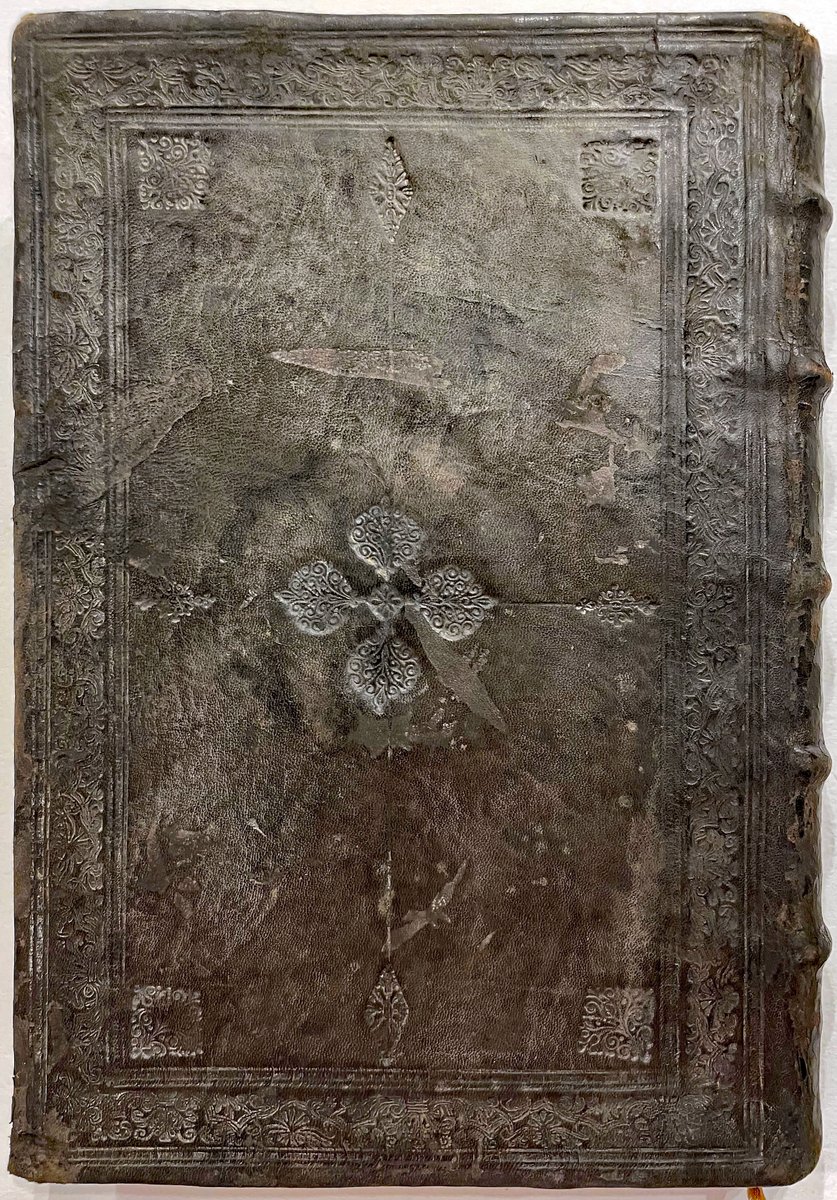
THE SECOND EDITION
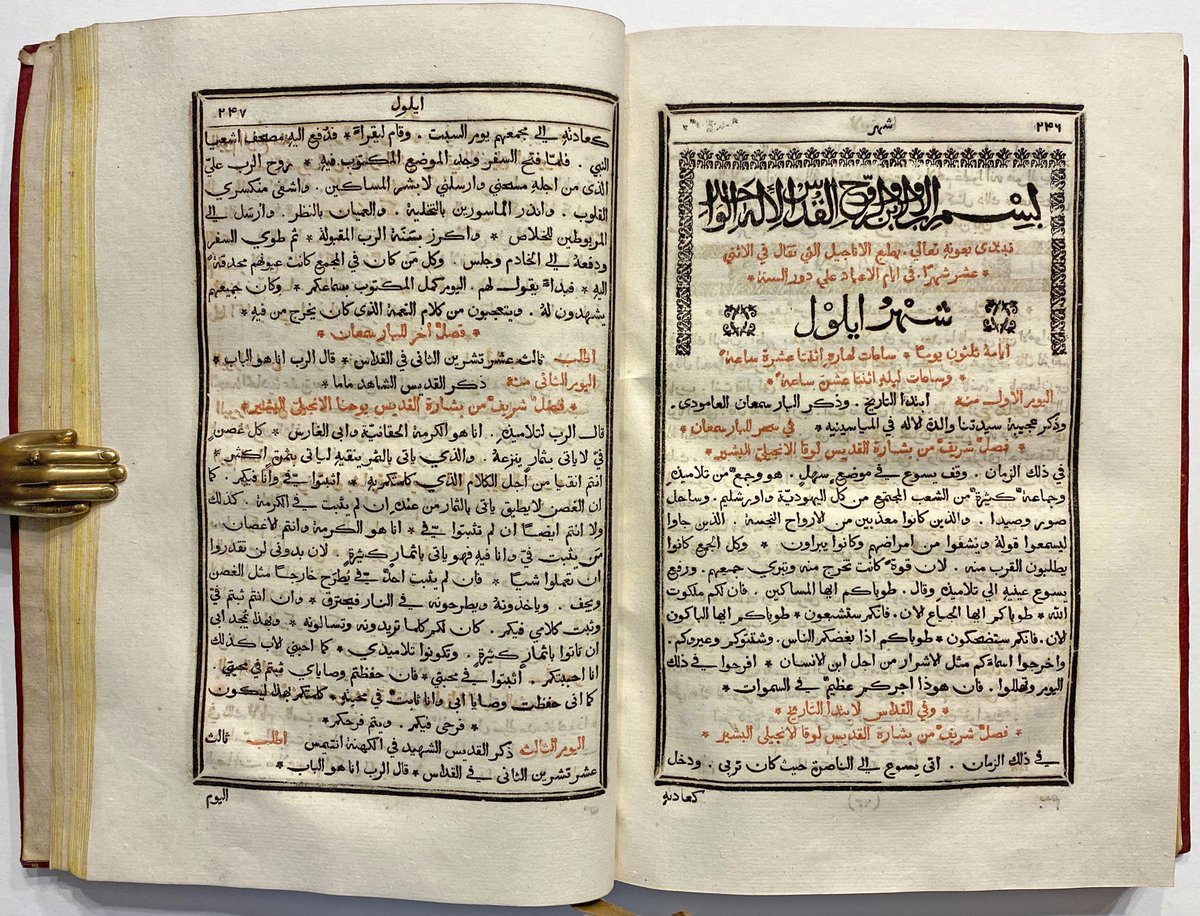
Kitab al-Injil [Book of the Liturgical Gospels] The Evangelion of the Greek Church, Monastery of St John the Baptist, Dair al Yuhanna, Shuwair, Lebanon, 1818.
Again printed in red and black, and bound at the monastery in red goatskin with gilt decorations. 4/
Kitab al-Injil [Book of the Liturgical Gospels] The Evangelion of the Greek Church, Monastery of St John the Baptist, Dair al Yuhanna, Shuwair, Lebanon, 1818.
Again printed in red and black, and bound at the monastery in red goatskin with gilt decorations. 4/
![THE SECOND EDITION
Kitab al-Injil [Book of the Liturgical Gospels] The Evangelion of the Greek Churc...](https://pbs.twimg.com/media/FVrbAF3WIAAmd0k.jpg)
![THE SECOND EDITION
Kitab al-Injil [Book of the Liturgical Gospels] The Evangelion of the Greek Churc...](https://pbs.twimg.com/media/FVrbAHaXsAAFDy_.jpg)
The printing office of the Melkite monastery of St. John the Baptist at al-Shuwayr in the Lebanese Kisrawan mountains, was operative between 1734 and 1899, during which time it produced in all 69 Arabic books, including re-editions. 5/
THE THIRD EDITION
Kitāb al-injil̄ al-sharīf al-tạ ̄hir wa-al-miṣbāh al-munir̄ al-zah̄ ir [Book of the Liturgical Gospels], Monastery of St John the Baptist, Dair al Yuhanna, Shuwayr, Lebanon, 1861.
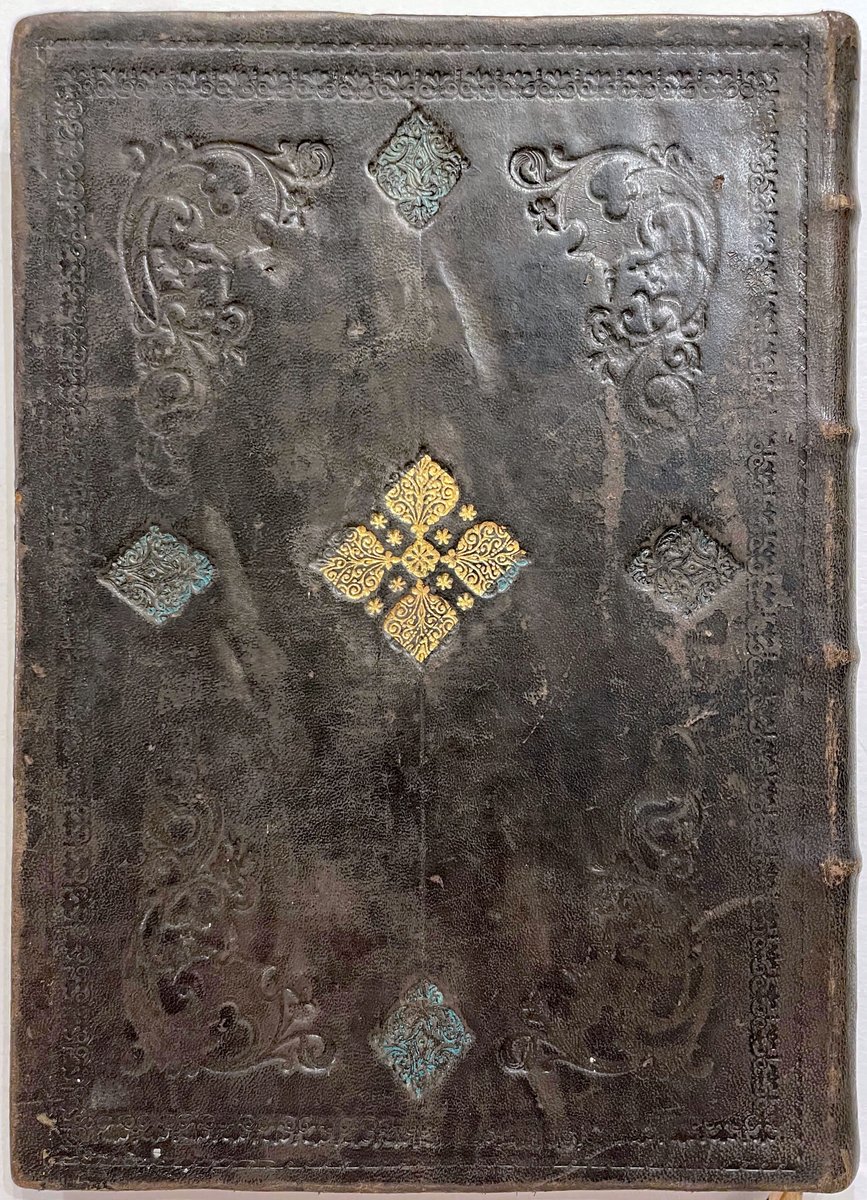
Black Shuwayr morocco stamped in gold and in blind, edges stained yellow. 6/
Kitāb al-injil̄ al-sharīf al-tạ ̄hir wa-al-miṣbāh al-munir̄ al-zah̄ ir [Book of the Liturgical Gospels], Monastery of St John the Baptist, Dair al Yuhanna, Shuwayr, Lebanon, 1861.
Black Shuwayr morocco stamped in gold and in blind, edges stained yellow. 6/
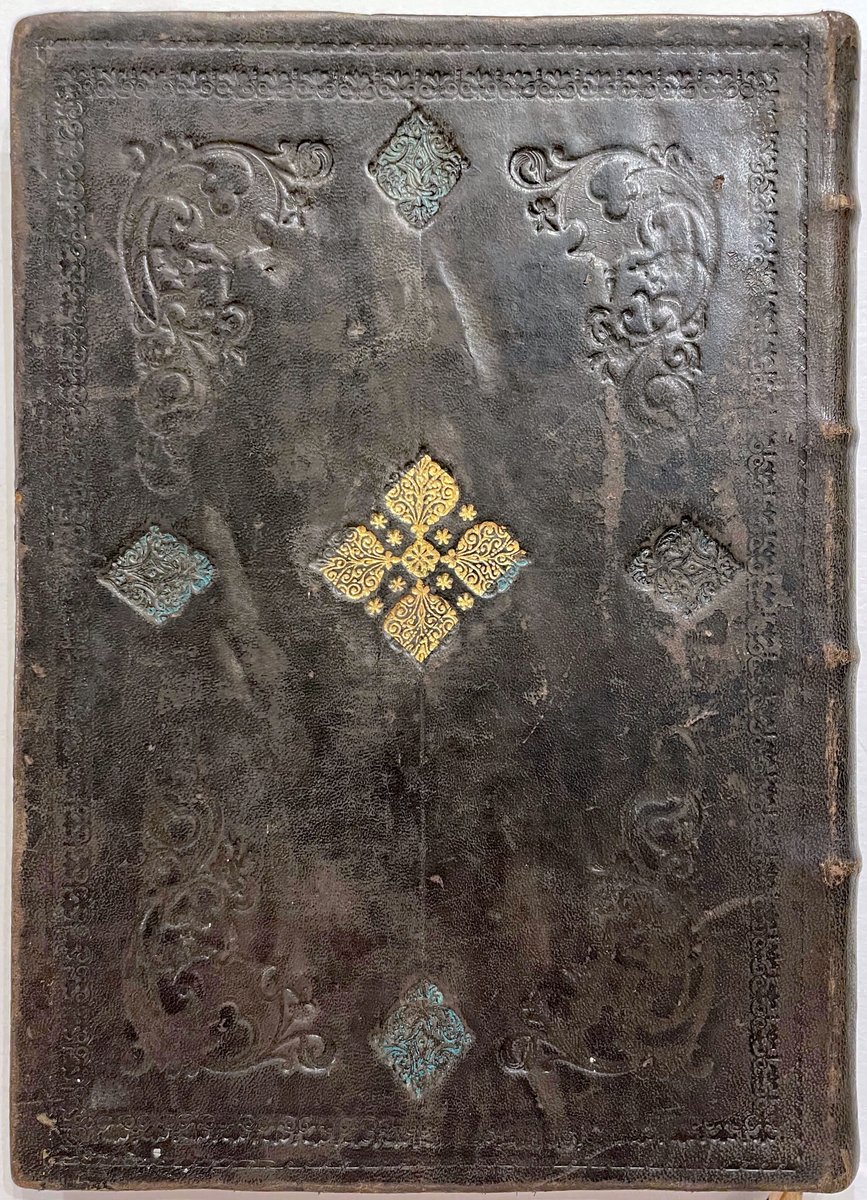
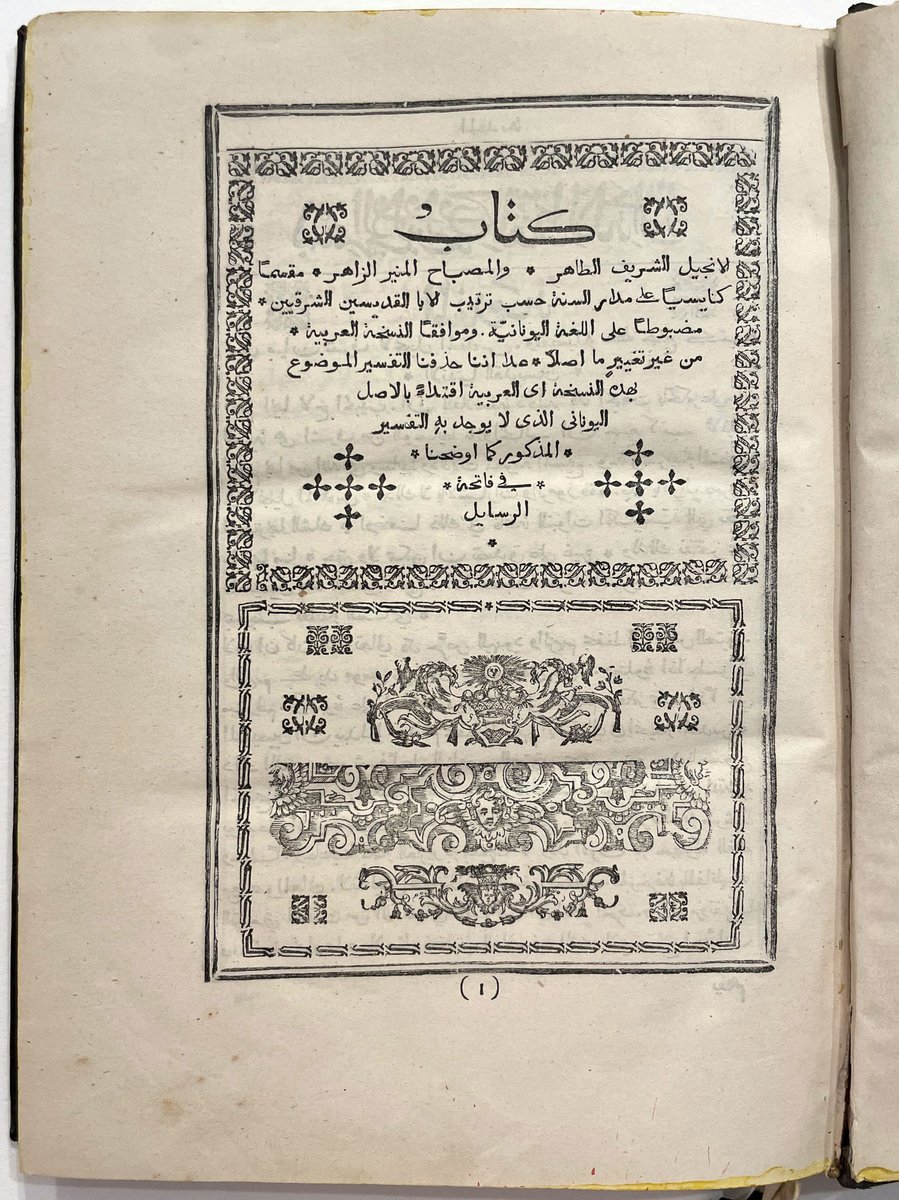
The third edition, of 1861, is an almost word-for-word reprint of the 1776 edition, with the addition of four lithographed portraits of the Evangelists. 7/
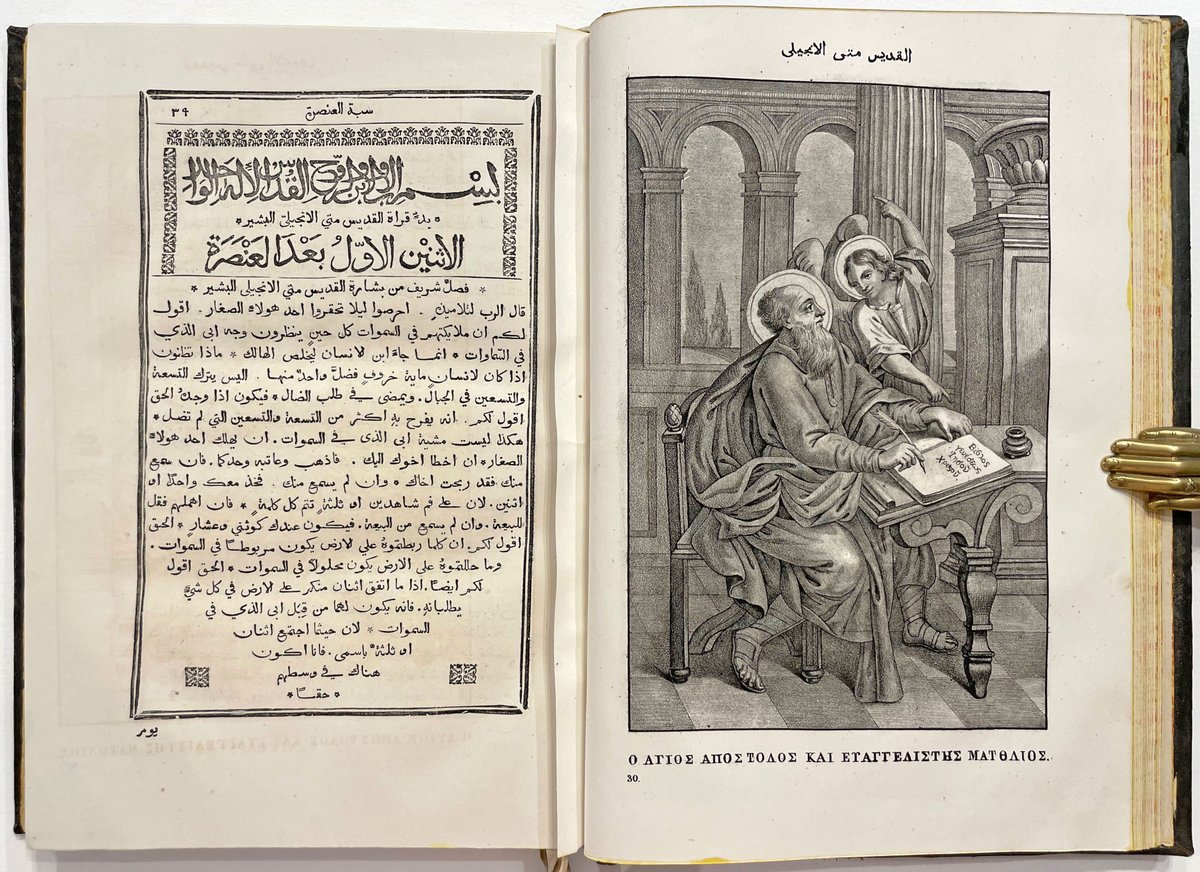
It's fascinating to see both the continuities and the differences of these three books, bound at Shuwayr over eighty years apart. The binding of the 1861 Evangelion (at left in the photo) in particular displays a striking mixture of the old and the new... 8/
.....the large fleuron stamps used to form the central motif are apparently exactly the same as those used on the bindings of the 1776 and 1818 editions, but the style of the corner-piece blind-stamps ultimately derives from the French late Romantic style. 9/
Loading suggestions...