
In the Spring of 1071, a great host massed on the Bosphorus. Frankish, Turkic, Bulgarian, Armenian, Georgian, Norse, Rus, Greek, and German echoed through the camp as mercenary contingents & army regiments joined the swelling ranks of the army.

Men from garrisons in Syria to the Danube were called up. The finest warriors of Byzantium joined the host as a part of the Emperor’s elite. Varangians & the Scholai, Hetaireai, and Stratelatai all assembled to provide Romanos with a force as capable as any on the planet.
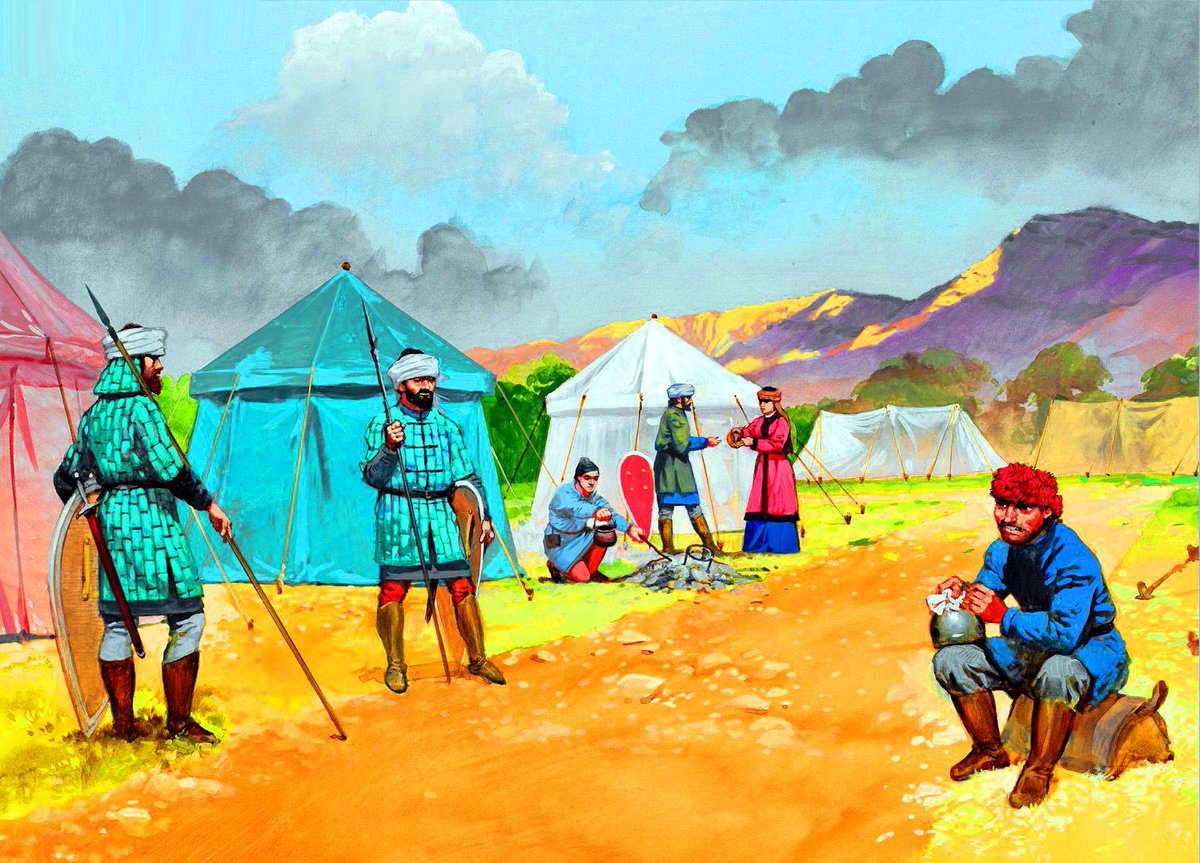
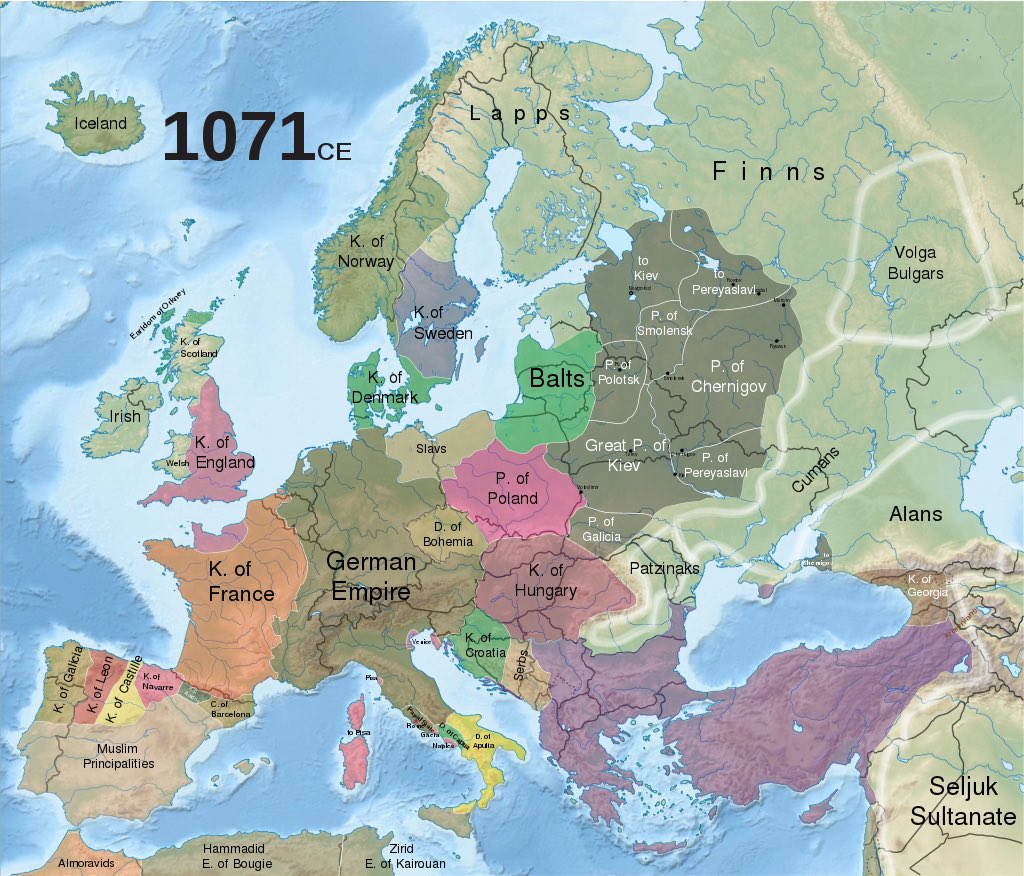
The army was a exhibition of the Byzantine world. All the lands in which the coin & reputation of the Emperor held sway were represented.
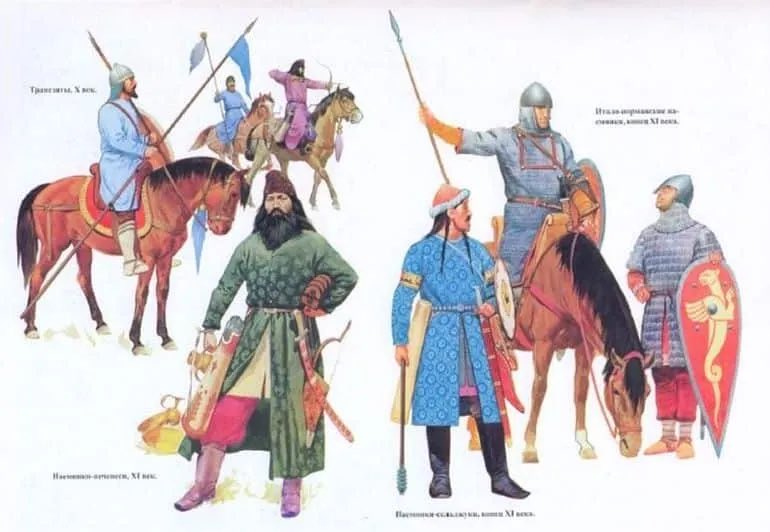
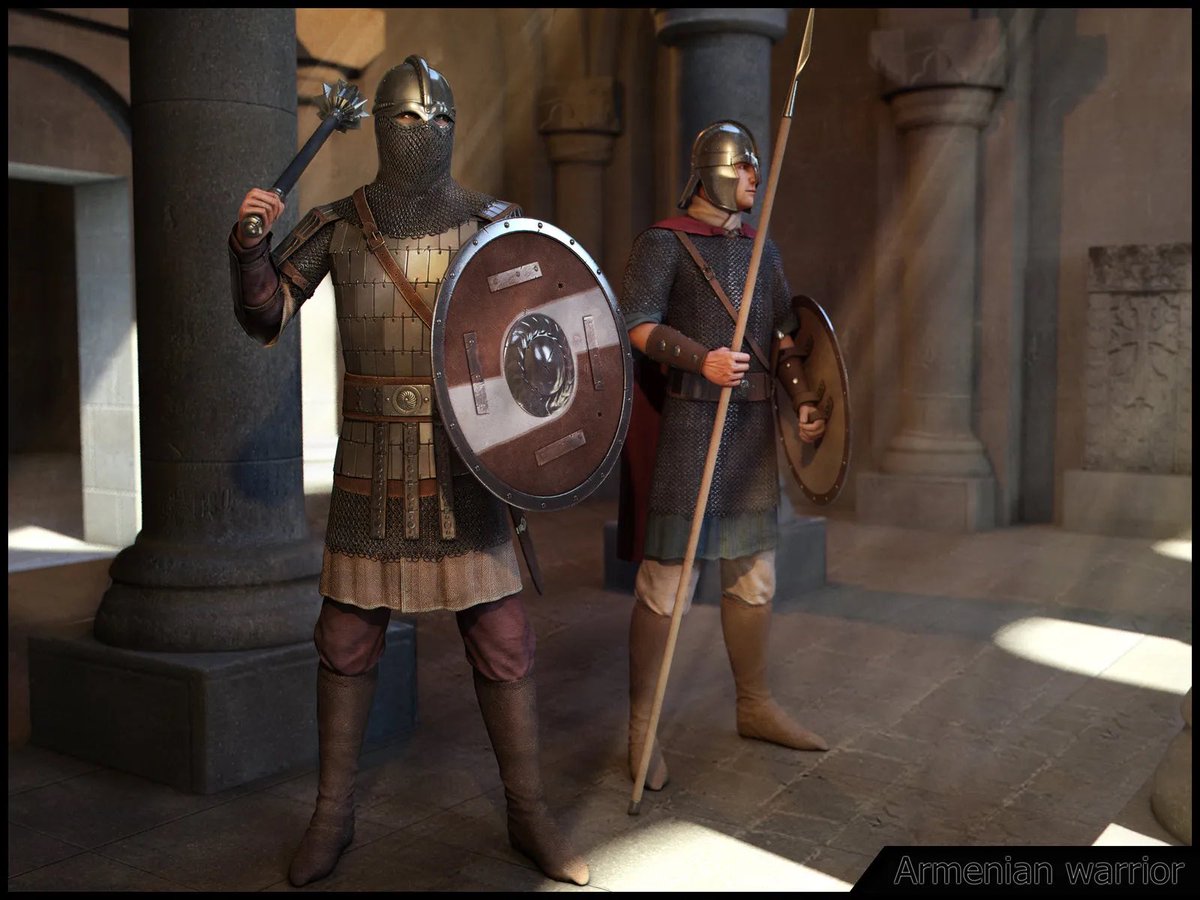
The camp held the warhorses & lances of Latin Knights, the ponies & bows of Turkic nomads, the axes of the blonde northmen, the bristling spears of the sturdy mountain folk of Armenia, and, of course, the diminished, yet proud, warriors of Byzantium itself.
Romanos assembled roughly 40,000 men. 10,000 from the Tagmata, perhaps slightly more with the inclusion of some of Romanos’s palace guard contingents. Many thousands more were thematic soldiers & less reliable retinues & levies raised by border lords (archontes).
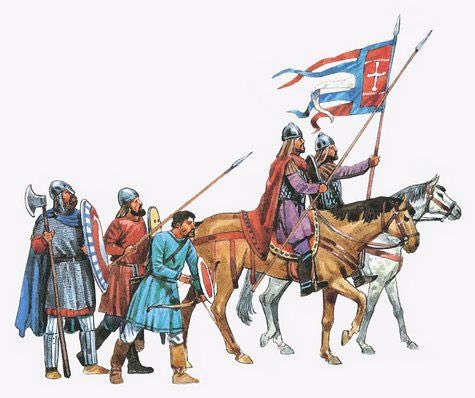
Concrete numbers for the mercenaries are hard to estimate but thousands of Armenians, Georgians, and Bulgarians must have bolstered the infantry, as they had for centuries. Thousands more Turkic horsemen had been recruited on the Danubian frontier & beyond.
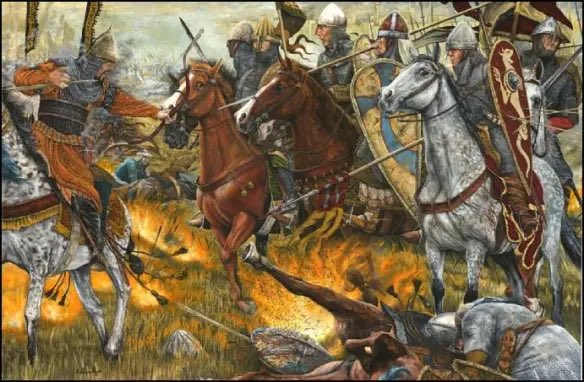
The Latins were well represented, Roussel de Bailleul commanded 500 Frank/Norman knights. As Romanos set off toward the East, envoys were sent to Alp Arslan who was besieging the city of Edessa. The Sultan agreed to a truce, moving on Aleppo & his real enemy, the Fatimids.
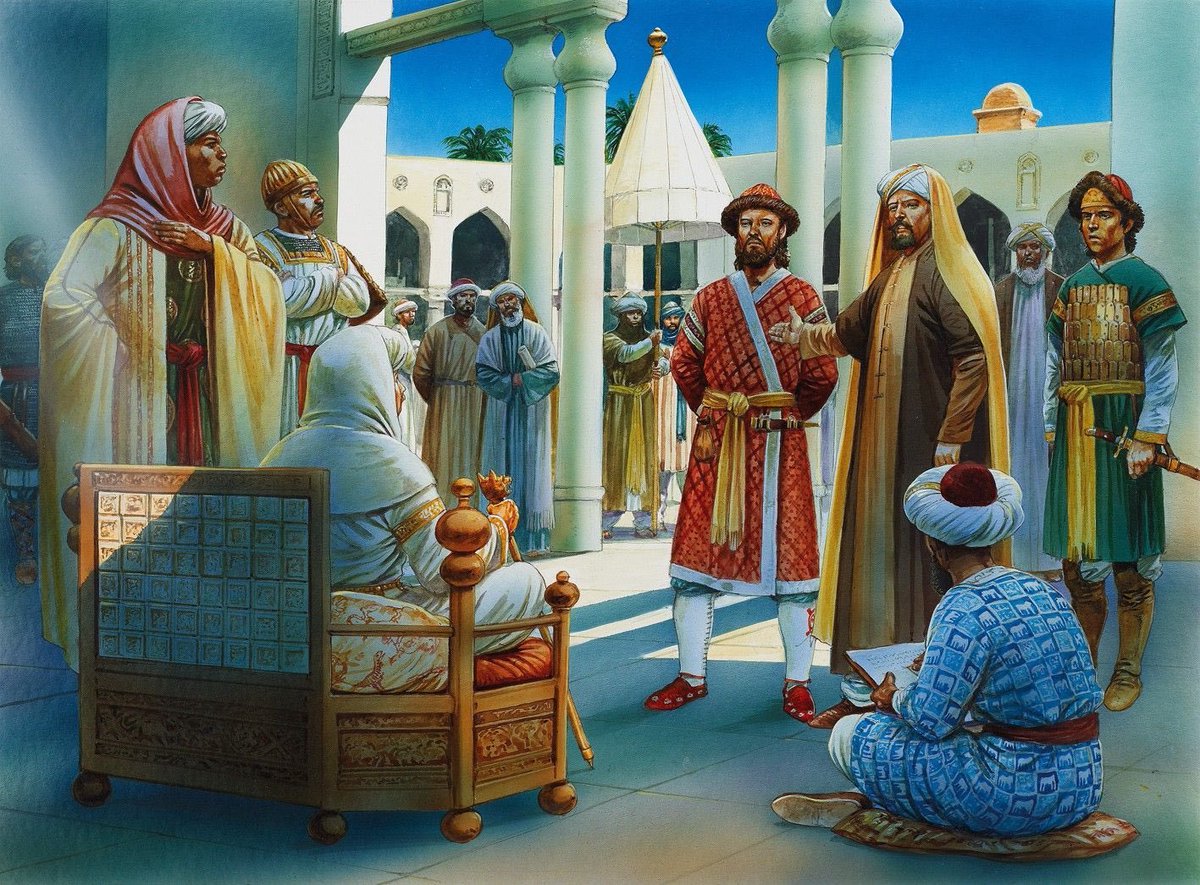
On the surface, this bit of trickery is typical of the “dastardly”Byzantines. However, the Sultan & Romanos both knew Alp could not control the Turkic tribes under his suzerainty.

Unable to let them continue their steppe lifestyle of raiding & pillaging in his sultanate, Alp pushed them to the borders of Byzantium, where for decades they had ravaged Anatolia. Diplomatic maneuvering is also highly prized in Byzantine military manuals.

This move would provide Romanos with critical knowledge on Alp’s forces, disposition, and the mood of his army as well as the freedom to maneuver uncontested in the mountains of Armenia. He aimed to retake lost fortresses & secure the mountain passes from would-be raiders.
Also, should Romanos take Manzikert, he would be in prime bargaining position with the Seljuks. Alp & his army campaigning in Syria would be isolated from their power base in the East & Romanos could march down from the mountains to the Euphrates basin like Heraclius before him.

This position could force Alp to fight a losing battle, allowing Romanos to also shatter the core of the Turkic warriors threatening his realm, extract a more favorable treaty from Alp, or cause chaos in the nascent Sultanate. This strategy showed Romanos’s strengths as a leader.
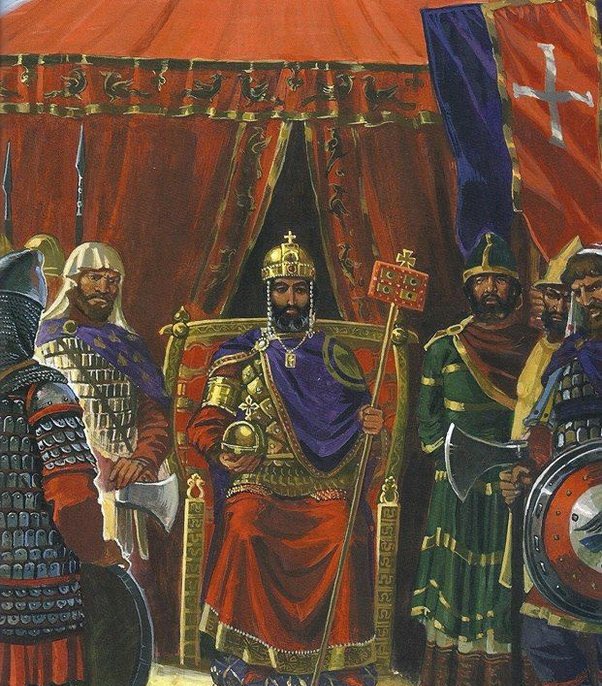
However, Romanos’s judgement was not ironclad & despite his earnestness & talent, issues plagued his plans. As the army lumbered across Anatolia, these issues started to boil over. Firstly, Romanos hadn’t learned the value of a light baggage train from his nimble foes.
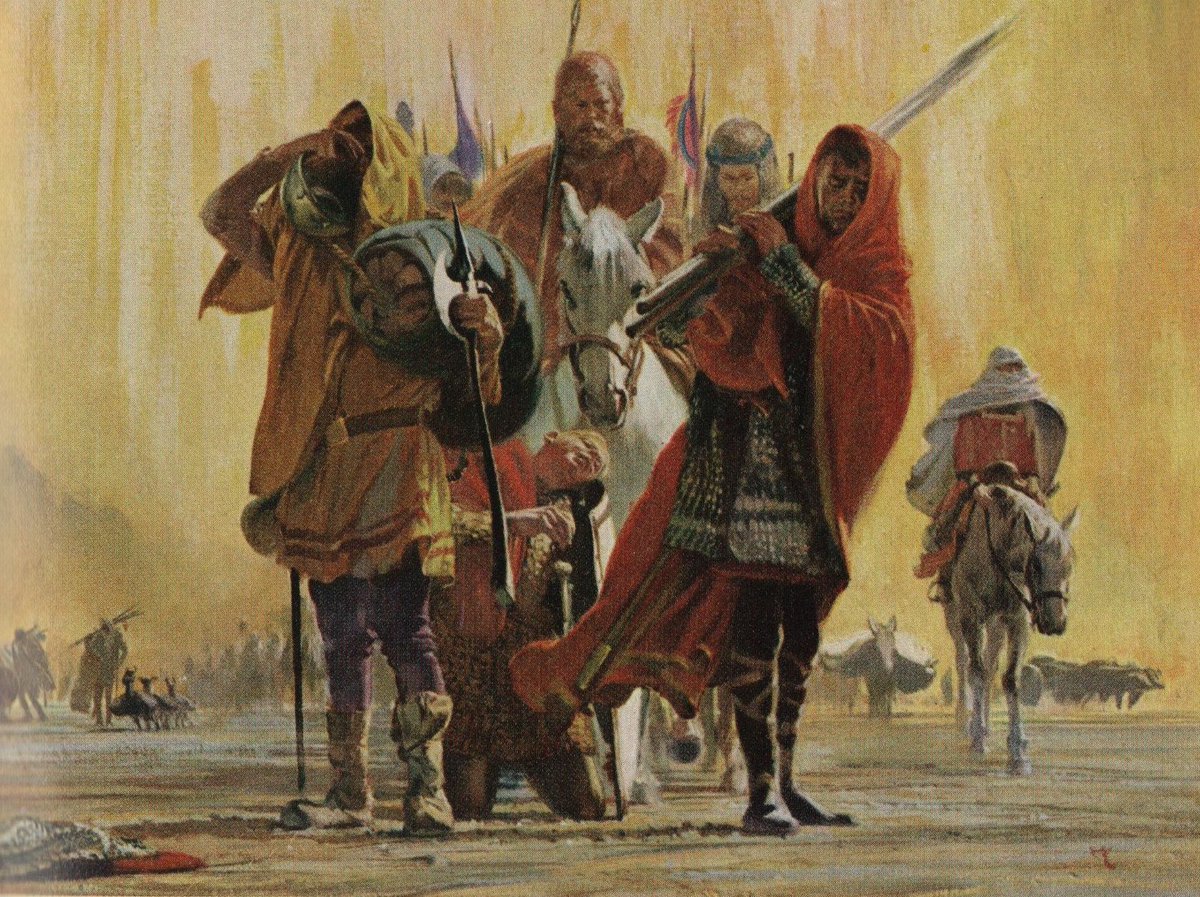
Romanos brought a lavish baggage train & its lumbering mass of colorful tents, mules, & servants slowed the army & did little to endear him to his troops. Soon, someone sabotaged & destroyed it. Romanos, feeling unsafe, camped separately from the army, hindering his control.
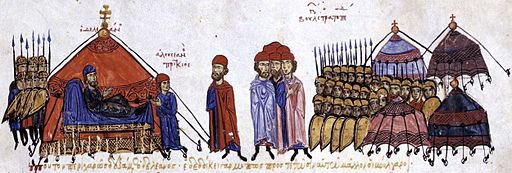
Discipline issues also boiled over. German mercenaries plundered their way through Anatolia, making the local populations suffer greatly. Romanos, unable to control them, sent them to a remote garrison, weakening the army & damaging his reputation among the soldiers & locals.
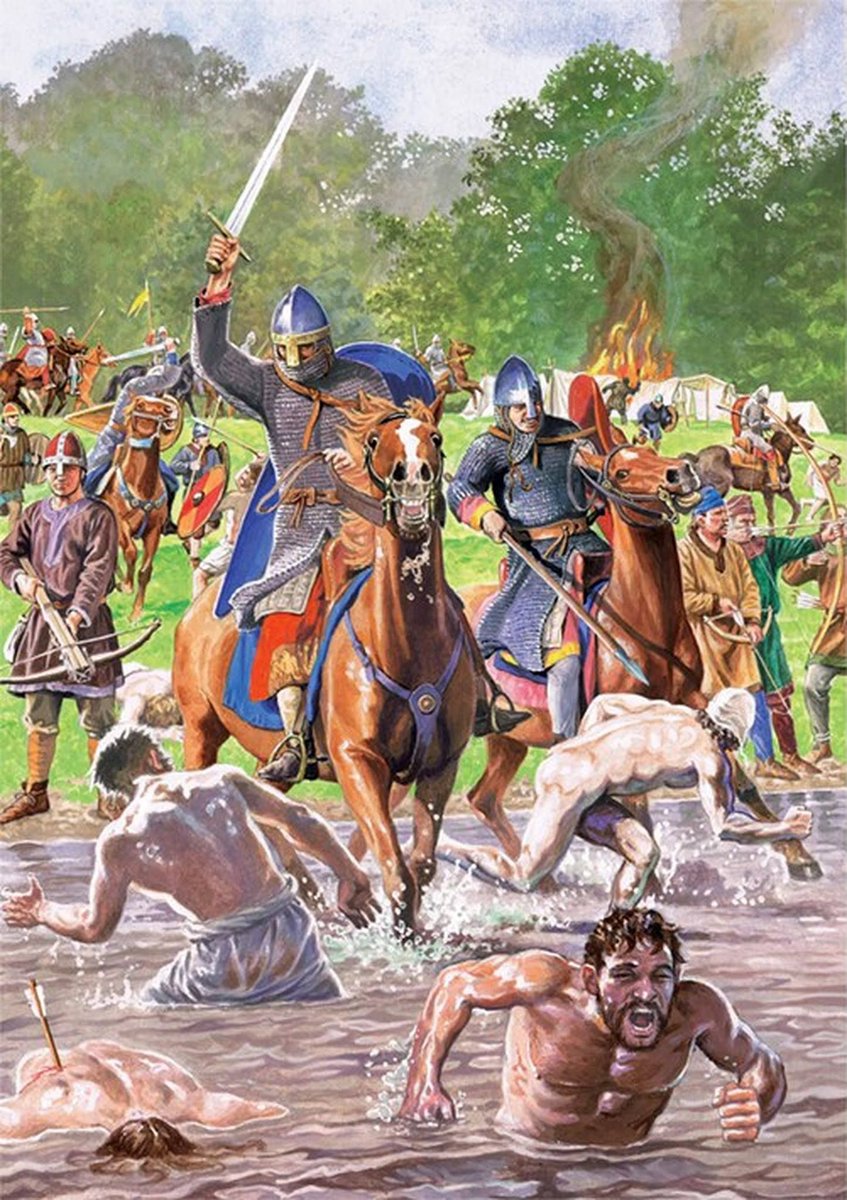
The army snaked to Theodosiopolis in June. News arrived that Alp had lifted the siege of Aleppo & was rushing back to Armenia, many of his men deserting. Romanos held a council of war with his generals at the fortress. Some desired to continue the march into Seljuk-held lands.
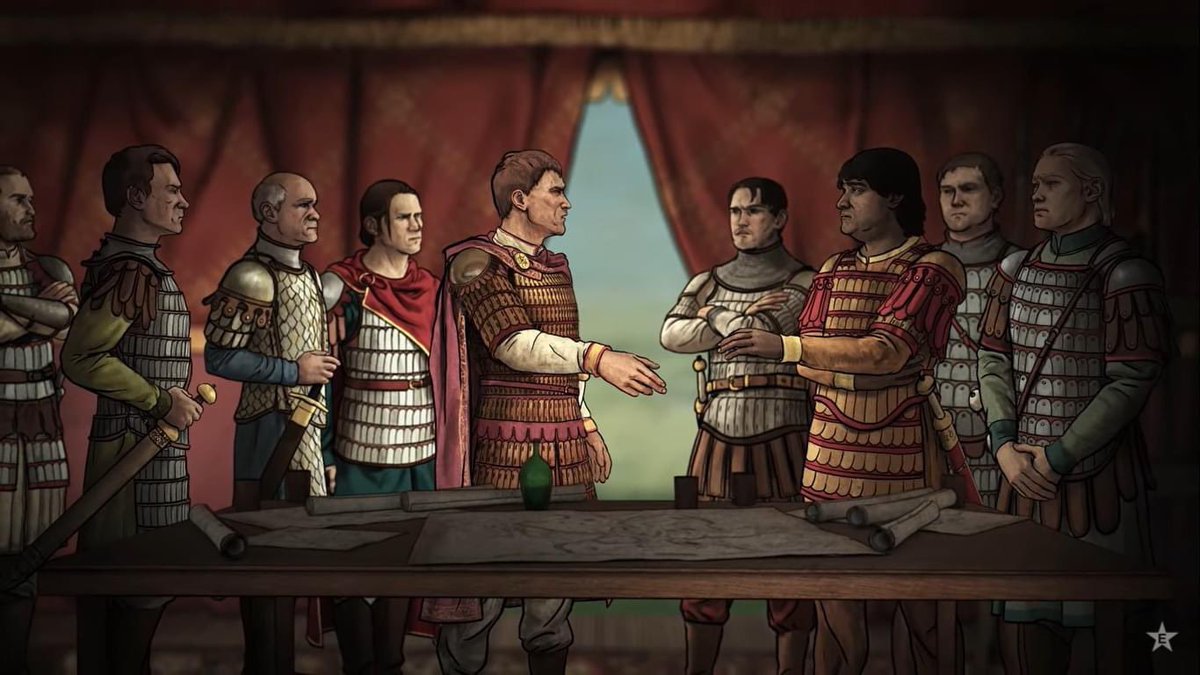
General Nikephoros Bryennius, considered by his peers to be the best tactician alive, advised they fortify their position at Theodosiopolis. He was overruled & the army continued eastward. Romanos believed the Seljuk army was still far-off & weak, he needed a decisive victory.
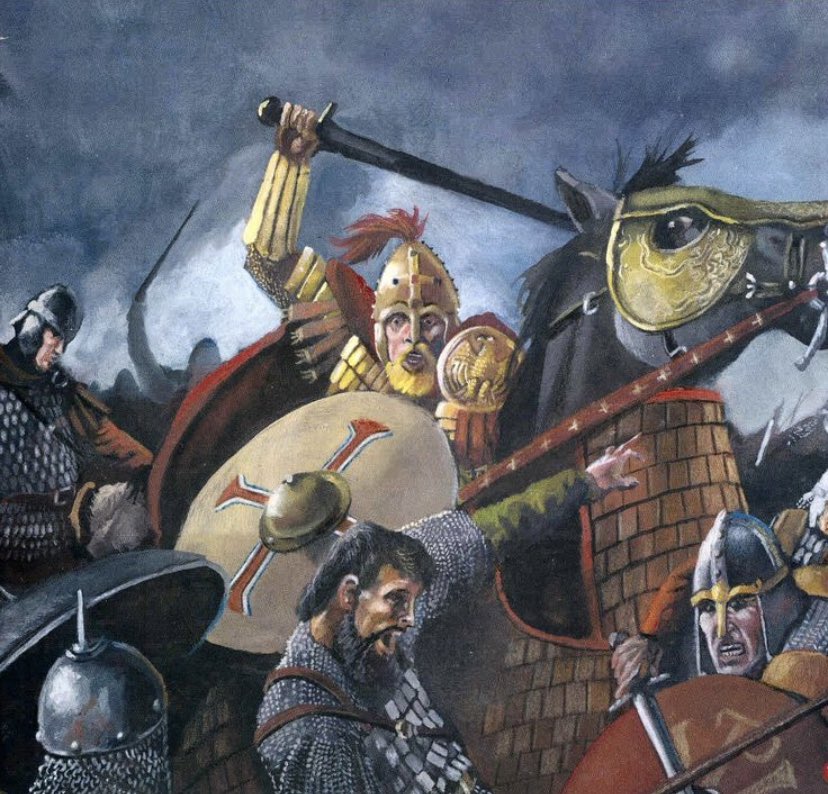
Thinking he still had time to seize key terrain in the mountains, Romanos made for Lake Van. He split his forces to allow for better logistical support & rapidly seize the forts of the region before Alp could react. General Tarchaniotes was sent to the south to take Khliat.
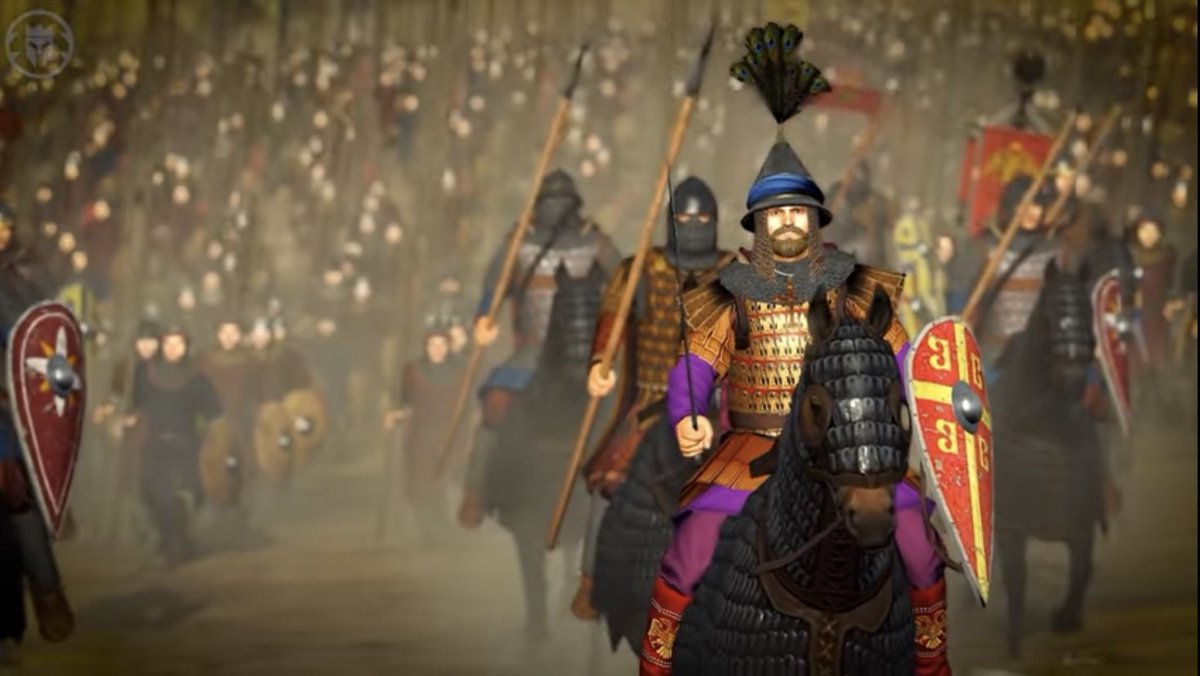
Tarchaniotes’ 20,000 men, including many of the Franks/Normans, some Varangians, & Pechenegs, (much of the army’s elite) would secure the southern passes from the Seljuks. Romanos made for Manzikert with 20,000 men, believing he could take the fortress & region quickly.
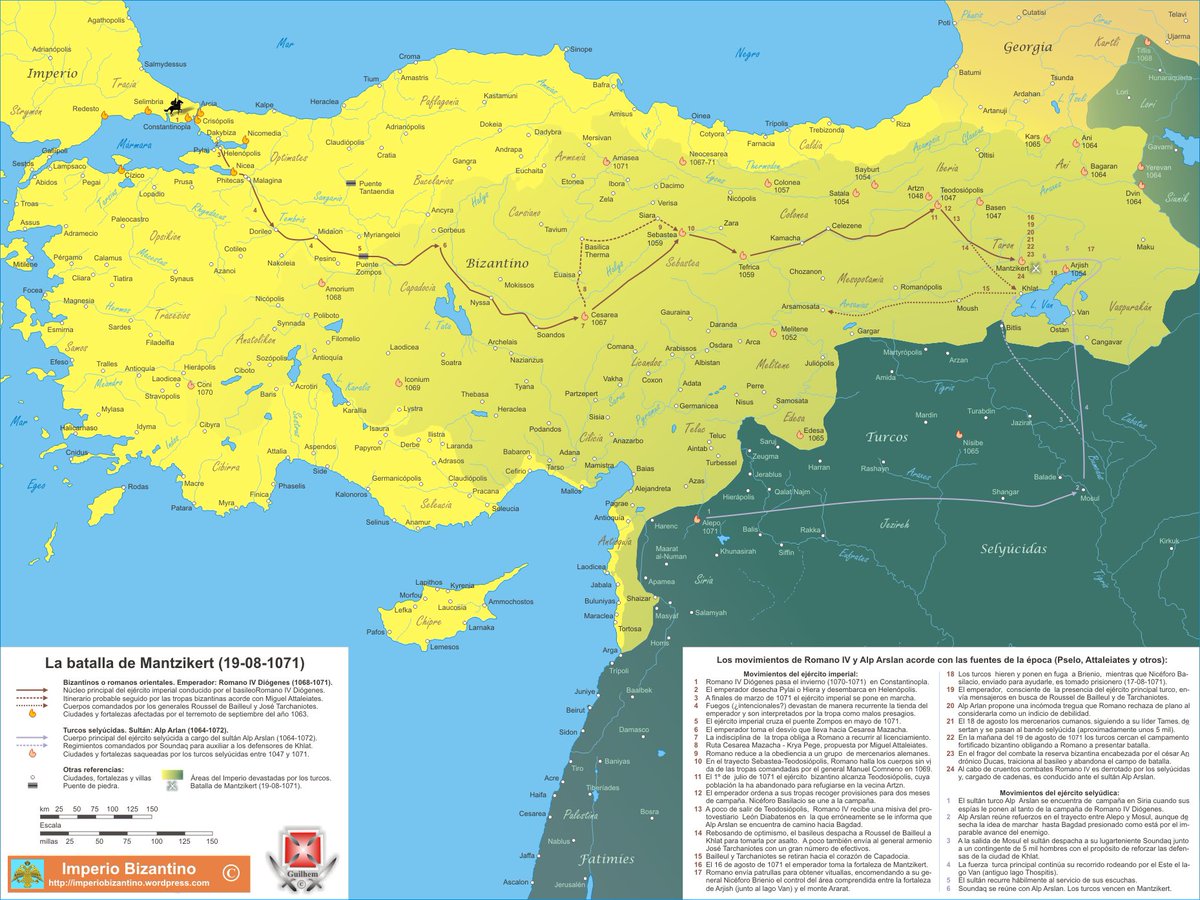
However, after a lightning march, Alp Arslan was already in the area and his scouts tracked Romanos’s every move. Romanos knew nothing of Alp’s 30,000 strong army. Islamic sources claim Alp first crushed Tarchaniotes’s army. However, this is not mentioned in Byzantine sources.

Considering Tarchaniotes & Roussel de Bailleul survived the Manzikert campaign, I believe they retreated relatively intact from a surprise battle with the Seljuks to regroup & reorganize. This would be of little note to Byzantine chroniclers during these chaotic years.
Attaleiates is the only Byzantine who speaks about these events and claims Tarchaniotes fled at the sight of the Seljuk host. However, this is unlikely considering Tarchaniotes’ character & likely written to highlight the “Roman Decline” that is Attaleiates’ stated goal.
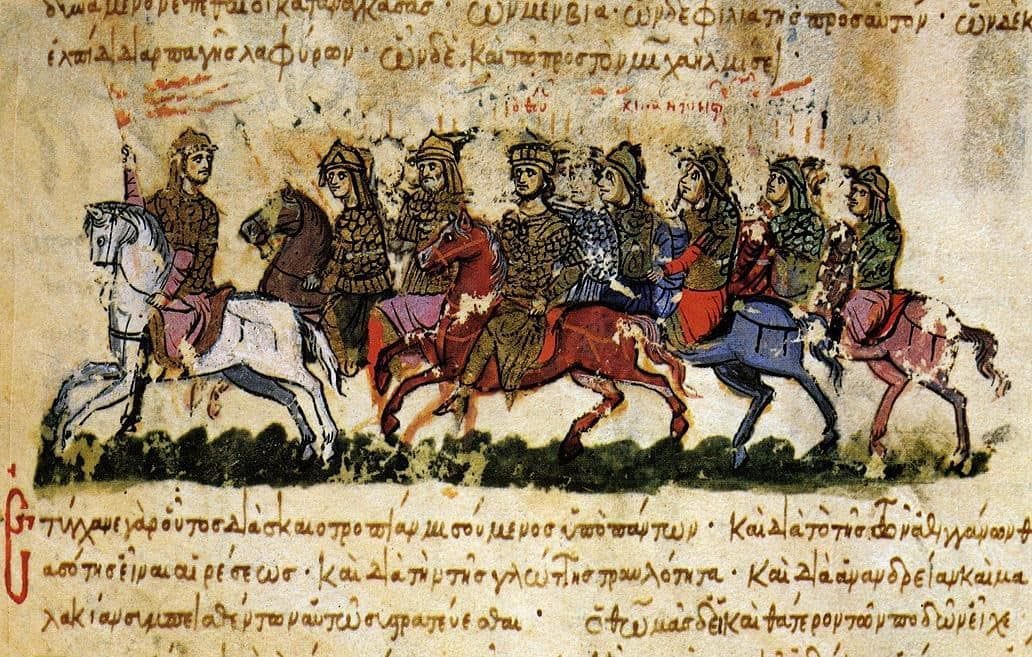
When Romanos reached Manzikert the Seljuk garrison surrendered immediately. On August 24th, 1071 Byzantine foraging parties on the rocky steppe outside the city were attacked by Turkish outriders of Alp’s army.
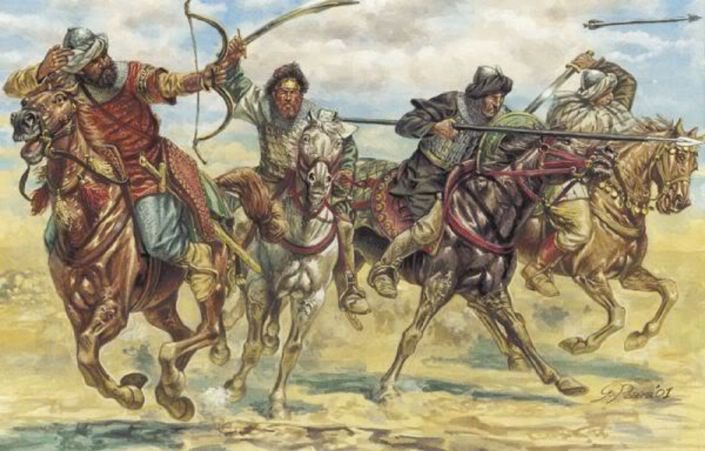
The Battle of Manzikert will unfold over the course of the next several days, blunder, treachery, and bad luck destroying Romanos’s dreams & changing the course of world history.
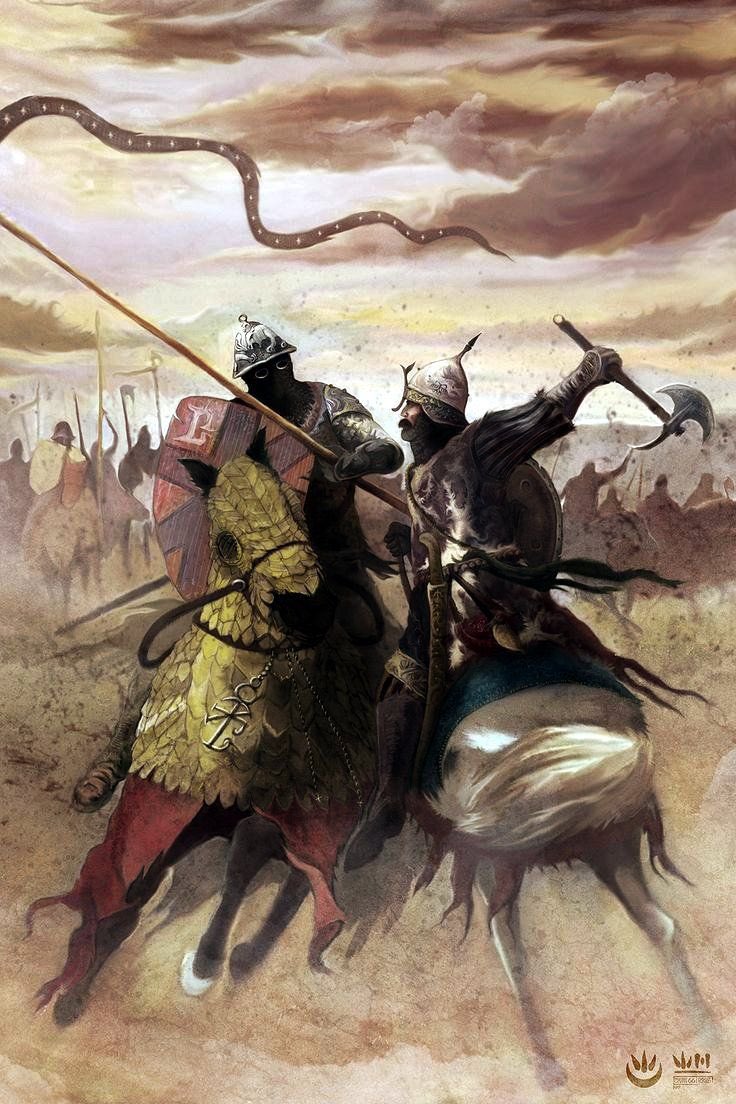
Our next thread will cover these events in detail & explore what transpired on that scorched Anatolian plain almost a millennia ago.

Loading suggestions...