

The P/E bias 🧵
Probably the least talked about bias in investment community but MOST important bias that exists is the P/E bias. 99% of investors are affected at least 50% of time by this bias. We look at P/E ratios.
Probably the least talked about bias in investment community but MOST important bias that exists is the P/E bias. 99% of investors are affected at least 50% of time by this bias. We look at P/E ratios.

We already form an opinion on whether we want to own the company or not. Then, we try to look for confirming evidence that supports that bias to own a low pe company. psychologytoday.com
Such is the hold that graham’s original value teachings have on our psyche that a low pe becomes the rationale, & business analysis becomes a tool to rationalise the decision to own a low pe stock. In the market there are no absolutes. In fact, there are no rights or wrongs.

Having said that, we have to be cognisant about fact that what are other investors thinking. In essence we should be humble & first ask the Q why this stock is LOW pe. Is it low pe because we just had a 53% market crash (true for small caps for 2018 to 2020 low).
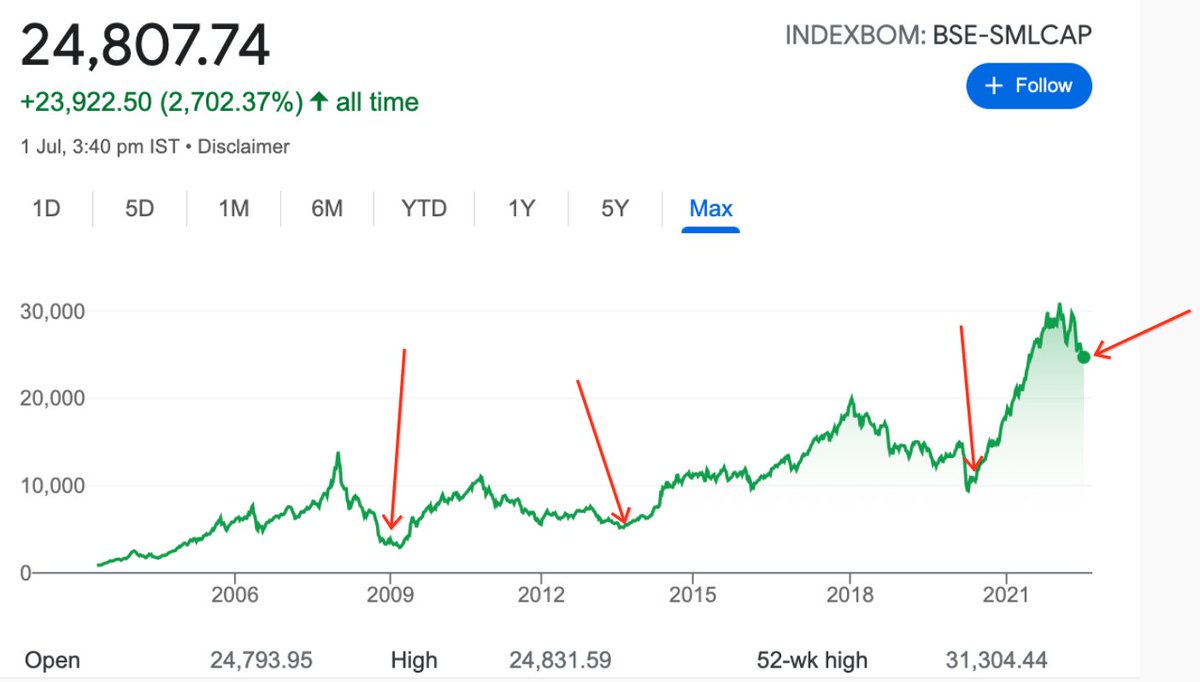
Then it probably is ok to own a low pe stock. But if we are in middle of roaring bull market, the base rate of success going after low pe stocks is low. Why is it low? Just think. Most important thing for us is be skeptical.
THis means, for a low pe stock, we need to ask “why is this so cheap?” Start by finding anti-thesis. Talk to investors & ex-investors. While investing is a lonely pursuit it is paradoxically more social than possibly any other pursuit.
It is like a group of people driving together towards a destination each in their own individual cars. For a high pe stock being skeptical means finding out whether it truly deserves a high valuation.
What are its competitive advantages, its TAM, its execution capabilities, its industry structure, its right to win. Other problems with PE is that earnings might not be normalized which is why business analysis matters. If we dont know the E, how can we know the PE?
Abnormal power costs abnormal freight costs, abnormal RM costs are just some of the problems our cos are facing. Look at this co. Screener PE of 28.8.
screener.in
screener.in
This is where the layered cake approach comes in. Type1 market participant looks at price alone. Type 2 at the screener PE. Type3 might see the P&L. Type4 will reach the annual report.
Type4 will be at an advantage because they will realize that large part of Other expenses is actually “freight costs” which is why the jump from 9cr to 17cr in Q4 is abnormal & a more reasonable other expenses in a normalized environment would be around 13 cr.
THis would add 3cr to PAT Mar-22 Q. We would end up with 8 cr PAT. Typr4 investor wont stop there. They know that we are truly paying for company’s current earnings power & that biz is not seasonal.
WHich is why they would be comfortable to annualize the Q4 pat to get 32cr of earning power. With some margin of safety they would estimate co can do 25-30cr annual profits in a year as it stands today. That same co goes from being 29 PE to 18-20 PE.
THis is why business analysis matters. How can we value that which we do not understand? We are valuing cashflows. We need to Understand the cashflows.
Loading suggestions...