

COVID-19: T-cells may play harmful role in Lewy body dementia
Today is the finale, Day 7 of T-cell week so why not celebrate with some T-Cell bits while you read how CD4+ T-cells contribute to neurodegeneration in Lewy body dementia ( ncbi.nlm.nih.gov ) H/T: @MeetJess 🧵1
Today is the finale, Day 7 of T-cell week so why not celebrate with some T-Cell bits while you read how CD4+ T-cells contribute to neurodegeneration in Lewy body dementia ( ncbi.nlm.nih.gov ) H/T: @MeetJess 🧵1

Lewy body dementia (LBD) is a disease associated with abnormal deposits (alpha-synuclein protein) in the brain called Lewy bodies and the degeneration of neurons ( nia.nih.gov ). 2/
These deposits affect chemicals in the brain whose changes can impact thinking, movement, behaviour and mood. This is one of the most common causes of dementia. 3/
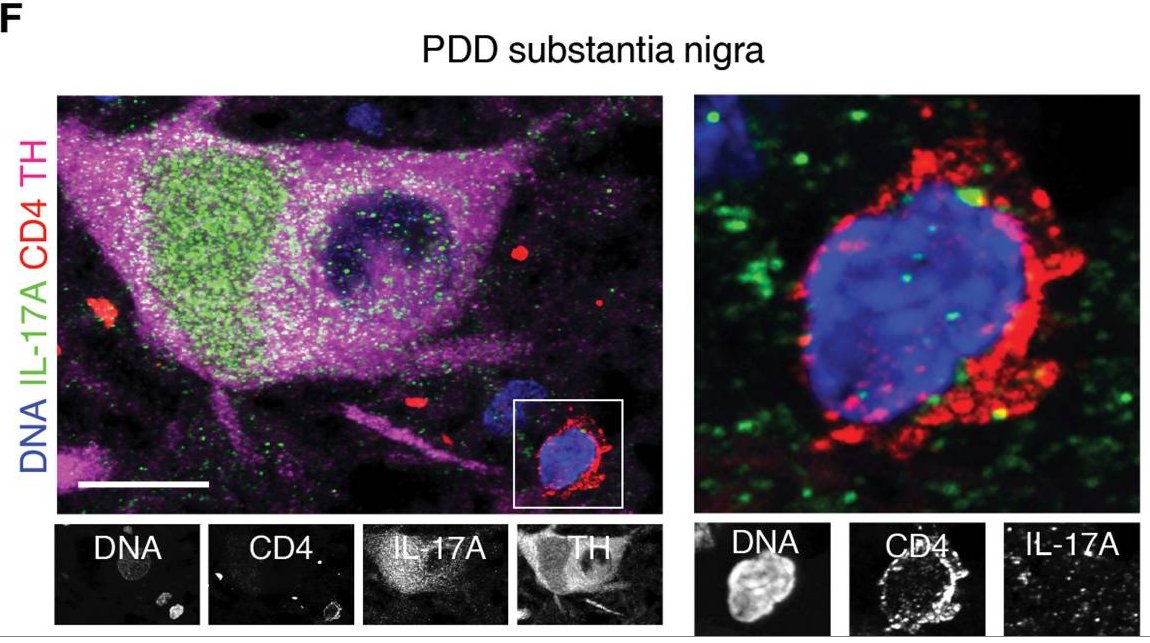
Researchers found that CD4+ T-cells expressing CXCR4 can travel to the brain and destroy neurons where T-cells were observed next to the Lewy bodies in the brain ( nia.nih.gov ). 4/
The T-cells seem to be reacting to the alpha-synuclein deposits but rather than protecting the body from pathogens, the immune system could be in part causing the dementia (autoimmunity). 5/
You can see in the image the CD4+ T-cells (red) adjacent to a neuron (blue) in the substantia nigra region of the brain which is essential for how your brain controls body movement, affects learning, mood, judgement, and decision-making among other things. 6/
A comparison of cells in spinal fluid samples from healthy older adults and people with Lewy body dementia also found upregulated expression of CXCR4 in CD4+ T-cells and higher than normal levels of CXCL12 protein of people with LBD. 7/
Together these proteins may play a role in driving the migration of T-cells into the brain, notably CXCR4 regulates cell migration. 8/
The researchers propose that the CD4+ T-Cells travel to the brain, react against the Lewy body deposits and secrete an inflammatory substance which can lead to neurodegeneration. 9/
The study concludes that therapies that can turn off the CXCR4-CXCL12 signalling mechanism may prevent these T-cells from entering the brain to destroy neurons. 10/
How does this relate back to COVID-19? It seems that CXCR4 is also upregulated in T-cells during COVID-19 infection and is associated with more severe and fatal COVID-19 disease ( ). 11/
CXCR4 was found to be highly expressed in COVID-19 patients. A study looked at finding new CXCR4 inhibitors as leads for the development of new COVID-19 therapies ( eurekaselect.com ). 12/
While some types of T-cells are helpful in fighting COVID-19 infection, others were associated with fatal COVID-19 ( medrxiv.org ). 13/
A robust non-suppressive COVID-19 virus specific T-cell response promotes recovery from severe COVID-19 while elevated numbers of circulating COVID-19 virus specific regulatory T-cells (Treg) and activated bystander CXCR4+ T-cells in the lungs were displayed in fatal COVID-19.14/
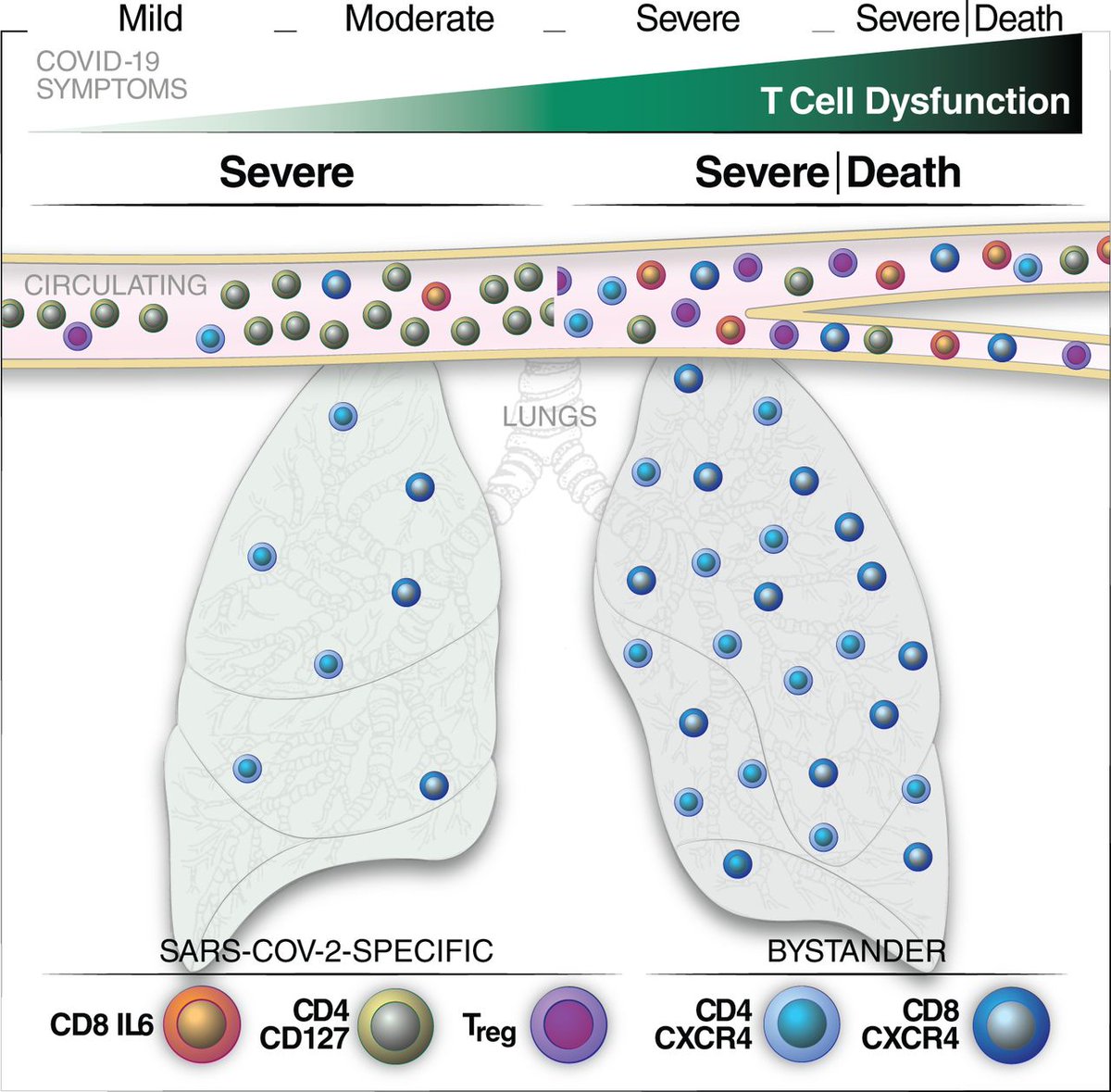
The study found that:
- Spike-specific CD127+ Th1 cells are increased in survivors of severe COVID-19
- Dysfunctional spike-specific T cells are characteristic of severe COVID-19
15/
- Spike-specific CD127+ Th1 cells are increased in survivors of severe COVID-19
- Dysfunctional spike-specific T cells are characteristic of severe COVID-19
15/
- Spike-specific Tregs and IL6+ CD8+ T cells are increased in fatal COVID-19
- Escalation of activated lung-homing CXCR4+ T cells associates with fatal COVID-19
16/
- Escalation of activated lung-homing CXCR4+ T cells associates with fatal COVID-19
16/
Thank you for spending T-cell week with me. I hope people were able to learn something new about T-cells with this information. 17/
You can jump back to Day 6 of T-cell week here ( ).
You can go all the way back to Day 1 of T-cell week here ( ).
Loading suggestions...