

Peter Brook, a theatre legend, and the first to take Hindu mythology to the world stage through his classic 'The Mahabharata'. Did you know that its soundtrack had three Tagore songs? This thread is our tribute to Brook, who passed away recently at 97. (1/9)

The Japanese maestro Tsuchitori Toshiyuki was the music director of the project. After extensive research, Toshiyuki & Brook chose the musicians for the project, more for openness & improvisational skills than for their skills in their area of specialization. (2/9)

The music team apart from Tsuchitori, included Kudsi Erguner, Djamchid Chemirani, Menzer and Tabrizi-Zadeh. Noted Indian violinist Subramaniam served as advisor to the project. (3/9)

The team comprised a Japanese multi-instrumentalist, a Turk flutist, two Iranian masters and a Dane with a jazz background. They worked closely with the actors at the rehearsals, trying out different ideas, and gradually arriving at a consensual, very open music. (4/9)
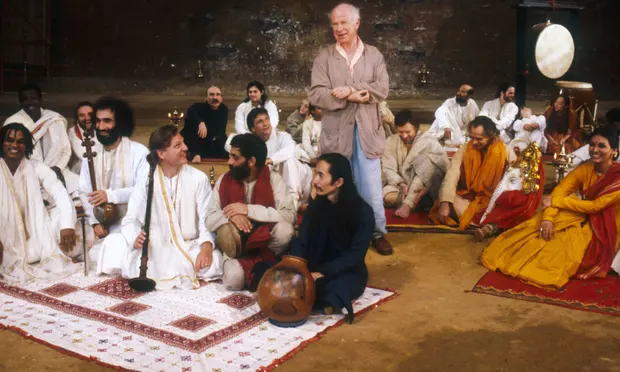
Based on four years of research on the music of Africa, Asia and the Middle East, Tsuchitori layered the music with the ideas and experiences of the other musicians. It was well conceived, expertly executed and successfully incorporated within the action of the play. (5/9)
Toshiyuki said what Brook wanted from him was not Indian, European, or any specifically identifiable music, but rather a primitive, aboriginal music. Brook also created a defamiliarization by integrating cultural elements from India with an ahistorical approach. (6/9)
Use of Rabindra Sangeet in the rendition of Mahabharata as a major musical theme can be considered as an example of that approach. It created a condition of removal from any identifiable cultural surface, not only for the audience but for the actors and the director too. (7/9)
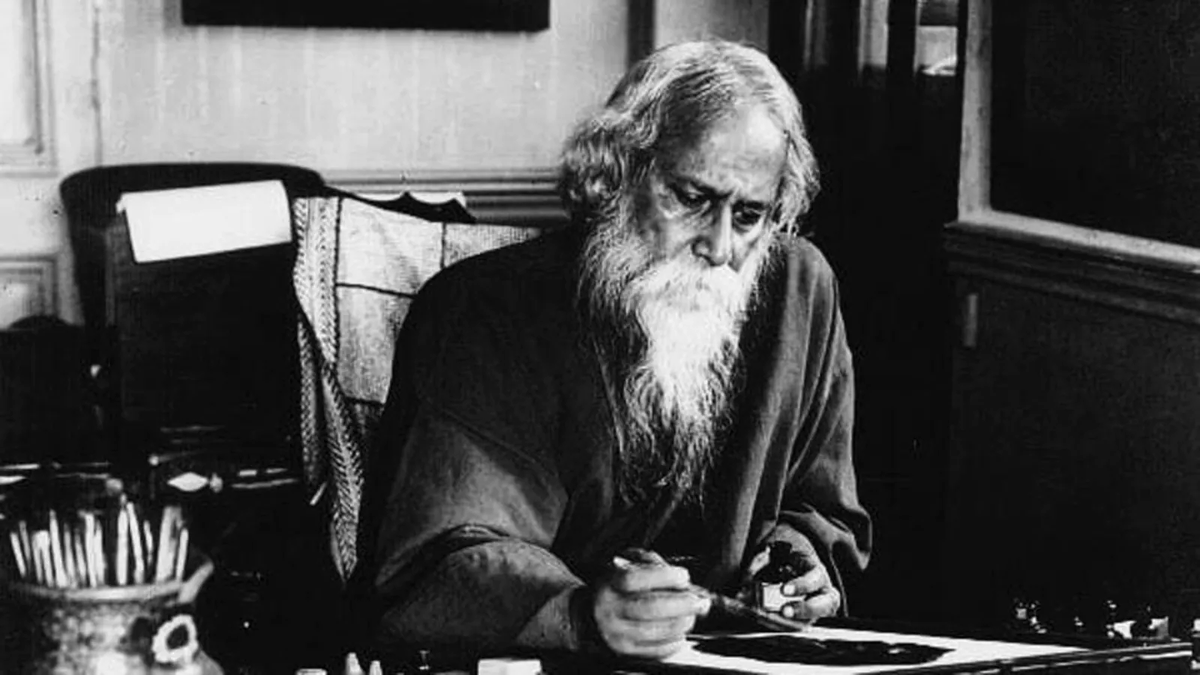
The production starts with the hauntingly beautiful Antoro Mamo Bikasito Karo sung by Sharmila Roy. The song, essentially a prayer and part of the 'Puja parjaye' was written by Tagore in 1907. Brooke incorporated the beauty in raag Bhairavi seamlessly in the epic. (8/9)

The other two Rabindra Sangeet used were Nibiro Ghono Andare and Bujhi Oi Sudure Dakilo More. The way all the three songs became an integral part of Brooke’s production went on to show the universal appeal of Rabindranath Tagore which transcends time and boundaries. (9/9)
Source: Mint, Scroll, LA Times, The Guardian, YouTube, Peter Brook's The Mahabharata: A Document of Cultural Encounter by Ganguly, Quarterly Journal of Film & Media. Peter Brook's Production of "The Mahabharata" at the Brooklyn Academy of Music by Devereaux, Asian Theatre Journal
Loading suggestions...