

1. Shri Ram Swarup on ‘5 Essential Concepts of Hindu dharma’
Shri Ram Swarup did not only do a pūrva pakṣa of the opponents of Sanātana dharma. He also told us who we are. His works on uttara pakṣa illuminate some of the most important aspects of Hindu dharma.
Shri Ram Swarup did not only do a pūrva pakṣa of the opponents of Sanātana dharma. He also told us who we are. His works on uttara pakṣa illuminate some of the most important aspects of Hindu dharma.
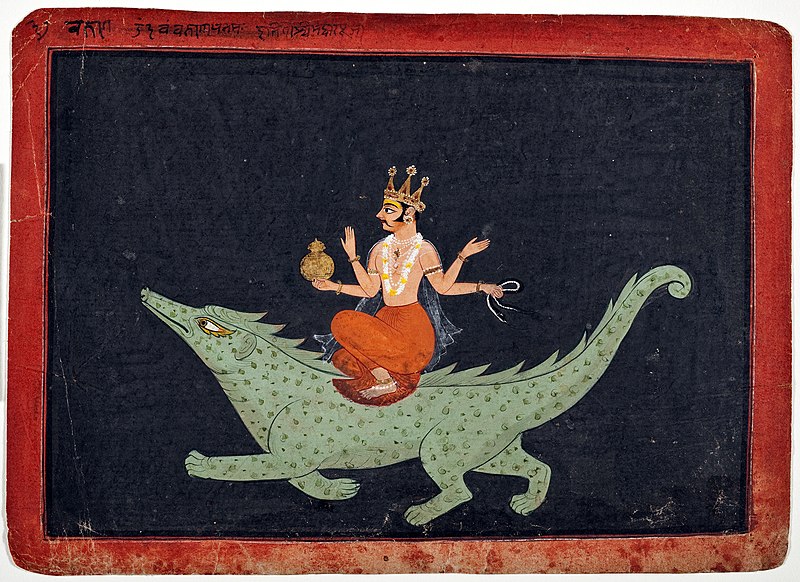
2. Ātmā, in his own words: (all quotes in the thread are derived from ‘On Hinduism’ of Shri Ram Swarup)
“The ancient sages studied man and for that they started with themselves; they turned their gaze inward and found there a vast internal life.”
“The ancient sages studied man and for that they started with themselves; they turned their gaze inward and found there a vast internal life.”
3. “Going still deeper, they discovered, beyond their more external being, another life or principle which takes another language to describe it; they found it self-existent, bodiless, pure, luminous and conscious;…”
4. “They found that it is in some way unborn and undying; that it does not come along with the body nor does it die with it; that it is beyond sorrow and decay; that it shines from within and it knows itself as self-evident.”
5. “They found that it is their very essence, their true Self; they called it âtman, which is pure, immortal, and untouched by evil.” Shri Ram Swarup maintains that this is why the concept of ātmā is central to Hindu dharma and its cosmology and cannot be dispensed with.
6. Brahman – Where there is ātmā, there is Brahman. It is a necessary corollary. Shri Swarup says: “They found that this innermost truth of their being is also the truth of all beings, that it is inside as well as outside, that it pervades all;…”
7. “That the âtman is also Brahman, that the immanent divine principle is also the transcendental principle and divine ground of all.”
8. In this way, Shri Ram Swarup explains that the central premise of Hindu dharma is antithetical to any monotheistic thought. Here ātmā is Brahman. While as in a monotheistic religion, it is the gravest sin to think that any human is equal to God.
8. Neti Neti (Not this. Not this.) – Nothing concrete or imaginary represents the supreme reality completely. Shri Ram Swarup says: “To much the seers had to say that - This too is anatma; that This too is not I; that This too is not That – the ‘neti neti’”
9. Sata cita ānaṅda - “They (rṣīs) taught that though this truth is beyond number, gender, definitions, descriptions and indications, yet it is a man's most intimate reality. It is the eye of his eyes, and ear of his ears, and in fact he is It and It is also all this.
10. “They taught that this reality is realized in the 'cave' of one's heart, and they also described it as sat, chit, ânanda…” (2) He stresses that the ultimate truth has to be realized through meditation and it is a matter of internal anubhūti.
11. Though this view is more of a transcendental view of the world, but it conveys a basic message: that it is impossible to completely capture the Supreme Reality in any language. The Ultimate is a matter of experience, not of language or any other human medium.
12. Monotheistic religions claim instead that the Ultimate Truth can be captured in the ‘favored language’ in a Book which can be forcefully disseminated to the entire world to spread the ‘good news’. No two systems can be as apart as monotheism and dharmic systems are.
13. Ṛta – The final important principle he defines after this is the principle of ‘Cosmic Order’. He says: “They taught that though this truth is Unmanifest, the Nameless and Formless (nirâkâra and nirguNa), it supports all manifestations, names and forms.”
14. “They saw in the world a great moral and spiritual order (rita), which knows no transgression, which sets up from within forces of self-correction and redress when violated.”
15. It is this cosmic order which is enshrined in all Hindu rituals and customs. Patterns of the cosmos and Nature which are invisible and ungraspable by human intellect become manifest to us when we follow these customs and rituals. That is the secret of Sanātana dharma.
16. These concepts how diametrically opposite monotheism is from dharma. While Hindu dharma says that truth is a matter of experience and is accessible to everyone, monotheism maintains that truth is the monopoly of the Messenger of God and everyone else needs belief in him.
===
===
Loading suggestions...