

Over $1 BILLION have been stolen from #blockchain bridges. If you're into #DeFi, a knowledge of bridges is a must-have.
Here's a guide on BLOCKCHAIN BRIDGES for serious-minded #crypto enthusiasts.
(the good & bad)
(1/15) 🧵
Here's a guide on BLOCKCHAIN BRIDGES for serious-minded #crypto enthusiasts.
(the good & bad)
(1/15) 🧵

In this thread, I'll cover:
→ Overview & meaning of blockchain bridges
→ Why we need bridges
→ Types of bridges
→ Risks & exploits on Bridges
→ Further readings.
Grab a seat, let's dive in!
→ Overview & meaning of blockchain bridges
→ Why we need bridges
→ Types of bridges
→ Risks & exploits on Bridges
→ Further readings.
Grab a seat, let's dive in!
A blockchain bridge connects two or more different blockchains or networks. It allows crypto users to transfer their assets from one network to another.
The thing is, blockchains networks are built differently. So, they work in isolation.
The thing is, blockchains networks are built differently. So, they work in isolation.
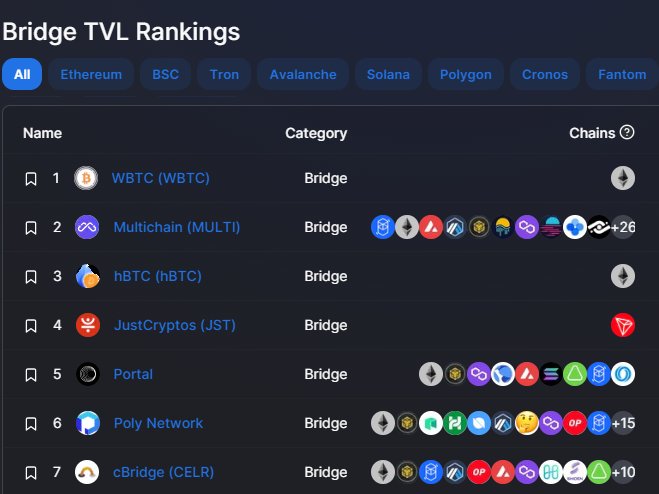
However, no network is all-powerful. Blockchains all have their particular strengths and weaknesses.
To get a complete DeFi experience, users need to interact with multiple networks that complement each other. Hence, the need for bridges.
To get a complete DeFi experience, users need to interact with multiple networks that complement each other. Hence, the need for bridges.
For instance, Ethereum's strength is in security and decentralization. At least for now, before the coming of the Merge.
Solana is faster. Cardano is more scalable. And the list goes on.
Solana is faster. Cardano is more scalable. And the list goes on.
Here's how blockchain bridges work in reality!
Let's say Peter has 50 ETH on Ethereum Mainnet and wants to use it on Solana. Usually, he can't use his 50 ETH on Solana because they're different networks.
Let's say Peter has 50 ETH on Ethereum Mainnet and wants to use it on Solana. Usually, he can't use his 50 ETH on Solana because they're different networks.
To do this, Peter will use a bridge network to ship his 50 ETH via Ethereum Mainnet to Solana.
Peter can convert his ETH on Ethereum to wETH on Solana using a bridge.
Peter can convert his ETH on Ethereum to wETH on Solana using a bridge.
Why Need Bridges to do the following:
→ To transfer assets and information across chains.
→ To compliment our current chain and access the benefits of other chains.
→ To allow developers from different chains to collaborate and connect on a project.
→ To transfer assets and information across chains.
→ To compliment our current chain and access the benefits of other chains.
→ To allow developers from different chains to collaborate and connect on a project.
There are different classifications of bridges based on their functionalities.
In this thread, we'll be focusing on trusted and trustless bridges.
In this thread, we'll be focusing on trusted and trustless bridges.
i) Trusted Bridges are bridges that are centralized. Here, users rely on third-party authorities to carry out bridging operations.
Examples are cross-chain-specific bridges are the WBTC bridge, Polygon POS bridge, etc.
Examples are cross-chain-specific bridges are the WBTC bridge, Polygon POS bridge, etc.
ii) Trustless Bridges are the opposite of trusted bridges. They are bridges that rely on smart contracts and algorithms to carry out bridging operations.
Examples of trustless bridges are Hop, Connext, and Celar.
Examples of trustless bridges are Hop, Connext, and Celar.
Despite the benefits of bridges, they still account for over $1 billion in losses in DeFi.
Hackers leverage the vulnerabilities of bridges to perpetrate illicit activities like theft and scams. Most of this is done by installing bugs on bridge networks.
Hackers leverage the vulnerabilities of bridges to perpetrate illicit activities like theft and scams. Most of this is done by installing bugs on bridge networks.
We can both agree that whatever affects the platform affects the users' funds.
Hence, if a bridge is attacked, everyone using the bridge platforms suffers a loss.
Hence, if a bridge is attacked, everyone using the bridge platforms suffers a loss.
Some of the major bridge exploits to date includes:
→ Over $540 million theft from Ronin Bridge
→ Over $250 million theft from Wormhole's Ethereum-Solana bridge.
→ Over $100 million theft from Harmony bridge.
→ Over $540 million theft from Ronin Bridge
→ Over $250 million theft from Wormhole's Ethereum-Solana bridge.
→ Over $100 million theft from Harmony bridge.
Due to the millions of dollars bridges hold, they have become a prime target for hackers and scam activities.
As much as bridge platforms owe their users the security of their funds, security is everyone's responsibility.
Protect yourself aggressively. No one's saving you.
As much as bridge platforms owe their users the security of their funds, security is everyone's responsibility.
Protect yourself aggressively. No one's saving you.
Bridges are an incredible innovation in DeFi. It's just that they're always bad actors in every invention.
That, in any way, does to discredit the fact that blockchain bridges are amazing.
The future is not multichain, but also cross-chain.
That, in any way, does to discredit the fact that blockchain bridges are amazing.
The future is not multichain, but also cross-chain.
Kindly like and retweet!
Loading suggestions...