

What could a taxidermy firm have to do with R.K Narayan’s celebrated fictional town of Malgudi? 1/17
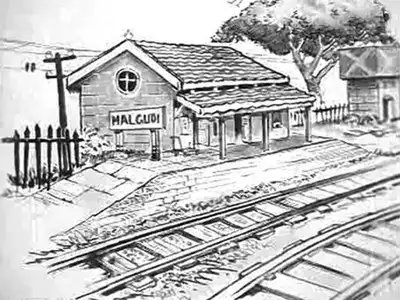
‘He gave me a hard grip. My entire hand disappeared into his fist—he was a huge man, about six feet tall’. ‘Well, what can I do for you Mr…?’ ‘Vasu’ he said and added I knew you didn’t catch my name, Natraj is bewildered. 2/17
In the first few pages of one of R.K Narayan’s celebrated novels ‘The man-eater of Malgudi’, we get to know about Vasu the enigmatic taxidermist, who seems to be up to no good as he looks for a place to set up his shop in the sleepy little town of Malgudi. 3/17

As the novel stretches on Vasu comes out to be somewhat of a personification of evil itself, a demonic power who plunges the world of Malgudi and that of Natraj, the humble protagonist into a tizzy. 4/17
Vasu is vicious and scheming, an anarchist who enjoys his trade as much as bullying and submitting others to his needs and wants. As the foul smell from the attic at Natraj’s press spreads across the town Malgudi seems like a cursed place. 5/17
But Vasu is at times sympathetic and also, a recluse whose demise comes as if under the weight of his own actions. Narayan once described how, in India, “the writer has only to look out of the window to pick up a character and thereby a story”. 6/17
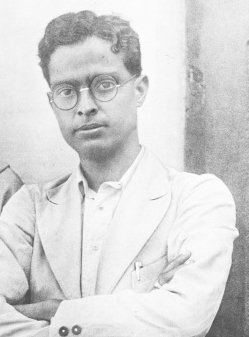
This holds very true to the character of Vasu which was not only inspired by myth but also by a particular Taxidermy company operating out of Mysore at the time. Van Ingen & Van Ingen was a taxidermy firm built in the 20th century in the heydays of colonial hunting. 7/17
Originally, Dutch traders, the Van Ingen family migrated to the Deccan way back in the 17th century. It was however not before the early 1900s when Eugene Melville van Ingen saw a huge potential for taxidermy because of Mysore’s dense forests and rich wildlife. 8/17
It is unclear from where they learned the art of taxidermy but nonetheless, some of the family members were very skilled in it. Soon they became highly sought after among India’s Maharajas and colonial officers. 9/17
The name of Van Ingen firm meant high-quality and excellent craftsmanship. They were particularly famous for producing mounting heads of tigers and leopards. The tongues, teeth, whiskers, and probably the most important part, the eyes were crafted to almost perfection. 10/17
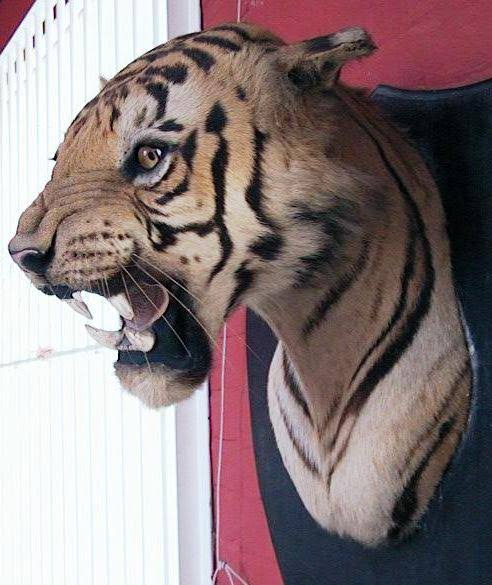
Furthermore, the snarling expression of many leopards and tigers was a trademark of the company. During its heyday from the 1930s to the late 1960s, the firm was the most significant taxidermy business in the world, beating the Ward family's 'The Jungle'. 11/17
Their prestigious factory located in the Nazarbad area of Mysore employed as many as 150-200 people working relentlessly to produce thousands of pieces every year. It was probably the only mass-production factory ever set up for the purpose of taxidermy in the world. 12/17
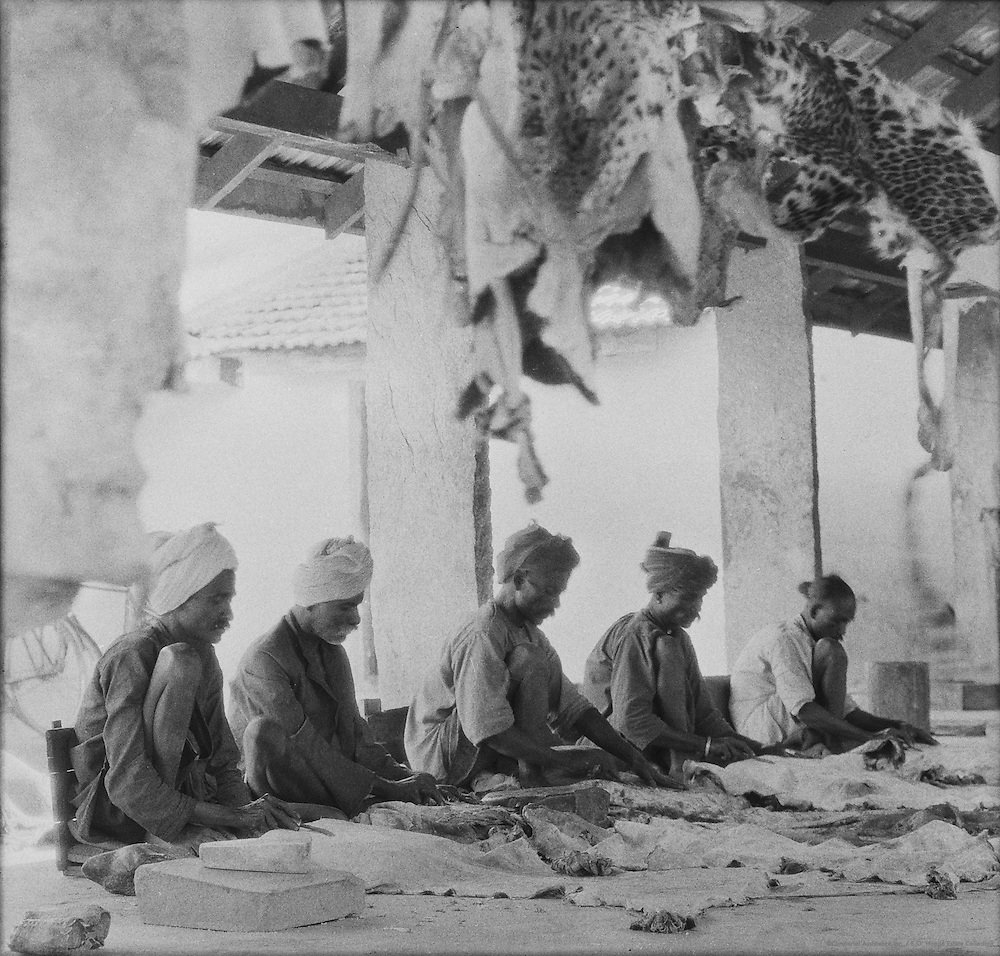
The Wodeyar’s were great patrons of the Van Ingens, the firm also got orders from Princely states of Vizianagram, Vijaynagar, Wankaner, Manipur, and Jaipur and also had correspondence with British officers for orders all the way from New York and London. 13/17
Narayan must have come across Van Ingens enough times for them to serve as an inspiration for one of his characters. But by the time the man-eater of Malugudi came out in 1961 Van Ingen’s heydays were pretty much behind them. 14/17
In 1972 the wildlife conservation act was passed which completely banned hunting and dealt a severe blow to the firms’ operations. It finally came to a halt in 1995, the last Van Ingen, Edwin Joubert Van Ingen, died at the age of 101 at his home in Nazarabad in March 2013. 15/17
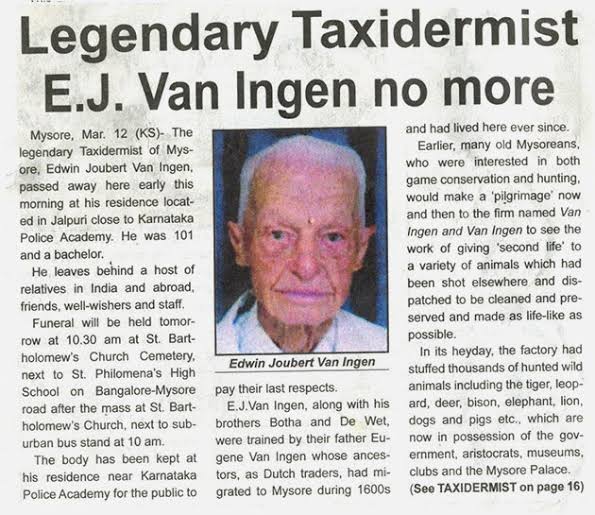
The firm’s products and still very sought after, many private collections, museums, and social clubs boast of having Van Ingen Work. There are even shops across the world in Australia and Britain that specialise in selling and preserving Van Ingen Items. 16/17
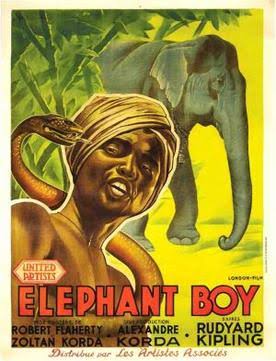
A small intriguing note before closing, in the 1930s a romance between Botha Van Ingen and Barbara Flaherty flourished, Barbara had come to Mysore since her Father was making a Film ‘The Elephant Boy’ starring a boy named Sabu. The two got married eventually. 17/17
Sources: deccanherald.com, frontline.thehindu.com, zebregsroell.com, Wikimedia, E.O. Hoppe Estate Collection
For anyone who is interested to know more about Sabu
Loading suggestions...