

12 pricing psychology tips to help you sell more stuff:
Before we dive in...
1. What you’re about to learn is powerful—use it for good (ie. to sell great stuff that actually helps people)
2. If you read this post all the way to the end, there’s a surprise for you 🎁
Ok. Let’s get into it...
1. What you’re about to learn is powerful—use it for good (ie. to sell great stuff that actually helps people)
2. If you read this post all the way to the end, there’s a surprise for you 🎁
Ok. Let’s get into it...
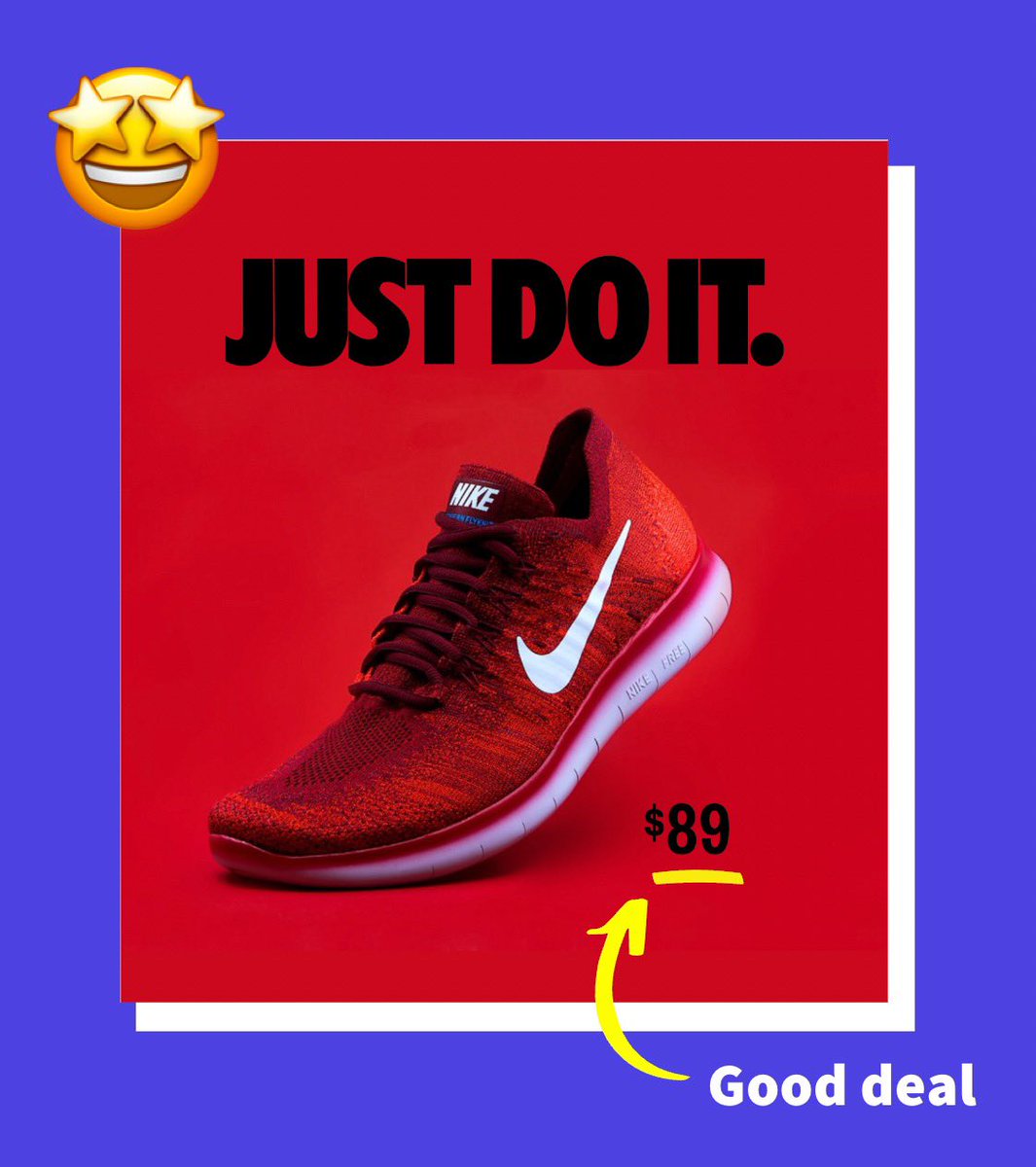
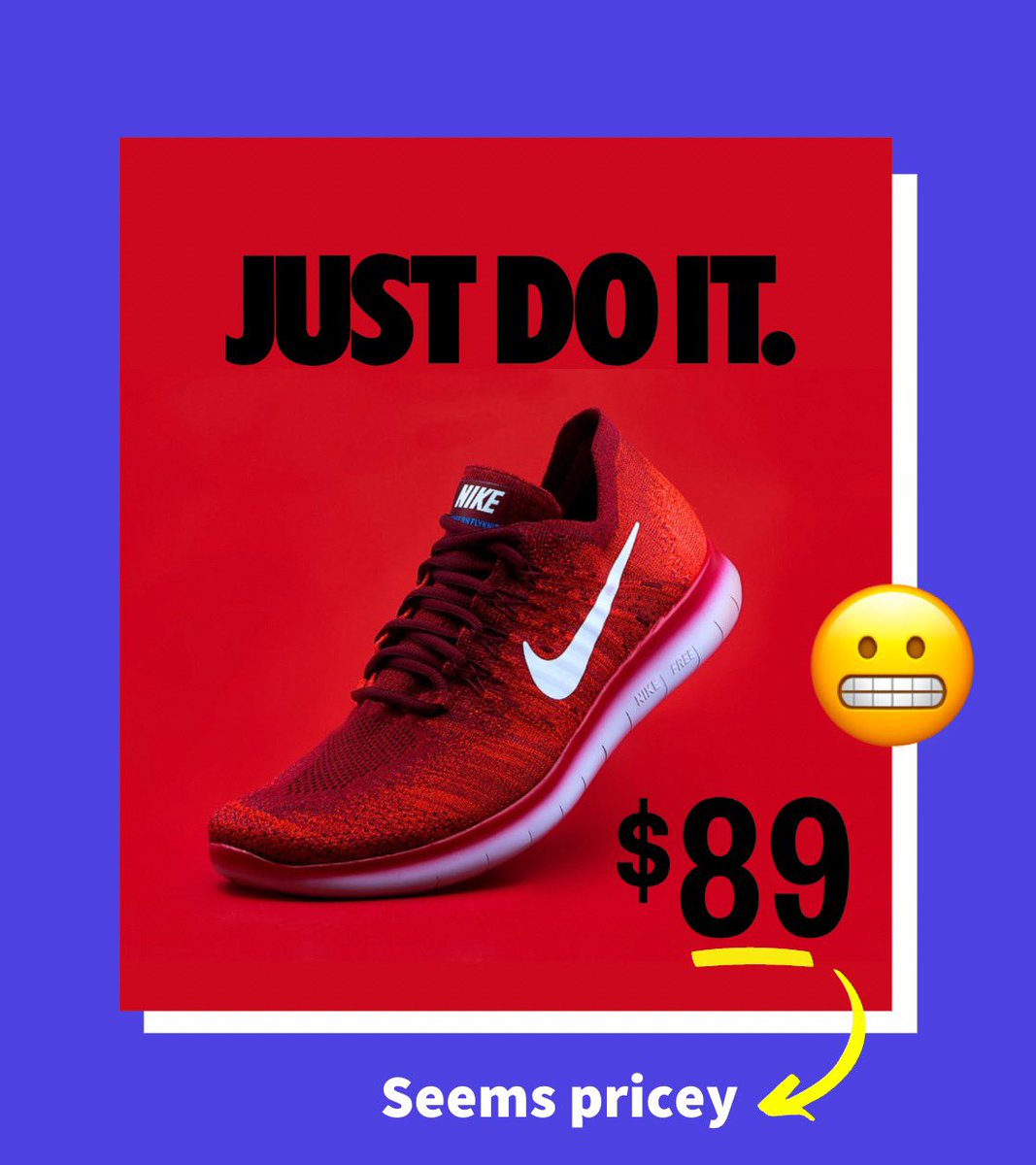
BIG font = BIG price
Our brains confuse the visual size of a number for numeric size
If we see $25 in large font, our brain notices how BIG the font is and assumes the price is big
Lesson: display prices using small fonts (not large ones)
Like this ✅ Not this ❌
Our brains confuse the visual size of a number for numeric size
If we see $25 in large font, our brain notices how BIG the font is and assumes the price is big
Lesson: display prices using small fonts (not large ones)
Like this ✅ Not this ❌
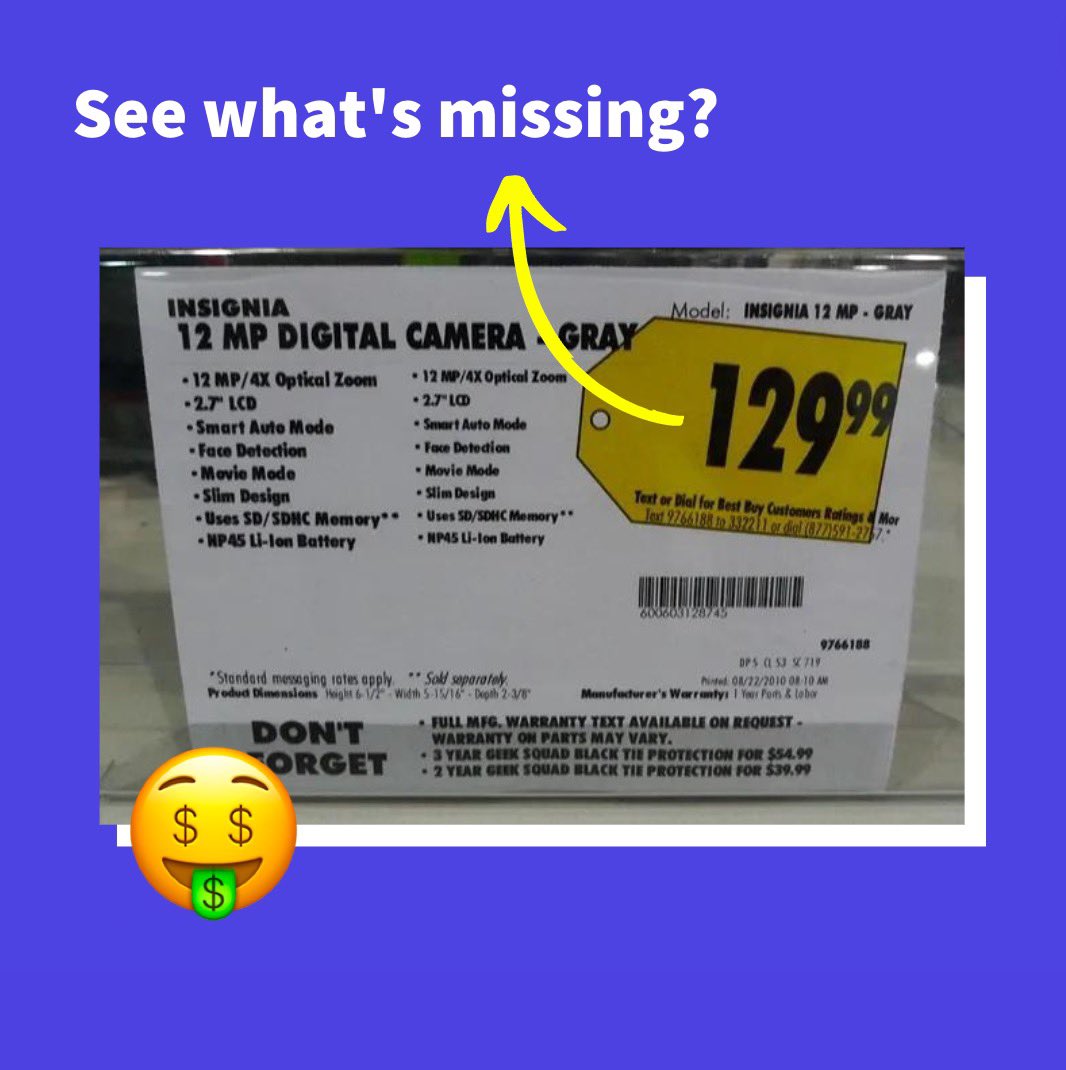
Dollar signs can trigger our “pain of paying”
When we pay for things it’s literally painful
Paying with cash is more painful than paying with plastic but still hurts
Lesson: leaving $ signs off signage can persuade more people to buy as it reduces association with losing money
When we pay for things it’s literally painful
Paying with cash is more painful than paying with plastic but still hurts
Lesson: leaving $ signs off signage can persuade more people to buy as it reduces association with losing money
Exact numbers appear larger
$1,302,859.53 seems much bigger than $1.3 M
Lesson: If you want a number to feel BIG, streeeeeeeeeeetch it out with commas and decimals
$1,302,859.53 seems much bigger than $1.3 M
Lesson: If you want a number to feel BIG, streeeeeeeeeeetch it out with commas and decimals
Abbreviated numbers appear smaller
$12K seems smaller than $12,000.00
Lesson: If you want a number to feel small (like the price of your services or products) abbreviate it
$12K seems smaller than $12,000.00
Lesson: If you want a number to feel small (like the price of your services or products) abbreviate it
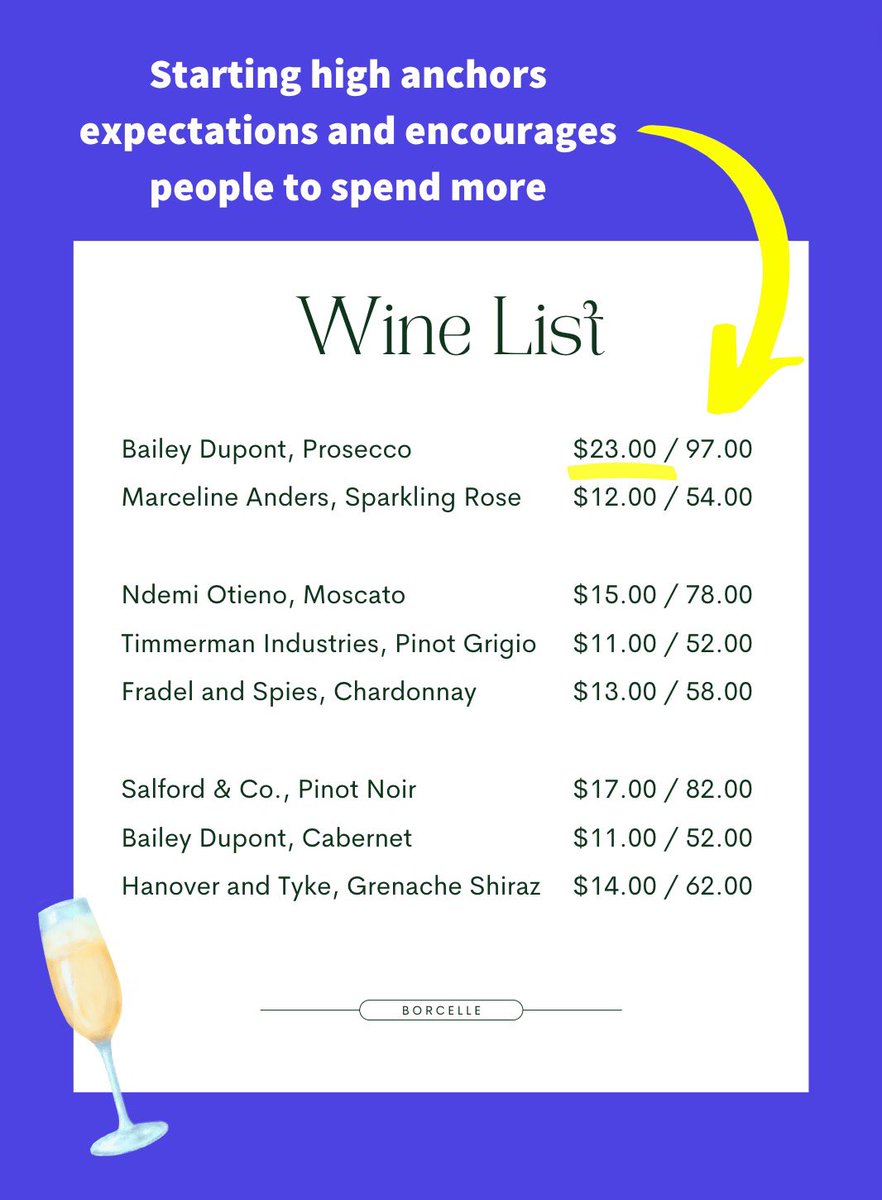
High prices anchor our expectations
When listing items—like a wine list—seeing higher priced items near the top of the list creates a price anchor and changes our perception of other items on the list
Lesson: list higher priced items first to encourage people to spend more
When listing items—like a wine list—seeing higher priced items near the top of the list creates a price anchor and changes our perception of other items on the list
Lesson: list higher priced items first to encourage people to spend more
Numbers in red feel like a bargain
Studies show that when prices are shown in red, we assume that they’re a great deal
Red pricing works particularly well for men
Lesson: show sale prices in red
Wanna up the effect? Use smaller fonts for sale prices than the original price
Studies show that when prices are shown in red, we assume that they’re a great deal
Red pricing works particularly well for men
Lesson: show sale prices in red
Wanna up the effect? Use smaller fonts for sale prices than the original price
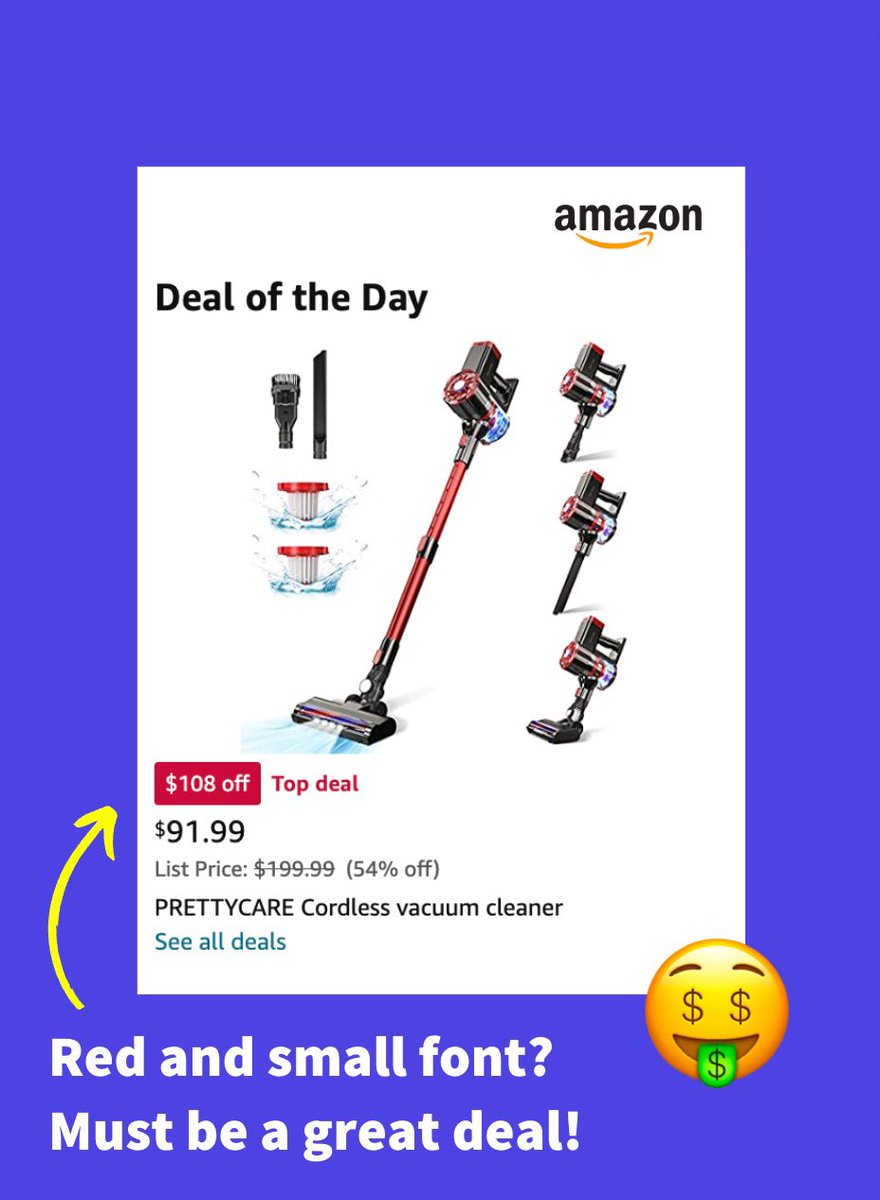
Numbers that end in .99 seem cheaper
Psychologically speaking, $9.99 seems smaller than $10
Why? We automatically round down and see 9 instead of 10
This is known as “charm pricing” and it’s a staple practice for discount retailers
Lesson: Use charm pricing to appear cheap
Psychologically speaking, $9.99 seems smaller than $10
Why? We automatically round down and see 9 instead of 10
This is known as “charm pricing” and it’s a staple practice for discount retailers
Lesson: Use charm pricing to appear cheap
Odd numbers seem like a better deal than even ones
In our minds... numbers that end in 5, 7 or 9 appear smaller than ones that end in even number or 0
So $120 seems more expensive than $117 or $119
Lesson: end prices with an odd number to appear smaller (without looking cheap)
In our minds... numbers that end in 5, 7 or 9 appear smaller than ones that end in even number or 0
So $120 seems more expensive than $117 or $119
Lesson: end prices with an odd number to appear smaller (without looking cheap)
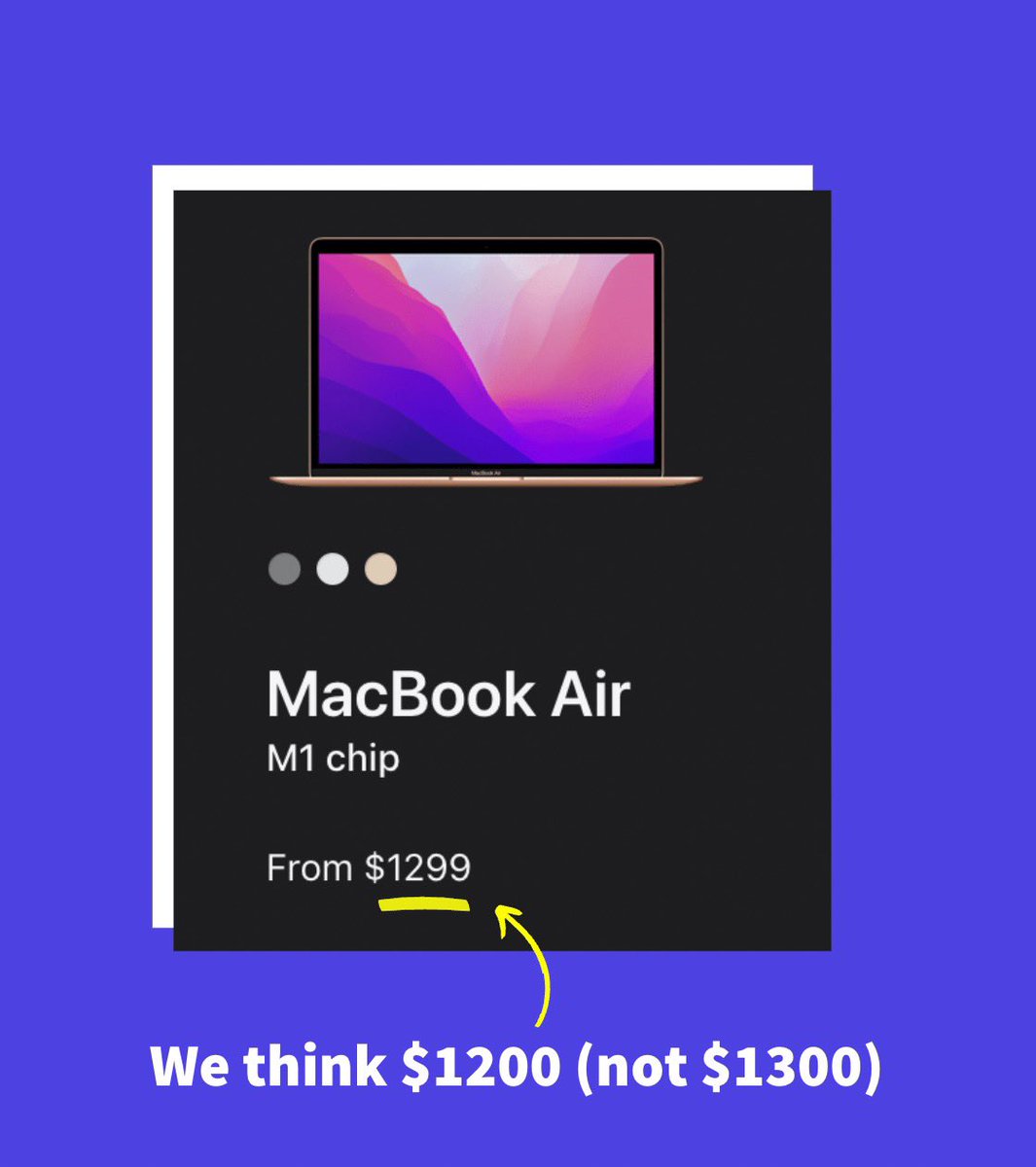
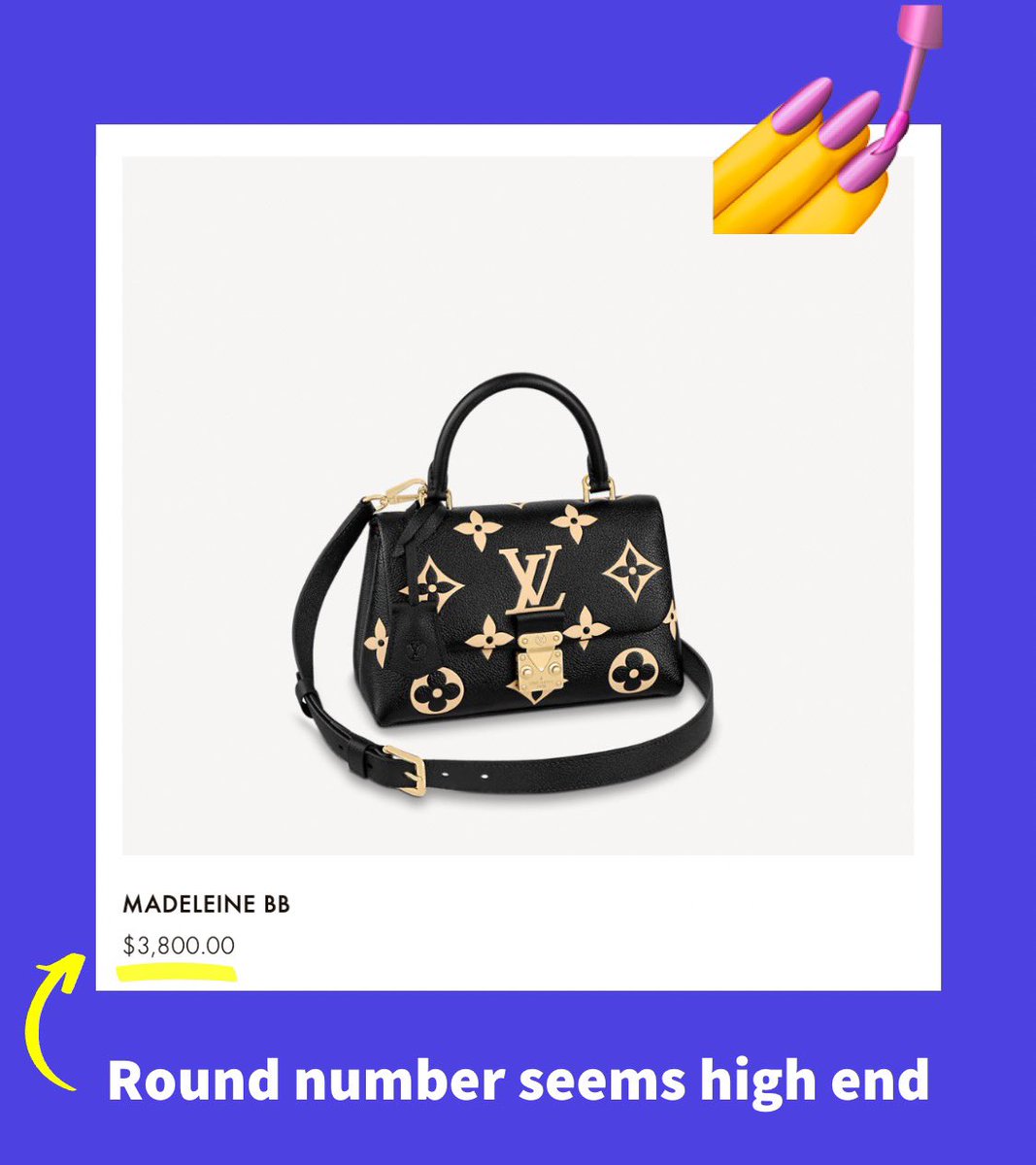
Round numbers = more expensive
When brands don’t use charm pricing or odd number ends, we perceive those products to be more expensive
This works well for luxury brands like Louis Vuitton or Prada that want to appear expensive
Lesson: use round to sell luxury
When brands don’t use charm pricing or odd number ends, we perceive those products to be more expensive
This works well for luxury brands like Louis Vuitton or Prada that want to appear expensive
Lesson: use round to sell luxury
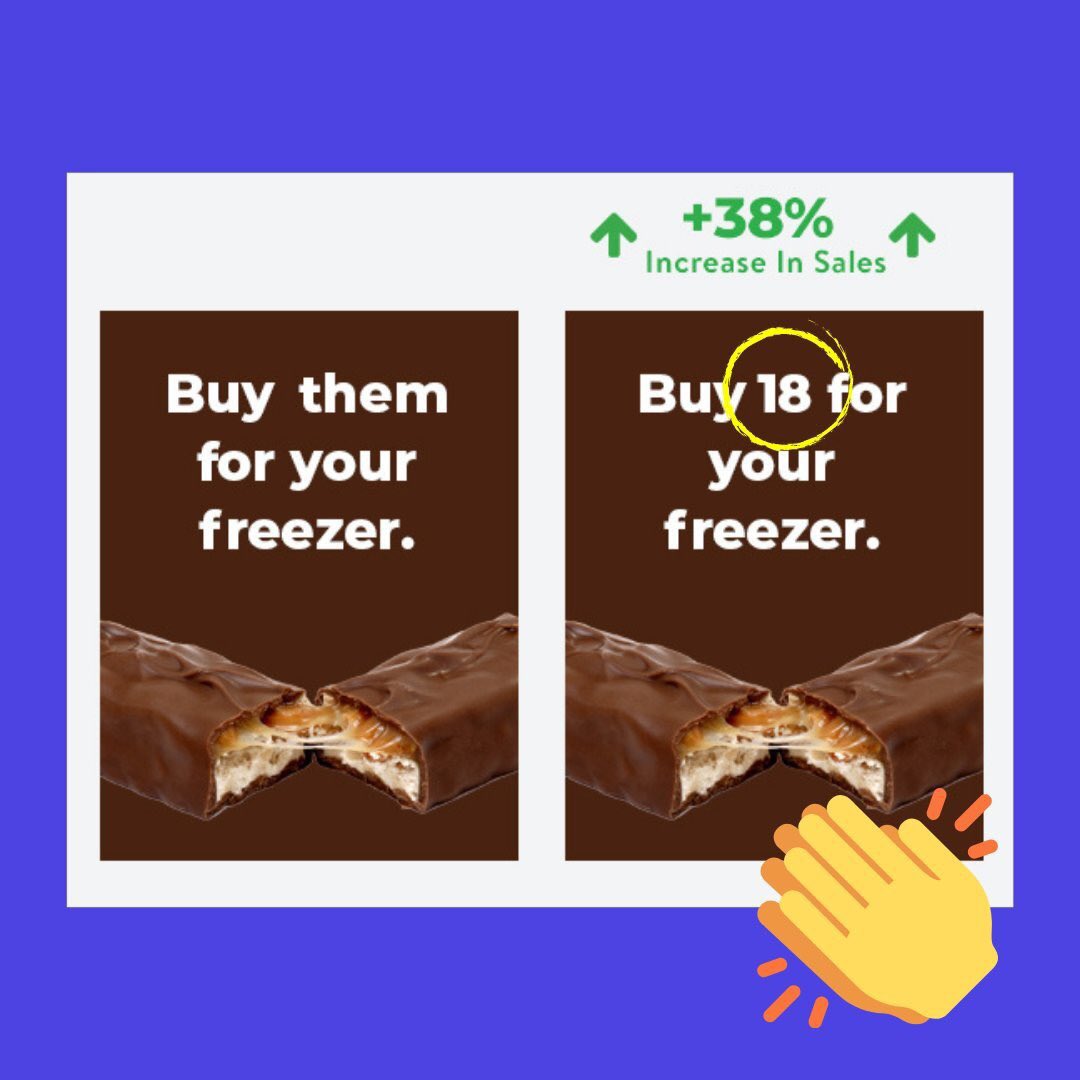
Specific numbers anchor our expectations
If we see “$70 and up” $70 becomes the anchor price
Snickers grew sales by 38% simply by changing the anchor from ‘them’ to ‘18’
Lesson: Use specific numbers to encourage people to spend more
If we see “$70 and up” $70 becomes the anchor price
Snickers grew sales by 38% simply by changing the anchor from ‘them’ to ‘18’
Lesson: Use specific numbers to encourage people to spend more
We’ll buy more to get something for $0
If given the choice between “Buy One Get One Free” or “50% off when you buy 2" the BOGO offer is more compelling
Lesson: free often beats discounted
If given the choice between “Buy One Get One Free” or “50% off when you buy 2" the BOGO offer is more compelling
Lesson: free often beats discounted
Comparison numbers help us decide
As Einstein famously said, “It’s all relative”
We seek comparisons to help us evaluate a product
Without another item to use as comparison, we won’t know if we’re getting a “good” price
Lesson: Choose your brand’s comparison set strategically
As Einstein famously said, “It’s all relative”
We seek comparisons to help us evaluate a product
Without another item to use as comparison, we won’t know if we’re getting a “good” price
Lesson: Choose your brand’s comparison set strategically


Did you find this thread helpful?
It took me 4.5 hours to create
If you’d share it (which will take about 0.3 seconds) I’d be so grateful 🙏
It took me 4.5 hours to create
If you’d share it (which will take about 0.3 seconds) I’d be so grateful 🙏
The best marketers use pricing psychology to help buyers decide
Wanna up your marketing game?
if you sign up for my Why We Buy newsletter TODAY you’ll also get a FREE copy of my Buyer Psychology Cheatsheet
The sign-up link is in my bio -> @katebour
Wanna up your marketing game?
if you sign up for my Why We Buy newsletter TODAY you’ll also get a FREE copy of my Buyer Psychology Cheatsheet
The sign-up link is in my bio -> @katebour

And a bonus tip from @p_agnew
Loading suggestions...