

Fascinating book on the intellectual history of political economy in 19th century Ireland. It argues that English economics was taught at all levels to ideologically justify colonial exploitation. Also includes key critiques made by dissenters.
“There were vitriolic popular attacks on the discipline, both moral and nationalist. There was increased scepticism concerning both the validity and universality of its laws, and even calls to establish an Irish political economy.”
“the leading proponents of the historical and comparative method in the English-speaking world were Irish economists,”
The English attempt to spread political economy was claimed to be impartial but the authors find it was anything but and was supremely ideological.
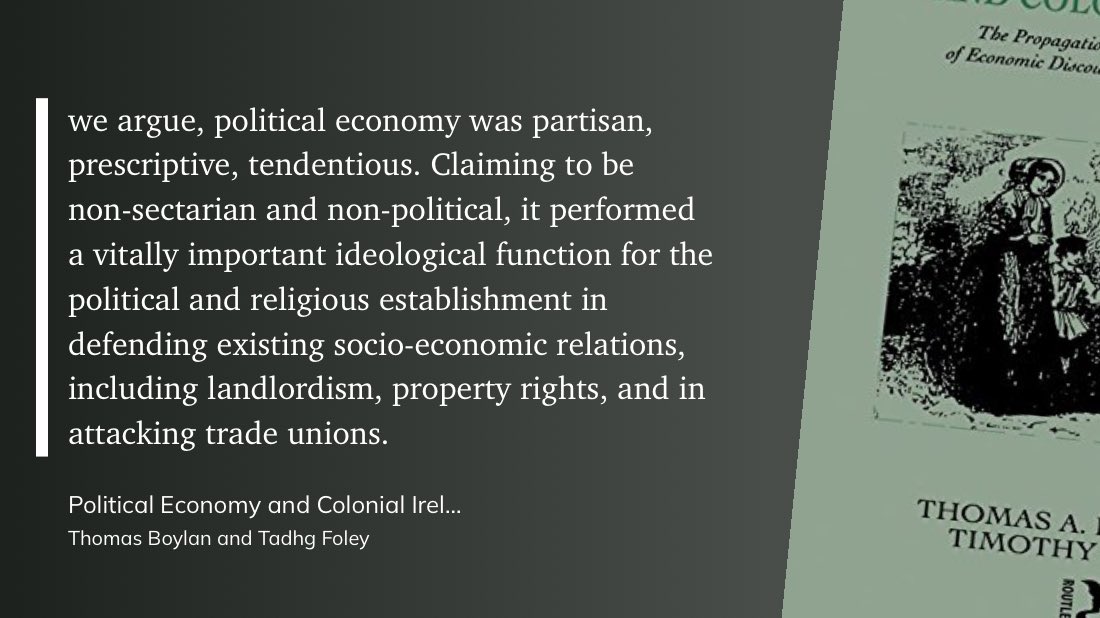
“mainstream British economists who…increased ‘scientificisation’, even mathematicisation of economic discourse, culminated in a new name, economics”
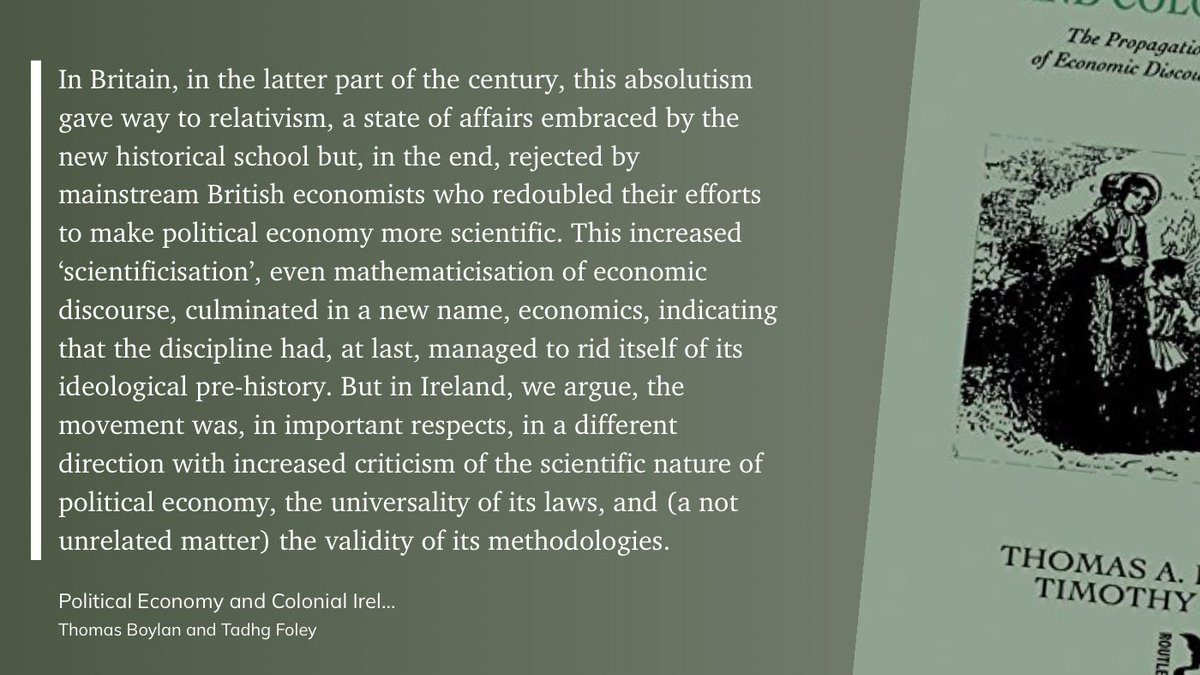
“But in Ireland…the movement was… in a different direction with increased criticism of the scientific nature”
“But in Ireland…the movement was… in a different direction with increased criticism of the scientific nature”
“An increasing [Irish] emphasis on the historical, the comparative and the institutional, combined with a moral and even political critique seriously undermined the universalist pretensions of orthodox political economy.”
![“An increasing [Irish] emphasis on the historical, the comparative and the institutional, combined w...](https://pbs.twimg.com/media/FXP3Us5UYAEy7gs.jpg)
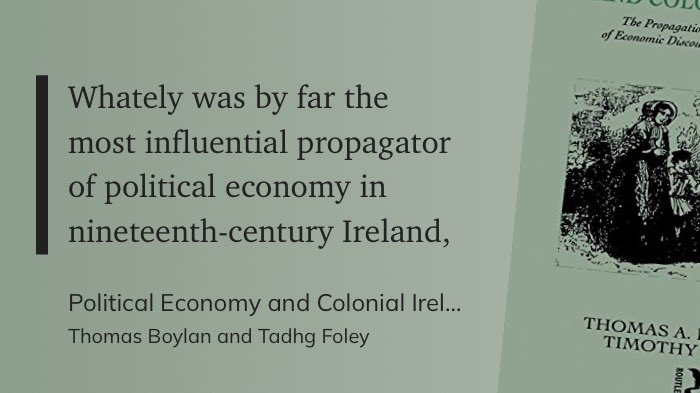
Whately was most influential exponent of English economics in Ireland and is the namesake for the Whately chair of econ at TCD.
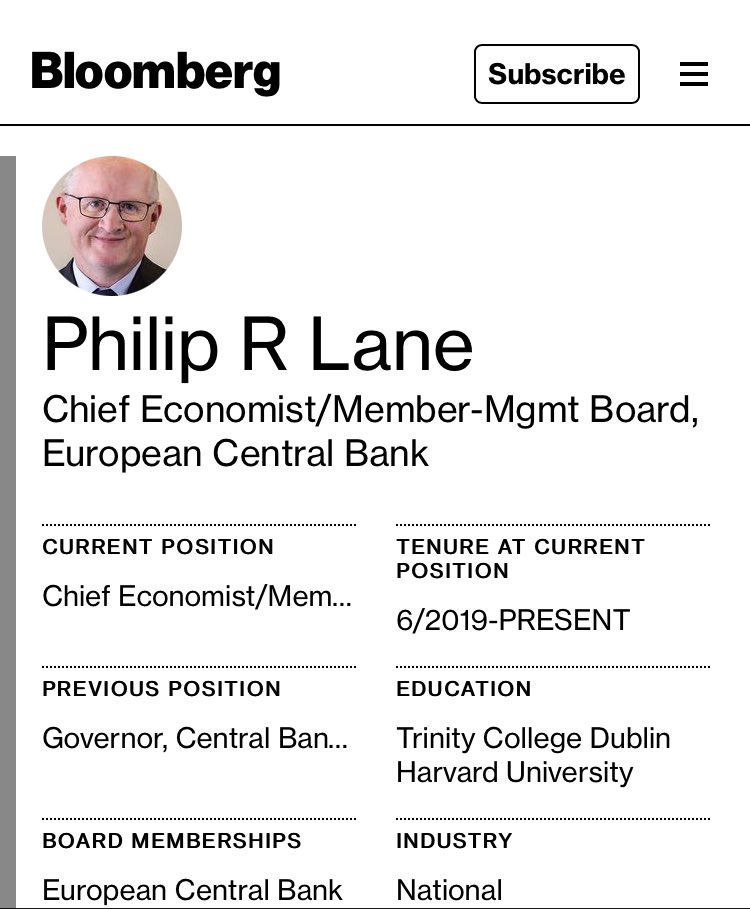
Food for thought, the current holder of that chair is the chief economist at the ECB.
Food for thought, the current holder of that chair is the chief economist at the ECB.
Bishop Berkeley and Jonathan Swifts extracts on economics were used by Young Irelanders like Mitchel to dismiss English political economy stimulated by the famine crisis
Mitchel called it English or Famine political economy.
“endeavoured to prove to us, that to part with our bread and cattle is profitable ‘commerce’ and that our trading intercourse with their country enriches us immensely whatever the ignorant and starving Irish may say”
“endeavoured to prove to us, that to part with our bread and cattle is profitable ‘commerce’ and that our trading intercourse with their country enriches us immensely whatever the ignorant and starving Irish may say”
“In other words, political economy had a nationality.”
“We know what happened”
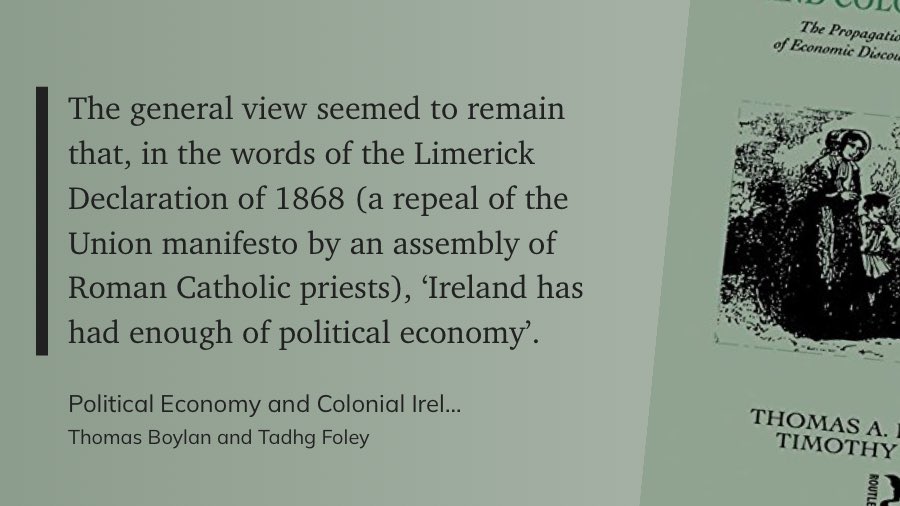
“Ireland has had enough of political economy.”
Loading suggestions...