
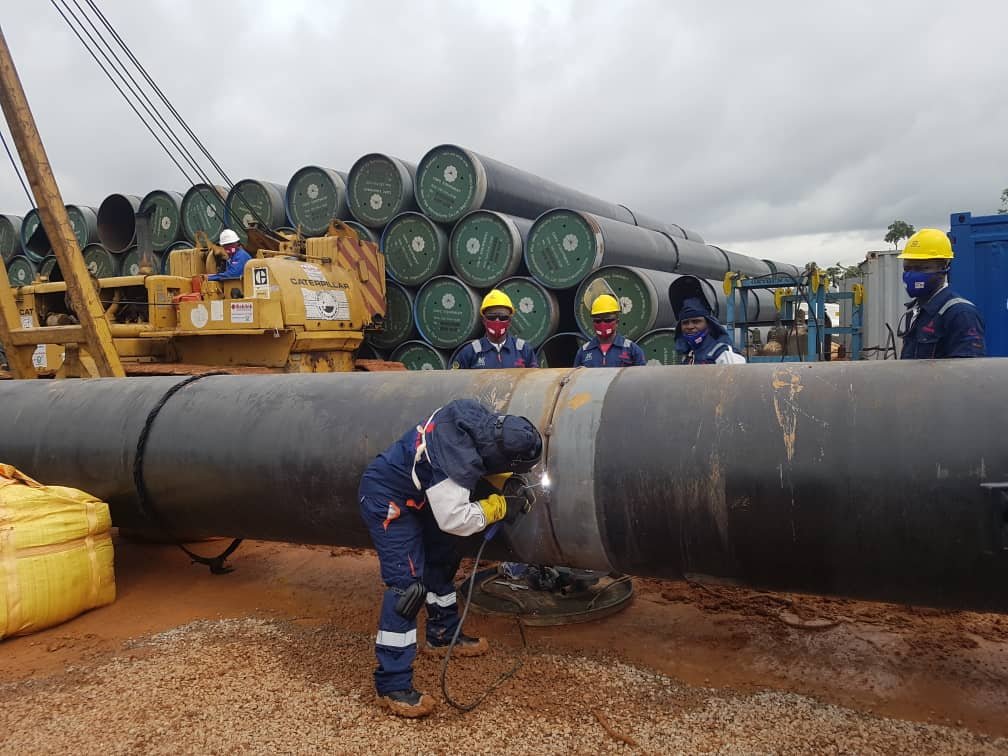
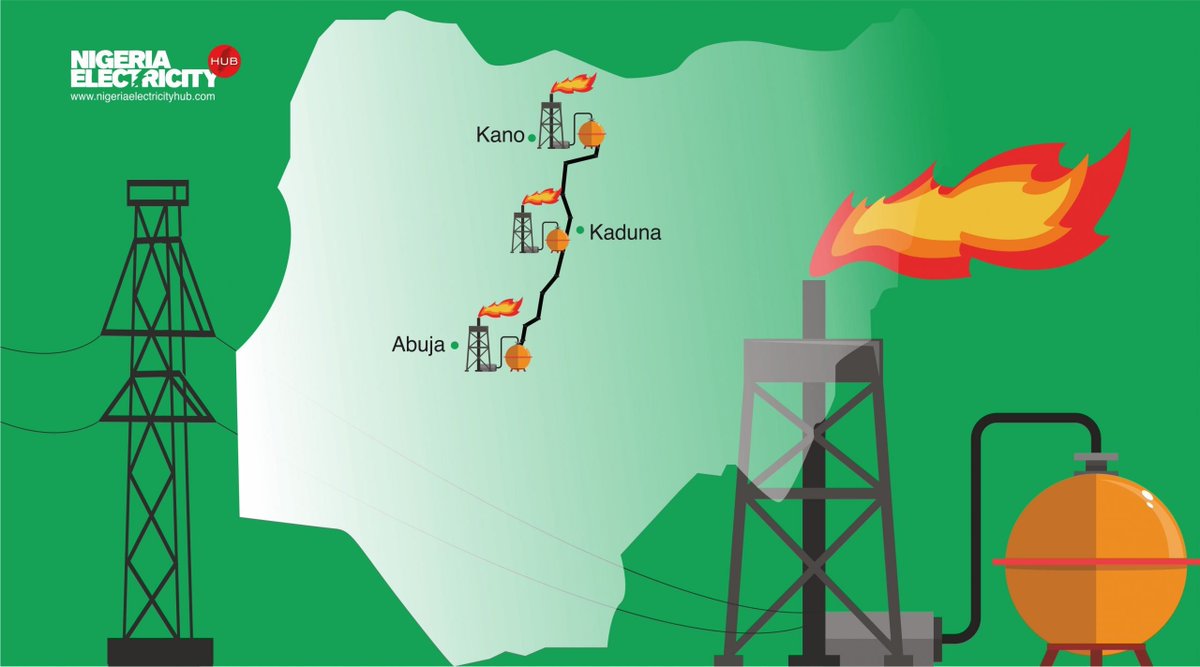
Since the Abuja-Kaduna-Kano (AKK) gas pipeline started construction in June 2020, many have asked an important question.
Why not generate electricity with the gas in the Niger Delta and transmit it to Kano?
In this 🧵, I'll try to answer this question.
nsenergybusiness.com
Why not generate electricity with the gas in the Niger Delta and transmit it to Kano?
In this 🧵, I'll try to answer this question.
nsenergybusiness.com
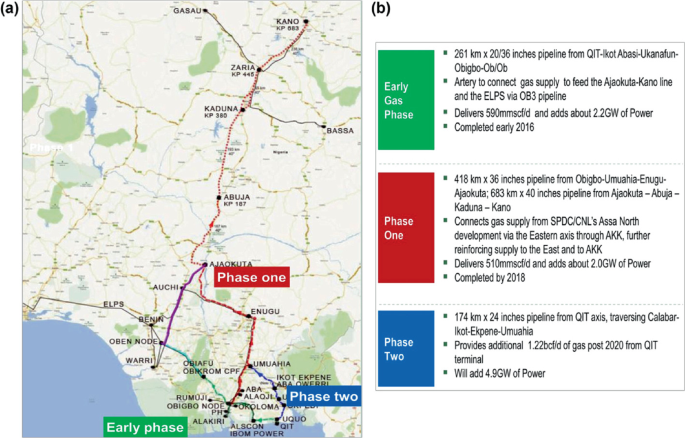
In order to do this, I will be using a HVDC transmission project in Iowa for comparison and convert the BTUs used for the gas to kWh to harmonize the energy units.
canarymedia.com
canarymedia.com
All data was pulled from the 2 linked articles.
Here's a short conversion key for the gas.
1cf of gas = 1000BTUs
1kWh = 3412.14BTU
Generation efficiency of CC gas turbine = 55%
Daily capacity of AKK pipeline = 3500 million cf
Divided Energy by 24 to get hourly capacity
Here's a short conversion key for the gas.
1cf of gas = 1000BTUs
1kWh = 3412.14BTU
Generation efficiency of CC gas turbine = 55%
Daily capacity of AKK pipeline = 3500 million cf
Divided Energy by 24 to get hourly capacity
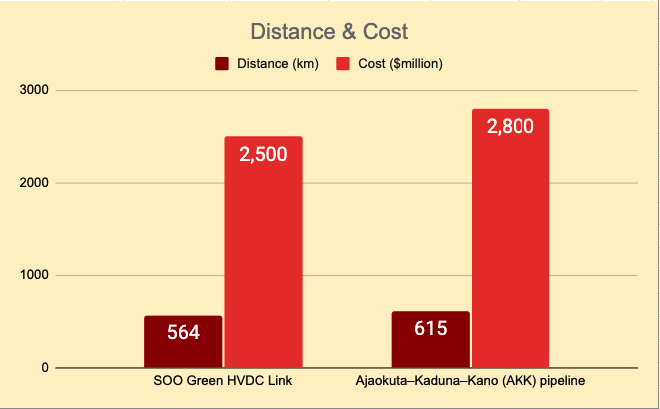
In terms of Distance and Cost, both pieces of transmission infrastructure are roughly the same.
AKK pipeline - $2.8bn - 615km
SOO HVDC - $2.5bn - 564km
AKK pipeline - $2.8bn - 615km
SOO HVDC - $2.5bn - 564km
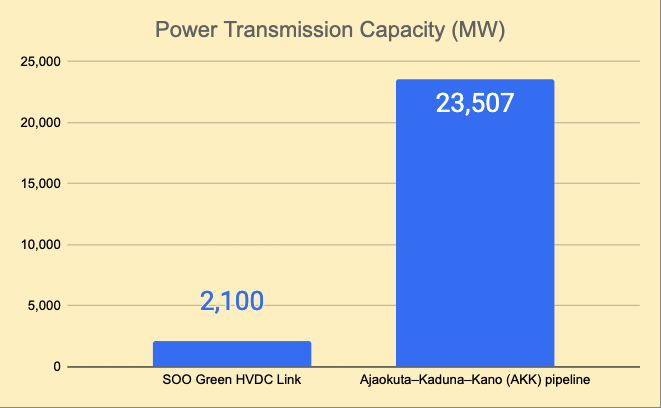
But when we look at the hourly transmission capacity, a huge difference emerges.
AKK pipeline - 23,507MW
SOO HVDC - 2,100MW
For the same investment cost, the gas pipeline has an 11X transmission capacity advantage.
AKK pipeline - 23,507MW
SOO HVDC - 2,100MW
For the same investment cost, the gas pipeline has an 11X transmission capacity advantage.
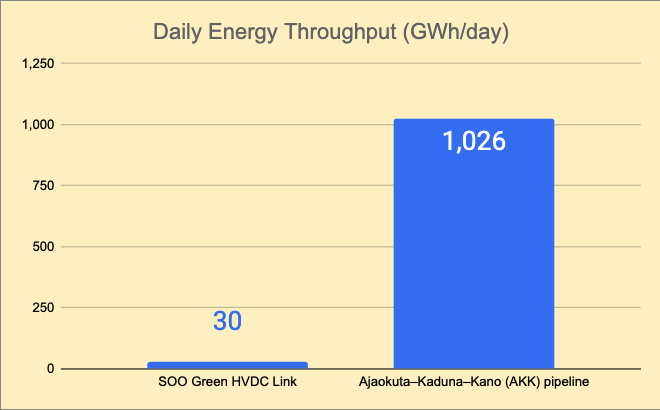
The advantage of the gas pipeline over the HVDC line is further increased when we look at the daily energy throughput.
AKK pipeline - 1,026GWh/day
SOO HVDC - 30GWh/day
A 34X energy throughput advantage.
AKK pipeline - 1,026GWh/day
SOO HVDC - 30GWh/day
A 34X energy throughput advantage.
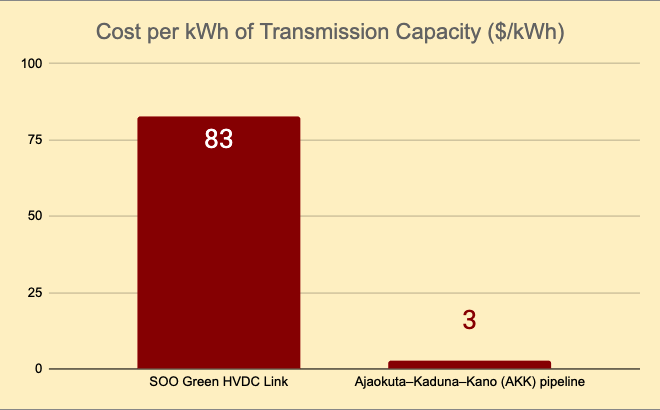
When we look at cost per unit of transported energy, the pipeline has is 30X cheaper per unit of energy transported.
AKK pipeline - $3/kWh
SOO HVDC - $83/kWh
AKK pipeline - $3/kWh
SOO HVDC - $83/kWh
Lastly looking at the cost per Power capacity, the gas pipeline is 10X cheaper per power transmission capacity though the investment cost per km is about the same at $4.43 million/km & $4.55 million/km.
AKK pipeline - $0.12 million/MW
SOO HVDC - $1.19 million/MW
AKK pipeline - $0.12 million/MW
SOO HVDC - $1.19 million/MW
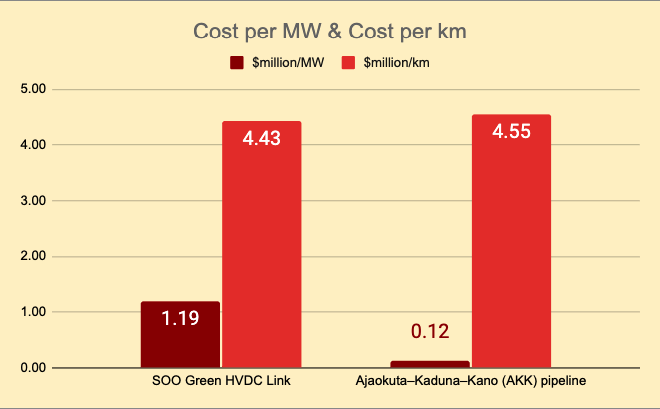
The conclusion from this brief analysis is that gas pipelines have insane energy transmission capacity relative to cost of infra.
And building power lines to transmit the same amount of energy from the Niger Delta in place of the gas pipeline would cost;
10X or $28bn to match the power capacity &
30X or $85bn to match the energy throughput.
END.
10X or $28bn to match the power capacity &
30X or $85bn to match the energy throughput.
END.
Loading suggestions...