
The argument by @ojblanchard1 @asdomash & @LHSummers that the natural rate has risen because matching efficiency has declined is compelling. But it has the testable implication of rising wage growth--which is not happening. Which leaves me puzzled. piie.com
Their argument is that the Beveridge Curve has shifted out, indicating it is harder to match people to jobs. This in turns means higher unemployment is required to stabilize inflation--they estimate the natural rate increased by 1.3pp because of this.
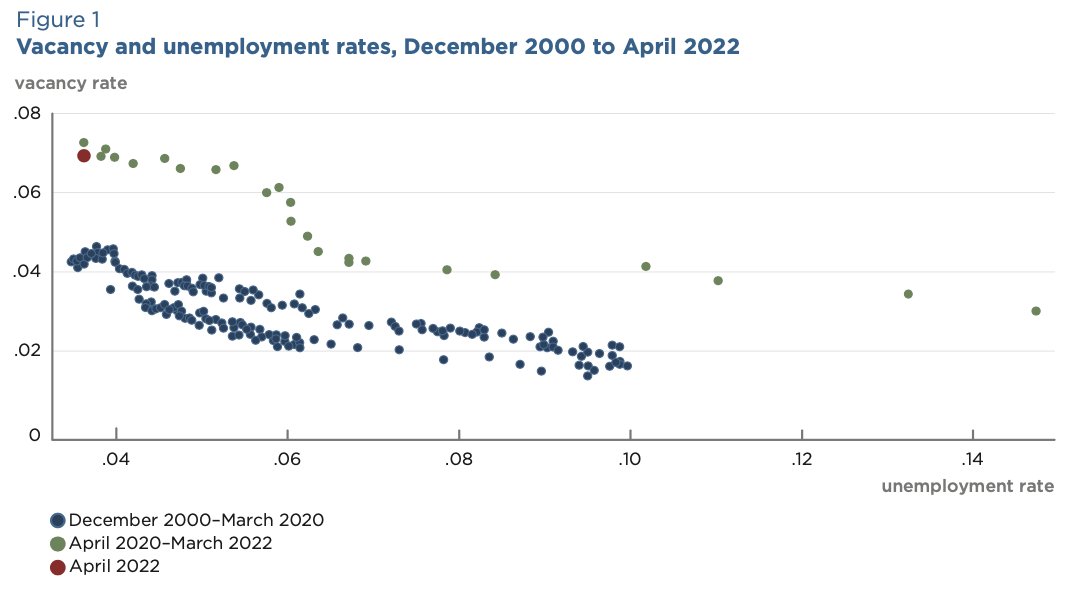
Note this isn't the only group making this argument, @pmichaillat and Emanuel Saez have as well--and they actually have a larger increase in the natural rate post-pandemic (although for them depends on how U and V jointly evolve).
pascalmichaillat.org
pascalmichaillat.org
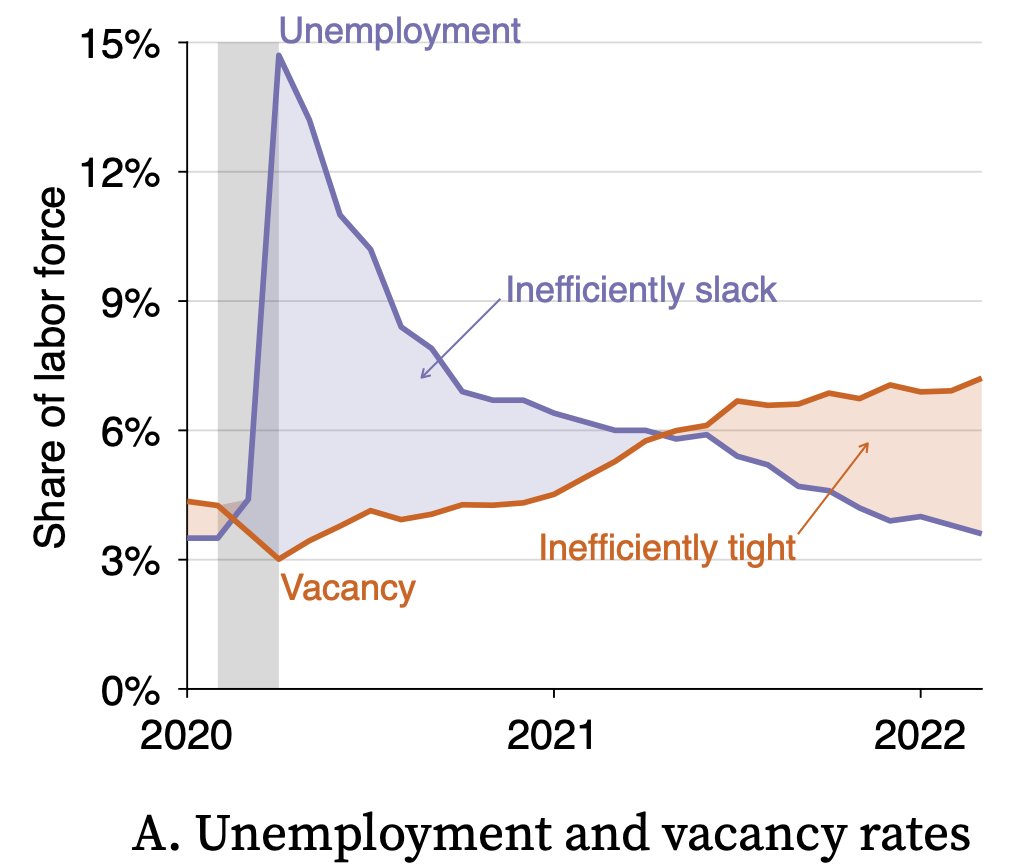
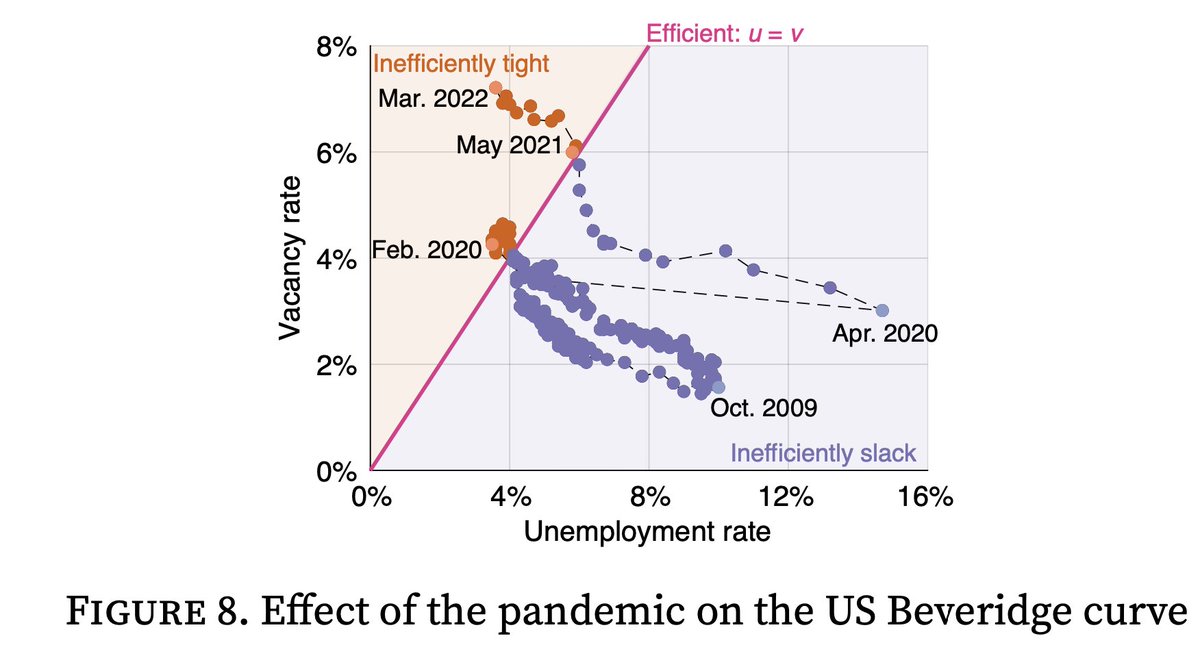
I find the theory compelling. But the theory also implies that nominal wage growth should be rising. And it is not--in fact it is falling.
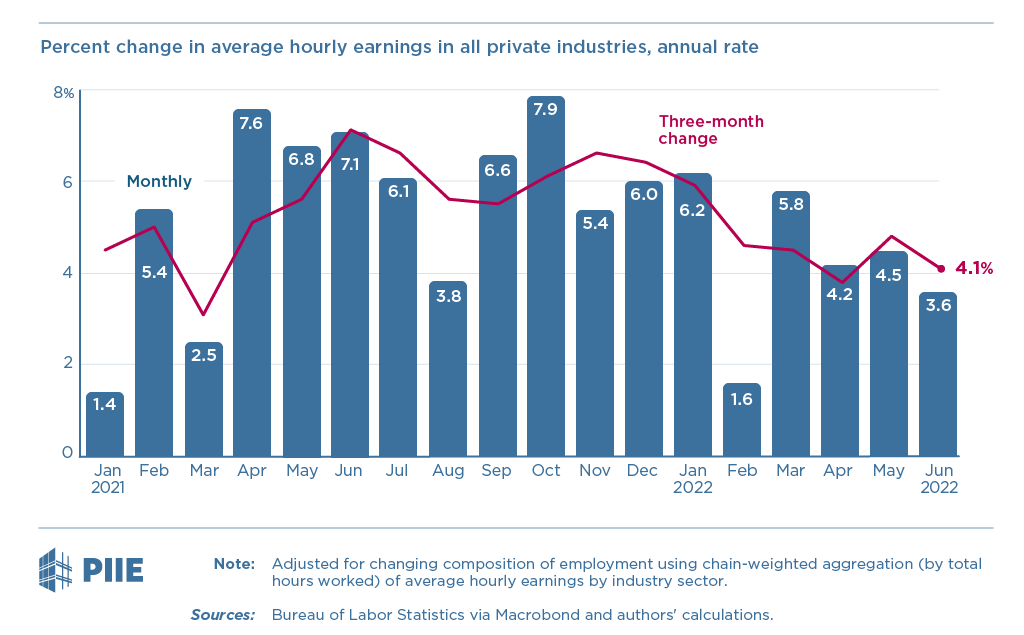
This leaves me puzzled. I wonder what @ojblanchard1 @asdomash & @LHSummers think (they don't say in he paper) but I can see five plausible possibilities:
1. THE DATA IS WRONG. The wage data gets revised. It suffers from compositional issues. Maybe it isn't actually slowing.
The plausibility of this argument goes down each and every month, but until I see the ECI at the end of the month I won't be sure.
The plausibility of this argument goes down each and every month, but until I see the ECI at the end of the month I won't be sure.
2. A LARGE NEGATIVE PRODUCTIVITY SHOCK. Productivity in 2022-H1 may have fallen at a 6 percent ar. Models of wage Phillips curves are about how much more/less above productivity wages rise. IF true productivity growth is terrible then even 4% wage growth is surprisingly high.

I view #2 as possible but I have a lot of skepticism, including not believing the productivity data (at least for Q1).
3. THE WAGE PHILLIPS CURVE IS RELATIVELY FLAT AND LAST YEAR HAD A ONE-TIME INCREASE. This model says that tight labor market is what raised nominal wage growth from 3% (normal) to 4.5% (what we're seeing). That's actually a large increase that reflects a very tight labor market.
Under this view on top of the normal labor market dynamics there was a one-time 2pp bump last year for post-pandemic adjustments but is over and underling wage inflation is 4.5% and rising. Will still take a big increase in UR to stabilize.
I view this as reasonably plausible.
I view this as reasonably plausible.
4. ANOTHER FACTOR LOWERED THE NATURAL RATE. Matching efficiency raised the natural rate by 1.3pp "ceteris paribus". But something else happened that pushed in the opposite direction. Best I can think of is people leaving labor force & returning but not sure I buy that.
5. THEIR THEORY IS WRONG. I find it quite compelling and almost obvious so don't place a lot of weight on this. But something has to give so maybe have to give up on the theoretical claim.
Will continue to ponder, thoughts welcome, and we'll see over time.
Will continue to ponder, thoughts welcome, and we'll see over time.
Loading suggestions...