

🧵
How to: Modern Warfare
Part 1: The Battlespace
How to: Modern Warfare
Part 1: The Battlespace
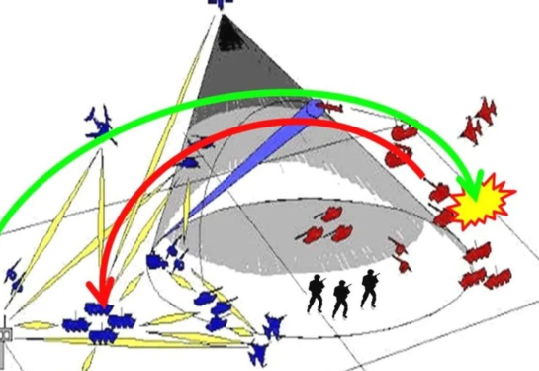
Thanks to not so recent events I've noticed a lot of people are preparing for the worst case scenario of defending their homeland or community from an invading force.
Others are "prepping" to bug out in case the govt decides to royally f*ck up.
Others are "prepping" to bug out in case the govt decides to royally f*ck up.
Let's say you're a tacticool BAMF and you got a plan to GTFO.
But have you asked yourself, once you have succesfully bugged out, what now?
But have you asked yourself, once you have succesfully bugged out, what now?
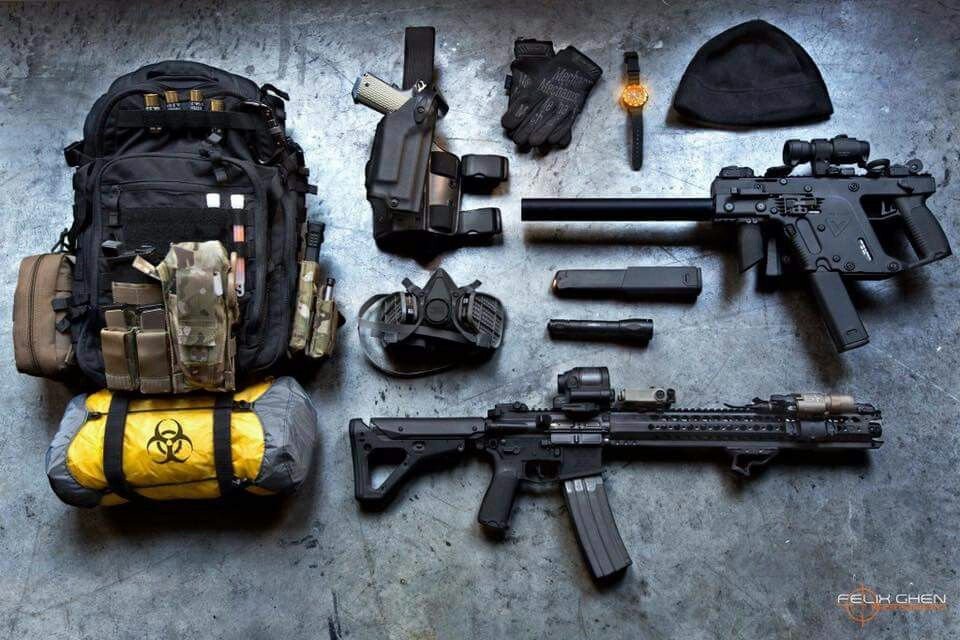
You got out, got your rifle, spare ammo, water, food, all those hours of sustainment & bushcrafting vids under your belt...
Those things are physical and easy to get.
The bad news is that if you don't act now you and yours will starve, outgunned or outmaneuvered at some point.
Those things are physical and easy to get.
The bad news is that if you don't act now you and yours will starve, outgunned or outmaneuvered at some point.
Awaiting a convoy to ambush won't do you much good.
The enemy forces will efficiently and quickly hunt you down once you hit once or twice succesfully.
The #1 need in that moment is not new kit or new rifle setups, it's a leader.
The enemy forces will efficiently and quickly hunt you down once you hit once or twice succesfully.
The #1 need in that moment is not new kit or new rifle setups, it's a leader.
Those who are preparing/ ready today for a scenario of this kind won't be riflemen or part of a militia squad tomorrow.
They will be squad leaders, platoon leaders, ...
History has taught us this over and over again.
They will be squad leaders, platoon leaders, ...
History has taught us this over and over again.
To get an idea of what to do with your limited resources you first should take a look at how to perceive a battlespace and its layers.
During the late 20th century most armies around the world replaced the term battlefield with the term battlespace.
It's not just a minor namechange, it actually showed a clear shift in understanding of the complexity inherent to modern warfare.
It's not just a minor namechange, it actually showed a clear shift in understanding of the complexity inherent to modern warfare.
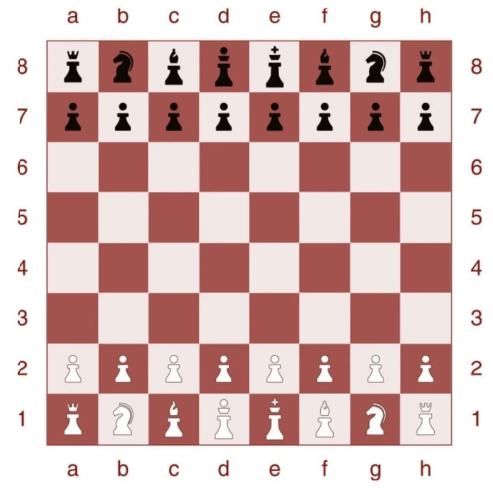
The old perception of war as something that was fought on a 2d chessboard was no more.
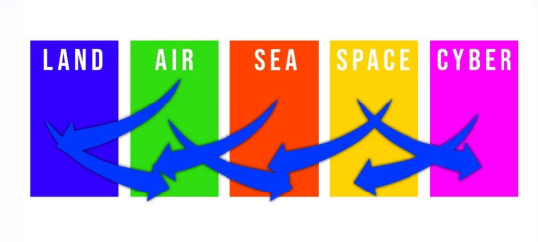
The modern battlespace is defined by 5 dimensions.
Space & Cyber is getting more and more important lately.
The modern battlespace is defined by 5 dimensions.
Space & Cyber is getting more and more important lately.

Those domains are largely achievement of technological advantage. If Napoleon had sattelites he would clearly recognize the Space domain as a field of importance. Nevertheless, those are the domains war is fought in.
It is every leader's goal to keep all those domains in check.
Which domains are under enemy control?
Which domains are his potential weak points?
When we look at the Ukraine conflict we've seen an outnumbered & outgunned defender make immense use of the cyberspace.
Which domains are under enemy control?
Which domains are his potential weak points?
When we look at the Ukraine conflict we've seen an outnumbered & outgunned defender make immense use of the cyberspace.
Information warfare is pretty much the only domain they have been winning at.
It boosts morale at land & air level. And just because you can't control one domain, it doesn't mean you can't contest or deny it.
It boosts morale at land & air level. And just because you can't control one domain, it doesn't mean you can't contest or deny it.
Those 5 domains are furthermore separated into subdomains.
This might sound like stuff you only need to konw about when leading battalions but even when leading a squad they are important.
Again, just because you don't control them, does't mean you won't be affected by them.
This might sound like stuff you only need to konw about when leading battalions but even when leading a squad they are important.
Again, just because you don't control them, does't mean you won't be affected by them.
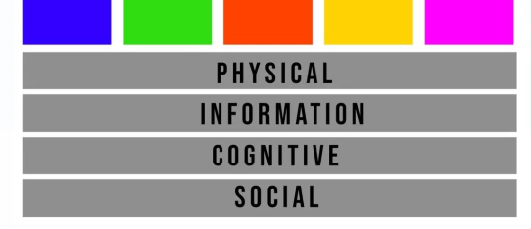
Example for physical domain:
Weapons & manpower available, ammo and supplies, positioning of forces.
These are the things that most would perceive as necessary for a battle.
But according to that logic an enemy with superiority in numbers & clever tactics would always win.
Weapons & manpower available, ammo and supplies, positioning of forces.
These are the things that most would perceive as necessary for a battle.
But according to that logic an enemy with superiority in numbers & clever tactics would always win.
If the attacker has poor intelligence, what if you have an advantage in the information subdomain?
The cognitive domain is your training, your morale and the enemies' morale & training.
Exploit your advantage in training it you have it.
Morale is another decisive factor, we've seen it most recently in Ukraine.
Exploit your advantage in training it you have it.
Morale is another decisive factor, we've seen it most recently in Ukraine.
The social subdomain is the morale and perception of a conflicts party as a whole.
Motivated fighters are one thing, but what if they aren't backed by their population?
Motivated fighters are one thing, but what if they aren't backed by their population?
Just like the main domains we can contest or exploit these subdomains. We are looking for our strenghts and weaknesses in those multi level domains.
Set up short-term and long-term goals. Every domain we contest will drive the enemy into a new level of decision making.
Set up short-term and long-term goals. Every domain we contest will drive the enemy into a new level of decision making.
Even if your presence in the physical domain is low, you can exert influence or even win in other domains, e.g. the social domain for recruiting purposes.
The enemy will then have to make the decision to enter the fight on the social domain or not.
The enemy will then have to make the decision to enter the fight on the social domain or not.
So, randomly ambushing enemy convoys in your area might be a big bois fantasy but it will wear your forces out.
The enemy will quickly gain the edge in other domains, while your forces wear out.
The enemy will quickly gain the edge in other domains, while your forces wear out.
Don't forget to look at all those domains from 3 perspectives
Tactical
Operational
Strategic
Your strategic goal is most likely winning this hypothetic conflict.
Again, your efforts will orientate along domains and dimensions of the battlespace.
Tactical
Operational
Strategic
Your strategic goal is most likely winning this hypothetic conflict.
Again, your efforts will orientate along domains and dimensions of the battlespace.
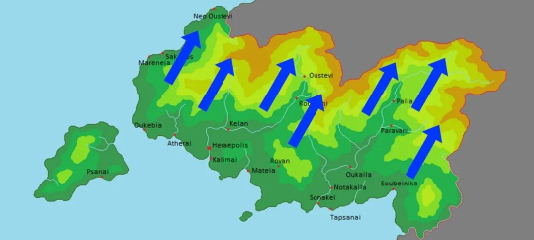
The strategic level is also where you want to place your forward line of own troops while also observing the forward line of enemy troops.
The strategic level always dictates the synergy of all other layers.
The strategic level always dictates the synergy of all other layers.
The tactical layer is how a goal is reached in detail. This is not limited to physical combat.
Efforts in all other domains also have a tactical effort.
Efforts in all other domains also have a tactical effort.
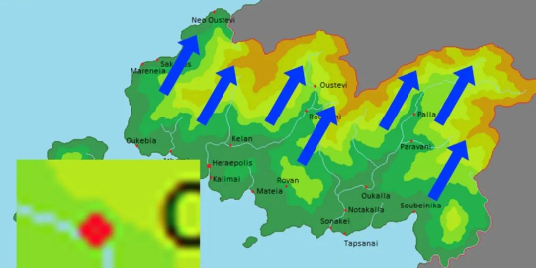
While the strategic level decision may be getting an information edge in the cyberspace area because a weakspot is identified, the tacticians' is to find a way to fulfill this goal.
The tactical level cares less about the why, it cares for the how.
The tactical level cares less about the why, it cares for the how.
You may have noticed that there is a huge gap between the strategic and tactical layer, this is where the relatively new operational layer comes into play.
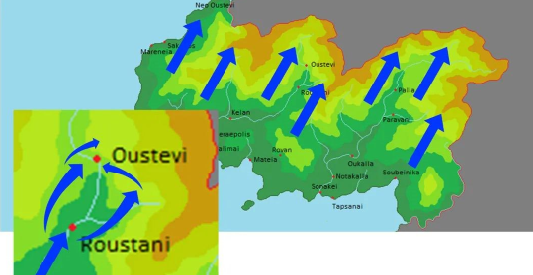
It forms a bridge between tactical and strategic efforts. The operational leader cares for a small chunk of the whole. None of those mentioned layers can exist without the other. Usually we are talking about multiple operations at the same time.
End of thread.
This is not a solution, it's a way to perceive things. How to analyze situations and how to find a way to actually start something that matters for the protection of your community in the long run.
Which dimensions and domains can you exploit, disrupt or deny?
This is not a solution, it's a way to perceive things. How to analyze situations and how to find a way to actually start something that matters for the protection of your community in the long run.
Which dimensions and domains can you exploit, disrupt or deny?
If you like this and want more of exactly this type of threads, give this one a boost by liking sharing and saving it to your bookmarks.
Cheers
Cheers
Loading suggestions...