

20 Lessons From "Adapt" 👇
1. Failure is everywhere. Ten percent of American companies disappear every year. 🧵
1. Failure is everywhere. Ten percent of American companies disappear every year. 🧵
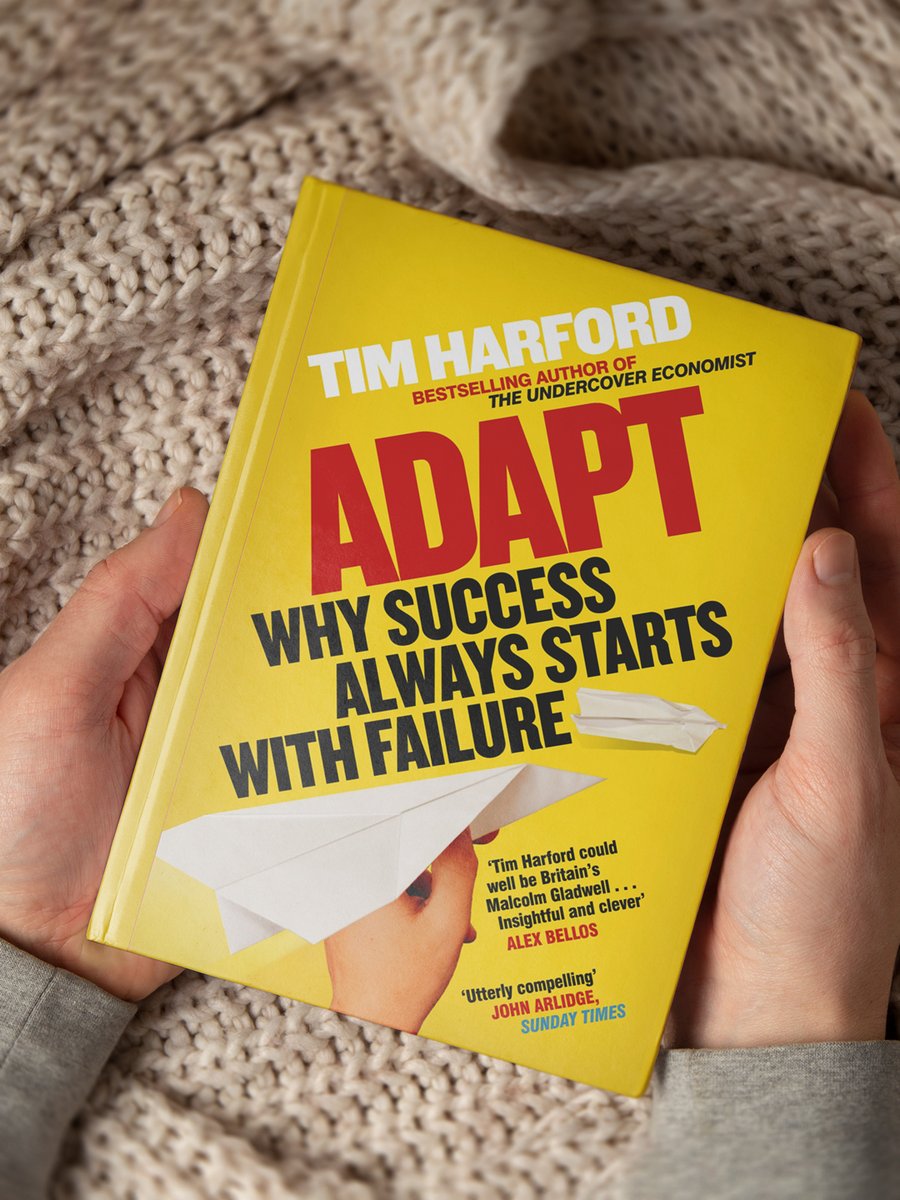
2. Avoid survivorship bias. Don't just see success. See all the failures that led to the eventual success.
3. The good ideas take off and less successful ones die out. It's like evolution for economics.
3. The good ideas take off and less successful ones die out. It's like evolution for economics.
4. Evolution produces ongoing “works for now” solutions and then builds upon those ideas.
5. The evolutionary mix of small steps and occasional wild gambles is the best possible way to search for solutions.
5. The evolutionary mix of small steps and occasional wild gambles is the best possible way to search for solutions.
6. Accepting trial and error means accepting error. And human brains don't seem to be very good at doing that.
7. “A person who has not made peace with his losses is likely to accept gambles that would be unacceptable to him otherwise.”
-Kahneman and Tversky
7. “A person who has not made peace with his losses is likely to accept gambles that would be unacceptable to him otherwise.”
-Kahneman and Tversky
8. We are more blind than we think
9. Most real-world problems are more complex than we think
10. Seek out new ideas and try new things
11. When trying something new, do it on a scale where failure is survivable
12. Seek out feedback. Learn from your mistakes as you go along
9. Most real-world problems are more complex than we think
10. Seek out new ideas and try new things
11. When trying something new, do it on a scale where failure is survivable
12. Seek out feedback. Learn from your mistakes as you go along
13. Make sure you know when you've failed. Measure your progress.
14. If everyone did things the same way, we would struggle to improve because nobody would test new ideas.
14. If everyone did things the same way, we would struggle to improve because nobody would test new ideas.
15. 80 percent of Google's projects will fail, but that doesn't matter. People only remember the 20 percent that succeed.
16. Formal theory won't get you nearly as far as an incredibly rapid systematic process of trial and error.
16. Formal theory won't get you nearly as far as an incredibly rapid systematic process of trial and error.
17. Hedonic editing is a way of avoiding thinking about losses and mistakes by convincing ourselves they aren't that bad.
18. The three obstacles that prevent us from learning from our mistakes are 1) denial, 2) self-destructive behavior, 3) remembering past mistakes as triumphs.
19. If you're going to fail in public, best to do it in front of a limited audience. You need a relatively safe space to fail.
20. Our response to failure should be, “I am not a failure, but I have made a mistake.”
Thanks for reading!🙏
If you found this thread valuable,
you can help me by:
🔃 RT the first tweet and help others find it
😇 Following @deep_develop
If you found this thread valuable,
you can help me by:
🔃 RT the first tweet and help others find it
😇 Following @deep_develop
Loading suggestions...