

You may have seen the 🧵on nonurologic uses of Foley catheters - head/neck edition (link at the end)...
Now let's finish it with nonurologic uses of Foley catheters - torso edition... a 🧵.
Now let's finish it with nonurologic uses of Foley catheters - torso edition... a 🧵.
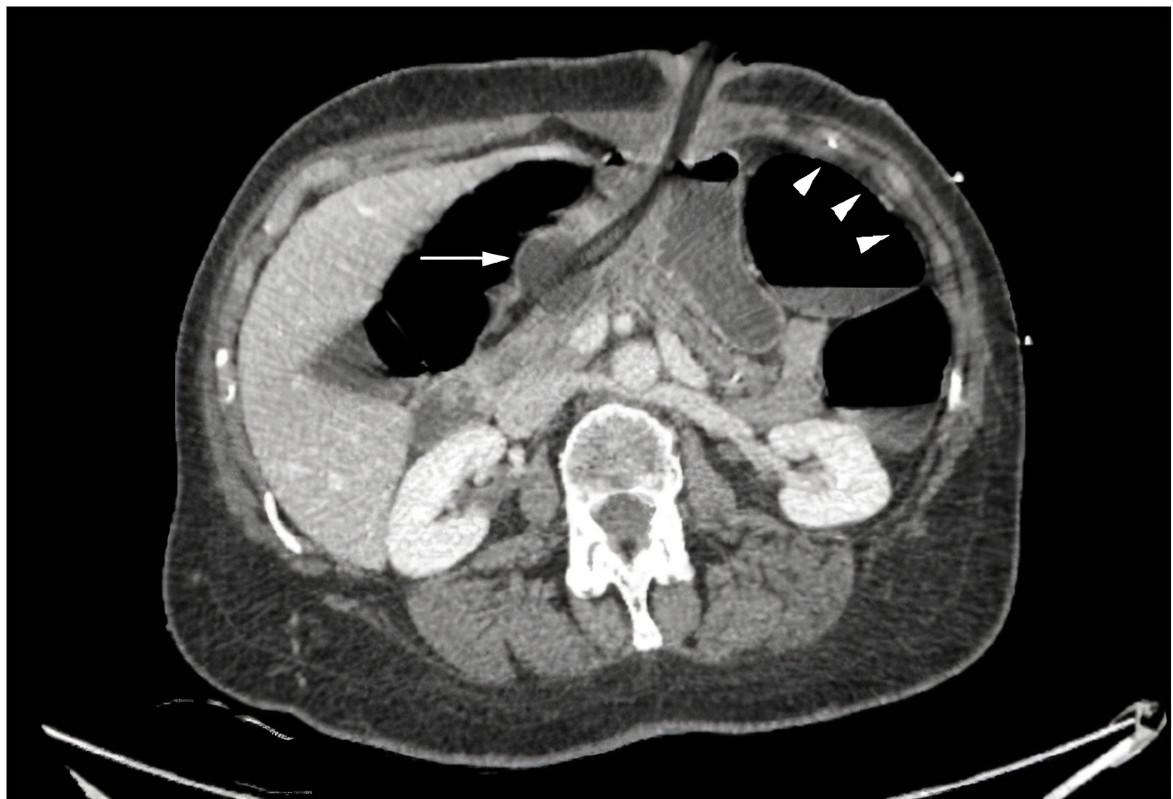
When a gastrostomy tube falls out, a Foley catheter is often used to preserve the tract. It can be used for feeding as well.
There is a risk that the balloon may migrate distally, causing a gastric outlet obstruction (many authors; CT scan from Vu et al (WestJEM case report)
There is a risk that the balloon may migrate distally, causing a gastric outlet obstruction (many authors; CT scan from Vu et al (WestJEM case report)

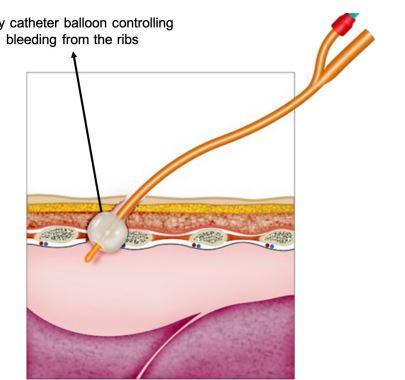
A Foley can also be used to tamponade chest wall bleeders in patients with stab wounds. I have also done this myself.
Photo from colombiamedica.univalle.edu.co
Photo from colombiamedica.univalle.edu.co
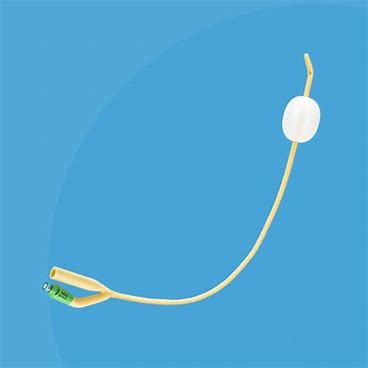
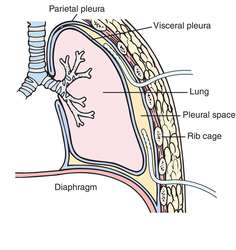
Lai (2018) reported using a Foleys instead of chest tubes after pulmonary resection in a large cohort (441 cases).
(generic images only - copyright)
pubmed.ncbi.nlm.nih.gov
(generic images only - copyright)
pubmed.ncbi.nlm.nih.gov
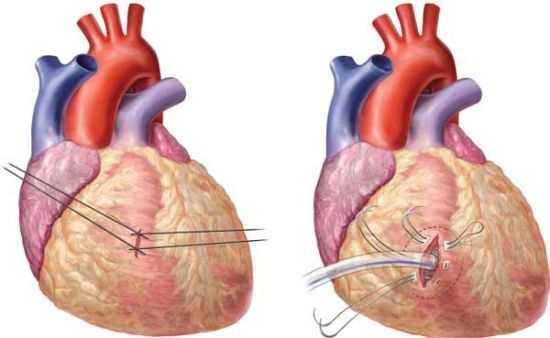
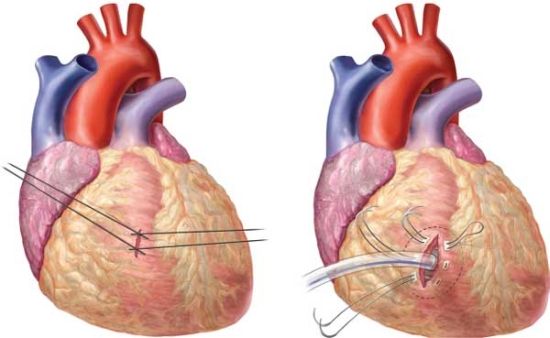
Foley placement for temporization of cardiac injuries has been described by many, and was formerly taught in the ATOM course, but has largely fallen out of favor.
Nowadays we just cover the hole with a finger, and move it when it's time to sew, and there's some blood loss.
Nowadays we just cover the hole with a finger, and move it when it's time to sew, and there's some blood loss.
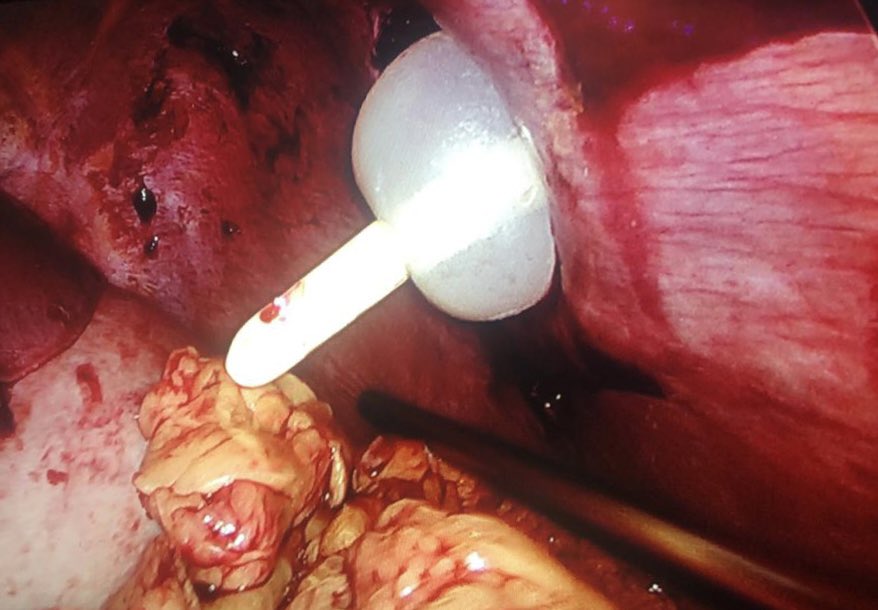
A Foley was used by @faga7 in a patient with an abdomimal stab wound to maintain pneumoperitoneum to allow for laparoscopic exploration.
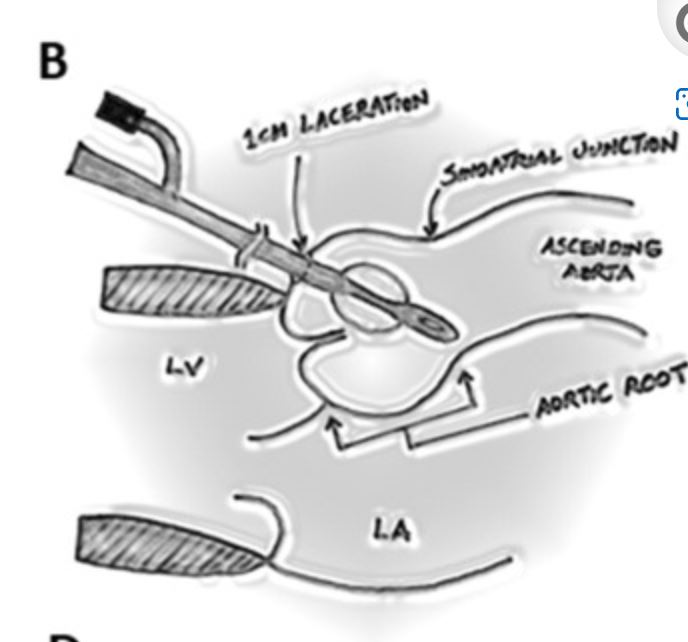
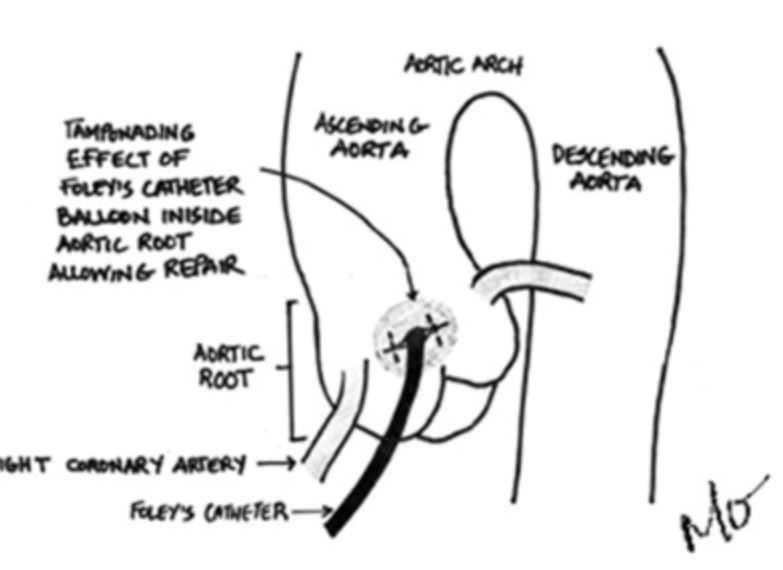
Elmoghrabi et al (2016) used a Foley to provide temporary hemorrhage control in a patient with a penetration aortic root injury.
ncbi.nlm.nih.gov
ncbi.nlm.nih.gov
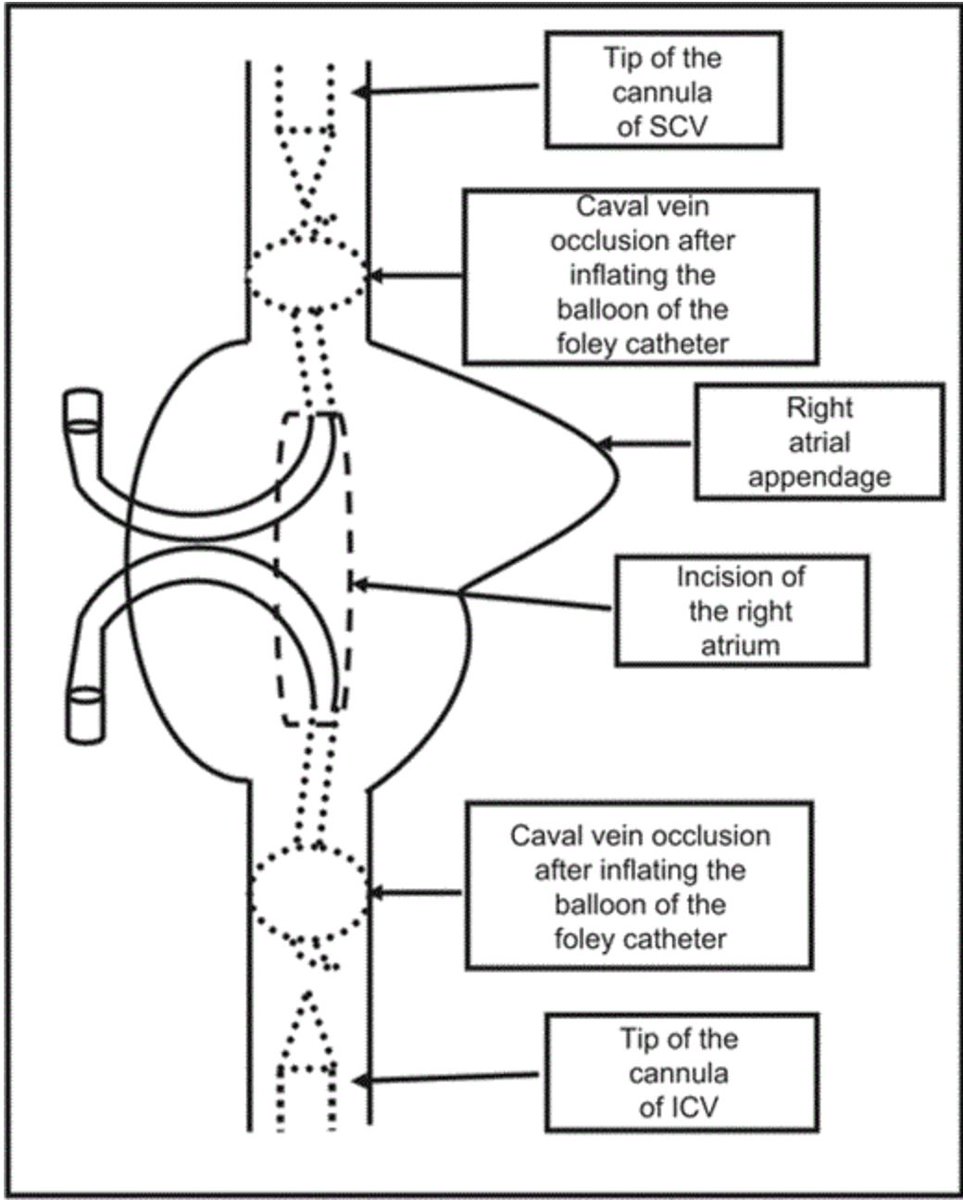
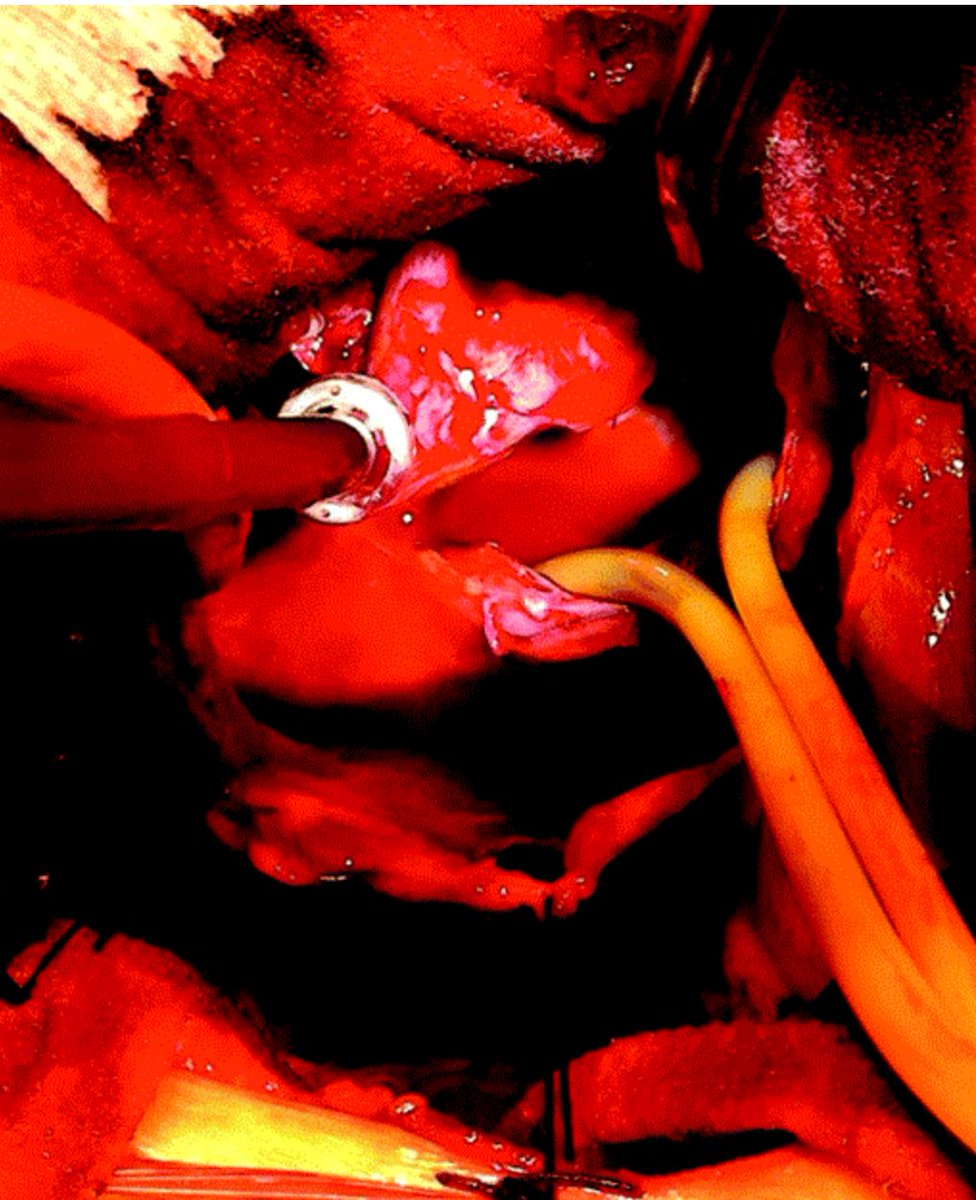
Sansone at al used 2 Foleys to control the SVC and IVC in a patient undergoing redo cardiac surgery.
academic.oup.com
academic.oup.com
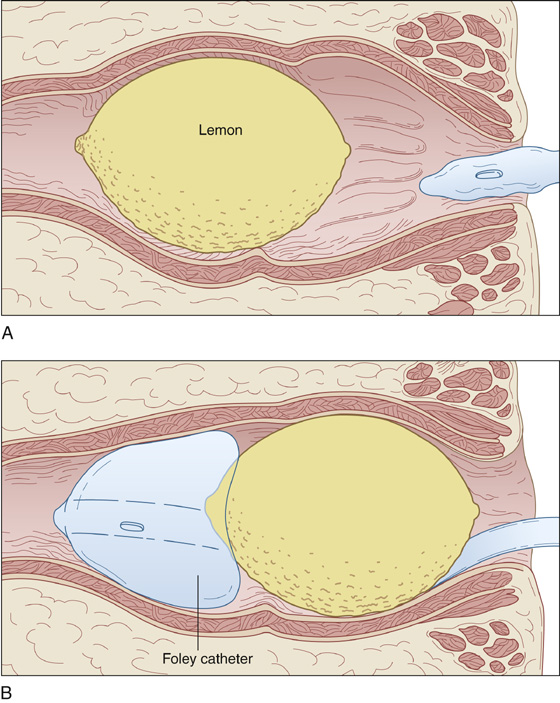
Many have described using a Foley for rectal foreign body removal. If it can be advanced past the object, it may break the ‘suction’ and the object is easier to remove. I think this is overrated…it’s hard to get the Foley past the object.
Image: aneskey.com
Image: aneskey.com
Foley catheters apparently not infrequently used to assist with labor induction. This is extensive enough to have a Cochrane review, and it’s not my specialty, so I won’t try to explore that in detail, but here is a representative article.
obgyn.onlinelibrary.wiley.com
obgyn.onlinelibrary.wiley.com
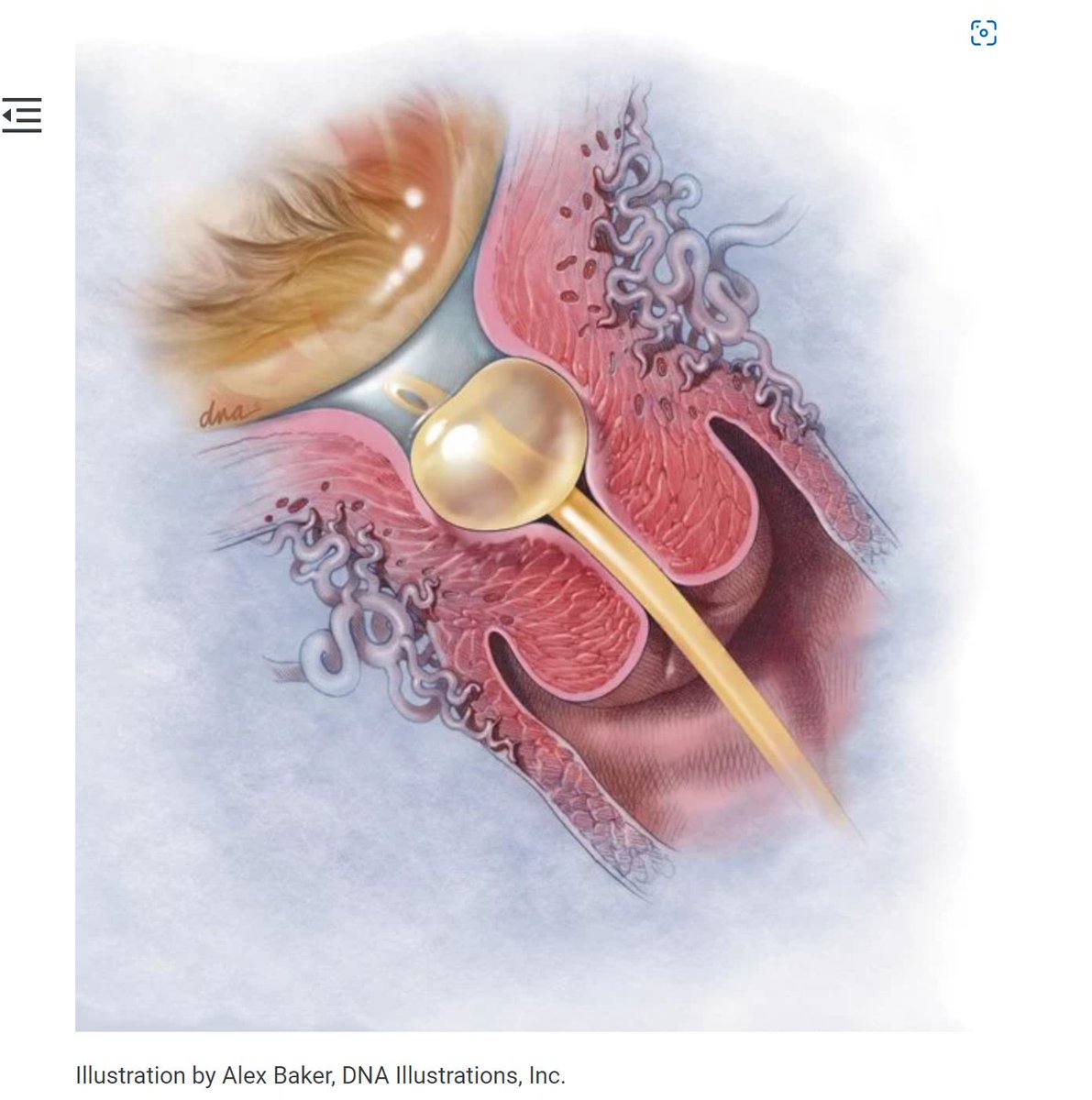
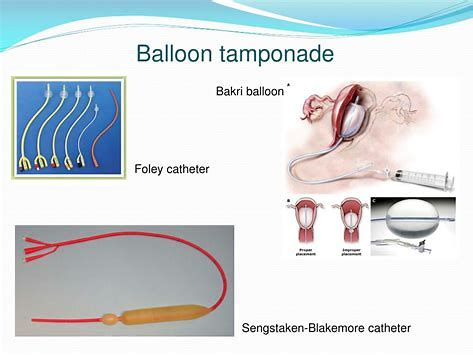
Foley catheters may be used for balloon tamponade for uterine hemorrhage when necessary, though they are probably for the first choice for this.
Image from slide presentation by Sanapo.
Image from slide presentation by Sanapo.
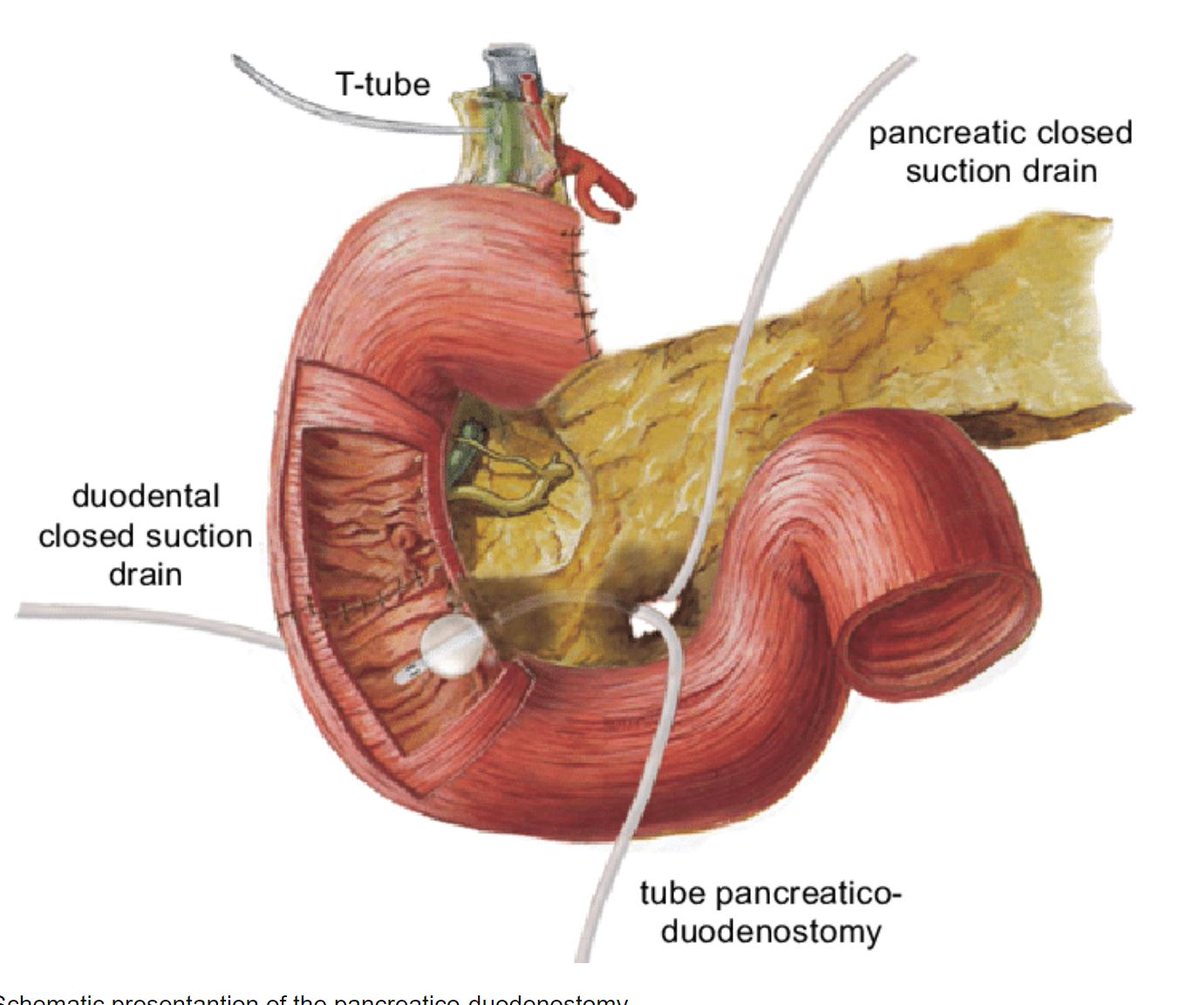
A Foley may be used in the duodenum for drainage purposes, though a Malecot catheter is probably more commonly used.
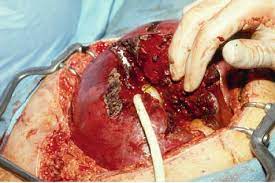
Thomas et al (1993) reported using a Foley to provide tamponade in a patient with a severe liver injury (also reported by others)
J Trauma 1993 Mar;34(3):448-9
J Trauma 1993 Mar;34(3):448-9
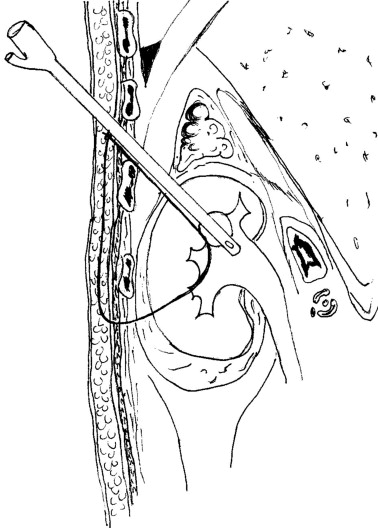
Foleys have been used as nephrostomy tubes (which I guess is urologic...but still non-bladder.)
researchgate.net
researchgate.net
In case you missed it, here’s the link to Foley catheters…head and neck edition.
Loading suggestions...