

Thread: Tokyo Ghoul is MUCH deeper than you think pt.2
“You wanted to know my mother… she was really an admirable person, she worked, did the housework, never troubled anybody… I was so proud of her” - Kaneki
“But… was your mother REALLY a kind an admirable person?” - Rize
“You wanted to know my mother… she was really an admirable person, she worked, did the housework, never troubled anybody… I was so proud of her” - Kaneki
“But… was your mother REALLY a kind an admirable person?” - Rize

A thread on the brilliance of the Torture Arc
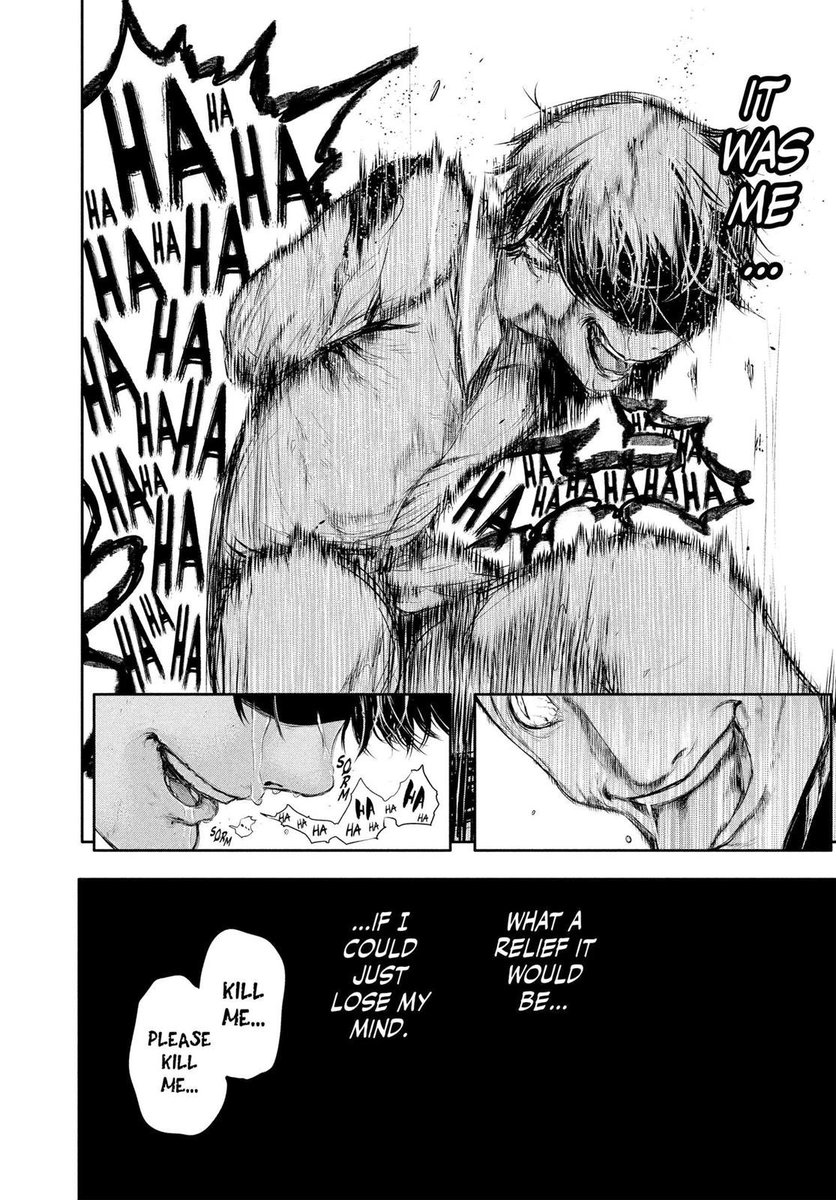
To answer Rize’s question we must do three things:
1. Explore Kaneki’s backstory and it’s links to ‘The Metamorphosis’ by Kafka
2. Explore the link between Kaneki and centipedes
3. Understand that Rize and Kaneki are two halves of a whole (Abraxis)
1. Explore Kaneki’s backstory and it’s links to ‘The Metamorphosis’ by Kafka
2. Explore the link between Kaneki and centipedes
3. Understand that Rize and Kaneki are two halves of a whole (Abraxis)
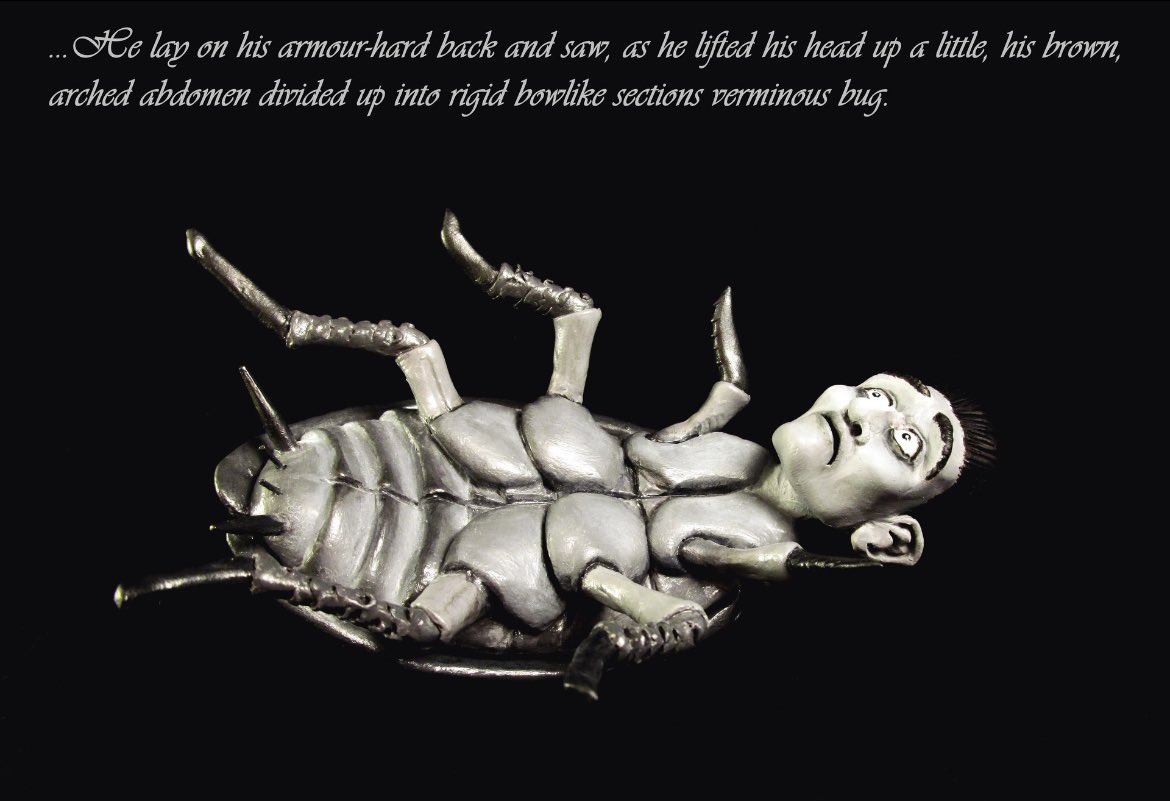
1. The Metamorphosis is a book written by absurdist philosopher Kafka, and in it Kafka tells the story of a travelling salesman who one day wakes up to find he has transformed into a bug
In TG: Kaneki also wakes up in a hospital to find he has had a ghoul’s organ transplanted >
In TG: Kaneki also wakes up in a hospital to find he has had a ghoul’s organ transplanted >
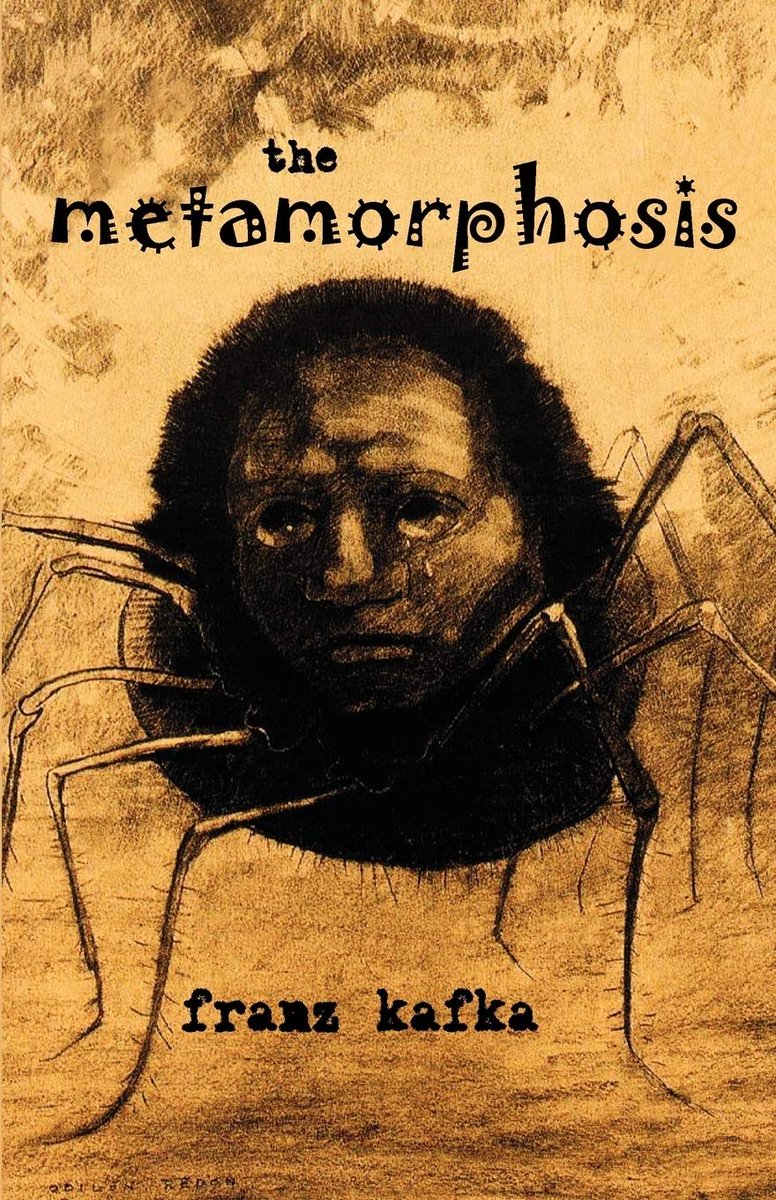
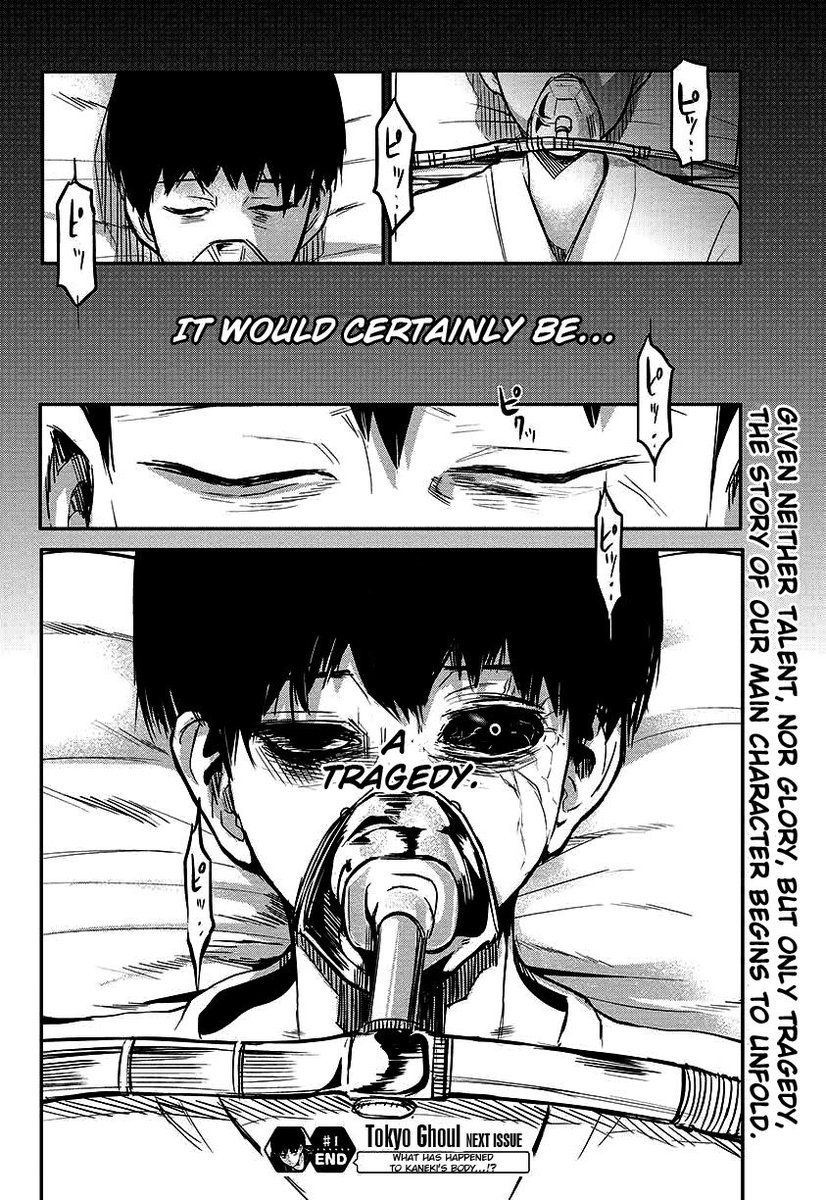
< into him making him half ghoul, he starts noticing the changes to his appetite and taste buds, and thinks of when he read The Metamorphosis by Kafka jokingly
(Notice how Kaneki’s bug is a centipede specifically, this is foreshadowing I’ll explain later)
(Notice how Kaneki’s bug is a centipede specifically, this is foreshadowing I’ll explain later)

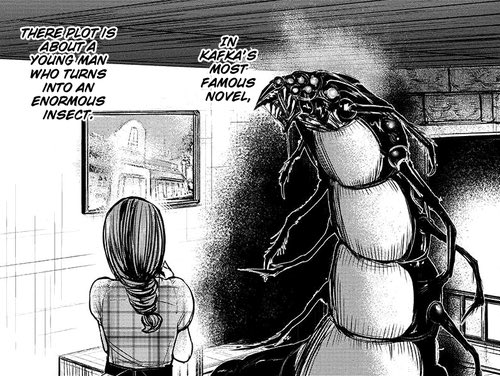
In The Metamorphosis: as a bug Gregor becomes free of his heavy responsibilities and finds joy in the day to day meaning of his life; climbing around the walls and roof of his room and and lazing around doing no work, this is because Gregor embraces his metamorphosis as an escape
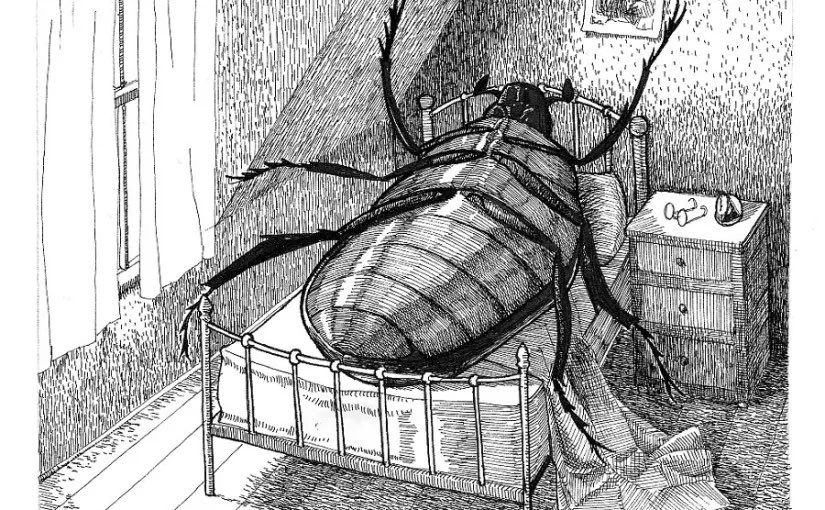
In TG: Kaneki does not embrace his new self and suffers heavily psychologically for it: questioning his reality, trying to cut out Rize’s ghoul organ with a knife, worrying about Hide’s safety, being alienated and outcast by Touka and other ghouls, and unable to eat human flesh

In The Metamorphosis: But Gregor struggles with the isolation by his family repulsed at his new self, and soon learns that they aren’t to be trusted, lying to him about debt problems when they had money saved so they could live parasitically off him while he overworked himself >
< to support them
In TG: this parallels to Kaneki’s backstory, in which he tells Rize that his mother was a “kind… admirable person” and that after his dad died he “wasn’t lonely growing up in a single parent family because of her”: Kaneki is lying about not feeling alone
In TG: this parallels to Kaneki’s backstory, in which he tells Rize that his mother was a “kind… admirable person” and that after his dad died he “wasn’t lonely growing up in a single parent family because of her”: Kaneki is lying about not feeling alone
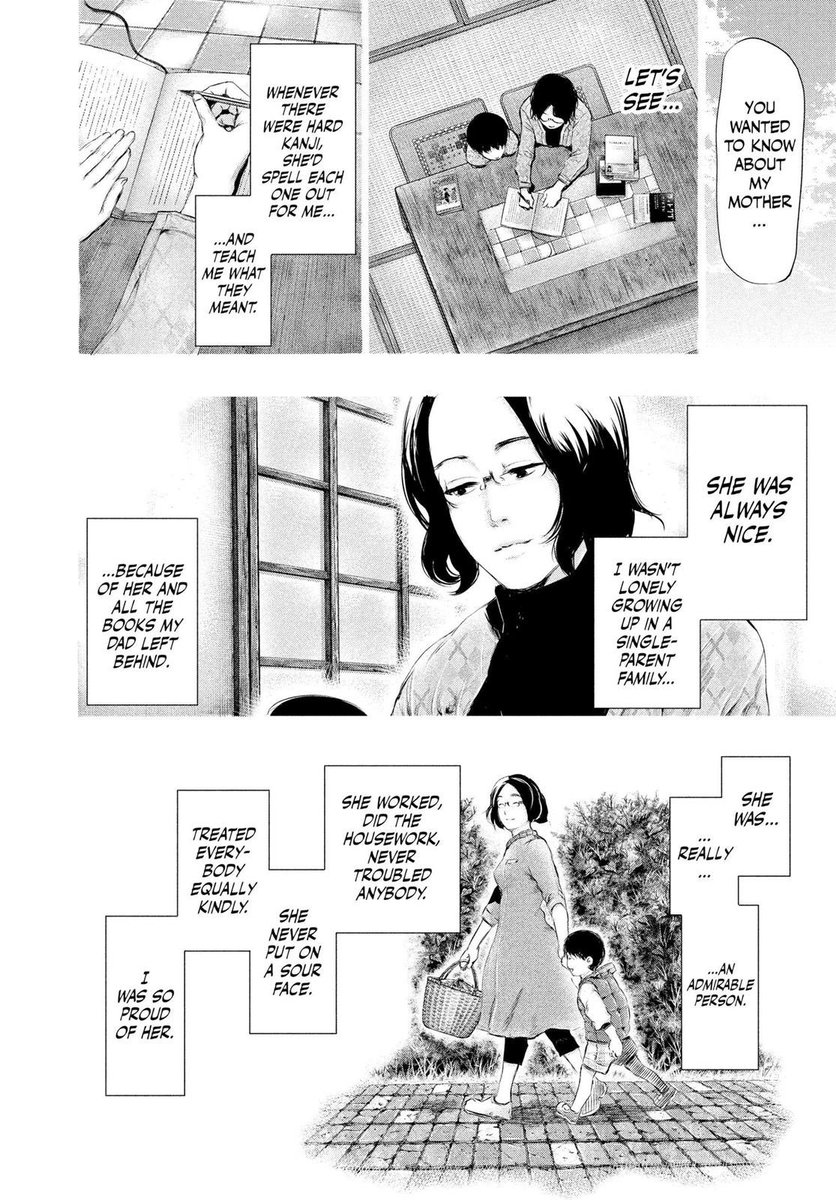
He was incredibly lonely due to his mother’s busy life in which she overworked herself to support her struggling sister and her son, immersing himself in his father’s books to feel closer to him
And Hide was his only friend growing up, something Kaneki even doubts the value of
And Hide was his only friend growing up, something Kaneki even doubts the value of
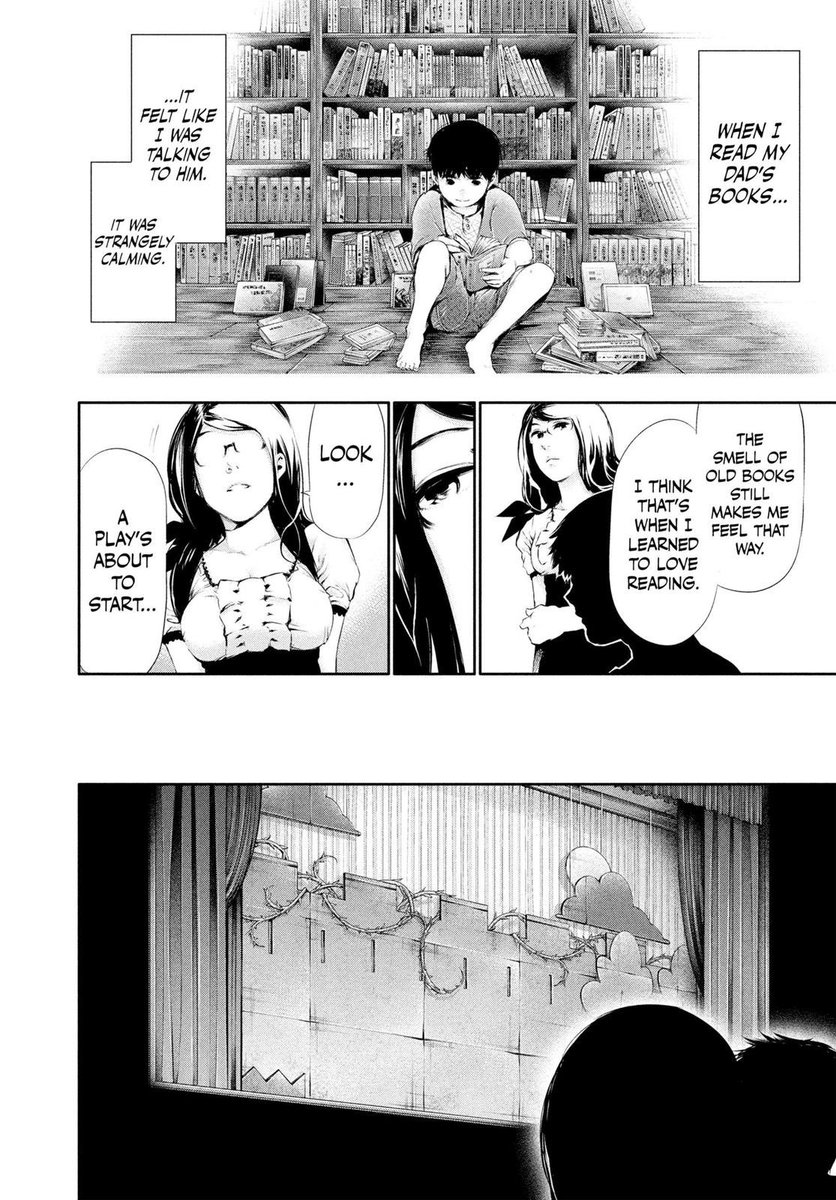
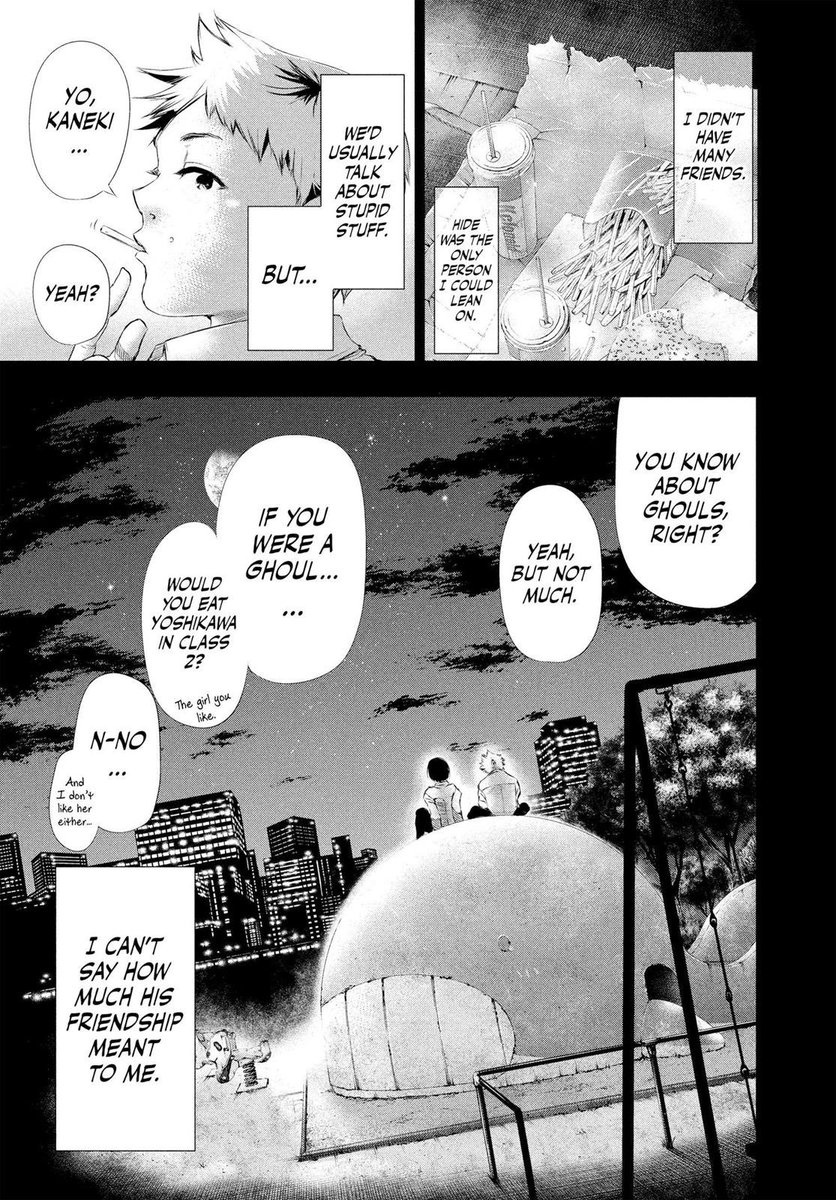
Also, Kaneki’s aunt lived parasitically off of his mother when her husband lost his job and went into debt which caused Kaneki’s mother to die from exhaustion, just like Gregor’s family lived parasitically off of him which caused him to die in his room alone
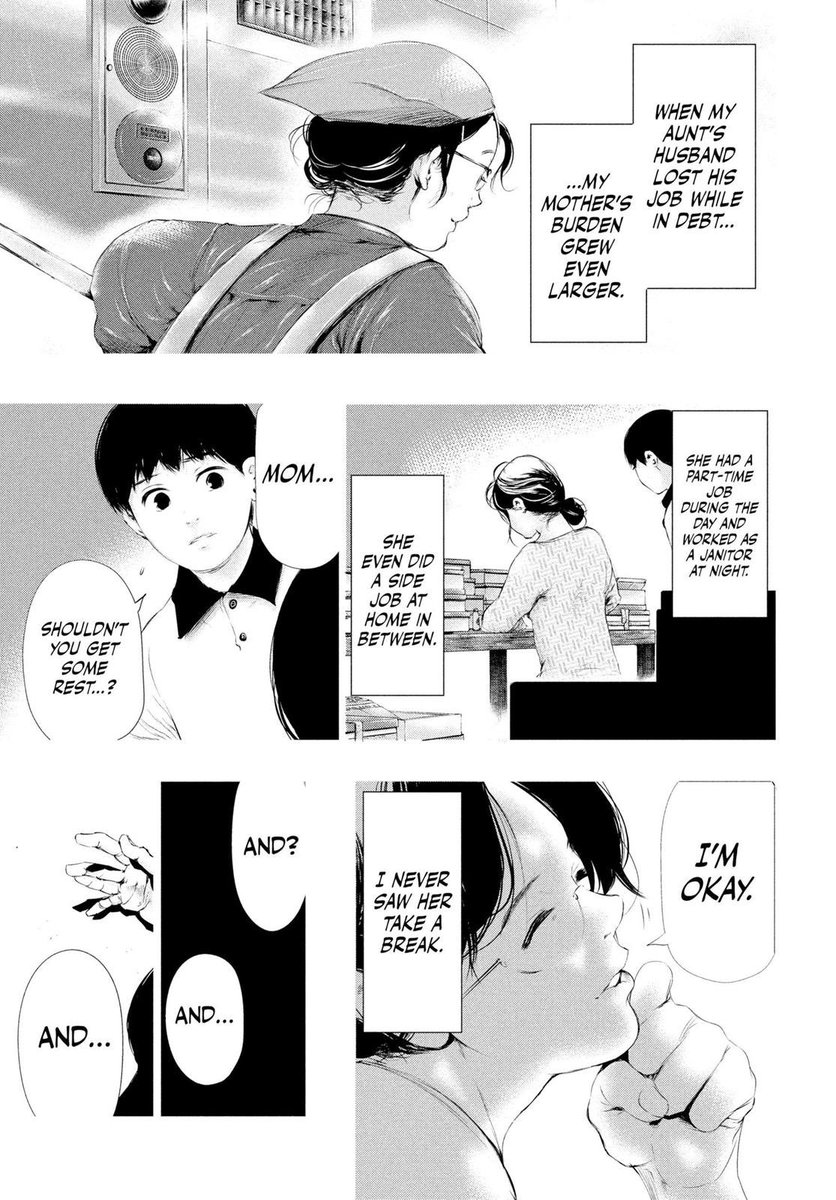
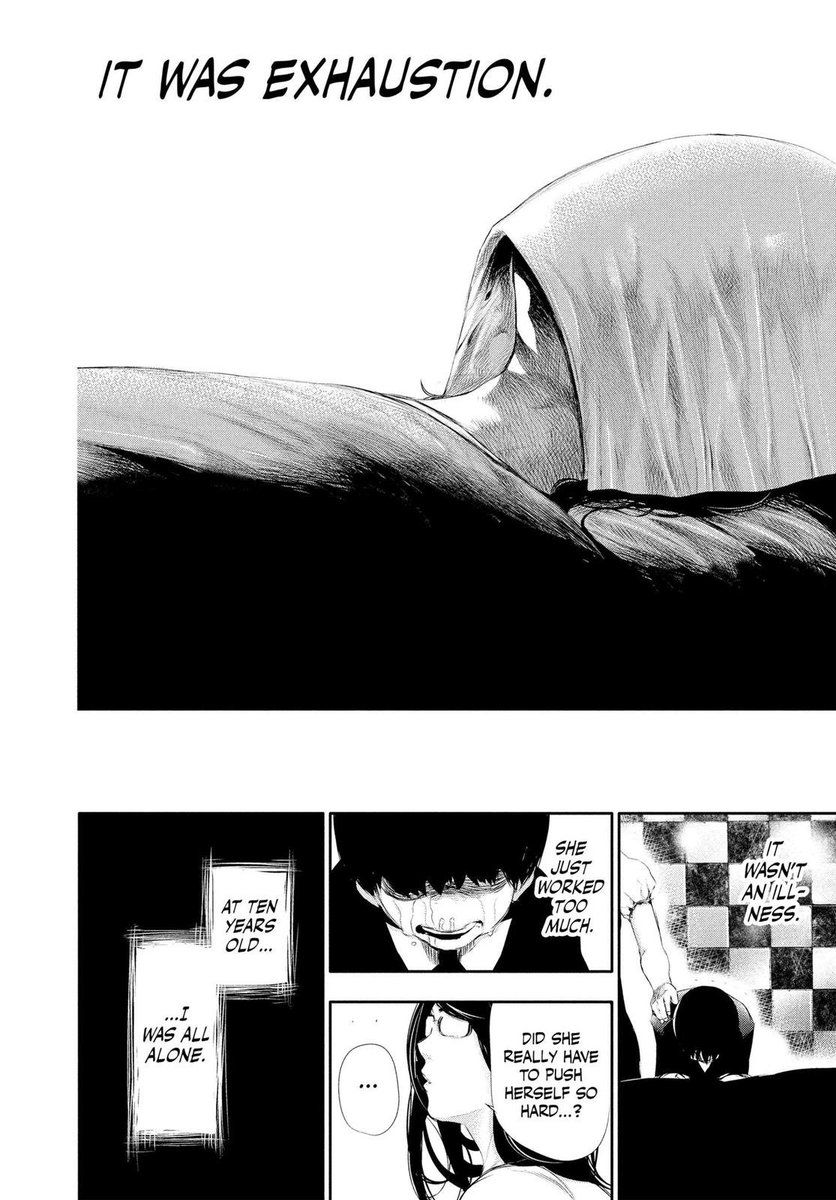
In the Metamorphosis: one of the book’s main themes is your ‘function’ in a society that is apathetically hostile to you, that is your job, ‘if you don’t work then you’re a useless bum with no aspirations’, but the very idea of needing to work is a notion that society itself >
< imposes on you so you will add to the economy and keep the rich people at the top: this is basic capitalism
Gregor’s escape from this comes in his metamorphosis into a bug
Kaneki and his mother are victims of a ‘hostile society’, his mother worked to death and he studied >
Gregor’s escape from this comes in his metamorphosis into a bug
Kaneki and his mother are victims of a ‘hostile society’, his mother worked to death and he studied >
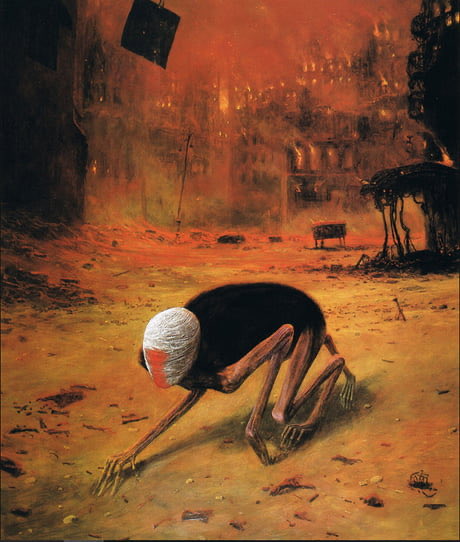
< to make his aunt proud and to get a good job like young people are taught to aspire to, but this lead him into the despair of deep loneliness, hated by his aunts’ family for being better than her son, and reminding her of her feelings of inferiority to his mother


Kaneki realises he has no place in the world and was alone his whole life- besides Hide; he only pretended to have a good life, Rize even reminds him that his weakness right now, his inability to protect people he loves (shown by the mother and child Yamori kills due to >
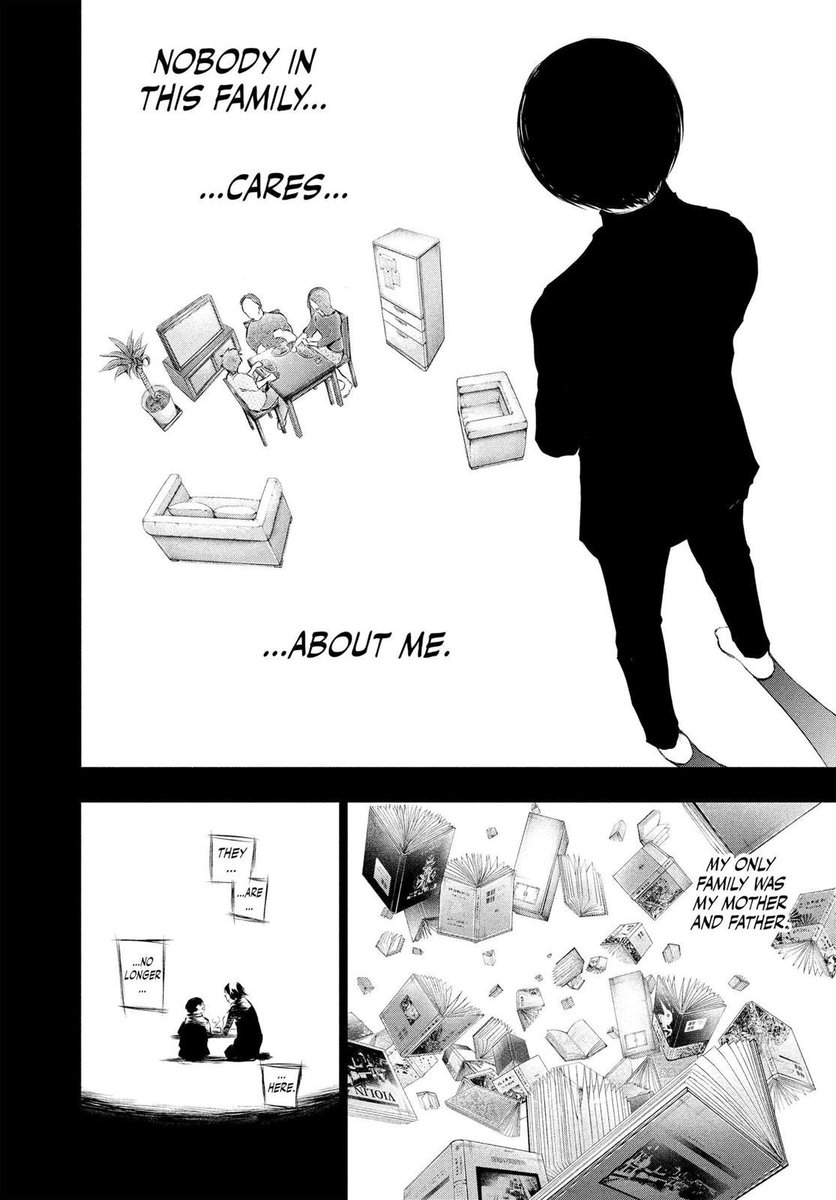
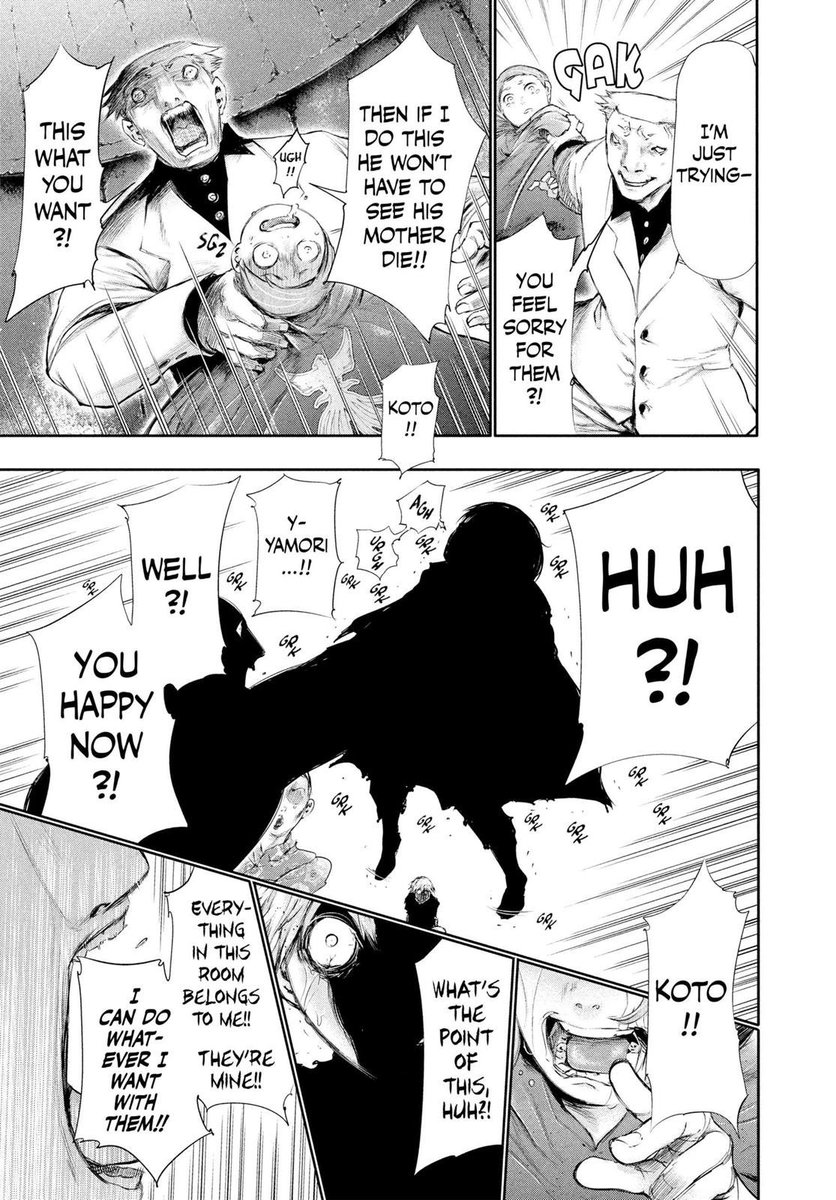
< Kaneki’s indecision) comes from the words he lived by from his mother: “Be somebody who knows pain instead of somebody who hurts.”
If Kaneki’s mother chose to be someone “who hurts (others)”, and not someone “who knows pain”, then she would’ve chose to turn her sister away >
If Kaneki’s mother chose to be someone “who hurts (others)”, and not someone “who knows pain”, then she would’ve chose to turn her sister away >
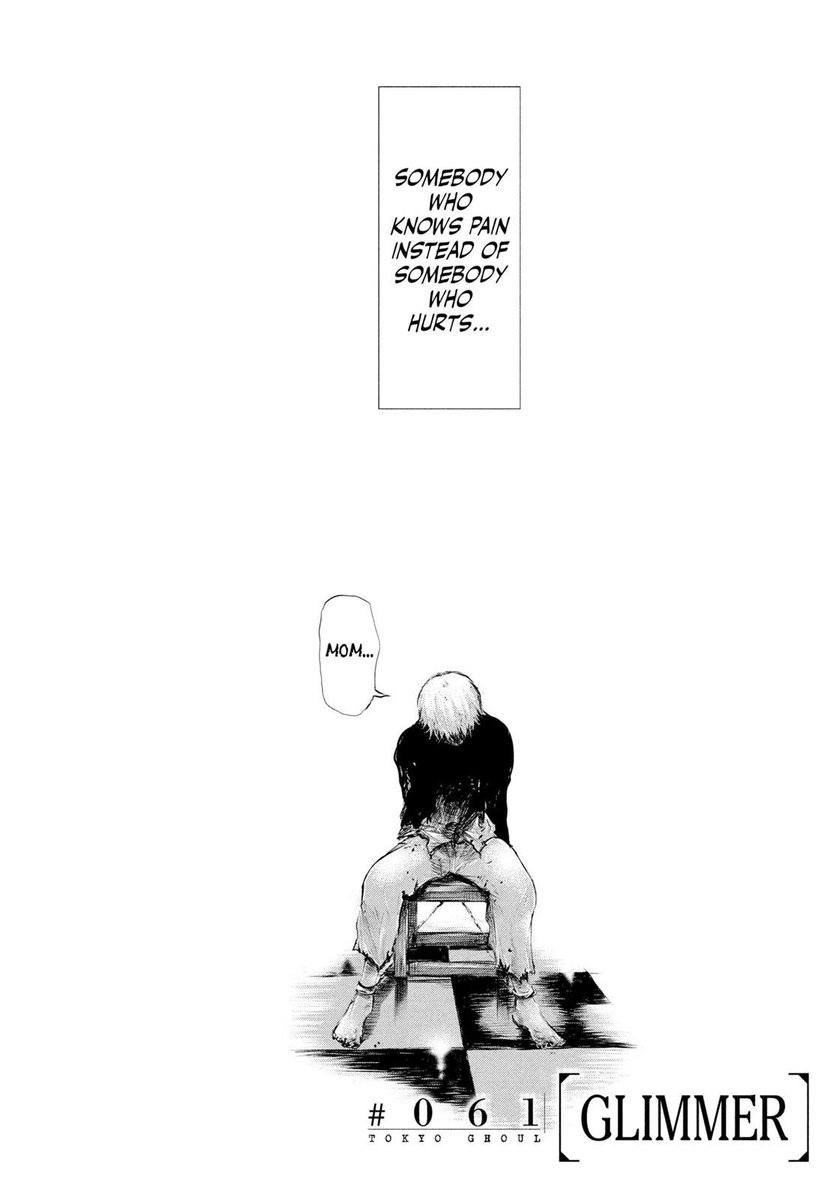
< and lived for her son instead, she wouldn’t of died from exhaustion and Kaneki wouldn’t be alone, instead she chose to be someone “who knows pain” and sacrificed herself for her sister leaving her son behind
In a ‘hostile society’ as Kafka portrays it, you must instead be >
In a ‘hostile society’ as Kafka portrays it, you must instead be >
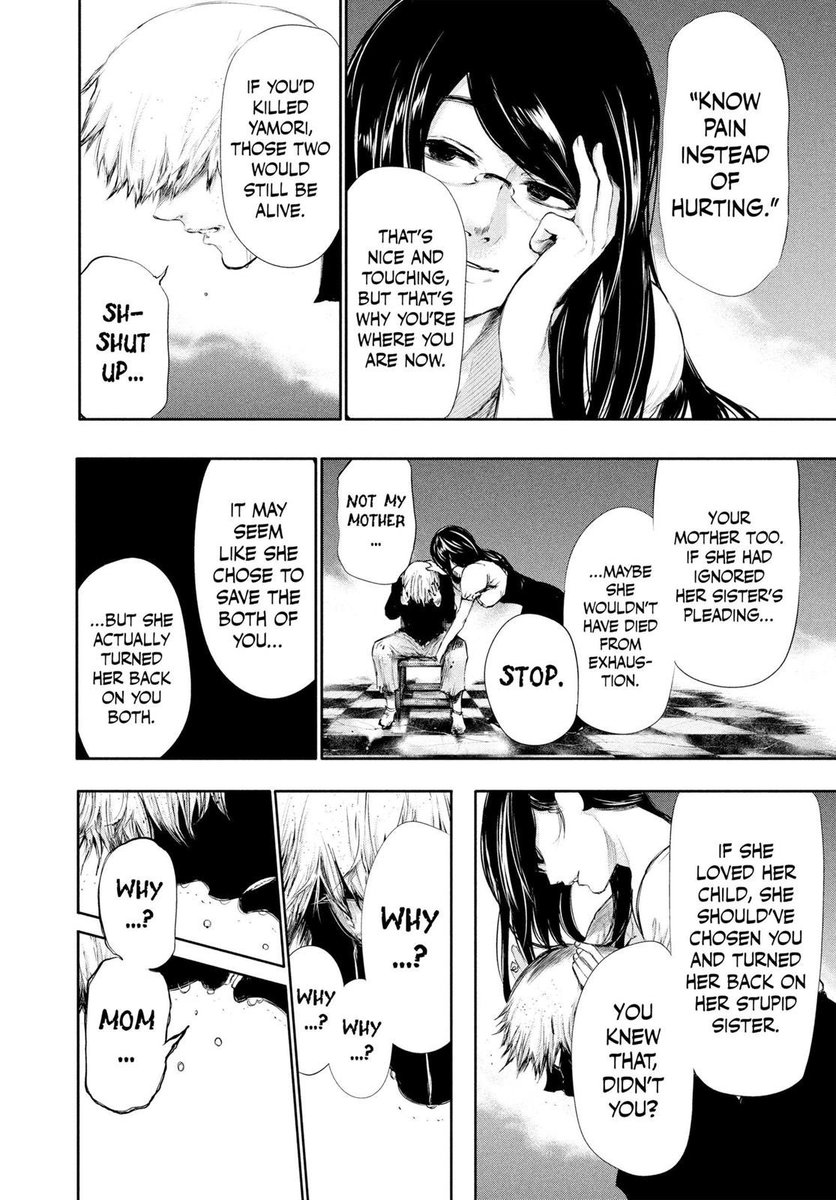
< someone who “who hurts” and not someone “who knows pain”
Kaneki cries out “Why’d you leave me, mom?”, and accepts that her choice to save both her sister and son got her killed and was just weakness, Kaneki couldn’t choose which of the mother and son to save so they both died
Kaneki cries out “Why’d you leave me, mom?”, and accepts that her choice to save both her sister and son got her killed and was just weakness, Kaneki couldn’t choose which of the mother and son to save so they both died
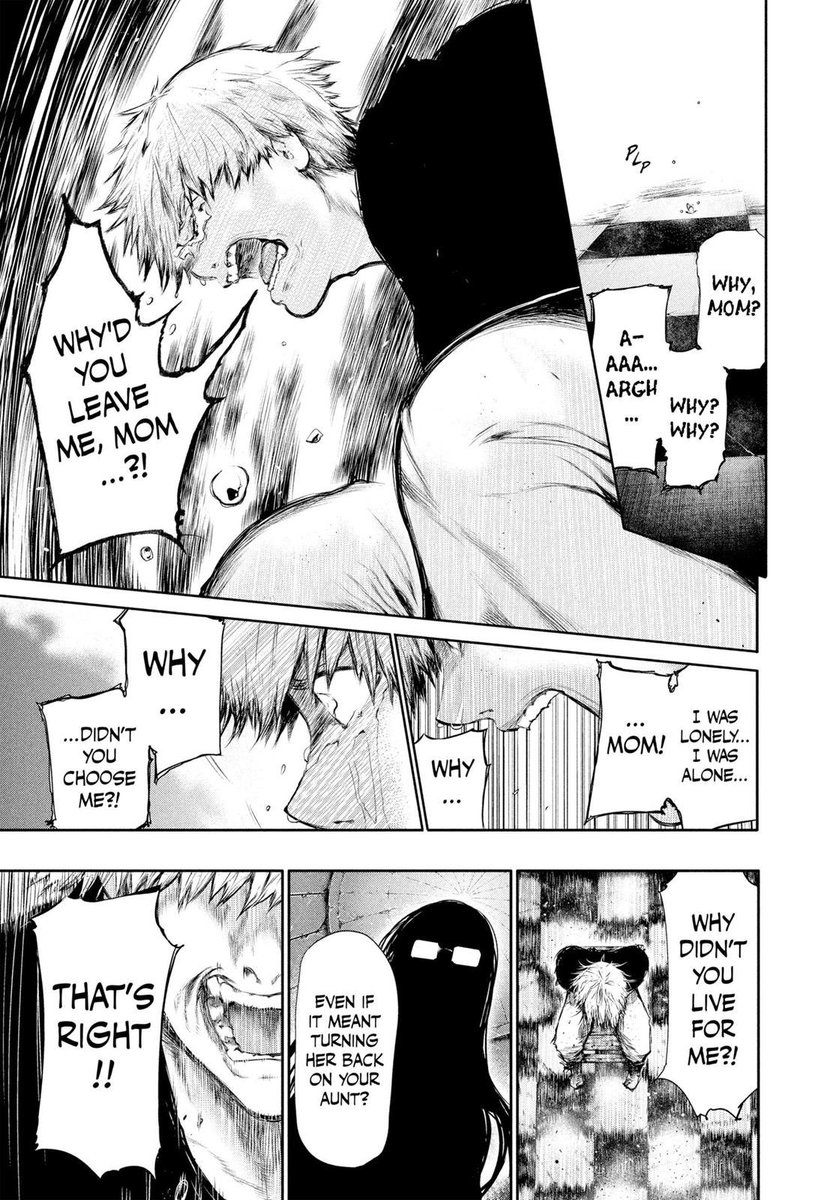
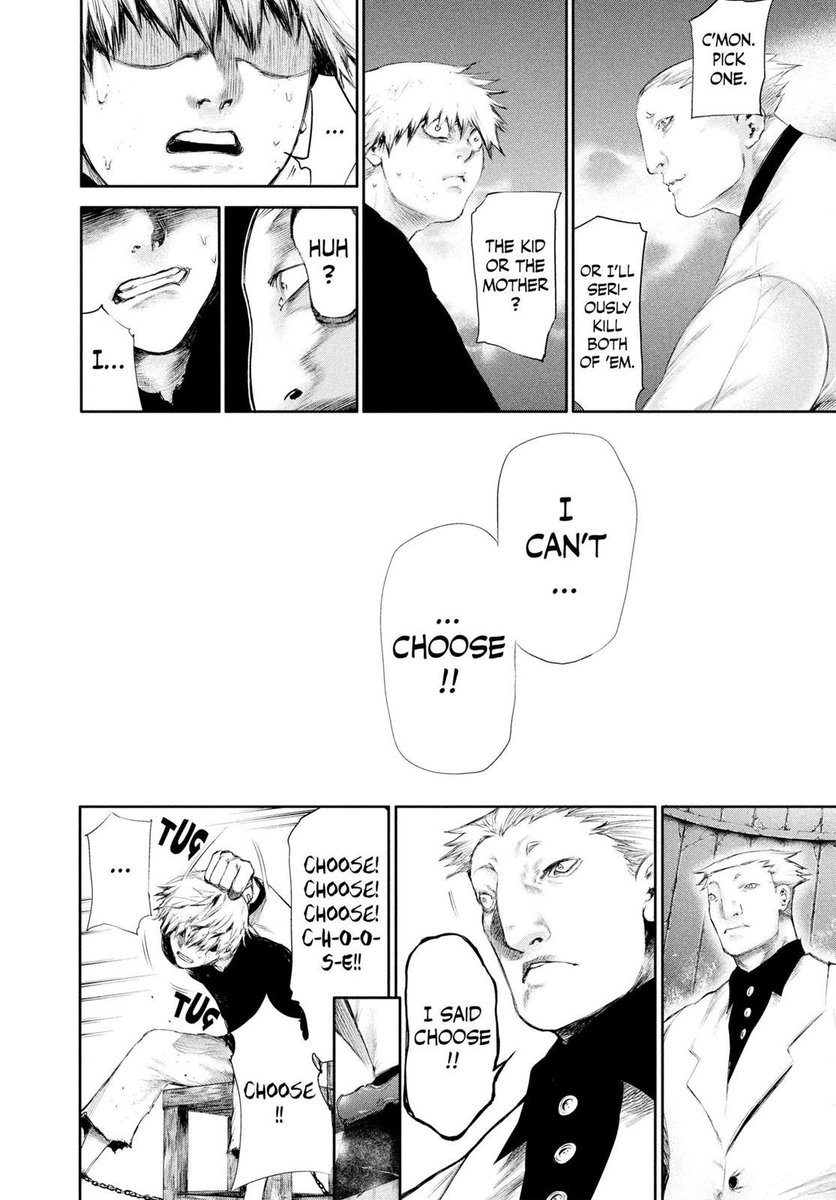
It’s the same as indecision to choose two things at once
2. Before I tie my kafkan analysis to ‘Demian’ and “Abraxis”, why the centipede imagery? Centipedes are everywhere in Tokyo Ghoul, Yamori even tortures Kaneki with one
In Buddhism centipedes have a special meaning >
2. Before I tie my kafkan analysis to ‘Demian’ and “Abraxis”, why the centipede imagery? Centipedes are everywhere in Tokyo Ghoul, Yamori even tortures Kaneki with one
In Buddhism centipedes have a special meaning >
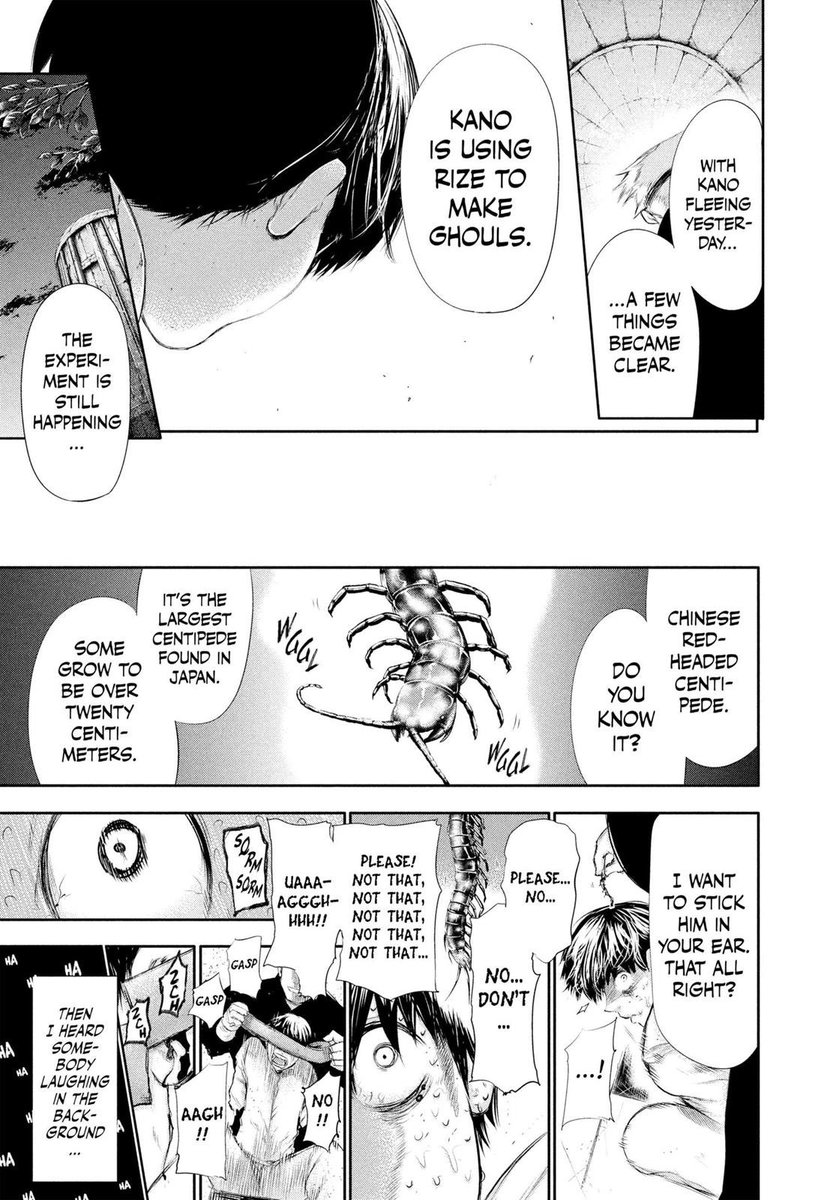
< attached to a god of fortune in war (‘Bishamonten’), warriors prayed to him for good fortune and wealth, and certain centipedes were seen as his messengers
The Chinese Red centipede Yamori tortured Kaneki with is also known for not being hostile to other centipedes, which is >
The Chinese Red centipede Yamori tortured Kaneki with is also known for not being hostile to other centipedes, which is >
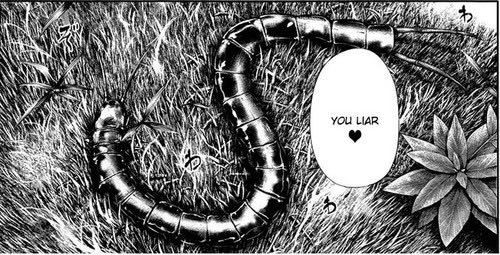
< very rare, symbolic of Kaneki’s ability to inhabit both the ghoul world and the human world, and his desire to connect both worlds without violence
Finally, centipedes were also symbols of war and victory for the samurai, and moving forward to find stability, foreshadowing >
Finally, centipedes were also symbols of war and victory for the samurai, and moving forward to find stability, foreshadowing >

< Kaneki’s victory at Aogiri and much further in the manga, and his metamorphosis, no longer trapped by the words of his mother in the past, and moving forward born anew (later in TG Kaneki becomes a centipede ghoul)
3. His rebirth is an allusion to “Abraxis”, the god of >
3. His rebirth is an allusion to “Abraxis”, the god of >

< light and dark (‘good’/‘evil’)
Ishida first references Abraxis with these panels, the rest of the quote is "The bird is flying to God. The name of the God is Abraxas."
Kaneki rejects Abraxis in the beginning of the manga, denying his ghoul self, so Ishida doesn’t write it
Ishida first references Abraxis with these panels, the rest of the quote is "The bird is flying to God. The name of the God is Abraxas."
Kaneki rejects Abraxis in the beginning of the manga, denying his ghoul self, so Ishida doesn’t write it


This quote is from Herman Hesse’s ‘Demian’, a story paralleling Nietzsche about a man named Sinclair who wants to find his ‘deeper inner self’ (which means his morals and reasons for them), to do this one must criticise the culture of their daily lives and their own society

Sinclair meets a man named Demian who shows him the world of darkness next to the world of light: Rize is Demian, and Kaneki is Sinclair; together, they are “Abraxis”
The annex chamber Yamori tortures Kaneki in is “the egg (that) the bird struggles out of”, a phoenix’s rebirth
The annex chamber Yamori tortures Kaneki in is “the egg (that) the bird struggles out of”, a phoenix’s rebirth

It bares an obvious circular resemblance to it, and thus is a microcosm for the “egg” (world) Kaneki “struggles out of”
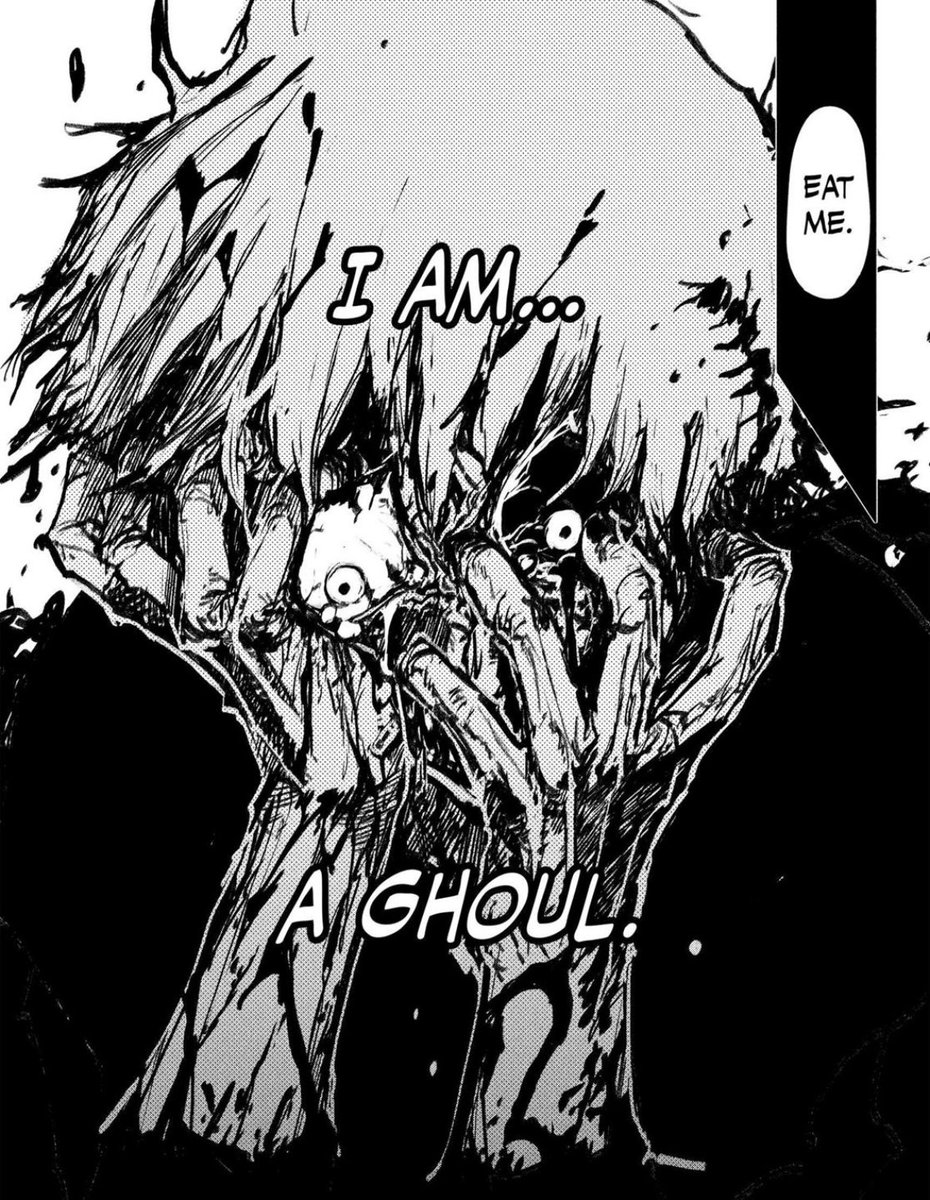
For Kaneki to be born he “must first destroy a world”, and he achieves this by becoming one with his ghoul self, Rize, by eating her, discarding his old morals
For Kaneki to be born he “must first destroy a world”, and he achieves this by becoming one with his ghoul self, Rize, by eating her, discarding his old morals
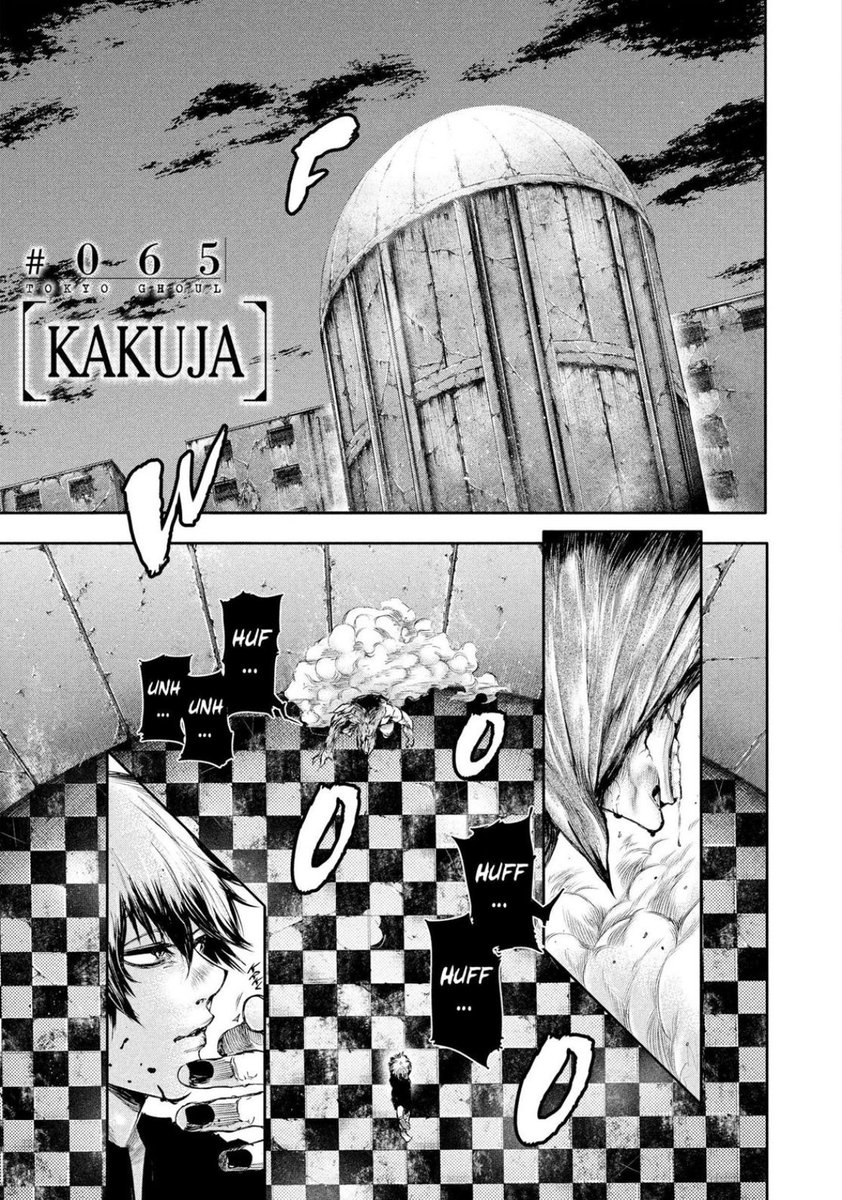
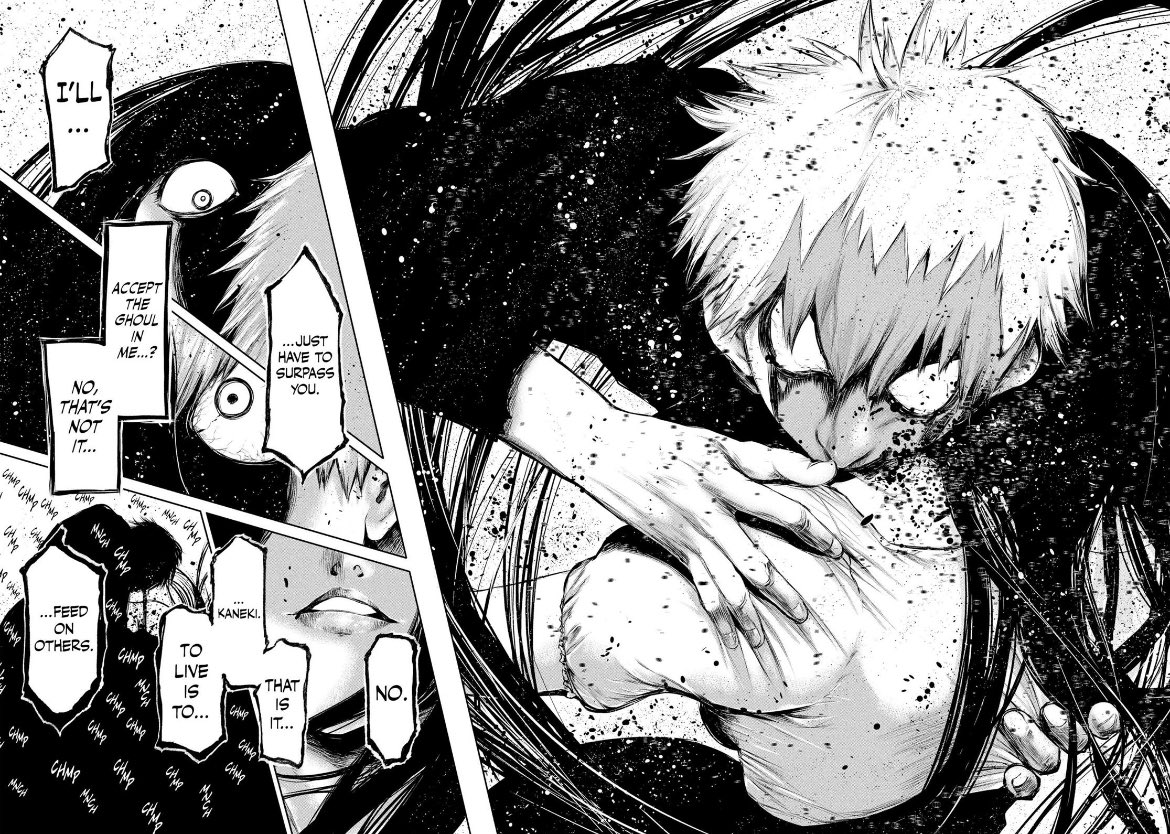
“I am a ghoul.”
Now to link Kaneki’s parallels to Abraxis from ‘Demian’ and Gregor from ‘The Metamorphosis’
In the ending of The Metamorphosis Gregor chooses to die in his room alone to let his family move on: in this sense The Metamorphosis is a story of self sacrifice; Gregor’s own self >
In the ending of The Metamorphosis Gregor chooses to die in his room alone to let his family move on: in this sense The Metamorphosis is a story of self sacrifice; Gregor’s own self >
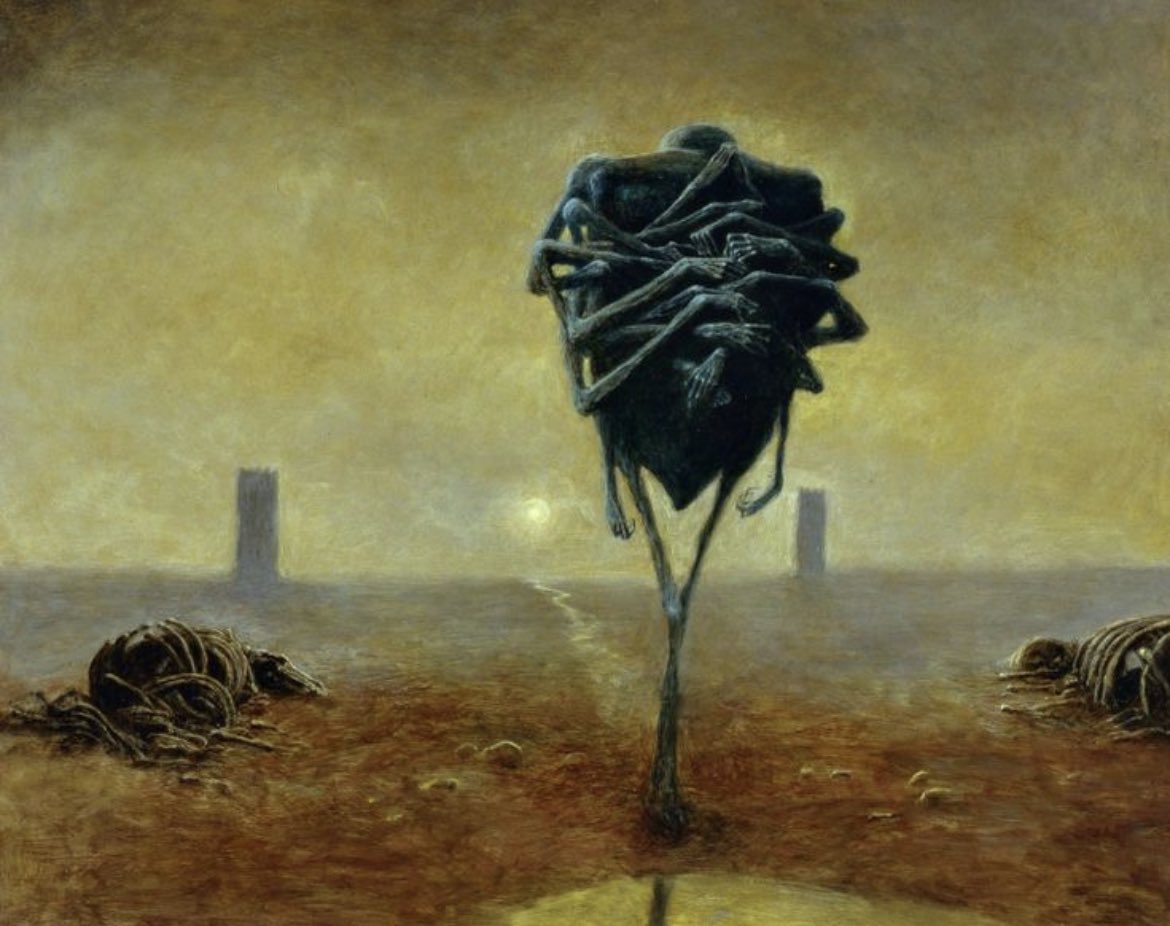
< sacrificial fantasy of a familial ideal birthed by a ‘hostile society’ imposing feelings of ineptness on him: Gregor embraced his metamorphosis, unlike Kaneki during the beginning of the manga, but he was a weak defenceless beetle, cursed with the worst of both worlds
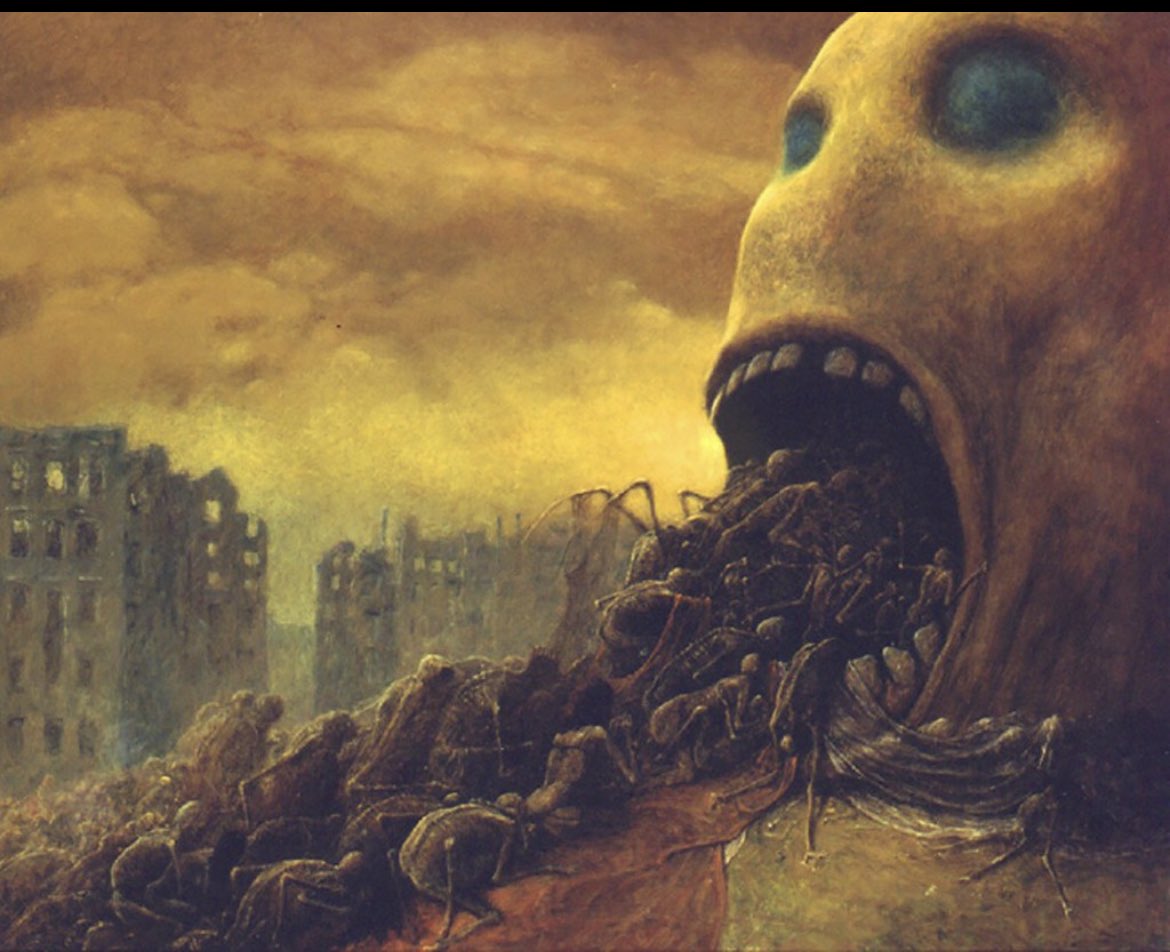
The difference between Gregor and Kaneki is that Kaneki is a centipede, not a wingless beetle, but a symbol of strength always moving forward; his metamorphosis IS his strength, not just his doomed momentary escape like it was for Gregor
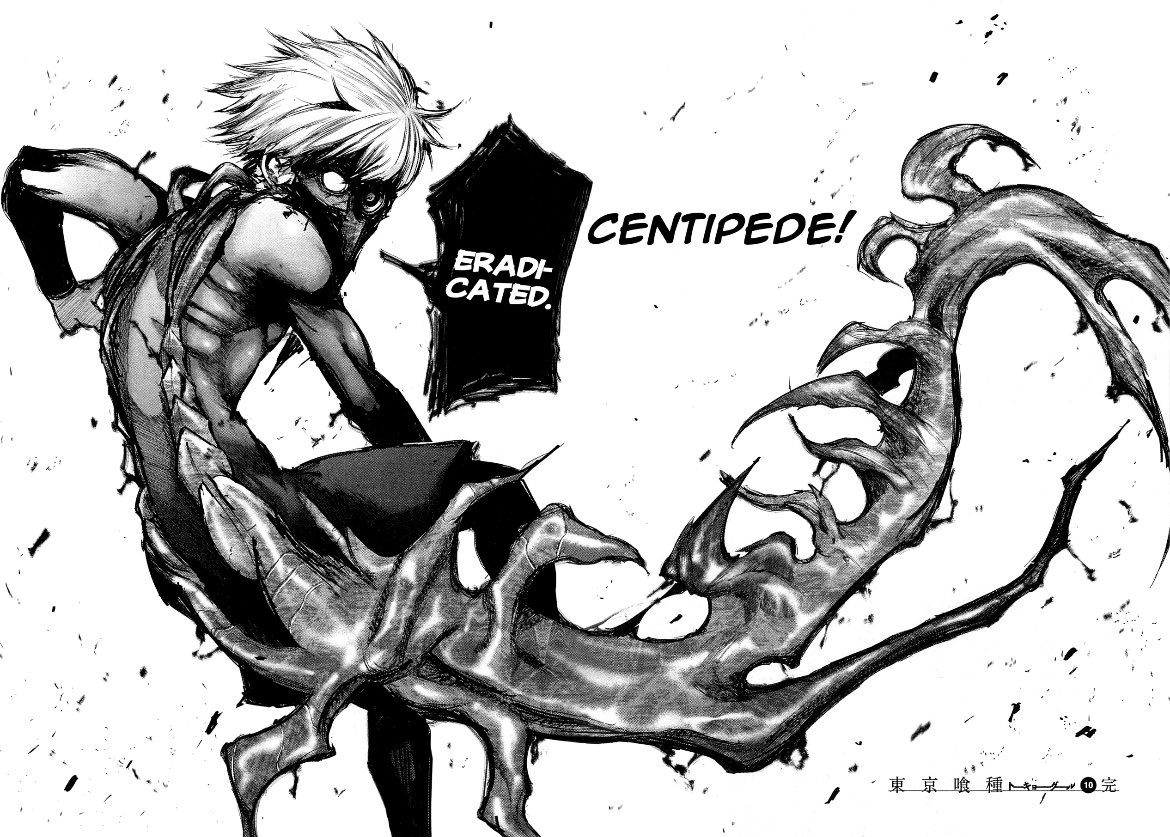
Kaneki’s hair becomes grey because he has become Abraxis, the god of light and dark (a little on the nose Ishida); he escapes his torture chair and dismembers Yamori but let’s him live, because Kaneki is in control of his ‘deeper inner self’ unlike Yamori, a prisoner to his lust
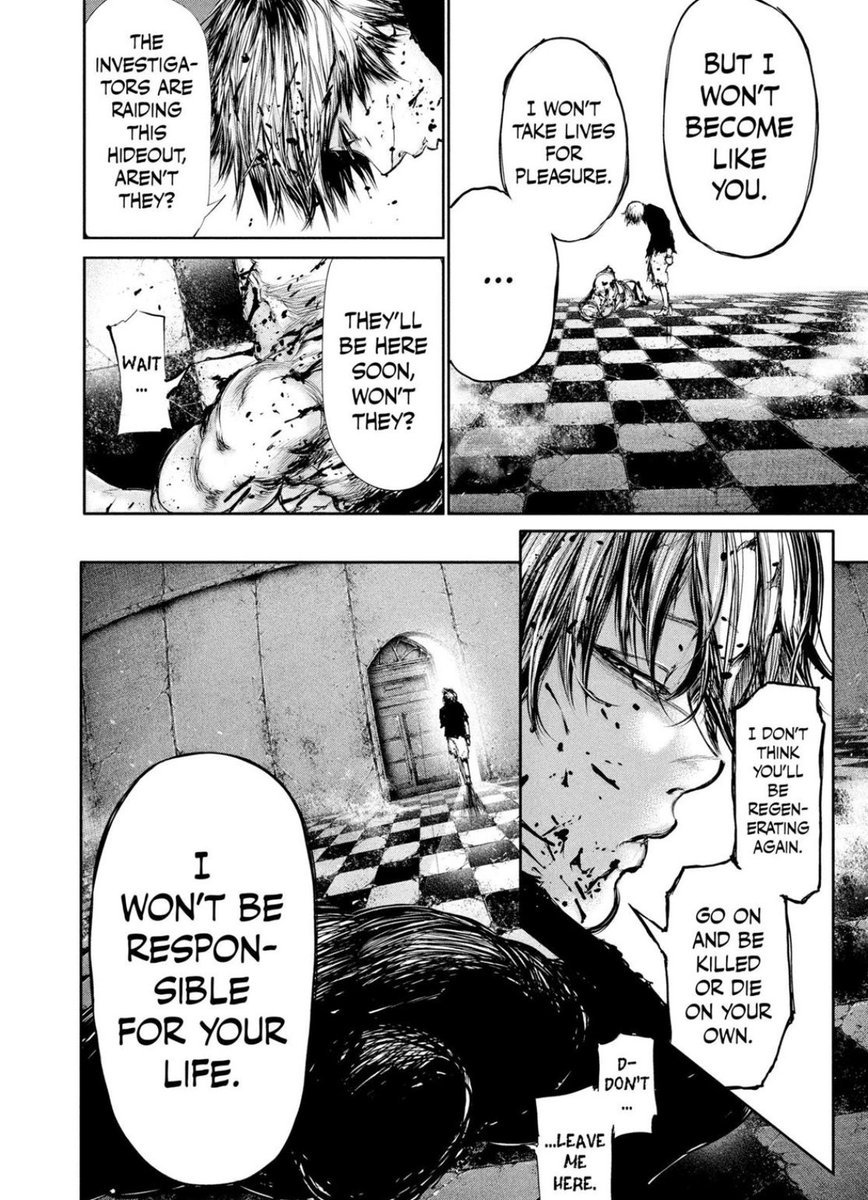
We see Kaneki bare the weight of self sacrifice, alike Gregor, when he comforts Banjou that he doesn’t have to fulfil a role that he’s too weak for, that of the leader, and when he saves Touka from Ayato and defeats him by torturing him just like Yamori did to Kaneki

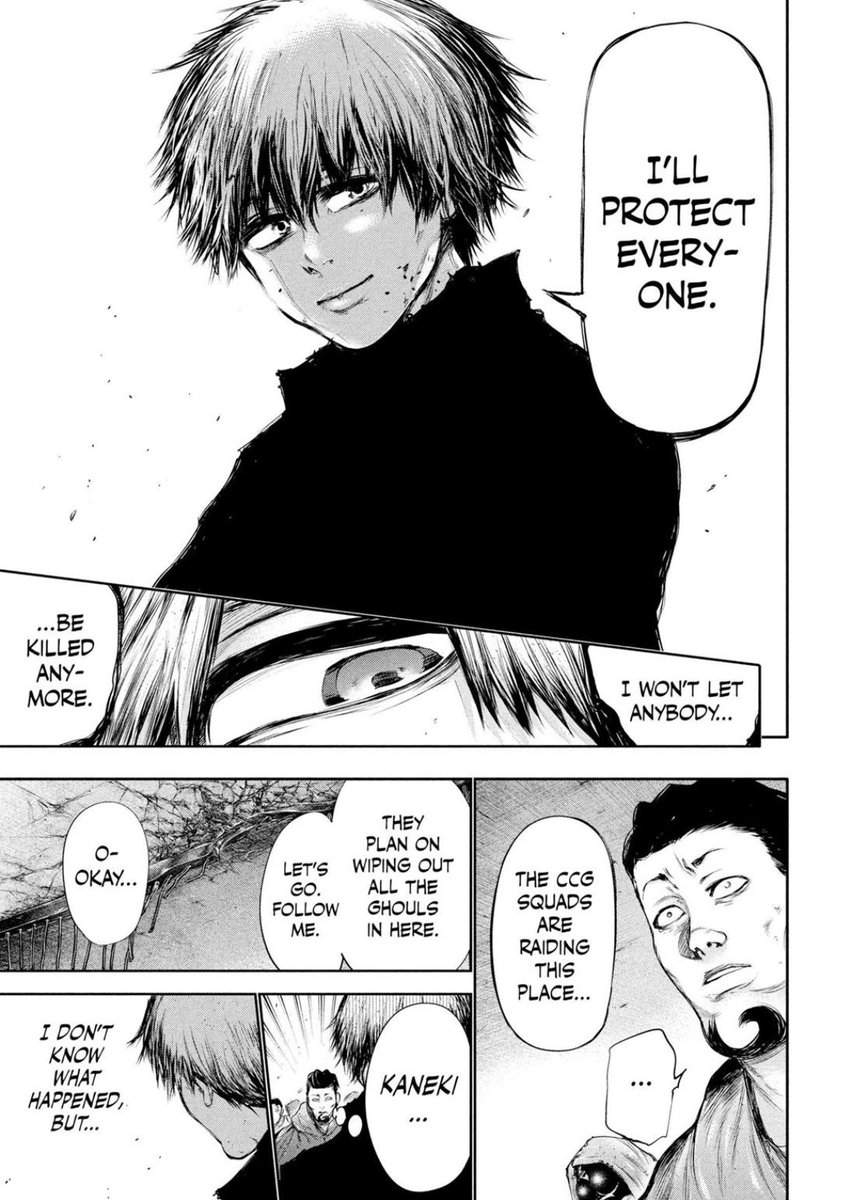

Ultimately, Tokyo Ghoul’s Torture Arc is one of metamorphosis, of the characters, the story, and even the writing quality of the manga itself: this is when Ishida really came into his own and started to tell one of manga’s greatest stories, thank you for reading my thread <3

Me and @metartis have sort of wrote a back n forth analysis through these two threads and earlier ones I did, pls check his thread out if u haven’t it’s incredible 🫶🏼
Loading suggestions...