

One week ago, the world learnt that Nigeria officially spent more than it earned on repaying its debt. 🇳🇬
Between January to April, the federal government spent 120% of its revenue on debt servicing!
How did we get here? 💭
A THREAD 1/15
Between January to April, the federal government spent 120% of its revenue on debt servicing!
How did we get here? 💭
A THREAD 1/15
In the initial budget, announced at the beginning of 2022, finance minister Zainab Ahmed told us that the total debt service for the year would cost ₦3.6 trillion, 34% of total revenues.
2/15
2/15
However, the 2022 fiscal performance report for January through April showed the federal government spent ₦300 billion (or 20% more) than its revenue on debt servicing.
3/15
3/15
It is possible that the total cost of debt servicing for the year (₦3.6 trillion) might not change. It is also too early to tell if revenue for the year will end up being only a fraction of debt by the end of the year.
4/15
4/15
But it is worth analysing how the finance ministry makes up its revenue projections, considering that the federal government struggles to meet them in the first place.
5/15
5/15
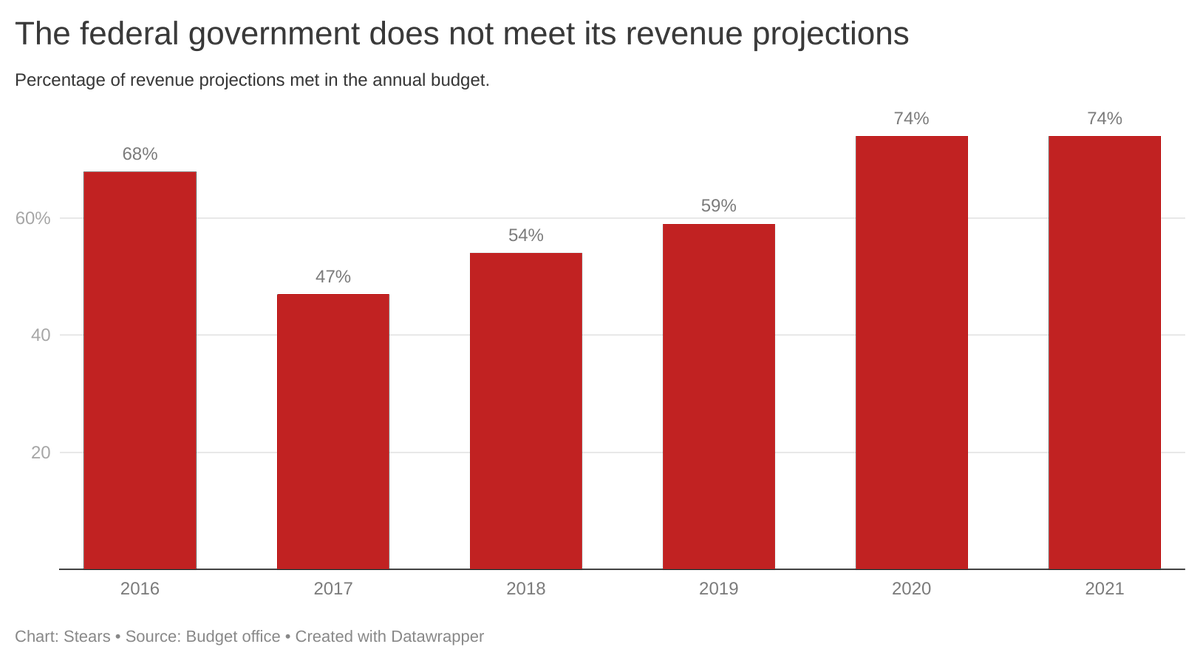
You see, the budget is a very crucial and multidimensional document which shows how much money the government hopes to make from different sectors—usually oil and non-oil.
6/15
6/15
In preparing the budget, Mrs Ahmed’s office makes certain assumptions that should determine the level of revenue expected for the year.
But the problem is that these assumptions are often unrealistic.
7/15
But the problem is that these assumptions are often unrealistic.
7/15
For example, the last budget review shows that the finance ministry expects to make roughly ₦9 trillion from oil and non-oil sources. Oil is expected to rake in ₦2 trillion, while non-oil revenue will bring in the rest.
8/15
8/15
One assumption for the oil revenues is based on the country producing 1.6 million barrels daily, which was revised from the 1.9 million barrels projected at the beginning of the year. But Nigeria hasn’t produced that much oil in years.
9/15
9/15
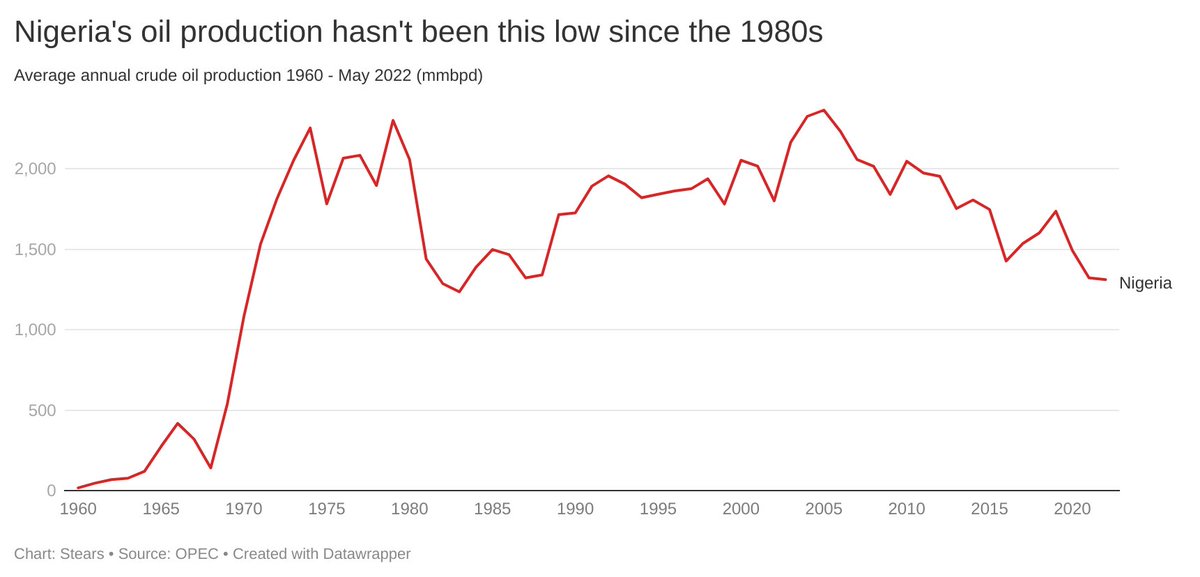
Raising the oil production targets when oil companies like Shell and Total were divesting, when crude oil theft was at its peak, or when we hadn’t met such a target in a while is like building castles in the air.
10/15
10/15
Similar to oil revenue, the projections for non-oil revenues are also based on assumptions such as expected inflation, domestic consumption and GDP.
11/15
11/15
The finance ministry expected inflation to drop to 13% this year—this is now revised to 16% (compared to 18.6% today).
But going by these projections, expecting inflation to slow down when the budget is expansionary is counterintuitive.
12/15
But going by these projections, expecting inflation to slow down when the budget is expansionary is counterintuitive.
12/15
The finance ministry wanted the government to spend ₦17 trillion, which was ₦3 trillion or 18% higher than 2021’s budget.
13/15
13/15
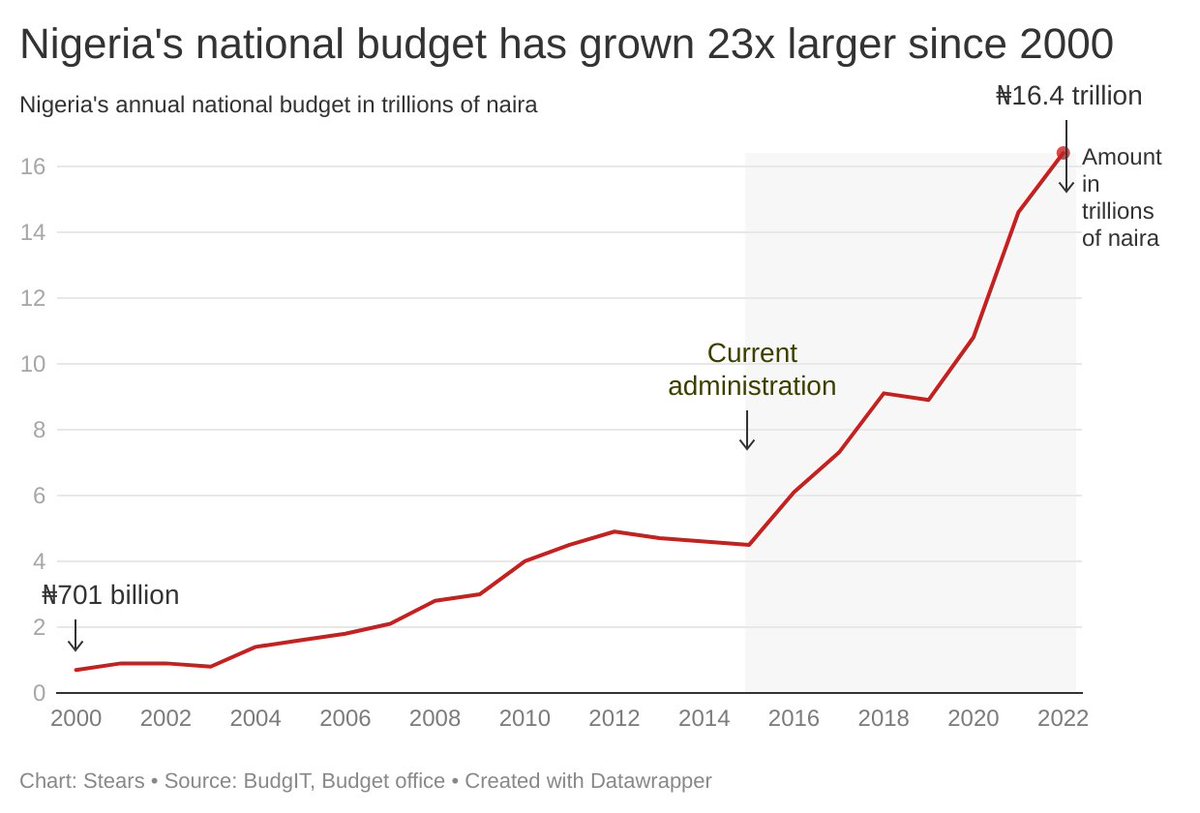
While assumptions like oil price can’t be controlled by the federal government, other factors like oil production and inflation have local elements that should make predictions more attainable.
14/15
14/15
So why does the federal government struggle to meet its revenue targets?
Our latest free story has all the answers to this question.
Read and share widely!
15/15
stears.co
Our latest free story has all the answers to this question.
Read and share widely!
15/15
stears.co
Loading suggestions...