

Traditional trade routes are getting revived. Over 2,200 years ago, Indian spices, gold, textiles and gemstones would transit across the Middle East to ports in Gaza and Lebanon before making their way to Europe. The Nabataeans of Petra grew enormously wealthy off this.
The economic development of Indian states in the ancient past was broadly uniform. In large part, this was due to both land and sea trade routes providing trade corridors. Over land, trade with Persia and beyond boosted economic activity in India’s north and central regions.
Pakistan’s recent pitch to capitalize on its geoeconomic potential is obviously falling flat because of political and security issues. China faces the same issues with both Afghanistan and Pakistan. Indian trade with Central Asia and Europe has to adjust to this reality.
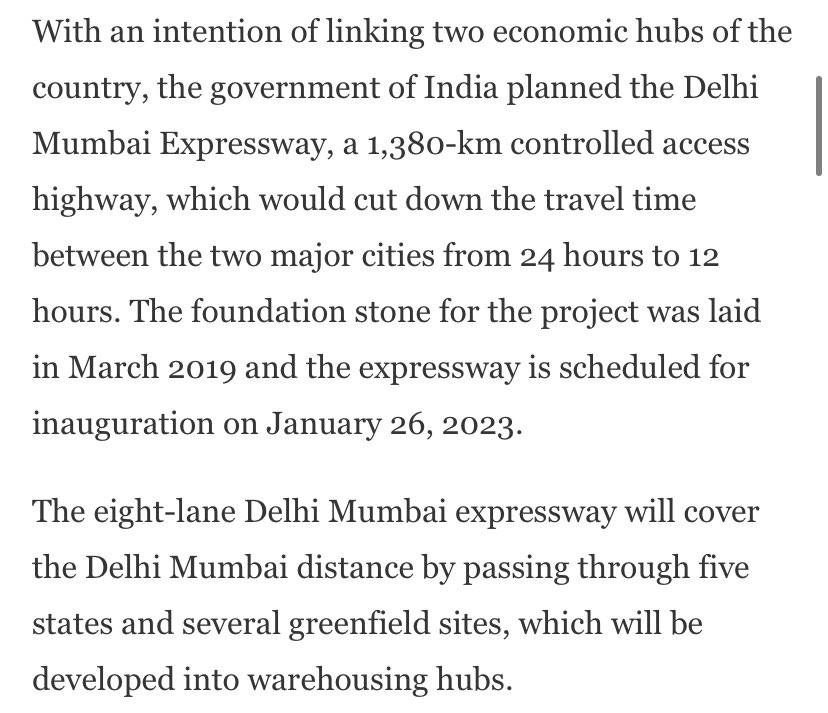
The Delhi-Bombay expressway is a key development which will tap India’s demographic dividend in its interior and harness it for external trade. Halving transport time will have a multiplier effect on both regional growth and the variety of goods that can be produced and exported.
On the eastern seaboard, the south has done well. The laggard is the east, drawing some of its weakness from the low economic activity in its immediate neighborhood. Until SE Asia develops and ties into the traditional Indosphere, Bengal and Bihar will relatively underperform.

Loading suggestions...