

The US is now officially in a technical recession, after printing a second negative quarter of GDP growth: -0.9%.
Let's take look at the last 5 recessions, and how this one may be different. 👇
Let's take look at the last 5 recessions, and how this one may be different. 👇
A recession is defined as "a period of temporary economic decline during which trade and industrial activity are reduced, generally identified by a fall in GDP in two successive quarters."
There are 2 types of recessions:
• Recession: A recessionary phase that sustains for a considerable length of time.
• Technical recession: A back-to-back decline (for two consecutive quarters) in the GDP.
Following today's GDP data, the US is now in a "technical recession".
• Recession: A recessionary phase that sustains for a considerable length of time.
• Technical recession: A back-to-back decline (for two consecutive quarters) in the GDP.
Following today's GDP data, the US is now in a "technical recession".
1. 1980 - 1982
During this period, there were two recessions. The worst of which came in 1982.
• Duration: 22 months total
• S&P 500 Performance: -25%
• Recovery: 15 months
During this period, there were two recessions. The worst of which came in 1982.
• Duration: 22 months total
• S&P 500 Performance: -25%
• Recovery: 15 months
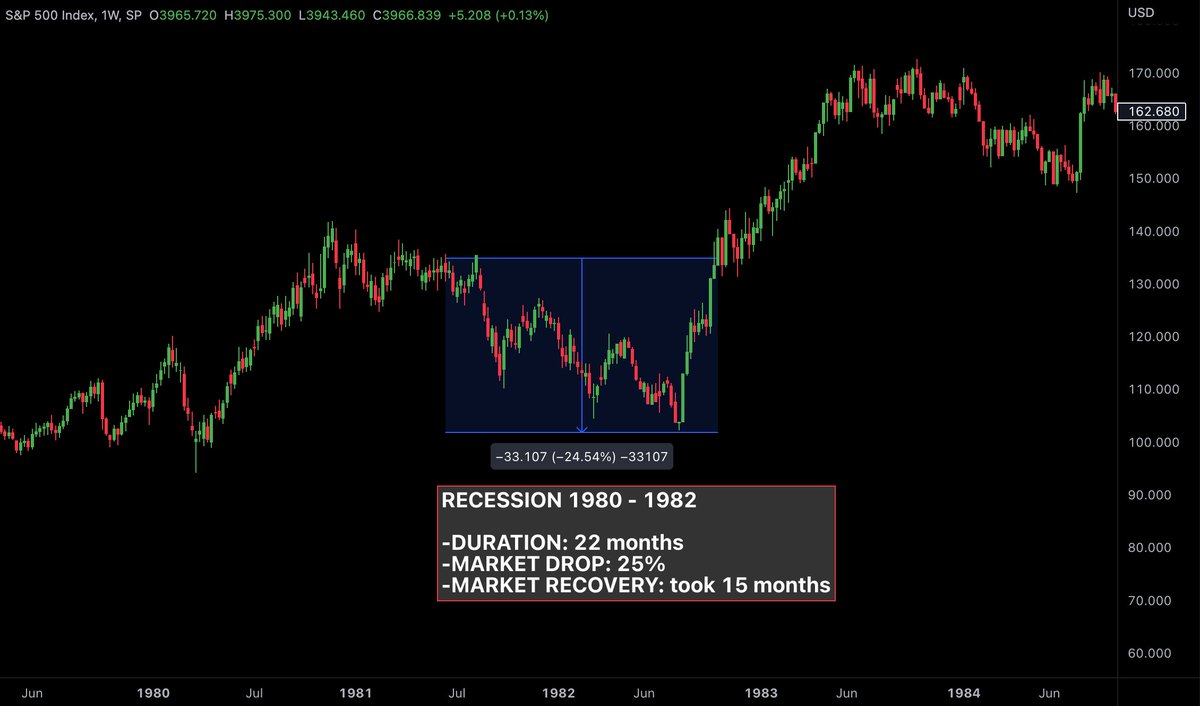
This recession was caused by the Fed raising interest rates in order to tame inflation.
High interest rates put pressure on sectors of the economy reliant on borrowing, like manufacturing and construction, which lead to a recession.
Sounds very familiar to the current scenario.
High interest rates put pressure on sectors of the economy reliant on borrowing, like manufacturing and construction, which lead to a recession.
Sounds very familiar to the current scenario.
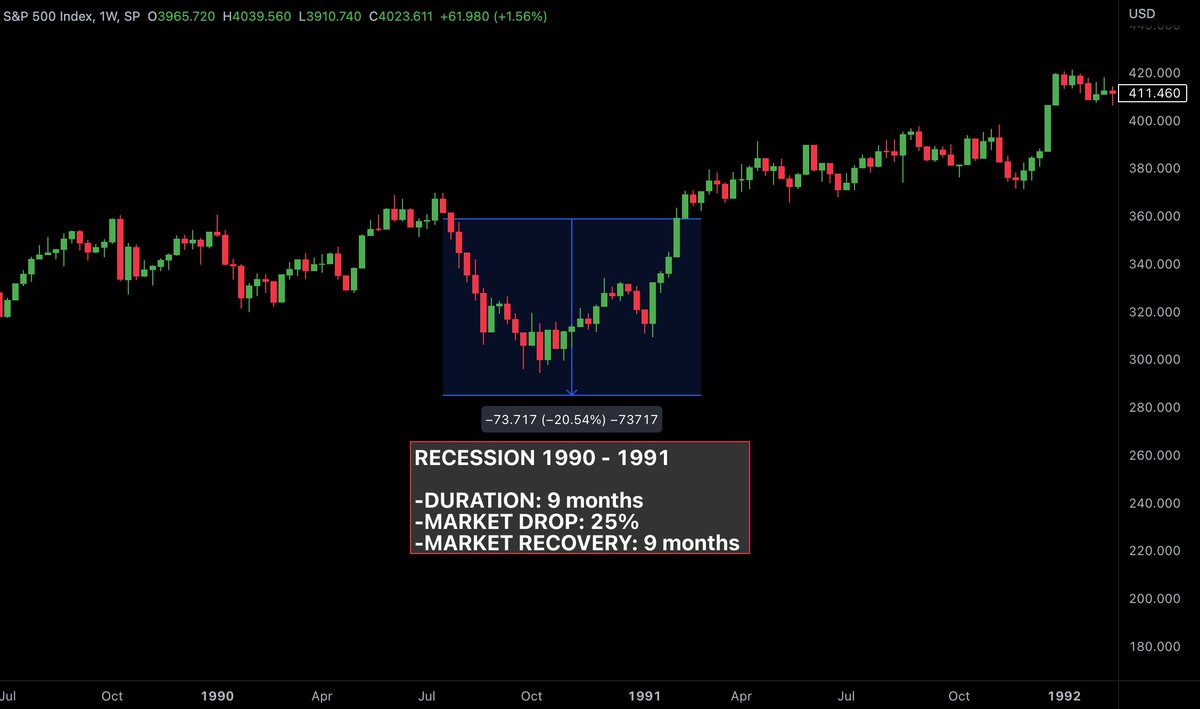
2. 1990 - 1991
This was considered a "flash recession", with a quick, v-shaped recovery (similar to the 2020 COVID crash).
• Duration: 9 months
• S&P 500 Performance: -25%
• Recovery: 9 months
This was considered a "flash recession", with a quick, v-shaped recovery (similar to the 2020 COVID crash).
• Duration: 9 months
• S&P 500 Performance: -25%
• Recovery: 9 months
3. 2001 (Dot-com bubble)
The buzz around US tech-stocks in the '90s led to massive overvaluations, creating a bubble which eventually burst in 2001.
• Duration: 8 months
• Nasdaq Performance: -71%
• Recovery: 14 years (S&P 500: 7 years)
The buzz around US tech-stocks in the '90s led to massive overvaluations, creating a bubble which eventually burst in 2001.
• Duration: 8 months
• Nasdaq Performance: -71%
• Recovery: 14 years (S&P 500: 7 years)
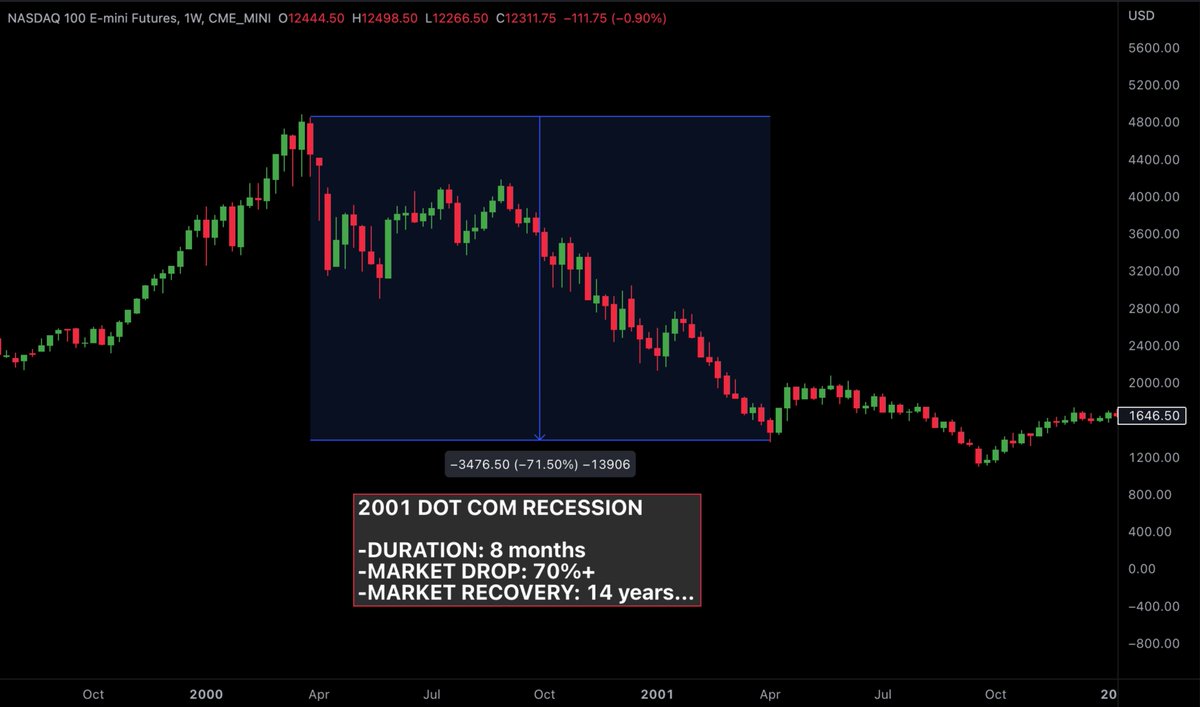
The 2001 crash was severe, with the S&P 500 and Nasdaq taking 7 and 14 years to recover, respectively.
Some critics have likened crypto's high valuations to tech stocks in the late '90s.
Some critics have likened crypto's high valuations to tech stocks in the late '90s.
4. 2008 (The Great Recession)
This was one of the worst financial collapses in history, brought on by the subprime mortgage crisis in 2006.
• Duration: 18 months
• S&P 500 Performance: -55%
• Recovery: 4 years
This was one of the worst financial collapses in history, brought on by the subprime mortgage crisis in 2006.
• Duration: 18 months
• S&P 500 Performance: -55%
• Recovery: 4 years

This resulted in banks, hedge funds, and insurance firms experiencing severe liquidity issues.
In October 2008, Congress approved a $700b bank bailout, followed by $787b economic stimulus package implemented to avoid a global depression.
In October 2008, Congress approved a $700b bank bailout, followed by $787b economic stimulus package implemented to avoid a global depression.
5. 2020 (COVID Crash)
A short crash, brought on by global pandemic fears. Unprecedented monetary policy initiated a v-shaped recovery.
• Duration: 4 months
• S&P 500 Performance: -35%
• Recovery: 6 months
A short crash, brought on by global pandemic fears. Unprecedented monetary policy initiated a v-shaped recovery.
• Duration: 4 months
• S&P 500 Performance: -35%
• Recovery: 6 months
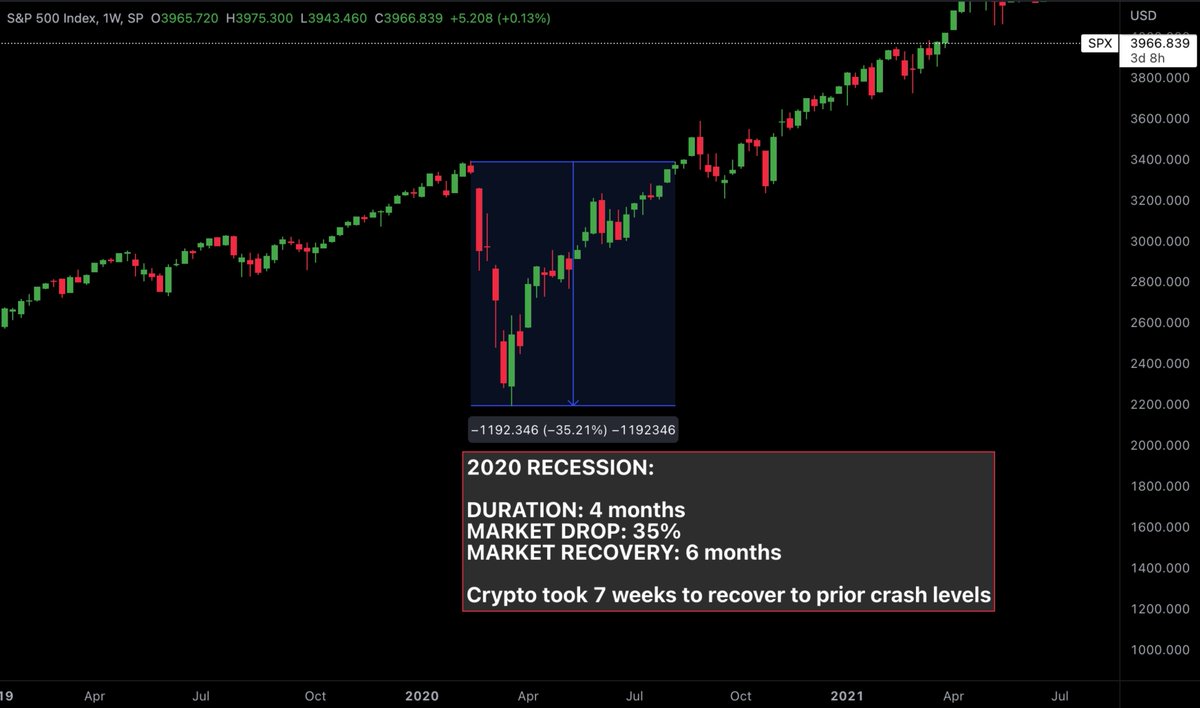
The current situation is very unique, given the aggressive post-COVID monetary policy.
Historically, during past recessions, if you had invested in quarters of negative GDP growth and taken profits when GDP began to recover, you would've made an average of 31%.
Historically, during past recessions, if you had invested in quarters of negative GDP growth and taken profits when GDP began to recover, you would've made an average of 31%.

So far, the combination of monetary policy and the duration/severity of decline looks most similar to the 1982 #recession, which took 15 months to recover.
For reference: So far, it's been 6.8 months since the last peak in January 2022.
For reference: So far, it's been 6.8 months since the last peak in January 2022.
@GarethSoloway contends that the confirmation of a recession is bullish for equities and #Bitcoin in the short-term, as the Federal Reserve is now unable to aggressively hike rates.
However, we shouldn't gloss over the fundamental macroeconomic detriment of a recession, especially when considering the long-term implications.
Loading suggestions...