
1/ Why do Russian soldiers fight in Ukraine, why do they quit and what happens when they do quit? Intercepted Russian phone calls published by the Ukrainians and accounts from the soldiers themselves shed some interesting light on these key questions. First 🧵 of a short series.
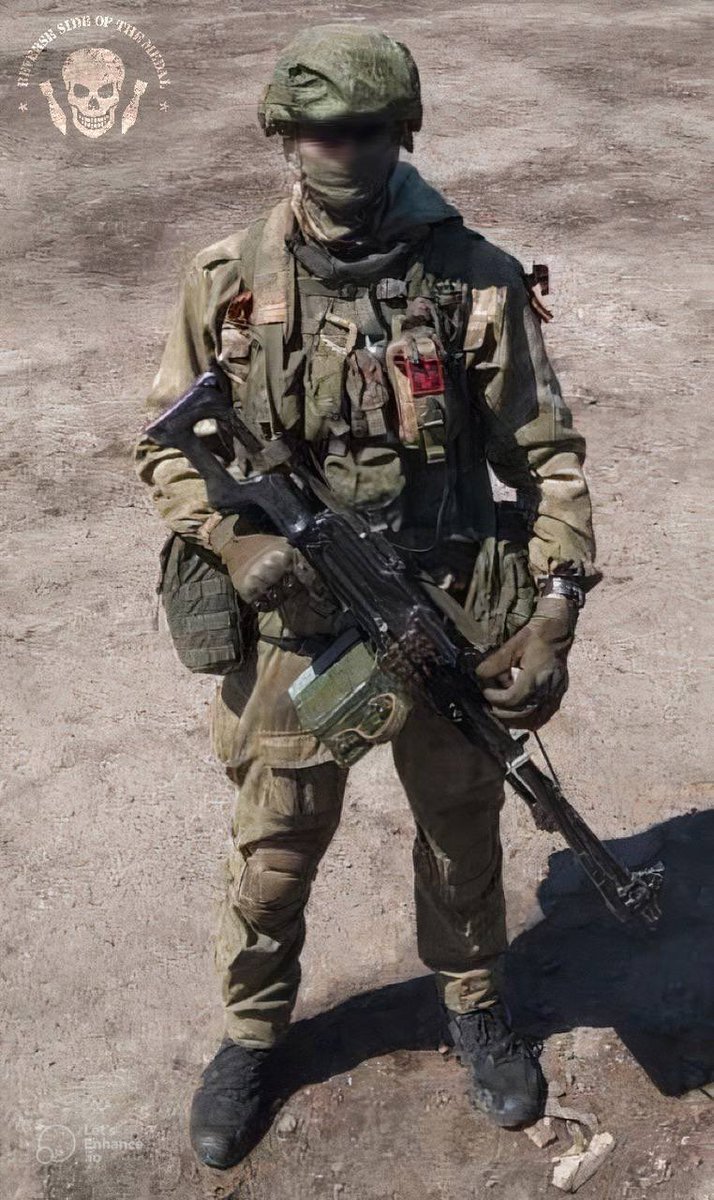
2/ Let's start with some caveats. The Ukrainian authorities have released extracts from recorded phone calls by Russian soldiers, clearly for propaganda. Some Russians have also published personal accounts of their service. These are particularly interesting for being unfiltered.
3/ It's unclear how well these recordings and accounts represent Russian soldiers in general. However, other countries (US, UK) have said that the Russians are badly demoralised, presumably based on a wider range of evidence. So the accounts may not be untypical.
4/ Second, it's essential to understand Russian soldiers' employment terms. All male citizens aged 18-27 are eligible for a mandatory 12-month draft. But Russian law doesn't permit the government to use conscripts in active combat situations such as in Ukraine.
5/ But others voluntarily sign up as 'contract soldiers' (kontraktniki) for 3 or more years. They make up the majority of the Russian forces: 460,000 contract soldiers versus 210,000 conscripts. Most contract soldiers are former conscripts, so will have some previous experience.

6/ The problem for the Russian government is that unless there's a formal state of war, contract soldiers can quit at any time – though as we'll see, they may expose themselves to penalties by doing so. Russia calls its invasion a "special military operation", not a war.
7/ So why do Russian soldiers fight? Soldiers in general will often fight for four main reasons: money, ideology, comradeship and experience. Russian contract soldiers are quite well paid and get benefits after their service. Ideology is a key factor in any conflict.
8/ Comradeship – not abandoning your fellow soldiers – is also very important, but does rely on being part of a cohesive unit. And experience is a good motivating factor – the military can train you in many skills that are useful in civilian life.
9/ It's important here to look at the picture before and after 24 February, the start of the invasion. Notoriously, the great majority of Russian soldiers didn't even know they were going to war – they thought they were merely on exercises.
10/ Many soldiers deserted in February and March, complaining that they had been lied to and weren't equipped for war. They were completely morally and psychologically unprepared to fight. But nobody joining the army after 24 February could have had any illusions.

11/ Let's look at one particular unit – the 752nd Guards Motor Rifle Regiment, part of the 3rd Motor Rifle Division under the 20th Combined Arms Army. It's normally based just across the border at Valyuki in Belgorod oblast. Information from both sides provides useful insights.

12/ The 752nd GMMR likely entered Ukraine on the day of the invasion. Since April it appears to have been fighting near Izyum, east of Kharkiv, where its vehicles were filmed crossing the Siverskyi Donets river around 7 April.
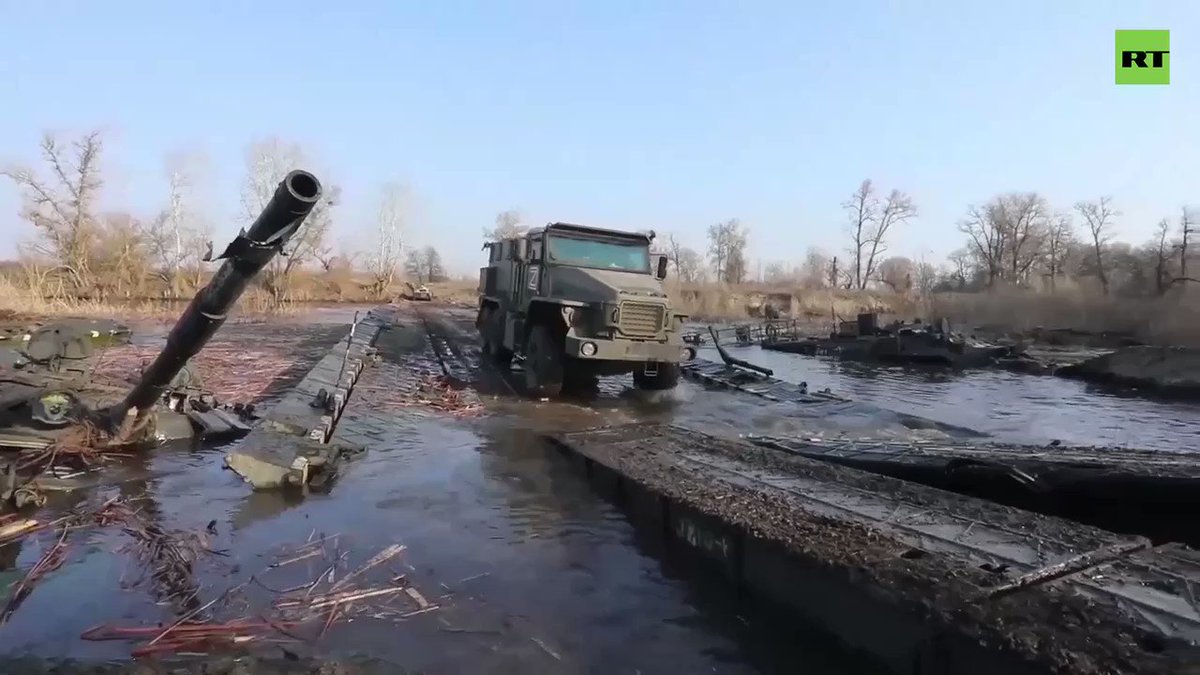
13/ Sources on both sides say it has suffered very heavy casualties, losing many tanks and other vehicles. One of the Russian soldiers who fought with the 752nd GMMR subsequently quit and posted a long and detailed account on LiveJournal which provides many details.
14/ Viktor Shayga had previously served as a conscript. 12 days after the war started, he decided to join the army after seeing "a video [on YouTube] of our (Russian) captives and wounded being abused by these inhumans from the Ukrainian armed forces".
15/ After a brief period of training, he was sent to the front line south of Izyum, where he fought through April and May in bloody battles to capture the villages of Sulyhivka and Dovhen'ke. His experiences ultimately led him to quit. But what motivated him to fight?

16/ Shayga and many of his colleagues clearly fully believed Putin's propaganda about Ukraine's 'Nazi' government. They had "the desire and readiness to crush this Banderite scum till the very end."
17/ Stepan Bandera was a Ukrainian nationalist leader who was assassinated by the KGB in 1959. He was and still is reviled by the Soviet and now Russian authorities. It's fair to say that his legacy is contested and controversial in Ukraine and elsewhere. en.wikipedia.org

18/ "The ideas of Bandera and Nazism are very strong in Ukraine", Shagya writes. "In fact, the official authorities in Ukraine since 2014 were constantly saying that Ukraine is at war with Russia."
19/ "And all the politics in Ukraine were pro-Banderite and aimed at destroying everything Russian in Ukraine – the language, culture, people who had positive attitudes towards Russia."
Shayga also repeats Putin's (false) propaganda about Russia being threatened by Ukraine.
Shayga also repeats Putin's (false) propaganda about Russia being threatened by Ukraine.
20/ "Ukraine shelled the peaceful population of Donbas for eight years – that’s a 100% fact, in my opinion. As well as the fact that Ukrainian army could attack Donbas and Crimea ... [and] that USA could place in Kharkiv nuclear missiles that could reach Moscow in 5-7 minutes."
21/ So at least in his own mind, he justified his involvement by rationalising it as defending his motherland and the Russian-speakers of eastern Ukraine from threats by Ukrainian nationalists and the Americans.
22/ He claims to have also been motivated by the supposed abuse of Russian captives, which he says is evidence of Ukrainian barbarism: "[O]ur captives are abused, maimed, killed – only scum is capable of this, not people. Such subhumans must be destroyed physically."
23/ According to Shayga, "the Banderites walked along the trenches at night, shouting – ‘Russians, surrender!’, and single shots could be heard. "As I understand they were finishing off the wounded…"
24/ Given the lack of any physical evidence, this may simply indicate that the Ukrainians were trying to freak out and demoralise the Russians in positions nearby. But the belief in Ukrainian atrocities may have had deadly consequences for one group of Russians.
25/ Shayga describes how a Russian reconnaissance unit saw a group of Russian soldiers being led off into captivity by Ukrainian soldiers. The Russians "decided to strike all of them with [anti-tank guided missiles] ...

26/ "both ours and Ukrainians, just so ours wouldn’t get captured and tortured. In my opinion that was the right thing to do, it’s better to die instantly like that than be tortured for days in the hands of these inhumans."
(Not sure the captured Russians thought the same.)
(Not sure the captured Russians thought the same.)
27/ Although Russian propaganda has often systematically dehumanised Ukrainians as a whole, characterising them as primitive brutes, Shayga takes a slightly more enlightened perspective. He acknowledges:

28/ "In Ukraine, like in any other country, there are many good, kind and peaceful people who are far from politics and just want to have a peaceful and happy life."
As evidence, he cites two specific Ukrainian people - blogger Anatoly Shariy and journalist Olesya Medvedeva.
As evidence, he cites two specific Ukrainian people - blogger Anatoly Shariy and journalist Olesya Medvedeva.
29/ Both are highly problematic individuals who are far from representative of Ukrainian opinion. Shariy, who is currently detained in Spain on an international arrest warrant, has been described as "odious" for his views.
news.yahoo.com
news.yahoo.com

30/ Olesya Medvedeva is a pro-Russian journalist and commentator who has, among other things, praised Russia's governance of the annexed Crimea and promoted Russia's completely bogus conspiracy theories about supposed "US biolabs" in Ukraine.

31/ So it's clear that Shayga's informational diet is completely polluted: he's getting information exclusively from (pro-)Russian propaganda sources, which he fully believes. Sadly, this is true of a lot of Russians. Putin has trapped a lot of people in his propaganda bubble.
32/ Other soldiers were more materialistic. Shayga comments that "there were cunning and savvy people who came just for the money and to receive a combat veteran’s certificate. And they were coming being sure they’ll be in safety – somewhere in the rears and checkpoints."
33/ Earning a certificate would make it easier to get a job and other benefits after military service. Shayga acknowledges that "fine and decent people" were also present and fighting on the front lines, "but they still came to earn 300-400,000 rubles in a month." ($5,000-6,500).

34/ "There were also many of those who were first and foremost coming to help, and not for the money… It’s obvious that almost everyone needs money, but for this category of people money and subsidies were of a secondary value, and in many ways not important or needed…"
35/ Despite the strength of the propaganda, however, it wasn't enough to convince Shayga and many of his comrades to stay and fight in Ukraine for more than a couple of months. Only "10-20% of the volunteers have stayed", he writes, indicating a huge number of quitters.
36/ In the next thread, I'll look at the factors which convinced Shayga that despite his support for the war's aims, it was futile for him to be involved in it. /end
And many thanks to @wartranslated for the translation of Shayga's account.
Part 2 here:
Loading suggestions...