

What is the purpose of jihad?
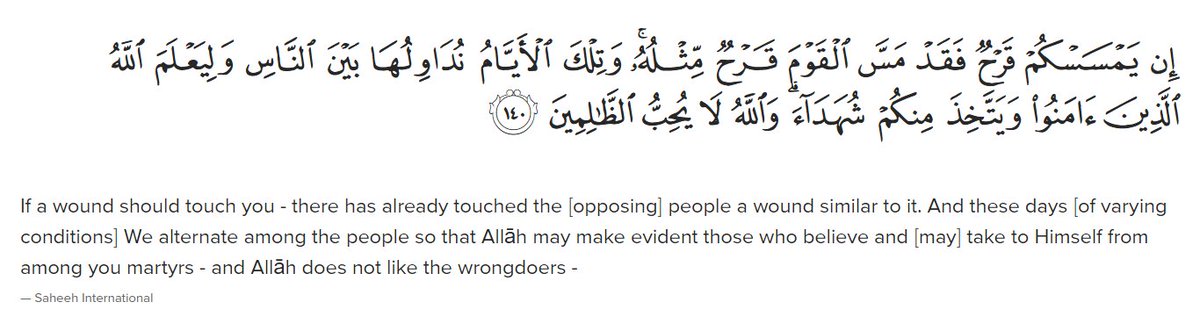
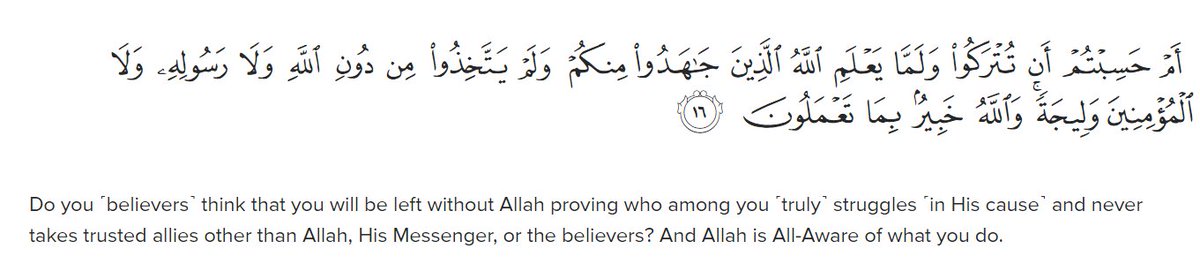
For one, it is a test, and a means of distinguishing true believers.
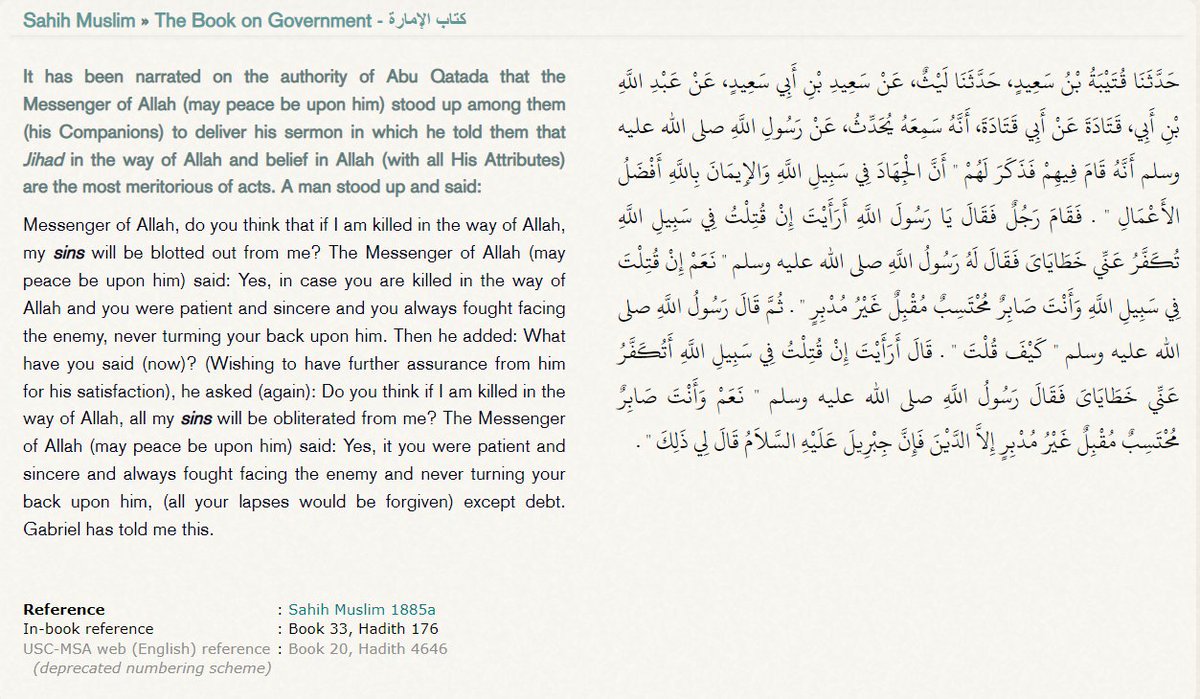
It is also an expression of the mercy of Allah, subhanahu wa t'ala, since within it lies the path to martyrdom.
For one, it is a test, and a means of distinguishing true believers.
It is also an expression of the mercy of Allah, subhanahu wa t'ala, since within it lies the path to martyrdom.


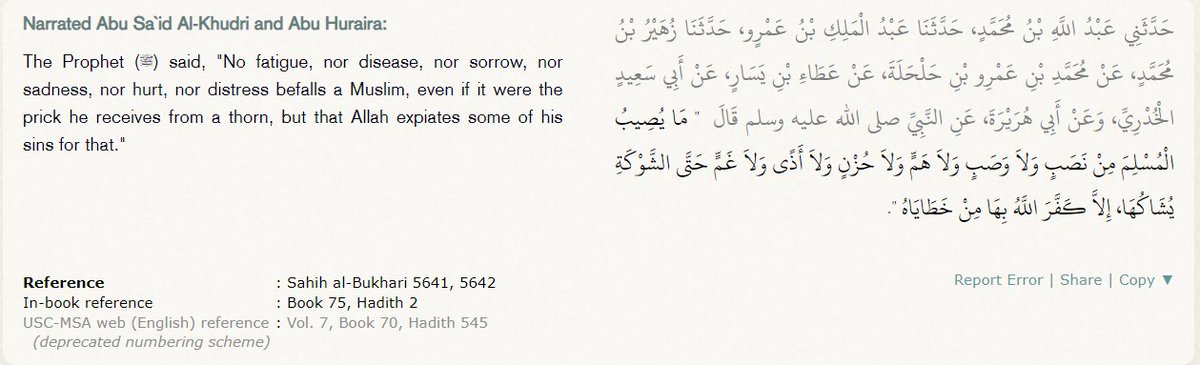
Furthermore, it can be a means of purification.
Achieving the status of a shaheed is the ultimate purification, but simply embarking on the path requires renouncing the world, thus purifying oneself of attachment.
The hardship of the path is also purification.
Achieving the status of a shaheed is the ultimate purification, but simply embarking on the path requires renouncing the world, thus purifying oneself of attachment.
The hardship of the path is also purification.
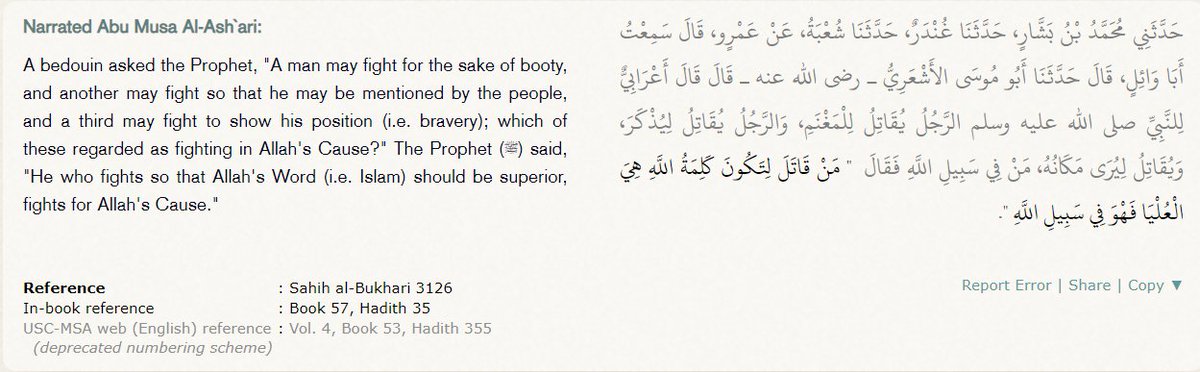
The criterion for jihad is whether it is fought to make Allah's word dominant. Is there, then, an important distinction between fighting to depose a corrupt khalifa who has abandoned sharia, or a post-colonial puppet regime that does the same?
Are the purposes of jihad fulfilled if the struggle is against an apostate khalifa, but not if it is against the apostate regime of nation-state installed by the kuffar? Especially when the regime is directly supporting and supported by occupying forces of the kuffar?
Ultimately, we carry responsibility for our own selves.
Fighting, or at least supporting those who fight spiritually, verbally, and financially, does not require an imam or khalifa, and in the present situation, it is an individual obligation.
Fighting, or at least supporting those who fight spiritually, verbally, and financially, does not require an imam or khalifa, and in the present situation, it is an individual obligation.

Jihad has not stopped since Allah, subhanahu wa t'ala, ordered the Prophet ﷺ to perform it, and it will continue until the the Muslims fight the dajjal.
So there is not necessarily any need to stage "uprisings" against apostate rulers. The struggle is a single struggle.
So there is not necessarily any need to stage "uprisings" against apostate rulers. The struggle is a single struggle.
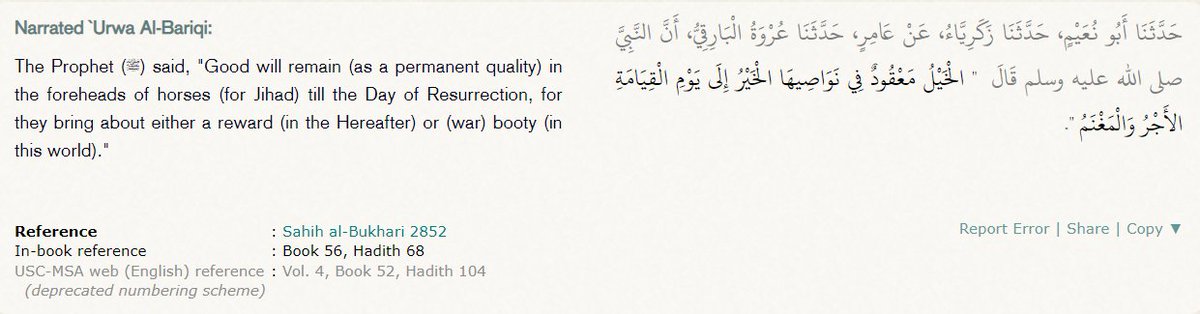
Fighting to make Allah's word superior anywhere supports those who are doing so everywhere.
This is apparent in the support that the apostate rulers all, without exception, continuously provide to the kuffar in their war efforts.
This is apparent in the support that the apostate rulers all, without exception, continuously provide to the kuffar in their war efforts.
We should distinguish between a "weak opinion," which carries connotations of a fiqhi ruling, and bad strategy.
Yes, jihadi groups have implemented bad strategies, but this does not mean that the underlying decision to fight is a "weak opinion."
Yes, jihadi groups have implemented bad strategies, but this does not mean that the underlying decision to fight is a "weak opinion."
The criticism of Madkhalis and some jihadis having shallow understanding and applying rulings out of context is valid, but these mistakes are unrelated to the continuous presence of jihad promised by Rasulullah ﷺ, and the obligation to participate in and support these efforts.
This is being called a "weak opinion," because the respected brother Abdullah al Andalusi regards his own opinion as the stronger opinion.
The first premise he brings to support his view is that jihadi movements fall into a trap where they lose all popular support.
The first premise he brings to support his view is that jihadi movements fall into a trap where they lose all popular support.
The governments they fight portray mujahideen as the cause of chaos and hardship for the people, drying up all popular support.
One problem with this view is that we are entering into a period where the liberal world order is on the decline.
One problem with this view is that we are entering into a period where the liberal world order is on the decline.
This opens new possibilities for governance, since Western institutions (IMF, etc.) will have less resources to provide the services that the general masses of Muslims then blame the mujahideen for losing.
Second, these struggles are part of a learning experience.
Second, these struggles are part of a learning experience.
The Algerian civil war ultimately failed in installing an Islamic government, but it did give rise to a new generation of jihadi movements which are now active in Mali and spreading throughout West Africa.
It also yielded many lessons which many mujahideen still heed today.
It also yielded many lessons which many mujahideen still heed today.
Failing to see the value of this struggle is also a result of an analytical perspective which centers on a single nation-state. Viewed in the context of an ongoing global jihad, it is easier to see the value of sacrifices made by those who fought with sincerity.
Foreign intervention is brought as another reason why jihad is a "weak opinion."
This is in spite of the fact that foreign intervention is a reality in every Muslim country, no matter how cooperative or uncooperative they are with the agenda of the global ruling elite.
This is in spite of the fact that foreign intervention is a reality in every Muslim country, no matter how cooperative or uncooperative they are with the agenda of the global ruling elite.
This is a guerilla war in which the goal of this phase is to exhaust the larger enemy by forcing them to make sustained expenditures. A country that fights is much more expensive for the kuffar than a country that cooperates, even if they have no tactical victories whatsoever.
Furthermore, the kuffar profit greatly from trade deals with cooperating (or better put, collaborating) countries. A country that fights is therefore much less profitable for the kuffar, and deprives them of potential revenue streams.
If we consider the fact that jihad is itself spiritual purification, and we place the spiritual in a higher position than the material, then suffering material loss for spiritual gain is not a loss at all, since as Muslims we do not achieve victory by force, but rather by faith.
The idea that khilafa cannot be established by multiple weak states also doesn't hold up to scrutiny. Throughout history, many states have given nominal bay'ah to largely symbolic khulafa, while remaining mostly independent in terms of internal policy.
This is not ideal, but it illustrates that khilafa can exist with sub-optimal coordination between wilayat. It's important not to view things as either/or. If we expect perfection we will lose everything.
The Dawla Uthmaniyya had to conquer the Mamluk Sultanate to claim...
The Dawla Uthmaniyya had to conquer the Mamluk Sultanate to claim...
...leadership because there was a khalifa with an established lineage, so they just forced him to acknowledge the Uthmani state as the rightful successors, and designation of a successor was the main method of transmitting the title of khalifa at that time.
The idea that fighting will weaken Muslim-majority states and should therefore be avoided is based on a very prevalent misunderstanding, which is that the economic infrastructure of high-functioning nations like Turkey and Malaysia represents strength.
The reality is that this infrastructure represents weakness, because it is a reflection of how deeply embedded these countries are in the liberal world order, and it actually acts as a kind of control mechanism. The people become addicted to luxuries, and so dependent on...
...imports of industrial inputs, that they can't even dream of achieving the spiritual purification and lofty worship of directly confronting the kuffar, while this honor remains available to relatively free countries like Somalia and Afghanistan.
So attempting to preserve this kind of "strength" in reality just prolongs and deepens a kind of slavery which necessitates taking the kuffar as awliya, which is a nullifier of Islam and a persistent condition of the regimes of high-GDP Muslim-majority countries.
The idea that the consciousness of the general masses of Muslims can be elevated through da'wah alone is a fallacy. It is not possible to engage in authentic da'wah under an apostate regime, and the people are distracted by luxuries and entertainment provided to appease them.
One of the benefits of jihad is that it carves out spaces, even if temporary spaces, where authentic da'wah can take place, without omitting or adding anything to the message of Islam in order to ensure the continued ability to preach.
Referencing the method by which Rasulullah ﷺ
established the Islamic state in Medina is a variant of the long debunked "Meccan phase" argument. Events like the pledges at al 'Aqaba took place before the command to fight and the revelation of the verse of the sword.
established the Islamic state in Medina is a variant of the long debunked "Meccan phase" argument. Events like the pledges at al 'Aqaba took place before the command to fight and the revelation of the verse of the sword.
Dialogue and diplomacy supported by military force can be used in expanding Islam, but since we have the full revelation at this point, to neglect military force entirely is to disobey Allah, not to mention denying the apparent meaning of many hadith.
We do indeed need to reform the Muslim community, but this will be achieved through jihad, rather than being a prerequisite for jihad.
As for the idea that those who are in power in Muslim lands and fight against Islam are not apostates, this has no basis.
As for the idea that those who are in power in Muslim lands and fight against Islam are not apostates, this has no basis.
They are people who have testified the shahadatayn, and who go against the apparent meaning of those words. I agree that the members of these regimes still deserve da'wah in many cases, but in terms of fiqh this would be called establishing hujjah, not creating a new category.
However, once it is clear that they understand the reality and choose to continue fighting against the establishment of Islam, it is obligatory to kill them, and if this obligation is abandoned it will be massively detrimental to Islam, as detrimental as it would have been for...
Abu Bakr, radhi Allahu anhu, to have tried to convince the tribes of the Arabian peninsula to return to Islam through verbal da'wah rather than armed da'wah.
Loading suggestions...