

Did you know that the extremely light weight “Muslin” sarees, the reverential art of “Kalamkari” and one of the earliest Roman coins found in India are all connected to a 2000-year-old port in the Bay of Bengal that ceased to exist about 150 years ago? A thread. 1/13
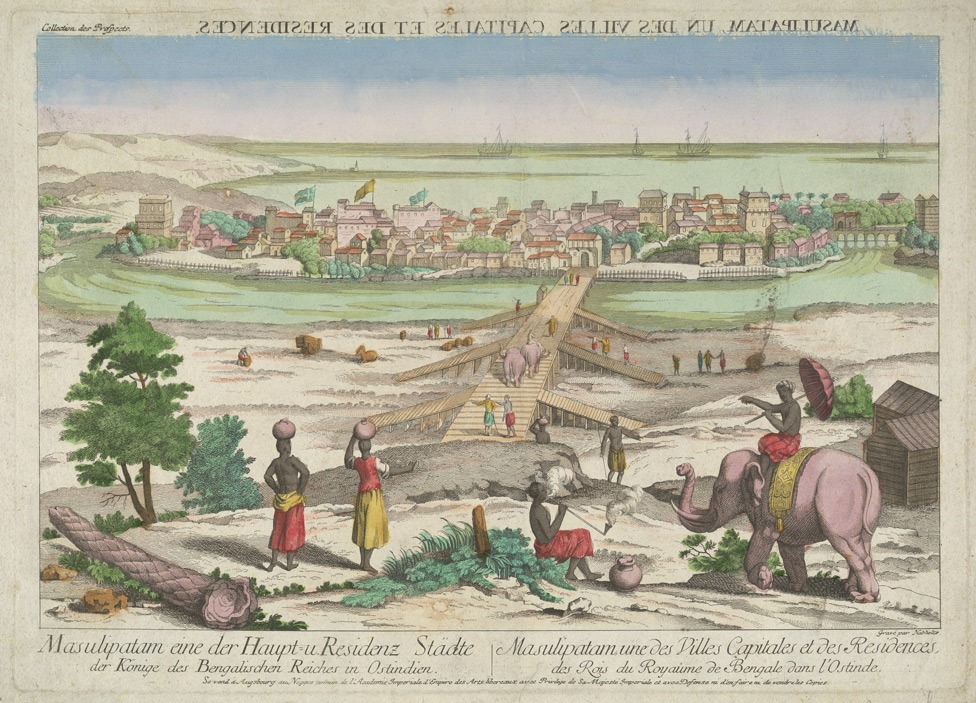
Machilipatnam or Masulipatam (in local Telugu language) used to be a natural harbour situated on one of the mouths of the Krishna River in Andhra Pradesh. The word ‘Machili/Masuli’ means fish and ‘Patnam/Patam’ means city hence the name ‘Town of the fish’. 2/13
During the Satavahana period, the rulers developed the town as a major export hub and connected it to another port Sopara (situated near today’s Mumbai) on Arabian sea through a land route across the kingdom. 3/13
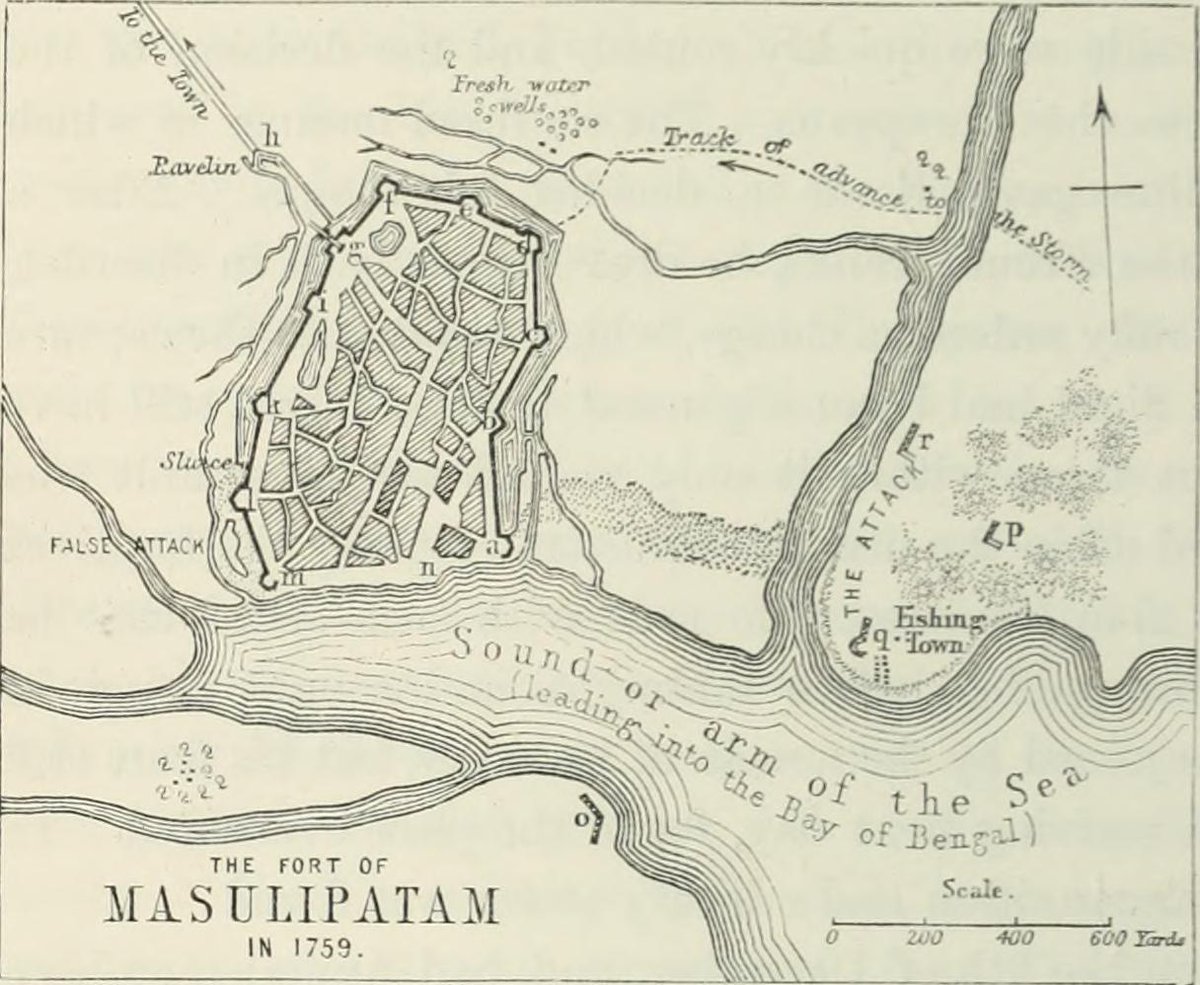
The primary export that fetched great wealth for the Satavahanas was textiles. This Indian fabric quickly became the most-wanted treasure for the Greeks and the Romans. This even reflects in Greek traveller Ptolemy’s account where he mentioned the wealthy town as “Maisolos”. 4/13
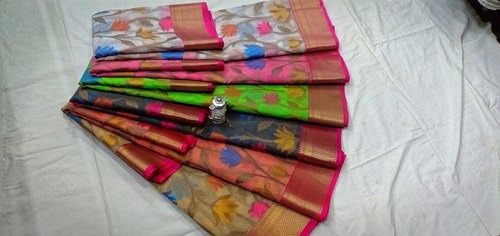
The modern-day Muslin fabric originated from the word “Maisolos” as it became a coveted item for the Greeks back then. As the kingdom changed hands in the early 16th century, the Qutb Shahi kings found an even bigger export at the nearby Golkonda mines. Diamonds. 5/13

Over the next few years, Machilipatnam rose to its pinnacle of prosperity. Soon the Dutch and British followed the footsteps and set-up their factory and opened trades with several other countries. Everyone wanted a piece of Machilipatnam’s fortune. 6/13
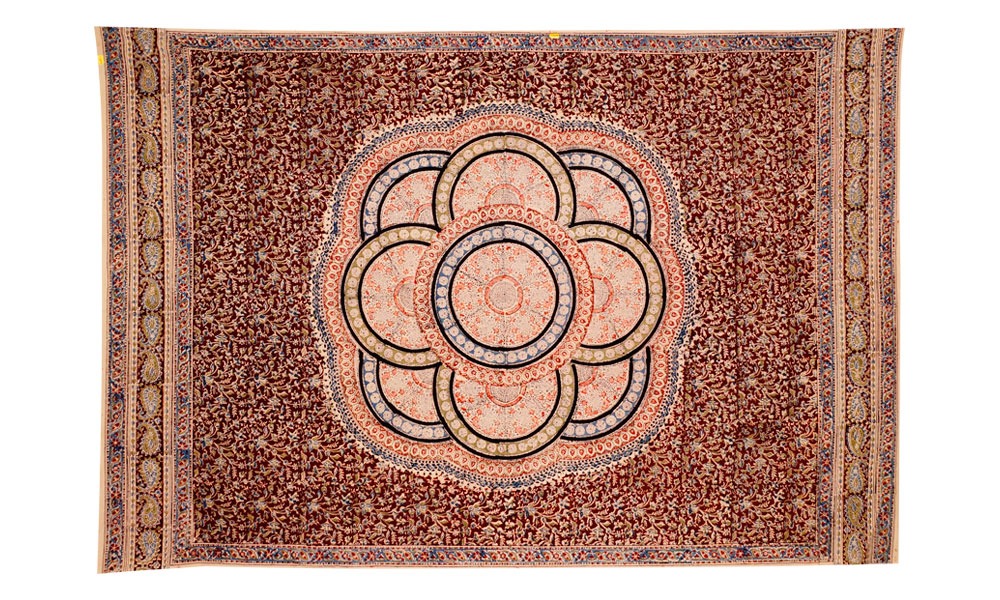
While Muslin was still the most traded fabric, a new art form evolved in the scene and shared the throne of the coveted. Local painters, known as “Chitrakars”, moved from place to place to tell mythological stories. 7/13
They embellished their accounts using large bolts of canvas painted on the spot with simple means and dyes extracted from plants. This gave birth to the “Machilipatnam style” of Kalamkari and became a craze around the world. 8/13
Despite an ever-growing economy, Machilipatnam was always on the verge of an inevitable danger. The coastal areas of Krishna River were very much prone to the devastating rage of cyclones. 9/13
To prevent their livelihood from destruction, the locals of Machilipatnam used to build “Chuttillu” ( round houses) which nestled closely to form clusters. The shape and the positioning helped that it could neutralize the force of the winds. 10/13

On 1st November 1864, a monstrous cyclone created 13 feet high tidal waves and rushed 30 kms inland, sweeping the entire city overnight. The destruction was at such massive scale that Machilipatnam never recovered from it. The largest port of India was washed away forever. 11/13
The history remained in bits and pieces though. Several Roman coins were found during the archaeological excavations of Buddhist towns near Machilipatnam. The coins were proved to be one of the earliest, found in India. 12/13
To this date, the home of one of the best fabrics and art forms of India, remains in an irrecoverable deep slumber. 13/13
Loading suggestions...