

We associate norepinephrine with feeling anxious, but here's a paradox:
Many anti-anxiety benefits of vagus nerve stimulation arise from *increasing* brain norepinephrine levels.
I was interested in this paradox, so I went looking for answers.
THREAD
Many anti-anxiety benefits of vagus nerve stimulation arise from *increasing* brain norepinephrine levels.
I was interested in this paradox, so I went looking for answers.
THREAD
1/ I believe the key to this paradox lay with two components outlined below:
1. The norepinephrine transporter (NET)
2. α2-adrenergic receptor
1. The norepinephrine transporter (NET)
2. α2-adrenergic receptor
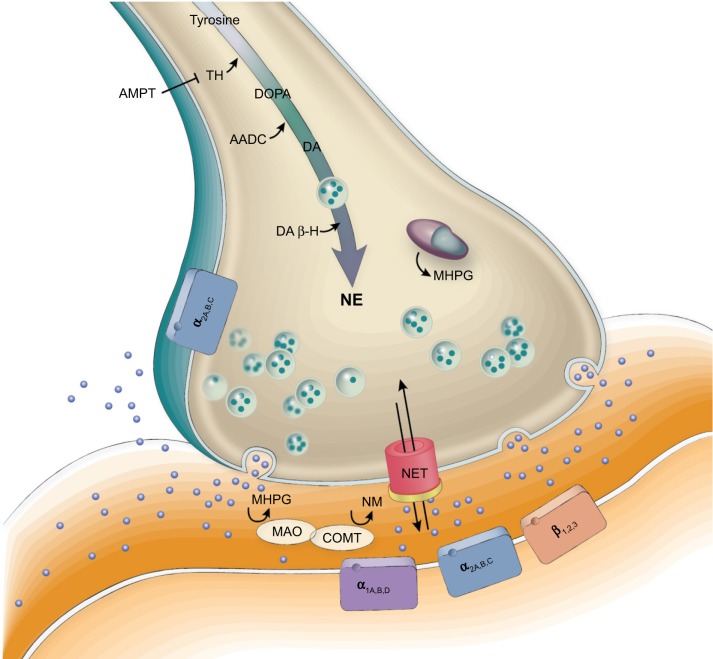
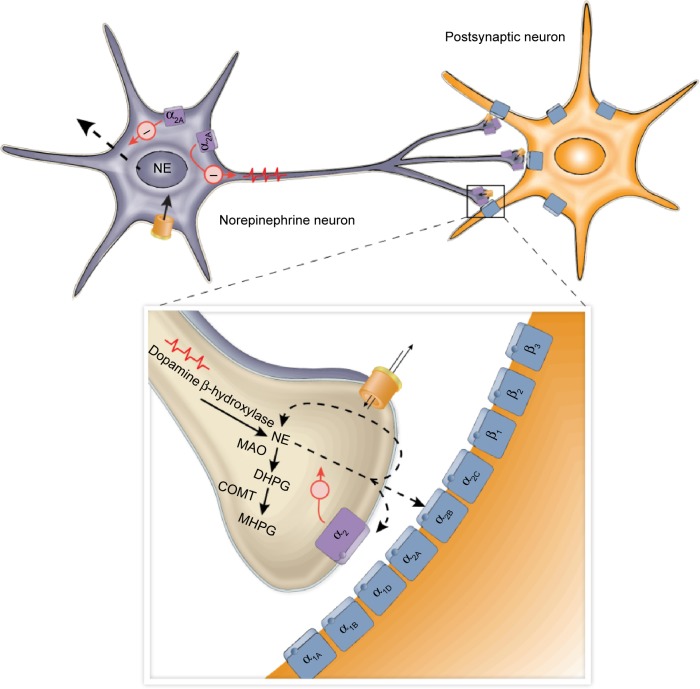
2/ NET's job is to reuptake NE (and dopamine) in the gap between neurons, regulating the concentrations of these neurotransmitters here.
3/ NE attaches to various types of receptors. The α2-adrenergic receptor is special though because it is an inhibitory autoreceptor which regulates the further release of NE.
It acts like a bouncer standing outside a club.
It acts like a bouncer standing outside a club.
4/ α1-adrenergic receptors and β1- and β3-adrenergic receptors are excitatory - they are involved with anxiety and panic.
But the α2-adrenergic receptor is associated with reduced anxiety.
But the α2-adrenergic receptor is associated with reduced anxiety.
5/ NE also loves (has a greater affinity for) α2-adrenergic receptors than α1- and β-adrenergic receptors.
6/ We've also got to understand that NE is being produced at a baseline level in everyone.
However, in those suffering from depression, there is a lower level of baseline NE and as well as reduced α2-adrenergic receptor function.
However, in those suffering from depression, there is a lower level of baseline NE and as well as reduced α2-adrenergic receptor function.
7/ Consequently in these people, the appearance of a threatening stimulus/acute stressor would result in a marked increase in neuronal firing without a strong dampening response, thus manifesting as heightened anxiety.
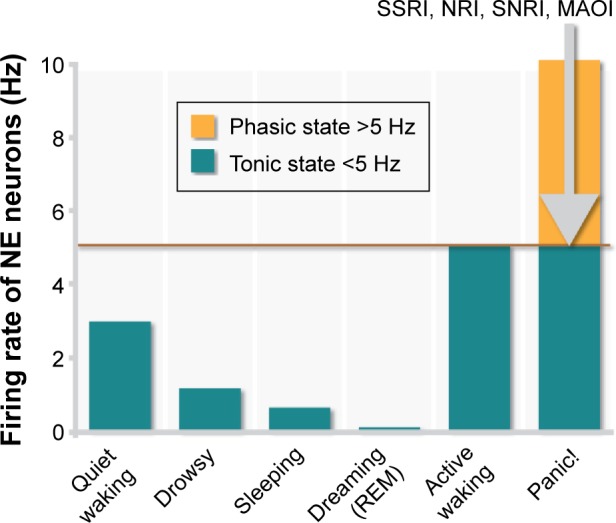
8/ The theory goes that if NETs are inhibited (using drugs), then the amount of free-floating NE increases which in turn increases baseline levels of NE, strengthens α2-adrenergic receptors and thus in turn reduces anxiety.
9/ Certain antidepressants can inhibit NET. This might explain why certain antidepressants work and do not cause a paradoxical rise in anxiety.
ncbi.nlm.nih.gov
ncbi.nlm.nih.gov
10/ Some of you may know that I am interested in the use of VNS to improve motor areas of the brain.
Well interestingly, noradrenergic α2 receptors are widely expressed in the motor cortex and have been critically implicated in synaptic communication and plasticity.
Well interestingly, noradrenergic α2 receptors are widely expressed in the motor cortex and have been critically implicated in synaptic communication and plasticity.
11/ One very recent study showed that α2-receptor activation is required for VNS-induced cortical reorganization to occur.
Is this why VNS seems to reduce anxiety?
nature.com
Is this why VNS seems to reduce anxiety?
nature.com
12/ I say the idea that NE causes anxiety should be scrapped for a more naunced take.
People may be inflicted by anxiety and respond to treatment differently due to the variability in the NE receptors or in the efficacy of the NE reuptake transporter across individuals.
People may be inflicted by anxiety and respond to treatment differently due to the variability in the NE receptors or in the efficacy of the NE reuptake transporter across individuals.
13/ An individualised approach to mental health is needed, especially when genetics plays a big part in receptor type and concentration.
ncbi.nlm.nih.gov
ncbi.nlm.nih.gov
14/ I feel a combinatory approach (rather than monotherapy) should be targeted too.
Exercise has shown to increase NET (in the heart).
What if we combined this with VNS?
physoc.org
Exercise has shown to increase NET (in the heart).
What if we combined this with VNS?
physoc.org
15/ For more on VNS and other ways to improve nerve function, I have written a ebook about it.
drkohilathas.co.uk
drkohilathas.co.uk
Loading suggestions...